Quick answer: This page offers 176 filled baby-description entries, with 174 distinct labels because “wise” and “witty” each appear twice. Choose a word for what you observe—such as alert, wiggly, calm, or curious—and add a short action or moment so it does not become a fixed judgment about the baby.
- Describe a visible action or moment, not an assumed motive.
- The preserved word bank mixes conventional adjectives, playful phrases, and critical terms; it is a vocabulary reference, not a recommendation to use every label.
- One precise adjective with an example is usually clearer than a long string of descriptors.
Choose Baby Adjectives by What You Observe
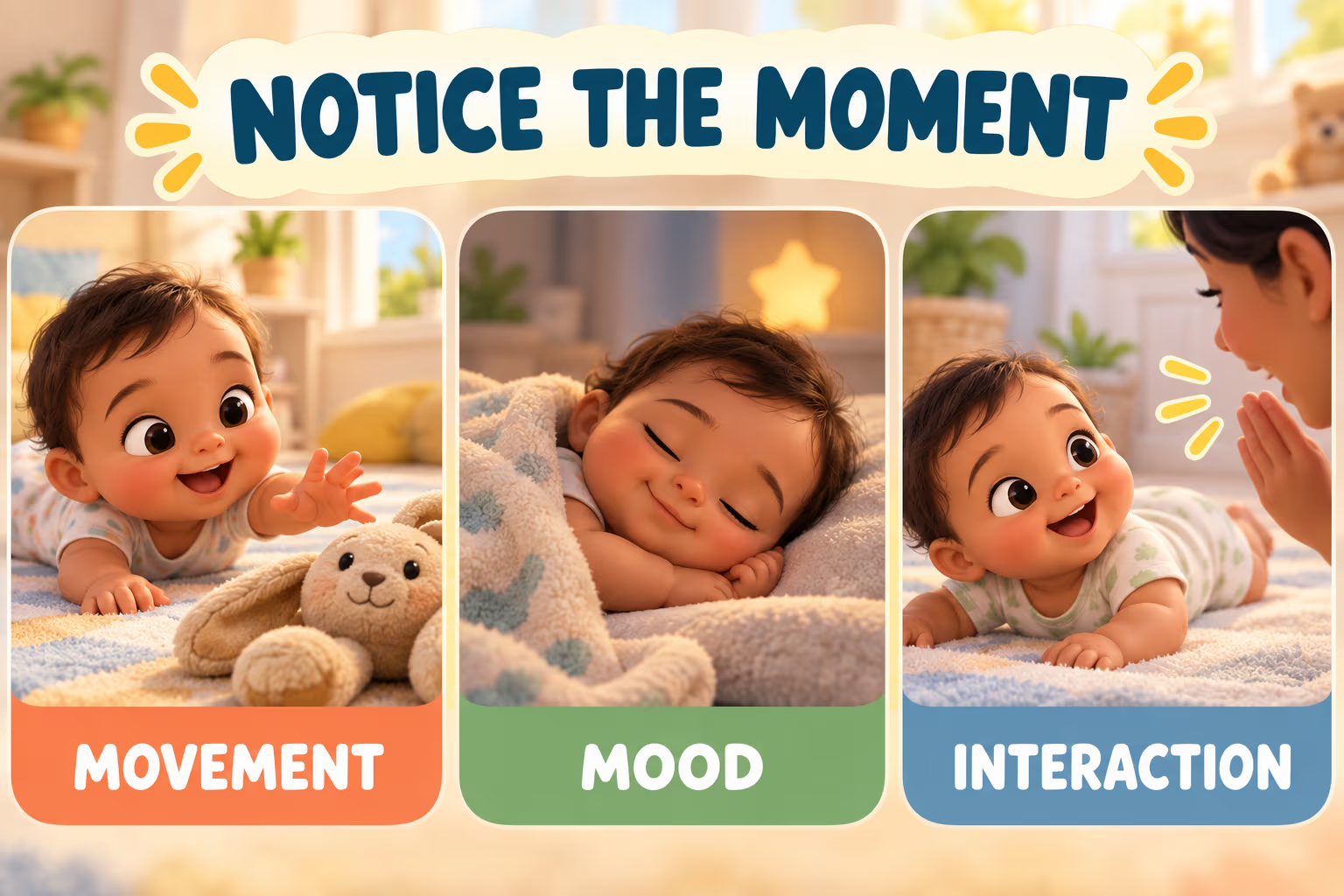
A useful description connects a word to something a caregiver or reader can picture. The same baby may be calm while resting, alert during a new sound, or fussy when tired. Treat these as descriptions of a moment, not permanent personality labels.
| What you notice | Words that may fit | Example detail |
|---|---|---|
| Attention or expression | Alert, attentive, curious, observant | The baby watches a bright mobile move across the room. |
| Movement or energy | Wiggly, lively, still, playful | The baby kicks toward the soft toy on the play mat. |
| Mood in a moment | Calm, content, fussy, sleepy | The baby yawns and settles against a caregiver’s shoulder. |
| Interaction | Responsive, sociable, smiley, attentive | The baby turns toward a familiar voice. |
Turn an Adjective Into a Clear Sentence
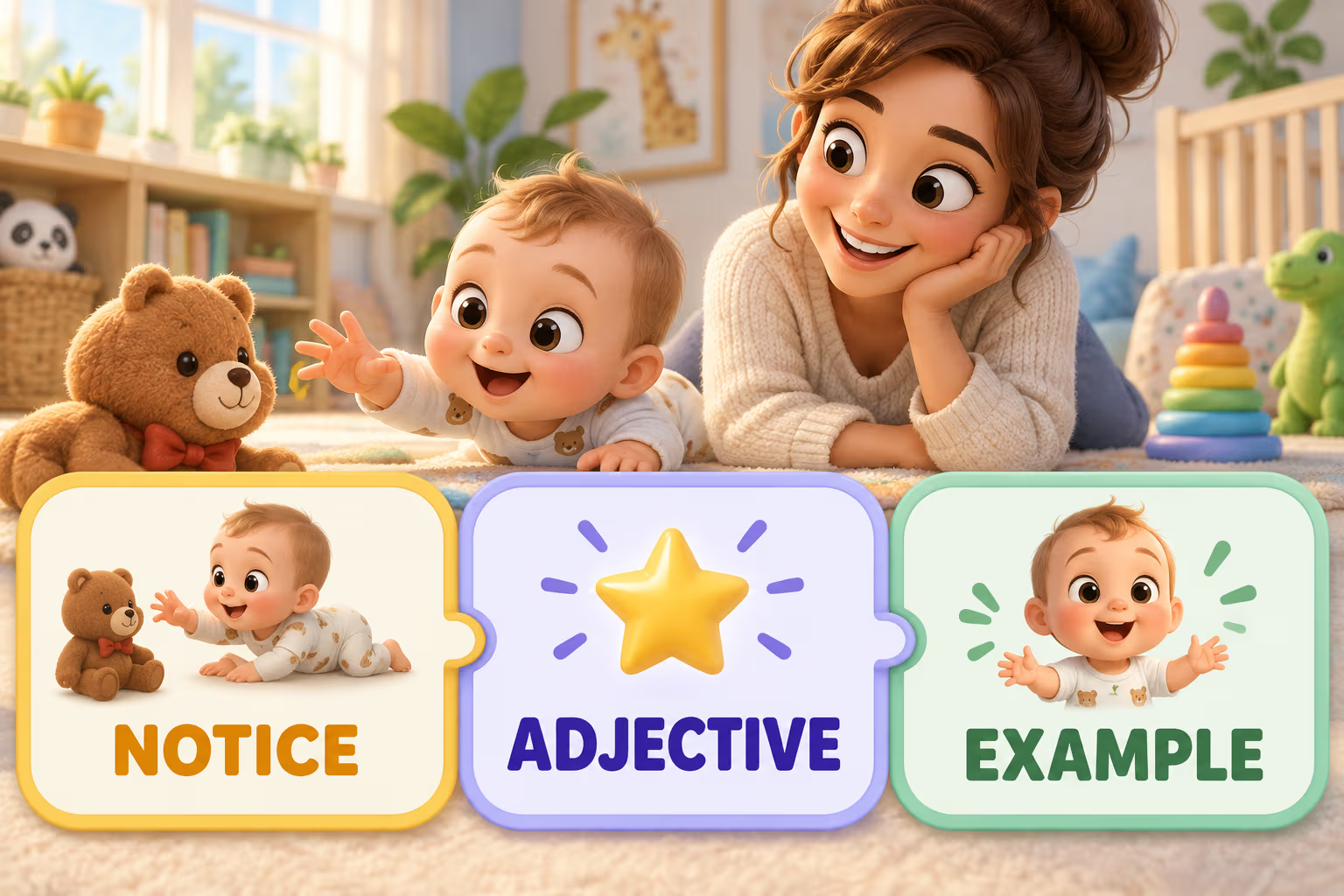
Try the pattern adjective + baby + observable action. It keeps the sentence warm and specific without suggesting that one moment defines a child’s whole character.
| Adjective | Example sentence | Why it is specific |
|---|---|---|
| Curious | The curious baby followed the crinkly toy with their eyes. | It connects the word to an action. |
| Sleepy | The sleepy baby yawned after a busy afternoon. | It describes a temporary state. |
| Playful | The playful baby reached for the soft blocks. | It gives the reader a visible moment. |
| Calm | The calm baby rested against a caregiver’s shoulder. | It describes the scene, not a fixed trait. |
Babies Have Individual Temperaments
The American Academy of Pediatrics describes babies as having individual temperaments; two babies may respond differently to activity, sound, or new situations, and one is not better than another. That is a useful reminder when choosing adjectives: “quiet” and “lively” describe different observations, not a ranking. See the AAP’s guide to a baby’s temperament.
Use extra care with words that suggest intention or moral judgment, such as selfish, lazy, or disobedient. A baby may cry, reach, turn away, or need help settling, but a label can imply an adult motive that the observation does not establish. Describe the action and situation instead. Avoid assuming that a baby boy or baby girl must have a particular personality.
Developmental milestones serve a different purpose from personality adjectives. The CDC says its checklists describe actions most children (75% or more) can do by a certain age and are communication tools for families and professionals. They are not a list of character traits or a way to rank babies. For an age-specific milestone concern, use the CDC resource as intended and discuss questions with a health professional.
The original table bank contains 176 populated cells and 174 distinct labels; “wise” and “witty” appear twice. It also includes playful phrases such as “bok choy” and “Worcester sauce,” along with words whose tone can be critical. Read each item in context before using it. For a broader life-stage word list, see our adjectives for age guide.
See the CDC’s key points about developmental milestone checklists for their intended use and limitations.
Adjectives are words that describe or modify another person or thing in the sentence. The article ” adjectives to describe a baby” provides a list of positive adjectives that can be used to describe infants.
The list includes physical traits, such as “cute,” “adorable,” and “joyful.” It also includes adjectives that capture the baby’s personality, such as “calm,” “playful,” and ” curious.” In addition, the article provides several tips on how to use adjectives effectively when describing a baby.
For example, it is important to choose adjectives that are appropriate for the audience and to avoid using too many adjectives in one sentence. By following these tips, you can be sure to paint a vivid and accurate picture of any baby.
Adjectives Words To Describe a Baby

A | B
| Adaptable | Amiable | Awesome |
| Admirable | Angelic | Balanced |
| Adorable | Angry | Beauteous |
| Affectionate | Appealing | Beautiful |
| Agreeable | Attentive | Bewildered |
| Alluring | Aware | Bewitching |
B | C
| Big | Classy | Considerate |
| Blessing | Clean | Courageous |
| Brave | Clumsy | Courteous |
| Calm | Colossal | Creative |
| Caring | Compassionate | Curious |
| Charming | Confident | Cute |
D | E | F | G
| Defeated | Energetic | Flexible |
| Delightful | Enthusiastic | Free-Spirited |
| Drab | Faithful | Friendly |
| Eager | Fancy | Fun-Loving |
| Elegant | Fat | Gentle |
| Embarrassed | Fierce | Gigantic |
G | H | I | J | K | L
| Glamorous | Helpless | Jolly |
| Graceful | Honest | Joyful |
| Great | Huge | Kind |
| Grumpy | Immense | Large |
| Handsome | Itchy | Lazy |
| Happy | Jealous | Little |
L | M | N | O | P
| Lively | Miniature | Old-Fashioned |
| Long-Haired | Mysterious | Open-Hearted |
| Loving | Nervous | Panicky |
| Magnificent | Nice | Petite |
| Mammoth | Obedient | Plain |
| Merry | Obnoxious | Playful |
P | Q | R | S
| Proud | Reciprocating | Reserved |
| Puny | Reflective | Resolute |
| Quaint | Reliable | Resourceful |
| Quirky | Relieved | Respectful |
| Radical | Remarkable | Resplendent |
| Receptive | Repulsive | Scary |
S
A baby girl is a bundle of joy. She brings happiness and laughter wherever she goes. She is also a source of comfort and strength during times of trouble. Baby girls are special and need to be treated with love and care.

They are also sensitive and should be handled with care. Baby girls are also sociable and love to interact with others. They are sincere and honest in their dealings with others. Lastly, baby girls are also sensible and know what they want. They are able to think for themselves and make decisions that are best for them.
| Scrawny | Sensitive | Sincere |
| Secure | Sentimental | Skillful |
| Selective | Serious | Small |
| Self-Assured | Short | Sociable |
| Self-Reliant | Shrewd | Sparkling |
| Sensible | Silly | Spirited |
S | T
| Spontaneous | Strong | Tall |
| Spunky | Stunning | Teeny |
| Steadfast | Successful | Teeny-Tiny |
| Steady | Sympathetic | Tenacious |
| Stimulating | Talented | Terrific |
| Straight-Forward | Talkative | Thankful |
T | U | V
| Thoughtful | Ugliest | Unsightly |
| Thoughtless | Uncompromising | Upbeat |
| Tiny | Unconventional | Uptight |
| Tolerant | Understanding | Valuable |
| Tough | Unique | Versatile |
| Trustful | Unparalleled | Vibrant |
V | W
| Victorious | Willing | Worried |
| Vigorous | Wise | Worthy |
| Vivacious | Witty | Wise |
| Warm | Wonderful | Witty |
| Wide-Eyed | Wondrous |
How to use adjectives to describe a baby?
Adjectives are a great way to describe a baby. They can be used to describe their physical appearance, their personality, or their behavior. Adjectives can also be used to describe how the baby makes you feel. Here are some examples of adjectives that can be used to describe a baby:

- Adorable: A baby who is so cute that you can’t help but smile.
- Adept: A baby who is quick to learn new things.
- Angelic: A baby who is so good that they seem like an angel.
- Bok choy: A baby who is as cute as a Chinese cabbage.
- Businesslike: A baby who is very serious and focused.
- Cheeky: A baby who is playful and mischievous.
- Cooperative: A baby boy who is happy to go along with what you want to do.
- Cuddly: A baby who loves to be held and cuddled.
- Determined: A baby who is very determined and single-minded.
- Easygoing: A baby who is happy and content most of the time.
- Fidgety: A baby who can’t sit still for long periods of time.
- Giggly: A baby who loves to laugh and giggle.
- Gusty: A baby who is full of energy.
- Helpful: A baby who is always happy to help out.
- Inquisitive: A baby who is always asking questions and wanting to know more.
- Independent: A baby who can entertain themselves and doesn’t need much help from others.
- Jovial: A baby who is always happy and cheerful.
- Lively: A baby who is full of energy and life.
- Loving: A baby who loves to show affection and be loved in return.
- Mischievous: A baby who likes to play tricks and get into mischief.
- Goofy: A baby who is silly and playful.
- Grouchy: A baby who is cranky and irritable.
- Healthy: A baby who is robust and full of energy.
- Helpful: A baby who is always willing to help out.
- Inquisitive: A baby who is always asking questions.
- Jaded: A baby who is bored or uninterested in what’s going on around them.
- Laid-back: A baby who is relaxed and easygoing.
- Moody: A baby who is prone to sudden changes in mood.
- Nervous: A baby who is easily scared or intimidated.
- Outgoing: A baby who loves to meet new people and try new things.
- Persistent: A baby who doesn’t give up easily.
- Quiet: A baby who is relatively quiet and subdued.
- Relaxed: A baby who is calm and not easily agitated.
- Rowdy: A baby who is loud and boisterous.
- Selfish: A baby who only thinks of themselves and their own needs.
- Shy: A baby who is timid and reserved around new people.
- Silly: A baby who loves to play and have fun.
- Sleepy: A baby who is always tired and tends to fall asleep a lot.
- Smart: A baby who is quick to learn new things.
- Stubborn: A baby who doesn’t like to be told what to do.
- Sweet: A baby who is kind and affectionate.
- Trusting: A baby who is quick to trust new people.
- Whiny: A baby who complains a lot or cries easily.
- Wild: A baby who is full of energy and never seems to sit still.
- Wise: A baby who seems to understand things beyond their years.
- Worcester sauce: A baby who is as cute as a British condiment.
Adorable Overload: Finding the Perfect Words to Describe Baby’s Cuteness
Babies have an innate ability to melt our hearts with their innocent smiles, tiny fingers, and rosy cheeks. Describing their cuteness can be a delightful challenge, as their charms are truly beyond words. In this article, we’ll explore a captivating array of adjectives that capture the essence of a baby’s irresistible allure. From their cherubic features to their contagious giggles, we’re about to dive into a treasure trove of words that perfectly describe a baby’s cuteness.
The Enchanting Journey of Describing Baby’s Cuteness
- Cherubic: With their plump cheeks and angelic expressions, babies often resemble cherubs straight out of a renaissance painting. The term “cherubic” encapsulates their innocent and almost ethereal appearance.
- Endearing: From their first adorable gurgle to their sweetest toothless grin, babies have a unique way of winning hearts and becoming incredibly endearing to anyone fortunate enough to cross their path.
- Pint-sized Perfection: The term “pint-sized perfection” encapsulates the idea that babies are small bundles of flawless beauty, radiating charm in every tiny gesture they make.
- Lovable Littles: Babies possess an uncanny ability to inspire love and affection from everyone around them. Their innocence and vulnerability make them truly lovable little beings.
- Precious Bundles: Just like a delicate and carefully wrapped bundle, babies are precious in every sense. Their vulnerability and innocence make them a bundle of joy that fills our lives with happiness.
- Tiny Marvels: Babies might be small in size, but they’re big on the marvel factor. Every milestone they achieve, no matter how small, is a testament to their amazing growth and development.
- Giggly Wonders: The sound of a baby’s laughter is like music to the soul. The term “giggly wonders” captures the infectious nature of their laughter and the wonder it brings to our lives.
- Adorable Angels: Babies often seem like little angels sent from above, spreading joy and happiness wherever they go. The term “adorable angels” beautifully reflects their heavenly presence.
- Heartwarming Charms: A baby’s cuteness goes beyond physical appearance. It encompasses the heartwarming charms that tug at our emotions and leave us feeling a sense of warmth and happiness.
Describing a baby’s cuteness is a joyful endeavor that reminds us of the beauty and innocence that exist in the world. From their cherubic features to their giggly wonders, babies possess a unique ability to captivate our hearts and bring smiles to our faces. These words are just a glimpse into the vast array of adjectives that attempt to capture the indescribable magic of a baby’s charm. Whether you’re a parent, a relative, or simply someone who adores babies, these words serve as a delightful reminder of the joy they bring into our lives.
Celebrating Individuality: Describing Baby Boys and Girls in All Their Splendor
Babies, regardless of their gender, are precious bundles of joy that bring happiness and wonder to our lives. While gender does not define a child’s worth, it’s natural to appreciate the unique qualities that baby boys and girls exhibit. In this article, we’ll explore how to beautifully describe baby boys and girls, highlighting their individual characteristics and the charming traits that make them equally special.
Describing Baby Boys: Exploring their Endearing Qualities
- Playful Adventurers: Baby boys often exhibit an innate sense of curiosity and adventure from an early age. They embrace exploration with wide-eyed wonder, as their playful spirits lead them to discover the world around them.
- Boisterous Bundles: With their boundless energy and infectious enthusiasm, baby boys can be described as “boisterous bundles” of joy. Their animated gestures and spirited antics are a testament to their vibrant personalities.
- Curious Explorers: Baby boys have a natural curiosity that prompts them to touch, taste, and investigate everything they encounter. The term “curious explorers” perfectly captures their insatiable desire to learn and understand.
- Mischievous Charms: Often known for their mischievous grins and mischievous glints in their eyes, baby boys have an uncanny ability to charm their way into our hearts with their playful antics.
- Lively Spirits: The term “lively spirits” paints a vivid picture of the vivaciousness that baby boys bring into our lives. Their energetic presence injects joy and dynamism into any room they enter.
Describing Baby Girls: Embracing their Unique Qualities
- Dainty Delights: Baby girls often possess a delicate and refined quality that can be described as “dainty delights.” From their tiny fingers to their graceful movements, they exude elegance.
- Gentle Sweetness: The term “gentle sweetness” encapsulates the tender and caring nature often associated with baby girls. Their innate ability to show empathy and affection is truly heartwarming.
- Curly-Q Cuties: With their often soft and fine hair, baby girls are sometimes playfully referred to as “curly-Q cuties.” This endearing term highlights their charming physical features.
- Charming Princesses: Just as every girl is unique, the term “charming princesses” signifies the individuality and specialness that each baby girl brings into the world. It emphasizes their potential to become strong and empowered individuals.
- Radiant Smiles: Baby girls are renowned for their radiant smiles that light up a room. Their infectious laughter and joyful expressions are a testament to their boundless happiness.
Celebrating the qualities of both baby boys and girls allows us to acknowledge their individuality while embracing the shared wonder of their presence. Each child, regardless of gender, possesses their own unique characteristics and charm that make them truly special. Describing them with adjectives that reflect their playful spirits, lively energy, tender hearts, and endearing qualities helps us appreciate the beautiful diversity that children bring into our lives. After all, it’s the combination of these qualities that makes every baby, whether a boy or a girl, an extraordinary and heartwarming presence in our world.
Final words
So what words should you use to describe a baby? According to the latest neuroscience research, babies are best described as curious, active, and social.
They learn through exploration and interaction with their environment and other people. Babies are constantly making new connections in their brains, so it’s important to provide plenty of opportunities for them to explore and learn.
Use these adjectives when describing your own little one – or any baby you meet – and see how your interactions with them change.
Frequently Asked Questions
What adjectives describe a baby?
Useful examples include alert, calm, curious, playful, sleepy, wiggly, and soothed. The most accurate word depends on the moment: describe what you can see, then add an action such as “The curious baby watched the mobile.” A list entry alone does not explain a baby’s mood or personality.
How do I use an adjective in a sentence about a baby?
Place the adjective near “baby,” then add what happened: “The alert baby turned toward the music” or “The sleepy baby yawned after lunch.” This pattern gives the word context and keeps the sentence specific. In longer writing, one or two precise adjectives are usually clearer than a long string.
How many distinct words are in this list?
The source tables contain 176 filled cells and 174 distinct labels. “Wise” and “witty” each appear twice. The total counts the printed entries in the preserved tables; it includes playful phrases as well as conventional adjectives, so it is not a count of 176 distinct standard adjectives.
Should I use negative adjectives for a baby?
The preserved bank includes critical words, but they may sound judgmental as fixed labels. Prefer a description of observable behavior, such as “the baby fussed when tired,” over a claim about adult-like motives. Use a negative term only when it fits the speaker, tone, and context.
Can the same adjectives describe baby boys and girls?
Yes. The same word can describe a baby of any gender when it fits the observed moment. Avoid assuming that girls are naturally gentle or boys are naturally brave. The American Academy of Pediatrics emphasizes that babies show individual temperaments, so describe the child in front of you.


