Confused about whether to use “freezed” or “frozen”? Let me clear that up for you. Understanding the correct tense to use can be tricky, especially with words that sound alike but have different meanings. In this article, I’ll break down the difference between “freezed” and “frozen” to help you use the right term in your writing.
Many people mistakenly use “freezed” as the past tense of “freeze,” but that’s incorrect. The correct term is “froze.” On the other hand, “frozen” is the past participle of “freeze” and is used to describe something turned into ice due to extreme cold. Stick around as I delve deeper into when to use “froze” and when to use “frozen” in your sentences.
Quick Answer: Freeze, Froze, or Frozen?
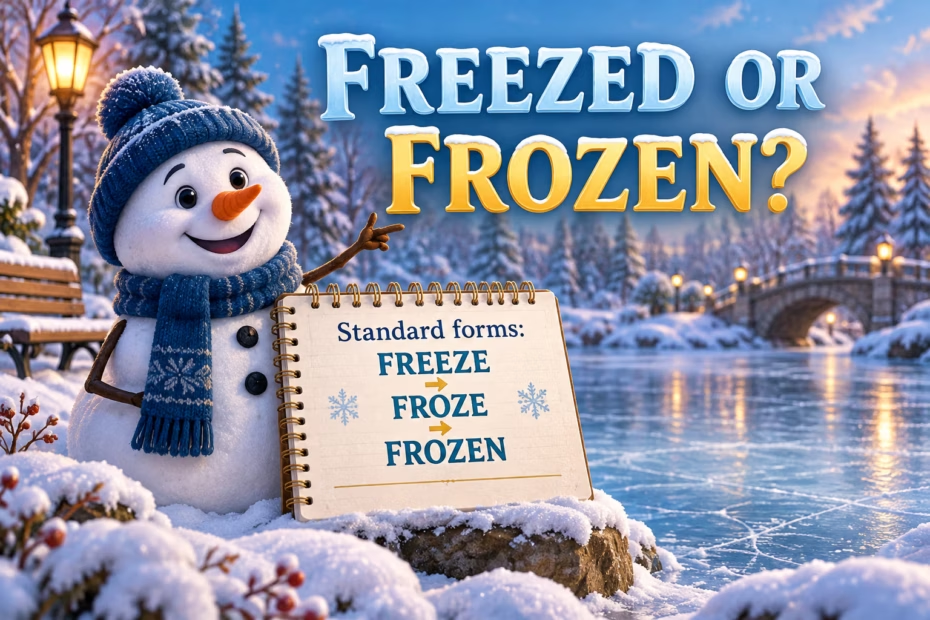
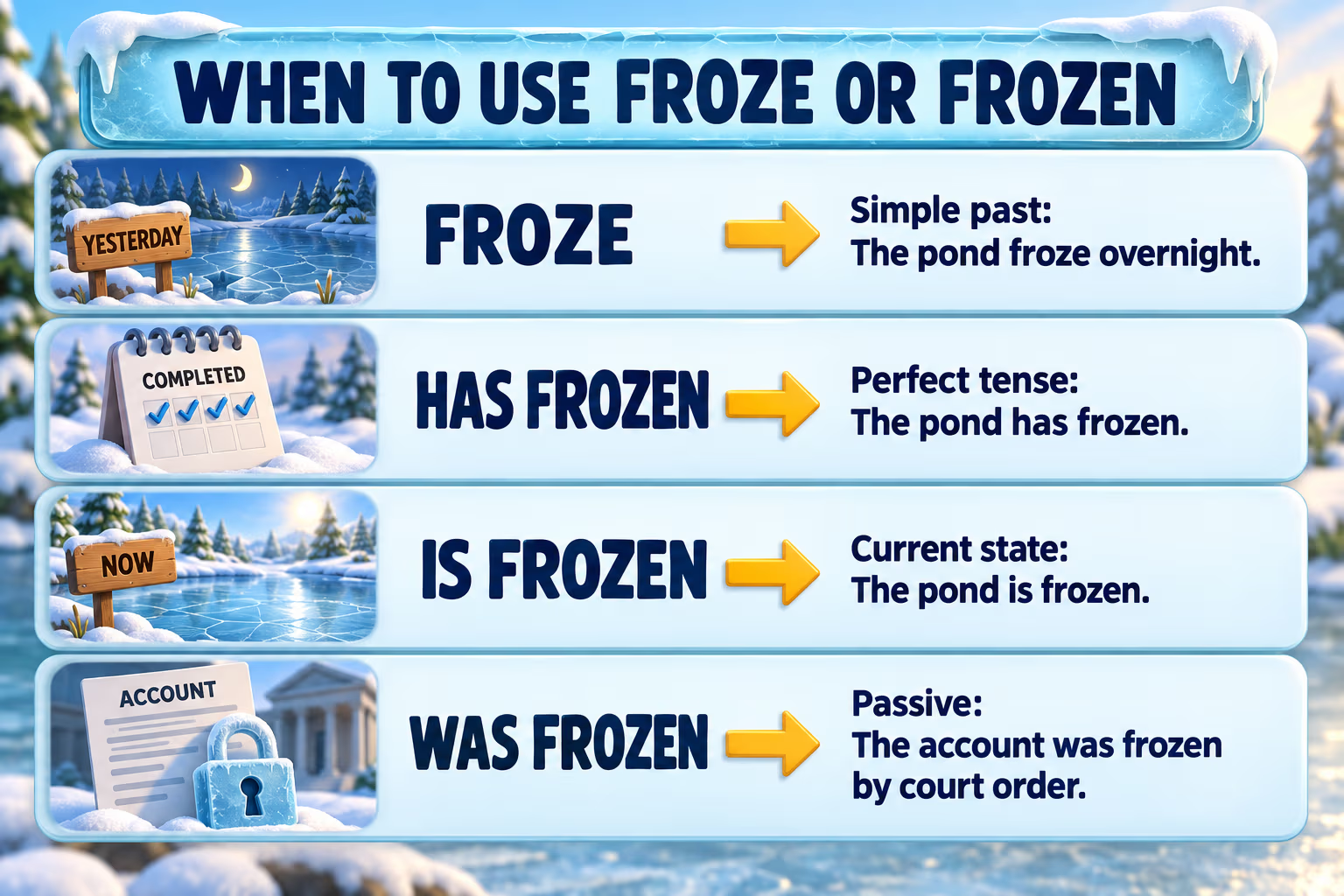
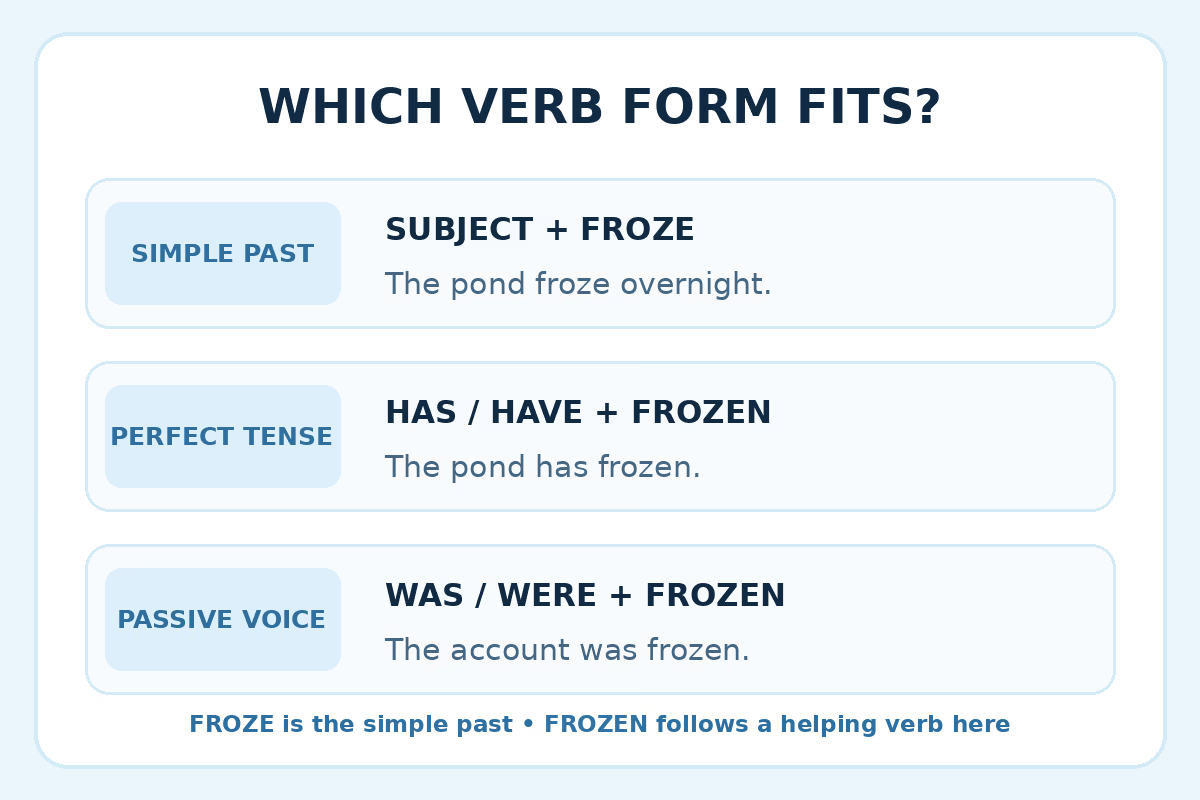
In standard English, the verb forms are freeze – froze – frozen. Use froze for a simple-past action (“The pond froze overnight”) and frozen as the past participle (“The pond has frozen”) or an adjective (“The pond is frozen”). Freezed is not the standard form in edited English. These are forms of one verb, not homophones. See the standard forms in Oxford Learner’s Dictionaries and Cambridge Grammar. For another irregular-verb comparison, see Meet or Met: Mastering Correct Usage.
Freezed or Frozen – Which is Correct?
When deciding between “freezed” and “frozen,” it’s crucial to understand their correct usage to avoid common mistakes in writing. “Freezed” is a word that does not exist in standard English. The correct past tense of “freeze” is “froze,” not “freezed.” On the other hand, “frozen” is the past participle of “freeze” and is used to describe something turned into ice or another solid due to extreme cold.
To clarify further, “froze” is the appropriate past tense to use when referring to something that was frozen in the past but is no longer frozen. It can also depict a sudden stop or pause in an activity. On the contrary, “frozen” is versatile and commonly used in various contexts, such as describing frozen food, rivers, or lakes.
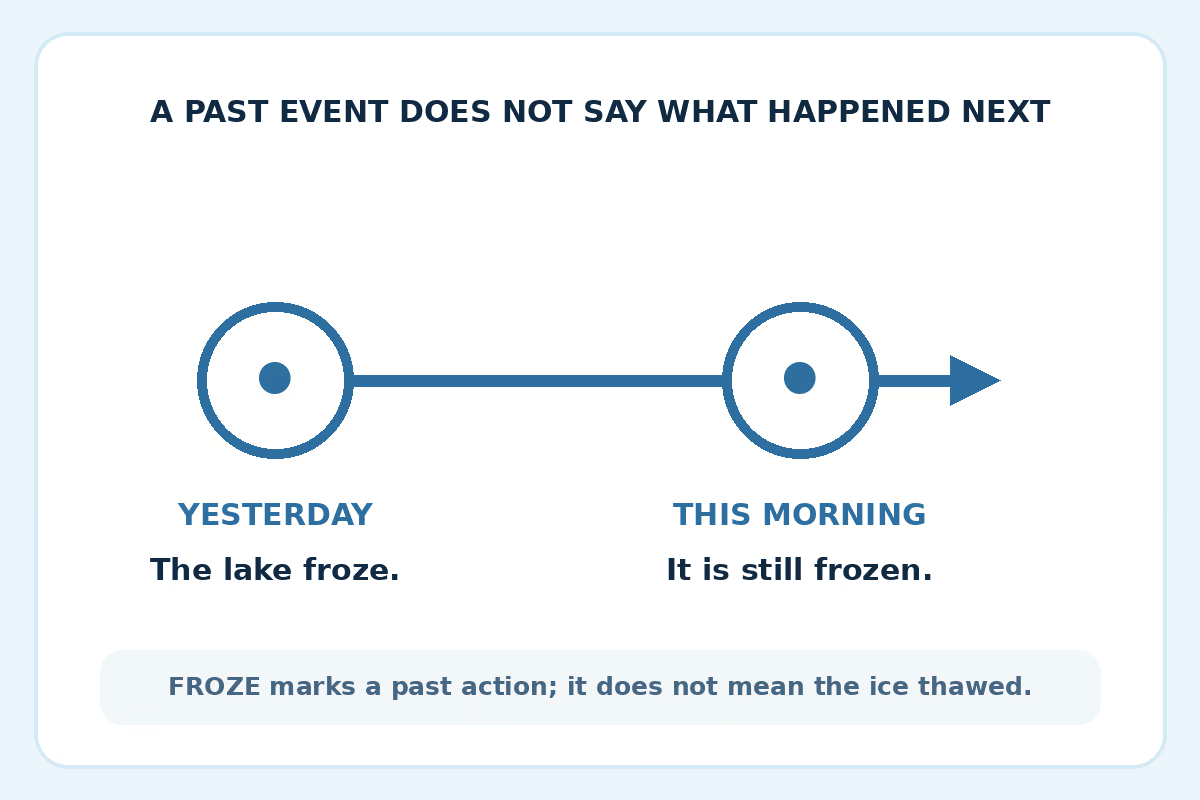
Important distinction: Froze does not mean that an object later thawed. It marks a past action, while a separate verb phrase describes the present result: “The lake froze last night, and it is still frozen this morning.” Use froze for the past event and is frozen for the current state.
Understanding the distinction between “freezed” and “frozen” is crucial for maintaining language accuracy in writing. While the former is incorrect and should be avoided, the latter carries the precise meaning of something solidified due to extreme cold. By using the correct form, writers can ensure clarity and precision in their expressions.
Understanding the Difference
Definition of Freezed
In standard English, “freezed” is not a valid word. The correct past tense of “freeze” is “froze.” Using “freezed” can lead to confusion and inaccuracies in written communication. It’s essential to replace “freezed” with “froze” for linguistic precision and clarity.
More precisely: Freezed is not the standard past-tense or past-participle form in edited English; standard reference sources give froze and frozen. The spelling is nevertheless attested in nonstandard use, so “not a word” is broader than the evidence supports. Use froze/frozen for school, work, and formal writing. Wiktionary’s entry for freezed is community-maintained and offers limited evidence of attestation, not proof of broad regional use.
Definition of Frozen
“Frozen” is the past participle used to describe something solidified by extreme cold. It is a versatile term applied to various contexts such as frozen food, bodies of water, and more. Understanding the correct usage of “frozen” ensures accuracy in describing objects or conditions affected by extreme cold.
How Is “Frozen” Used Beyond Ice?
Frozen can describe a literal state, a completed action, or the result of a non-literal use of freeze. “We bought frozen berries” uses frozen adjectivally; “The account was frozen by court order” uses the past participle in a passive clause; and “Her smile froze” uses freeze figuratively for a sudden stop. The verb can also describe a computer screen that stops responding or prices held at a fixed level. These meanings are listed in Oxford Learner’s Dictionaries.
| Form | Use | Example |
|---|---|---|
| froze | Simple past action | “The pipes froze during the cold snap.” |
| has/have/had frozen | Perfect tense | “The pond has frozen overnight.” |
| was/were frozen | Passive or resulting state | “The account was frozen pending review.” |
| frozen | Adjective | “We stored the frozen vegetables in the top drawer.” |
Common Usage Mistakes
Why “Froze” Does Not Mean “Thawed”
Choose the form by grammar, not by whether the object is still cold. “The lake froze yesterday” reports a past event; “The lake has frozen” uses the past participle with has; “The lake is frozen” describes its present state. A past event can leave an object frozen now, so froze does not imply thawing.
Examples of Incorrect Usage
Many people mistakenly interchange “freezed” and “froze” in their sentences. For instance, saying “The ice cream is freezed” instead of “The ice cream is frozen” is a common mistake that can lead to confusion.
Explaining the Correct Usage
To use the correct word, it’s essential to understand that “frozen” is the appropriate term to describe something that has been solidified by extreme cold. For example, saying “She froze the leftover soup to save for later” is correct usage compared to using “freezed.” Remember, using the correct word, “frozen,” is vital for clear and accurate communication.
Language Evolution
Changes Over Time
Languages are constantly evolving, adapting to the needs and preferences of its speakers. Over time, words may shift in meaning or usage, reflecting the dynamic nature of language. In the case of “freezed” versus “frozen,” the incorrect form “freezed” may have emerged as a result of linguistic experimentation or misunderstanding. Such deviations often occur as language users seek to convey meaning more efficiently or creatively, leading to the introduction of new terms or alterations in existing ones.
Influence of Regional Dialects
Regional dialects play a significant role in shaping language usage and can contribute to variations in vocabulary and grammar. The choice between “freezed” and “frozen” may reflect regional linguistic patterns, where certain communities or areas have adopted one form over the other. These differences in dialects can stem from historical, cultural, or geographical factors, highlighting the rich diversity within a language. As a result, individuals may encounter varying usages of these terms based on their linguistic environment.
A single nonstandard example does not show that freezed is typical of a particular region. To describe a regional pattern, name the variety and cite dialect or corpus evidence; otherwise, describe freezed only as a nonstandard form readers may encounter. The dictionary forms checked here remain freeze – froze – frozen.
Conclusion
Considering the evolution of language and the influence of regional dialects, the choice between “freezed” and “frozen” may vary based on linguistic patterns. The diversity in language usage reflects historical, cultural, and geographical factors, shaping individual encounters with these terms. As language continues to adapt to meet speakers’ needs, variations in vocabulary and grammar are expected. It’s essential to recognize the dynamic nature of language and embrace the richness of linguistic diversity. Whether one opts for “freezed” or “frozen,” understanding the context and regional influences behind these choices enhances linguistic appreciation. Language evolves, and our flexibility in accepting these variations contributes to a more inclusive and comprehensive communication landscape.
Frequently Asked Questions
Is “freezed” a correct word?
No, “freezed” is not a correct word. The past tense of freeze is “froze” and the past participle is “frozen.”
For standard edited English, use froze as the simple past and frozen as the past participle. Freezed is attested in nonstandard use, but that does not make it the standard form.
Why do some people use “freezed” instead of “frozen”?
Some people may use “freezed” due to regional dialects or linguistic influences. However, “frozen” is the standard past participle form of the verb “freeze.”
Is “freezed” accepted in formal language?
No, “freezed” is not accepted in formal language. It is considered non-standard usage.
How can I use the correct forms of “freeze” in a sentence?
Use “froze” as the past tense and “frozen” as the past participle. For example, “The lake froze overnight” or “The meat had frozen in the freezer.”
Can regional differences influence the use of “freezed”?
Yes, regional dialects can influence language usage, leading to variations like “freezed.” It’s important to follow standard language conventions for clarity and accuracy.
The standard dictionaries checked list freeze – froze – frozen; a specific claim about a regional variety needs evidence for that variety.


