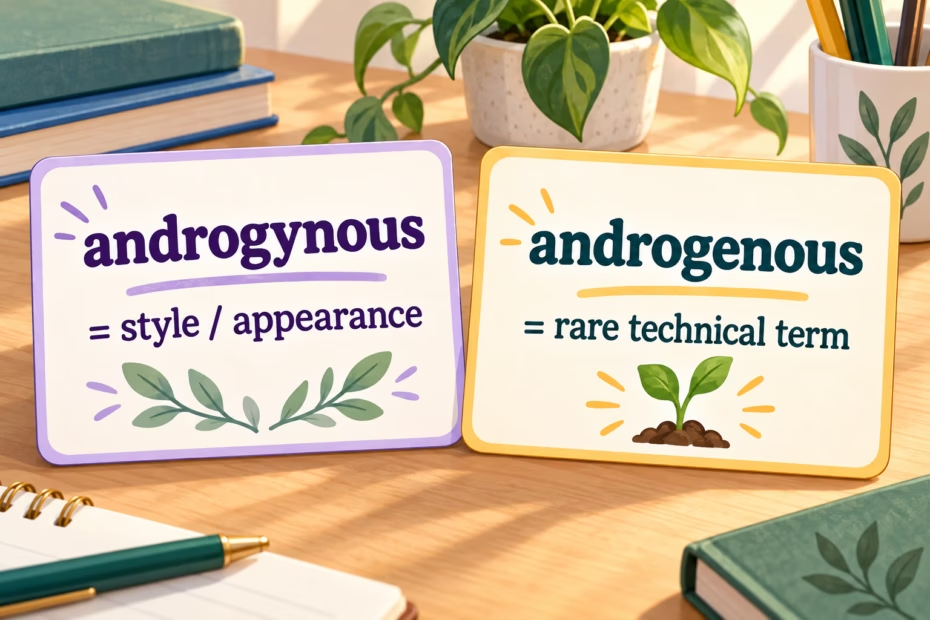
Androgynous describes an appearance or style that is not clearly masculine or feminine, while androgenous is a rare technical adjective used in biological contexts. The spellings differ by one letter, but they are not interchangeable; neither word tells you a person’s gender identity.
At a glance
- Androgynous commonly describes a look, silhouette, or style; specialist biology dictionaries also record a biological sense.
- Androgenous is rare and technical. Dictionary.com labels it Biology and defines it in relation to producing or tending to produce male offspring.
- Use gender identity words only for the identity a person uses for themself; appearance cannot establish identity or pronouns.
- For everyday fashion writing, androgynous is usually the intended word.
- In a scientific passage, check the field-specific definition before using androgenous.
Androgenous vs. Androgynous: What Is the Difference?
Androgynous is the ordinary choice when describing a style or appearance that does not read as clearly masculine or feminine. Androgenous is a rare, specialized biological adjective; it is not the standard spelling for a gender-neutral or mixed-gender presentation.
| Word | Usual context | Safe example | Common mistake |
|---|---|---|---|
| androgynous | Appearance, style, or—within biology—features associated with both sexes | “The costume has an androgynous silhouette.” | Assuming the word reveals the wearer’s gender identity |
| androgenous | Rare technical biological use; verify the field-specific definition | “The botanist checked a specialist dictionary’s use of androgenous.” | Using it to mean a person’s clothing or presentation |
Cambridge Dictionary defines the everyday sense of androgynous as “not clearly male or female,” and marks a biological sense as specialized. Dictionary.com labels androgenous as Biology and notes that it is rare. The entries show why a spelling checker alone may not resolve the intended meaning: both spellings exist, but the contexts differ.
What Does Androgynous Mean in Everyday English?
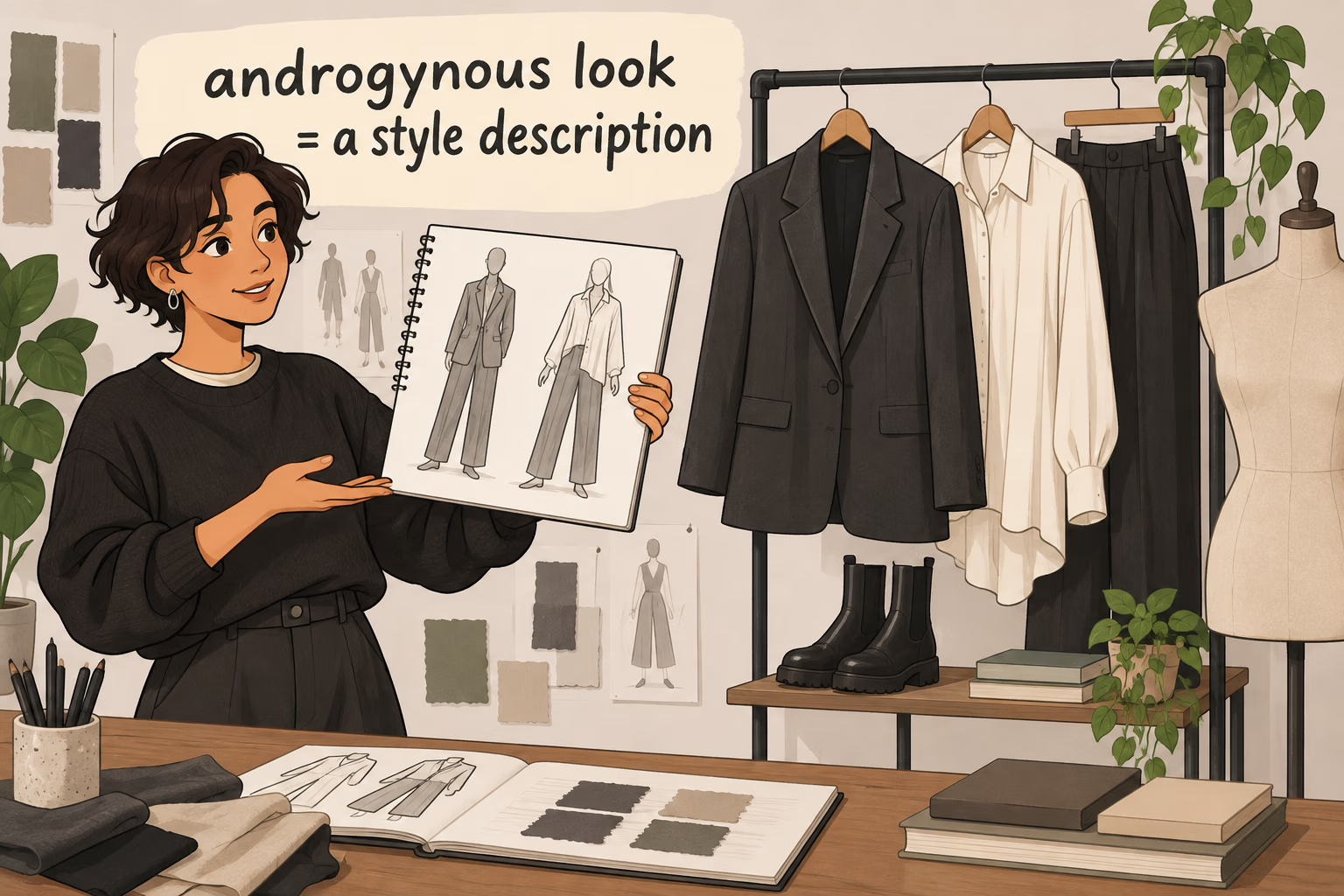
In everyday English, androgynous most often modifies a look, outfit, hairstyle, design, or overall style that is not clearly coded as masculine or feminine. Cambridge gives a fashion example and separately lists a specialized biological sense, so the surrounding noun usually makes the intended meaning clear.
For example, “The performer chose an androgynous stage costume” describes the costume. “The label uses an androgynous design” describes the design. Neither sentence identifies the performer or designer as nonbinary, transgender, or any other gender.
Does Androgynous Describe Gender Identity?
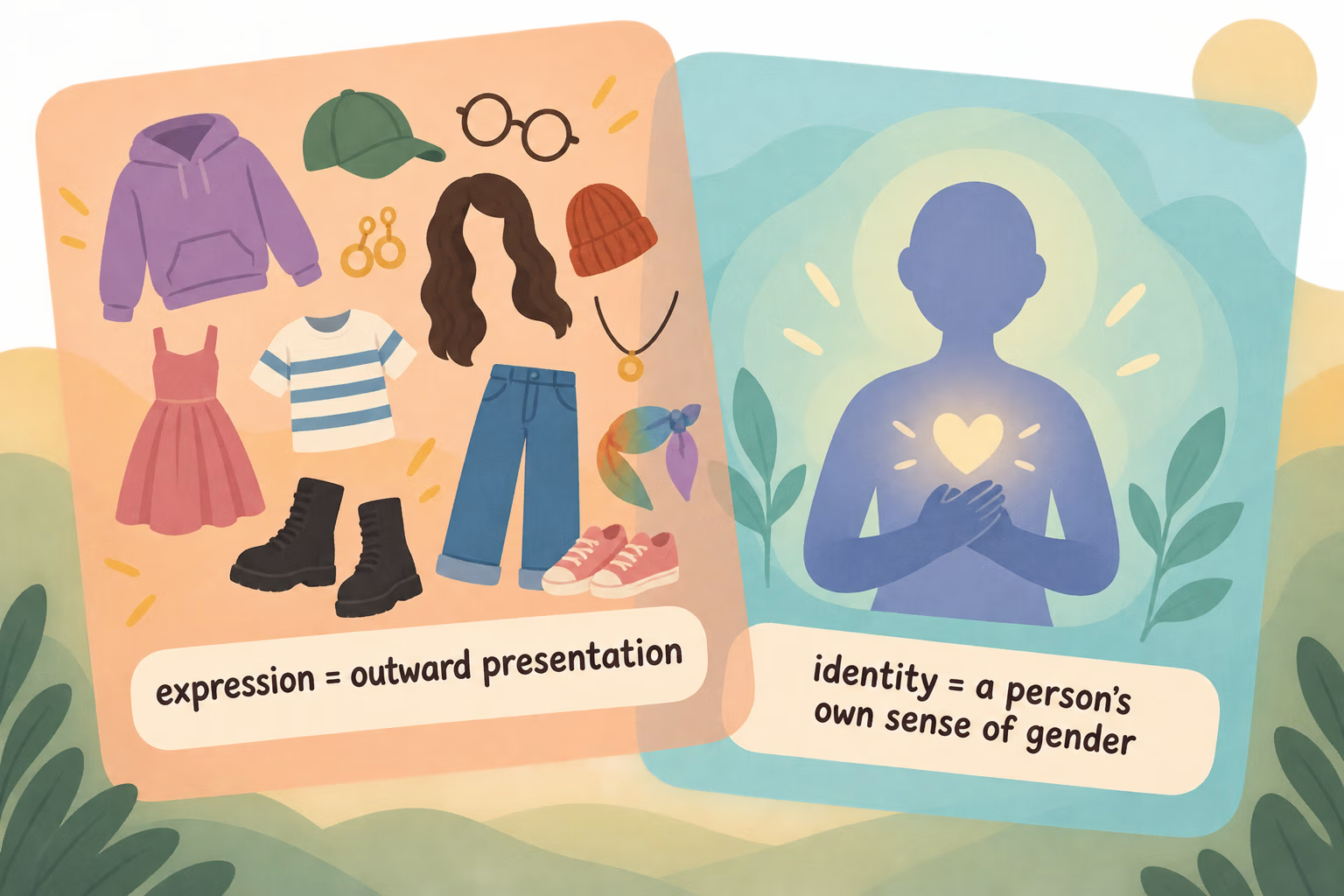
Androgynous can describe gender expression, but it does not by itself name a person’s gender identity. The American Psychological Association distinguishes gender identity—the person’s internal sense of gender—from gender expression, which includes outward presentation and behavior; the two do not have to match other people’s expectations.
Someone may identify as a man, woman, nonbinary, or another gender and still choose an androgynous style. Another person with a similar appearance may use a different identity or no label at all. Ask respectfully if the information matters, use the person’s name and pronouns, and do not infer identity from clothing, hair, voice, or body shape.
What Does Androgenous Mean?
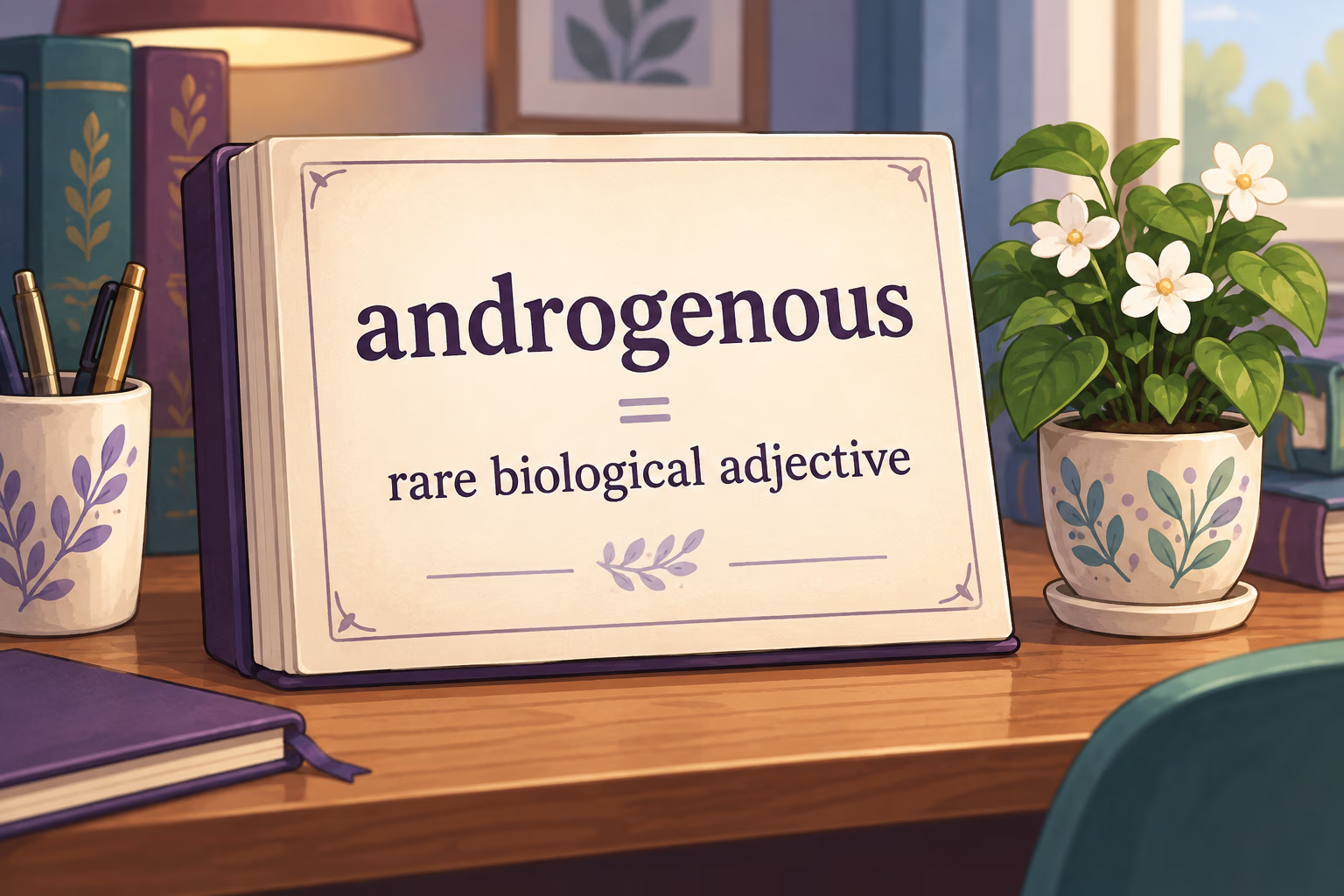
Androgenous is an uncommon adjective with specialist biological uses. Dictionary.com’s Biology entry defines it in relation to the production of, or tendency to produce, male offspring. Because dictionaries and technical fields can use specialized terms differently, quote or link the field-specific source when precision matters.
Do not confuse androgenous with androgenic. The American College of Obstetricians and Gynecologists defines an androgen as a type of hormone made by the body that causes masculine physical characteristics; androgenic describes a relation to androgen activity. That hormone-related word family is separate from androgynous, the common appearance and style adjective.
How Do You Use Each Word Correctly?
Choose the word by asking what the sentence is describing: style or appearance usually calls for androgynous; a technical biological statement may call for androgenous. If the topic is a person’s gender, use that person’s own terms instead of substituting either adjective.
- Style: “The collection pairs tailored jackets with flowing fabrics for an androgynous look.”
- Design: “The game gives the character an androgynous silhouette.”
- Identity: “Jordan describes themself as nonbinary.” Use this only if Jordan has shared that label.
- Technical biology: “The paper uses androgenous in its specialized reproductive-biology sense.” Name the source or field if readers may not know the term.
A practical editing test is to replace the adjective with “style” or “presentation.” If the sentence still means what you intend, androgynous is likely the word. If your sentence concerns a biological process, consult a specialist dictionary or the source text; if it concerns who someone is, ask how they identify.
Why Is the Pair Commonly Confused?
The words look and sound similar, share the Greek combining form andro-, and are often encountered in discussions of gender or biology. Yet the final word parts point to different histories and conventional uses. The ending alone is not a reliable guide: look up the whole word in a dictionary that labels its subject area.
Autocorrect may silently substitute the more familiar spelling. Proofread the sentence after correction, especially in scientific or botanical writing. Conversely, if a general-audience passage uses androgenous for fashion or appearance, check whether the writer intended androgynous.
Frequently Asked Questions
Is androgenous just a misspelling of androgynous?
No. Androgenous is a rare technical word recorded in biological dictionaries, while androgynous is the usual everyday adjective for a look or style that is not clearly masculine or feminine. In casual writing, “androgenous” may be an accidental misspelling, so check the context before correcting it.
Can a person be described as androgynous?
A person may use androgynous for their own presentation, and writers may describe a person’s appearance that way when relevant and respectful. The adjective does not determine the person’s identity. If the sentence is about who someone is rather than what they wear or how they present, use their stated identity or ask them.
Does an androgynous appearance mean someone is nonbinary?
No. Androgyny describes an appearance or expression; nonbinary describes an identity some people use when their gender is not exclusively man or woman. A person can be androgynous and identify as a man or woman, and a nonbinary person can present in a masculine, feminine, androgynous, or other way.
What is the difference between androgenous and androgenic?
Androgenous is a rare biological adjective recorded in relation to producing male offspring. Androgenic means relating to the effects or activity of androgens, a group of hormones. Neither is the everyday word for a gender-neutral style; that word is usually androgynous.
What should I write if I do not know a person’s gender?
Use the person’s name, a neutral noun such as “the person,” or singular they when appropriate. If pronouns or identity labels matter to the conversation, ask politely and follow the person’s answer. Do not use androgynous or androgenous as a substitute for a person’s chosen identity.
Correction to the Preserved Source Text
Editorial note: The material below is the original article text, preserved verbatim. It repeatedly misdefines androgenous as a person’s style and incorrectly says androgynous describes gender identity. Those claims and the examples built on them are inaccurate; use the corrected definitions and usage guidance above.
Original Article Text (Preserved)
When it comes to gender identity and expression, the terms “androgenous” and “androgynous” are often used interchangeably. But, it’s important to understand the subtle differences between the two and use them appropriately. In this text, I’ll investigate into the meanings and usage of “androgenous” and “androgynous,” shedding light on their distinct definitions and how they relate to gender and style. By the end, you’ll have a clear understanding of when and how to use these terms correctly, ensuring effective communication and avoiding any potential confusion. Let’s immerse and explore the intriguing area of gender-neutral language and expression.
Key Takeaways
- “Androgenous” refers to an individual who exhibits both masculine and feminine characteristics in their physical appearance or mannerisms, while “androgynous” is a broader concept that goes beyond physical attributes and encompasses individuals who blur the lines between traditional masculine and feminine norms.
- “Androgenous” should not be used to describe someone’s gender identity, but rather their outward expression or presentation, whereas “androgynous” relates to gender expression and identity.
- It is important to use the correct terminology, such as “non-binary” or “genderqueer,” when discussing someone’s gender identity instead of using “androgenous.”
- Understanding and respecting the differences between gender identity and expression is crucial for effective communication and creating an inclusive environment.
- Recognizing the difference between “androgenous” and “androgynous” ensures that we respect individuals’ chosen gender identities and expressions.
- By understanding the nuances between these terms, we can communicate more effectively and create a society that embraces diversity and inclusivity.
Explaining Androgenous
When it comes to gender identity and expression, it’s important to have a clear understanding of the terms we use. One term that often causes confusion is “androgenous.” In this section, I’ll explain the definition of “androgenous” and how it relates to gender and style.
The word “androgenous” refers to an individual who exhibits both masculine and feminine characteristics in their physical appearance or mannerisms. It’s important to note that “androgenous” is not a term used to describe someone’s gender identity, but rather their outward expression or presentation. It’s about how they appear to others, rather than how they personally identify.
The concept of “androgenous” is closely related to the idea of androgyny. Androgyny refers to a blending of both masculine and feminine qualities or characteristics. It’s about breaking down the traditional gender stereotypes and embracing a more fluid and inclusive understanding of gender.
While “androgenous” is often used in the context of fashion and style, it is not limited to those areas. Individuals who identify as androgenous may adopt a style that combines elements traditionally associated with both genders. This can include clothing, grooming choices, and mannerisms.
Understanding and respecting the term “androgenous” is essential for effective communication and to create an inclusive environment where everyone feels valued. It’s important to note that using the term “androgenous” when referring to someone’s gender identity can be incorrect and disrespectful. It’s crucial to use the right terminology, such as “non-binary” or “genderqueer,” when discussing someone’s gender identity.
Remember, the term “androgenous” is specifically about the blending of masculine and feminine characteristics in one’s appearance or mannerisms, not their gender identity. By using these terms appropriately, we can contribute to a more respectful and understanding society.
To summarize, “androgenous” refers to an individual who exhibits both masculine and feminine characteristics in their physical appearance or mannerisms. It is not a term used to describe someone’s gender identity, but rather their outward expression or presentation. Understanding and respecting the differences between gender identity and expression is crucial for effective communication and creating an inclusive environment for all individuals.
Understanding Androgynous
To have a better understanding of the term “androgynous,” let’s take a closer look at its definition and how it relates to gender identity and expression.
Defining Androgynous:
- Androgynous refers to individuals who exhibit both masculine and feminine characteristics in their physical appearance or mannerisms.
- It is not a term used to describe someone’s gender identity, but rather their expression and presentation.
Breaking Down Traditional Gender Stereotypes:
- Androgyny is closely related to the concept of breaking down traditional gender stereotypes.
- It embraces a more fluid understanding of gender, where individuals are not restricted to conforming to either masculine or feminine norms.
Fluidity in Gender Expression:
- Androgynous individuals may blur the lines between what society traditionally considers masculine and feminine.
- They embrace a mix of both and may reject societal expectations of how they should look or behave based on their assigned sex at birth.
- It is important to understand and respect the term “androgynous” to ensure effective communication and create an inclusive environment.
- But, when discussing someone’s gender identity, it is essential to use the appropriate terminology, such as “non-binary” or “genderqueer.”
Androgyny challenges the traditional binary understanding of gender, allowing individuals to express themselves authentically and outside societal expectations. By understanding and respecting the concept of androgynous expression, we can foster a more respectful and understanding society.
Understanding the difference between gender identity and gender expression is crucial for promoting inclusivity and creating a safe space for individuals of all gender identities.
Differences between Androgenous and Androgynous
I’d like to shed some light on the differences between the terms “androgenous” and “androgynous.” It’s important to understand these definitions correctly to use them appropriately.
Androgenous refers to an individual who exhibits both masculine and feminine characteristics in their physical appearance or mannerisms. But, it’s crucial to note that “androgenous” is not used to describe someone’s gender identity. Instead, it pertains to how a person presents themselves and their gender expression.
On the other hand, androgynous is a term closely related to androgyny, which challenges traditional gender stereotypes and embraces a more fluid understanding of gender. Androgynous individuals blur the lines between traditional masculine and feminine norms, rejecting societal expectations based on their assigned sex at birth.
Understanding the distinction between these terms is significant for effective communication and creating an inclusive environment. Proper usage ensures that we respect individuals’ chosen gender identities and expressions. When discussing someone’s gender identity, it’s essential to use appropriate terminology, such as “non-binary” or “genderqueer.”
By recognizing and appreciating the concept of androgynous expression, we foster a more respectful and understanding society. Embracing androgyny promotes inclusivity and creates a safe space for individuals of all gender identities.
Understanding the differences between “androgenous” and “androgynous” allows us to communicate respectfully and avoid misconceptions. Now that we’re clear on these definitions, let’s investigate deeper into the concept of androgyny and explore its positive impact on our society.
Gender and Style: How Androgenous and Androgynous Relate
When it comes to gender identity and expression, the terms “androgenous” and “androgynous” are often used interchangeably, leading to confusion. In this section, I’ll help clarify the differences between these two terms and how they relate to each other.
Understanding the Definitions
Before diving into the distinctions, let’s establish the definitions of “androgenous” and “androgynous.”
- Androgenous: This term describes an individual who exhibits both masculine and feminine characteristics in their physical appearance or mannerisms. It refers to the visible expression of gender and is not directly related to one’s internal gender identity.
- Androgynous: On the other hand, “androgynous” is a broader concept that goes beyond physical attributes. It encompasses individuals who blur the lines between traditional masculine and feminine norms. Androgynous people reject societal expectations based on their assigned sex at birth and embrace a more fluid understanding of gender.
Recognizing the Differences
Now that we have established the definitions, let’s investigate into the differences between “androgenous” and “androgynous.”
- Physical Expression vs. Identity: The key distinction lies in the scope of these terms. “Androgenous” primarily pertains to an individual’s physical appearance, while “androgynous” encompasses a more comprehensive view of gender expression and identity.
- Stereotype Breaking vs. Gender Fluidity: “Androgenous” individuals challenge traditional gender stereotypes by embodying both masculine and feminine characteristics. On the other hand, “androgynous” individuals reject the limitations imposed by societal norms, embracing a more fluid understanding of gender identity.
Examples and Usage
To better illustrate the differences, let’s look at some examples:
- Emma has an androgenous style, with a mix of feminine and masculine clothing and hairstyles.
- Alex identifies as an androgynous individual, defying the norms of gender by not conforming to traditional expectations.
Understanding the differences between “androgenous” and “androgynous” is crucial for effective communication. Using these terms appropriately respects individuals’ unique expressions of gender and fosters inclusivity. It’s important to honor and embrace the diversity of gender identities and expressions within our society.
Inclusive Language and Respecting Individuality
Using Androgenous and Androgynous Appropriately
As a writer, it is essential to have a clear understanding of the differences between commonly confused words to use them appropriately. One such pair of words that often trips people up is “androgenous” and “androgynous.” Let’s explore their definitions and how to use them correctly.
First, let’s clarify the definition of “androgenous.” Although it sounds similar to “androgynous,” these terms have distinct meanings. “Androgenous” refers to an individual who exhibits both masculine and feminine characteristics in their physical appearance or mannerisms. But, it is important to note that “androgenous” is not used to describe someone’s gender identity. It solely pertains to external attributes or behaviors that may blend masculine and feminine qualities.
On the other hand, “androgynous” is closely related to the concept of androgyny. Androgyny is about breaking down traditional gender stereotypes and embracing a more fluid understanding of gender. Individuals who are “androgynous” blur the lines between traditional masculine and feminine norms, rejecting societal expectations based on their assigned sex at birth. This term describes a gender expression that encompasses both masculine and feminine traits, allowing individuals to express themselves authentically.
Understanding the difference between “androgenous” and “androgynous” is crucial for effective communication. Using these terms appropriately ensures that we convey our thoughts accurately and respectfully. Here are a few tips to help us use them correctly:
- When describing someone’s physical appearance or behavior, use “androgenous.” For example, “They have an androgenous style that incorporates both masculine and feminine elements.”
- Use “androgynous” when referring to individuals who challenge gender norms and express themselves beyond traditional categories. For example, “Their androgynous fashion choices defy societal expectations.”
- Remember, “androgenous” focuses on external traits, while “androgynous” relates to gender expression and identity.
By understanding the nuances between “androgenous” and “androgynous,” we can communicate more effectively and respectfully with others. Let’s strive to create a society that embraces diversity and inclusivity, allowing individuals of all gender identities to feel accepted and respected.
Conclusion
Understanding the differences between “androgenous” and “androgynous” is essential for promoting inclusivity and respectful communication. While “androgenous” refers to external attributes or behaviors that blend masculine and feminine qualities, “androgynous” relates to gender expression and identity. By recognizing these nuances, we can foster a society that embraces diversity and creates a safe space for individuals of all gender identities.
The concept of androgyny challenges traditional gender stereotypes and encourages a more fluid understanding of gender. Androgynous individuals blur the lines between masculine and feminine norms, rejecting societal expectations based on their assigned sex at birth. By embracing androgynous expression, we can promote a more respectful and understanding society.
To use these terms appropriately, it is important to remember, “androgenous” describes external characteristics, while “androgynous” pertains to gender identity and expression. By using these terms accurately, we can communicate effectively and avoid misconceptions.
To conclude, by understanding and respecting the differences between “androgenous” and “androgynous,” we can contribute to a more inclusive society that values and celebrates the diversity of gender identities. Let us continue to explore the concept of androgyny and its positive impact on our world.
Frequently Asked Questions
Q: What does “androgenous” mean?
A: “Androgenous” describes an individual who displays both masculine and feminine attributes in their physical appearance or behavior. It is not a term that defines someone’s gender identity.
Q: What is the concept of “androgenous” related to?
A: “Androgenous” is closely linked to androgyny, which challenges traditional gender stereotypes and promotes a more fluid understanding of gender.
Q: How do androgynous individuals break gender norms?
A: Androgynous individuals defy societal expectations based on their assigned sex at birth. They blur the boundaries between traditional masculine and feminine norms.
Q: Why is it important to understand and respect the concept of androgynous expression?
A: Understanding and respecting androgynous expression fosters a more accepting and understanding society. It promotes inclusivity and creates a safe space for individuals of all gender identities.
Q: How can we properly use the terms “androgenous” and “androgynous”?
A: “Androgenous” refers to external attributes or behaviors that blend masculine and feminine qualities, while “androgynous” relates to gender expression and identity. Understanding these nuances enables effective and respectful communication, supporting a diverse and inclusive society.


