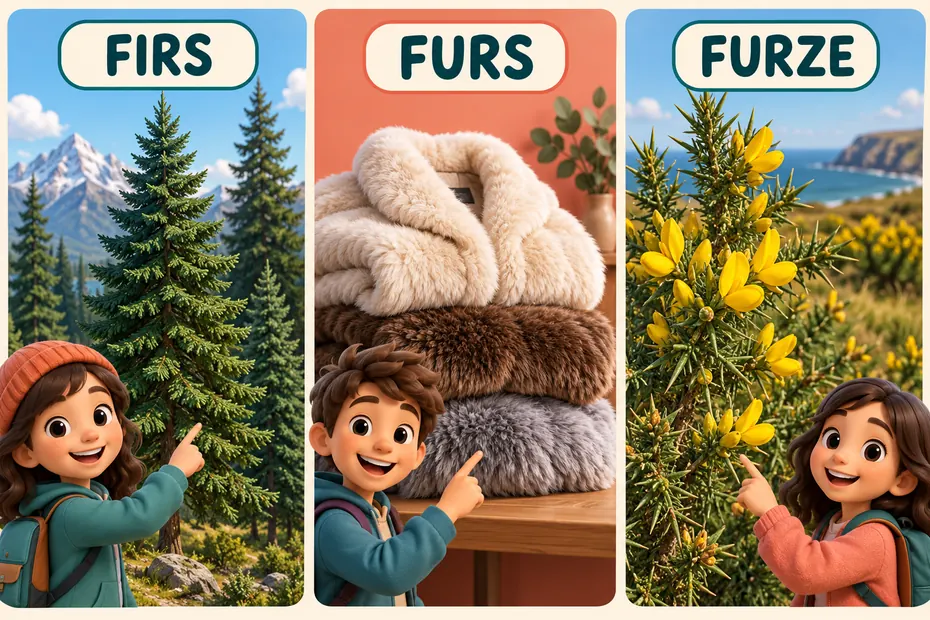
Firs, furs or furze: the quick answer
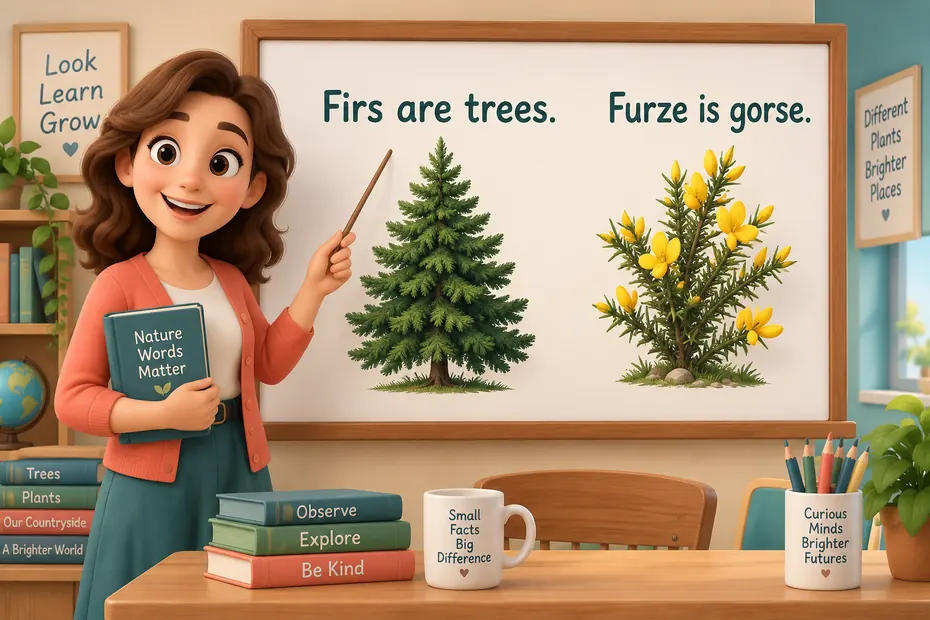
Firs are trees: Several firs grow beside the trail. Furs usually names pelts or fur garments: The museum displayed historical furs. Furze is another name for gorse, the spiny shrub with yellow flowers: Furze covered the hillside. Their familiar pronunciations sound alike, so context identifies the spelling.
Corrections to the older guide below: Douglas fir should not be treated as a member of the true-fir genus Abies merely because its common name includes fir. Also, an animal’s coat is ordinarily called fur, not automatically furs. Fir can additionally mean the tree’s wood. Those distinctions are more accurate than rules claiming the words have only one possible context.
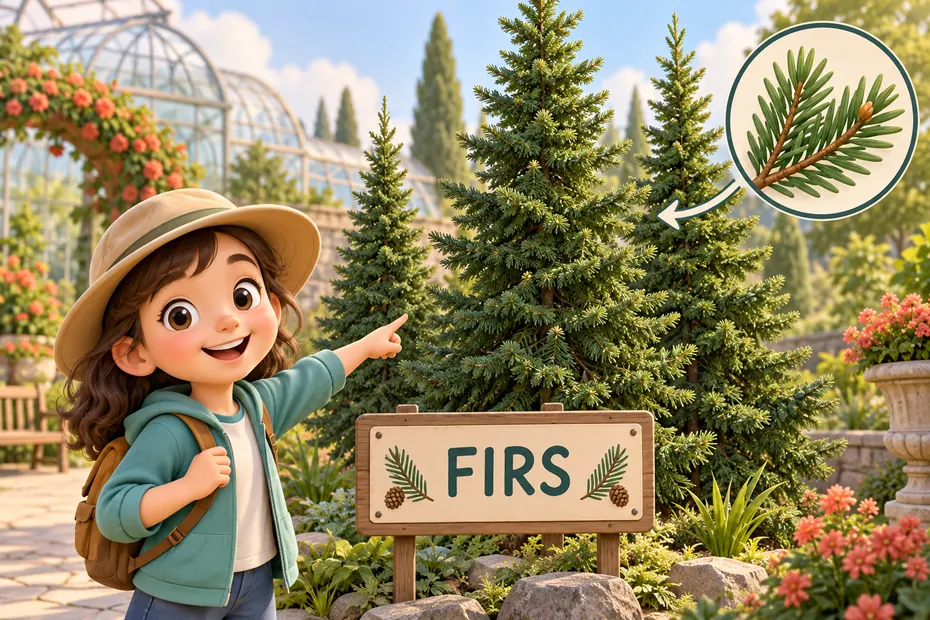
Key facts and a comparison table
| Word | Meaning cue | Typical grammar | Example |
|---|---|---|---|
| Firs | Evergreen trees | Plural of fir | The firs stood along the path. |
| Furs | Pelts or garments | Plural of fur in countable senses | The exhibit included furs. |
| Furze | Gorse shrub | Usually a collective plant name | The slope was covered in furze. |
Merriam-Webster’s fir entry distinguishes trees of Abies from other conifers that also carry fir in their common names, and includes the wood sense. Its fur entry includes an animal’s hairy coat, pelts and garments. The furze entry directs readers to gorse.

Firs: the plural tree spelling
Use one fir and several firs when counting trees. For example, The gardener planted a fir describes one tree, while The gardener planted three firs describes three. The spelling does not become furs because the trees look soft or because the sentence is spoken aloud.
True firs belong to Abies. However, everyday common names are not a complete botanical classification system. Douglas fir appears in the dictionary as an example from another genus. If your sentence depends on scientific identification, use the correct botanical name rather than inferring it from the word fir alone.
The singular word fir can also identify wood: The shelf is made of fir. That is a material use, so it normally does not need a plural s. Compare We saw several firs with We used fir for the frame. The first counts trees; the second names material.
Fur and furs: animal coats and countable items
For the hair covering an animal, fur is commonly a mass noun: The rabbit has soft fur. Even with several animals, The rabbits’ fur was soft is a natural construction. An apostrophe identifies possession in rabbits’; it does not change fur into a tree word.
Furs is useful when counting or grouping pelts or fur garments. A historical account might say The traders carried furs, while a clothing description might refer to a collection of furs. Those examples name items rather than each individual hair on an animal.
When describing imitation material, write faux fur if that distinction matters. A photograph or illustration of a plush garment does not establish its material. Likewise, a vocabulary guide should not assume every item described as fur has the same origin. State the intended material clearly when the reader needs that information.
Furze: the shrub name
Furze refers to gorse. The gorse definition identifies a spiny shrub with yellow flowers, particularly Ulex europaeus, while recording a broader use for related plants. Therefore, avoid using furze for any yellow-flowered shrub merely because its flowers look similar.
Useful sentence patterns include a patch of furze, furze bushes, and furze along the path. In The hillside was covered in furze, the word names the vegetation collectively. If you need to count individual plants for a general audience, three furze bushes is clearer than forcing an unfamiliar plural.
The word’s spelling does not establish medicinal effects or folklore claims. The older passage mentions such topics, but those references should not be read as evidence of a health benefit. For this spelling comparison, the shrub meaning and clear landscape examples provide the relevant information.
A simple proofreading method
First identify what the sentence names: trees, animal material or garments, or gorse. Next check number and construction. More than one tree takes firs; an animal’s coat usually takes fur; countable pelts or garments can take furs; gorse can be called furze.
- The forest contains tall furs. For trees, change furs to firs.
- The cat’s fir is soft. For the animal coat, change fir to fur.
- Yellow furze blossoms lined the path. This is the shrub spelling.
- The cabinet is made of fir. This uses the wood sense.
Frequently asked questions
Do firs, furs and furze sound alike?
In their familiar pronunciation, yes. Their meanings determine the spelling.
What is the singular of firs?
Fir. It can name one tree or the wood as a material.
Should I write a rabbit’s fur or furs?
For its hairy coat, rabbit’s fur is the ordinary choice.
Is furze the same as gorse?
Yes. Furze is another name for gorse.
Are all trees called fir members of Abies?
No. Some common names, including Douglas fir, use fir for conifers from other genera.
Are you confused about when to use “firs,” “furs,” or “furze”? Don’t worry, I’ve got you covered. In this text, I’ll break down the differences between these commonly confused words and provide you with some simple guidelines for using them appropriately. Whether you’re a writer, a student, or just someone who wants to improve their language skills, understanding the nuances of these words is essential. So, let’s immerse and unravel the mysteries of “firs,” “furs,” and “furze.” By the end of this article, you’ll be able to confidently choose the right word for any situation.
Key Takeaways
- “Firs,” “furs,” and “furze” are commonly confused words due to their similar spellings and pronunciations.
- “Firs” are evergreen trees belonging to the genus Abies, used as Christmas trees and valued for their scent.
- “Furs” refer to animal skins with soft, dense hair still attached, used for clothing and accessories.
- “Furze” is a thorny shrub with bright yellow flowers, native to Europe and known for its ability to grow in poor soil conditions.
- Understanding the distinctions between these words is essential for accurate communication.
- When using these words, it’s important to consider their specific definitions and contexts to avoid confusion.
What are “firs,” “furs,” and “furze”?
“Firs,” “furs,” and “furze” are three words that are commonly confused in English due to their similar spellings and pronunciations. Understanding the differences between these words is important for proper usage in writing and communication. Let’s investigate into the definitions of each word to gain a clearer understanding.
- Firs: Firs are a type of evergreen tree belonging to the genus Abies. They are characterized by their conical shape, needle-like leaves, and pinecone fruits. Firs are commonly used as Christmas trees and are known for their pleasant scent. They can be found in various species, such as the popular Balsam Fir or the majestic Douglas Fir.
- Furs: Furs, on the other hand, refer to the skins of animals, typically with the soft, dense hair still attached. These animal skins are valued for their warmth and aesthetic appeal. Furs have been used throughout history for clothing, accessories, and decorations. Examples of animals whose fur is commonly used include mink, fox, and chinchilla.
- Furze: Furze, also known as gorse, is a thorny shrub with bright yellow flowers. It belongs to the genus Ulex and is native to parts of Europe and North Africa. Furze is known for its ability to grow in poor, acidic soil, making it a resilient plant. It is often found in coastal areas and heathlands, adding vibrancy to the world with its eye-catching blooms.
Understanding the distinctions between these words is vital to avoid confusion and ensure accurate communication. Let’s now explore the differences further, so you’ll know exactly when to use each term.
Differences between “firs,” “furs,” and “furze”
As an expert blogger, I’ve come across many instances where people confuse the words “firs,” “furs,” and “furze.” In this section, I’ll jump into the differences between these three commonly confused words and provide you with the tools you need to use them appropriately. Let’s get started!
Firs: First, let’s talk about “firs.” The word “firs” refers to a type of evergreen tree that belongs to the genus Abies. These trees are known for their needle-like leaves, which stay green all year round. They are often used as Christmas trees due to their conical shape and pleasant aroma. It’s important to note that “firs” always refers to the trees and not any other context.
Furs: Now, let’s move on to “furs.” The word “furs” is most commonly used to describe the skins of animals, specifically those that have been removed from the animal and have undergone a process called fur dressing. Fur dressing involves preserving and softening the animal hides to create luxurious and warm garments. The word “furs” is also used to refer to the trade and industry related to these animal skins.
Furze: Finally, we have “furze.” “Furze” is a thorny shrub that goes by the scientific name Ulex europaeus. This plant is known for its ability to grow in poor soil conditions and is often found in coastal areas or in open heathland. “Furze” is also referred to as gorse and is characterized by its yellow flowers that bloom throughout the year. It’s important to note that “furze” should be used when discussing this specific plant and not when referring to other shrubs or plants.
Understanding the differences between “firs,” “furs,” and “furze” is crucial in avoiding confusion and ensuring accurate communication. With this knowledge, you’ll be able to use these words appropriately in your writing and conversations.
Next, let’s dive deeper into the characteristics and uses of each word.
Guidelines for using “firs”
When it comes to using the word “firs” correctly, there are a few guidelines to keep in mind. Let me break it down for you:
- Definition of “Firs”: “Firs” refers to a group of evergreen trees belonging to the genus Abies. These trees are known for their cone-shaped crowns and flat, needle-like leaves. They are typically tall and majestic, and their branches grow in a horizontal manner.
- Distinguishing Characteristics: One of the key characteristics of “firs” is the presence of resin blisters on their bark. These blisters are filled with a sticky, fragrant sap. Also, “firs” have erect cones that stand upright on the branches.
- Common Uses: “Firs” serve various purposes. They are often used as Christmas trees due to their evergreen nature and pleasing aesthetic. Also, the wood from “firs” is highly valued for its quality and is used in the construction industry for making furniture, doors, and even musical instruments.
- Tips for Usage: When using the word “firs,” it’s essential to remember, it refers specifically to the evergreen trees in the Abies genus. Avoid confusing it with other similar-sounding words like “furs” or “furze.” Understanding this distinction will help you communicate accurately and avoid confusion.
- Examples in Context: To illustrate the correct usage of “firs,” here are a few sentences:
- “We went to the local tree farm and picked out a beautiful fir for our Christmas celebration.”
- “The smell of the fir filled the air as we decorated it with lights and ornaments.”
- “The wood from these firs is excellent for crafting high-quality furniture.”
Guidelines for using “furs”
When it comes to confusing words, “furs” is one that often causes confusion. Let me clarify the usage and provide you with some guidelines to use it appropriately.
Definition of “Furs”
“Furs” typically refers to the soft, thick hair that covers the bodies of animals. It is commonly used to make luxurious garments, accessories, and home decor items.
Difference Between “Furs” and “Firs”
It’s important to note the key difference between “furs” and “firs.” While “furs” pertains to animal hair, “firs” refers to a group of evergreen trees belonging to the genus Abies.
How to Use “Furs” Correctly
To ensure proper usage of “furs,” keep the following guidelines in mind:
- Specific Animal Reference: When referring to the furry covering of a particular animal, use the word “furs.” For example, “I adore the luxurious furs of minks.”
- Plural Form: Use “furs” when talking about multiple animal pelts or when referring to a collection or industry involving various types of animal hair. For instance, “The boutique offers a wide selection of furs.”
- Indicating Material: When discussing products made from animal pelts, such as coats, hats, or accessories, “furs” is the appropriate term. For example, “She wrapped herself in furs to keep warm during the winter.”
Keeping these guidelines in mind will help you effectively use the word “furs” in your writing or conversations. Remember, precision in language is crucial, and understanding the distinctions between similar words helps to avoid confusion and enhance communication.
Guidelines for using “furze”
As we investigate into the world of commonly confused words, let’s shine the spotlight on “furze.” What exactly is “furze,” and how can we use it appropriately? Here are the guidelines to help you navigate:
- Definition of “furze”: “Furze” refers to a type of shrub with bright yellow flowers. It is also known as “gorse” or “whin,” and its scientific name is Ulex europaeus. This prickly plant is native to Europe and commonly found in heathlands, moorlands, and coastal areas.
- Difference between “furze” and “firs”: It’s crucial to distinguish between “furze” and “firs.” While “furze” is a type of shrub, “firs” are a group of evergreen trees, such as the Douglas fir or the balsam fir. Remember, “furze” is a plant, and “firs” are trees.
Let’s explore the proper ways to use “furze” in various contexts:
- Referring to the plant: Use “furze” when talking about the shrub itself, its characteristics, or its habitat. For example, “I spotted a vibrant patch of furze blooming on the hillside” or “The prickly branches of the furze provided shelter for small birds.”
- Describing landscapes: When describing a world or setting that prominently features furze, include the word to paint a vivid picture. For instance, “The rugged moorland was adorned with golden furze bushes, creating a stunning contrast against the green grass.”
- Natural remedies or folklore: “Furze” holds significance in traditional healing practices and folklore. If you’re writing about medicinal uses or cultural beliefs associated with the plant, make sure to use the term correctly. For example, “According to folklore, carrying a sprig of furze can bring good luck.”
Remember, precision in language enhances communication and prevents confusion. With these guidelines, you’ll confidently incorporate “furze” into your writing, giving your words a touch of botanical flair and accuracy.
Keep learning and exploring the intricacies of language to further enrich your writing skills.
Conclusion
In this text, I have discussed the proper usage of the words “firs,” “furs,” and “furze.” By providing clear guidelines and explanations, I have aimed to help you understand the distinctions between these similar words and use them appropriately in your writing.
I have emphasized the difference between “furze” and “firs,” clarifying that “furze” refers to a type of shrub with bright yellow flowers, while “firs” refers to a group of evergreen trees. This distinction is important to ensure precision in language and avoid confusion.
Besides, I have provided specific situations where the word “furze” should be used, such as when referring to the shrub itself, describing landscapes that prominently feature furze, or discussing natural remedies or folklore associated with the plant.
By following these guidelines, you can enhance your communication skills and ensure that your writing is clear and accurate. Remember, language is a powerful tool, and understanding the nuances between similar words can greatly impact the effectiveness of your message.
Frequently Asked Questions
Q: What does the word “furze” refer to?
A: “Furze” refers to a type of shrub with bright yellow flowers, also known as “gorse” or “whin.”
Q: What is the difference between “furze” and “firs”?
A: “Firs” refers to a group of evergreen trees, while “furze” refers to a specific type of shrub.
Q: How should I use the word “furze” correctly?
A: You can use “furze” when referring to the shrub itself, describing landscapes with prominent furze, or discussing natural remedies and folklore associated with the plant.
Q: Why is precision in language important when using words like “furze”?
A: Precision in language helps to avoid confusion and enhances communication, especially when dealing with similar words that have distinct meanings.


