Quince vs Quints: Fruit, Siblings and Clear Spelling
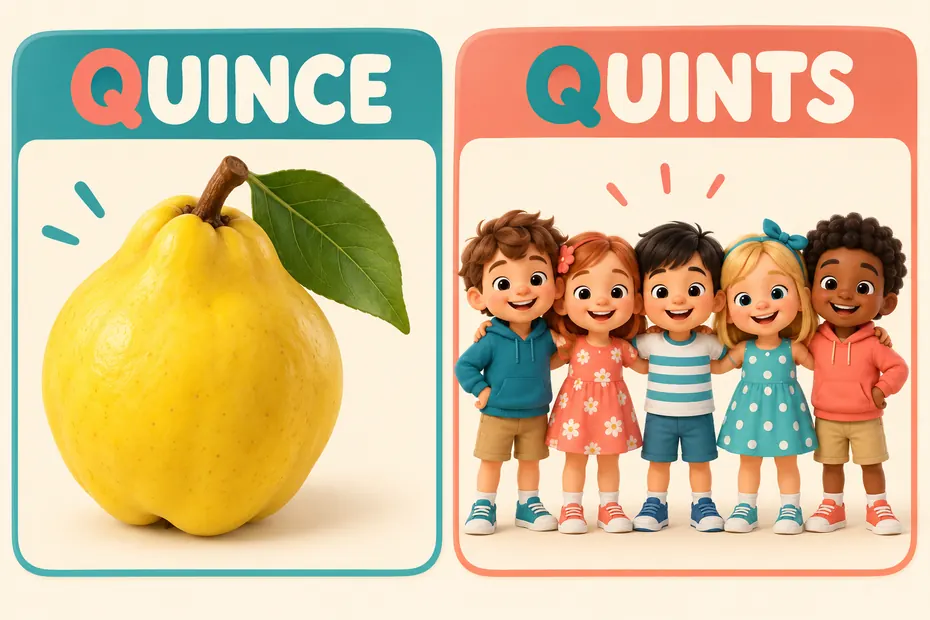
Quince names a fruit or the tree bearing it. Its fruit plural is quinces. Quints commonly means quintuplets: five offspring from one pregnancy. One member of that group is a quint. These words can sound very similar, but the sentence’s meaning and singular-or-plural grammar distinguish them.
Clarification of the retained article: five siblings born in different pregnancies are not quintuplets, and “born at the same time” should not be read as literally at the same instant. Quints also has specialist senses beyond siblings. Quince can name the tree, not only the fruit. The original family and hospital examples are illustrations, not documented birth announcements.
Key Facts and Comparison Table
| Word | Number | Common meaning | Example |
|---|---|---|---|
| Quince | Singular | A fruit or its tree | A quince fell from the tree. |
| Quinces | Plural | More than one fruit or tree | The basket holds three quinces. |
| Quint | Singular | One quintuplet | One quint waved at the camera. |
| Quints | Plural | Quintuplets | The quints started school together. |
Quince: Fruit and Tree
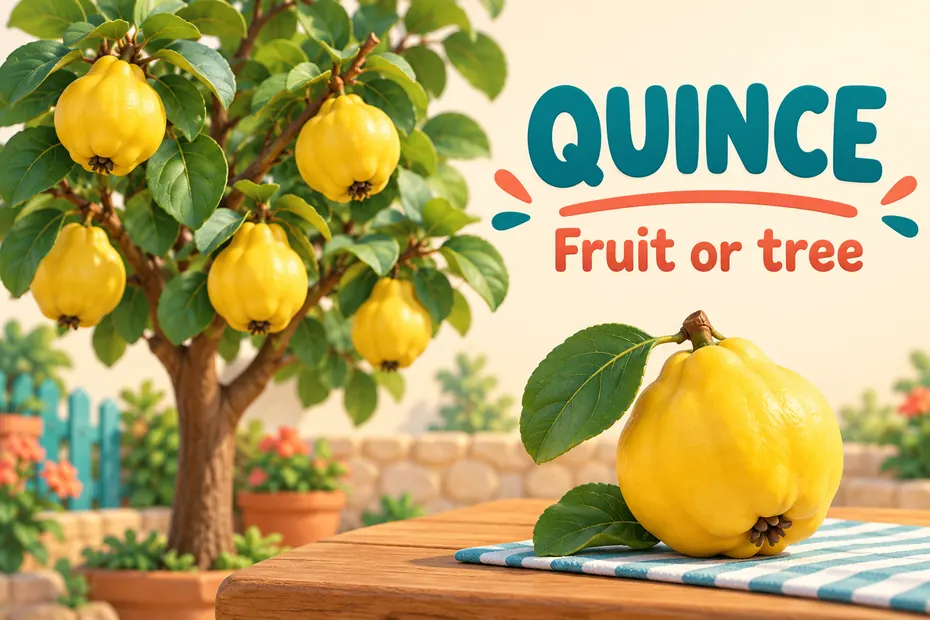
A quince is the fruit of a tree called Cydonia oblonga, and the same word can name the tree. Merriam-Webster describes the fruit as hard-fleshed and yellow, with preserves as a common use, in its quince entry. This guide focuses on choosing the word rather than providing a recipe or identifying every similarly named ornamental plant.
“We bought a quince” normally means one fruit. “We planted a quince” uses context to suggest the tree. For extra clarity, write “a quince tree” when discussing planting. In “quince jelly,” the word identifies the fruit ingredient rather than a number of siblings.
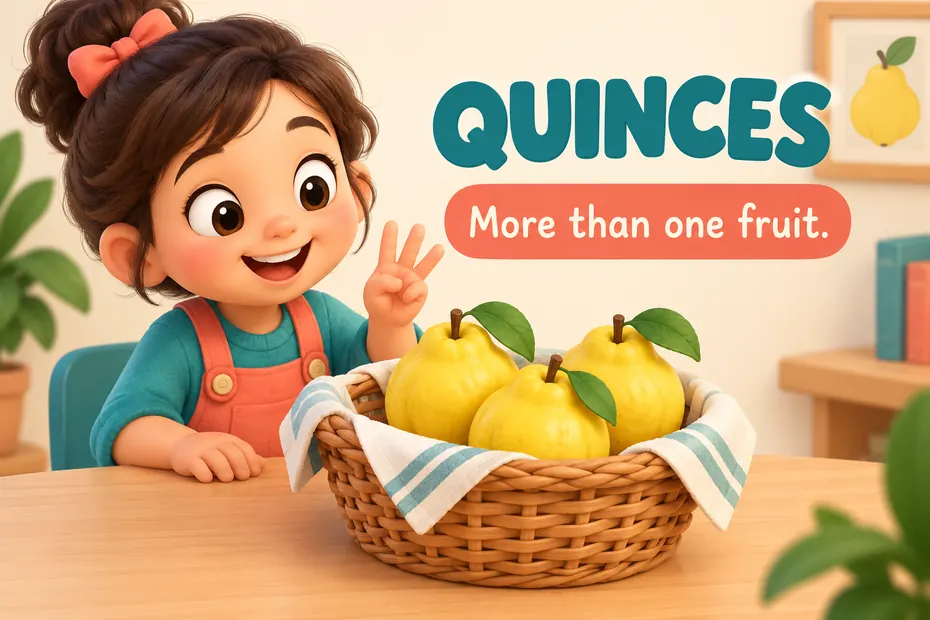
The count plural is quinces: “The basket contains three quinces.” The singular word’s final sound does not make it plural. “This quince is large” is ordinary singular agreement; “These quinces are large” is plural agreement.
As an ingredient name, quince can also occur without an article: “The filling contains quince.” That construction does not require the reader to count individual fruits. Compare “We sliced two quinces” with “We added quince to the filling.” The second describes an ingredient, while the first counts items.

Quints: Quintuplets, Not Just Any Five Children
Quint is an informal shortened form of quintuplet, and quints is its plural. Merriam-Webster’s quint entry records that shorthand, while its quintuplet entry supplies the underlying term.
Use quints when the context actually establishes quintuplets. A photograph of five children does not by itself prove that relationship. “Five siblings posed together” is appropriate if that is all the caption writer knows. “The quints posed together” adds a specific claim about their birth grouping.
For a general audience, introduce the full word first: “The quintuplets, often called the quints in the family’s account, began school together.” Thereafter the shorthand can be clear. In a formal report, the full word may avoid confusion with a specialist use of quint.
Quints remains a plural word when referring to the children: “The quints are in the photograph.” If you use “a set of quints,” the head noun is set: “A set of quints is featured in the story.” Choosing the sentence’s actual subject helps avoid agreement mistakes.
Other Meanings of Quint
The dictionary also records quint for a five-revolution jump in certain sports and for a multipurpose firefighting vehicle. Their plurals are also quints. Thus, “The department purchased two quints” may concern fire vehicles rather than children. The surrounding words determine which sense applies.
You do not need those specialist meanings to answer a fruit-versus-siblings question, but they explain why “quints always means five siblings” is too absolute. In specialist writing, define an unfamiliar term at its first appearance. Avoid inventing a family relationship when a text is actually about equipment or sport.
Pronunciation and a Useful Memory Aid
Merriam-Webster records quince with a pronunciation that may include a brief t sound before the final s. Quints also ends in a t-s sequence. They may sound alike or nearly alike in ordinary speech. Exaggerating the sound is less useful than checking whether the sentence concerns fruit, a tree, or quintuplets.
Remember quint as the singular member of the quintuplet group and quince as the fruit spelling. Then check the ending: more than one fruit gives quinces, while more than one quint gives quints.
Quick Practice
- “The recipe calls for two ___.” Use quinces when counting fruits.
- “The ___ celebrated their birthday together.” Use quints if the children are quintuplets.
- “We planted a ___ tree.” Use quince.
- “One ___ appears on the left of the family photo.” Use quint if one quintuplet is meant.
Frequently Asked Questions
Is quince already plural?
No. A quince is singular in ordinary count use. The fruit plural is quinces.
Does quints mean any five siblings?
No. In the family sense it is shorthand for quintuplets, rather than five siblings born in separate pregnancies.
Can quince name a tree?
Yes. “Quince tree” makes that sense especially clear.
What is one of the quints called?
A quint, or more fully a quintuplet.
Does quints have other meanings?
Yes. Specialist contexts may use the plural for particular sports jumps or firefighting vehicles.
Earlier Article, Preserved for Reference
The original text follows. Use the updated number, tree and specialist-sense distinctions when choosing a spelling.
Key Takeaways
- Quince is a fruit that is often used in cooking, while quints refer to a set of five siblings born at the same time.
- Understanding the difference between quince and quints is essential for accurate communication.
- Quince has a tart flavor and is used to make jams, jellies, and desserts, while quints are a rare occurrence and attract significant attention.
- Quince is versatile and can be used in both sweet and savory dishes, adding a unique taste and aroma to the meal.
- Quints are commonly mentioned in media, personal conversations, and medical/scientific research when discussing families with five siblings born together.
What are quince and quints?
When it comes to words that are commonly confused and misused, “quince” and “quints” often fall into that category. Although they may sound similar, they have distinct meanings and uses. Let’s take a closer look at the difference between quince and quints.
Definition of Quince: Quince is a fruit that belongs to the same family as apples and pears. It has a unique flavor and is often used in cooking, especially for making jams, jellies, and desserts. Quinces have a distinctive yellow color, similar to a yellow pear. They are known for their fragrant aroma and tart taste.
Definition of Quints: On the other hand, “quints” is a shortened term for “quintuplets.” Quintuplets refer to a set of five siblings who are born from the same pregnancy. It is a rare occurrence to have quintuplets, as most pregnancies result in a single birth or multiples of two (twins, triplets, etc.). Quintuplets often receive significant attention due to their rarity and the unique challenges faced by their families.
As you can see, the difference between quince and quints lies in their meanings and contexts. While quince refers to a fruit, quints refer to a set of five siblings.
Understanding the distinction between these words is essential to ensure accurate communication. Now that we have established the definitions of quince and quints, let’s investigate deeper into their usage and examples in the next sections of this article. By gaining this knowledge, you’ll be able to use these words confidently and appropriately in your writing and conversations.
Stay tuned to learn more about how to use quince and quints correctly and avoid any potential confusion.
The difference between quince and quints
When it comes to English vocabulary, there are often words that sound similar but have completely different meanings. One common confusion is between the words “quince” and “quints.” To communicate accurately and avoid misunderstandings, it’s important to understand the distinction between these two words.
What is a quince?
A quince is a fruit that is often used in cooking. It is yellow-green in color and has a unique tart flavor. Quinces are commonly used to make jams, jellies, and desserts. They are not typically eaten raw due to their hard texture, but they become soft and edible when cooked.
What are quints?
On the other hand, quints refer to a set of five siblings born from the same pregnancy. It is derived from the word “quintuplets,” which means a group of five babies born at the same time. Quints are a rare occurrence and often attract significant attention. The birth of quints can present unique challenges for parents and medical professionals.
Now that we understand the basic difference between quince and quints, let’s explore some examples to further solidify our understanding.
Here are a few examples of how to use these words correctly:
- Quince: I picked up some fresh quinces from the farmers’ market to make a quince tart.
- Quince: The quince tree in my garden produces delicious fruit every year.
- Quints: The local hospital celebrated the birth of quints, who made national headlines.
- Quints: The Johnson family, proud parents of quints, have their hands full taking care of five babies.
As you can see, using the correct word in the right context is essential for effective communication. By clearly distinguishing between the meanings of “quince” and “quints,” we can avoid confusion and ensure that our words convey exactly what we intend.
Understanding the difference between commonly confused words is one step towards improving your communication skills. Stay tuned for more articles where we explore other pairs of words that often trip us up.
When to use quince
Quince, as a delicious fruit, has a variety of potential uses in cooking and baking. Here are some instances where using “quince” is appropriate:
- Definition of Quince: Quince refers to a yellow-green fruit with a tart flavor that is often used to make jams, jellies, and desserts. It is a versatile ingredient that adds a unique twist to culinary creations.
- Difference between Quince and Other Fruits: While many fruits can be used in cooking, quince stands out for its distinctive taste and texture. It has a tangy flavor that is often compared to a mix of apple and pear. Also, quince has a tough and fibrous flesh that softens during cooking, adding richness and depth to recipes.
- Usage in Traditional Recipes: Quince has a long history of being used in traditional recipes around the world. It is a key component in popular dishes like quince paste, quince tart, and quince jelly. These recipes take advantage of the fruit’s natural pectin content, which helps create a smooth and spreadable consistency.
- Enhancing Sweet and Savory Dishes: Quince can be used in both sweet and savory dishes. It pairs well with meats like pork and lamb, adding a burst of flavor to savory stews and roasts. In sweet preparations, quince can be poached or baked to create aromatic desserts and preserves.
- Making Use of Quince’s Aromatics: Quince not only adds a unique taste to dishes, but it also releases a delightful fragrance while cooking. This aromatic quality enhances the overall sensory experience of the meal.
Understanding when to use the word “quince” allows for more accurate communication and opens up a world of culinary possibilities. Whether you’re looking to add a tangy twist to your desserts or elevate your savory dishes, quince is a versatile ingredient worth exploring.
Next, let’s shift our focus to the definition and usage of the word “quints” to avoid any confusion and ensure effective communication.
When to use quints
Quints and quince are two words that can easily be confused due to their similar sound. But, they have completely different meanings and usage in the English language. In this section, I’ll explain when it is appropriate to use the word “quints” and provide examples to clarify any confusion.
Definition of Quints
The word “quints” is a shortened form of the word “quintuplets.” It refers to a set of five siblings born at one birth to the same mother. Quints are a rare occurrence, but they have captured public fascination throughout history.
Usage of Quints
The word “quints” is specifically used when referring to a family or group of five siblings born at the same time. Here are some common instances where the word “quints” is appropriate:
- Media References: The term “quints” is often used in media, such as newspapers, magazines, and online articles, to discuss notable cases of quintuplets being born. For example, “The Smith family welcomed quintuplets yesterday.”
- Personal Conversations: In everyday conversations, you may come across situations where you discuss or share stories about quintuplets. When talking about a family with five siblings born together, you can use the word “quints” to describe them. For instance, “Did you hear about the Jones family? They have quintuplets!”
- Medical and Scientific Research: Quintuplets have attracted significant attention in the medical and scientific communities. Researchers and healthcare professionals may use the term “quints” when studying or conducting research on multiple births.
It’s important to understand the distinction between “quints” and “quince” to avoid confusion and accurately communicate your message.
Remember, “quince” refers to a yellow-green fruit used in cooking and baking, while “quints” refers to a set of five siblings born at the same time. By using these words appropriately, you can ensure effective communication and enhance your understanding of the English language.
Conclusion
To conclude, understanding the appropriate usage of the words “quince” and “quints” is essential for effective communication. Quince, a versatile fruit with a tart flavor, adds a delightful fragrance and can be used in a variety of sweet and savory dishes. Learning to incorporate quince into your cooking and baking opens up a world of culinary possibilities.
On the other hand, “quints” refers to a set of five siblings born at one birth. It is important to differentiate between “quints” and “quince” to avoid confusion and accurately convey your message. Whether you are referring to media references, personal conversations, or medical and scientific research, using the word “quints” correctly is crucial.
By understanding the distinctions and nuances between these two words, you can ensure that your communication is clear and precise. So, next time you come across the word “quince” or “quints,” you’ll have the knowledge to use them appropriately and confidently.
Frequently Asked Questions
Q: What is quince?
A: Quince is a yellow-green fruit with a tart flavor. It is commonly used to make jams, jellies, and desserts. It has a unique taste and texture and adds a delightful fragrance while cooking.
Q: How is quince used in cooking?
A: Quince can be used in both sweet and savory dishes. It is often used to make jams, jellies, desserts, and even savory dishes like roasted meats and stews.
Q: What is the difference between quince and quints?
A: Quince refers to a fruit used in cooking, while “quints” is a shortened form of “quintuplets,” referring to a set of five siblings born at the same birth to the same mother.
Q: When should I use the word “quints”?
A: The word “quints” should be used when referring to a set of five siblings born at the same birth. It can be used in media references, personal conversations, medical and scientific research, and other relevant contexts.
Q: Why is it important to understand the distinction between quince and quints?
A: Understanding the distinction between quince and quints is important to avoid confusion and accurately communicate one’s message. Using the correct term ensures effective communication and prevents misunderstanding.


