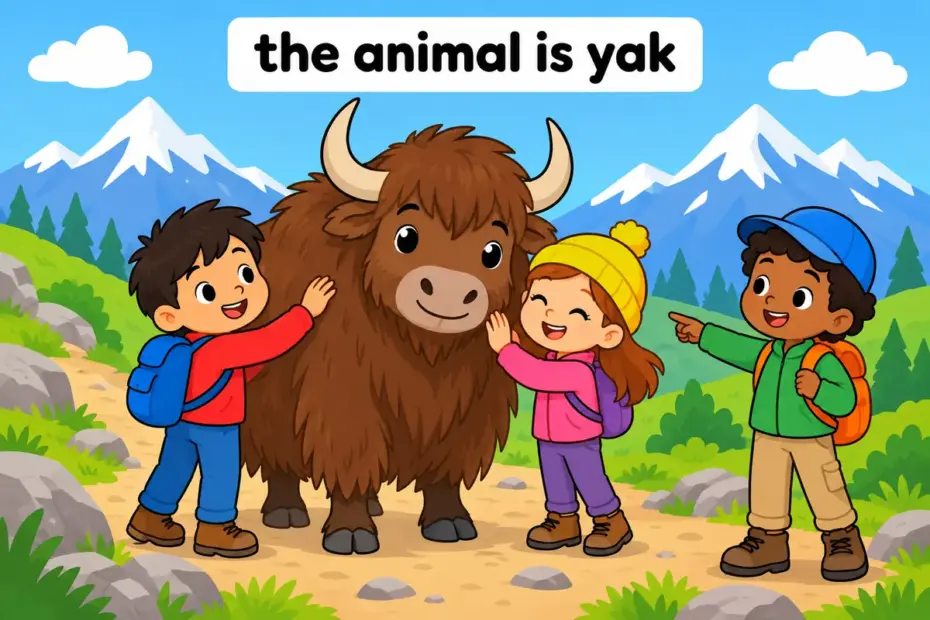
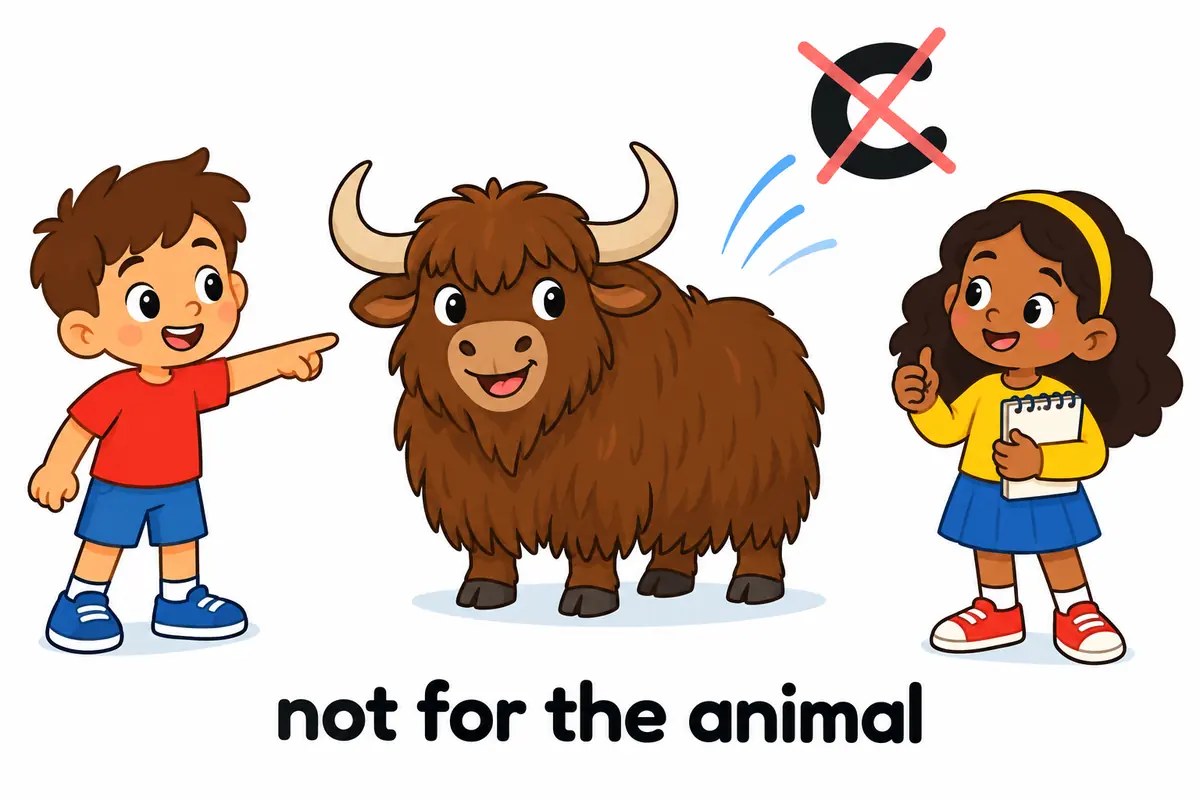
Yack vs yak is easy to settle: write yak for the long-haired animal and for the usual verb meaning to talk at length, and treat yack as an accepted variant of that verb only. The animal never takes a c. Double the k before -ing in either spelling.
Yack vs Yak at a glance
- The animal is always yak; yack never names the animal.
- The chatter verb is usually yak in edited writing, with yack an accepted variant.
- Both verb spellings double the k before -ing: yakking and yacking.
- The past tense follows the same pattern: yakked and yacked.
- The usual error is writing yack for the animal or yaking without the doubled k.
What do yack and yak mean?
Yak is a noun naming a long-haired ox of Central Asia and a verb meaning to talk continuously about ordinary things. The Cambridge entry for yak records both the animal and the talking verb, while the separate entry for yack lists only the talking sense. The yak page pairs the ox with its sentences, and for the talking sense the plainer word chatter is more common in formal writing.
| Sense | Spelling | Example sentence |
|---|---|---|
| The animal | yak only | A yak grazed on the high pasture. |
| Talk at length (verb) | yak (usual), yack (variant) | They yakked about the match for an hour. |
| One long talk (informal noun) | yak | We had a good yak over tea. |
Yack vs yak: the core difference
The only real decision is the sense, because the letter c appears in just one of them. The table below sets the two spellings side by side across the points that matter most.
| Point of comparison | Yak | Yack |
|---|---|---|
| Animal sense | The standard and only spelling | Not used for the animal |
| Chatter verb | Standard; the usual choice | Accepted variant |
| Part of speech | Noun and verb | Verb only |
| Edited prose | Preferred for both senses | Allowed for the verb |
| Plural of the animal | yaks | never for the animal |
| -ing form of the verb | yakking | yacking |
| Register | Neutral | Informal |
Choose yak for the animal and for most edited writing; choose yack only when you want the informal verb spelling and your reader will accept a variant.
Which should you use?
Match the spelling to the situation. In every case the animal keeps its single form.
| Situation | Use | Why |
|---|---|---|
| School essay about the animal | yak | yack is not a spelling of the animal. |
| Text message about friends talking | either; yack is fine | the variant is accepted informally. |
| News or business writing | yak | edited prose prefers the standard spelling. |
| Story for young readers | yak | children meet the standard form first. |
| Crossword or word game | yak | the reference spelling is yak. |
How do you use yack and yak in a sentence?
The verb is intransitive, so it names the act of talking and then attaches a topic or a listener. British writers often prefer natter for friendly, unhurried talk.
| Pattern | Example | What it signals |
|---|---|---|
| yak about + noun | They yakked about the film for hours. | Names the topic. |
| yak away | The pair yakked away all afternoon. | Stresses continuous chatter. |
| a good yak (noun) | We had a good yak over tea. | Informal noun for one long talk. |
| yak to + person | She yakked to her sister on the phone. | Names the listener. |
| yack for the verb | He kept yacking during the film. | The accepted variant, informal. |
Yack vs yak: examples across contexts
Context decides which spelling feels natural. The examples below keep the animal and the chatter apart.
| Context | Example sentence | Why this works |
|---|---|---|
| Classroom | The class learned that a yak lives on high, cold ground. | Keeps the animal spelling fixed. |
| Workplace email | Please keep the meeting short; we do not need to yak for an hour. | Uses the verb in a mild instruction. |
| News report | A herd of yaks crossed the mountain road. | Uses the animal and its plural. |
| Travel writing | We watched a yak graze beside the trail. | Paints a scene with the animal. |
| Conversation | They yakked about the match until midnight. | Shows the verb with a topic. |
| Children story | The friendly yak shared its warm wool. | Gives the animal a gentle role. |
| Scientific writing | The yak is adapted to low oxygen at altitude. | Keeps the standard spelling in a report. |
| Social media | We yacked for hours about the new game. | Shows the accepted informal variant. |
| Editorial note | Writers who yack keep the c, but the animal never has one. | States the rule in one line. |
Word forms and grammar of yack and yak
The animal and the verb share a spelling, so the forms have to be read together. The informal gab is close in tone to the chatter verb.
| Form | Part of speech | Example |
|---|---|---|
| yak | noun (animal) | A yak stood by the tent. |
| yaks | noun (plural) | Two yaks climbed the ridge. |
| yak | verb (base) | They yak all day. |
| yakked | verb (past) | She yakked for an hour. |
| yakking | verb (-ing) | Stop yakking and help. |
| yack, yacked, yacking | verb (variant) | He yacked on the phone. |
| yaking | non-standard | Write yakking, not yaking. |
Common mistakes with yack and yak
Most errors come from mixing the two senses or from forgetting the doubled k. Related verbs such as babble and gossip describe different kinds of talk and never describe the ox.
I saw a yack on the mountain.I saw a yak on the mountain. Rule: the animal is always yak.Stop yaking and listen.Stop yakking and listen. Rule: double the k before -ing.The yacks grazed quietly.The yaks grazed quietly. Rule: the animal plural is yaks, never yacks.We had a good yakking over tea.We had a good yak over tea. Rule: the noun is yak, not yakking.He yak about football all day.He yaks about football all day. Rule: third person singular adds s.
Practice using yack and yak
- Fill in the blank: A ____ grazed on the high pasture.
- Choose the better spelling: which is standard for the animal? (yak / yack)
- Correct the error: Stop yaking and listen.
- Build a sentence: use yak about about a school trip.
- Spot the register: which fits a school report? (A) A herd of yaks crossed the pass. (B) The yaks were, like, totally chilling.
- Fill in the blank: They ____ about the match for an hour.
Answers
- yak – the animal spelling never takes a c.
- yak – yack is only a variant of the talking verb.
- Stop yakking and listen. – the -ing form doubles the k.
- Example: The children yakked about their school trip for hours. – yak about names the topic.
- (A) – it keeps the standard spelling and a neutral tone.
- yakked – the past tense doubles the k.
The bottom line
Choosing between yack vs yak is simple once the sense is clear: the animal is always yak, and the chatter verb is yak in edited writing, with yack an accepted variant. Double the k before -ing whichever verb spelling you use. When in doubt, choose yak, because it is correct in every context, animal or chatter. The only time yack earns its place is an informal mention of talking.
Frequently asked questions about yack vs yak
Which spelling should I use in a school essay?
Use yak. School and exam writing counts as edited prose, where the standard spelling is expected for both the animal and the verb. A marker who sees yack in an essay about the animal will treat it as a spelling error, and even in the talking sense the safer choice is the familiar form that every dictionary lists first.
Why does the talking verb have two accepted spellings?
English borrows the word and then settles its spelling slowly, so a common informal verb can keep two forms for a long time. Both yak and yack appear in dictionaries for the talking sense, which makes yack a recognised variant rather than a mistake. The animal sense never developed that double, so it stays fixed.
Is the plural of the animal yaks or yak?
Both yaks and yak are used for more than one animal. Yaks is the ordinary plural, as in a herd of yaks, while yak can appear unchanged after a number in some writing about the species. What you must avoid is yacks, because the c belongs only to the talking verb and never to the animal.
How is the chatter verb different from talk?
Talk is the neutral, general verb for speaking, while the chatter verb adds a tone of idle, continuous conversation about ordinary things. Saying that people yakked about a film suggests light, unhurried talk, not a serious discussion. Use talk when you want no comment on the mood, and the chatter verb when the tone matters.
Yack vs Yak: Variants, Meanings and Correct Forms
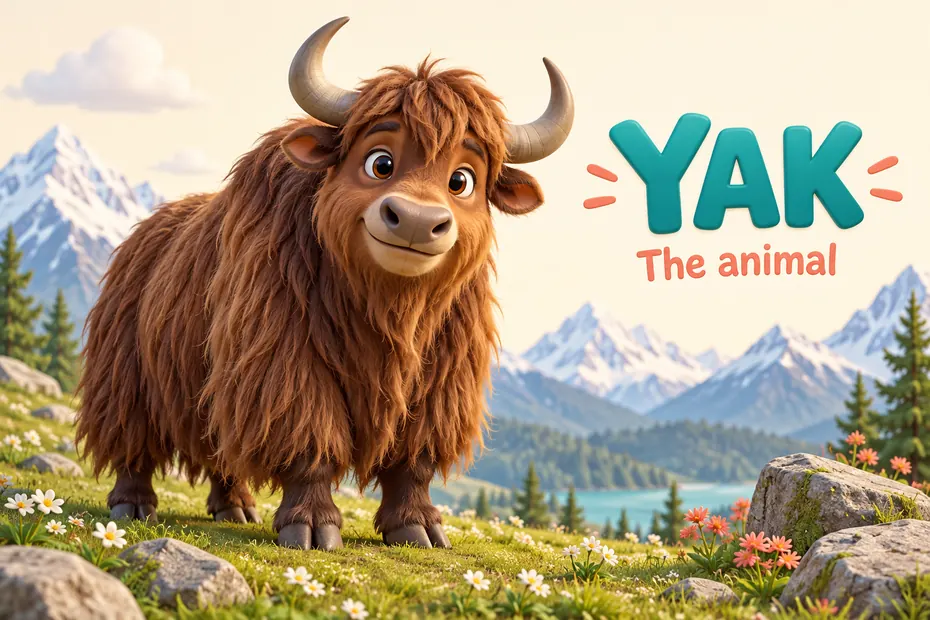
Yak names a long-haired bovine animal. For informal persistent talking, yak and yack are alternative spellings of the same word; both can be nouns or verbs. Use yak for the animal. For chatter, either recorded spelling can work, although yak is the main spelling in Merriam-Webster.
Correction to the retained article: there is no reliable “friendly yak versus purposeless yack” distinction. Yak is not exclusively a noun, and its final k is not silent. Yak and yack normally have the same pronunciation. The earlier form yaking should be yakking for the chatter verb.
Key Facts and Comparison Table
| Meaning | Spelling | Grammar | Example |
|---|---|---|---|
| The animal | Yak | Noun | A yak grazed on the hillside. |
| Persistent talking | Yak or yack | Verb | They yak about their hobbies. |
| Persistent talk | Yak or yack | Noun | The conversation became endless yak. |
| Past talking | Yakked or yacked | Past-tense verb | We yakked after lunch. |
| Ongoing talking | Yakking or yacking | -ing form | They were yakking in the hallway. |
Merriam-Webster’s yak entry records the animal noun and the chatter noun and verb. Its yack lookup identifies yack as a less common variant of the chatter word. The recorded animal plural is yaks, also yak.
Yak: The Animal Sense
In “The illustration shows a yak,” the word names an animal. A following description such as shaggy, grazing, or curved horns reinforces that sense. “The herd contains several yaks” uses a plural noun. A noun can appear as a subject, an object, or part of a longer phrase.
Use the conventional spelling yak for an animal label, school report or wildlife caption. “A yack in the mountain pasture” is not the spelling choice supported by the dictionary entries cited here for that sense. The talk-related variant does not automatically extend to the animal name.
Animal context does not make the word inherently formal. “Look at that fluffy yak!” is informal speech using the animal noun. Formality depends on the wording and setting, rather than the absence of the letter c.

Yak and Yack: The Chatter Sense
“We spent the afternoon yakking” describes persistent talking. “We spent the afternoon yacking” uses the alternative spelling. Do not invent a difference in friendliness, duration or meaningfulness solely from those spellings. The surrounding sentence supplies the speaker’s attitude.
Compare these original examples: “We enjoyed yakking about old school memories” sounds friendly. “Please stop yakking while I explain the schedule” sounds impatient. The word is the same; enjoyment and interruption change its tone. The alternative yack can occur in either kind of context.
These terms are informal and may sound dismissive when applied to another person’s contribution. In a meeting record, “The discussion continued for twenty minutes” gives a more neutral description than “They yakked for twenty minutes.” In dialogue or a casual personal story, the informal wording may fit the voice.
Do not use yak or yack as a precise synonym for lying. “He yakked his way through the interview” suggests much talking, possibly with a critical tone. It does not establish that his statements were false. If accuracy matters, describe the actual behavior: answered at length, changed the subject, or made an unsupported claim.
Spelling the Verb Forms
The yak spelling doubles the final k before the endings in yakked and yakking. The yack spelling already ends in ck, giving yacked and yacking. Write “We were yakking,” not the retained article’s “We were yaking.”
For a consistent paragraph, choose one variant family. “They yak every week, yakked yesterday and are yakking now” maintains yak. “They yack every week, yacked yesterday and are yacking now” maintains yack. A quotation may preserve the speaker’s or original writer’s spelling.
Subject agreement works normally: “I yak,” “we yak,” and “she yaks.” The spelling yaks can therefore be a verb or an animal plural. Compare “She yaks during the break” with “She photographs yaks.” In the first sentence yaks is the action; in the second it names what she photographs.
Practice: Meaning Before Letters
- “The ___ grazed near the fence.” Choose yak: animal noun.
- “We spent an hour ___ about movies.” Choose yakking or yacking: chatter.
- “The guide counted four ___.” Choose yaks for the animal plural.
- “Yesterday they ___ after class.” Choose yakked or yacked: past-tense chatter.
Frequently Asked Questions
Is yack a misspelling of yak?
For the chatter sense, it is a recorded alternative spelling. For the animal, use yak.
Is yak only a noun?
No. Yak can be a verb meaning talk persistently, as well as a noun naming the animal or talk.
Is the k in yak silent?
No. Yak and yack ordinarily rhyme with back and include the final k sound.
Is yakking friendlier than yacking?
The spelling alone does not establish that distinction. Context and tone determine whether the chatter sounds friendly or annoying.
Is yaking the usual -ing form?
No. Use yakking, or yacking with the alternative spelling.
Earlier Article, Preserved for Reference
The original text follows. Use the updated guide for variant spellings, pronounced final k and consistent verb forms.
Have you ever found yourself confused between “yack” and “yak”? Don’t worry, you’re not alone. These two words may sound similar, but they have different meanings and uses. In this text, I’ll guide you through the proper usage of “yack” and “yak” so you can avoid any embarrassing mix-ups. Whether you’re a seasoned writer or just someone looking to improve their vocabulary, understanding the nuances of these words is essential. So, let’s immerse and unravel the mystery of “yack” and “yak” together.
Key Takeaways
- “Yack” is a verb/noun that means to talk incessantly or ramble on, while “yak” is a noun referring to a shaggy-haired bovine found in the Himalayas.
- The spelling is the main difference between the two words, as “yack” ends with “ck” while “yak” ends with just “k”.
- “Yack” is used in informal or colloquial situations, while “yak” is used more formally or when discussing the animal.
- Understanding the distinction between “yack” and “yak” allows for accurate communication and avoids embarrassing mix-ups.
- “Yack” is related to excessive speech and can be used as a verb or noun, while “yak” is solely used as a noun to describe the animal or casual conversation.
- By correctly using “yack” and “yak,” one can effectively convey meaning and avoid misunderstandings.
What is the difference between “yack” and “yak”?
When it comes to the words “yack” and “yak,” it’s easy to see how they can be easily confused. But, understanding their differences is essential to ensure precise and effective communication. So, let’s investigate into the definitions of these words and unravel their subtle nuances.
Definition of “Yack”:
- “Yack” is a verb that means to talk incessantly or ramble on, often in a monotonous or repetitive manner. It is also used as a noun to refer to lengthy, tedious, or pointless speech.
- Example: “She would yack on and on about her weekend plans.”
Definition of “Yak”:
- On the other hand, “yak” is a noun that refers to a type of large, shaggy-haired bovine found in the Himalayan region. It is known for its long, thick hair and a distinctive hump on its back.
- Example: “During my trek in the mountains, I caught sight of a majestic yak grazing peacefully.”
Now that we’ve established the definitions, let’s examine the key differences between “yack” and “yak.”
- Spelling: The most obvious difference between the two words lies in their spelling. “Yack” has a “ck” at the end, while “yak” ends with just a “k.”
- Meaning: While “yack” refers to excessive talking or speech, “yak” refers to a specific type of bovine found in the Himalayas.
- Usage: “Yack” is predominantly used as a verb or a noun related to verbal communication. On the other hand, “yak” is exclusively used as a noun for the animal.
- Context: “Yack” is often used in informal or colloquial situations, whereas “yak” is utilized in more formal contexts or when discussing the animal.
To conclude, understanding the distinction between “yack” and “yak” allows us to communicate accurately and avoid any embarrassing mix-ups. While “yack” refers to excessive talking, “yak” is a shaggy-haired bovine found in the Himalayan region. So, let’s make sure we use these words appropriately in our conversations and writing.
The meaning and usage of “yack”
When it comes to the words “yack” and “yak,” it’s easy to understand why they can be confused. But, it’s important to note the key differences between these two terms to avoid any misconceptions or embarrassing mix-ups. In this section, I’ll investigate deeper into the meaning and usage of “yack.”
Definition of “Yack”:
“Yack” is a verb that refers to extended, often tedious, and purposeless talking. It can also be used as a noun to describe idle or rambling conversation. It’s important to note that “yack” is an informal term and is more commonly used in spoken language rather than formal writing.
Difference Between “Yack” and “Yak”:
While “yack” and “yak” may sound similar, they have different meanings and contexts of usage. Here are a few key distinctions:
- Spelling: The main difference lies in their spelling. “Yack” is spelled with a “c” in the middle, while “yak” is spelled with a “k.”
- Meaning: “Yak” is a noun that refers to a long-haired bovine found in the Himalayas and Tibet, often known for its shaggy coat and curved horns. On the other hand, “yack” refers to lengthy and aimless talking.
- Usage: “Yak” is used to describe the animal itself or its characteristics, while “yack” is used to refer to the act of talking extensively without a clear purpose.
Examples of Usage:
To give you a better understanding, here are a few examples of how “yack” can be used in sentences:
- “After a long day of work, my friends and I love to yack away at our favorite coffee shop.”
- “It’s frustrating when people yack on their phones in quiet places like libraries.”
- “The meeting turned into a never-ending yack session, with no real progress being made.”
By understanding the meaning and proper usage of “yack,” you can effectively communicate your thoughts and avoid misunderstandings. As we continue, we’ll explore the counterpart to “yack” – the word “yak” – to further expand your vocabulary and ensure accurate communication. So, let’s jump into the meaning and usage of “yak” in the next section.
The meaning and usage of “yak”
As we continue our exploration of commonly confused words, let’s jump into the counterpart of “yack” – the word “yak.” It’s important to understand the differences between these two words to ensure accurate communication and avoid embarrassing mix-ups.
Definition: The word “yak” is a noun and refers to a large, shaggy-haired mammal, commonly found in the Himalayas and other mountainous regions. It is also used as a verb to describe the action of talking casually or engaging in casual conversation.
Difference between “Yak” and “Yack”:
- Spelling: The first noticeable difference between “yak” and “yack” is their spelling.
- “Yak” has three letters, while “yack” has an additional “c” at the end.
- The letter “c” in “yack” changes the pronunciation to /k/, making it distinct from the silent “k” in “yak”.
- Meaning: The meanings of “yak” and “yack” are quite different.
- “Yak” is primarily used to refer to the animal or to describe casual conversation.
- On the other hand, “yack” is used informally to describe extended, often tedious, and purposeless talking.
Usage of “Yak”:
The word “yak” can be used in various contexts to depict casual conversation or the actions and characteristics of the animal.
Here are a few examples to demonstrate the usage of “yak”:
- “Let’s go grab a cup of coffee and have a nice yak about our weekend plans.”
- “I had a great time yaking with my friends at the party last night.”
- “John just loves to yak about his travels, he has so many interesting stories to share.”
By understanding the meaning and proper usage of “yak” and “yack,” you can effectively express yourself and avoid any confusing or embarrassing situations.
In the next section, we will uncover some key similarities between these two words, further solidifying our grasp on their distinctions.
Examples of proper usage
As I mentioned earlier, understanding the proper usage of “yak” and “yack” is essential for effective communication. To help clarify further, let me provide you with some examples of how “yak” can be used correctly in sentences:
- “I love getting together with my friends and having a good yak about life.”
- In this example, “yak” is used to describe a casual and relaxed conversation. It implies a friendly and informal exchange of ideas or thoughts.
- “During our camping trip, we had the opportunity to observe a majestic yak in its natural habitat.”
- Here, “yak” refers to the large mammal found in mountainous regions, such as the Himalayas. It emphasizes the animal’s impressive presence and natural beauty.
- “Let’s not waste any more time yakking about irrelevant topics and get back to work.”
- In this sentence, “yakking” is the present participle form of “yak.” It is used informally to describe prolonged or purposeless talking. The word conveys a sense of annoyance or impatience with the excessive chatter.
- “The politician tried to yak his way out of answering the tough questions during the press conference.”
- Here, “yak” is used to describe someone speaking at length or in a way that is perceived as evasive or insincere. It implies that the individual is talking excessively without providing substantial or meaningful information.
Remember, using “yak” correctly in your conversations and writing will prevent any confusion or misinterpretation. It will showcase your mastery of language and enhance your communication skills.
Understanding the difference between “yak” and “yack” is crucial. While “yak” refers to a large mammal or casual conversation, “yack” is used informally to describe extended and purposeless talking. By using these terms appropriately, you will effectively convey your intended meaning and avoid any misunderstandings.
Now that you have a better understanding of the proper usage of “yak,” let’s investigate deeper into the distinctions between “yak” and “yack” in the following section.
Common misconceptions and errors
One of the most common mistakes when it comes to the words “yack” and “yak” is confusing their spelling and meaning. Let’s take a closer look at some misconceptions and errors that often arise with these words and how to avoid them.
Difference Between “Yack” and “Yak”
What is the definition of “yack”?
“Yack” is an informal term that refers to extended and purposeless talking. It is often used to describe excessive chatter or someone who is talking without a specific purpose. For example, if someone is going on and on about their weekend plans without ending, you might say, “She can really yack on and on!”
What is the definition of “yak”?
“Yak” refers to two different things: a large mammal found in mountainous regions and casual conversation. On one hand, it represents the animal with a shaggy coat and long horns that is native to the Himalayas and Central Asia. On the other hand, it can describe an informal conversation or a friendly chat. For instance, if you’re catching up with a friend over a cup of coffee, you could say, “We had a great yak about our summer vacations.”
Clarifying the Differences
To avoid confusion, it’s essential to understand the differences between “yack” and “yak.” Here are the key points:
- Spelling: The spelling is the first crucial distinction. “Yack” has the letter “c” in it, while “yak” does not. Remember this spelling rule to use each word correctly.
- Meaning: “Yack” specifically refers to excessive and unending talking, while “yak” has a dual meaning, representing both a large mammal and casual conversation.
Understanding these distinctions will ensure that you use the right word in the appropriate context, avoiding common errors that may confuse your message.
- “After the meeting, my co-worker wouldn’t stop yacking about their vacation plans.”
- “We spent hours yacking about our favorite books and movies.”
- “I can’t believe how much she loves to yack on her phone!”
- “During our adventure in the Himalayas, we encountered a majestic yak.”
- “The villagers
Conclusion
Understanding the distinctions between “yack” and “yak” is crucial for effective communication and to avoid confusion. “Yak” refers to a large mammal or casual conversation, while “yack” is used informally to describe extended and purposeless talking. By grasping the spelling and meaning differences between these two words, you can confidently use each word correctly in the appropriate context.
Remember, “yak” can be used in various ways, such as describing casual conversations, expressing annoyance with excessive talking, describing the animal, or even describing someone speaking evasively. On the other hand, “yack” is specifically used to refer to excessive and unending talking.
By being mindful of these distinctions, you can ensure that your communication is clear and concise. Avoiding common misconceptions and errors related to “yack” and “yak” will enhance your language skills and help you convey your thoughts accurately.
So, the next time you come across these words, remember their unique meanings and confidently choose the correct one to express yourself effectively.
Frequently Asked Questions
1. What is the difference between “yack” and “yak”?
“Yack” and “yak” are two similar-sounding words, but they have different meanings. “Yak” refers to a large mammal and can also mean casual conversation. On the other hand, “yack” is used informally to describe extended and purposeless talking. So, the main difference lies in their spelling and meaning.
2. How can “yak” be used in sentences?
“Yak” can be used in various contexts. It can be used to describe casual conversations, like “We had a fun yak about our weekend plans.” It can also refer to the animal, for example, “We saw a majestic yak at the zoo.” Additionally, “yak” can express annoyance with excessive talking, as in “Stop yacking and let me concentrate.” Furthermore, it can describe someone speaking evasively, such as “He yakked his way out of answering the question.”
3. Why is it important to understand the difference between “yack” and “yak”?
Understanding the distinctions between “yack” and “yak” is crucial for effective communication and to avoid confusion. Using the wrong word may lead to misunderstandings, especially in writing. By knowing the correct usage of “yack” and “yak,” you can express your thoughts accurately and convey your message clearly.


