Pleas vs please: which spelling belongs in your sentence?
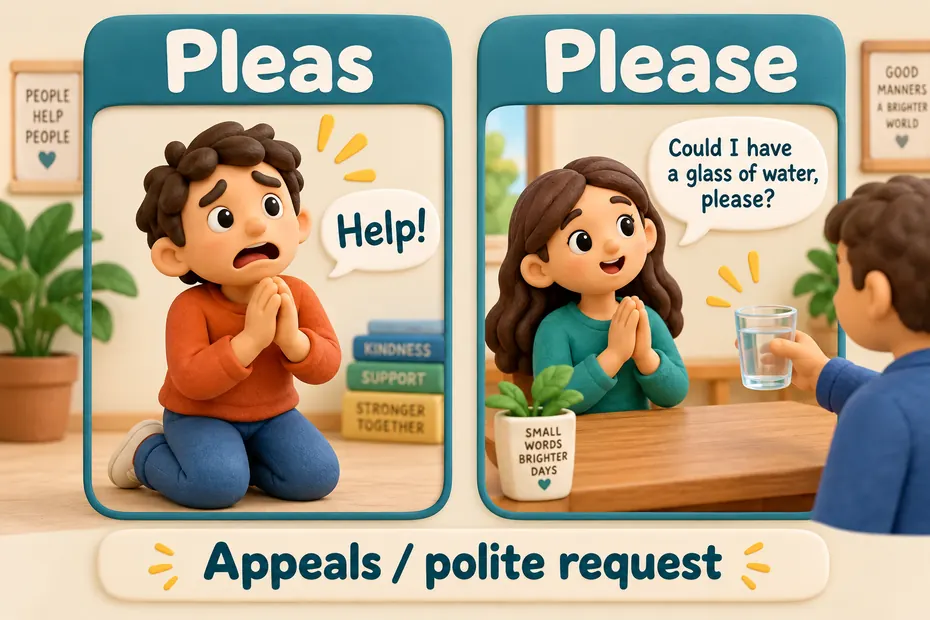
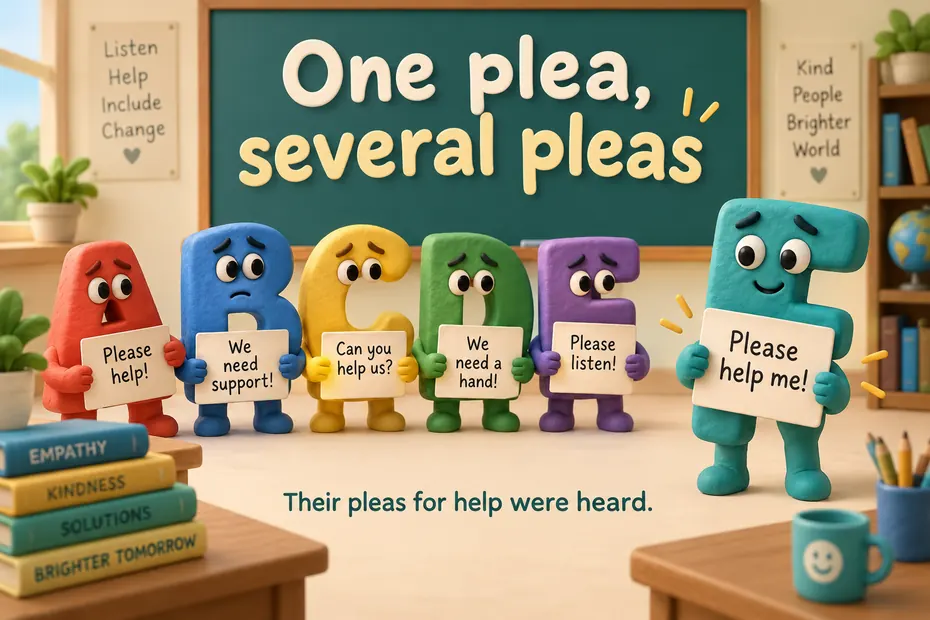
Pleas is the plural noun of plea, meaning earnest appeals or particular statements made in court. Please makes a request polite or acts as a verb meaning satisfy. In pleas vs please, compare “Their pleas for help continued” with “Please help us carry these boxes.” The words sound alike but perform different jobs.
- A plea is one appeal; pleas are multiple appeals.
- Pleas can concern everyday requests, not only court proceedings.
- Please appears in polite requests and polite acceptance.
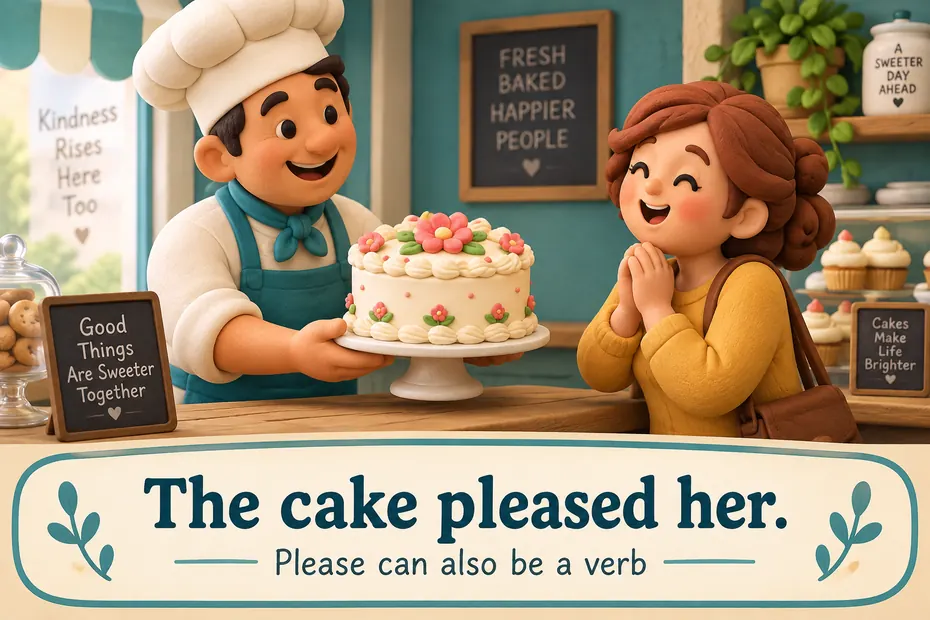
- Please also means give satisfaction: “The result will please everyone.”
- Thank you expresses gratitude; please does not normally replace it.
What does pleas mean outside a courtroom?
Pleas are urgent or emotional requests. “The neighbors’ pleas for quieter music went unanswered” describes appeals, not legal proceedings. This broader meaning corrects the overly narrow advice in the older discussion below, which repeatedly assigns pleas only to legal matters.
Cambridge’s entry for plea includes both an earnest request and a court-related statement. Use the surrounding words to show which sense applies. “Repeated pleas for food” suggests appeals; “Their pleas of not guilty” identifies a legal context.
The plural is formed by adding s to plea. Keep the ea together, then add s: plea → pleas. The plural is pronounced with a final z sound, matching please in standard English pronunciation. Sound alone therefore cannot tell a listener which spelling a writer needs.
Pleas vs please in common patterns
| Meaning | Correct example | Grammar clue |
|---|---|---|
| Several appeals | Their pleas for patience were ignored. | Their modifies a plural noun. |
| Polite instruction | Please wait by the entrance. | Please accompanies the verb wait. |
| Polite question | Could you wait here, please? | Please adds courtesy to a request. |
| Give satisfaction | The new arrangement will please her. | Please follows will as a verb. |
| Choose freely | Sit wherever you please. | Please means wish or choose. |
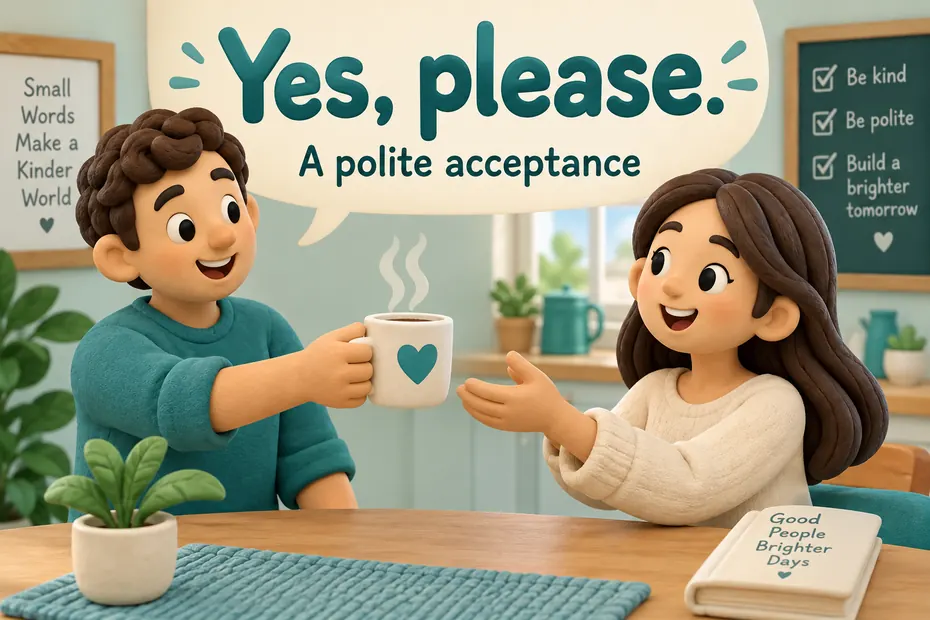
| Polite acceptance | Yes, please. | A response to an offer |
Use plural agreement with pleas: “The pleas were sincere,” not “The pleas was sincere.” Use singular agreement with plea: “Her plea was sincere.” When please is the main verb, its form changes with tense and subject: please, pleases, pleased, pleasing.
How does please make a request polite?
Please marks courtesy when asking someone to do something. “Please send the file” puts please first; “Could you send the file, please?” places it last. Neither position changes the requested action, although tone and context influence how the request feels.
Cambridge’s entry for please also records polite acceptance, satisfaction, and choosing as one wishes. Those senses explain why “Yes, please,” “This should please the audience,” and “Do as you please” are all correct despite having different functions.
Please does not automatically make a message considerate. “Please stop interrupting” may be a firm boundary; “Oh, please” can express disbelief. A clear action and suitable tone matter alongside the word itself. In a work email, “Please send the signed form by Friday” supplies a useful deadline without adding repeated pleas for compliance.
Can please be a verb?
Please is a verb when it means make someone happy or satisfied. “The concert pleased the audience” reports a reaction. “The musician hopes to please the audience” expresses an aim. In both examples, the audience is the object receiving satisfaction.
Compare “The child’s pleas moved her” with “The child’s gift pleased her.” The first sentence names appeals that affected her; the second names a gift that made her happy. The spelling changes because the sentence changes from a plural noun to a past-tense verb.
Do not confuse please with pleased. “I am pleased with the result” describes a satisfied state; “I want to please the client” uses an infinitive verb. “I am please with the result” is incorrect. If the intended meaning is satisfaction, decide whether you need an action or a description before choosing the form.
Common mistakes and a dependable spelling test
Replace the uncertain word with a phrase that fits its intended meaning. If appeals works, use pleas: “Her appeals were ignored” becomes “Her pleas were ignored.” If the sentence asks politely, use please: “Please close the window.” If satisfy works, the verb is also please.
- Incorrect: “Pleas call me tomorrow.” Correct: “Please call me tomorrow.”
- Incorrect: “Their please for shelter continued.” Correct: “Their pleas for shelter continued.”
- Incorrect: “The decision will pleas them.” Correct: “The decision will please them.”
- Incorrect: “Thank you” replaced with “Please” after receiving help. Use “Thank you” to acknowledge the help.
An apostrophe introduces another distinction. “The plea’s wording” means the wording of one plea. “The pleas’ wording” refers to the wording of multiple pleas. Neither possessive form can replace the courtesy word please. A spellchecker may accept all four forms, so read the sentence for meaning.
Frequently asked questions
Are pleas and please homophones?
Yes, in standard English they share the pronunciation /pliːz/. Their grammatical roles separate them in writing. A listener understands the intended word from context, while a writer must choose the correct spelling. A useful practice pair is “Please read their pleas,” which places both words in one sentence.
Is please the plural of plea?
No. Pleas is the plural of plea; please is a separate word. Count the appeals: one plea, two pleas, many pleas. The extra final e in please belongs to its spelling and does not mark plurality. This distinction remains the same whether an appeal is personal or court-related.
Do I need a comma before please?
A final please is commonly set off with a comma: “Pass the folder, please.” An initial please usually needs no comma: “Please pass the folder.” A comma after initial please can indicate a deliberate pause or extra emphasis. Punctuation should support the request’s rhythm rather than determine the spelling.
Can pleas sound dramatic in everyday writing?
Yes. Pleas suggests earnestness or urgency, so requests may be better for ordinary administrative messages. “We received several requests for copies” sounds neutral; “We received several pleas for help” conveys stronger need. Choosing between pleas vs please requires grammar first, then wording that matches the actual situation.
Hey there! Have you ever found yourself confused about when to use “pleas” and when to use “please”? Well, fear not, because I’m here to shed some light on this common language dilemma. In this text, I’ll be diving into the proper usage of “pleas” versus “please” and providing some helpful tips to ensure you’re using them appropriately.
We’ve all been there, trying to craft the perfect email or text message, only to second-guess ourselves when it comes to this seemingly simple choice of words. But don’t worry, I’ve got your back. By the end of this article, you’ll have a clear understanding of when to use “pleas” and when to opt for “please,” allowing you to communicate with confidence and clarity.
Key Takeaways
- “Pleas” is the plural form of “plea” and is primarily used in legal matters, referring to the statements made by the parties involved in a court case.
- “Please” is a versatile word used to indicate politeness, make requests, express desires, and show gratitude in everyday communication.
- Use “pleas” in the context of legal matters, such as court cases, and use “please” in everyday language to express politeness and make requests.
- “Please” is commonly used to indicate politeness, make requests, express desires, and show gratitude.
- Proper usage of “please” involves using it for expressing politeness, making requests, expressing desires, and showing gratitude in various situations.
- Mistakes to avoid include confusing the meanings of “pleas” and “please,” overusing or forgetting to use “please,” and not tailoring the level of politeness appropriately.
Pleas vs Please: Understanding the Difference
When it comes to the words “pleas” and “please,” it’s easy to get confused. Both words sound similar, but they have distinct meanings and uses. Understanding the difference between them will help you communicate with clarity and confidence. Let’s jump into the definitions and usage of each word.
Definition of “Pleas”:
- “Pleas” is the plural form of the word “plea,” which refers to a request or an appeal made to someone in authority.
- “Pleas” can also be used to describe the statements made by the defendant or the prosecution in a court of law, presenting their case or defense.
Usage of “Pleas”:
- When talking about legal matters, such as a court case, you would use “pleas” to refer to the statements made by the parties involved.
- Example: The defense lawyer presented their pleas to the jury.
Definition of “Please”:
- “Please” is a versatile word that is used to indicate politeness, make a request, or express a desire for something.
- It can also be used as an adverb to indicate a state of satisfaction or approval.
- “Please” is commonly used to make polite requests or ask for something in a courteous manner.
- Example: Can you please pass me the salt?
- It can also be used to express gratitude or to show appreciation for something.
- Example: Thank you, that was delicious, please pass my compliments to the chef.
Understanding the difference between “pleas” and “please” is essential for effective communication. While “pleas” refers to legal statements or requests made in court, “please” is used in everyday language to express politeness and make requests. So, make sure you use the appropriate word in the right context to avoid any confusion.
Now that we have a clear understanding of the difference between “pleas” and “please,” let’s explore some common examples to further solidify our knowledge.
When to Use “Pleas”
A common source of confusion in English is the difference between “pleas” and “please.” While they may sound similar, they have distinct meanings and usage. In this section, I will provide you with a clear understanding of when to use “pleas.”
Definition of “Pleas”
“Pleas” is the plural form of the word “plea,” which is used in legal matters. In the context of law, a “plea” refers to a statement made by the parties involved, typically in a court of law. It is a formal declaration of a person’s guilt or innocence.
Examples of Using “Pleas”
Here are a few examples that demonstrate the appropriate usage of “pleas”:
- The defense lawyer entered a plea of not guilty on behalf of their client.
- The prosecutor bargained for a plea deal with the defendant.
- The judge listened to the pleas of the victim’s family for a harsher sentence.
The Difference Between “Pleas” and “Please”
It is important to note that “pleas” and “please” have different meanings and functions. While “pleas” is used in legal matters, “please” is a versatile word used to indicate politeness, make requests, express desires, and show gratitude in everyday communication.
Understanding the Difference
Understanding the difference between “pleas” and “please” is crucial for effective communication. Using “pleas” incorrectly can lead to confusion and misunderstandings, especially outside the legal context. So, remember to reserve “pleas” for legal matters and use “please” when expressing politeness or making requests in your daily interactions.
When to Use “Please”
As we continue to explore the differences between “pleas” and “please,” let’s now focus on when to use the word “please.” Understanding its appropriate usage is crucial for effective communication. Here’s what you need to know:
- Politeness: The most common usage of “please” is to indicate politeness. It adds a respectful tone to requests or statements, showing consideration for the other person’s feelings. For example:
- Could you please pass me the salt?
- Please, thank you for your assistance.
- Making Requests: “Please” is commonly used when making requests. It helps to convey your desire for someone to do something for you. Here are some examples:
- Could you please help me with this task?
- Please don’t interrupt me while I’m speaking.
- Expressing Desires: “Please” can also be used to express desires or wishes. It shows that you would like something to happen or to be true. For instance:
- Please let me know if you need any further information.
- Please stay safe during your travels.
- Showing Gratitude: Also, “please” can be used to show gratitude or appreciation. It adds a polite touch when expressing thanks. For example:
- Thank you for your help, I really appreciate it, please.
- Please accept my heartfelt thanks for your kind assistance.
Remember, using “please” appropriately can go a long way in fostering positive communication and displaying good manners. But, it’s essential to avoid overusing it, as it may appear insincere or unnecessary in certain contexts.
To summarize, “please” is a versatile word that indicates politeness, makes requests, expresses desires, and shows gratitude. Understanding the appropriate situations to use “please” is crucial for effective communication.
Now that we have covered when to use “please,” let’s investigate into the usage of “pleas” in the next section.
Tips for Using “Pleas” and “Please” Appropriately
When it comes to the confusion between “pleas” and “please,” understanding their appropriate usage is key to effective communication. Let me provide you with some tips on using these words correctly.
Understand the Difference
First, let’s clarify the difference between the two. “Pleas” is the plural form of “plea” and is commonly used in legal matters to refer to the statements made by the parties involved. On the other hand, “please” is a versatile word used to indicate politeness, make requests, express desires, and show gratitude.
Using “Please” for Politeness
One of the most common uses of “please” is to express politeness. It’s important to remember to use “please” when asking for favors, making inquiries, or seeking help. For example:
- “Could you please pass me the salt?”
- “Please let me know if you need any further information.”
Making Requests with “Please”
Plus to politeness, “please” is used to make requests. When asking someone to do something, don’t forget to use “please” to show courtesy. For instance:
- “Can you please send me the report by tomorrow?”
- “Please remember to lock the door when you leave.”
Expressing Desires with “Please”
“Please” can also be used to express desires or wishes. Whether it’s expressing your preference or stating what you would like, remember to include “please” to sound polite. Consider these examples:
- “Please don’t make a mess in the living room.”
- “I would like a glass of water, please.”
Showing Gratitude with “Please”
Finally, “please” is often used to show gratitude or appreciation. When someone does something for you, make sure to acknowledge their help with a “thank you” and a “please.” See these examples:
- “Thank you for your assistance. I really appreciate it, please.”
- “Please accept my heartfelt thanks for your support.”
Remember, using “please” appropriately demonstrates respect and courtesy in your communication. But, it’s important not to overuse it. Find the right balance so that your requests and expressions of gratitude don’t lose their impact.
Common Mistakes to Avoid
When it comes to using “pleas” and “please” appropriately, there are a few common mistakes that people often make. Understanding these mistakes can help you avoid them and improve your communication skills. Here are some of the most common mistakes to watch out for:
- Confusing the meanings: One of the main mistakes is using “pleas” when you actually mean “please.” It’s important to remember, “pleas” is the plural form of “plea” and is primarily used in legal matters. On the other hand, “please” is a versatile word used to indicate politeness, make requests, express desires, and show gratitude. Understanding the difference between the two will help you use them correctly in different contexts.
- Overusing “please”: While “please” is a polite word that is commonly used in daily conversations, overusing it can diminish its impact. Using “please” sparingly and appropriately will make your requests more effective and genuine. Instead of repeatedly saying “please” in every sentence, look for alternative ways to express politeness and gratitude.
- Forgetting to use “please”: On the flip side, forgetting to use “please” when making a request can come across as rude or demanding. Adding “please” to your request not only shows politeness but also enhances the overall tone of your communication. Remembering to include “please” in your requests can go a long way in maintaining positive and respectful interactions.
- Not tailoring the level of politeness: Different situations call for different levels of politeness. It’s important to gauge the appropriate level of politeness based on the context and the relationship with the person you are communicating with. Being overly formal or excessively casual may lead to miscommunication or create an unintended impression. Hence, adjust the level of politeness in your language accordingly.
Understanding these common mistakes will help you navigate the usage of “pleas” and “please” more effectively. By being mindful of their meanings, avoiding overuse, remembering to include “please” when necessary, and tailoring the level of politeness, you can enhance your communication skills and convey your message with greater clarity and respect.
Conclusion
Understanding the difference between “pleas” and “please” is essential for effective communication. While “pleas” is the plural form of “plea” and is used in legal matters, “please” is a versatile word that indicates politeness, makes requests, expresses desires, and shows gratitude.
By using “please” appropriately, we can enhance our communication skills and convey our messages with clarity and respect. It is important to remember not to overuse “please” and to tailor the level of politeness according to the situation.
To conclude, mastering the appropriate usage of “please” allows us to navigate various social and professional contexts with confidence. Whether we are expressing gratitude, making requests, or simply being polite, using “please” correctly ensures that our intentions are understood and appreciated.
So, the next time you find yourself wondering whether to use “pleas” or “please,” remember the tips discussed in this text. By using these words appropriately, you can elevate your communication skills and create meaningful connections with others.
Frequently Asked Questions
Q: What is the difference between “pleas” and “please”?
A: “Pleas” is the plural form of “plea” and is used in legal matters to refer to statements made by the parties involved. “Please” is a versatile word used to indicate politeness, make requests, express desires, and show gratitude.
Q: When should I use “please”?
A: “Please” should be used when you want to be polite, make a request, express a desire, or show gratitude. It adds a respectful tone to your communication.
Q: Can you give examples of using “please”?
A: Certainly! Examples include saying “Please pass the salt,” “Could you please help me with this task?” or “I would appreciate it if you could please send me the report.”
Q: Is it important to use “please” appropriately?
A: Yes, using “please” appropriately is crucial for effective communication. However, be mindful of overusing it as it may dilute its impact.
Q: Why is understanding the difference important?
A: Understanding the difference between “pleas” and “please” helps you use them correctly in different contexts, ensuring clear and respectful communication.


