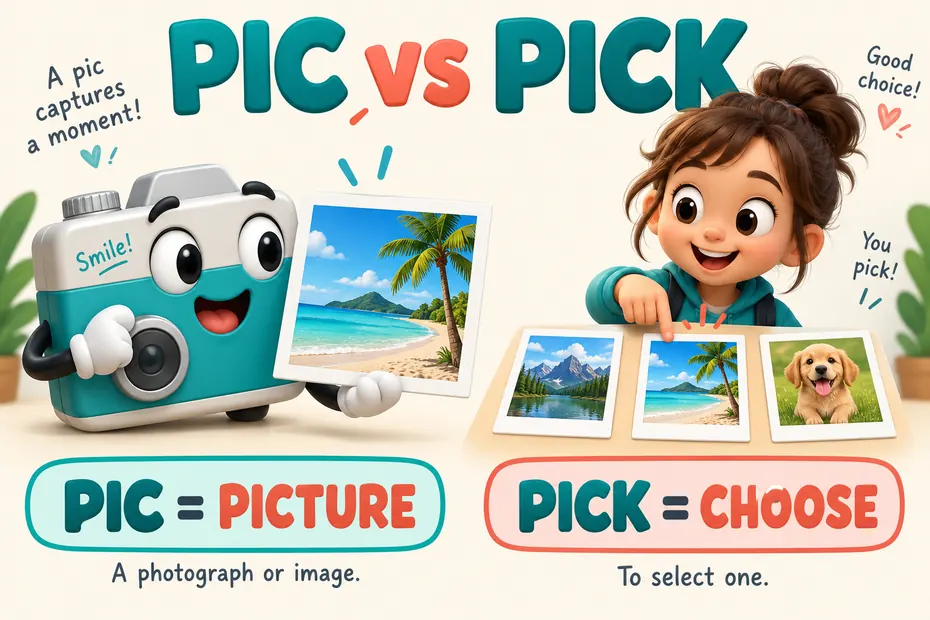
Pic means a picture or photograph in everyday informal writing; pick means to choose, a choice, or a tool. Pic vs pick is a spelling distinction, not a difference you can hear: both normally sound like “pik.” Write “pick a pic” when you mean “choose a picture.”
Pic vs Pick: Key Facts
- Pic is a shortened form of picture.
- Pick can be a verb or a noun.
- The usual plurals are pics and picks.
- Picked and picking describe actions; pic does not replace those verb forms.
- Picture or photograph is often clearer in formal documents.
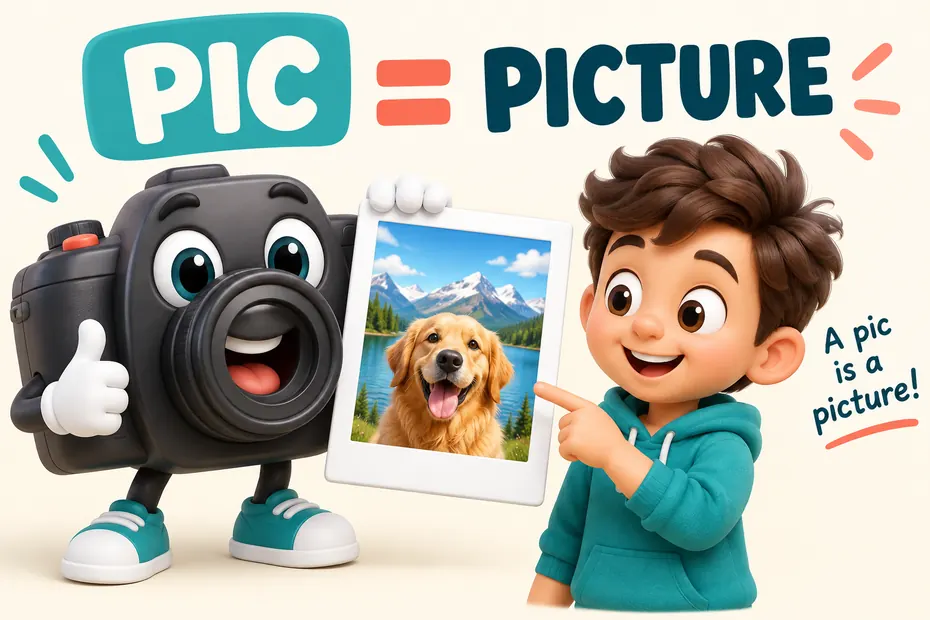
Which word belongs in your sentence?
Choose the spelling by testing the meaning. If photograph fits, use pic in a casual message. If choose fits, use pick. The sentence “Pick your favorite pic” contains both words correctly: the first tells someone what to do, and the second names the image.
| Meaning needed | Word | Original example |
|---|---|---|
| A photograph | pic | Send me the pic from our walk. |
| Choose | pick | Pick the clearest image. |
| A chosen option | pick | This photo is my top pick. |
| A small guitar tool | pick | The guitarist dropped her pick. |
| Several photographs | pics | We saved six pics. |
| Several selections | picks | These are the editor’s picks. |
Merriam-Webster’s pic entry confirms photograph and movie senses. That means the older wording below calling pic “not a standard word” needs qualification: pic is a recognized dictionary word, although its shortened picture sense is usually informal. Dictionary recognition and suitability for a formal report are different questions.

How do the grammar patterns differ?
Pic names an image in ordinary picture-related usage. Pick can describe the act of selecting or name the resulting choice. Compare “My pic won the competition” with “My pick won the competition.” The first identifies a photograph; the second identifies the competitor or entry you selected.
As a verb, pick changes with the subject and tense: “I pick,” “she picks,” “we picked,” and “they are picking.” As a noun, pic normally takes a determiner when singular: “a pic,” “that pic,” or “your pic.” A caption such as “New pic” can be a purposeful fragment, but an ordinary complete sentence needs more structure.
The Merriam-Webster pick entry also distinguishes selecting, gathering by plucking, and several tool senses. Do not assume every pick means choose. “Pick apples” means gather them, whereas “pick an apple variety” means select one.

What mistakes should you correct?
Correct “Please pic a date” to “Please pick a date.” Correct “I uploaded a pick of the dog” to “I uploaded a pic of the dog.” The first sentence needs an action; the second needs the name of an image. Both mistakes can survive a spelling checker because both spellings are real words.
In the preserved article below, the bullet headed “Professional usage of ‘pick’” actually discusses replacing pic with picture. Read that advice as a formality note about pic; pick itself needs no replacement simply because the document is professional. “Pick a delivery date” is ordinary understandable English, though “select a delivery date” may fit a formal interface.
When editing a photo-related instruction, identify the verb and object separately. “Pick a profile pic” is clear for a casual app message. “Select a profile photograph” is clearer for readers unfamiliar with the abbreviation. Replacing only one word will not fix an instruction if the remaining word still conveys the wrong meaning.
A quick practice check
- “Please ___ the best ___.” Answer: pick, pic.
- “The photographer sent three ___.” Answer: pics.
- “This image is my first ___.” Answer: pick.
- “We ___ a photo yesterday.” Answer: picked.
After completing the blanks, substitute choose, photograph, or choice. If the substitute matches the intended meaning and grammar, your spelling is likely right. Reading the sentence aloud alone will not resolve this pair because the ordinary pronunciations match.
Frequently Asked Questions
Is pic always a spelling mistake?
No. Pic is an established shortened word for picture, especially in informal communication. A teacher or editor may prefer photograph or picture because of the assignment’s style, but that preference does not make every use of pic an error. Ask whether the audience understands the abbreviation.
Should I write pics or pic’s?
Write pics for more than one picture: “The folder contains ten pics.” Write pic’s only when the singular noun needs a possessive ending, as in “the pic’s resolution.” An apostrophe does not normally form a plural. The same distinction applies to picks and pick’s.
Can pick refer to a photograph?
Pick can refer to a selected photograph when the emphasis is on the selection: “This portrait is my pick for the cover.” It does not simply mean photograph. “Send me a pick” therefore asks for a choice or another pick-related thing unless the context supplies more information.
Is “take a pick” the same as “take a pic”?
No. “Take a pic” means take a picture. For choosing among options, the usual expression is “take your pick.” Compare “Take a pic of the garden” and “Take your pick of these photos.” The surrounding words help distinguish the action even when the central words sound alike.
How can I remember pic vs pick?
Connect pic with the beginning of picture, then connect pick with choosing or selecting. Practice “Pick a pic” as a short two-part instruction: choose an image. For an unfamiliar sentence, determine whether the word names an image, expresses a selection, or names a tool before deciding.
Key Takeaways
- “Pic” is a colloquial abbreviation for “picture” and is commonly used in casual conversations, texting, and social media.
- “Pic” specifically refers to an image or a photograph.
- “Pick” is a noun and a verb that refers to choosing or selecting something.
- “Pick” can have different meanings depending on the context and can refer to choosing a meal from a menu, selecting an item, or making a decision.
- “Pic” is not a formal word and should be used sparingly in formal writing or professional contexts.
- In formal writing and professional contexts, it is advisable to use the full word “picture” instead of the abbreviated form “pic.”
Understanding the Difference between “pic” and “pick”
In this section, we will clarify the distinction between the words “pic” and “pick” to help you use them appropriately in your writing. It’s important to understand their definitions and how they are commonly used.
Definition of “pic”
“Pic” is a colloquial abbreviation for the word “picture.” It is often used informally in written and spoken language, particularly in casual conversations, text messages, and social media posts. It is used to refer to an image or a photograph.
Here are a few examples of how “pic” is commonly used:
- “I took a pic of the sunset at the beach today.”
- “Can you send me that pic you took at the party last night?”
Definition of “pick”
On the other hand, “pick” is a noun and a verb that has several different meanings. As a noun, it refers to an act of choosing, selecting, or making a choice. As a verb, it means to choose or select something.
Here are a few examples of how “pick” is commonly used:
- “She made a careful pick from the menu.”
- “I need to pick a dress for the party tonight.”
The Difference between “pic” and “pick”
The main difference between “pic” and “pick” lies in their meanings. While “pic” is a colloquial abbreviation specifically referring to a picture or an image, “pick” is a general term used to describe choosing or selecting something.
It’s important to note that “pic” is not a standard or formal word, and it should be used sparingly in formal writing or professional contexts. In those situations, it is advisable to use the full word “picture” instead.
Conclusion
Understanding the difference between “pic” and “pick” is crucial for using these words appropriately in your writing. By differentiating their definitions, you can accurately convey your intended meaning. Whether you’re talking about a picture or making a choice, using the correct word will enhance your communication skills. So, next time you’re tempted to use an abbreviation, consider if it’s the right choice for the context.
Now that we have explored the difference between “pic” and “pick,” let’s move on to other commonly confused words in the English language.
Common Misconceptions about “pic” and “pick”
In this section, I’ll address some common misconceptions about the words “pic” and “pick” and set the record straight. It’s important to clear up these misunderstandings to use these words appropriately in writing.
Difference between “pic” and “pick”
Let’s start by understanding the difference between “pic” and “pick.” The word “pic” is a colloquial abbreviation for “picture,” commonly used in informal language or when texting. On the other hand, “pick” is both a noun and a verb that refers to the act of choosing or selecting something.
“Pic” specifically refers to an image
A common misconception is that “pic” can be used interchangeably with “pick” to refer to making a choice. But, this is not the case. “Pic” specifically refers to an image, while “pick” is a more general term for selecting something.
“Pic” is not a formal word
Another misconception is that “pic” can be used in formal contexts or professional writing. This is not advised because “pic” is considered informal and may come across as unprofessional. It’s better to use the complete word “picture” in formal settings.
Understanding the distinction is crucial for effective communication
To communicate clearly and effectively, it’s essential to grasp the distinction between “pic” and “pick.” Proper usage will prevent misunderstandings and maintain a professional tone in your writing. Remember, “pic” is for informal contexts and texting, while “pick” is for making choices or selections.
Overall, understanding the difference between “pic” and “pick” is crucial. “Pic” refers specifically to images, while “pick” is a broader term for choosing or selecting something. Keep in mind that “pic” is informal and should be used sparingly in professional writing. By clarifying these misconceptions, we can use these words appropriately and enhance our communication skills.
Want to learn more?
| “Pic” | “Pick” | |
|---|---|---|
| Meaning | Colloquial abbreviation for “picture” | To choose or select |
| Usage | Informal, texting, casual contexts | General term, formal and informal contexts |
| Professional use | Not advised | Acceptable |
| Example | “Hey, can you send |
Proper Usage of “pic”
When it comes to the word “pic,” it’s important to understand its proper usage, especially in formal writing and professional contexts. Let’s jump into the details and explore how to use “pic” appropriately.
What is a “pic”?
First things first, “pic” is a colloquial abbreviation for the word “picture.” It is commonly used in informal language, texting, and social media platforms. The word “pic” specifically refers to an image, usually captured by a camera or created through digital means.
Using “pic” in informal situations
In casual conversations, social media captions, or texting with friends, it’s perfectly acceptable to use “pic” instead of “picture.” This informal abbreviation is widely understood and used, allowing for quick and effortless communication.
For example:
- “Check out this awesome pic I took at the beach!”
- “I can’t wait to see your vacation pics!”
Limited use in formal writing
But, in formal writing, it is advisable to use the full word, “picture,” rather than the abbreviated form, “pic.” The word “pic” is considered more suitable for informal communication and may not be fully recognized or appreciated in a professional setting.
In academic essays, business correspondence, or reports, it’s crucial to maintain a high level of professionalism. By using “picture” instead of “pic,” you demonstrate a strong command of the English language and adhere to accepted writing conventions.
The importance of context
As with any word, the appropriate usage of “pic” depends on the context and audience. It’s essential to consider the level of formality required in a particular situation.
To recap:
- “Pic” is an informal abbreviation for “picture.”
- It is commonly used in casual conversations, texting, and social media.
- In formal writing, it is best to use “picture” instead of “pic.”
Understanding the distinction between the colloquial “pic” and the more formal “picture” will help you communicate effectively in a variety of settings. Remember to always be mindful of the context and choose your words wisely.
Now that we’ve covered the proper usage of “pic,” let’s move on to explore the word “pick” and its various meanings and applications.
Proper Usage of “pick”
When it comes to the word “pick,” it is important to understand its proper usage to communicate effectively. Let’s investigate into the correct ways to use this versatile word.
- Definition of “pick”: As a noun, “pick” refers to a tool with a pointed end used for things like breaking up soil or ice. It can also refer to a choice or selection. As a verb, it means to choose, select, or pluck.
- Choosing the right context: Context is key when using the word “pick.” Consider the situation and your audience. Are you referring to selecting an item from a menu, making a decision, or physically picking something up? Understanding the context will help you choose the appropriate usage.
- Examples: Here are a few examples to illustrate the proper usage of “pick”:
- “I couldn’t decide, so I let the waiter pick my meal for me.”
- “She carefully picked up the fragile vase and placed it on the shelf.”
- “I need to pick a new book to read for my book club.”
- The difference between “pic” and “pick”: It’s important to note that “pic” is a colloquial abbreviation for “picture,” while “pick” is a more general term for making a choice. “Pic” specifically refers to an image, while “pick” encompasses a broader range of choices.
- Professional usage of “pick”: In professional writing and formal contexts, it is advisable to use the full word “picture” instead of the abbreviated form “pic.” This demonstrates a higher level of professionalism and avoids any confusion.
Remember, clarity and precision in communication are essential. Using “pick” correctly will ensure that your message is properly conveyed and understood.
Now that we have explored the proper usage of “pick,” let’s move on to the distinction between “pic” and “picture” in the next section.
Examples of Correct Usage for “pic”
When using the word “pic,” it’s important to consider the context and audience to ensure the message is clear. Here are some examples of how to use “pic” appropriately:
- Social Media: Posting a picture or image on social media platforms is a common use of the word “pic.” For example, you might say, “Check out this stunning pic I took at the beach yesterday.”
- Text Messages: In casual conversations, using “pic” as an abbreviation for “picture” is acceptable. For instance, you could text a friend, “I’ll send you the pic from last night’s party.”
- Informal Writing: In informal settings, like personal blogs or online forums, using “pic” instead of “picture” is often acceptable. But remember to maintain clarity and professionalism when appropriate.
- Captions and Headlines: When writing captions or headlines for images, “pic” is a commonly used abbreviation. For instance, you may see a headline that reads, “Stunning Pic of the Year: Capturing Nature’s Beauty.”
It’s important to note that while “pic” is widely used in casual and informal writing, in formal writing or professional settings, it is recommended to use the full word “picture” to maintain clarity and avoid confusion.
To summarize, “pic” is a shortened version of “picture.” It is commonly used in social media, text messages, informal writing, and captions/headlines. But, in formal writing settings, it’s better to use the full word “picture” for clarity and professionalism.
By understanding the proper usage of “pic,” you can effectively communicate your message and avoid any misunderstandings. Whether you’re sharing a picture on social media or writing a caption, using “pic” appropriately will ensure that your intentions are clear.
Examples of Correct Usage for “pick”
When it comes to using the word “pick” correctly, context is key. Here are some examples that illustrate its proper usage in different situations:
- Picking a book from the library: When I’m at the library, I often pick a book based on its cover design. It’s a fun way to discover new authors and genres.
- Picking a team member: As a team leader, I have the responsibility of picking the right candidate for each project. It’s important to consider their skills and expertise to ensure successful collaboration.
- Picking a restaurant: Going out for dinner with friends? Let’s pick a restaurant that serves our favorite cuisine. I’ll take your suggestions into account when making the final decision.
- Picking a movie to watch: With so many options available, it can be challenging to pick a movie that satisfies everyone’s preferences. We’ll have a movie night and take turns picking our favorite films.
- Picking a paint color: When redecorating my home, I like to take my time picking the perfect paint color for each room. It can completely transform the ambiance and mood of the space.
By using “pick” appropriately in these examples, I am able to convey my choices and decisions effectively. Remember to consider the context and audience when using this word, as it can have different meanings and implications depending on the situation.
Understanding the difference between “pic” and “pick” is crucial for using them correctly. While “pic” is an abbreviation for “picture,” “pick” is a more general term for making a choice. In formal writing and professional contexts, it is recommended to use the full word “picture” instead of the abbreviated form “pic” to maintain professionalism and avoid confusion.
Summarizing, proper usage of “pick” requires considering the context and audience. Whether you’re picking a book, a team member, a restaurant, a movie, or a paint color, using “pick” correctly ensures clear communication.
Conclusion
Using the word “pick” appropriately is essential for effective communication. Throughout this article, we have explored the correct usage of “pick” and its importance in conveying choices and decisions. By considering the context and audience, we can ensure that our message is clear and understood.
It is crucial to distinguish between “pic” and “pick,” with “pic” being an abbreviation for “picture” and “pick” being a more general term for making a choice. In professional writing and formal contexts, it is recommended to use the full word “picture” instead of the abbreviated form “pic” to maintain professionalism and avoid confusion.
We have provided various examples of correct usage for “pick,” such as picking a book, team member, restaurant, movie, or paint color. These examples demonstrate how using “pick” appropriately can convey choices effectively.
To conclude, using “pick” correctly ensures clarity and precision in communication. By following the guidelines discussed in this text, you can confidently use “pick” in various situations, conveying your intended meaning accurately.
Frequently Asked Questions
Q: What is the article about?
A: The article discusses the proper usage of the word “pick” and provides examples to illustrate its correct usage within different contexts.
Q: Why is it important to consider the context and audience when using the word “pick”?
A: Considering the context and audience is crucial when using the word “pick” because the word can have multiple meanings and interpretations depending on the situation.
Q: What is the difference between “pic” and “pick”?
A: “Pic” is an abbreviation for “picture,” while “pick” is a more general term for making a choice or selecting something.
Q: Should I use the full word “picture” instead of “pic” in professional and formal writing?
A: Yes, to maintain professionalism and avoid confusion, it is recommended to use the full word “picture” instead of the abbreviated form “pic” in professional and formal contexts.
Q: Can you provide some examples of correct usage for “pick”?
A: Sure! Examples include picking a book from the library, picking a team member, picking a restaurant, picking a movie to watch, and picking a paint color. Using “pick” appropriately helps convey choices and decisions effectively.


