
Faze vs phase: disturbance or a stage?
Faze is a verb meaning to disturb, unsettle or disconcert. Phase is a noun for a stage or aspect of a process, and also a verb for carrying something out in stages or coordinating it. “The setback did not faze her” concerns her reaction. “The project entered a new phase” concerns its stage.
The words are pronounced alike, so spelling must follow meaning. The older noun-versus-verb shortcut below is incomplete because phase is also a verb. “We will phase in the changes” is correct, even though phase describes an action there.

Quick facts
| Word | Meaning | Example |
|---|---|---|
| faze | Unsettle someone | The question did not faze the speaker. |
| phase, noun | A distinguishable stage | The testing phase begins next week. |
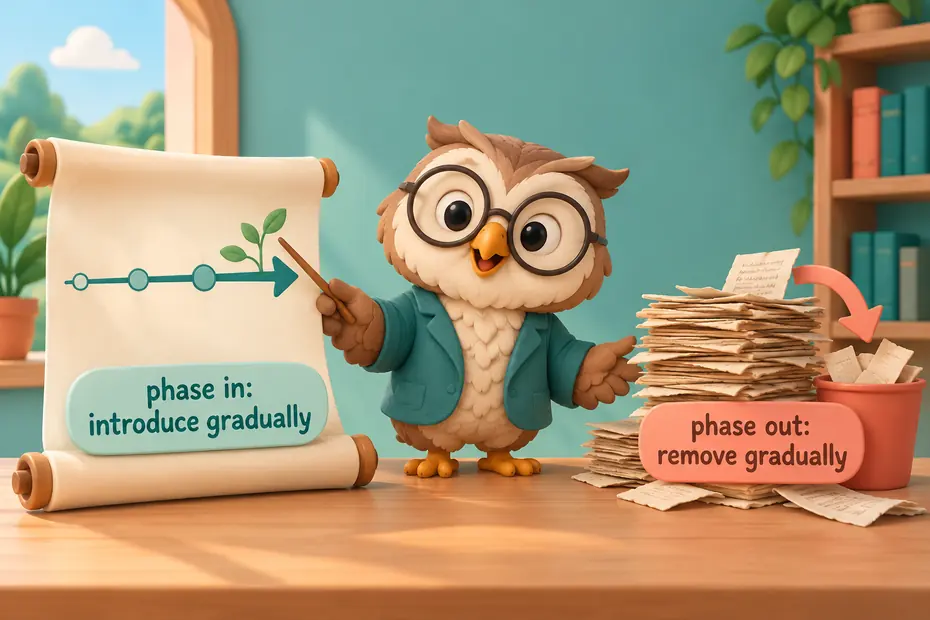
| phase in | Introduce gradually | We will phase in the timetable. |
| phase out | Remove gradually | The team will phase out the old forms. |
Merriam-Webster defines faze as disturbing or disconcerting. Its phase entry covers stages, technical meanings and verb uses. The practical contrast is therefore unsettling someone versus a stage or staged change, not simply action versus object.
Using faze naturally
In “The noise did not faze the musician,” noise is the subject that might disturb someone, and musician is the object. “The criticism fazed him” means the criticism unsettled him. It does not merely say he heard it or disagreed with it. The verb describes an effect on composure.
Negative constructions are common: did not faze, nothing fazed her and remained unfazed. Unfazed means not unsettled. Write “The delay left her unfazed,” with f, when she stayed calm. Unphased belongs to a different spelling family and does not normally convey that meaning.
The forms are faze, fazes, fazed and fazing. Drop the final e before ing. After did or did not, use the base form: “It did not faze him,” rather than “It did not fazed him.” The auxiliary already supplies the past tense.
Phase as a noun
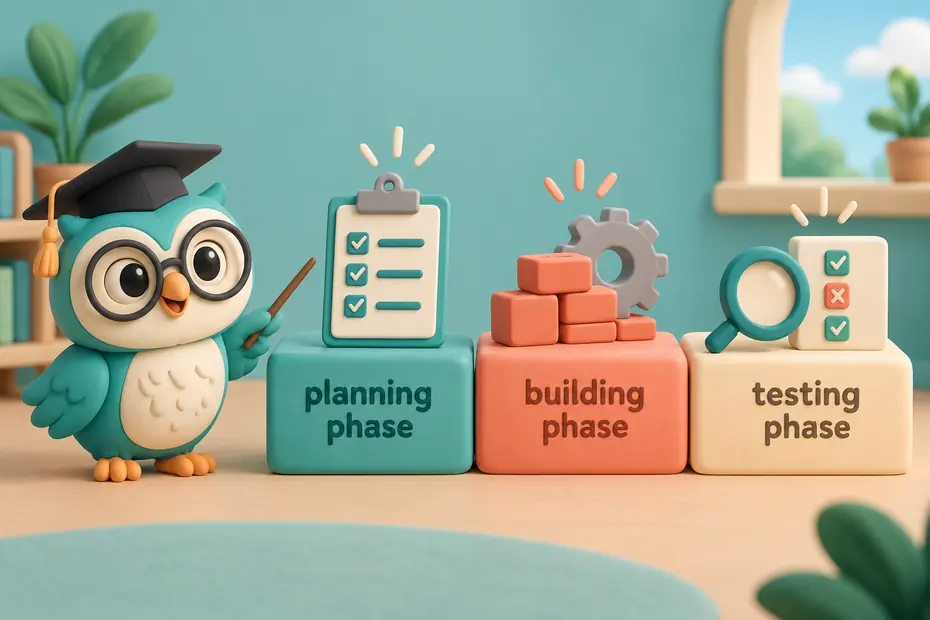
A phase can be a project stage, a period in a career or an aspect of a process. “The design phase” identifies one distinguishable part of the work. “A difficult phase” says the difficulty belongs to a period or stage, though it does not promise when that period will end.
Use phases for the plural: “The plan has three phases.” Phase does not require that every stage be identical in length or repeat in a cycle. A project can move through phases once, while other uses concern recurring changes. Be specific when sequence matters: planning, building and testing communicate more than first, second and third alone.
“It is only a phase” is a common expression about a temporary pattern, but the sentence can sound dismissive. If duration is uncertain, avoid treating the phrase as evidence that a concern will disappear. As vocabulary, phase names a period; it does not diagnose behavior or establish a prediction.
Phase as a verb
“The school phased in the timetable over two terms” describes gradual introduction. “The office phased out the duplicate paperwork” describes gradual removal. These phrasal verbs have different directions: in brings something into use; out takes something out of use.
The forms are phase, phases, phased and phasing. Compare “The delay fazed the manager” with “The manager phased the changes.” The first describes an emotional effect; the second describes scheduling or implementation. Because both are verbs, grammar alone cannot choose between them.
When writing instructions, add a time or sequence if readers need one. “Phase in the changes” says the introduction should occur in stages but leaves the actual stages unspecified. “Introduce the first form in May and the second in June” gives a concrete plan. Vocabulary can describe the approach without supplying every operational detail.
Special contexts and a practical check
Phase also appears in technical discussion, including cyclic motion and physically distinct portions of matter. In such a sentence, the field’s specific definition matters. The spelling remains phase; faze does not become the technical term merely because the words sound alike. For ordinary writing, you usually need only the stage or staged-change meaning.
Try replacing faze with unsettle. “The interruption did not unsettle her” preserves the intended meaning, so faze works. Try replacing a noun phase with stage: “the next stage” supports phase. For phase in or out, try introduce gradually or remove gradually. These checks focus attention on what the sentence claims.
Practice: “The challenge did not ___ the team.” Faze. “The project entered its final ___.” Phase. “They remained ___.” Unfazed. “We are ___ out the old labels.” Phasing. “The new system was ___ in slowly.” Phased. Read the full phrase before choosing.
Frequently asked questions
Is phase only a noun?
No. It is also a verb.
Is it unfazed or unphased for staying calm?
Unfazed.
Does phase out mean cancel immediately?
No. It normally means remove gradually.
Are faze and phase homophones?
Yes, their ordinary pronunciation is the same.
Can I write did not fazed?
No. Use did not faze.
Have you ever found yourself confused between the words “faze” and “phase”? Trust me, you’re not alone. As a language enthusiast, I’ve encountered this dilemma countless times. In this text, I’ll guide you through the proper usage of these two words, ensuring that you never mix them up again.
First, let’s address the difference between “faze” and “phase.” Many people mistakenly believe that these words are interchangeable, but that’s simply not the case. “Faze” refers to being bothered or disturbed, while “phase” refers to a distinct stage or period. Understanding this distinction is crucial for effective communication and avoiding embarrassing mistakes.
Key Takeaways
- “Faze” and “phase” are two distinct words with different meanings and usages.
- “Faze” is a verb that means to be bothered or disturbed, while “phase” is a noun that refers to a distinct stage or period within a process or development.
- It is important to choose the appropriate word based on its definition and intended meaning to ensure effective communication.
- When using “faze,” be specific about the emotion or feeling that is being affected and use it to describe personal responses to external factors that affect your emotional well-being.
- “Phase” should be used to describe sequential patterns, project stages, life stages, or scientific processes.
- Understanding the proper usage of both “faze” and “phase” will help improve your vocabulary and communication skills.
What is the difference between “faze” and “phase”?
When it comes to the English language, there are numerous words that sound similar but have completely different meanings. This can often lead to confusion, especially for non-native speakers. Two such words that are commonly misused are “faze” and “phase.” In this section, we will investigate into the distinct definitions and usages of both words to shed light on their differences.
- Definition of “Faze”: The word “faze” is a verb, and it means to be bothered, disturbed, or unsettled by something. It refers to a state of emotional or mental distress caused by an event or situation. For example, if someone were to say, “The criticism from my peers didn’t faze me,” it means that they were not disturbed or affected by the negative comments.
- Definition of “Phase”: On the other hand, “phase” is a noun that refers to a distinct stage or period within a larger process or development. It often signifies a temporary state or a specific time frame. For example, we can say, “We are currently in the planning phase of the project,” indicating that planning is one of the stages in the overall project timeline.
The key difference between “faze” and “phase” lies in their definitions. While “faze” relates to one’s emotional or mental state, “phase” refers to a specific stage or period within a process. It is important to recognize this distinction to ensure effective communication and avoid any embarrassing mistakes.
Now that we have delved into the definitions of both words, let’s explore their usage in a sentence to solidify our understanding:
- “The loud noise didn’t faze me as I was accustomed to it.”
- “The construction project is entering its final phase as all the major tasks have been completed.”
Remember to always choose the appropriate word based on its definition and usage in context. By understanding the differences between “faze” and “phase,” you can improve your communication skills and avoid potential confusion.
Next, let’s move on to the similarities between these two words and explore how they relate to each other.
How to use “faze” correctly
When it comes to using the word “faze,” it’s important to understand its meaning and proper usage. “Faze” is a verb that means to be bothered, disturbed, or unsettled by something. It relates to one’s emotional or mental state. Knowing how to correctly use “faze” can help you communicate your feelings or experiences effectively without any confusion.
Here are a few tips on how to use “faze” correctly:
- Know the definition: Familiarize yourself with the definition of “faze” to ensure you’re using it in the right context. Remember, it means to be bothered or disturbed.
- Identify the emotion: When using “faze,” be specific about the emotion or feeling that is being affected. For example, you can say, “The criticism didn’t faze me” to express that negative comments didn’t bother or disturb you.
- Choose the right situation: Use “faze” when describing personal responses to external factors that affect your emotional well-being. For instance, you can say, “The loud noise outside didn’t faze me because I was in a deep sleep.”
- Avoid confusion with “phase”: Remember, “faze” and “phase” are two different words with distinct meanings. While “faze” relates to being bothered or disturbed, “phase” refers to a specific stage or period. Make sure to use the correct word based on its definition and intended meaning.
Examples of using “faze” in sentences
One of the best ways to understand how to use the word “faze” correctly is by looking at examples. These examples will give you a clear idea of how “faze” is used in different contexts. Let’s explore a few sentences to see “faze” in action:
- The criticism didn’t faze me at all.
- Even though the loud noises, she remained unfazed.
- The unexpected turn of events didn’t faze the team; they still battled on.
- He’s a resilient person who doesn’t let setbacks faze him.
- The constant pressure and challenges never fazed her determination to succeed.
In these examples, “faze” is used to describe the lack of change in someone’s state of mind, emotions, or behavior even though external factors or difficulties. It shows a sense of resilience and mental strength when faced with obstacles. Remember, “faze” is all about how we are affected (or rather, not affected) by certain situations or events.
Notice how “faze” is used to convey a sense of inner fortitude, demonstrating that the person remains calm, composed, and unaffected by external circumstances. This word highlights the ability to maintain one’s focus and determination regardless of obstacles. It emphasizes our emotional and mental resilience when facing challenges.
Remember, “faze” is distinct from “phase.” While they may sound similar, they have different definitions and functions in sentences. “Faze” focuses on our response to external factors, whereas “phase” refers to a distinct stage or period in a process or development.
Now that we’ve explored some examples, you can see how “faze” is used to describe personal responses in various situations. It’s essential to understand the definition and proper usage of “faze” to communicate effectively. So, the next time you encounter a challenging situation, remember, you have the power to stay unfazed.
How to use “phase” correctly
As we explore the distinction between “faze” and “phase,” it’s important to understand the proper usage of “phase” as well. This word often causes confusion due to its similar spelling and pronunciation. Let’s investigate into how to use “phase” correctly in various contexts.
Definition of “Phase”
“Phase” refers to a distinct stage or period in a process or development. It describes a particular step or point in a series of events. It is essential to grasp this definition to avoid misusing the word in your writing or conversations.
Difference Between “Faze” and “Phase”
While both “faze” and “phase” can be easily confused, they have different meanings and applications. Remember, “faze” focuses on our emotional or mental response to external factors or challenges, while “phase” pertains to a specific stage in a process or development.
Examples of Correct Usage
To help solidify your understanding of “phase,” here are some examples of its proper usage in different contexts:
- Relating to a Project: “We are currently in the planning phase of our project.”
- Referring to Life Stages: “Adolescence is a challenging phase of development.”
- Describing a Sequential Pattern: “The moon goes through different phases, including full, half, and crescent.”
- Discussing Scientific Processes: “The experiment has entered the final phase of data analysis.”
These examples illustrate how “phase” is used to express different stages, steps, or periods within various contexts. Familiarizing yourself with these examples will enable you to use “phase” accurately in your own writing.
By understanding the proper usage of “phase,” you can effectively communicate your ideas and thoughts without any confusion or ambiguity. Remember, clarity in language is crucial for effective communication.
Now that we have explored both “faze” and “phase,” let’s move on to further enhancing our vocabulary and usage of these commonly confused words.
Examples of using “phase” in sentences
One of the best ways to understand the usage of a word is by looking at examples in context. Let’s explore some sentences that illustrate the proper use of the word “phase”:
- The construction project is divided into several phases, from the planning phase to the execution phase.
- After months of studying, I finally reached the revision phase of my exam preparation.
- The teacher emphasized the importance of the research phase in the scientific method.
- Our marketing strategy includes a phase of market research to understand our target audience better.
- In the early phase of the company’s growth, our main focus is on customer acquisition.
- The coach implemented a new training phase to improve the team’s performance.
- The political campaign entered a critical phase, where candidates competed for public support.
- The development of a new vaccine involves rigorous testing during the clinical trial phase.
- After the initial design phase, it’s crucial to gather feedback from users for further improvements.
- The business experienced a transitional phase as it shifted its focus from traditional retail to e-commerce.
By analyzing these examples, we can see that “phase” is consistently used to describe distinct stages or periods in a process or development. Whether it’s a construction project, exam preparation, scientific method, marketing strategy, or business growth, the word “phase” helps us understand and communicate the different steps or stages involved.
Remember, understanding the true meaning of “phase” is key to using it correctly and effectively in your writing. By incorporating these examples into your vocabulary, you can confidently express yourself and avoid any potential confusion.
To further solidify your understanding, let’s now explore the difference between “faze” and “phase” to eliminate any chance of mixing them up.
Conclusion
Understanding the proper usage of the word “phase” is crucial for effective communication. Throughout this article, we have explored various examples that highlight how “phase” is consistently used to describe distinct stages or periods in a process or development.
By grasping the true meaning of “phase,” we can accurately convey the different steps or stages involved in various contexts, such as construction projects, exam preparation, scientific methods, marketing strategies, or business growth. This understanding allows us to articulate our ideas clearly and concisely.
It is important to differentiate between “faze” and “phase” to avoid confusion. While “faze” refers to being disturbed or unsettled, “phase” refers to specific stages or periods. By using “phase” appropriately, we can enhance the clarity and precision of our writing.
Remember, mastering the proper usage of “phase” empowers us to communicate effectively and ensures that our message is conveyed accurately. So, let’s continue to use this valuable word to describe the distinct stages and periods in our processes and developments.
Frequently Asked Questions
What is the main objective of the article?
The main objective of the article is to provide examples of how to use the word “phase” in sentences and highlight its true meaning.
How can the word “phase” be used in sentences?
The word “phase” can be used in sentences to describe distinct stages or periods in various processes or developments, such as construction projects, exam preparation, scientific methods, marketing strategies, and business growth.
Why is it important to understand the meaning of “phase”?
Understanding the meaning of “phase” is important to use it correctly and effectively in writing. It helps us communicate and comprehend the different steps or stages involved in a process or development.
Does the article mention the difference between “faze” and “phase”?
Yes, the article hints at exploring the difference between “faze” and “phase” to avoid confusion. It highlights that “phase” is the correct word to use when referring to stages or periods in a process, while “faze” means to disturb or unsettle.


