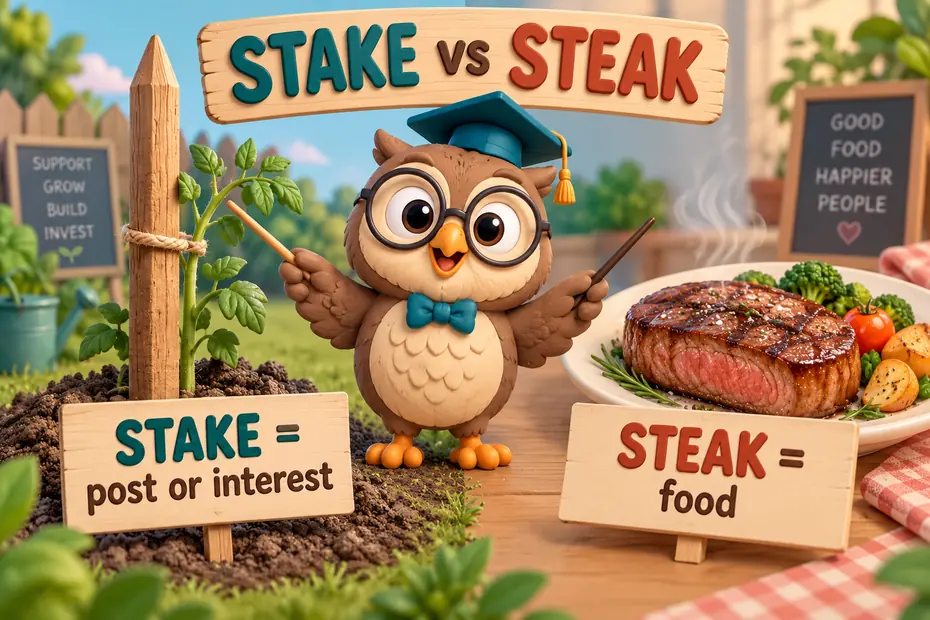
Stake can mean a pointed post, an interest or share, or something risked; steak is a food word for a cut or slice, commonly of meat or fish. Write “a garden stake,” “a stake in the business” and “a beef steak.” Stake also works as a verb: “Stake the plant.”

Stake vs steak: the facts that matter
These homophones are normally pronounced alike, but their spellings follow their meanings. Stake is not restricted to one kind of physical post or one kind of investment. Steak is not a promise that a cut will be expensive, tender or highly marbled. Keep the basic noun meanings separate before adding descriptions.
| Word | Meaning | Example |
|---|---|---|
| Stake | Pointed post | The stake supports the tomato plant. |
| Stake | Interest or share | She has a stake in the company. |
| Stake | Something risked or wagered | The stakes were high. |
| Stake | Verb: support or risk | They staked the plants. |
| Steak | Food cut or slice | He ordered a tuna steak. |
Merriam-Webster’s stake entry includes noun and verb senses. Its steak entry includes meat and fish uses. The older article’s repeated description of steak as inherently “high-quality” or tender is a culinary judgment, not the word’s definition.
Stake for a post or support
A stake is commonly a pointed post driven into the ground. It can mark a position or support a plant. In “The gardener drove in a stake,” stake is a noun. In “The gardener staked the plant,” staked is a verb describing attaching or supporting it with a stake.
- The surveyor placed a stake beside the path.
- We tied the young plant to a wooden stake.
- She staked the tomato plants.
- They are staking the new saplings.
Be precise about what a stake marks. In ordinary language it can be a marker, but the word alone does not establish a legal property boundary. A sentence about a survey should describe what the marker represents according to the survey, rather than claim that putting a post into the ground automatically creates ownership.
Stake for an interest, share or risk
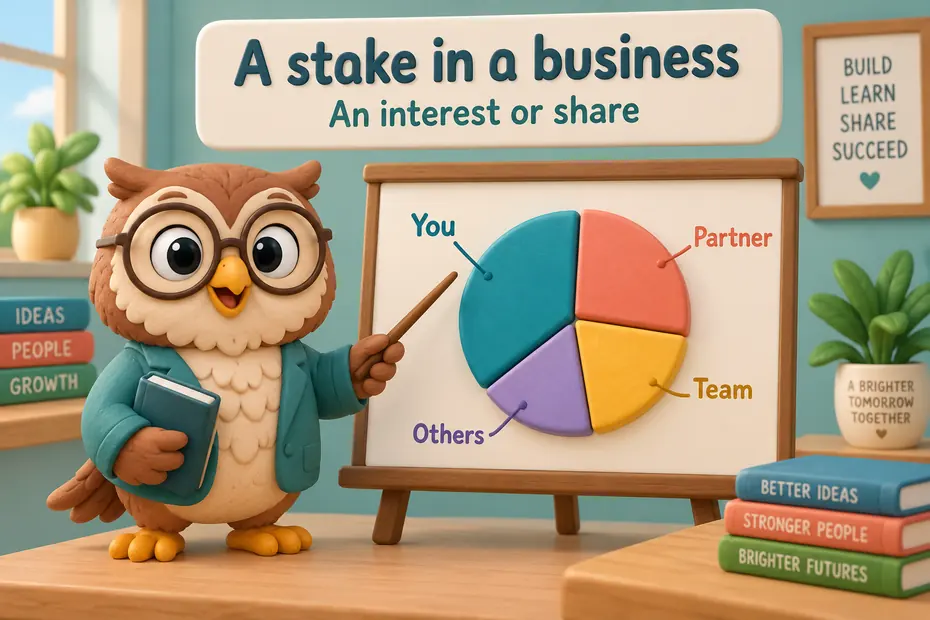
A stake in a business is an interest or share. A stake in an outcome can also be personal: someone may care about a decision because it affects their work, community or reputation. Financial ownership is one stake meaning, not the only possible reason someone has something at stake.
- The founder retained a stake in the company.
- Residents have a stake in the neighborhood’s future.
- Her reputation was at stake.
- The team understood the stakes of the decision.
At stake means potentially gained or lost, or exposed to the outcome. “There is a lot at stake” is already correct. The older example below labels that exact phrase wrong and then repeats it as correct; no spelling change is needed. “A lot at steak” would usually be a pun or an error.
The plural stakes can describe what is risked or the importance of an outcome: high stakes, low stakes, raise the stakes. Before a noun, high-stakes is often hyphenated as a modifier: a high-stakes contest. The food spelling does not belong in these ordinary expressions.
Stake as a verb
Stake can also mean put something at risk: “He staked his reputation on the result.” The regular forms are stakes, staked and staking. Staking drops the final e before -ing. This is why a rule treating stake only as a noun would miss correct sentences.
Stake out can mean mark or establish a claim or position, depending on context. In “The writer staked out a clear position,” no wooden post is required. Figurative meanings are common, but they still belong to stake rather than steak.
Steak for food
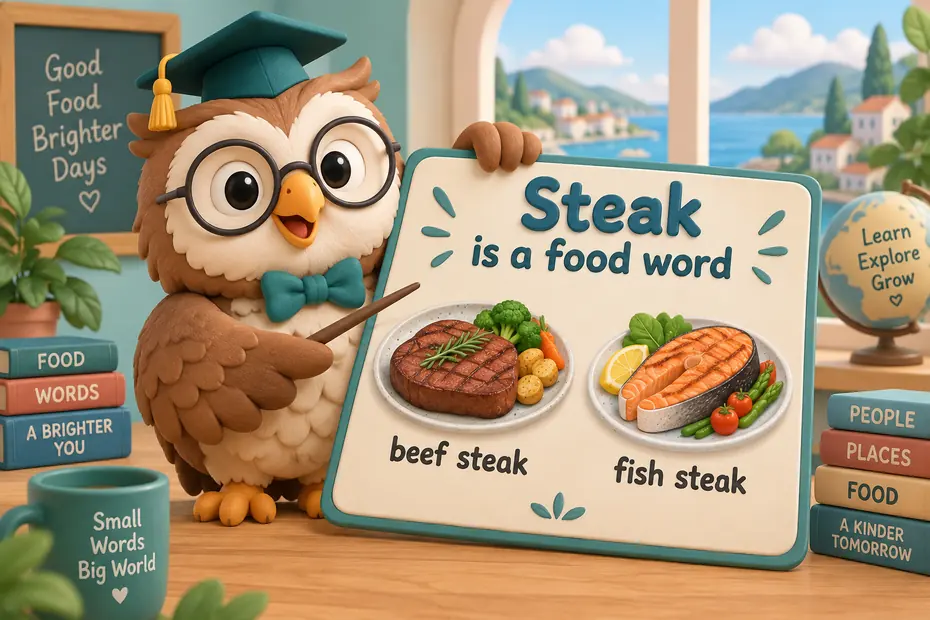
Steak commonly names a cut of beef, but the word also occurs with other meat and fish. A tuna steak is a fish cut. A cauliflower steak uses the familiar food word for a thick slice of the vegetable. The accompanying noun identifies what the steak is made from.
- The menu lists beef steak and tuna steak.
- She sliced the cooked steak.
- We ordered two steaks for the table.
- The recipe describes thick cauliflower steaks.
The plural is steaks. Do not confuse it with stakes, the plural posts or interests. Neither spelling tells you a cooking temperature or quality grade. If you are writing about a recipe or menu, give the actual ingredient and preparation separately.
A quick editing check
Try replacing stake with post, interest or risk, depending on the sentence. Try replacing steak with food cut. “A post beside the plant” points to stake. “A food cut on the plate” points to steak. In “She staked her reputation,” use risked as the replacement test.
The ea in steak can remind you of eat, but treat that as a mnemonic rather than an etymology claim. A spellchecker will usually accept both words. Read the entire sentence to decide whether its subject is food, support, ownership or consequences.
Frequently asked questions
Is it high stakes or high steaks?
High stakes describes important consequences or risks. High steaks would concern food or wordplay.
Can stake be a verb?
Yes. “Stake the plant” and “stake your reputation” are standard uses with different meanings.
Does steak always mean beef?
No. The word is also used with other meat, fish and thick vegetable slices. Specify the ingredient when needed.
Is a stakeholder always a shareholder?
No. Stake can describe an interest in an outcome beyond owning shares. Use shareholder when that specific ownership relationship is intended.
How do I form the plurals?
Stake becomes stakes; steak becomes steaks. Keep the original vowel spelling in each family.
Key Takeaways
- “Stake” is a noun related to boundaries, interests, or investments.
- “Steak” is a noun referring to a slice of meat, typically beef, suitable for cooking.
- Confusing “stake” with “steak” can lead to misunderstandings or embarrassment.
- Use examples to clarify the correct usage of “stake” and “steak”.
- Familiarize yourself with the definitions and pay attention to spelling when using these words.
- Context is key – choose the appropriate word based on the intended meaning.
Understanding the Difference between Stake and Steak
As an expert in language and writing, it’s essential to grasp the difference between commonly confused words. In this section, I’ll shed light on the distinction between “stake” and “steak.” These two words might sound similar, but they have distinct meanings and usage.
Definition of Stake
Let’s start with “stake.” The word “stake” is primarily used as a noun and has several meanings. The most common definition of “stake” is a pointed stick or post driven into the ground, often used to mark boundaries or support plants. It can also refer to a share or interest in a business or venture. Also, “stake” can convey the idea of a financial or personal interest in the outcome of a situation.
Definition of Steak
On the other hand, “steak” is a noun that refers to a slice of meat, typically beef, that is suitable for grilling, frying, or broiling. It is a culinary term associated with the specific cut of meat and the way it is prepared. “Steak” can also be used in a broader sense to describe similar cuts of meat from other animals, such as pork or chicken.
Difference between Stake and Steak
The main difference between “stake” and “steak” lies in their meanings and usage. While “stake” is related to boundaries, interests, or investments, “steak” is all about delicious slices of meat. Here’s a quick recap of the key differences:
- “Stake” is a noun related to boundaries, interests, or investments.
- “Steak” is a noun referring to a slice of meat, typically beef, suitable for cooking.
Understanding the difference between these two words is important for proper communication and precision in your writing. Confusing them could lead to misunderstandings or even embarrassment in certain contexts.
Examples
To further illustrate the difference, let’s look at a few examples:
- Incorrect: I ordered a juicy stake at the restaurant.
Correct: I ordered a juicy steak at the restaurant. - Incorrect: He had a lot at stake in the game.
Correct: He had a lot at stake in the game.
Remember, knowing when to use “stake” or “steak” will make a significant difference in conveying your intended meaning accurately.
Definition and Usage of Stake
When it comes to the commonly confused words “stake” and “steak,” understanding their differences is crucial for effective communication. So, let’s jump into the definition and usage of “stake.”
Definition of Stake: As a noun, “stake” has multiple meanings and uses. It can refer to:
- A pointed stick or post driven into the ground – You might have come across stakes used as markers for boundaries or as supports for plants in a garden.
- A share or interest in a business – In the business world, stakeholders hold a financial interest in the company’s success.
- A financial or personal interest in the outcome of a situation – When you have something at stake, you have a vested interest in a particular outcome. It could be a personal investment, reputation, or even a bet.
Understanding these different meanings of “stake” is important to avoid confusion and ensure effective communication. Let’s explore some examples to reinforce our understanding.
- Example 1: She planted stakes in the garden to support the growing tomatoes.
- Example 2: The stakeholders in the company were eager to see increased profits.
- Example 3: I have a lot at stake in this upcoming presentation.
By grasping the nuances of “stake,” you can confidently use it in various contexts and avoid any mix-ups with its homophone, “steak.” Now that we’ve covered the definition and usage of “stake,” let’s move on to understanding “steak” in the next section.
Definition and Usage of Steak
Steak is a delicious, savory dish that is loved by many. It refers to a high-quality cut of meat, usually beef, that is typically cooked by grilling or frying. Here, I’ll provide a comprehensive definition of steak and explore its usage in different contexts.
What is Steak?
Steak is a noun that primarily refers to a piece of meat that is taken from a larger animal, such as a cow or a pig. It is known for its tenderness, juiciness, and flavorful taste. Steak is often renowned for its marbling, which refers to the small flecks of fat distributed throughout the meat, enhancing both its taste and texture.
Definition of Steak
- A high-quality cut of meat, typically beef, that is known for its tenderness, juiciness, and flavorful taste.
- Often characterized by marbling, which enhances the taste and texture of the meat.
Usage of Steak
Steak is a versatile ingredient that can be prepared in various ways to suit different tastes and preferences. Here are some common contexts in which the word “steak” is used:
- Culinary Delight: Steak is a popular choice for meals at restaurants, backyard barbecues, and special occasions. It can be cooked to different degrees of doneness, ranging from rare to well-done, to cater to individual preferences.
- Menu Terminology: When dining out, you may come across terms like “filet mignon,” “ribeye,” or “T-bone,” which all refer to specific cuts of steak. Each cut has its unique characteristics, such as tenderness, marbling, and flavor profile.
- Cooking Techniques: Steak can be prepared using various cooking methods, including grilling, pan-searing, broiling, or even sous vide. Each technique offers a different culinary experience and allows for the development of different flavors and textures in the meat.
Understanding the definition and usage of steak is essential for effective communication, particularly in culinary discussions, menu selections, and cooking instructions. So, the next time you encounter this delicious cut of meat, you’ll have a better appreciation for its culinary significance.
Keep reading to explore the difference between “stake” and “steak” in the next section!
And now, let’s investigate into the difference between “stake” and “steak” in the next section.
Common Mistakes and Confusion
When it comes to the words “stake” and “steak,” it’s easy to see how they can be confused. They sound similar and are only one letter apart. But, their meanings are quite different, and using them appropriately is crucial in communicating effectively. Let’s explore some common mistakes and confusion surrounding these two words.
The Difference Between “Stake” and “Steak”
To clear up any confusion, let’s start by understanding the difference between “stake” and “steak”:
- Stake: This noun refers to a pointed stick or post that is driven into the ground, often used as a marker or support. It can also refer to a personal or financial interest in something, like having a stake in a business or a stake in a game.
- Steak: This noun is a high-quality cut of meat, usually beef, known for its tenderness, juiciness, and flavorful taste. It’s a culinary delight that many people enjoy grilled, broiled, or pan-seared.
What is the Definition of “Stake”?
Now that we’ve clarified the difference between the two words, let’s focus on the definition of “stake”:
- Definition: A stake is a pointed stick or post driven into the ground for various purposes. It can also refer to a personal or financial interest in something.
How to Use “Stake” Appropriately
To use the word “stake” correctly, it’s important to remember its meanings and contexts. Here are some examples of how to use “stake” appropriately:
- “I marked the boundaries of my garden using wooden stakes.”
- “The company has a stake in the success of the new product.”
- “He placed a stake in the ground, claiming the land as his own.”
Ensuring Proper Usage of “Steak”
When it comes to “steak,” its usage is more straightforward. Here are some examples of how to use “steak” in a sentence:
- “I ordered a medium-rare steak for dinner.”
- “She grilled the steak to perfection.”
- “The steak was tender and flavorful.”
Tips for Using Stake and Steak Correctly
Now that we have a clear understanding of the difference between “stake” and “steak,” it’s important to know how to use these words appropriately in our writing and conversations. Here are a few tips to help you use these words correctly:
- Remember the Definitions: Familiarize yourself with the definitions of “stake” and “steak.” “Stake” refers to a pointed stick or post driven into the ground, used as a marker or support, or as a personal or financial interest in something. On the other hand, “steak” is a high-quality cut of meat, usually beef, known for its tenderness, juiciness, and flavorful taste.
- Context is Key: Consider the context in which you are using the words. Is it referring to a pointed stick or post driven into the ground, or are you talking about a delicious piece of meat? Ensure that your choice of word aligns with the intended meaning.
- Pay Attention to Spelling: Be mindful of the spelling of the words. “Stake” and “steak” may sound similar, but they are spelled differently. Using the wrong spelling can lead to misunderstandings and confusion.
- Examples: Now and then, it can be helpful to provide examples to clarify your intended meaning. Here are a few examples to illustrate the correct usage of “stake” and “steak”:
- I used a stake to mark the boundaries of my garden.
- The hiker tripped over a stake that was sticking out of the ground.
- He has a financial stake in the success of the company.
- I ordered a juicy steak for dinner.
- The restaurant is known for its delicious steaks.
- She likes her steak cooked medium-rare.
By following these tips, you can confidently and accurately use “stake” and “steak” in your communication. Remember, using the correct word will enhance your ability to effectively convey your message.
Conclusion
Note: The article should not have a conclusion paragraph or sentence at the end.
Conclusion
To conclude, it is crucial to understand the difference between “stake” and “steak” to communicate effectively. “Stake” refers to a pointed stick or post driven into the ground or a personal or financial interest in something, while “steak” is a high-quality cut of meat, typically beef, known for its tenderness and flavor. By remembering these definitions, considering the context, paying attention to spelling, and practicing with examples, you can confidently incorporate these words into your communication.
Using “stake” correctly ensures that your intended meaning is conveyed, whether you are referring to a marker, support, or personal/financial interest. On the other hand, using “steak” accurately allows you to describe a delicious and tender cut of meat, enhancing your culinary descriptions.
So, the next time you come across these words, remember to use “stake” when referring to a pointed stick or personal/financial interest, and use “steak” when discussing a delectable piece of meat. By mastering the appropriate usage of these words, you can avoid confusion and effectively express yourself in both written and spoken English.
Frequently Asked Questions
Q: What is the article about?
A: The article is about the common mistakes and confusion surrounding the words “stake” and “steak” and provides tips on how to use them correctly.
Q: How does the article define “stake”?
A: “Stake” is defined as a pointed stick or post driven into the ground, used as a marker or support, or as a personal or financial interest in something.
Q: What is the definition of “steak” provided in the article?
A: “Steak” is defined as a high-quality cut of meat, usually beef, known for its tenderness, juiciness, and flavorful taste.
Q: Does the article provide examples of how to use both words correctly?
A: Yes, the article provides examples of how to use both “stake” and “steak” correctly in sentences.
Q: What tips are provided in the article for using “stake” and “steak” correctly?
A: The article suggests remembering the definitions, considering the context, paying attention to spelling, and providing examples as tips for using “stake” and “steak” correctly.
Q: How can readers confidently and accurately use “stake” and “steak” in their communication?
A: By following the tips provided in the article, readers can confidently and accurately use “stake” and “steak” in their communication.


