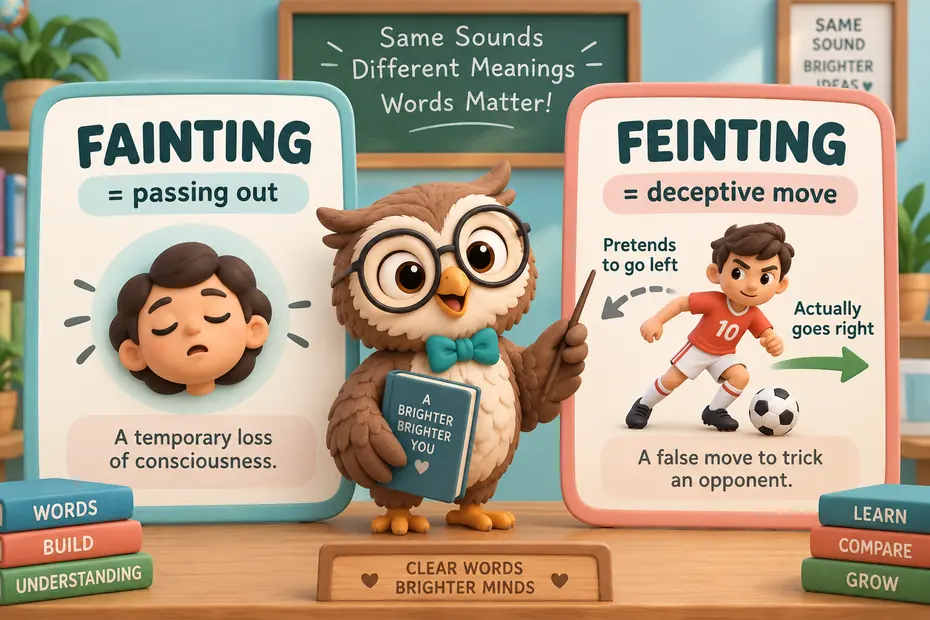
Fainting means briefly losing consciousness; feinting means making a deceptive movement to mislead someone, often an opponent. Write “The visitor was fainting” for passing out and “The player was feinting” for a tactical fake. These homophones sound alike but describe different actions.
Correction to the older first-aid section below: lowering a person’s head between their knees applies to someone who feels about to faint, not someone already unconscious. Follow current NHS fainting guidance: check responsiveness and breathing; a normally breathing person who fainted can lie on their back with legs raised, while someone pregnant, especially beyond 28 weeks, is better on their side. In the UK, call 999 if they are not breathing, cannot be woken within one minute, have not recovered fully, have chest pain, a seizure or serious injury, or fainted during exercise or while lying down. Elsewhere use the local emergency number. A fainting episode should be checked by a clinician; do not assume its cause from the spelling lesson.
Fainting vs feinting: key facts
| Word | Base verb | Meaning | Example |
|---|---|---|---|
| Fainting | Faint | Passing out | The report mentions a fainting episode. |
| Feinting | Feint | Making a misleading move | The striker was feinting to draw the defender left. |
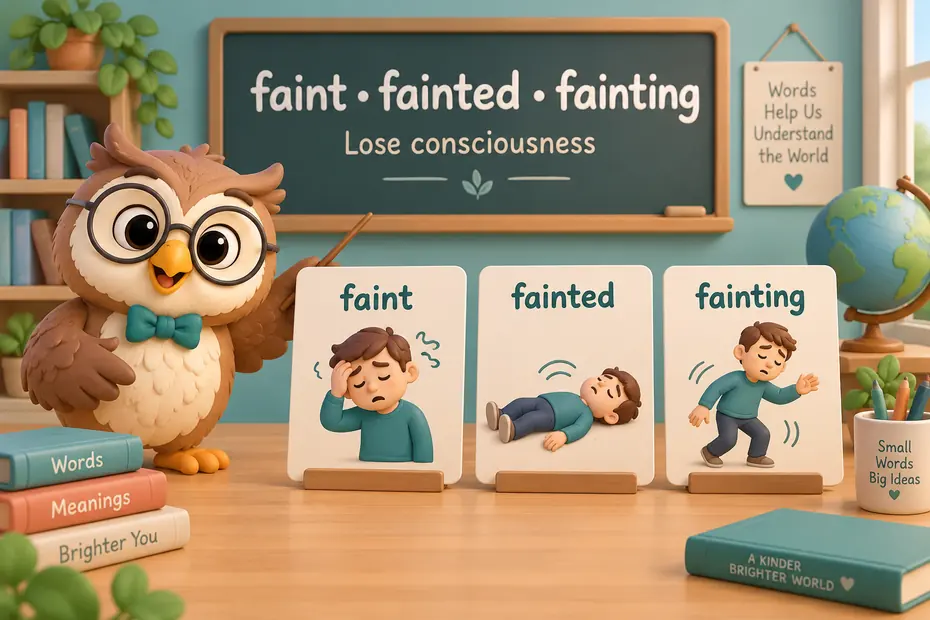
The spelling difference is ai versus ei. Both belong to verb families: faint, fainted, fainting; feint, feinted, feinting. Adding -ing does not change either pair of vowel letters. Keep the same spelling when you move between present, past and continuous forms.
How to use fainting
Merriam-Webster’s faint entry describes the verb’s usual meaning as losing consciousness because blood supply to the brain temporarily decreases. In everyday writing, fainting and passing out often express the same event. A sentence can report the event without identifying why it happened.
- The witness described the visitor fainting.
- She had a fainting episode during the meeting.
- The notes say that he fainted yesterday.
- The story’s narrator feared fainting in public.
Feeling faint and fainting are different descriptions. “I feel faint” reports a sensation of weakness or dizziness and does not say the person has already lost consciousness. “I fainted” reports that they did. When accuracy matters, do not turn the first statement into the second simply to make the sentence shorter.
Likewise, not every collapse or period of unresponsiveness should automatically be labeled fainting. The language distinction explains a word’s meaning; it does not establish a medical diagnosis. A careful report can describe what was observed and leave the cause to an appropriate assessment.
How to use feinting
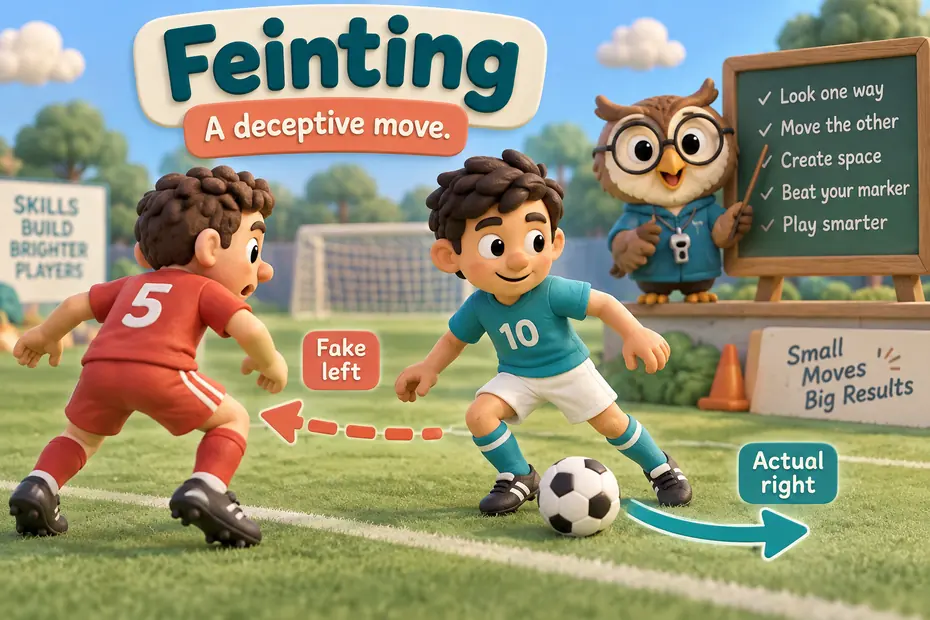
A feint creates a misleading impression of an intended action. A footballer may suggest a move left before moving right. A fencer may suggest one attack to prompt a response elsewhere. The common feature is the deceptive move, rather than the particular sport or equipment.
Merriam-Webster’s feint entry records feint as both a noun and a verb. A player can make a feint or feint toward an opening. Feinting is the -ing form used in “The player is feinting” or as the activity in “Feinting confused the defender.”
- The forward kept feinting before taking the shot.
- He feinted left, then moved right.
- Her feint made the opponent change position.
- The coach reviewed the player’s feinting technique.
A feint need not involve pretending to faint. Those ideas can occur together in a story, but they remain different words. An actor who pretends to lose consciousness is feigning a faint; a player making a tactical fake is feinting. Describe the actual action before choosing the term.
Related words: faint, feint and feign
Faint can also be an adjective. A faint sound is quiet or hard to hear; a faint outline is hard to see. These meanings use ai even though nobody has passed out. Feint is not the adjective to use for a dim light or a weak sound.

Feign is another related-looking verb meaning pretend. “Feigning surprise” describes pretending to be surprised. “Feinting left” describes a deceptive move. “Fainting” describes passing out. If a sentence concerns a performance of emotion rather than a tactical movement or loss of consciousness, you may need feigning instead of either word in this pair.
An editing check that works
Try replacing fainting with passing out and feinting with making a deceptive move. “The midfielder was passing out to distract the defender” probably changes the intended sporting action. “The midfielder was making a deceptive move” points to feinting. A sentence about someone becoming unconscious points to fainting.
Do not rely on autocorrect: both spellings are valid. Read the sentence before and after the disputed word. Is it a health event, a dim or weak quality, a strategic movement, or pretending more generally? Context often shows that a third word is required rather than a simple one-letter substitution.
Frequently asked questions
Do fainting and feinting sound the same?
Yes, in standard pronunciations they are homophones. Their spelling follows their meanings rather than a difference in sound.
Is feinting always a sport term?
No. It also appears in accounts of military tactics and other deceptive maneuvers. The essential meaning is a misleading action.
Does feeling faint mean someone fainted?
No. Feeling faint describes a sensation. Fainted reports a loss of consciousness.
What are the past forms?
Fainted and feinted. Write “She fainted” for passing out and “She feinted” for making a deceptive move.
Which spelling fits fainting spell?
Fainting spell uses ai because it refers to an episode of passing out. A sports feint uses ei.
Key Takeaways
- Fainting is a sudden loss of consciousness caused by a drop in blood pressure or lack of oxygen, while feinting is a deliberate deceptive action used in strategic moves, usually in sports or combat.
- Fainting is triggered by physiological factors, such as low blood pressure or lack of oxygen, while feinting is a conscious and intentional action taken to deceive an opponent.
- Fainting results in a temporary loss of consciousness, while feinting does not lead to loss of consciousness.
- Fainting is commonly associated with medical conditions or sudden physical stress, while feinting is often used in sports, combat, or strategic games.
- Feinting is used in sports and martial arts to deceive opponents and gain an advantage by making deceptive moves or gestures.
- Using the terms “fainting” and “feinting” appropriately is important for accurate communication and understanding in various contexts.
The Difference Between Fainting and Feinting
As an expert blogger, I’ve come across many confusing word pairs, and one that often causes confusion is the difference between fainting and feinting. So, let’s immerse and clear up any misconceptions about these two terms.
Definition of Fainting:
Fainting is a sudden, temporary loss of consciousness that occurs when there is a brief interruption in the brain’s blood supply. It is commonly caused by a drop in blood pressure or a lack of oxygen. When someone faints, they typically lose consciousness and may experience lightheadedness, dizziness, or a feeling of weakness beforehand.
Definition of Feinting:
Feinting, on the other hand, is a term used in strategic moves, usually in sports or combat. Feinting refers to a deliberate deceptive action or movement made to mislead an opponent or divert their attention. It is a calculated move designed to trick the opponent into reacting in a certain way, creating an advantageous opening for the person executing the feint.
So, while fainting involves a physical condition resulting in a loss of consciousness, feinting is a strategic tactic used in certain activities to deceive and gain an advantage over an opponent.
Now that we have a clear understanding of the definitions, let’s take a closer look at the differences between fainting and feinting.
- Cause: Fainting is generally caused by physiological factors such as low blood pressure or lack of oxygen. Feinting, on the other hand, is a deliberate action taken by an individual to deceive their opponent.
- Consciousness: Fainting results in a temporary loss of consciousness, while feinting does not lead to loss of consciousness.
- Purpose: Fainting is an involuntary reaction triggered by physiological conditions, whereas feinting is a conscious and intentional action taken to gain an advantage in a specific situation.
- Context: Fainting is commonly associated with medical conditions or sudden physical stress, while feinting is often used in sports, combat, or strategic games.
Understanding the difference between fainting and feinting is important for clear communication and accurate usage. So, next time you come across these words, keep in mind their distinct meanings and contexts.
Remember, knowledge is power, and with a clear understanding of words like these, you can navigate the English language with confidence and precision.
What is Fainting?
Fainting, also known as syncope, is a sudden loss of consciousness that occurs when there is a temporary decrease in blood flow to the brain. It is important to differentiate fainting from other causes of loss of consciousness, such as seizures or strokes. Understanding the definition of fainting can help us use the term appropriately in conversation or writing.
- Definition of Fainting: Fainting is a transient loss of consciousness that is typically accompanied by a loss of postural tone. It is most commonly caused by a temporary drop in blood pressure or a temporary lack of oxygen reaching the brain. This temporary disruption in blood flow to the brain leads to a brief loss of consciousness, usually lasting only a few seconds to a few minutes.
- Difference between Fainting and Other Conditions: It is crucial to distinguish fainting from other medical conditions that involve loss of consciousness. For example, seizures are caused by abnormal electrical activity in the brain, while strokes are caused by a disruption in blood flow to the brain due to a clot or bleeding. Fainting, on the other hand, is caused by a temporary decrease in blood flow.
- Similarity to Feinting: Although the terms may sound similar, fainting and feinting are not related in terms of their causes, consciousness, or purpose. Fainting is a physiological response to a drop in blood pressure, while feinting is a deliberate deceptive action used in a specific context, such as sports or warfare, to deceive or confuse an opponent.
Understanding the difference between fainting and other conditions, as well as the distinction between fainting and feinting, is essential for accurate usage of these terms. It allows us to effectively communicate and prevents any confusion or misinterpretation.
- Fainting can be triggered by various factors, including dehydration, intense emotions, exposure to heat, standing for long periods, or certain medical conditions like low blood sugar or heart problems.
- Fainting can happen to anyone, but it is more common in older adults, pregnant women, and individuals with certain underlying medical conditions.
In the next section, let’s explore what feinting is and how it differs from fainting.
Causes and Symptoms of Fainting
Fainting, also known as syncope, occurs when there is a temporary reduction in blood flow to the brain, resulting in a sudden loss of consciousness. Understanding the causes and symptoms of fainting is crucial for accurately differentiating it from other conditions.
Causes of Fainting
There are several factors that can contribute to fainting episodes. These include:
- Drop in Blood Pressure: A sudden decrease in blood pressure can lead to fainting. This can occur due to factors like dehydration, medication side effects, or underlying medical conditions.
- Heart Problems: Certain heart-related issues, such as irregular heartbeats (arrhythmias) or structural abnormalities, may disrupt the normal flow of blood and result in fainting.
- Vasovagal Response: This is a reflex reaction that can be triggered by certain stimuli, such as extreme pain, seeing blood, or standing up too quickly. It causes a sudden drop in heart rate and blood pressure, leading to fainting.
- Hyperventilation: Breathing rapidly and shallowly can decrease the carbon dioxide levels in the blood, affecting its balance and potentially causing fainting.
- Neurological Disorders: Conditions like epilepsy, migraines, or certain autonomic nervous system disorders can increase the risk of fainting episodes.
Symptoms of Fainting
Fainting is typically accompanied by specific symptoms that can help differentiate it from other causes of loss of consciousness. These symptoms include:
- Dizziness or lightheadedness: Feeling unsteady or woozy before losing consciousness.
- Pale complexion: Skin turning pale or appearing ashen.
- Sweating: Profuse sweating, often described as cold and clammy.
- Nausea: Feeling sick to the stomach or experiencing a sensation of impending vomiting.
- Blurred vision: Temporary loss of clear vision, seeing spots, or experiencing tunnel vision.
- Feeling of impending doom: Sensation of extreme fear or anxiety before fainting.
It’s important to note that fainting episodes are usually brief and self-resolving, with individuals regaining consciousness shortly after collapsing. But, it’s always essential to seek medical attention to determine the underlying cause and rule out any serious conditions.
How to Help Someone Who Has Fainted
When someone faints, it can be a scary and confusing experience for both the person who fainted and those around them. As an expert in dealing with fainting spells, I’m here to provide you with some important steps on how to help someone who has fainted:
- Stay calm: It’s important to remain calm and composed when faced with a situation where someone has fainted. Panicking will not help the situation and can potentially worsen it.
- Ensure safety: The first step is to ensure the safety of the person who has fainted. Carefully guide them to a safe and comfortable position, either by laying them down flat or positioning them with their head between their knees.
- Check for responsiveness: Gently tap the person’s shoulders and ask if they can hear you. If there is no response, it’s crucial to check for signs of breathing. Look for chest movements and listen for any sounds of breathing.
- Loosen tight clothing: If the fainting episode was caused by constriction from tight clothing, such as a tie or a high collar, it’s important to loosen or remove these items to help improve blood flow.
- Call for help if necessary: If the person does not regain consciousness within a minute or if they have any difficulty breathing, it’s important to call for medical assistance right away. This is especially crucial if the person has underlying health conditions or if the fainting episode is unexplained.
- Monitor vital signs: While waiting for medical help to arrive, it’s important to monitor the person’s vital signs. Check for a pulse and observe their breathing. If the person is not breathing, begin CPR immediately, if you are trained to do so.
Remember, fainting can be caused by various underlying conditions, and it’s crucial to seek medical attention to determine the cause. The steps I’ve outlined here are just initial measures to help the person in the immediate moment. Medical professionals will be able to provide a thorough evaluation and appropriate treatment.
By following these guidelines, you can help someone who has fainted and ensure their well-being. Stay calm, act swiftly, and seek medical attention when needed.
What is Feinting?
Feinting is a term that is often confused with fainting, but it has a completely different meaning. While fainting refers to a temporary loss of consciousness due to a decrease in blood flow to the brain, feinting is a strategy used in sports or combat to deceive an opponent.
In sports such as boxing or fencing, a feint is a deceptive move designed to trick the opponent into reacting in a certain way. It involves making a false attack or movement to create an opening or to lure the opponent into a particular defensive position. The intention behind a feint is to mislead the opponent and create an opportunity for a successful attack.
Feinting is also commonly used in military tactics. A feint can involve making a false movement or maneuver to distract the enemy and divert their attention away from the main objective. By creating a diversion or causing confusion, feints can be used to gain a strategic advantage on the battlefield.
Unlike fainting, which is a physical condition, feinting is a deliberate action intended to deceive or trick. It requires strategy, timing, and skill. Feinting can be a powerful tool when used effectively in sports or combat scenarios, allowing the individual or team to gain an upper hand.
Understanding the difference between fainting and feinting is crucial to using the words correctly. Fainting is a medical term that describes a loss of consciousness due to a lack of blood flow to the brain. Feinting, on the other hand, refers to a tactical move used to mislead or deceive opponents in sports or combat.
By recognizing the distinct definitions of fainting and feinting, you can ensure that you are using the appropriate term in the right context. Whether discussing medical conditions or strategic maneuvers, it’s important to have a clear understanding of the differences between these two words.
Don’t forget to check out the next section where I will discuss the causes and symptoms of fainting and provide important steps on how to help someone who has fainted.
Feinting in Sports and Martial Arts
Feinting is a strategy commonly used in sports and martial arts to deceive opponents and gain an advantage. It involves making a deceptive move or feigned attack to mislead the opponent into reacting in a certain way. Let’s explore some examples of how feinting is utilized in various sports and martial arts disciplines.
Soccer
In soccer, feinting is often seen during penalty kicks or when a player is trying to score a goal. A player may fake a shot by swinging their leg as if they’re going to kick the ball, only to quickly change direction and pass it to a teammate or dribble past the opposing player. This unexpected change in direction can catch the goalkeeper or defender off-guard, creating an opportunity for the attacking team to score.
Boxing
Feinting plays a crucial role in boxing, where fighters use it to create openings for punches while keeping their opponents guessing. By throwing a feint, a boxer can trick their opponent into lowering their guard or moving in a particular direction, allowing them to land a powerful punch. Feinting is an essential skill for boxers, as it helps them control the tempo of the fight and gain a strategic advantage.
Fencing
In fencing, feinting is a fundamental technique used to deceive opponents and create scoring opportunities. Fencers use quick and subtle movements to simulate an attack in one direction, only to change their movement at the last moment. This confuses the opponent, making them react in the wrong direction and leaving themselves open to a well-executed attack.
Martial Arts
Feinting is also a valuable strategy in various martial arts disciplines, such as judo, taekwondo, and Brazilian Jiu-Jitsu. Martial artists use feints to create openings, lure their opponents into making mistakes, and set up effective techniques or takedowns. By feinting an attack, they can disrupt their opponent’s rhythm and exploit their reactions to gain a tactical advantage.
Understanding the concept of feinting in sports and martial arts is essential for athletes and enthusiasts alike. By incorporating feints into their strategies, athletes can surprise their opponents, gain a competitive edge, and eventually achieve greater success in their respective disciplines.
The Importance of Using the Terms Appropriately
Feinting and fainting are two words that are often confused in various contexts. As an expert in language usage, I understand the importance of using these terms appropriately. To fully grasp their distinctions, let’s investigate into their definitions and explore the differences between them.
When it comes to sports and martial arts, feinting is a commonly employed strategy. It involves making a deceptive move or gesture to mislead an opponent and create scoring opportunities. For instance, in soccer, a player may pretend to pass the ball in one direction but then quickly change course, taking advantage of the opposition’s reaction. In boxing, a feint may involve throwing a punch in one direction to draw the opponent’s guard away, opening up a vulnerable spot for a subsequent strike. Understanding the art of feinting can give athletes a significant advantage on the field or in the ring.
On the other hand, fainting has an entirely different meaning. It refers to a sudden loss of consciousness, often caused by a drop in blood pressure. Fainting is a medical condition that requires prompt attention and is associated with various factors such as emotional distress, low blood sugar, or even underlying health conditions. It is crucial to recognize the seriousness of fainting episodes and seek medical assistance when necessary.
It is essential to use these terms appropriately to prevent any misunderstandings or confusion, especially when discussing sports tactics or medical emergencies. Misusing these terms can lead to misinformation and potentially harmful situations. By understanding the difference between feinting and fainting, we can effectively communicate our thoughts and knowledge to others, ensuring clarity and accuracy in our discussions.
To conclude, the distinction between feinting and fainting lies in their definitions and the contexts in which they are used. Feinting refers to a strategy used in sports and martial arts to deceive opponents, while fainting is a medical condition characterized by a sudden loss of consciousness. Using these terms appropriately ensures proper communication and avoids any potential confusion. Now that we have clarified the difference, let’s move on to exploring more examples and scenarios where these terms are commonly used.
Conclusion
Understanding the difference between fainting and feinting is crucial in the world of sports and martial arts. Feinting is a strategic move used to deceive opponents and create scoring opportunities, while fainting refers to a sudden loss of consciousness. By using these terms appropriately, we can prevent confusion and ensure accurate communication.
Feinting is a skill that can give athletes a competitive edge. It allows them to outsmart their opponents and make calculated moves that catch them off guard. By mastering the art of feinting, athletes can gain an advantage and increase their chances of success.
On the other hand, fainting is a medical condition that requires immediate attention. It is important to understand the signs and symptoms of fainting, as well as the appropriate actions to take when someone faints. By being knowledgeable about fainting, we can provide timely assistance and potentially save lives.
To conclude, knowing the difference between fainting and feinting is essential. It allows us to use these terms accurately and avoid confusion. Whether in sports or everyday life, understanding these concepts can make a significant difference in our communication and overall well-being.
Frequently Asked Questions
Q: What is the concept of feinting in sports and martial arts?
A: Feinting is a strategy used in sports and martial arts to deceive opponents. It involves making deceptive moves or gestures to mislead the opponent and create scoring opportunities.
Q: What is the difference between feinting and fainting?
A: Feinting and fainting are not the same. Feinting refers to deceptive moves used in sports and martial arts, while fainting refers to a sudden loss of consciousness. It’s important to use these terms appropriately to prevent confusion.
Q: Why is feinting important in sports and martial arts?
A: Feinting is important because it helps athletes and martial artists gain a competitive edge. By tricking opponents with deceptive moves, they can create openings for attacks or confuse their opponents to gain an advantage.
Q: How can feinting be used effectively in sports and martial arts?
A: To use feinting effectively, athletes and martial artists should focus on their body language, footwork, and timing. By mastering these skills, they can execute feints that are convincing and effective in misleading opponents.
Q: What are the benefits of properly understanding and using the terms feinting and fainting?
A: Properly understanding and using the terms feinting and fainting helps prevent confusion and misinformation. By using the correct terms, athletes, coaches, and fans can have clearer communication and a better understanding of different strategies and techniques in sports and martial arts.


