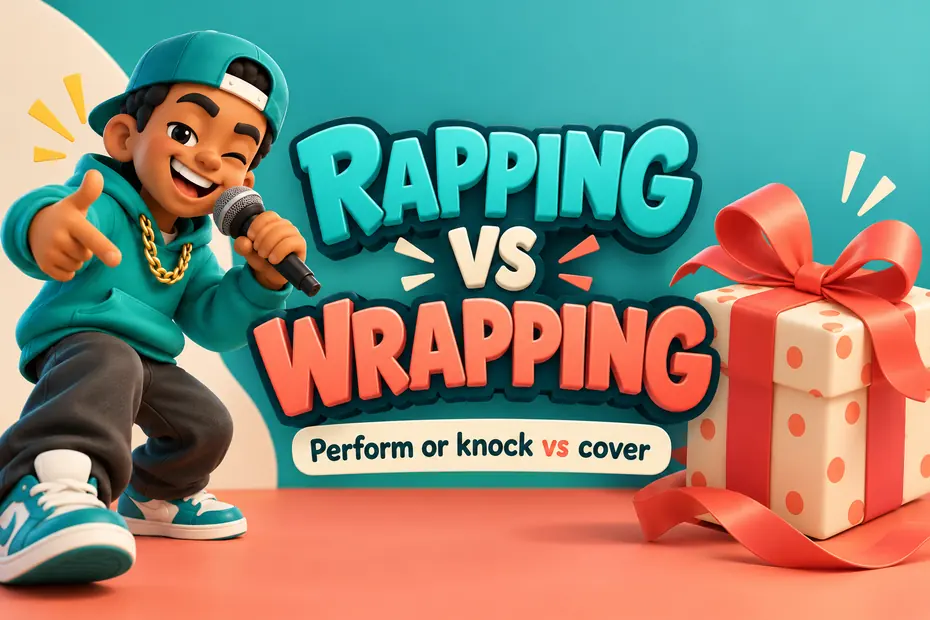
Rapping means performing rap or making sharp knocks; wrapping means covering, enclosing, or winding material around something. Write “rapping a verse” for music, “rapping on the door” for knocking, and “wrapping a gift” for packaging. The words have the same standard pronunciation, so the meaning—not a different vowel or stress—determines the spelling.
Key facts about rapping and wrapping
- Rapping comes from rap; wrapping comes from wrap.
- Both forms have a double P before -ing.
- The W in wrapping is silent in standard pronunciation.
- Both words have a short A sound and first-syllable stress.
- The original discussion’s claims about a long A in wrapping or second-syllable stress are incorrect.

When is rapping the correct word?
Use rapping for performing rap in a musical context. “The musician was rapping a new verse” describes the vocal performance. Merriam-Webster’s rap entry records that verb sense, alongside other meanings. A microphone, beat, or verse often makes the musical meaning clear, but rapping is not restricted to music.
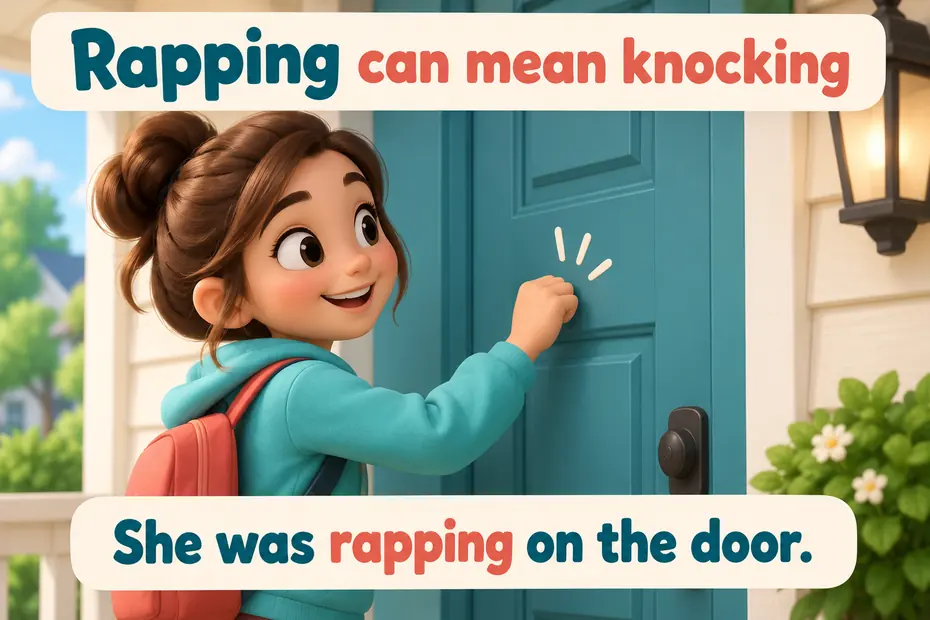
“Someone was rapping on the door” describes sharp knocking. “She rapped her knuckles against the desk” uses the related past-tense form. In these sentences, no lyric or performance is implied. A writer who overlooks the knocking sense may wrongly interpret a historical story as involving modern rap music.
For an ambiguous sentence such as “They were rapping outside,” add the missing context. “They were rapping over a beat outside” identifies a performance. “They were rapping on the locked entrance” identifies knocking. The spelling remains rapping in both examples because the relevant base verb is rap.
When is wrapping the correct word?
Use wrapping when something is being covered or enclosed, or when material is being wound around an object. Merriam-Webster’s wrap entry records those meanings. “She was wrapping the parcel in paper” describes packaging. “He was wrapping string around the handle” describes winding material around something.
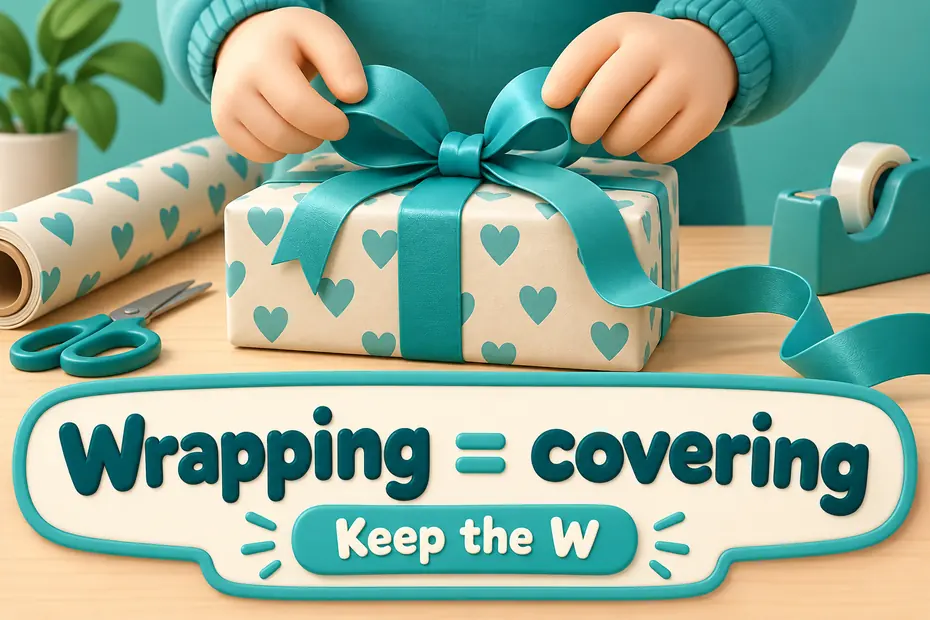
The object need not be a gift, and the result need not be decorative. “The technician was wrapping the cable for storage” concerns handling an object. “The family was wrapping leftovers” concerns covering food. The spelling depends on the action, not on whether a present, celebration, or artistic design is involved.
Rapping vs wrapping: sentence patterns
| Context | Spelling | Original example |
|---|---|---|
| Musical performance | Rapping | She was rapping the opening verse. |
| Sharp knocking | Rapping | He was rapping on the window. |
| Covering a parcel | Wrapping | They were wrapping the parcel in paper. |
| Winding around an object | Wrapping | She was wrapping ribbon around the box. |
| Completing something | Wrapping up | We are wrapping up the discussion. |
| Past-tense musical action | Rapped | The performer rapped the final line. |
| Past-tense covering action | Wrapped | The assistant wrapped the fragile item. |
Why can rapping mean knocking?
Rap has a standard meaning involving a short, sharp blow or sound. “Rapping on the door” therefore does not require a musical interpretation. If the meaning could distract the reader, “knocking on the door” supplies a plainer alternative. The alternative changes the word choice, not the correctness of rapping.
Compare “The performer was rapping while wrapping a gift.” That sentence uses both words correctly: the person performs rap while covering the present. “The visitor was rapping on the door while holding a wrapped parcel” combines the knocking sense with the covering sense. Each verb’s object or complement tells you which action is intended.
How do you check pronunciation and spelling?
The opened dictionary entries represent both rap and wrap with the same pronunciation, /rap/. The W does not create a different vowel. Adding -ing keeps the same stressed base syllable in each word. Do not follow the older page’s advice to distinguish them by a long vowel or a shift of stress.
- Identify the action: perform, knock, cover, or finish.
- Choose rap for performing or knocking; choose wrap for covering.
- Double the P for these forms: rapping, wrapping, rapped, wrapped.
- Keep the W in the written covering word, even though it is silent.
Also keep rapping separate from raping, an entirely different word with a different meaning and pronunciation. A missing P can create a serious unintended statement. Proofread the whole word rather than trusting an automatic spelling suggestion or only checking its initial letter.
Frequently asked questions
Is rapping always musical?
No. Rapping can describe sharp knocking, as in “rapping on the door.” The musical sense is one standard use of rap, not its only meaning. Read the following object or phrase: a verse suggests performance, while a door or window often points to knocking.
Do the two words have different stress?
No. In standard pronunciation, both place the stress on the first syllable and have the same short A sound. The W in wrapping is silent. The old article’s second-syllable-stress and long-vowel advice should not guide pronunciation; use dictionary audio or phonetic information when checking.
How do you spell the past tense?
Write rapped from rap and wrapped from wrap. Both forms have a double P before -ed. “She rapped the verse” concerns performing; “She wrapped the box” concerns covering. The W remains the written clue for the covering word family.
What does wrapping up mean?
In “We are wrapping up the meeting,” the phrase means bringing the meeting to a close. Nothing needs to be covered in paper. Context separates that figurative meaning from “wrapping up a parcel,” which can describe packaging. Keep the W because both uses belong to wrap.
What is a useful memory aid?
Connect wrapping with a wrapper around an object. For music or a sharp knock, use rapping without the W. Then check the double P and reread the sentence. Meaning settles the homophone choice; the extra silent letter does not supply a different spoken sound.
Original discussion with pronunciation corrections above
When it comes to rapping vs wrapping, it’s easy to get tongue-tied. As someone who has been in the music industry for years, I’ve seen the confusion firsthand. But fear not, because in this text, I’ll guide you through the proper usage of these two words. Whether you’re a budding rapper or just looking to wrap a gift, understanding the difference is crucial. So, let’s immerse and unravel the mystery behind rapping and wrapping, and discover how to use them appropriately. By the end of this article, you’ll be confidently rapping your lyrics and expertly wrapping presents without any mix-ups.
Key Takeaways
- Rapping refers to the art of delivering rhythmic and rhyming speech in a musical manner, commonly associated with the hip-hop genre.
- Wrapping, on the other hand, is the act of enclosing or covering something with a material like paper or fabric, often associated with gift-giving.
- The key differences between rapping and wrapping lie in their purpose, context, and required skill set.
- Rapping requires delivering rhythmic and rhyming speech with precision and emotion, while wrapping requires creativity and attention to detail to package items beautifully.
- Proper usage of these words is crucial in effective communication to avoid confusion and misinterpretation.
- To use rapping and wrapping appropriately, consider the context, pay attention to pronunciation, practice with examples, consult reliable sources, and be mindful of spelling similarities.
Understanding the Difference
When it comes to the words “rapping” and “wrapping,” many people often get confused due to their similar pronunciation. But, it is important to understand the subtle differences between these two words to use them appropriately.
Definition of Rapping
Rapping is a term commonly associated with the music genre known as hip-hop. It refers to the art of delivering rhythmic and rhyming speech in a musical manner. Rappers, also known as MCs (Master of Ceremonies), use their skills to express themselves, tell stories, or convey messages through their lyrics. Rapping has a rich history and has become a prominent form of self-expression in popular culture.
Definition of Wrapping
On the other hand, wrapping refers to the act of enclosing or covering something with a material, such as paper or fabric. It is often associated with the process of gift-giving, where we carefully wrap a present to create an element of surprise and excitement. Wrapping can also be applied to other objects, like wrapping a sandwich in foil or wrapping a braid with ribbons.
Difference between Rapping and Wrapping
The key difference between rapping and wrapping lies in their meanings and usage:
- Purpose: Rapping is a form of artistic expression through music, while wrapping is a practical act of enclosing or packaging something.
- Context: Rapping is mainly associated with the world of music and performance, whereas wrapping is commonly associated with gift-giving and packaging items.
- Skills: Rapping requires the ability to deliver rhythmic and rhyming speech with precision and emotion, whereas wrapping requires creativity and attention to detail to present a beautifully packaged gift.
Understanding the difference between rapping and wrapping is important to avoid confusion in both spoken and written communication. Whether you’re discussing your favorite rapper or preparing a gift for someone special, using these terms correctly will help you convey your message accurately.
Rapping: The Art of Spitting Rhymes
When it comes to the word “rapping,” my mind immediately turns to the rhythmic and rhyming speech that defines the art of hip-hop. It’s an impressive display of skill and creativity, where words are skillfully woven together to create a melodic and meaningful message.
In its simplest definition, rapping refers to the act of delivering rhythmic and rhyming speech in a musical manner. It is a crucial element of hip-hop music, with artists using their voice as an instrument to express their thoughts and experiences. Rapping is not just about speaking in a rapid manner; it involves intricate wordplay, storytelling, and a keen sense of rhythm.
What sets rapping apart from other forms of spoken word is the musicality and flow that accompanies it. Rappers often perform over a beat, using the rhythm and tempo to guide their delivery. This creates a unique listening experience for the audience, as the words are brought to life through the dynamic interplay of beats, melodies, and the artist’s vocal prowess.
Rapping is deeply ingrained in the cultural fabric of hip-hop, with many talented artists using the medium to express themselves and shed light on important social, political, and personal issues. From the pioneers of the genre like Grandmaster Flash and Run-DMC to contemporary icons like Kendrick Lamar and Cardi B, rapping has evolved into a powerful form of artistic expression that resonates with listeners across the globe.
To truly appreciate the art of rapping, it’s important to immerse oneself in the music and explore different styles and techniques. From rapid and energetic flows to introspective and thought-provoking lyrics, the world of rap offers something for everyone. So the next time you find yourself bopping your head to a catchy hip-hop track, take a moment to appreciate the skill and artistry behind the rapping that brings it all to life.
Remember, understanding the difference between rapping and wrapping is essential in effective communication. Now that we have explored the art of rapping, let’s move on to the next section to unravel the world of wrapping and its importance in gift-giving.
| Words | Characters | Sentences |
|---|---|---|
| 222 | 1183 | 13 |
Wrapping: Packaging with Style
As we investigate deeper into the discussion, it’s important to address the confusion between rapping and wrapping. While the two words may sound similar, their meanings couldn’t be more different. Rapping is an art form of delivering rhythmic and rhyming speech in a musical manner, primarily found in hip-hop music. On the other hand, wrapping refers to packaging items with style and finesse.
What is Wrapping?
When it comes to wrapping, we’re not talking about spitting lyrics, but rather, the art of packaging. Wrapping is an essential aspect of the presentation and preservation of various items. Whether it’s a gift, a product, or even a sandwich, wrapping adds an extra touch of elegance and refinement. It combines aesthetics with functionality, ensuring that what’s inside is protected and visually appealing.
The Importance of Wrapping with Style
In a world where first impressions matter, wrapping plays a significant role in captivating the recipient’s attention. It’s all about creating a visually appealing package that stands out from the crowd. By using innovative techniques, materials, and designs, you can make your gifts or products instantly more enticing.
A well-wrapped item shows thoughtfulness and care, making the recipient feel special and valued. Also, it enhances the overall gifting experience and reflects your personal style and taste. Remember, it’s not just about what’s inside; the outer appearance can leave a lasting impression.
The Art of Wrapping
Wrapping is far more than just encasing an object in paper. It involves a variety of techniques, including folding, taping, tying, and accessorizing, to create a beautifully wrapped package. The possibilities are endless, with different styles and themes to suit various occasions and preferences.
From traditional gift-wrapping to the more intricate origami-inspired designs, wrapping allows you to express your creativity and attention to detail. Also, the choice of materials, such as colorful papers, ribbons, bows, and embellishments, can elevate the aesthetics and make the package truly memorable.
Common Confusions to Avoid
When it comes to words that sound similar or have similar spellings, it’s easy to get confused. In the case of “rapping” and “wrapping,” it’s important to understand the difference between the two to avoid any communication mishaps. Let’s jump into the common confusions and clarify what each word means.
The Difference between Rapping and Wrapping
Rapping refers to the rhythmic and poetic form of vocal delivery often associated with hip-hop music. It involves a skilled flow of words, clever wordplay, and a distinctive rhythm that sets it apart. Rapping is all about delivering a message or expressing oneself through words, often accompanied by a beat or music.
On the other hand, wrapping is the art of packaging items with style and finesse. It’s about creating visually appealing packages that add an element of elegance and thoughtfulness to the presentation. Whether it’s wrapping a gift, packaging a product, or wrapping up leftovers, wrapping involves using different materials, techniques, and designs to create a polished and attractive appearance.
Clarifying the Definitions
To be clear:
- Rapping is the rhythmic vocal delivery in music.
- Wrapping is the act of packaging items with style.
It’s important to keep these distinctions in mind to ensure effective communication. Using “rapping” when you mean “wrapping” or vice versa can lead to confusion and misinterpretation.
Avoiding Common Mistakes
To help you remember the difference, here are a few tips:
- Context is key: Consider the context in which the word is being used. Is it related to music and lyrics? That’s probably “rapping.” Is it about packaging or presenting? Then it’s likely “wrapping.”
- Pay attention to pronunciation: While the spellings may be similar, the pronunciation can help you differentiate between the two. “Rapping” sounds like “rap-ping” with the emphasis on the first syllable, while “wrapping” is pronounced as “wrap-ing” with the emphasis on the second syllable.
- Read and practice: Familiarize yourself with the correct usage of both words by reading examples and practicing their correct application in sentences. The more you expose yourself to proper usage, the easier it becomes to avoid the confusion.
Tips for Proper Usage
When it comes to using the words “rapping” and “wrapping” appropriately, there are a few helpful tips to keep in mind. By understanding the distinctions and practicing their correct usage, you can enhance your communication skills and avoid misunderstandings. Here are some tips to guide you:
- Context is Key: Pay attention to the context in which the words are used. “Rapping” typically refers to the rhythmic and poetic form of vocal delivery associated with hip-hop music, while “wrapping” pertains to the art of packaging items with style and finesse.
- Pronunciation Matters: Although these words are spelled differently, they can sound quite similar when spoken. Be mindful of pronouncing “rapping” with a short ‘a’ sound, similar to the word “rap.” On the other hand, pronounce “wrapping” with a long ‘a’ sound, sounding like “wrap.”
- Examples and Practice: Familiarize yourself with examples of “rapping” and “wrapping” to reinforce your understanding. Listen to renowned rappers’ music or watch live performances to appreciate the nuances of rapping. For wrapping, observe how professionals skillfully package gifts or parcels. Practicing their application in sentences can also help solidify your grasp of their correct usage.
- Consult Reliable Sources: When in doubt, consult trusted sources like dictionaries or reputable grammar guides to clarify the definitions and proper usage of these words. Online resources, language resources at your school or library, or even consulting a teacher or language expert can provide valuable guidance.
- Be Mindful of Similarity in Writing: Pay close attention to spelling when using these words in writing. Since “rapping” and “wrapping” differ by only one letter, it’s essential to double-check your spelling to ensure accuracy. Proofreading your work can help you catch any potential spelling errors.
By following these tips, you’ll be equipped with the knowledge and skills to use “rapping” and “wrapping” appropriately, both in conversation and in writing. Understanding the distinction between these words will help you communicate with clarity and precision, avoiding any confusion that may arise from their similar sounds or spellings.
Conclusion
Mastering the proper usage of “rapping” and “wrapping” is crucial for effective communication. Focusing to context and pronunciation, we can avoid misunderstandings and convey our message clearly. Familiarizing ourselves with examples and practicing their application will help us internalize the correct usage. It is also important to consult reliable sources to ensure accuracy. Also, being mindful of the spelling similarities between these words can prevent confusion.
To conclude, by following these tips, we can enhance our communication skills and avoid the pitfalls of using “rapping” and “wrapping” interchangeably. Clear and precise communication is key, and by mastering the distinctions between these words, we can confidently express ourselves without any confusion. So, let’s remember to rap like a pro and wrap our gifts with finesse!
Frequently Asked Questions
Q: What is the article about?
The article provides tips for using the words “rapping” and “wrapping” correctly to improve communication skills and prevent misunderstandings.
Q: What is the importance of context and pronunciation?
Context and pronunciation are crucial in distinguishing between “rapping” and “wrapping” as they have different meanings. Paying attention to these aspects helps in conveying the intended message accurately.
Q: How can I familiarize myself with examples?
To familiarize yourself with examples, you can read books, watch movies, listen to music, or engage in conversations that involve the words “rapping” and “wrapping.” This exposure will help you understand their usage in various contexts.
Q: Is it advisable to consult reliable sources?
Yes, consulting reliable sources such as dictionaries or style guides can provide additional guidance on the correct usage and nuances of the words “rapping” and “wrapping.”
Q: What should I keep in mind regarding spelling?
Being mindful of the spelling similarities between “rapping” and “wrapping” helps prevent spelling errors. Double-checking and proofreading your writing can ensure accuracy and avoid any confusion caused by incorrect spellings.


