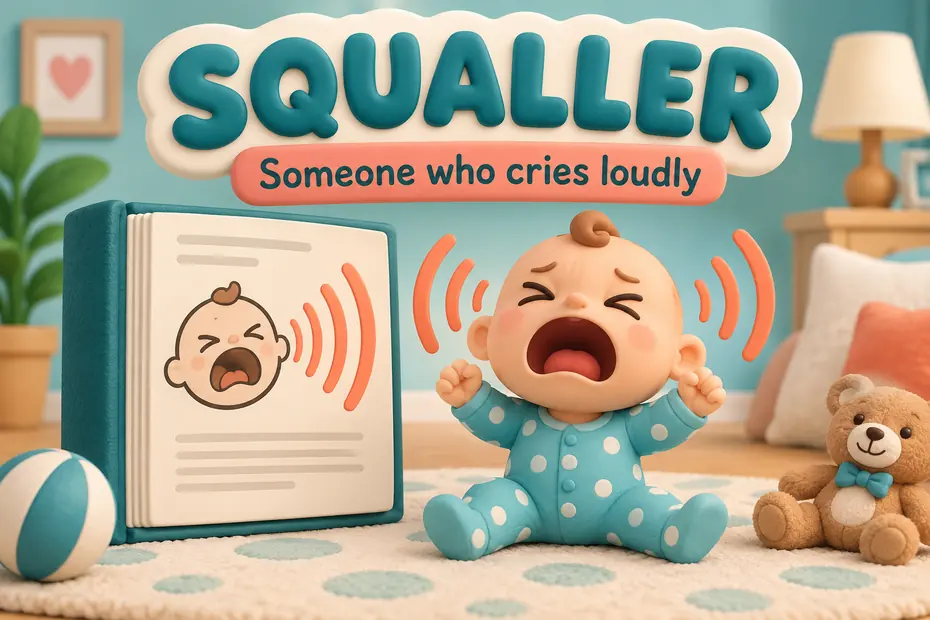
Squaller means someone or something that squalls, especially a baby that cries excessively. “Squalvs” is not a reliable English alternative for either a loud cry or dirty living conditions. If your intended meaning is filth or severe uncleanliness, the noun is squalor; the related adjective is squalid.
Key facts: the spelling changes the meaning
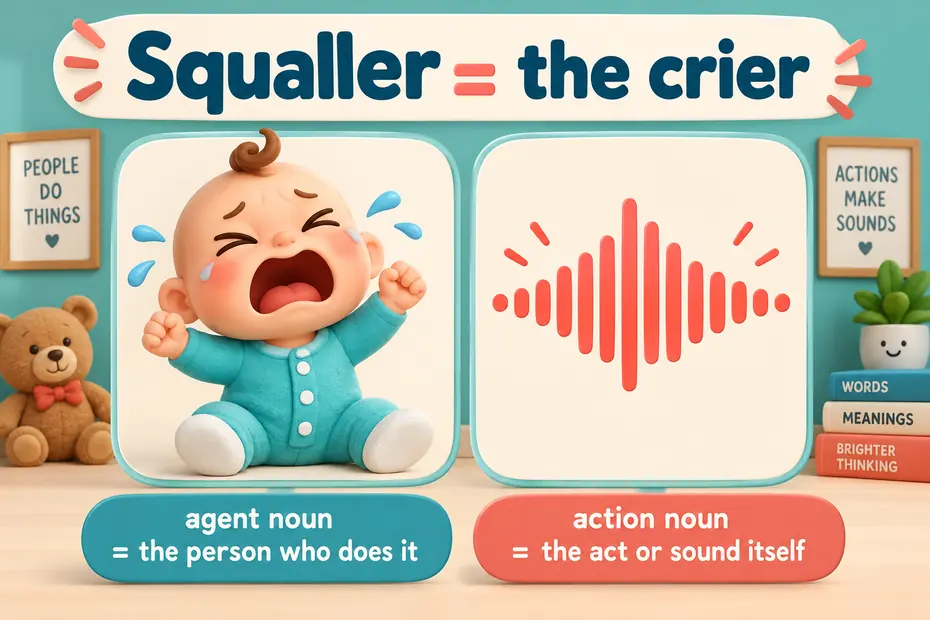
- A squaller produces the cry; a squall can name the cry itself.
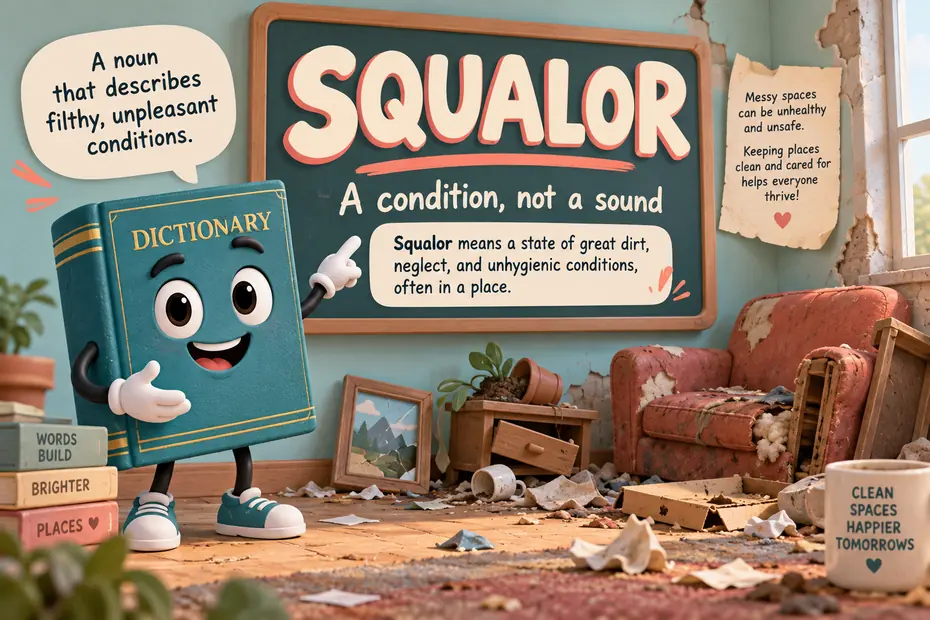
- Squalor describes a condition, not a noise or a person who cries.
- Squalid is an adjective: “a squalid room.”
- The earlier discussion below incorrectly assigns dirtiness to squaller and an unsupported Latin definition to squalvs.
- Check the source text before changing squalvs; it may be a transcription issue rather than an English word.
What does squaller actually describe?
A squaller is the source of squalling. Merriam-Webster’s squaller entry identifies someone or something that squalls, particularly a baby that cries excessively. The word names the crier rather than a general condition of disorder. In an invented story, “The youngest kitten was the loudest squaller” describes which kitten made the most noise.
For a neutral description of a baby, “a crying baby” is often clearer and less judgmental. In dialogue or humorous narration, squaller may fit a character’s voice. Consider tone before using a label for someone who may be uncomfortable or distressed. The same factual event can be described as “The baby cried throughout the journey” without turning the behavior into a nickname.
Which word fits your sentence?
| Word | Grammatical role | Meaning or use | Original example |
|---|---|---|---|
| Squaller | Count noun | The one making a loud cry | That kitten is a determined squaller. |
| Squall | Noun or verb | A cry; crying loudly; also a weather event | A sudden squall interrupted our picnic. |
| Squalor | Uncountable noun | A filthy condition | The neglected building had fallen into squalor. |
| Squalid | Adjective | Describes filthy or degraded conditions | The inspectors documented a squalid kitchen. |
| Squalvs | Unresolved spelling | Requires source and context verification | Check the scan before interpreting this label. |
The grammatical slot provides a useful clue. After “a noisy,” you may need a count noun naming a creature. After “in a state of,” you may need an abstract condition such as squalor. Before room, use an adjective such as squalid. These checks are practical editing cues, not a substitute for understanding what the sentence means.
Is squaller another spelling of squalor?
No. The words have different dictionary meanings even when they sound similar. Merriam-Webster’s squalor entry describes a filthy condition. Write “The room was in squalor” when discussing its condition, or “The room was squalid” when describing it with an adjective. Neither sentence calls the room a person or animal making noise.
Compare these original examples: “A squaller could be heard in the next room” identifies a crier, whereas “Squalor was evident in the next room” identifies the room’s condition. One statement gives evidence about sound; the other gives evidence about cleanliness or neglect. They do not establish each other. A loud household can be clean, and a filthy room can be silent.
What if squalvs appears in a Latin text?
Do not adopt the old article’s claim that squalvs is a Latin word meaning “worthlessness” or “uselessness.” The apparent letters need checking against the actual source. In old printing, a capital V can represent a U. That can lead a reader to investigate squalus, but it does not justify translating an isolated transcription without context.

The Lewis and Short entry for squălus in Perseus records a kind of sea-fish. This is a concrete counterexample to the assumption that similar-looking Latin lettering must describe abstract worthlessness. If the text is historical, technical, or scientific, preserve the original spelling in a quotation and explain the reading separately.
How do you proofread these words?
- Decide whether the sentence concerns a crier, a cry, weather, or dirty conditions.
- Check the dictionary entry matching that meaning.
- Match the noun or adjective to the sentence’s grammatical slot.
- For an unfamiliar transcription, inspect the source before proposing a replacement.
When correcting someone else’s writing, record the reason beside the change: “Changed squaller to squalor because this sentence describes the building’s condition.” That explanation is specific enough to be checked. “These words sound alike” does not explain why one spelling is right for the intended message.
Frequently asked questions
Can squall name a sound?
Yes. Merriam-Webster’s squall entry includes a harsh cry as a noun meaning. Write “a squall from the nursery” for the sound itself. Use squaller when you want to name whoever or whatever is producing that cry, rather than the cry as an event.
How do you form the plural of squaller?
The plural is squallers, made by adding -s. “The two kittens were energetic squallers” uses a plural count noun. If you mean repeated cries instead, use squalls. The two plurals distinguish the creatures producing the noise from the individual sounds that they make.
Is squalor an adjective?
No. Squalor is a noun. The related adjective is squalid, which can appear before another noun or after a linking verb: “a squalid yard” and “The yard was squalid.” Merriam-Webster’s squalid entry verifies the adjective and its meanings.
Does a squall always involve crying?
No. Squall also names a sudden violent wind, often accompanied by rain or snow. A boating report and a description of a noisy nursery therefore use different senses of the same spelling. Read the surrounding sentence before deciding which meaning applies; the spelling alone cannot identify it.
Should I use squalvs in an English essay?
Use a verified English word that expresses your intended meaning. For dirty conditions, that may be squalor or squalid. If you are quoting a historical label, retain the label accurately and give its source. Do not present the older article’s unsupported “worthlessness” definition as an established translation.
Original discussion with corrections above
As a seasoned blogger, I’ve encountered my fair share of linguistic conundrums. One such dilemma that often arises is the proper usage of “squaller” and “squalvs.” These two words may seem similar, but they have distinct meanings and contexts. In this text, I’ll investigate into the intricacies of these terms and provide you with the necessary knowledge to use them appropriately. Whether you’re a language enthusiast or simply looking to enhance your vocabulary, understanding the nuances between “squaller” and “squalvs” is essential. So, let’s immerse and unravel the mystery behind these intriguing words.
Key Takeaways
- “Squaller” refers to a deep, loud, and unpleasant sound or noise, as well as a person or place that is unclean, disorderly, or in a state of poverty.
- “Squalvs” is a Latin term that means “worthlessness” or “uselessness” in English. It is often used in academic or literary contexts to describe something devoid of significance or purpose.
- The main difference between “squaller” and “squalvs” is that “squaller” describes a sound or noise, while “squalvs” denotes worthlessness or uselessness.
- “Squaller” can be used to describe loud and disturbing noises, untidy or disorderly places, and unkempt or impoverished individuals. It can also express disapproval or criticism.
- “Squalvs” can be used to describe loud and shrill sounds or depict extremely clean and affluent environments. It can also be used to express approval or praise for cleanliness, elegance, or affluence.
- Understanding the differences between “squaller” and “squalvs” allows for more precise and effective communication. Using these words appropriately enhances the ability to express ideas accurately.
What is “squaller”?
“Squaller” is a fascinating word that often raises questions about its meaning and usage. To understand its true essence, let’s investigate into its definition and explore its intricacies.
Definition: “Squaller” refers to a deep, loud, and unpleasant sound or noise. It can also describe a person or place that is unclean, disorderly, or in a state of poverty.
But, it’s important to note that “squaller” is not to be confused with “squalor” or “squalid” which have similar meanings but slightly different connotations.
Difference between “Squaller” and “Squalor”: While both words pertain to uncleanliness and disorder, “squaller” specifically focuses on the sound associated with these conditions. On the other hand, “squalor” emphasizes the state of extreme dirtiness and poverty. Think of “squaller” as the audible representation of the squalid environment.
To gain a better understanding, here are a few examples of how “squaller” can be used in different contexts:
- The piercing squaller of the sirens filled the air as the firetruck raced through the city streets.
- The old abandoned house stood in eerie silence, broken only by the occasional squaller of the wind through the broken windows.
- The marketplace was crowded and chaotic, with the loud squaller of vendors and customers blending together into a cacophony.
By using “squaller” in the appropriate context, you can convey a vivid and evocative image. Remember, mastering the nuances of these words is vital for effective communication and expression.
Now that we have a clear understanding of “squaller,” let’s continue our exploration and discover the intriguing world of “squalvs.” But first, let’s examine what sets them apart from each other.
What is “squalvs”?
“Squalvs” is a term that often leads to confusion due to its similarity to “squaller.” But, it is important to understand that these two words have distinct meanings and usage. While “squaller” refers to a loud and unpleasant sound or a state of disorder and poverty, “squalvs” has a different context altogether.
The term “squalvs” is actually a Latin word, which translates to “worthlessness” or “uselessness” in English. It is not commonly used in everyday conversation but is frequently encountered in academic or literary contexts. Its usage is often limited to specific areas such as philosophy, literature, or linguistics.
In these disciplines, “squalvs” is employed to convey the concept of something being futile, pointless, or without value. It is used to describe a state or quality of being devoid of significance or purpose.
One example of the usage of “squalvs” would be in a philosophical discourse discussing the existential dilemma of human existence. It may be used to describe a feeling of meaninglessness or insignificance in the face of an indifferent universe.
Another use of “squalvs” could be in a literary analysis of a novel or poem, where it is employed to investigate into the themes of despair, hopelessness, and the futility of certain actions or endeavors.
It is crucial to note that “squalvs” is not interchangeable with “squaller” or any similar word. Each term has its unique meaning and usage, and confusing them may lead to a miscommunication or an inaccurate portrayal of the intended message.
Understanding the nuances and distinctions between words like “squaller” and “squalvs” allows us to choose the appropriate term in our communication and express our thoughts accurately. By grasping the subtle differences in meaning, we enhance our ability to convey precise ideas and engage in effective communication.
Now that we have explored the concept and meaning of “squalvs,” let’s move on to further examining its usage and examples in various contexts.
Differences between “squaller” and “squalvs”
When it comes to the words “squaller” and “squalvs,” it’s important to understand their nuances and differences. Even though their similar sound and spelling, these words have distinct definitions and usage. Let’s jump into the details:
Definition of “Squaller”
“Squaller” refers to a deep, loud, and unpleasant sound or noise. It can also describe a person or place that is unclean, disorderly, or in a state of poverty. While “squaller” brings to mind vivid and evocative images, it is not interchangeable with “squalor” or “squalid.” These words may have similar meanings, but their connotations differ slightly.
Definition of “Squalvs”
On the other hand, “squalvs” is a Latin term translated as “worthlessness” or “uselessness” in English. It is not commonly used in everyday conversations, but it frequently appears in academic or literary contexts, especially in philosophy, literature, or linguistics. “Squalvs” encapsulates the concept of something being futile, pointless, or without value.
Differences between “Squaller” and “Squalvs”
To summarize, the main distinctions between “squaller” and “squalvs” are as follows:
- Definition: “Squaller” refers to a deep, loud, and unpleasant sound or noise, as well as a person or place that is unclean, disorderly, or impoverished. “Squalvs” denotes worthlessness or uselessness.
| Squaller | Squalvs |
|---|---|
| Describes a sound or noise | Denotes worthlessness or uselessness |
| Can describe a person or place in a state of poverty or disorder | Frequently used in academia and literature |
| Used in everyday communication | Rarely used in everyday conversation |
Now that we have a clear understanding of the differences between “squaller” and “squalvs,” we can use these words appropriately in our communication. This knowledge will enhance our ability to express ourselves accurately and effectively.
When to use “squaller”
“Squaller” is a word that can be used in various contexts to describe both sounds and conditions. Understanding when to use “squaller” correctly is essential for effective communication. Let’s explore the different situations in which “squaller” is appropriate:
Definition of “Squaller”:
- “Squaller” refers to a deep, loud, and unpleasant sound or noise. It can be associated with harsh tones, piercing cries, or grating voices.
- Also, “squaller” can also describe a person or place that is unclean, disorderly, or in a state of poverty. It implies a sense of dilapidation, squalor, or neglect.
- Describing Noises:
- Use “squaller” when you want to convey a loud, disturbing, or cacophonous sound. For example, “The concert was filled with the squaller of heavy metal music.”
- Referring to Untidy or Disorderly Places:
- Use “squaller” when you want to depict a place that is dirty, messy, or run-down. For example, “The abandoned house was in a state of complete squaller.”
- Depicting an Unkempt or Impoverished Person:
- Use “squaller” when you want to describe someone who appears neglected, impoverished, or lacking proper hygiene. For example, “The beggar on the street was dressed in rags, giving off an air of squaller.”
- Expressing Disapproval or Criticism:
- Use “squaller” when you want to convey a negative judgment or criticism towards a noise, place, or person. For example, “The restaurant’s restroom was in a state of utter squaller.”
When to use “squalvs”
As we investigate deeper into the topic of “squalvs vs squaller,” it’s important to understand when and how to use the word “squalvs” correctly. This will help us express ourselves accurately and avoid any confusion. So, let’s explore the different contexts in which “squalvs” should be used.
Definition of “squalvs”
Firstly, it’s crucial to grasp the meaning of “squalvs.” The word refers to a high-pitched, shrill, and unpleasant sound or noise. It can also describe something or someone that is extremely clean, well-organized, or in a state of affluence. Now that we have a clear definition, let’s take a closer look at when to use “squalvs” correctly.
Loud and Shrill Sounds
One common usage of “squalvs” is to describe loud and shrill sounds. This can include the screeching of a car tire, the ear-piercing noise of a fire alarm, or the high-pitched cries of a child. So, if you come across a situation that involves any kind of piercing or shrill sound, “squalvs” is the appropriate word to describe it.
Clean and Affluent Environments
Also, “squalvs” can be used to depict something or someone that is extremely neat, tidy, and well-maintained. You could use the word to describe a meticulously organized office space, a spotless and luxurious hotel room, or a tastefully decorated mansion. When you encounter situations that require you to describe an environment that is both clean and affluent, “squalvs” is the perfect choice.
Expressing Approval or Praise
Beyond describing sounds and environments, “squalvs” can also be used in a positive context to express approval, admiration, or praise. For instance, you can use it to compliment someone on their exceptional organizational skills or to express your admiration for a well-designed and well-maintained garden. When you want to convey your appreciation for cleanliness, elegance, or affluence, “squalvs” is the word to use.
Conclusion
To conclude, understanding the differences between the words “squaller” and “squalvs” is crucial for effective communication and expression. “Squaller” refers to a deep, loud, and unpleasant sound or noise, as well as a person or place that is unclean, disorderly, or in a state of poverty. It can be used to describe disturbing sounds, untidy places, unkempt individuals, and to express disapproval or criticism.
On the other hand, “squalvs” refers to a high-pitched, shrill, and unpleasant sound or noise, as well as something or someone that is extremely clean, well-organized, or in a state of affluence. It can be used to describe shrill sounds, clean environments, and to express approval or praise for cleanliness, elegance, or affluence.
By understanding the nuances and distinctions between these words, we can choose the appropriate term to accurately convey our intended meaning. Whether we want to describe a noisy and disorderly situation or praise a clean and affluent environment, using “squaller” or “squalvs” correctly enhances our communication and ensures that our message is clear and precise.
Frequently Asked Questions
Q: What does the word “squaller” mean?
A: “Squaller” refers to a loud, unpleasant sound, a dirty or disorderly place, a poor person, or an expression of disapproval or criticism.
Q: When should “squaller” be used?
A: “Squaller” can be used to describe loud and disturbing sounds, untidy or disorderly places, unkempt or impoverished people, and to express disapproval or criticism.
Q: What does the word “squalvs” mean?
A: “Squalvs” refers to a high-pitched, shrill, and unpleasant sound, a clean or well-organized place, a person in a state of affluence, or an expression of approval or praise for cleanliness or elegance.
Q: When should “squalvs” be used?
A: “Squalvs” can be used to describe loud and shrill sounds, clean and affluent environments, and to express approval or praise for cleanliness, elegance, or affluence.


