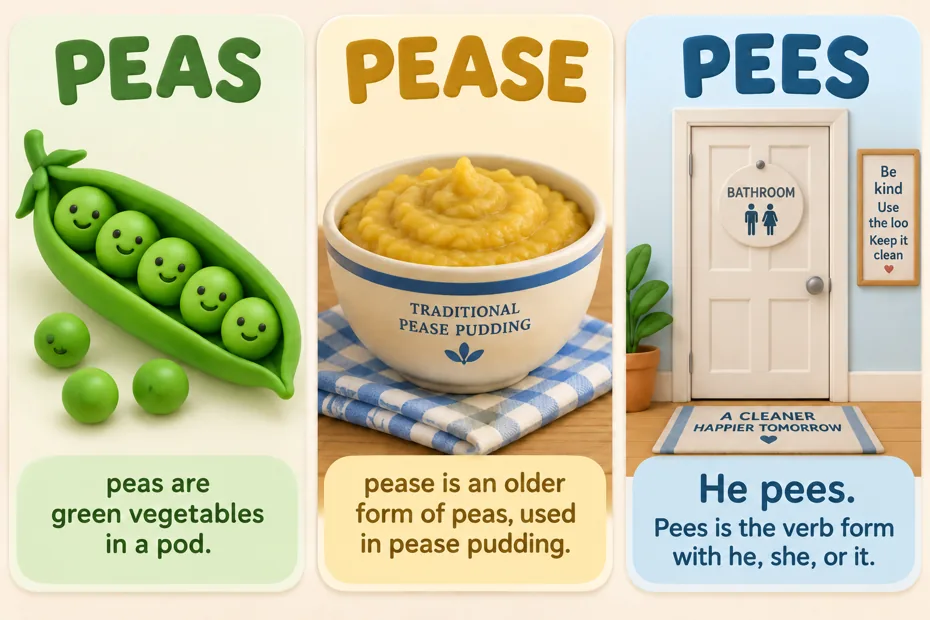
Peas, pease, and pees: food, traditional wording, or an action?
Peas is the ordinary plural of pea, the plant or its edible seeds. Pease is an older form that survives in expressions such as pease pudding and is recorded as a variant plural. Pees commonly means urinates, the third-person singular form of the informal verb pee. Choose by meaning, grammar, and context.
The earlier discussion correctly separates the food from the bathroom meaning, but calling pees merely a term for urination misses its sentence role. In “He pees,” it is a verb. Also, pease is not simply an error that must always be modernized: established food names and historical wording can preserve it.
Key facts at a glance
| Spelling | Meaning or use | Example |
|---|---|---|
| pea | Singular plant or seed | One pea rolled off the plate. |
| peas | Ordinary plural of pea | We added peas to the soup. |
| pease | Older or variant form; traditional expressions | The menu lists pease pudding. |
| pees | Present-tense verb with he, she, or it | The dog pees outside. |
Peas: the everyday plural
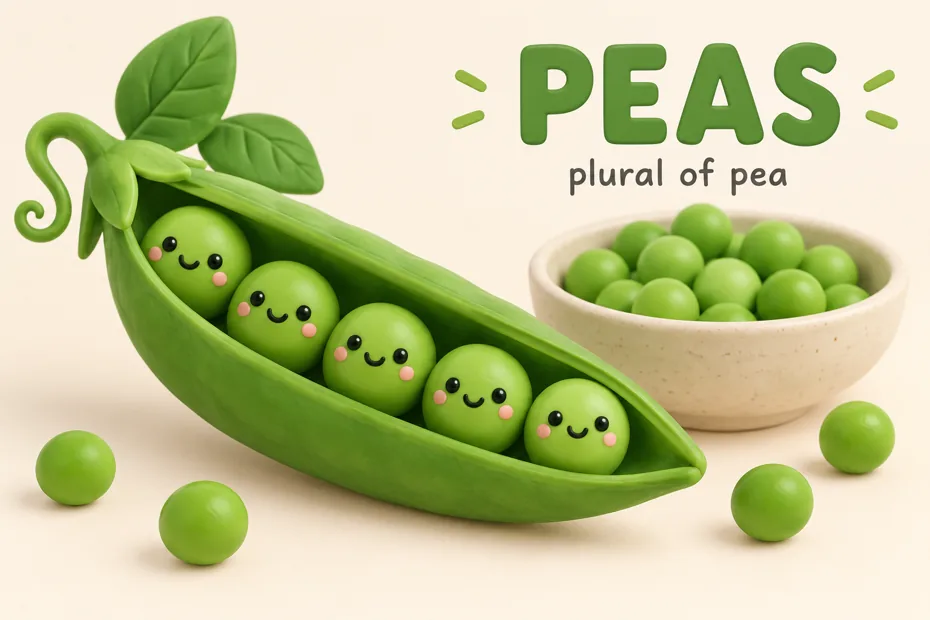
Merriam-Webster’s pea entry records the plant and its seeds, with peas as the familiar plural. Write “a pea” for one seed and “peas” for more than one. “The gardener planted peas” refers to the crop, while “The cook stirred in the peas” refers to the food in the dish.
The singular can occur before another noun: pea soup, pea plants, or pea seeds. Do not assume that naming several objects always requires peas inside a compound phrase. “Pea plants” uses the singular noun before plants, even though the entire phrase refers to multiple plants.
For ordinary shopping lists and modern recipes, peas is a clear default when you are naming the food directly. “Buy frozen peas” gives the reader an immediate instruction. Writing “Buy frozen pees” would change the apparent meaning entirely, even if a spellchecker accepted the word.

Pease: an older form that survives
Merriam-Webster’s pease page points to the pea entry and records pease as a variant plural. Collins’s pease entry supplies the older usage context. You may encounter the form in historical writing, traditional names, or familiar rhymes, rather than in an ordinary contemporary vegetable list.
The spelling history is interesting: the modern singular pea developed through reinterpretation of the older form pease as a plural. This is a back-formation: speakers treated an ending as a plural marker and formed a shorter singular. That history explains the relationship; it does not require modern writers to replace the normal plural peas.
In pease pudding, keep the established expression if that is the dish being named. A traditional name is not automatically a proofreading mistake. Likewise, when quoting an old source, reproduce its spelling accurately and explain it if readers need help. Modernizing a quotation silently can remove information from the source.
Pees: identify the verb form
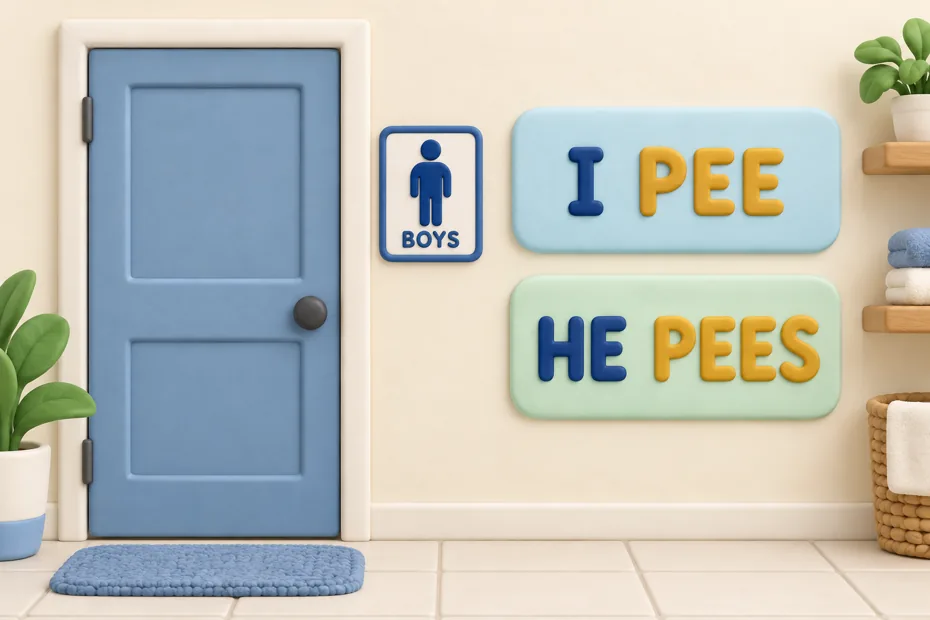
Merriam-Webster’s pee entry records the informal bathroom-related word as a verb and a noun. The verb takes an -s ending with a third-person singular subject in the present tense: “The puppy pees outside.” With I, you, we, or they, the ordinary present form is pee.
Compare “The puppy pees” and “The puppies pee.” The change follows subject agreement, not a change in the activity being described. The past tense is peed, and the form ending in -ing is peeing. These forms belong to the bathroom word, not to the vegetable.
In formal writing, urinates may suit the context better than pees. For everyday dialogue, the informal verb may be appropriate. Register is a separate decision from spelling: first establish the intended meaning, then choose how formal the wording should be for your reader.
Proofread the complete sentence
Sound alone cannot reliably separate these similar-sounding spellings. Look at the words around the blank. A shopping instruction such as “Add the ___ to the basket” probably concerns peas if the topic is vegetables. A historical dish name such as “___ pudding” points to pease. A sentence such as “The dog ___ outside” needs the verb pees.
Try four examples: “One ___ remained in the pod”; “We cooked the ___”; “The recipe is for ___ pudding”; “The puppy ___ before its walk.” The answers are pea, peas, pease, and pees. Each answer follows a specific meaning or grammatical pattern rather than an arbitrary spelling preference.
Frequently asked questions
Is pease always wrong?
No. Dictionaries record it as an older or variant form, and it survives in traditional expressions such as pease pudding. In an ordinary modern grocery list, peas is normally clearer. Preserve an established dish name or an accurately quoted historical spelling instead of treating every occurrence as an error.
Is pees a noun or a verb?
In the common sentence “He pees,” it is a present-tense verb. The underlying word pee also has noun uses, so the exact grammatical role depends on the sentence. For this comparison, the important point is that pees does not name the vegetable and commonly expresses a bathroom-related action.
Why is it pea soup rather than peas soup?
English often uses a singular noun before another noun to identify its type or ingredient. Pea soup follows that pattern, just as pea plants can name several plants. When the food stands on its own as a plural noun, use peas: “The soup contains peas.”
How can I remember the difference?
Connect peas with a green pod and an ordinary shopping list. Connect pease with the established name pease pudding or historical wording. Connect pees with the verb pattern “he pees.” Then check the surrounding sentence to confirm which meaning and form actually fits.
Are you ever confused about when to use “peas,” “pease,” or “pees”? Well, you’re not alone. In this text, I’ll guide you through the proper usage of these similar-sounding words and help you avoid common mistakes. Understanding the differences between “peas,” “pease,” and “pees” is essential for effective communication, whether you’re writing an academic paper, a professional email, or simply engaging in everyday conversation. So, let’s immerse and unravel the mystery behind these words to ensure you use them appropriately and confidently.
Key Takeaways
- “Peas,” “pease,” and “pees” are similar-sounding words with distinct meanings and usage.
- “Peas” are the small, green seeds from the pea plant that are commonly consumed as a vegetable.
- “Pease” is an archaic term for “peas” that is rarely used in modern English.
- “Pees” is a slang or informal term for urination, not related to the vegetable “peas.”
- Understanding the differences between these words is essential for effective communication.
- Use “peas” when referring to the vegetable, “pease” in historical or old texts, and “pees” in informal or slang contexts.
What are “peas,” “pease,” and “pees”?
Let’s jump into the confusion surrounding the words “peas,” “pease,” and “pees.” These words may seem similar, but they actually have distinct meanings and usage. Understanding their differences can help you communicate effectively and avoid common mistakes.
First, let’s define each word:
- Peas: “Peas” refers to the small, round, green seeds that come from the pod of a pea plant. They are commonly consumed as a vegetable and are known for their nutritional value and sweet flavor. Examples of dishes that feature peas include pea soup, mashed peas, and pea salad.
- Pease: “Pease” is an archaic term that was commonly used in old English to refer to the same vegetable we now call “peas.” In modern usage, “pease” is rarely used and is instead replaced by the word “peas.” But, you may encounter the term in old literature or historical texts.
- Pees: Now, this is where things get interesting. “Pees” is not related to the vegetable “peas.” Instead, it is a word used in slang or informal contexts to refer to urination or the act of urinating. This word is used less commonly than “peas” or “pease”, but it’s important to be aware of its meaning to avoid any confusion or awkward situations.
To summarize the differences:
- Peas: refers to the green seeds that come from a pod and are eaten as a vegetable.
- Pease: an archaic term for “peas” that is rarely used in modern English.
- Pees: a slang or informal term for urination.
Now that we have clarified the definitions, let’s explore how to properly use these words in different contexts.
Common Confusions: “peas” vs “pease” vs “pees”
As a language expert, I often come across confusion surrounding similar-sounding words, and one such confusion that arises frequently is between “peas,” “pease,” and “pees.” In this section, I’ll shed light on the differences between these words and guide you on their appropriate usage.
Understanding “Peas”
Let’s start by clarifying “peas.” Peas are the small, round, green seeds that come from the pea plant. They are commonly consumed as a vegetable and are known for their sweet flavor and nutritional value. Whether enjoyed fresh, cooked, or frozen, peas make a delicious addition to various dishes, including soups, salads, and stir-fries.
The Archaic Term: “Pease”
Let’s talk about the archaic term “pease.” You might come across this word in old literature or historical texts, but it is rarely used in modern English. “Pease” simply refers to the same thing as “peas”—the small round seeds of the pea plant. But, as the English language evolved, the singular form “pea” replaced “pease” in common usage, and today, we use “peas” to refer to both the singular and plural forms.
Clarifying “Pees”
Finally, we have “pees”—a slang or informal term that has an entirely different meaning. “Pees” is a colloquial term for urination, often used in casual conversations or humorous contexts. While “pees” may be a popular term among friends or in comedies, it’s essential to use it judiciously and consider the appropriateness of the situation.
Understanding the distinctions between “peas,” “pease,” and “pees” is crucial for effective communication. Misusing these words can lead to confusion and misinterpretation. So, let’s recap:
- “Peas” refers to the small, green seeds from the pea plant, commonly consumed as a vegetable.
- “Pease” is an archaic term for “peas” and is rarely used in modern English.
- “Pees” is a slang or informal term for urination.
Understanding the Definitions
To effectively use and differentiate between “peas,” “pease,” and “pees,” it is crucial to understand their definitions. Let’s explore each term in detail:
- Peas: Peas are small, round, green seeds that come from the pea plant, scientifically known as Pisum sativum. They are widely consumed as a nutritious vegetable due to their sweet flavor and high nutritional value. Peas can be enjoyed in various ways, including fresh, cooked, or frozen. They are a common ingredient in salads, soups, stir-fries, and side dishes.
- Pease: While “pease” is an archaic term, it refers to the same thing as “peas.” In contemporary English, the term “pease” is rarely used and has been largely replaced by the word “peas.” But, it is worth noting the historical significance of the term, as it was commonly used in Middle English and Old English.
- Pees: On the other hand, “pees” is a slang or informal term used to describe the act of urination. It is a colloquial word often used in casual conversations or humorous contexts. While it is important to be aware of this term, it is not commonly used in formal English writing.
Understanding the distinctions between these words is essential to avoid confusion and misinterpretation in communication. Now that we have clarified the definitions, let’s investigate deeper into how to properly use these words in different contexts. But before we do that, let’s explore in the following section the similarities and differences between “peas” and “pease.”
Singular vs Plural: When to Use Each Form
When it comes to using the words “peas,” “pease,” and “pees,” understanding whether to use the singular or plural form is essential. Let’s take a closer look at each word and when it is appropriate to use each one.
Peas
The term “peas” refers to the small, round, green seeds that come from a pea plant and are commonly consumed as a vegetable. Peas are known for their sweet flavor and nutritional value. They can be enjoyed fresh, cooked, or frozen, making them a versatile ingredient in various dishes. So, whenever you are talking about these delicious green seeds, use the plural form – “peas.”
Pease
What about “pease”? The archaic term “pease” actually refers to the same thing as “peas.” But, it is rarely used in modern English. In contemporary usage, “peas” has completely replaced “pease.” So, if you want to communicate effectively and avoid confusion, it’s best to stick with the more common and widely recognized term – “peas.”
Pees
Finally, we have the word “pees.” This is a colloquial term for urination, often used in casual conversations or humorous contexts. It’s important to note that “pees” is not related to the green pods we call “peas.” So, if you find yourself talking about the biological process of urination, feel free to use the singular form – “pees.”
Understanding the distinctions between these words is crucial to effective communication and will help you avoid any misunderstandings. So, keep in mind that “peas” are the tasty, green vegetable, “pease” is an outdated term for “peas,” and “pees” is slang for urination. Use each word appropriately depending on the context and you’ll be in perfect linguistic harmony.
Stay tuned for the next section, where we’ll explore how to properly use these words in different contexts.
Contextual Usage: Differentiating “peas,” “pease,” and “pees”
As I’ve mentioned earlier in this text, understanding the distinctions between similar words is crucial for effective communication. In this section, I will investigate deeper into the contextual usage of “peas,” “pease,” and “pees” to help you differentiate and employ these terms appropriately in your writing and conversations.
Definition of “Peas”
Let’s start by focusing on the most commonly used term, “peas.” When we talk about “peas,” we are referring to those small, round, green seeds that are harvested from a pea plant. Known for their sweet flavor and nutritional value, peas are widely consumed as a vegetable. They can be enjoyed fresh, cooked, or even frozen.
Understanding “Pease”
Let’s discuss the archaic term “pease.” In the past, “pease” was used to refer to the same thing as “peas.” But, it has fallen out of use in contemporary English. Nowadays, we simply use the term “peas” to describe those tasty green delights. So, if you come across the word “pease” in older texts, keep in mind that it is an outdated term for “peas.”
The Meaning of “Pees”
Finally, we come to “pees” – a slang or informal term for urination. While “pees” is not a word you would typically find in formal writing, it is often used in casual conversations or humorous contexts. So, if you’re in a lighthearted discussion or trying to inject a bit of humor into your writing, feel free to use “pees” as a colloquial substitute for “urination.”
By understanding the definitions and connotations of “peas,” “pease,” and “pees,” you can now navigate the proper usage of these words in various situations. Properly employing these terms will not only enhance your communication skills but also prevent any confusion or misinterpretation.
In the next section, I will guide you through the importance of using the appropriate singular or plural form for each word. Stay tuned to refine your grasp on these words and their correct usage.
Remember, using the right word in the right context is the key to effective communication.
Exceptions and Idioms: Unusual Usages
When it comes to the English language, there are always exceptions to the rules. This is true for the words “peas,” “pease,” and “pees” as well. Although we have discussed their definitions and proper usage, there are a few exceptions and idiomatic expressions worth mentioning that deviate from the norm.
First, let’s talk about the difference between “peas” and “pease” when used in idiomatic expressions. The word “peas” is the standard term for the small, round, green seeds that we commonly consume as a vegetable. But, in idiomatic expressions like “in a pod,” the word “peas” is used instead of “pease.” For example, if someone says “we are like two peas in a pod,” it means that they are very similar or closely connected. It’s important to remember, this idiomatic usage is an exception and not the standard way of referring to “peas.”
Let’s turn our attention to the word “pees.” While it is commonly used as a slang term for urination, it can also be used in certain idiomatic expressions. One such expression is “going to spend a penny,” which is a British idiom used to refer to using a public restroom. While the word “pees” is not commonly used in this context, it adds a whimsical touch to the phrase and is in line with the colloquial nature of the expression. Keep in mind that this is an unusual usage of the word “pees” and not something you would encounter in everyday conversation.
Understanding these exceptions and idiomatic usages is crucial for mastering the English language. It allows us to effectively communicate and comprehend the nuances of the language. While these exceptions and idioms may seem unusual or even confusing at times, they add color and depth to our conversations.
To conclude, the English language is full of surprises, and the words “peas,” “pease,” and “pees” are no exception. From idiomatic expressions to unusual usages, it’s important to be aware of these exceptions to ensure our communication is accurate and effective. Now that we have explored their definitions, differences, and even some exceptions, we can confidently use these words in various contexts. Let’s embrace the intricacies of language and continue our journey toward linguistic mastery.
Conclusion
Understanding the distinctions between “peas,” “pease,” and “pees” is crucial for effective communication. “Peas” are the small, round, green seeds that come from a pea plant and are commonly consumed as a vegetable. On the other hand, “pease” is an archaic term that has been replaced by “peas” in modern English. Finally, “pees” is a colloquial term for urination, often used in casual conversations or humorous contexts.
By using these terms appropriately, we can avoid confusion and misinterpretation. Whether we are discussing the nutritional value and versatility of “peas,” or using idiomatic expressions like “in a pod” that replace “pease,” or even talking about the biological process of “pees,” understanding the correct usage is crucial.
So, let’s embrace the intricacies of the English language and employ these words appropriately in our writing and conversations. By doing so, we can communicate effectively and ensure that our messages are clear and understood.
Frequently Asked Questions
Q: What are peas?
A: Peas are small, round, green seeds that come from a pea plant. They are commonly consumed as a vegetable and are known for their sweet flavor and nutritional value.
Q: What is the difference between “peas” and “pease”?
A: “Peas” and “pease” essentially refer to the same thing. However, “pease” is an archaic term that is rarely used in modern English. “Peas” is the preferred and commonly used term.
Q: What does “pees” mean?
A: “Pees” is a slang or informal term for urination. It is often used in casual conversations or humorous contexts.
Q: Why is it important to understand the distinction between these terms?
A: Understanding the distinctions between these terms is crucial for effective communication and to avoid confusion or misinterpretation in writing or conversations.
Q: Can you explain the usage of these terms in different contexts?
A: The usage of “peas,” “pease,” and “pees” depends on the context. “Peas” is used when referring to the vegetable, “pease” is an archaic term that is no longer used, and “pees” is used to refer to urination. Using the appropriate term in each context is important for clear communication.


