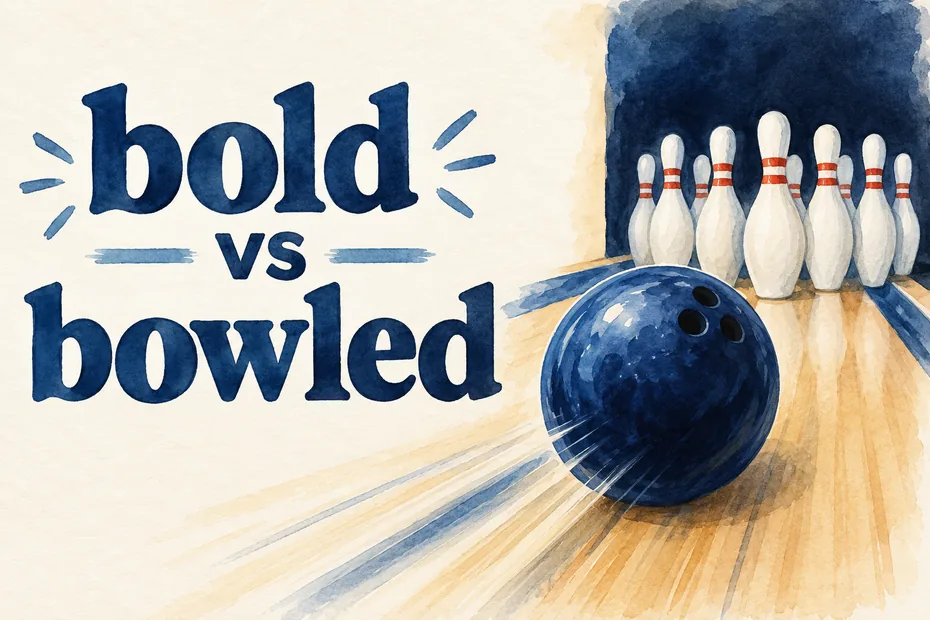
Bold vs bowled: description versus a past action
Bold usually describes courage, striking appearance, or heavy type; bowled is the past tense or past participle of bowl. Write “She made a bold suggestion” for a daring suggestion and “She bowled yesterday” for a completed bowling activity. The words are homophones in ordinary standard English pronunciation, so grammar and meaning settle the spelling.
Correction to the older discussion below: bold and bowled are not normally separated by a short-versus-long o pronunciation rule. Dictionaries give the same basic vowel sound. Bowled is also broader than a cricket dismissal: it belongs to the verb bowl and can describe playing bowling, delivering a ball, or phrases such as bowled over.
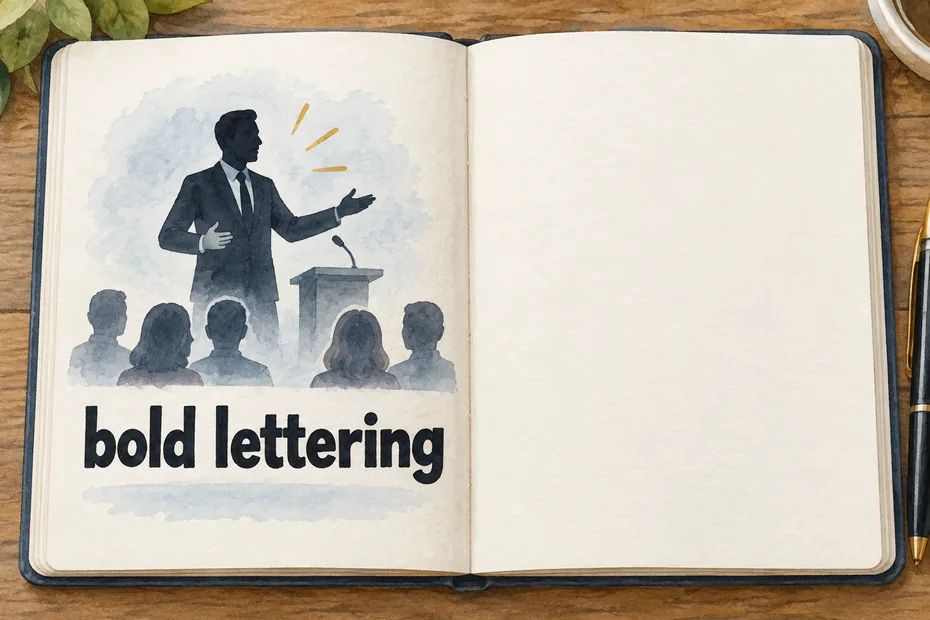
Key facts and comparison
- Bold commonly functions as an adjective.
- Bold can describe a daring person, a striking pattern, or heavy lettering.
- Bowled belongs to the verb family bowl, bowls, bowling, bowled.
- Bowled can follow have, has, or had as a past participle.
- Bowled over can express strong surprise or admiration in figurative language.
| Form | Role | Original example | Meaning clue |
|---|---|---|---|
| bold | Adjective | A bold proposal changed the discussion. | Daring |
| bold | Type description | Print the heading in bold. | Heavy lettering |
| bowled | Past-tense verb | They bowled after work. | Completed activity |
| bowled | Past participle | She has bowled here before. | Verb after has |
| bowled over | Phrase | The performance bowled us over. | Strongly impressed |
What meanings does bold have?
Merriam-Webster’s bold entry records daring, impudent, prominent, and boldface-related meanings. Bold therefore does not always praise bravery. A bold interruption might be judged presumptuous, while a bold stripe simply stands out visually.
Compare “a bold explorer,” “a bold demand,” and “a bold headline.” The explorer example concerns courage; the demand can suggest excessive confidence; the headline concerns appearance. These original phrases require the same spelling while expressing different attributes. Choose a more precise adjective if the positive or negative implication needs to be unmistakable.
Collins’s bold entry also includes behavior and visual prominence. In a document instruction, “Make the warning bold” concerns typography. It does not ask a warning to act courageously, and it does not refer to a bowling result. The object being described guides the interpretation.
What does bowled mean beyond cricket?
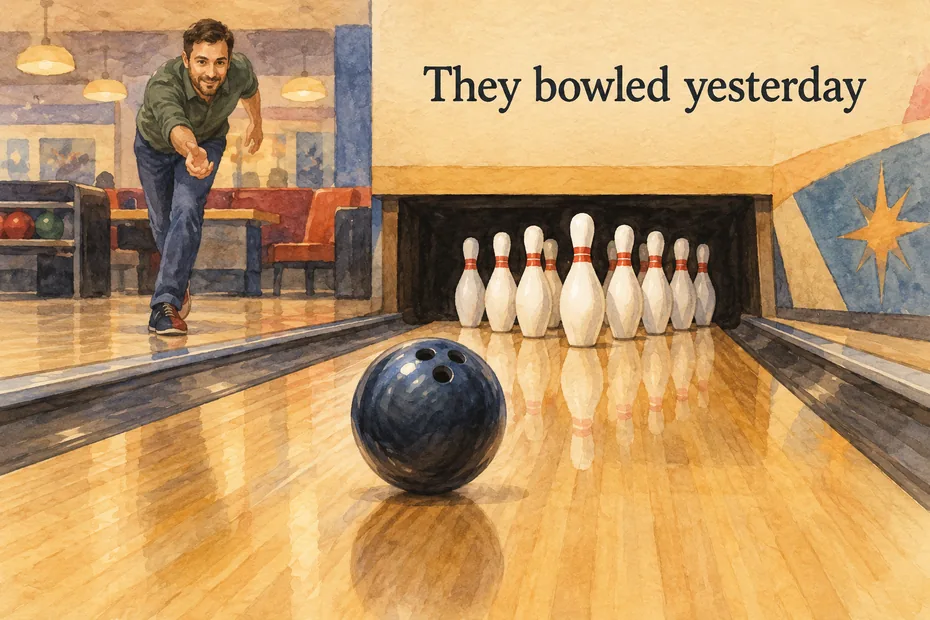
Bowled is formed from bowl by adding the regular past ending. Merriam-Webster’s bowl entry records verb senses connected with rolling or delivering a ball and playing bowling. A sentence can therefore use bowled without referring to cricket at all.
“The friends bowled on Saturday” describes a completed activity. “The player bowled the ball down the lane” identifies an action and an object. “The player had bowled before joining the team” uses a past participle with had. These original sentences illustrate grammar rather than asserting any particular sporting score.
Collins’s bowl entry includes sporting and broader verb uses. In cricket writing, bowled can relate to delivering the ball or to a dismissal, depending on the sentence. “The player bowled three overs” and “The batter was bowled” do not describe the same role in the game.
How does bowled over work?
Bowled over can describe being knocked over literally or being strongly surprised or impressed figuratively. Context decides the reading. “The news bowled them over” is usually figurative; “The collision bowled him over” may describe a physical event.
A writing lesson should not assume that the phrase always conveys praise. Unexpected bad news can also overwhelm someone. When precision matters, substitute impressed, astonished, overwhelmed, or knocked down according to the intended sense. The phrase’s meaning is broader than the bowling equipment suggested by its spelling.
Which grammar test chooses the right spelling?
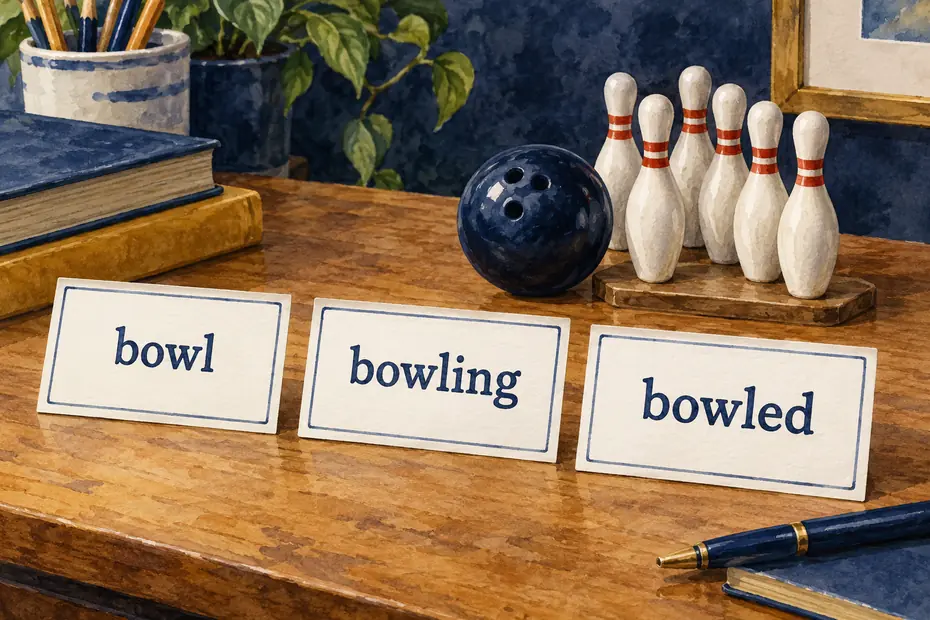
Use bold for a description and bowled for a form of the verb bowl. Try daring, striking, or heavy-type where the sentence describes an attribute. Try played bowling or delivered the ball where the sentence reports an action.
- Find the word’s role in the whole sentence.
- If it describes a person, plan, pattern, or type style, consider bold.
- If it reports a past bowling action, use bowled.
- If it follows have, has, or had, inspect the bowl verb family.
- If it appears with over, read the complete phrase before interpreting it.
Practice with these original examples: “Use ___ for the title”; “We ___ after dinner”; “The proposal was unusually ___”; “The welcome ___ her over.” The answers are bold, bowled, bold, and bowled. A spelling checker can recognize both forms, so the sentence-level test remains useful.
The conclusion for bold vs bowled is to separate descriptions from verb forms. Pronunciation is not a dependable spelling distinction here, and a sports topic alone cannot tell you which word the sentence needs.
FAQ: bold and bowled
Can bold appear as a noun?
Yes. Bold can name boldface type, as in “Print the date in bold.” The grammar differs from “a bold date heading,” where bold describes the heading. Both uses belong to typography and keep the spelling bold; neither uses the past-tense verb bowled.
Is bowled the same as bowling?
They are forms of the same verb, but they serve different grammatical purposes. “They bowled” reports a past action; “They are bowling” places the activity in progress. Match the form to tense and sentence structure rather than swapping endings because the sporting meaning seems similar.
Does bold always describe a good quality?
No. Bold can be approving when it describes courage, but it can also suggest impudence or presumption. Visual boldness may be neutral. Identify the intended attribute and the surrounding tone before interpreting the word as praise; daring and appropriate are not identical judgments.
Why can speech-to-text confuse the pair?
Bold and bowled share an ordinary pronunciation, so a transcription system must infer the spelling from context. Check sentences about typography, descriptions, and completed activities after dictation. Replacing the uncertain word with an explicit description or action is a simple way to confirm the intended meaning.
Hey there! Have you ever been confused about when to use “bold” and when to use “bowled” in your writing? Well, you’re not alone! In this text, I’ll walk you through the subtle differences between these two words and help you use them appropriately.
We all know that choosing the right words can make a huge impact on the clarity and effectiveness of our communication. Whether you’re a writer, a student, or just someone who wants to improve their language skills, understanding the nuances of “bold” and “bowled” is essential. So, let’s immerse and unravel the mystery behind these words!
Key Takeaways
- “Bold” means courageous, audacious, or daring, emphasizing fearlessness and confidence.
- “Bowled” refers to the act of the ball hitting the wickets and dismissing the batsman in the game of cricket.
- The pronunciation of “bold” is “bohld” with a short “o” sound, while “bowled” is also pronounced as “bohld” but with a longer “o” sound.
- “Bold” can be used to express confidence and assertiveness, highlight prominence or importance, and describe visually striking elements.
- “Bowled” is mostly used in sports, particularly cricket and lawn bowls, to describe the act of delivering or rolling a ball successfully.
- Avoid common mistakes such as using “bowled” instead of “bold” or vice versa, mispronouncing the words, failing to use “bold” to emphasize importance or prominence, and overusing or underusing “bowled” in sports context.
Understanding the meaning of “bold” and “bowled”
When it comes to effective communication, using the right words is crucial. Confusion often arises when similar-sounding words have different meanings. This is the case with “bold” and “bowled.” In this section, I’ll guide you through the nuances of these two words, helping you understand their distinct definitions and usage.
Let’s start with the definition of “bold.” When I say someone is “bold,” I mean they are courageous, audacious, or daring. It’s about having the confidence to take risks, speak one’s mind, or step outside of one’s comfort zone. Being bold means embracing challenges and not shying away from expressing yourself in a fearless manner.
On the other hand, “bowled” has a completely different meaning. To understand what “bowled” refers to, we need to look into the sport of cricket. In cricket, a bowler throws the ball toward the batsman, aiming to hit the wickets (the three upright wooden stumps) and get the batsman out. When the ball successfully hits the wickets and dislodges the bails (the small wooden pieces on top of the stumps), it is known as being “bowled.” In this context, “bowled” means that the batsman has been dismissed by the bowler.
Now that we have a clear understanding of the definitions of “bold” and “bowled,” let’s discuss the difference between these two words. The main distinction lies in their meanings and usage. While “bold” emphasizes fearlessness and confidence, “bowled” is specific to the sport of cricket and refers to a particular method of dismissing a batsman.
To summarize:
- “Bold” means courageous, audacious, or daring.
- “Bowled” refers to the act of the ball hitting the wickets and dismissing the batsman in the game of cricket.
Understanding the differences between these words is essential for effective communication. Using the appropriate word in the right context can avoid confusion and ensure clarity in your writing and conversations.
Differences in pronunciation
When it comes to the words “bold” and “bowled,” one key difference lies in their pronunciation. Let’s take a closer look at how these two words are pronounced to ensure we use them appropriately in our communication.
- Bold: Pronounced as “bohld,” this word has a short “o” sound followed by a clear “ld” ending. Remember, the emphasis is on the first syllable, and the “o” sound is not elongated.
- Bowled: Pronounced as “bohld” as well, but this time the emphasis is on the second syllable. Although the spelling is the same as “bold,” the pronunciation differs slightly with a longer “o” sound. This is due to the association with the sport of cricket, where the bowler delivers the ball to the batsman, aiming to hit the wicket and dismiss the batsman.
Understanding the correct pronunciation is crucial to avoid confusion and ensure effective communication.
Now that we’ve clarified the differences in pronunciation, let’s investigate deeper into the meanings and usage of these words.
Contextual usage of “bold”
When it comes to the word “bold,” it is essential to understand its correct usage in different contexts. Let’s investigate into its various meanings and examine how it can be effectively employed in written and spoken communication.
Definition of “Bold”
The word “bold” is a versatile adjective that has multiple meanings depending on the context. Primarily, it refers to someone or something fearless, confident, or daring. It can also denote a sense of prominence or clear visibility.
Difference between “Bold” and “Bowled”
Before we explore the contextual usage of “bold,” let’s quickly address the confusion between “bold” and “bowled.” While they may sound similar, they have entirely different meanings. “Bold” refers to confidence and fearlessness, while “bowled” is a term associated with the sport of bowling.
Let’s dive deeper into the various scenarios where “bold” can be appropriately employed.
Expressing Confidence and Assertiveness
One common usage of “bold” is to describe individuals who display confidence, assertiveness, and fearlessness in various situations. For example, in a presentation, I might say, “She delivered a bold and compelling speech that captivated the audience.”
Highlighting Prominence or Importance
In some instances, “bold” can also be used to emphasize prominence or importance. For instance, when discussing key points in an essay, I might state, “I highlighted the most significant findings in bold to ensure they stand out.”
Describing Visually Striking Elements
Another context where “bold” finds its application is in describing visually striking features or design choices. For instance, when reviewing a website, I may comment, “The bold color scheme and typography create a visually appealing user interface.”
Concluding Thoughts
Understanding the various meanings and contexts of “bold” is vital to effective communication. Whether expressing confidence, emphasizing prominence, or describing visually striking elements, using the word appropriately adds depth and clarity to your language.
Next, we’ll explore the contextual usage of “bowled” to further distinguish it from “bold.” Stay tuned for a comprehensive explanation in the following section.
Contextual usage of “bowled”
As we explore the contextual usage of “bowled,” we begin to unravel the diverse applications of this word in English language.
Definition of “Bowled”
- “Bowled” is the past tense and past participle form of the verb “bowl.”
- In the context of sports, it refers to the act of delivering a ball in games such as cricket or lawn bowls.
- In common usage, it can also describe the action of throwing or rolling a ball in a specific direction.
The Difference Between “Bold” and “Bowled”
Before we jump into the contextual usage of “bowled,” let’s revisit the distinction between “bold” and “bowled” to avoid any confusion.
- “Bold” is an adjective that means showing confidence, assertiveness, or courage.
- “Bowled,” on the other hand, is a verb that pertains to the act of delivering or rolling a ball.
Now that we have clarified the difference between these two words, let’s examine how “bowled” can be used in various contexts.
- Sports: In the world of cricket, “bowled” assumes a crucial role in describing a significant event. It signifies when the bowler successfully knocks over the wicket and dismisses the batsman.
- Example: “The fast bowler bowled an impressive delivery that shattered the stumps.”
- Lawn Bowls: The term “bowled” finds its relevance in lawn bowls, a game where players roll biased balls towards a target. It emphasizes the skill and precision involved in aiming and delivering the ball.
- Example: “She expertly bowled her ball, landing it close to the jack.”
- Everyday Usage: Beyond the area of sports, “bowled” can be used to describe actions involving the rolling or throwing of balls in everyday life.
- Example: “The child enthusiastically bowled the ball across the playground.”
By understanding the contextual usage of “bowled,” we can effectively communicate the intended meaning and prevent any confusion with similar-sounding words. In the next section, we will explore the practical applications of the word “bowled” through additional examples and expand our understanding of its versatility.
Common mistakes to avoid
When it comes to the words “bold” and “bowled,” there are common mistakes that people make which can lead to confusion and miscommunication. It’s important to understand the differences between these words and use them appropriately to effectively convey your message. Let’s take a closer look at some of these common mistakes and how to avoid them:
Mistake #1: Using “bowled” instead of “bold” or vice versa
One common mistake is mistakenly using “bowled” instead of “bold” or vice versa. This can happen when you are writing quickly or not paying close attention to your choice of words. It’s crucial to remember, “bold” refers to being confident, assertive, or visually striking, while “bowled” is the past tense and past participle form of the verb “bowl.”
Mistake #2: Mispronouncing the words
Another mistake is mispronouncing these two words. While both “bold” and “bowled” are pronounced similarly, there is a slight difference in the pronunciation. “Bold” has a short “o” sound, pronounced as “bohld,” whereas “bowled” has a longer “o” sound and emphasizes the second syllable, also pronounced as “bohld.”
Mistake #3: Failing to use “bold” to emphasize importance or prominence
A common mistake is failing to use the word “bold” to accurately convey importance or prominence. When writing or speaking, it’s important to use “bold” to describe something that stands out, commands attention, or is visually striking. By using this word appropriately, you can effectively communicate the significance of certain elements.
Mistake #4: Overusing or underusing “bowled” in sports context
In the context of sports like cricket or lawn bowls, it’s important to use the word “bowled” correctly. One common mistake is overusing or underusing this term when describing the action of delivering a ball in these sports. Be mindful of using “bowled” when referring to the act of throwing or rolling a ball in a specific direction in these specific sports.
Conclusion
To conclude, understanding the differences between “bold” and “bowled” is crucial for effective communication. The article has provided a detailed explanation of the meanings of these words and highlighted their distinct pronunciation. By using “bold” correctly, we can convey confidence, assertiveness, and highlight prominence or importance. On the other hand, “bowled” is the past tense form of the verb “bowl” and is used to describe the act of delivering a ball in sports like cricket or lawn bowls.
Avoiding common mistakes, such as mispronouncing the words or using “bowled” instead of “bold,” is essential to prevent confusion. It is also important to use “bold” appropriately to emphasize importance or prominence and to avoid overusing or underusing “bowled” in sports contexts. By mastering the correct pronunciation and contextual usage of both words, we can ensure clear and effective communication.
Remember, choosing the right words is key to conveying our intended message accurately. So, let’s be bold in our communication and avoid being bowled over by confusion.
Frequently Asked Questions
Q: What is the article about?
A: The article discusses the confusion between the words “bold” and “bowled” and aims to clarify their differences. It emphasizes the importance of choosing the right words for effective communication.
Q: How are “bold” and “bowled” pronounced?
A: “Bold” is pronounced as “bohld” with a short “o” sound, while “bowled” is also pronounced as “bohld” but with a longer “o” sound and emphasis on the second syllable.
Q: What are the different meanings of “bold”?
A: “Bold” can be used to describe confidence and assertiveness, highlight prominence or importance, and describe visually striking elements.
Q: What does “bowled” mean?
A: “Bowled” is the past tense and past participle form of the verb “bowl.” It refers to the act of delivering a ball in sports like cricket or lawn bowls, as well as the action of throwing or rolling a ball in a specific direction.
Q: What are some common mistakes to avoid when using these words?
A: Common mistakes to avoid include using “bowled” instead of “bold” or vice versa, mispronouncing the words, failing to use “bold” to emphasize importance or prominence, and overusing or underusing “bowled” in a sports context.
Q: Why is understanding the correct usage important?
A: Understanding the correct pronunciation and contextual usage of both “bold” and “bowled” is important to avoid confusion and ensure effective communication.


