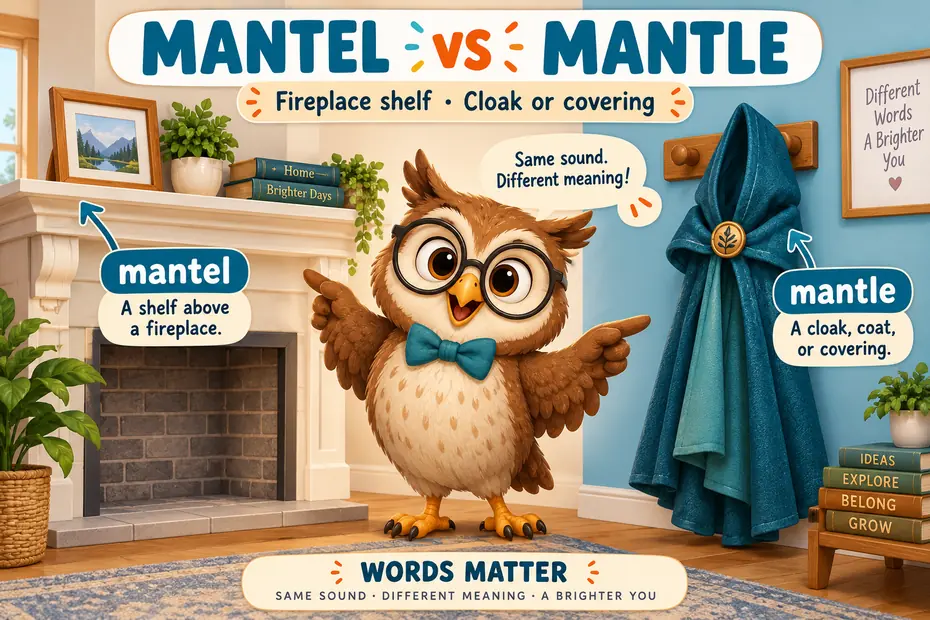
Mantel vs. mantle: the quick answer
Use mantel for the shelf or surround of a fireplace. Use mantle for a cloak, a covering, a role or responsibility, or the layer inside Earth between its crust and core. Both words normally sound the same, so meaning is the practical spelling test. A photograph can stand on a mantel; a new director can take on the mantle of leadership.
There is one useful exception: mantle is also an accepted spelling for the fireplace feature in some usage, especially American English. For an article, product description, or school exercise, mantel makes that particular meaning easier to recognize. Merriam-Webster’s mantel entry explains this overlap; it does not treat the two spellings as completely separate in every context.
Key facts to remember
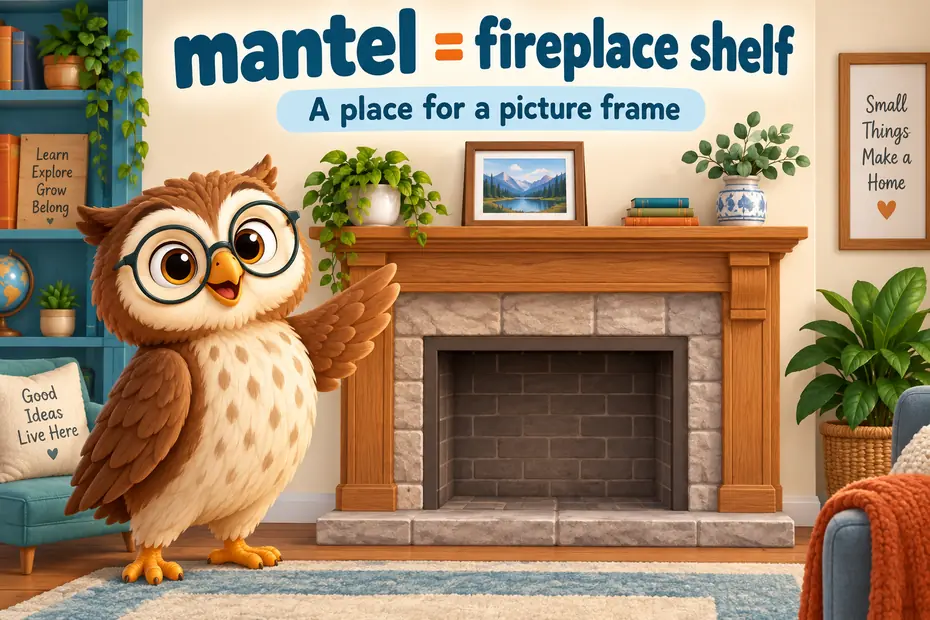
- Mantel: a noun associated with a fireplace, often its shelf or decorative surround.
- Mantle: a noun with several meanings, including a garment, covering, responsibility, and geological layer.
- Same sound: pronunciation alone usually will not tell you which spelling to write.
- Plural forms: one mantel, two mantels; one mantle, two mantles.
- Verb form: mantle can also mean to cover or spread over something. Its forms include mantled and mantling.
How to choose the word in a sentence
First identify what the word refers to. Is it the place above a fireplace where someone sets a clock or picture frame? Choose mantel. Is it clothing worn over someone’s shoulders, a layer covering a landscape, or a responsibility someone accepts? Choose mantle. Do not choose by whether the object is wooden, stone, old, or modern: those details do not create the spelling distinction.
A mantel is not simply any shelf in a room. If a library has ordinary shelves for books, call them shelves or bookcases. If that library also has a fireplace with a shelf above it, that feature can be its mantel. This is a useful correction to examples that label unrelated storage furniture a mantel.
For figurative responsibility, the phrase the mantle of is common: “She accepted the mantle of leadership.” The sentence presents leadership as something someone takes on. It does not mean she picked up a physical fireplace shelf or necessarily wore a real cloak. Merriam-Webster’s mantle entry distinguishes the covering, authority, scientific, and verb senses.

Comparison and examples
| Situation | Clear choice | Original example |
|---|---|---|
| Fireplace shelf | Mantel | The family portrait stands on the mantel. |
| Garment | Mantle | The traveler wrapped a woolen mantle around her shoulders. |
| Responsibility | Mantle | After the election, he assumed the mantle of chairperson. |
| Landscape covering | Mantle | A thin mantle of snow covered the garden. |
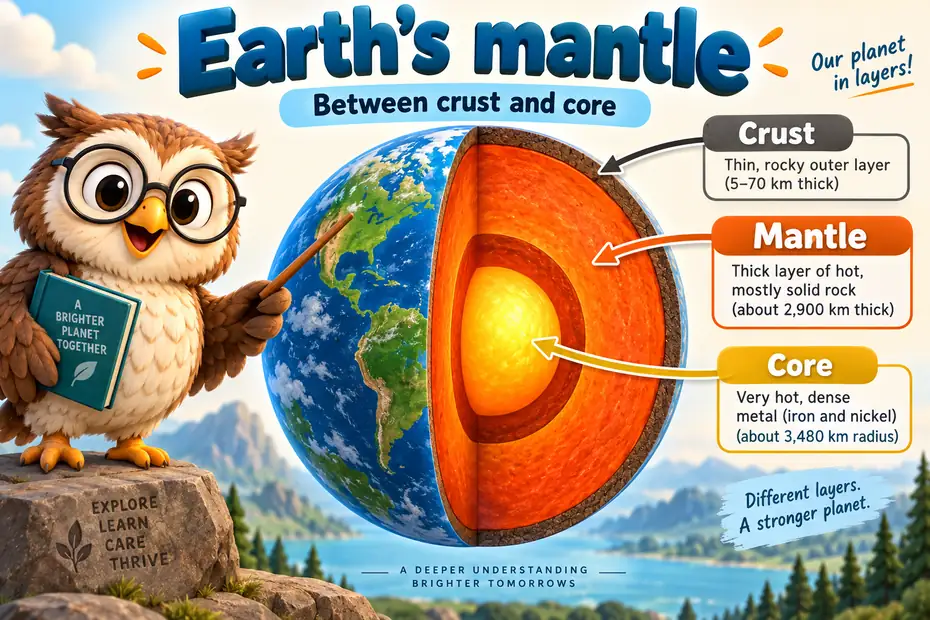
| Earth’s interior | Mantle | The diagram labels the crust, mantle, and core. |
These examples show different meanings, not rules about particular people, buildings, or climates. A writer can describe many kinds of coverings with mantle, but that word often sounds more literary than layer or covering. “A mantle of mist settled over the valley” suits descriptive prose; “Mist covered the valley” says the same basic thing more directly.
Common errors and clearer revisions
“She took on the mantel of leadership.” For a responsibility, revise mantel to mantle. A quick test is to substitute “role”: she took on the role of leader.
“The books are stored on the library mantel.” This needs context. If the books sit on an ordinary wall shelf, use shelf. If they sit above a fireplace, mantel can be accurate. An impressive shelf does not become a mantel merely because it is decorative.
“The Earth’s mantel lies beneath the crust.” In geology, write mantle. The relevant meaning is an interior layer, not a fireplace feature. Avoid using the illustration as a scale drawing: it is a simplified spelling aid.
“The fireplace mantle is always wrong.” That statement is too absolute. Dictionaries record overlap for the fireplace meaning. Mantel remains the clearer default, particularly when helping readers learn the difference.
Practice: choose mantel or mantle
- The old clock stood in the center of the _____.
- She inherited the _____ of team leadership.
- Clouds formed a gray _____ over the hills.
- The lesson explained Earth’s crust, _____, and core.
- They repaired the cracked stone fireplace _____.
Answers: 1. mantel; 2. mantle; 3. mantle; 4. mantle; 5. mantel. The first and fifth examples describe fireplace features. The others describe responsibility, covering, or a scientific layer.
Frequently asked questions
Are mantel and mantle homophones?
Yes, they are normally pronounced alike. Read the surrounding sentence to choose the intended meaning.
Can mantle be a verb?
Yes. “Snow mantled the roofs” uses it to mean covered them. This is a literary option; “Snow covered the roofs” will often be clearer in everyday writing.
Is mantelpiece another spelling of mantle?
Mantelpiece refers to a fireplace feature. It is useful when you want to emphasize that physical object, rather than a cloak or figurative role.
What is an easy memory aid?
Picture mantel beside a fireplace shelf and mantle as something someone wears or takes on. Then check for special scientific meanings. The picture helps you remember; the sentence’s meaning makes the final decision.
Are you confused about the difference between “mantel” and “mantle”? Don’t worry, you’re not alone. As a language enthusiast, I often come across this common confusion. In this text, I’ll shed light on the appropriate usage of these two words, so you can confidently use them in your writing.
First, let’s clarify the distinction between “mantel” and “mantle.” The word “mantel” refers to the shelf above a fireplace, while “mantle” has multiple meanings, including a cloak or a layer covering the Earth’s interior. Understanding the correct context for each word is crucial to avoid any miscommunication or grammatical errors.
So, whether you’re a writer, a student, or simply someone looking to enhance their language skills, this article will provide you with the knowledge and clarity you need to use “mantel” and “mantle” appropriately. Let’s immerse and unravel the mystery behind these two words.
Key Takeaways
- The word “mantel” refers to the shelf above a fireplace, while “mantle” has multiple meanings including a cloak, a responsibility assigned to someone, and a layer of the Earth’s interior.
- Understanding the appropriate context for each word is crucial to avoid confusion and misuse.
- A mantel serves both a functional and decorative purpose, adding character and charm to a fireplace and the room as a whole.
- “Mantle” can also refer to a cloak or loose garment worn as protection from the weather, or a responsibility or role assigned to someone.
- In the field of Earth sciences, the mantle refers to a layer of the Earth’s interior below the crust and above the core.
- Proper usage of “mantel” and “mantle” enhances language skills and effective communication.
What is a Mantel?
A mantel, also known as a mantelpiece or fireplace mantel, is the shelf that surrounds and is placed above a fireplace. It serves both a functional and decorative purpose, adding character and charm to the fireplace and the room as a whole.
The mantel is typically made of wood, stone, marble, or other sturdy materials, and is designed to withstand the heat generated by the fireplace. It is often used to display various items, such as family photos, artwork, or decorative objects.
The term “mantel” is commonly used to refer to the shelf above a fireplace, but it can also be used more broadly to describe a similar shelf or structure in other contexts. For example, a mantel can be found in libraries or study rooms, where it functions as a shelf for books and other items.
Understanding the difference between “mantel” and “mantle” is important to ensure clear and accurate communication. While “mantel” refers specifically to the shelf above a fireplace, “mantle” has a different meaning altogether.
Definition of “Mantel” and “Mantle”
“Mantel” refers to:
- The shelf above a fireplace
- A similar shelf or structure in other contexts, such as libraries or study rooms
On the other hand, “mantle” has multiple meanings:
- A cloak or loose garment worn as a protection from the weather
- FIGURATIVE: The responsibility or role assigned to someone
- A layer of the Earth’s interior below the crust and above the core
Understanding the appropriate context for each word is crucial to avoid confusion and misuse. By using these words accurately, we can enhance our language skills and effectively convey our thoughts and ideas.
What is a Mantle?
A mantle, in the context of this article, refers to the shelf above a fireplace or a similar structure. It serves both a functional and decorative purpose, adding an elegant touch to the overall design of the fireplace.
The mantle is usually made of materials such as wood, stone, or marble, and it often serves as a platform for displaying decorative items like picture frames, candles, or artwork. It provides a space to showcase personal style and add visual interest to the room.
But, it’s important to note that the term “mantle” has other meanings outside of its association with fireplaces. For example, in the context of clothing, a mantle is a cloak or a loose, sleeveless garment that drapes over the shoulders. In a metaphorical sense, a mantle can also refer to a responsibility or role assigned to someone, symbolizing their authority or expertise in a particular field.
In the Earth sciences, the mantle refers to a layer of the Earth’s interior that lies between the crust and the core. It is composed mostly of solid rock but has some partially molten regions. The mantle plays a crucial role in geological processes such as plate tectonics and the movement of magma.
Understanding the difference between “mantel” and “mantle” is essential for clear communication. While “mantel” refers specifically to the shelf above a fireplace or a similar structure, “mantle” has broader meanings related to clothing, responsibility, and the Earth’s interior.
By using these terms accurately, you can enhance your language skills and effectively convey your thoughts and ideas.
Using “Mantel” Correctly
When it comes to the word “mantel,” it’s important to understand its correct usage to effectively communicate your thoughts and ideas. Let’s jump into the definition and proper application of this commonly confused word.
What is a Mantel?
A mantel, in the context of this article, refers to the shelf above a fireplace or a similar structure. It serves both a functional and decorative purpose, adding an elegant touch to the overall design of the fireplace. The mantel is usually made of materials such as wood, stone, or marble, and it often serves as a platform for displaying decorative items like picture frames, candles, or artwork. It provides a space to showcase personal style and add visual interest to the room.
The Difference between “Mantel” and “Mantle”
To prevent any confusion, it’s crucial to distinguish between “mantel” and “mantle.” While “mantel” represents the shelf above a fireplace, “mantle” has multiple other meanings. In the context of clothing, a “mantle” refers to a cloak or a loose, sleeveless garment. Metaphorically, a “mantle” can also denote a responsibility or role assigned to someone.
But, the term “mantle” has an additional meaning in the field of Earth sciences. Here, it refers to a layer of the Earth’s interior that lies between the crust and the core. This geological mantle plays a crucial role in various geological processes, such as plate tectonics and the formation of volcanoes.
Enhancing Your Language Skills
Understanding the difference between “mantel” and “mantle” is essential for clear communication. By using these words accurately, you can enhance your language skills and effectively convey your thoughts and ideas. Whether you’re discussing home décor, fashion, or Earth sciences, using the appropriate term will ensure clarity and avoid any misunderstandings.
Remember, a mantel is the shelf above a fireplace, while a mantle can signify a cloak, a responsibility, or the Earth’s geological layer. By mastering this distinction, you’ll be able to express yourself with confidence and precision.
Now that we’ve covered the correct usage of “mantel,” it’s time to move on to the next part of our exploration: understanding and using “mantle” accurately.
Using “Mantle” Correctly
When it comes to using the words “mantel” and “mantle,” understanding the difference is crucial for clear communication. In this section, I’ll focus on the correct usage of “mantle” and provide you with examples to help solidify your understanding.
Firstly, let’s begin with the definition of “mantle.” In the context of this article, “mantle” refers to a cloak, a loose, sleeveless garment typically worn over other clothing. It can also mean a responsibility or role assigned to someone in a metaphorical sense. But, when it comes to the topic at hand, the word “mantle” is most commonly associated with a layer of the Earth’s interior.
The Earth’s mantle lies between the crust and the core and plays a crucial role in geological processes. It’s a vast layer that consists of hot, solid rock, and is responsible for movements such as plate tectonics and volcanic activity. Understanding this scientific meaning of “mantle” is essential when discussing the Earth’s structure and geological phenomena.
Let’s jump into some examples to further illustrate the correct usage of “mantle.”
- Example 1: “She gracefully wore a beautiful silk mantle over her evening gown.”
- Example 2: “As the CEO of the company, he took on the mantle of leadership with confidence and determination.”
- Example 3: “The Earth’s mantle is a complex layer that influences various geological processes.”
By using “mantle” correctly in these examples, we can effectively convey the intended meaning and enhance our language skills.
Summarizing, “mantle” has multiple meanings depending on the context. In everyday conversation, it can refer to a cloak or a responsibility assigned to someone, while in the field of Earth sciences, it signifies a layer of the Earth’s interior. Understanding the appropriate usage of “mantle” allows us to convey our thoughts and ideas accurately and enhances our overall language skills.
Common Mistakes to Avoid
When it comes to using “mantel” and “mantle” appropriately, there are a few common mistakes that people tend to make. It’s important to be aware of these mistakes so that you can avoid them and communicate effectively. Here are some key points to keep in mind:
- Confusing the Spelling: One of the most common mistakes is mixing up the spelling of “mantel” and “mantle.” Remember, “mantel” refers to the shelf above a fireplace, while “mantle” has various meanings related to a cloak, responsibility, or the Earth’s interior. Always double-check the spelling to ensure accuracy.
- Misusing the Definitions: Another mistake is using the wrong definition for “mantel” or “mantle.” It’s crucial to understand the specific meanings of these words and choose the appropriate one for your context. For example, if you were talking about the Earth’s structure, you would use “mantle” to refer to the layer between the crust and the core.
- Not Considering Context: Context plays a crucial role in using “mantel” and “mantle” correctly. Take into account the specific situation or subject you are discussing. Is it related to home decor or geology? This will help you determine the right word to use and avoid any confusion.
- Lack of Precision: Precision is key when using these words. Avoid vague or ambiguous usage that might confuse your audience. It’s essential to be clear and specific about what you mean when using “mantel” or “mantle” in your writing or speech.
Remember, understanding the difference between “mantel” and “mantle” and using them appropriately can enhance your language skills and avoid misunderstandings. By avoiding these common mistakes, you’ll be better equipped to convey your thoughts and ideas accurately.
Now that we’ve covered the common mistakes to avoid, let’s investigate deeper into the definitions of “mantel” and “mantle” to gain a clearer understanding of their usage.
Conclusion
To conclude, understanding the difference between “mantel” and “mantle” is crucial for effective communication. By using these words accurately, we can enhance our language skills and convey our thoughts and ideas more precisely.
Throughout this article, we have explored the various meanings of “mantle,” including its references to a cloak, a responsibility or role assigned to someone, and a layer of the Earth’s interior. We have also discussed the significance of the mantle in the context of the Earth’s structure and geological processes. It is important to note that the mantle is a vast layer of hot, solid rock that lies between the crust and the core.
To avoid common mistakes, such as confusing the spelling, misusing the definitions, not considering context, and lacking precision, we must be mindful of the appropriate usage of “mantel” and “mantle.” By doing so, we can ensure that our thoughts and ideas are accurately conveyed.
To conclude, mastering the correct usage of “mantel” and “mantle” will not only improve our language skills but also enable us to communicate more effectively. So, let’s continue to enhance our understanding of these words and use them appropriately in our everyday conversations and writing.
Frequently Asked Questions
Q: What is the difference between “mantel” and “mantle”?
A: “Mantel” refers to a shelf above a fireplace, while “mantle” can mean a cloak, a responsibility, or a layer of the Earth’s interior.
Q: What does “mantle” represent in the context of the Earth’s structure?
A: In the context of the Earth’s structure, the “mantle” is a vast layer of hot, solid rock that lies between the crust and the core.
Q: Why is it important to use “mantel” and “mantle” accurately?
A: Using “mantel” and “mantle” accurately enhances language skills and effectively conveys thoughts and ideas.
Q: What are common mistakes to avoid when using “mantel” and “mantle”?
A: Common mistakes to avoid include confusing the spelling, misusing the definitions, not considering context, and lacking precision.
Q: How can accuracy be achieved when using “mantel” and “mantle” in writing?
A: Accuracy can be achieved by understanding the proper definitions and paying attention to the specific context in which these words are used.


