
Courier vs. currier is a spelling-and-meaning distinction: a courier carries or sends messages and parcels; a currier prepares already-tanned hides for use. If you are talking about a delivery, write courier; use currier for the specialized leather trade.
Courier vs. Currier: Quick Comparison
| Word | Meaning | Typical context | Memory cue |
|---|---|---|---|
| courier | A person or company that transports messages, documents, or parcels; also a verb meaning to send by that service. | Delivery, logistics, business correspondence | OU appears in courier; think “outbound parcel.” |
| currier | A person who dresses or finishes leather after tanning. | Leatherworking, craft history, occupational records | RR follows the opening CU in currier. |
The words are not interchangeable. A delivery company is a courier service; a person preparing a hide is a currier. “Currier” is uncommon in everyday conversation, but it remains a valid specialist and historical word rather than a misspelling of “courier.”
What Does Courier Mean?
A courier is a person or company that carries messages, letters, packages, or other items from a sender to a recipient. Cambridge also records courier as a verb: “to courier” something means to send it using a courier.

Examples: “The law office sent the signed papers by courier”; “We will courier the replacement part to the client.” The noun identifies the messenger or delivery company, while the verb describes the shipping method.
Do not assume that every courier offers same-day delivery, live tracking, or special handling. Those are features of particular providers and service levels; the word itself only identifies the delivery role or method. Check the selected service’s terms when timing or proof of delivery matters.
What Does Currier Mean?
A currier is a worker who prepares tanned hides for use by dressing, smoothing, or finishing the leather. The American Heritage Dictionary defines the occupation in those terms, and the University of York’s Yorkshire Historical Dictionary documents the currier as a leather tradesperson working after tanning.

Tanning and currying name different stages or kinds of work, so “currier” is more specific than a general label such as leatherworker. Historical sources also distinguish a currier from a shoemaker: a currier prepares the material, while a shoemaker makes footwear. A modern craftsperson may perform overlapping tasks, but the job title describes the leather-preparation role.
The term is rare in general modern writing because few readers encounter the occupation outside leather trades, museums, or historical records. That rarity does not make the word obsolete: dictionaries still define it, and the occupational meaning is precise when relevant.
Are Courier and Currier Homophones?
Not for every English speaker. Cambridge gives different British pronunciations for courier and currier; its US entries also show pronunciation variation. Some accents may make the words sound closer or alike, so the safest general description is “similar-sounding,” not universally “homophones.”
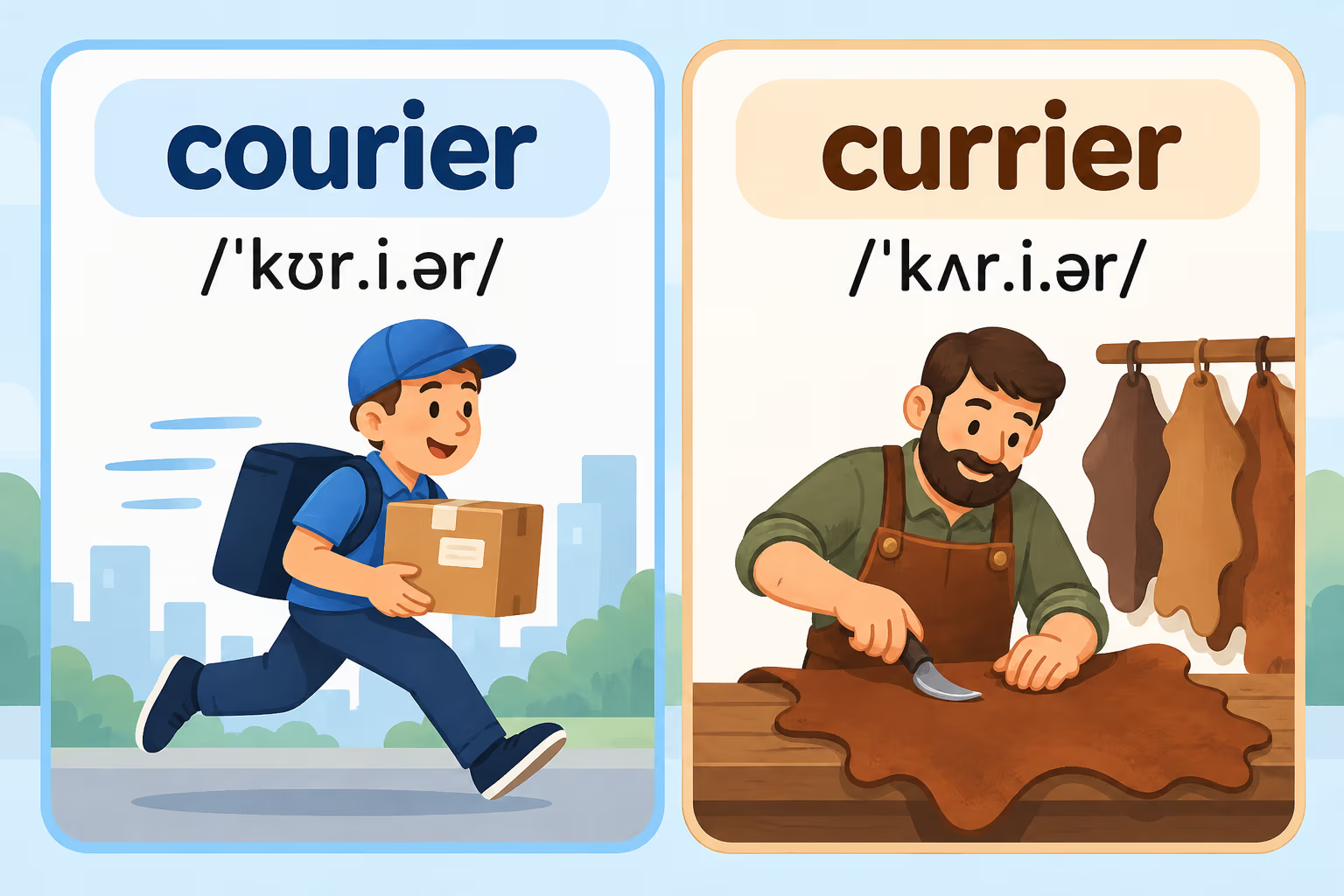
Cambridge lists UK courier as /ˈkʊə.ri.ə(r)/ and UK currier as /ˈkʌr.i.ə(r)/. The initial vowel differs in those transcriptions. American pronunciations vary too, so speakers should not rely on sound alone when spelling either word.
How Do You Spell the Right Word?
Choose the spelling by the action or occupation, then check the letter pattern:
- Write courier for delivery. Its letters are C-O-U-R-I-E-R, with OU after C.
- Write currier for leather preparation. Its letters are C-U-R-R-I-E-R, with RR after the opening CU.
- Read the whole sentence aloud and ask whether someone is transporting an item or finishing leather.
- In a formal document, replace an uncertain word with a direct phrase such as “delivery company” or “leather finisher.”
| Sentence | Correct word | Why |
|---|---|---|
| “A ___ delivered the contract before noon.” | courier | The person transports a document. |
| “The ___ treated the hide after it was tanned.” | currier | The craftsperson finished leather. |
| “Please ___ the signed forms to our office.” | courier (verb) | The verb means send using a courier. |
| “The museum record lists a ___ among local tradespeople.” | currier | The word names a leather worker. |
Usage Notes Before the Original Examples
The original article is retained below in full. A few statements in it need context: currier is uncommon but not simply obsolete; the words are not homophones in every accent; the spelling clue about an “o after u” and “u after r” is inaccurate; and speed, tracking, security, and special handling depend on the courier service purchased. Use the new comparison above for these distinctions while reading the preserved original examples.
Are you confused about when to use “courier” and when to use “currier”? Well, you’re not alone. As an expert in the English language, I often come across this common dilemma. In this text, I’ll shed light on the appropriate usage of these two words and help you avoid any embarrassing mistakes.
Firstly, let’s clarify the difference between “courier” and “currier.” While they may sound similar, they have distinct meanings. “Courier” refers to a person or company that delivers packages or documents, often with speed and efficiency. On the other hand, “currier” is an archaic term that refers to a person who prepares and finishes leather.
Key Takeaways
- A courier refers to a person or company that specializes in the transportation and delivery of packages and documents, often with speed and efficiency.
- A currier is an archaic term that refers to a craftsman who prepares and finishes leather.
- Couriers offer faster and more personalized services compared to traditional mail services, often providing same-day or express delivery options.
- Couriers play a vital role in facilitating the efficient and secure transportation of time-sensitive items in various industries.
- Advantages of using a courier service include speed and timeliness, security and tracking, personalized service, and special handling for fragile or sensitive items.
- It’s important to understand the distinction between a courier and a currier to avoid confusion and misuse of these terms. A courier is responsible for transportation, while a currier is a craftsman who works with leather.
What is a courier?
Couriers play a vital role in the rapid world of package and document delivery. They are responsible for ensuring that goods and important papers reach their intended recipients in a timely manner. Let me provide you with a clear definition of what a courier is and why they are an essential part of today’s society.
Definition of a Courier:
A courier is a person or company that specializes in the transportation and delivery of packages, documents, and other items. They are experts in logistics, ensuring that goods are picked up from the sender’s location and delivered safely and efficiently to the recipient.
Difference between a Courier and Other Delivery Services:
It’s important to note that there is a distinction between a courier and other delivery services. While both may involve the transportation of goods, couriers typically offer a faster and more personalized service. Unlike traditional postal services or shipping companies, couriers often provide same-day or express delivery options, catering to the immediate needs of their clients.
Courier Services in the Modern World:
In today’s interconnected world, courier services have become an integral part of various industries. Their services are utilized by individuals, businesses, and organizations alike, all relying on their efficiency and reliability. From delivering important legal documents to shipping medical supplies, couriers ensure that time-sensitive items reach their destination promptly.
Benefits of Using a Courier Service:
There are several advantages to using a courier service, including:
- Speed and Timeliness: Couriers prioritize fast and timely delivery, often offering same-day or expedited options.
- Security and Tracking: With courier services, you can track your package throughout its journey, knowing its exact location at any given time.
- Personalized Service: Couriers often provide door-to-door delivery, ensuring a more personalized and convenient experience.
- Special Handling: Fragile or sensitive items can receive special attention and care from couriers, reducing the risk of damage during transportation.
To conclude, a courier is a specialized service that offers fast, reliable, and personalized delivery of packages and documents. With their expertise in logistics and commitment to timeliness, couriers play a vital role in facilitating efficient and secure transportation in today’s society.
What is a currier?
As we investigate further into our exploration of commonly confused words, it’s important to clarify the difference between a courier and a currier. While the two words may sound similar and are often used interchangeably, they actually refer to different things. In this section, I’ll provide a clear definition of a currier and highlight the distinctions between a currier and a courier.
So, what is a currier? A currier is a skilled craftsman who works with leather. They are responsible for the process of “currying,” which involves treating animal hides to remove impurities, soften the leather, and make it more durable. Currying is an essential step in the production of high-quality leather goods.
It’s easy to see why the terms “courier” and “currier” can be confused. They are homophones, meaning they sound the same but have different meanings. Both words also involve a certain degree of transportation or handling of goods. But, the similarity ends there.
While a courier is focused on the transportation and delivery of various items, a currier is primarily concerned with the treatment and preparation of leather. The roles and skill sets required for each profession are distinct.
To summarize, a currier is a skilled individual who works with leather, specifically in the process of currying. On the other hand, a courier is a transportation expert who is responsible for the efficient and timely delivery of goods.
Understanding the difference between a courier and a currier is essential to avoid confusion and misuse of these terms. With this knowledge in hand, you’ll be able to use these words appropriately and confidently in your writing and conversations.
Now that we have a clear understanding of what a currier is, let’s move on to explore the role of a courier in more detail.
Understanding the difference between courier and currier
When it comes to words that are commonly confused, “courier” and “currier” definitely make the list. Although the two words may sound similar, they have completely different meanings and usage. In this section, I’ll provide a clear definition of each term and highlight the key differences between them.
Let’s start with the word “courier.” A courier is a person or a company that specializes in delivering packages, documents, or important goods from one place to another. They provide faster and more personalized services compared to traditional mail services. Couriers offer options like same-day or express delivery, ensuring that your items reach their destination quickly and securely.
On the other hand, a “currier” is a skilled craftsman who works with leather. Unlike a courier, a currier focuses on shaping, finishing, and treating leather to make it suitable for various purposes, such as shoe making, bookbinding, or upholstery. It’s important not to confuse the two terms, as they have distinct definitions and functions.
To summarize:
- A courier is responsible for transporting packages and documents quickly and securely.
- A currier is a skilled craftsman who works with leather.
Now that we have a clear understanding of the differences between these two terms, let’s explore some examples to further illustrate their usage.
Example 1:
I hired a courier to deliver important legal documents to the courthouse before the deadline. They ensured that the documents arrived promptly and securely.
Example 2:
The local shoemaker relies on the expertise of a skilled currier to treat and shape the leather for their handcrafted shoes. The currier’s attention to detail guarantees a high-quality finished product.
Understanding the difference between “courier” and “currier” is essential to using these terms correctly. Remember, a courier delivers packages and documents, while a currier is a craftsman who works with leather.
Common mistakes in using courier and currier
One common mistake that people make when using the words “courier” and “currier” is confusing their meanings and applications. While these words may sound similar, they actually refer to completely different things.
Let’s start by clarifying the definition of each term:
- A courier is a person or company that transports packages, documents, or other items from one location to another. Couriers specialize in fast and secure deliveries, often with additional services such as tracking and personalized handling. They play a crucial role in today’s rapid world, ensuring that important items reach their destinations quickly and safely.
- On the other hand, a currier is a skilled craftsman who works with leather. Curriers are involved in the process of treating, scraping, and finishing leather to make it suitable for various applications, such as shoes, handbags, or belts. They bring out the desired qualities in the leather and make it ready for use in different products.
Now that we understand the difference between a courier and a currier, let’s examine some common mistakes people make when using these words:
- Confusing the spellings: One of the most common mistakes is mixing up the spellings of “courier” and “currier.” It’s important to remember, a courier deals with transportation, while a currier is a professional in leather crafting.
- Using the wrong term: Sometimes, people mistakenly use the word “currier” when they actually mean “courier” or vice versa. This can lead to confusion and misunderstandings, especially in written communication.
- Assuming they are interchangeable: Another mistake is assuming that “courier” and “currier” can be used interchangeably. They have distinct meanings and refer to different professions, so it’s essential to use the correct term based on the context.
To illustrate these mistakes, let’s consider an example: If someone were to say, “I need to hire a currier to deliver these documents,” it would be incorrect because the proper term for the job is “courier.”
To conclude, understanding the difference between a courier and a currier is crucial to avoid common mistakes. Remember, a courier is responsible for fast and secure transportation, while a currier is skilled in working with leather. By using the correct term, you can convey your message accurately and avoid confusion.
Tips for using courier and currier appropriately
When it comes to using the words “courier” and “currier” appropriately, there are a few key tips to keep in mind. Let me share some insights that will help you navigate the differences between these two terms and ensure you are using them correctly.
- Understand the Definition: First and foremost, it’s important to have a clear understanding of what each term means. A courier is responsible for transporting packages and documents quickly and securely. On the other hand, a currier is a skilled craftsman who works with leather. Keep this distinction in mind to avoid any confusion.
- Know the Context: Consider the context in which you are using these words. If you are referring to the transportation of packages or documents, you should use the term courier. But, if you are talking about someone who works with leather and creates leather goods, then currier is the appropriate term to use.
- Be Mindful of Spelling: One common mistake people make when using these words is mixing up their spellings. Remember, courier has an “o” after the “u” whereas currier has a “u” after the “r”. Pay attention to the spelling to ensure accuracy in your communication.
- Use the Right Term: Be sure to use the correct term based on the situation. Referring to a transport service as a currier or a leather craftsman as a courier can lead to confusion and misunderstandings. Always use the appropriate term to convey your message accurately.
Understanding the difference between a courier and a currier is essential for effective communication. Whether you’re writing an academic paper, crafting a professional email, or simply engaging in casual conversation, using these terms appropriately will enhance your communication skills.
By following these tips, you’ll be able to use the words “courier” and “currier” with confidence and avoid the common mistakes that people often make when using these terms interchangeably. Remember, clarity in communication is key, and using these words appropriately will help you convey your message accurately and avoid any confusion.
Conclusion
To conclude, understanding the difference between a courier and a currier is crucial for effective communication. Couriers play a vital role in our modern world, offering fast and personalized delivery services for individuals, businesses, and organizations. They ensure that packages and documents reach their destination quickly and securely. On the other hand, a currier is a skilled craftsman who works with leather, creating beautiful and durable leather goods.
By knowing the definitions of these terms and using them appropriately, we can avoid common mistakes such as confusing their meanings, mixing up the spellings, or assuming they are interchangeable. This understanding allows us to accurately convey our message and avoid any misunderstandings.
So, whether you need to send important documents urgently or are looking for someone to craft a unique leather item, make sure to use the correct term. Remember, a courier delivers your packages, while a currier works with leather. By using these terms appropriately, you can ensure effective communication and make the most out of the services provided by couriers and curriers.
Frequently Asked Questions
What is the role of a courier in the modern world?
A courier is responsible for transporting packages and documents quickly and securely. They offer faster and more personalized services, often providing same-day or express delivery options.
How is a courier different from a currier?
A courier is someone who transports packages and documents, while a currier is a skilled craftsman working with leather.
Who uses courier services?
Individuals, businesses, and organizations utilize courier services for various purposes, such as delivering legal documents and shipping medical supplies.
What are the benefits of using a courier service?
The benefits of using a courier service include speed, security, tracking, personalized service, and special handling for fragile items.
What are some common mistakes people make when using the words “courier” and “currier”?
Common mistakes include confusing their meanings and applications, mixing up the spellings, using the wrong term, and assuming they are interchangeable.
Why is it important to understand the difference between a courier and a currier?
Understanding the difference is crucial to avoid common mistakes and accurately convey one’s message when discussing the roles of couriers and curriers.
How can I use the terms “courier” and “currier” appropriately?
To use the terms appropriately, you should understand their definitions, know the context, be mindful of spelling, and use the right term based on the situation.


