Engaging Sight Word Learning Games for Your Classroom
Engaging sight word learning games give students repeated opportunities to read familiar words while connecting sounds, spelling, and meaning. Start with a small set already taught, choose a low-pressure game, and check reading afterward. The activities below support classroom practice; games work best alongside explicit instruction rather than as its substitute.
Key facts at a glance
- A sight word is any word a reader recognizes automatically.
- High-frequency describes how often a word occurs, not its spelling pattern.
- Some high-frequency words are fully regular; others contain unexpected spellings.
- Use games to practice taught words and give corrective feedback.
- Check reading in fresh order and connected text, not only on a game board.
What should students learn before playing?
Teach the target words before asking students to recognize them in a game. Say each word, identify its sounds, connect those sounds with spellings, and explain any unexpected part. A game can provide enjoyable practice, but winning does not demonstrate that a student can independently read the word later.
For planning, distinguish sight words from high-frequency words. The first label describes a reader’s automatic recognition; the second describes frequency in print. Not every common word is irregular. This distinction updates the common assumption that all sight words must be memorized as whole visual shapes. Choose words that match the phonics patterns your students know.
Reading Rockets’ overview of sight words and orthographic mapping explains the role of sound-spelling connections. For practical game planning, the proposed set sizes and times below are classroom starting points, not a research-based dosage or a guarantee of mastery.
Engaging sight word learning games: compare six options
| Game | Suggested session | Materials | Best use | Main limitation |
|---|---|---|---|---|
| Read-and-cover bingo | 5–8 minutes | Small grids and counters | Small-group review | Listening alone can hide reading difficulty |
| Read, build, reveal | 5–7 minutes | Cards and letter tiles | Spelling connections | Needs adult feedback |
| Memory match | 5–8 minutes | Two copies of each card | Partner practice | Matching position can replace reading |
| Word detective | 5–10 minutes | Short familiar text | Context transfer | Text must be accessible |
| Pathway practice | 5–7 minutes | Cards and tabletop path | Turn-taking review | Long waits reduce practice |
| Sort and explain | 5–8 minutes | Cards and sorting spaces | Pattern awareness | Requires clear sorting criteria |
1. Read-and-cover bingo for guided review
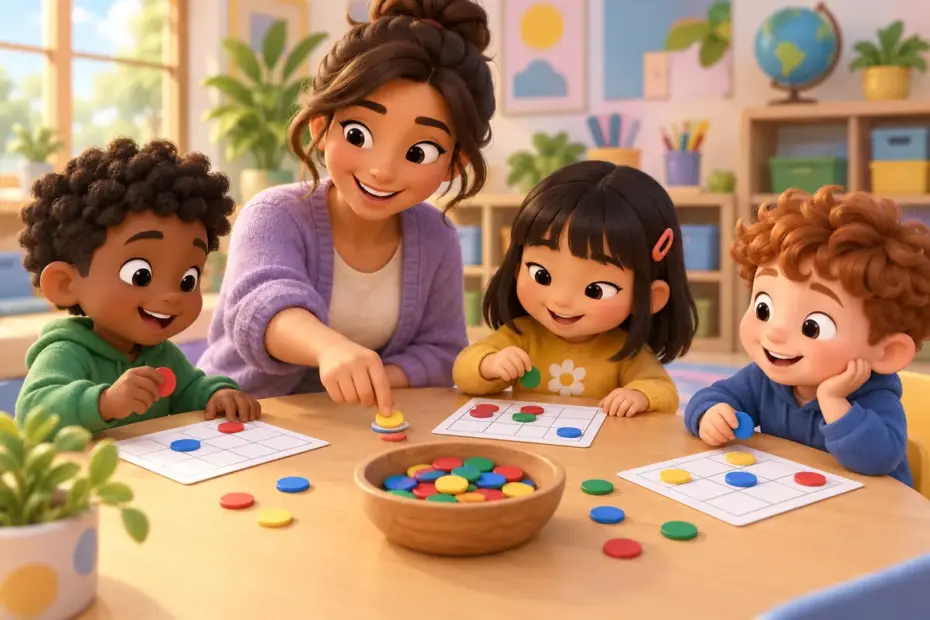
Read-and-cover bingo provides a simple group routine using a 2-by-3 grid with six taught words. Give each learner counters. Say a target word, have learners locate it, then ask each learner to read the selected word before covering it. Rotate who reads aloud so one confident student does not supply every response.
The limitation is that a student may match the spoken word to a familiar location without actually reading it. Shuffle the layouts and finish with two or three cards presented separately. For learners who need support, point to the relevant spelling and model the word rather than asking them to guess from its first letter.
Choose bingo when you can hear individual responses in a small group. For a whole class, use partner checks plus teacher spot checks; a roomful of covered squares gives little evidence about each child’s independent reading.
2. Read, build, reveal for spelling connections
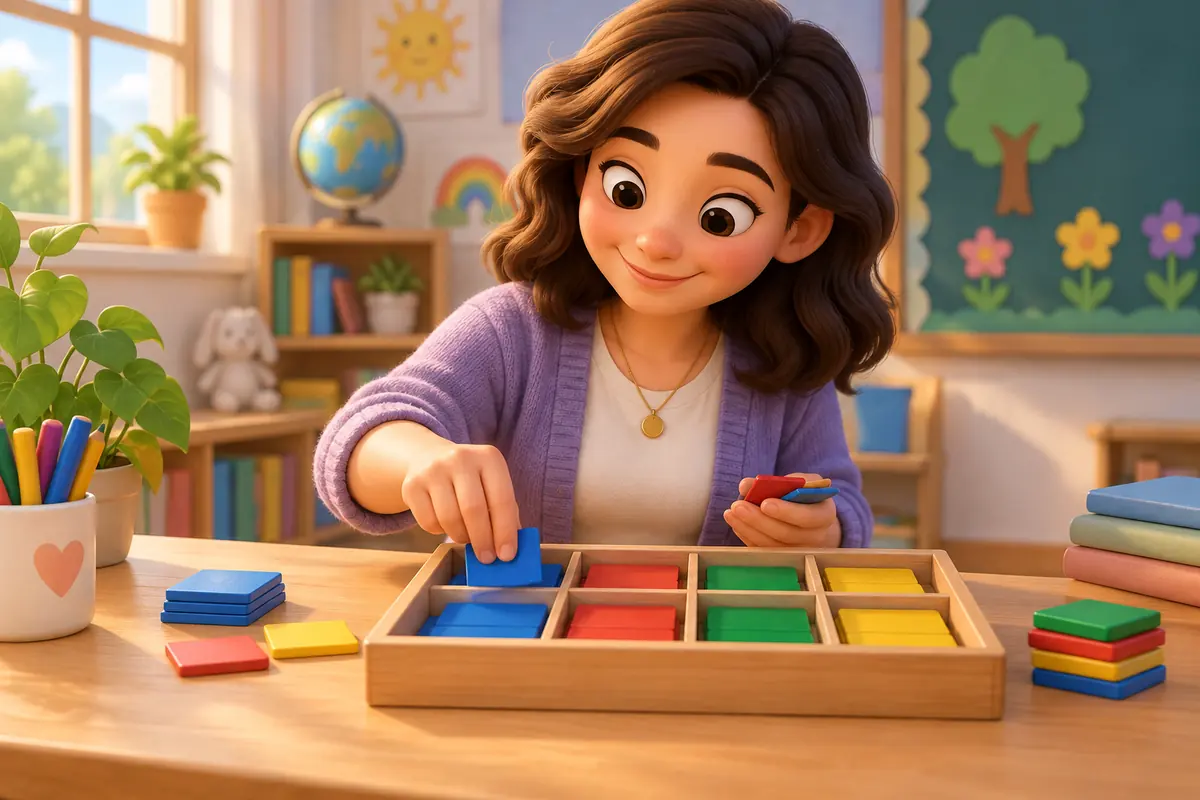
Read, build, reveal combines reading with a brief spelling attempt. Show a taught word, have the learner read it, then turn the card over while the learner builds it with letter tiles. Reveal the card and compare the spelling together. Start with three or four words so the task stays manageable.
Ask the learner to explain one sound-spelling connection, including an unexpected spelling when relevant. If a tile is misplaced, return to the spoken word and its sounds. Do not turn the exercise into a race: speed can crowd out the careful comparison that makes the routine useful.
The limitation is that building requires monitoring. Independent students can compare with an answer card, but an adult should sample attempts to catch repeated errors. Offer magnetic letters or larger tiles for students who find small pieces difficult to manipulate.
3. Memory match for partner reading
Memory match works with two copies each of four taught words, giving eight cards in total. Students turn over two cards, read both, and keep matching pairs. If the words differ, they return the cards face down. Prompt readers to look through the spelling, even when they remember a card’s location.
The limitation is that successful matching may reflect visual memory or remembered positions. Require both words to be read, and change the arrangement between rounds. Keep a separate record of words that needed help rather than treating the number of pairs collected as a reading score.
Choose this game for pairs who can take turns independently. For a learner who needs direct support, play face up first: locate a pair, read both cards, and discuss the spelling. Add the memory component only when it helps engagement.
4. Word detective for reading in context
Word detective asks students to find taught words in a short, accessible passage and read the sentence containing each one. Provide one page with a few target words, a pencil or removable marker, and a clear task: locate a target, read it, then read its sentence.
The limitation is text difficulty. A passage with unfamiliar patterns may overwhelm students even if the target words are familiar. Select a text they can largely decode, and supply help with other vocabulary without suggesting that pictures should replace attention to letters.
This activity tests a different task from isolated cards: recognition within connected reading. Ask what one selected sentence means so students attend to comprehension as well as finding words. Do not assess progress only by counting highlighted items.
5. Pathway practice for turn-taking
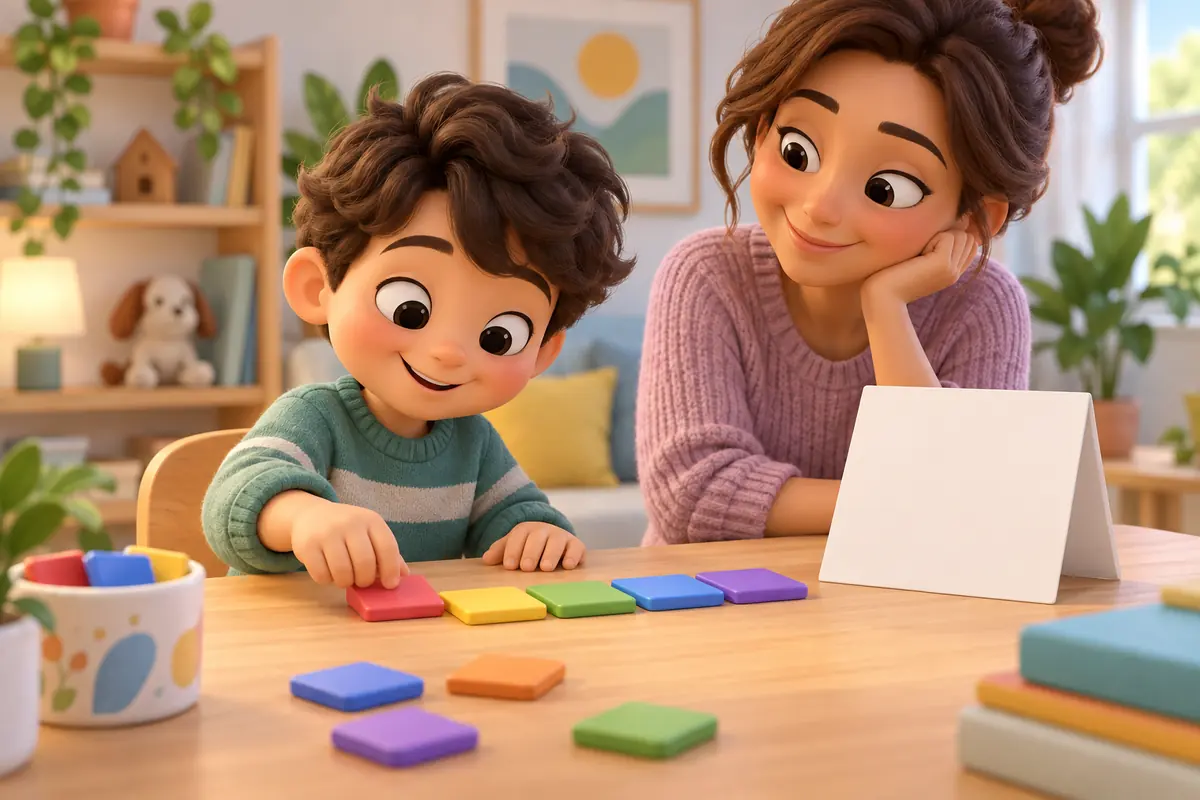
Pathway practice uses a short tabletop path and a card stack. A learner reads one taught word, receives feedback, and moves a token one space. Give every correct or corrected attempt a chance to move so struggling readers continue participating. Six to eight spaces are enough for a brief session.
The limitation is waiting time. Keep groups to two or three learners and let other players read quietly with the active player. Avoid elimination rules, especially when the point is to increase opportunities to practice. A missed word should lead to modeling and a later retry, not removal from the game.
A tabletop path provides the movement-and-progress theme without requiring floor hopping. Learners with mobility or sensory needs can select tokens or move a digital marker while keeping the same reading task.
6. Sort and explain for noticing patterns
Sort and explain asks learners to group already taught words by a meaningful spelling feature. For example, sort he, she, we, and me together when the long-e use of final e has been taught, then compare that group with a separately taught short-vowel set. Ask students to read each card and state the sorting rule.
The limitation is that a student can sort by an irrelevant visual feature, such as word length, without understanding the intended pattern. Accept a different defensible rule during discussion, but return explicitly to the lesson’s sound-spelling focus. Do not label every unexpected spelling as a permanent exception when it may become regular after a later lesson.
Choose this game after students can read the cards with support. If naming the pattern is too difficult, model one group and offer two possible locations for the next card.
How do you run a short practice session?
Choose a small taught set, explain the game, model one turn, and monitor reading before checking transfer. A proposed 10-minute session can include two minutes of review, six minutes of play, and two minutes of individual checking. Adjust the schedule to attention, group size, and the amount of feedback required.
- Select four to six taught words, including earlier review words.
- Read the words together and revisit relevant spelling patterns.
- Model the reading response required for a turn.
- Play without elimination or public speed rankings.
- Record help needed and revisit missed words.
- Present a few words in a new order and one short sentence afterward.
A student who reads a word after a prompt has completed a supported attempt. Record that differently from an independent response. Useful notes might say “read independently,” “needed spelling cue,” or “needed full model.” These distinctions guide the next teaching decision better than a winner’s score.
When should you change a game or seek more support?
Change the practice when learners guess, wait too long, repeatedly miss the same words, or become distressed by competition. Reduce the set, slow the turn-taking, revisit instruction, or choose a more supported format. Difficulty does not prove a child needs more speed drills.
For multilingual learners, establish pronunciation and meaning alongside spelling. For students with handwriting difficulty, use tiles or pointing when assessing reading so motor demands do not obscure the result. If difficulty persists across lessons and appropriately supported practice, use the school’s assessment and intervention process rather than relying on additional game rounds alone.
Named commercial products and online platforms may change prices, access, and content. The low-material routines here can be adapted to your curriculum without assuming any product is available or that its word sequence matches your instruction.

Putting the examples into practice
Use engaging sight word learning games to increase supported practice, then check independent reading separately. Keep instruction, feedback, and accessible participation at the center of the activity.
Frequently asked questions
How many new words should a game include?
Use a small set selected for the learner’s current instruction rather than a fixed universal quota. Four to six taught words is a practical starting set for the activities above, but reduce it when students need frequent help. Introduce unfamiliar spellings before play so the game supplies practice instead of repeated guessing.
Can these games work at home?
Yes. A caregiver can use a few teacher-selected words with paper cards, counters, or letter tiles. Ask the teacher how each word was taught so home practice reinforces the same spelling connections. Keep the session brief, model missed words calmly, and report persistent difficulty instead of increasing competition or pressure.
Should children be timed while reading cards?
Timing is unnecessary for these practice games. Begin with accurate reading and useful feedback, especially for words that are still being learned. If a school uses a formal timed measure, follow that assessment’s instructions separately. Public races can discourage some learners and do not explain which spelling connections need further teaching.
How do you know a word has been learned?
Check whether the learner reads the word independently in a fresh arrangement and in accessible connected text across later opportunities. A successful game turn immediately after a model is useful practice but weaker evidence of independent learning. Also check meaning and revisit the spelling when the student repeatedly confuses similar-looking words.
Teaching sight words can sometimes feel like a challenging job, but it doesn’t have to be. I’ve discovered that incorporating fun and engaging games into the learning process can make a world of difference. Not only do these games capture students’ attention, but they also reinforce learning in a way that’s both enjoyable and effective.
Key Takeaways
- Understanding Sight Words: Sight words are common high-frequency words in English that often defy standard phonetic rules and require memorization for reading fluency.
- Importance of Sight Word Games: Incorporating engaging sight word learning games boosts student motivation, supports differentiated instruction, and enhances retention through a multisensory approach.
- Effective Features of Sight Word Games: Interactive elements, visual appeal, and age-appropriate content are key characteristics that make sight word games effective tools for reinforcing literacy skills.
- Top Sight Word Games: Popular options include digital games like ABCmouse and Reading Eggs, board games such as Zingo! Sight Words and Sight Word Bingo, and dynamic classroom activities like Sight Word Scavenger Hunt and Flashcard Relay.
- Integration Tips: Implementing game stations, incorporating games into lesson plans, and using periodic assessments can efficiently integrate sight word games into the classroom to enhance student learning outcomes.
Understanding Sight Words
In early childhood education, sight words form the foundation of reading skills. These high-frequency words appear in texts with such frequency that they don’t conform to standard phonetic patterns. Due to this irregularity, students can’t rely on decoding strategies alone to learn sight words. Instead, they must recognize these words by sight, so enhancing reading fluency.
Importance of Sight Words
Sight words comprise a significant portion of elementary reading material. According to Dr. Edward Fry, words like “the,” “and,” “is,” and “in” are essential for young readers to master. By swiftly recognizing these words, students can focus on comprehending text rather than decoding every word. This fluency fosters a smoother reading experience, making reading more enjoyable and less frustrating.
Characteristics of Sight Words
Sight words often defy conventional phonics rules. Words such as “was,” “were,” and “does” don’t follow typical phonetic patterns, making them challenging for early readers. Their irregular spelling necessitates memorization. They also tend to be short; many are just three or four letters long. These characteristics make frequent practice crucial.
Lists of Sight Words
There are several widely recognized sight word lists. The Dolch Sight Words, created by Edward William Dolch, showcase 220 common words and 95 nouns found in children’s books. The Fry Sight Words list, developed by Dr. Edward Fry, includes 1,000 words ranked by frequency. Both lists serve as vital resources for educators aiming to enhance their students’ reading skills.
| Sight Word Lists | Creator | Number of Words | Features |
|---|---|---|---|
| Dolch Sight Words | Edward William Dolch | 220 words, 95 nouns | Commonly found in children’s books |
| Fry Sight Words | Dr. Edward Fry | 1,000 words | Ranked by frequency |
Challenges in Learning Sight Words
Memorizing sight words can be demanding due to their irregular spellings. Children may struggle to recall words that don’t follow phonetic rules. Consistent practice and repetition become essential for mastery. Strategies incorporating multiple senses, such as visually identifying words through flashcards and audibly repeating them, can aid retention.
Effective Strategies for Teaching Sight Words
Using multiple modes of learning engages different senses. Flashcards allow visual recognition, while chanting spells out words. Interactive games like “Sight Word Bingo” and “Memory Match” offer repetitive practice in a fun context. Digital apps designed for sight word practice can provide immediate feedback, fostering improvement.
Understanding sight words and their significance in early reading development is crucial for educators. Armed with effective strategies and resources, I can guide my students toward reading fluency.
Importance of Sight Word Learning Games
Sight word learning games play a vital role in early literacy development. They engage students interactively, making the learning process enjoyable. Students encounter words like “the”, “and,” and “is” frequently. These high-frequency words often defy phonetic rules, requiring memorization for fluency. Games provide a multi-sensory approach, involving visual, auditory, and kinesthetic elements, which aids in retention.
Teachers face the challenge of maintaining student interest while teaching sight words. Traditional methods, like rote memorization, can become monotonous. Incorporating games addresses this by adding excitement and variability to lessons. For instance, flashcard races or memory matching games make repetitive exposure fun. This engagement boosts motivation and encourages consistent practice, essential for mastery.
Another key benefit of sight word learning games is the opportunity for differentiation. Games can be tailored to meet individual learning needs. For students struggling with specific words, targeted games provide additional practice in a supportive setting. On the other hand, advanced students can engage in more challenging tasks, promoting ongoing growth. This adaptability ensures that all students progress at their own pace.
Peer interaction is another advantage of sight word learning games. Many games involve group participation, fostering collaboration and communication among students. Activities like bingo or word search puzzles encourage teamwork, allowing students to learn from one another. This social aspect not only enhances learning but also builds a sense of community in the classroom.
Sight word learning games also offer immediate feedback. In traditional settings, waiting for teacher corrections can delay progress. Games provide instantaneous reinforcement, helping students quickly recognize and correct mistakes. This immediate feedback loop solidifies understanding and promotes confidence.
Also, parental involvement can be increased through sight word learning games. Activities sent home involve families in the educational process, reinforcing learning outside the classroom. Parents playing sight word games with their children provide additional practice and demonstrate the importance of literacy skills. This home-school connection strengthens overall educational outcomes.
For non-native English speakers, sight word games offer an approachable way to grasp tricky words. Games designed for English Language Learners (ELL) adapt to different proficiencies, making complex sight words more accessible. By integrating games, teachers create inclusive environments where all students can thrive.
Incorporating technology enhances the effectiveness of sight word games. Digital platforms offer interactive experiences that traditional methods can’t match. Apps and online games provide diverse and engaging ways for students to practice, track progress, and receive personalized instruction. This technological integration keeps lessons current and relevant, appealing to tech-savvy learners.
Games supporting phonemic awareness are particularly beneficial. While sight words defy many phonetic rules, understanding sound patterns helps with overall literacy. Games that blend sight word recognition with phonemic elements strengthen both areas. For example, games that require students to identify sight words in the context of a sentence illustrate proper usage and enhance comprehension.
To conclude, sight word learning games are invaluable in early education. They make learning interactive and enjoyable, cater to individual needs, promote social interaction, offer immediate feedback, and involve families. Through technology and phonemic support, these games provide a comprehensive approach to mastering sight words.
Key Features of Effective Sight Word Games
Effective sight word games engage students, making learning memorable. They incorporate essential elements ensuring that educational goals align with student enjoyment.
Interactivity
Interactive elements in sight word games grab students’ attention and make learning engaging. For example, games that incorporate physical movement, such as “sight word hopscotch,” encourage kinesthetic learning. In digital formats, features like dragging and dropping or tapping can create an engaging experience. These interactive methods foster better retention of sight words, as students actively participate rather than passively receive information. Including levels or achievements can motivate students to progress, tapping into students’ competitive spirits and desire for accomplishment. By implementing interactive features, games can cater to various learning styles, enhancing the overall educational experience.
Visual Appeal
Visually appealing sight word games captivate students, motivating them to participate. Bright colors, clear fonts, and engaging graphics make sight word games more attractive. Games like “sight word matching” with vivid images associated with each word help students remember better. Animated elements and rewards, such as virtual stickers or badges, keep students engaged and provide instant gratification. Ensuring that visuals are not overly distracting but supportive of the learning process is crucial. Well-designed visual elements balance fun and learning, making sight word practice enjoyable and effective.
Age Appropriateness
Age-appropriate sight word games ensure content aligns with students’ developmental stages. For younger students, simple games with basic words and easy instructions work best. As students grow, games can introduce more complex words and advanced challenges. For instance, kindergartners might benefit from matching games, while older students might find word scrambles or context-based games beneficial. Tailoring the difficulty level to match students’ abilities prevents frustration and promotes successful learning experiences. Adjusting game content to different age groups ensures that students remain motivated and engaged, facilitating effective sight word acquisition.
These features collectively make sight word games effective tools in reinforcing literacy skills.
Top Engaging Sight Word Learning Games
Interactive sight word games can significantly improve students’ reading skills. Let’s explore some of the best options.
Digital Games
Digital sight word games combine interactivity with visual appeal, making learning fun and engaging. Platforms like ABCmouse offer various sight word activities that adapt to each student’s skill level. The game “Sight Words by Photo Touch” uses vibrant images and sound to reinforce word recognition. “Starfall” provides interactive lessons where students match words with corresponding images, enhancing memory retention.
Another excellent option is “Reading Eggs,” which offers a comprehensive approach to sight word learning, including animated characters and reward systems. These digital games keep students motivated by providing immediate feedback and progress tracking, making them an effective tool for both classroom and home use.
| Digital Game | Key Features |
|---|---|
| ABCmouse | Adaptive learning, multiple activities |
| Sight Words by Photo Touch | Vibrant images, sound reinforcement |
| Starfall | Interactive lessons, memory retention |
| Reading Eggs | Animated characters, reward systems |
Board Games
Board games offer tactile, hands-on learning experiences that help reinforce sight words. The game “Zingo! Sight Words” combines speed and word recognition, making it perfect for competitive learning in small groups. “Sight Word Bingo” allows students to match words on their cards with those called out, promoting quick recall.
“POP for Sight Words” uses a popcorn theme to engage students. Players pick “popcorn” pieces with sight words and must read them aloud to keep them. “Boggle Junior” provides a modified version of the classic word game, adjusted for younger students to learn sight words through letter arrangement and word formation.
| Board Game | Key Features |
|---|---|
| Zingo! Sight Words | Speed recognition, group play |
| Sight Word Bingo | Quick recall, matching words |
| POP for Sight Words | Engaging theme, read-aloud practice |
| Boggle Junior | Letter arrangement, word formation |
Classroom Activities
Classroom activities can make learning sight words dynamic and enjoyable. “Sight Word Scavenger Hunt” involves hiding word cards around the classroom and having students find and read them aloud. This combines physical movement with reading practice. “Word Wall” organizes sight words on a bulletin board, encouraging students to interact with them daily.
“Flashcard Relay” splits the class into teams to race against each other, reading flashcards correctly to advance. Incorporating technology, “Interactive Whiteboard Activities” let students drag and drop sight words into sentences, enhancing both their reading and writing skills.
| Classroom Activity | Key Features |
|---|---|
| Sight Word Scavenger Hunt | Physical movement, reading practice |
| Word Wall | Daily interaction, visual reinforcement |
| Flashcard Relay | Team competition, quick recall |
| Interactive Whiteboard Activities | Drag-and-drop, reading and writing enhancement |
These engaging games and activities make sight word learning an enjoyable and effective experience for students, ensuring consistent improvement in their reading skills.
Tips for Integrating Sight Word Games in the Classroom
Effective integration of sight word games into classroom activities can significantly enhance students’ literacy skills, engagement, and retention.
Setting Up Game Stations
Establishing game stations in the classroom promotes interactive learning. Each station should focus on a specific type of sight word game. For instance, one station can feature digital games like “ABCmouse” or “Starfall,” while another can offer physical board games such as “Zingo! Sight Words” or “Sight Word Bingo.” Ensure each station has clear instructions and necessary materials, minimizing the setup time and maximizing the activity duration.
Rotation schedules keep every student engaged and allow them to experience various game types. Rotate students through stations every 10-15 minutes, ensuring exposure to different learning modalities. You can form small groups to minimize chaos and maintain control.
Visual aids at each station support independent gameplay. Posters or cards outlining game rules and objectives help students understand expectations without constant teacher intervention. These aids empower students to manage their learning activities, fostering independence.
Incorporating Games into Lesson Plans
Integrating sight word games into lesson plans enhances standard literacy instruction. Identify sight words relevant to your current teaching unit and select games that reinforce these words. For example, if teaching a unit on animals, use games featuring common animal-related sight words.
Timing is crucial for successful integration. Use sight word games as a warm-up activity to energize students at the beginning of a lesson or as a review exercise at the end. Short, 10-minute sessions can effectively reinforce learning without taking up too much instructional time.
Periodic assessments help gauge effectiveness. Use quick quizzes or word recognition tests to measure progress. Record and analyze these results to identify which games yield the best outcomes, adjusting your approach based on data-driven insights.
By carefully planning and executing these strategies, sight word games can seamlessly become an integral part of your teaching toolkit, providing an engaging and effective learning experience for students.
Conclusion
Integrating sight word learning games into the classroom can transform the way students engage with reading. By making these activities interactive and visually appealing, we can foster a love for learning and help students retain essential literacy skills. Establishing game stations and incorporating sight word games into lesson plans ensures that these activities become a seamless part of the educational experience. By doing so, we not only enhance students’ reading abilities but also create a more dynamic and enjoyable learning environment. Let’s embrace these strategies to make sight word learning both effective and fun for our students.
Frequently Asked Questions
What are sight words?
Sight words are commonly used words that children are encouraged to recognize without having to sound them out. Examples include words like “the,” “and,” and “is.”
Why are sight words important in early childhood education?
Sight words are crucial because they make up a large portion of the words children encounter while reading. Recognizing these words quickly can improve reading fluency and comprehension.
What are Dolch and Fry Sight Words?
Dolch and Fry Sight Words are lists of high-frequency words that children are encouraged to memorize. The Dolch list is often used for kindergarten through third grade, while the Fry list includes words most commonly used in reading materials.
How can sight word games enhance learning?
Sight word games can make learning interactive and fun. They help in reinforcing word recognition through engaging activities that cater to different learning styles.
What are the key features of effective sight word games?
Effective sight word games should be interactive, visually appealing, and age-appropriate. They should also include clear instructions and be adaptable to different skill levels.
How can sight word games be integrated into the classroom?
Teachers can set up game stations with clear instructions, rotation schedules, and visual aids. Incorporating these games into lesson plans as warm-up activities or reviews can also be effective.
What tips are there for setting up sight word game stations?
Ensure each station has clear instructions and visual aids. Develop a rotation schedule so each student gets a chance to participate. Include a variety of games for different learning styles.
How often should sight word games be used in teaching?
Sight word games can be used regularly as part of your lesson plans. They can serve as warm-up activities, quick reviews, or even part of a rotation in literacy centers.
How can teachers measure the effectiveness of sight word games?
Conduct periodic assessments to evaluate students’ progress. Use tools such as sight word checklists or reading fluency tests to measure improvement and provide feedback for further learning.
Can sight word games be tailored to specific lesson plans?
Yes, select sight word games that align with current teaching units. Customize the games to include words from recent lessons to reinforce learning and ensure relevance.