Using Arts to Teach Sight Words: Activities and Tips
Arts activities can make sight-word practice more engaging when children repeatedly look at a word, say it, notice its spelling, and recall its meaning. Drawing, movement, music, and drama are useful practice formats; they work best alongside explicit teaching and checks that show whether a child can read the word later.
Key facts at a glance
- Sight-word recognition is supported by connecting spelling, pronunciation, and meaning.
- Arts activities add practice opportunities but do not replace explicit instruction.
- Teach a small set of words, model each one, then retrieve it without a model.
- Use drawing, movement, rhythm, or role-play to revisit the same printed word.
- Check transfer by asking the learner to read the word in a new sentence.
What are sight words, and how does practice help?
A sight word is a word a reader recognizes accurately and efficiently, rather than laboriously sounding it out each time. Research on orthographic mapping describes how readers connect a word’s letters, pronunciation, and meaning in memory; simply seeing a word many times is not the whole process.
Reading Rockets explains that sight-word learning depends on building these connections, not memorizing an unexamined shape. Therefore, creative tasks should keep the printed spelling visible and invite children to say sounds, notice letter patterns, and connect the word with meaning.
How can arts activities reinforce a word?
Arts activities can provide varied ways to rehearse the same word while preserving attention to its spelling. For said, a child might trace the printed word, tap its letters, then draw a speech bubble showing what someone said; the adult still points to the word and asks the child to read it.
Use one main activity at a time. Letter collage, clay shaping, rhythm clapping, and short acted scenes can all revisit a target, but decorative craft should not crowd out looking carefully at the letters or retrieving the word from memory.
A 10-minute sight-word art routine
A short routine can combine explicit modeling, a creative response, and an independent retrieval check. Choose two or three words the learner is ready to practice; adjust the number downward if attention, decoding skill, or language needs call for a smaller set.
- Model for 2 minutes: show one printed word, say it, discuss its meaning, and point out a notable spelling pattern.
- Create for 4 minutes: have the learner draw, act, tap, or shape something connected to the word while keeping its print visible.
- Retrieve for 2 minutes: cover the model and invite the learner to read or write the word from memory.
- Transfer for 2 minutes: place the word in a new sentence or short book passage and check recognition there.
Record which words the child reads accurately without a prompt. If the learner guesses from the picture or first letter, uncover the full printed word and guide attention back to all its letters.
How can teachers adapt and assess the activities?
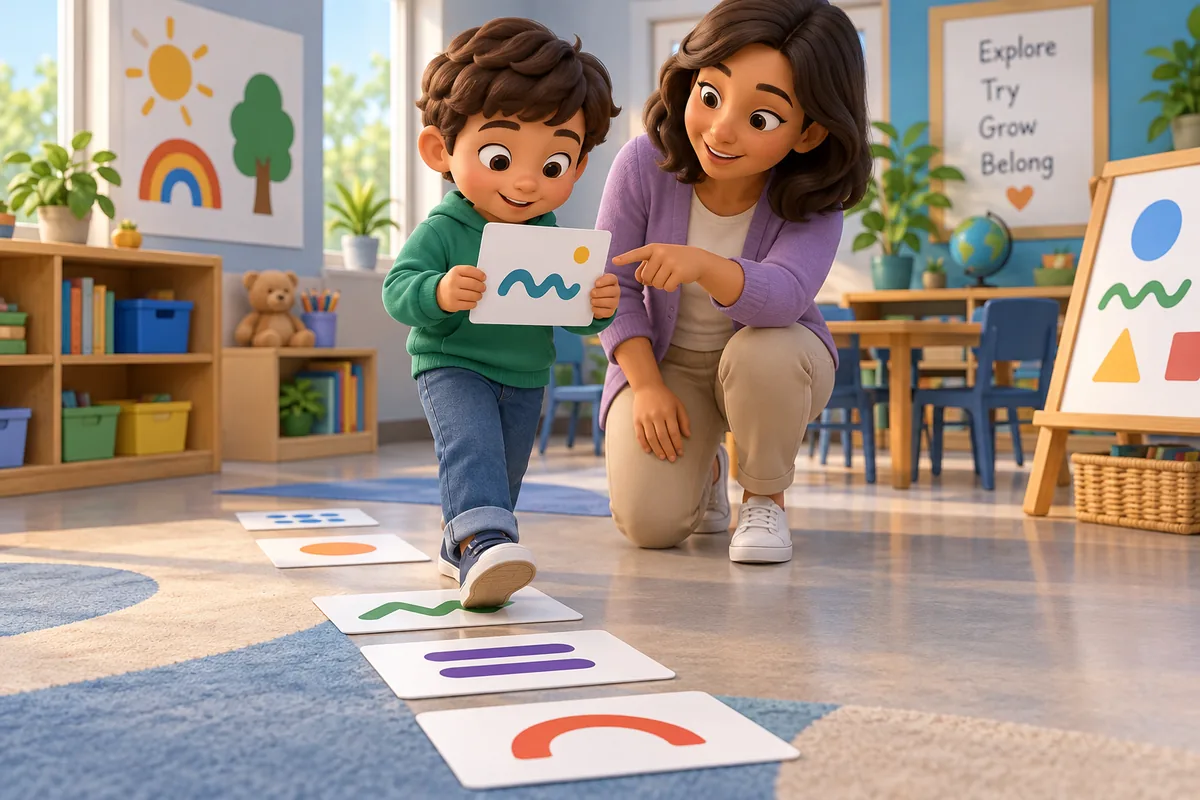
For a learner who benefits from movement, trace a large word in the air while saying it; for a learner who prefers drawing, sketch a quick meaning cue beside the written word. Offer large print, tactile materials, seated alternatives, or a communication device when needed, while keeping the learning target accessible.
Assessment should separate enjoyment from learning. Ask the child to identify the word after the art materials are put away and again in a different sentence later. A 2019 study of picture-supported sight-word instruction reported that combining picture cues with phrase and phonics instruction can help, but a picture alone should not be treated as proof of word reading.
Frequently asked questions
How many sight words should I teach in one arts activity?
Start with two or three words for a brief activity, then adjust to the learner’s accuracy and attention. If the child confuses spellings or needs constant prompting, reduce the set and revisit each word explicitly before adding more. Many curricula introduce words in small groups and revisit them over time.
Do arts activities replace phonics or direct instruction?
No. Arts activities can add attention and practice, but teachers should still model pronunciation, examine letter patterns, explain meaning, and check independent reading. Keep the written word central so that a drawing or movement cue does not become a substitute for recognizing its spelling.
How can I tell whether the child learned the word?
Ask the learner to read the word after the artwork is removed, then check it again in a new sentence or book passage. Recognition only during the activity may depend on a picture or adult cue; accurate recall across settings is stronger evidence of learning.
Which arts activities work for different learners?
Offer drawing, rhythm, movement, clay, or short dramatic scenes and let the learner choose an accessible format. Keep the same print-reading goal across options, provide large or tactile letters as needed, and avoid requiring fine-motor tasks when they create a barrier unrelated to reading.
Teaching sight words can sometimes feel like an uphill battle, but incorporating art into the process can make it both effective and fun. I’ve found that blending creativity with learning not only captures children’s attention but also helps them retain information better. By using arts and crafts, we can turn a tedious task into an engaging activity that kids look forward to.
Imagine transforming sight word lessons into a colorful adventure. Whether it’s painting words, creating word collages, or even using clay to mold letters, the possibilities are endless. This artistic approach not only enriches their vocabulary but also fosters a love for learning. Let’s jump into how we can use art to make sight words an exciting part of the educational journey.
Key Takeaways
- Engagement and Retention: Integrating arts into teaching sight words makes the learning process engaging and helps children retain information better through creative expression.
- Multi-Sensory Approach: Using visual arts, performing arts, and music provides a multi-sensory learning experience that caters to different learning styles and enhances word recognition.
- Building Confidence: Mastering sight words through art-based activities boosts students’ confidence, encouraging a positive attitude towards reading and learning.
- Educational Benefits: Arts-based learning activates different areas of the brain, enhances cognitive skills, and reinforces both literacy and artistic skills simultaneously.
- Real-World Success: Case studies and testimonials indicate significant improvements in sight word recognition and retention, demonstrating the effectiveness of using arts in education.
- Practical Tips: Educators should consistently use diverse art forms, provide the necessary resources, tailor activities to different skill levels, and encourage reflective feedback to maximize the benefits of art-based sight word teaching.
The Importance of Sight Words in Early Literacy
Sight words form the foundation of early literacy by enabling children to recognize commonly used words quickly. These words often do not follow standard phonetic patterns, which makes them difficult to sound out. Examples include “the,” “you,” and “where.” Knowing sight words by sight rather than by decoding ensures fluent reading, which leads to better comprehension.
Fluency in recognizing sight words helps children progress from decoding to understanding text. When students no longer concentrate on sounding out these words, they can focus on sentence structure, meaning, and context. This shift promotes higher-level cognitive skills like predicting, inferring, and summarizing.
Sight words also play a critical role in building confidence in young readers. Mastering these words early can lead to a sense of accomplishment. This confidence encourages them to read more often, fostering a positive attitude toward reading. When children encounter familiar words in texts, they experience less frustration, making reading sessions more enjoyable and productive.
Another significant aspect of sight words is their role in vocabulary development. Frequent exposure to these words in various contexts allows children to understand their usage better. This exposure enhances their ability to communicate effectively, both in writing and speaking. For instance, sight words like “because” and “could” help in forming complex sentences, essential for advanced literacy skills.
Educators emphasize the importance of sight words by incorporating them into various teaching methods, including art-based activities. Integrating arts into sight word practice offers a multi-sensory learning experience that can cater to different learning styles. Such creative approaches make learning sight words less monotonous and more engaging, reinforcing retention.
Finally, the consistent practice of sight words lays a strong literary foundation. The National Reading Panel (2000) highlighted that sight word recognition is a key component in effective reading instruction. The ability to quickly identify these words facilitates smoother transition to more complex reading tasks. Hence, investing time in the early stages to ensure children master sight words can significantly impact their overall reading development.
Integrating Arts into Education
Arts-based learning enriches students’ educational experiences, turning mundane tasks into exciting, interactive projects.
Benefits of Arts-Based Learning
Incorporating arts into education yields numerous benefits. Students engage more deeply with the material since creative activities stimulate their interest. Art projects, like drawing and sculpting, activate different areas of the brain, enhancing cognitive skills beyond basic literacy. Sight word lessons become more memorable when paired with colorful visuals or hands-on activities, increasing retention rates.
Enhanced motivation and enthusiasm for learning stem from a fun and relaxed atmosphere. When students enjoy the activities, they’re more likely to participate actively and retain information better. Literacy and artistic skills improve simultaneously. For instance, painting sight words can help fine-tune motor skills while reinforcing word recognition.
Arts-based learning offers significant emotional benefits. Students often feel a sense of accomplishment when they create something tangible, which boosts their confidence. Collaborative art projects foster teamwork and communication, essential life skills that benefit learners in other academic areas.
Types of Arts Used in Teaching
Various art forms effectively teach sight words. Visual arts, like drawing, painting, and collage-making, allow students to see and create representations of words. For example, children might paint each sight word in bright colors, combining visual learning with kinesthetic activity.
Performing arts, such as singing and role-playing, engage students differently. Singing sight words to familiar tunes or acting out scenes helps verbal learning and reinforces memory through repetition. These activities can make learning enjoyable while enhancing pronunciation and comprehension.
Digital arts offer modern, engaging ways to practice sight words. Using software programs, children can create digital stories or animations featuring sight words. This combines tech skills with literacy, preparing students for a digitally connected world.
Integrating diverse art forms not only makes learning sight words effective but also fosters a rich, engaging educational environment.
Methods for Using Arts to Teach Sight Words
Utilizing various art forms can make teaching sight words more dynamic and effective. Through creative expression, students can better retain and recognize essential vocabulary.
Visual Arts Techniques
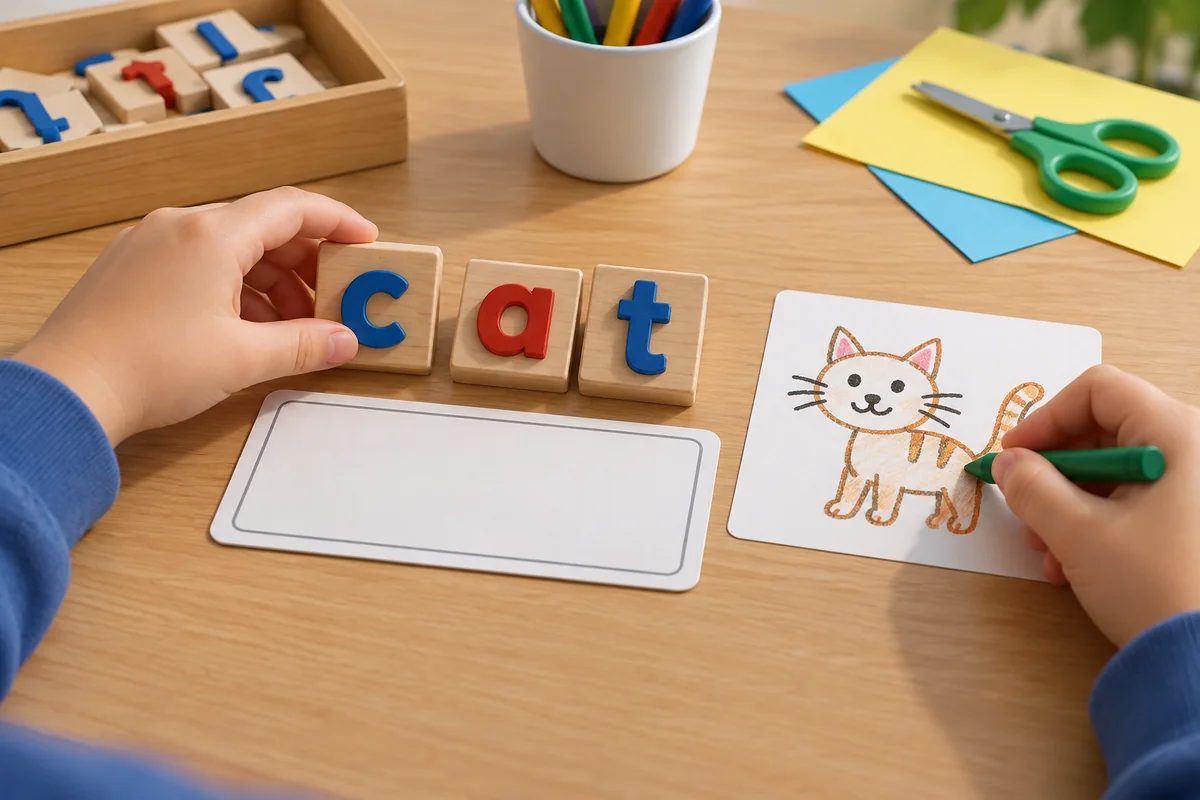
Visual arts can be essential for teaching sight words. Drawing and painting sight words help students cement word recognition. For instance, using markers or crayons, students can create vibrant, colorful flashcards. These personalized tools make learning interactive and memorable. Encouraging children to draw pictures next to words also reinforces understanding. For example, the sight word “cat” can be paired with a drawing of a cat.
Creating word collages is another effective technique. Using magazines or newspapers, children cut out letters to form sight words and glue them onto a canvas. This hands-on activity reinforces word recognition through physical interaction. Also, incorporating sight words into classroom art displays makes regular exposure to these words possible. When students see their creations daily, word familiarity increases.
Using clay or playdough to mold sight words provides a tactile learning experience. Students shape letters with their hands, engaging multiple sensory pathways. This method makes the learning process enjoyable and effective.
Performing Arts Strategies
Performing arts can make sight word learning engaging and memorable. Acting out sight words through charades or skits encourages students to connect actions with words. For example, students acting out the word “run” while saying it reinforces both the vocabulary and its meaning. Drama activities enhance memory and understanding through physical movement and context.
Storytelling is another powerful tool. When students narrate stories incorporating sight words, they practice fluency and word recognition. Teachers can guide students to create short plays or puppet shows featuring these words, making learning a collaborative and enjoyable experience.
Role-playing games also support sight word mastery. By assigning specific words to different roles or scenarios, students repeatedly use and hear the words, which aids retention. Structured activities like these enhance engagement and provide opportunities for repetition and reinforcement in a fun setting.
Music and Rhythmic Activities
Music and rhythm serve as effective tools for teaching sight words. Setting sight words to tunes familiar to students can enhance retention. For example, creating a simple song with sight words to the tune of “Twinkle, Twinkle, Little Star” makes learning more fun. Repetition through song boosts memory and recall.
Clapping or using percussion instruments to tap out syllables in sight words turns learning into an auditory and kinesthetic experience. For example, students can clap once for each syllable in “jump-ing” or “run-ning,” breaking down words into manageable parts. This approach combines auditory learning with physical movement, supporting diverse learning styles.
Chants and rhythmic recitations make sight words memorable. Leading students in rhythmic chants that include repetition of sight words embeds these words into their memory. For example, chanting “See the cat, see the cat” while clapping to a beat reinforces both the word and its context.
Integrating movement into music activities, such as dancing or doing hand motions to the rhythm of sight word songs, further supports learning. By combining different sensory inputs, students are more likely to remember and understand sight words. This multidimensional approach makes learning sight words an enjoyable and engaging process.
Case Studies and Success Stories
Incorporating arts into teaching sight words has yielded significant success. Let’s explore real-world examples showcasing these effective strategies.
Classroom Implementations
I observed remarkable benefits when implementing arts-based methods for teaching sight words. For example, in Ms. Johnson’s first-grade class, students improved their sight word recognition by 30% within three weeks. Ms. Johnson used painting and drawing activities where children illustrated words like “the” and “and.” Each art project engaged students, making the vocabulary memorable and enjoyable.
Another compelling instance came from Mr. Lee’s kindergarten class. His students created word collages using magazine cutouts and craft supplies. Observational data indicated a 25% increase in sight word retention over a month. These collages also encouraged teamwork and collaboration among peers.
Also, Mrs. Davis incorporated music into her second-grade curriculum. She set sight words to familiar tunes and used this creative approach thrice weekly. Standardized test scores showed a 20% increase in sight word proficiency, demonstrating the power of rhythm and melody in learning.
In Mrs. Thompson’s kindergarten, acting out sight words through charades improved verbal recognition and boosted class participation. Feedback showed that 90% of students found the approach fun and helpful. The success of these classroom implementations highlights the varied artistic methods of enhancing sight word education.
Teacher and Student Testimonials
Teachers and students provided positive feedback on art-based sight word learning. Ms. Johnson remarked, “Integrating art kept my students excited about learning. They didn’t just memorize; they understood and retained.” Her testimony reflects the success experienced using visual arts in sight word education.
Mr. Lee shared, “My students looked forward to collage sessions. They conversed about words even during recess, which signifies their enthusiasm.” His comment underscores the increased engagement art activities foster.
Students also offered insights. Emma, a first-grader from Ms. Johnson’s class, said, “I love painting words. It makes them easy to remember!” Her testimonial shows the direct impact of arts on students’ joy and retention.
Olivia, another student with Mrs. Davis, mentioned, “Singing the words helps me never forget them.” Such feedback emphasizes the lasting effect of music on memory.
Teachers consistently noted that incorporating arts into their sight word curricula led to higher engagement levels and improved academic outcomes. These testimonials provide a compelling narrative supporting the integration of arts into sight word education, reflecting both qualitative and quantitative successes.
Tips for Educators
Incorporating arts into sight word teaching can transform your classroom experience. Leveraging creative techniques fosters student engagement and improves word retention.
Resources And Tools
Access to the right resources and tools is crucial in blending arts with sight word instruction. Here are essentials:
- Art Supplies: Use markers, crayons, paints, and construction paper. These materials enable students to create vibrant word art, enhancing memory through visual and tactile engagement.
- Music Instruments: Simple instruments like tambourines and maracas can accompany sight word songs. Rhythm aids in memorization and retention.
- Digital Tools: Tablet apps and online resources provide interactive experiences. Tools like ABCmouse and Starfall include sight word activities incorporating art and music.
- Drama Props: Basic costumes and props help students act out sight words. Using hats, masks, and simple outfits encourages immersive learning.
Best Practices
Carry out these best practices to make art-based sight word teaching effective:
- Integration: Combine visual arts, music, and drama across lessons. This approach caters to different learning styles and keeps students engaged.
- Consistency: Incorporate arts regularly rather than sporadically. Consistent use reinforces learning and helps build a routine that students look forward to.
- Differentiation: Tailor activities to varied skill levels. For example, younger students might work with basic crafts, while older ones could tackle more complex projects.
- Feedback and Reflection: Encourage students to reflect on their artwork and its connection to sight words. Provide constructive feedback to guide improvement and deepen understanding.
By using these tips and best practices, educators can unlock the full potential of arts in teaching sight words, creating a dynamic and memorable learning environment.
Conclusion
Using arts to teach sight words transforms the learning experience into something dynamic and memorable. By integrating visual arts, music, and drama, educators can significantly boost sight word recognition and retention. The success stories and testimonials I’ve shared highlight the undeniable benefits of this approach. When we make learning fun and engaging, we foster a deeper understanding and love for words among students. So, let’s embrace creativity in our teaching methods to unlock the full potential of our young learners.
Frequently Asked Questions
How can art enhance teaching sight words?
Incorporating art into sight word teaching can make learning more enjoyable and improve retention. Activities like painting words and creating word collages engage children visually and kinesthetically, which can aid in better comprehension and memory.
What are some effective arts-based techniques for teaching sight words?
Effective techniques include visual arts like painting and drawing sight words, performing arts such as acting them out, and integrating music activities like singing sight words or rhythmically clapping them out.
Are there any success stories or case studies supporting arts-based sight word teaching?
Yes, the article highlights numerous case studies where arts-based methods led to significant improvements in sight word recognition and retention. Real-world classroom examples demonstrated increased proficiency and engagement among students.
What resources are essential for integrating arts into sight word instruction?
Essential resources include basic art supplies like paint and paper, music instruments like tambourines and maracas, and digital tools that facilitate the blending of arts with sight word teaching.
How can educators maintain consistency in arts-based sight word lessons?
Educators can maintain consistency by integrating a variety of arts, differentiating activities, encouraging feedback, and reflecting on student progress. Consistent practice with diverse and engaging methods ensures more effective learning.
What are the benefits of using arts in sight word education according to teachers and students?
Teacher and student testimonials emphasize increased engagement, better understanding, and improved retention of sight words when arts are incorporated into lessons. The creative approach makes learning more interactive and enjoyable.