Baby Items That Start With A: Useful and Optional
Baby items that start with A include aspirators, activity gyms, audio monitors, adaptive clothing, ankle socks, and age-appropriate toys. The first letter does not tell you whether an item is essential or suitable for your baby. Match each product to its purpose, instructions, developmental stage, and current safety guidance before buying.
A baby items at a glance
- An aspirator is a tool for removing nasal mucus, not a cure for illness.
- An activity gym supports supervised awake floor play, not sleep.
- An audio monitor helps a caregiver hear a baby at a distance.
- Adaptive clothing can make dressing easier for particular care needs.
- An alphabet list is a vocabulary aid, not an essential shopping checklist.
- Amber jewelry, inflatable arm bands, and aromatherapy require particular caution.
Which A items need an immediate safety correction?
Amber teething necklaces should not be used on babies. Inflatable arm floaties do not prevent drowning, and “baby-safe” is not a dependable blanket description for aromatherapy products. These cautions apply wherever those items appear in the descriptions below; their inclusion in an alphabet list does not make them recommended baby gear.
The FDA teething guidance reports choking and strangulation injuries from teething jewelry. The CDC water-safety guidance explains that arm bands and water wings can slip off and do not prevent drowning. Keep direct adult supervision at the center of infant water care.
Poison Control’s essential-oil guidance explains that misuse can cause poisoning and skin reactions. Aromatherapy diffusers and bath products are optional fragrance products, not established infant health necessities. Keep oils inaccessible to children and seek advice specific to the product before exposing an infant; do not infer suitability from natural or baby-safe marketing.
Which baby items that start with A have clear uses?
Aspirators, activity gyms, audio monitors, and adaptive clothing have identifiable purposes, but usefulness depends on the household and child. Start with the problem an item solves. A product that duplicates something you already own may be optional even when the underlying category is useful.
| Item | Purpose | Buying or use check |
|---|---|---|
| Aspirator | Remove nasal mucus. | Follow cleaning and use instructions; use gentle suction. |
| Activity gym | Supervised awake play. | Check age suitability and attached toy security. |
| Audio monitor | Hear sounds from another room. | Keep cords out of reach and test the signal. |
| Adaptive clothing | Accommodate particular dressing needs. | Check access, fit, and compatibility with care equipment. |
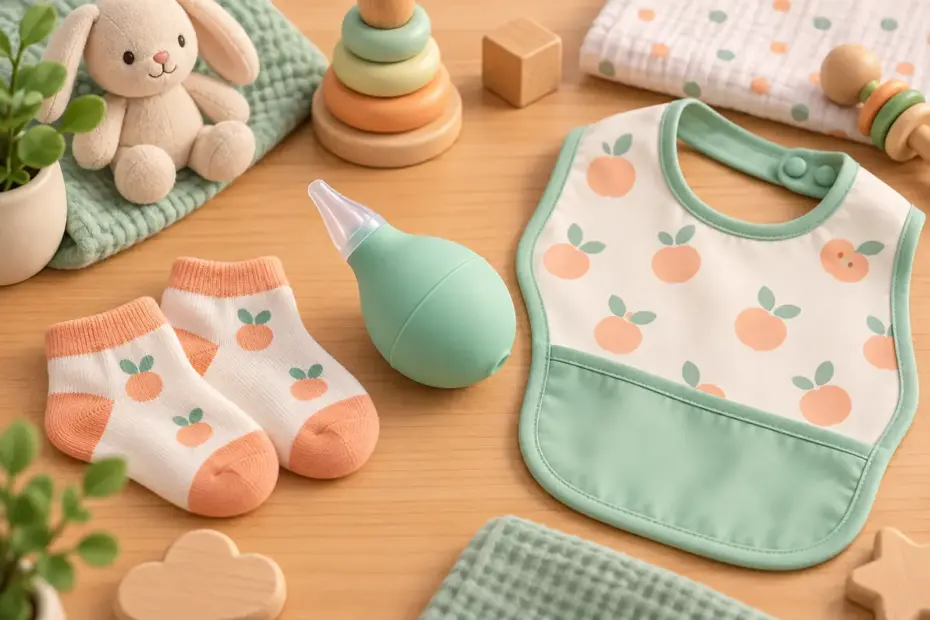
| Ankle socks | Cover feet. | Check fit and loose threads. |
| Apron-style feeding bib | Cover clothing during feeding. | Check closures and cleanable material. |
| Anti-colic bottle | Feed milk using a particular bottle design. | Check flow, cleaning, and the baby’s feeding response. |
| All-in-one car seat | Transport a child through specified seat stages. | Check child fit, vehicle fit, instructions, and recalls. |
| Age-appropriate alphabet blocks | Supervised play. | Choose sufficiently large pieces suited to the child. |
| Adjustable crib | Provide a sleep space within approved configurations. | Use the correct mattress and manufacturer-specified settings. |
How should you think about aspirators and care supplies?
An aspirator removes mucus from the nose; it does not replace evaluation of breathing or feeding difficulties. AAP congestion guidance describes gentle suction and plain saline as practical measures. Follow the device instructions rather than assuming stronger or more frequent suction is better.
Adaptive utensils and apron-style bibs become relevant as feeding needs change. A broad alphabet article should not prescribe one utensil or bottle for every child. An anti-colic bottle name describes a marketed design, not a promise that it prevents all crying or discomfort; persistent feeding concerns deserve individual advice.
Antibacterial wipes may be designed for surfaces rather than skin. Read the intended-use label instead of treating all wipes as interchangeable. Likewise, a brand-name ointment is not a universal treatment recommendation; choose skin-care products for the actual purpose and ask the child’s clinician about a persistent rash.
What is the difference between an activity gym and center?
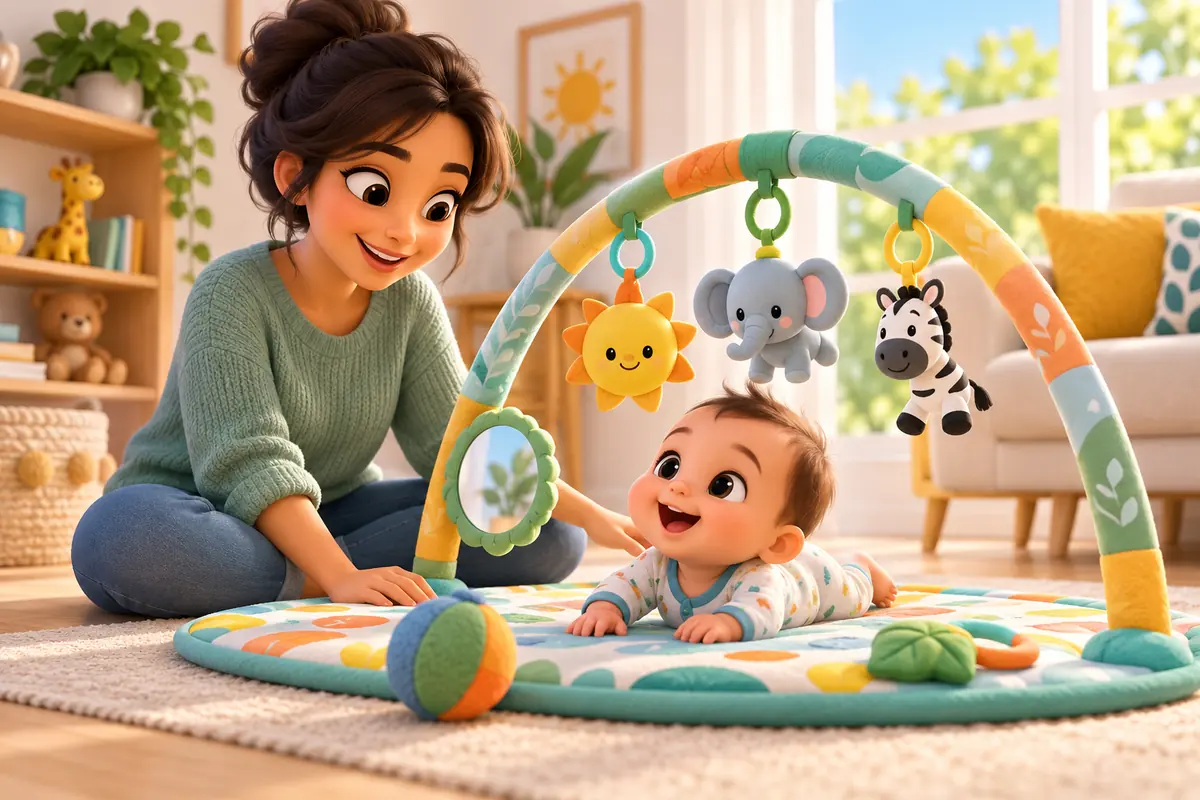
An activity gym generally provides a floor-play area with attached or suspended toys. A stationary activity center supports a child within a product designed for limited movement. These are different categories and should not be selected simply because both start with activity.
The CPSC activity-center information describes stationary centers for children who can hold up their heads unassisted but are not yet able to walk. The exact product instructions remain the guide to suitability. A stationary center is different from a wheeled infant walker.
Use play products for awake activity according to their instructions. If a baby falls asleep in a play or sitting product, move the baby to an appropriate sleep space. Toys with beads, detachable parts, strings, or batteries require attention to the exact design and age labeling; the alphabet name alone cannot establish suitability.
Which A items belong in a sleep discussion?
Adjustable cribs, some bassinets, and audio monitors may appear in a nursery list, but only an appropriate sleep product supplies the sleep surface. The AAP safe-sleep guidance recommends back sleeping on a firm, flat, non-inclined surface with a fitted sheet and no soft objects.
An automatic rocking bassinet needs evaluation as the actual product, not as a comforting name. Check whether the precise product and configuration are intended for infant sleep, follow the limits, and check recalls. An audio monitor cannot make an unsuitable sleep arrangement safe or replace responsive caregiving.
Adjustable means a product has settings, not that every setting is appropriate at every stage. Crib mattress heights and conversion modes need to follow the manufacturer’s instructions as the child develops. Keep monitor cords and any other cords out of the baby’s reach.
Which products are optional or brand-name entries?
Air purifiers, automatic bottle warmers, specialized diaper pails, and some branded swaddles are optional choices rather than universal requirements. Whether they help depends on the home, routines, budget, and specific product. Avoid using essential for every item in a long alphabet list.
Brand names beginning with A can qualify for a naming game, but keep them distinct from generic product categories. A named swaddle brand is not a separate type of baby equipment. An automatic diaper-disposal device and a manual diaper pail address the same basic task through different mechanisms.
A bottle warmer is a convenience product. Check the temperature and instructions rather than assuming an automatic cycle guarantees the right result. Air purifiers also vary in design; a broad list should not promise that every purifier improves an infant’s health or is suitable for every nursery.
How can you build a sensible A-item checklist?
- List the tasks you need to cover: transport, sleep, feeding, clothing, and awake play.
- Match each proposed A item to a specific task rather than buying for the letter.
- Read the exact age, size, installation, cleaning, and stop-use instructions.
- Check current recall information for the model, especially for secondhand equipment.
- Remove duplicate categories and optional extras that do not solve a real need.
Baby items that start with A are useful for a registry game or vocabulary activity. For actual care decisions, product-specific instructions and a child’s needs carry more weight than the list. In particular, do not treat amber jewelry, inflatable floaties, or fragrance products as required infant supplies.

Frequently asked questions about A baby items
What is a simple A item for a baby-shower game?
Aspirator, activity gym, and ankle socks are straightforward answers because they name recognizable products. Set the game’s rules first: some hosts accept brand names, while others want generic categories. A valid alphabet answer does not establish that a product is necessary or appropriate for every baby in real life.
Are alphabet blocks suitable for newborns?
Do not assume alphabet blocks are suitable just because they are sold as children’s toys. Use the manufacturer’s age guidance and inspect the size, materials, and detachable parts. For a newborn, a block set may be a gift intended for later supervised play rather than an item to use immediately.
Does an anti-colic bottle guarantee less crying?
No. Anti-colic describes a product design or marketing claim, not a guarantee for every child. Bottle flow, feeding technique, cleaning, and the baby’s individual response all matter. If feeding seems painful, ineffective, or persistently difficult, discuss the symptoms with the child’s clinician rather than relying on the product name.
Can I buy every A item as an essential starter kit?
A complete alphabet list makes a poor essential starter kit because it mixes care tools, toys, optional conveniences, brand names, and unsuitable products. Build a checklist around the baby’s actual needs instead. Prioritize appropriate sleep and transport arrangements, feeding supplies, and clothing, then add extras that solve a specific problem.
Embarking on the journey of parenthood is both exciting and overwhelming. As you prepare for your little one’s arrival, you’ll encounter a plethora of baby items, each serving a unique purpose in your child’s early years. In this comprehensive guide, we’ll explore baby items that start with the letter A, providing you with valuable insights into their uses, benefits, and considerations.
Adorable A’s: Essential Baby Items
Activity Centers
Activity centers are versatile play stations designed to entertain and stimulate your baby’s developing senses. These engaging structures typically feature a variety of toys, textures, and interactive elements that encourage exploration and motor skill development.
Key Features:
- Multiple sensory elements (lights, sounds, textures)
- Adjustable height settings
- Rotating seat for 360-degree access to toys
- Removable toy bars for customization
Age Range: 4 months to 12 months (or when the child can walk independently)
Safety Considerations:
- Ensure the activity center is placed on a flat, stable surface
- Never leave your baby unattended while in the activity center
- Check weight limits and discontinue use when your child outgrows the product
Aprons (Feeding)
Feeding aprons, also known as bibs with sleeves, are essential for keeping your baby clean during mealtimes. These full-coverage garments protect your child’s clothes from spills and messes, making cleanup easier for parents.
Materials:
- Waterproof fabrics (e.g., polyester with PVC coating)
- Soft, absorbent materials (e.g., cotton, bamboo)
- Silicone (for easy wiping and washing)
Benefits:
- Reduces laundry by protecting clothes
- Encourages independent eating without fear of mess
- Often feature catch-all pockets for dropped food
Cleaning Tips:
- Machine washable options for fabric aprons
- Wipe-clean surfaces for silicone or plastic-coated aprons
- Hang to dry to maintain shape and prevent shrinkage
Audio Monitors
Audio monitors provide parents with the ability to listen to their baby from another room, offering peace of mind during naps and nighttime sleep. These devices transmit sounds from the baby’s room to a parent unit, allowing you to respond quickly to your child’s needs.
Types of Audio Monitors:
- Analog monitors (older technology, less secure)
- Digital monitors (clearer sound, more secure)
- DECT monitors (interference-free, highly secure)
Features to Consider:
- Range (distance the signal can travel)
- Battery life of parent unit
- Two-way communication
- Temperature sensors
- Nightlight or lullaby functions
Privacy Concerns:
- Choose monitors with encrypted signals to prevent eavesdropping
- Avoid using Wi-Fi-enabled monitors on unsecured networks
Ankle Rattles
Ankle rattles are soft, colorful bands that wrap around your baby’s ankles, featuring small bells or rattles. These charming accessories serve as both entertainment and a developmental tool for infants.
Developmental Benefits:
- Encourages kicking and leg movement
- Promotes awareness of cause and effect
- Stimulates auditory senses
Age Range: Newborn to 6 months
Safety Tips:
- Choose ankle rattles with secure, non-slip closures
- Ensure the material is soft and non-irritating to sensitive skin
- Remove ankle rattles during sleep times to prevent entanglement
Aromatherapy Diffusers (Baby-Safe)
Baby-safe aromatherapy diffusers can create a soothing environment in your nursery using gentle, child-friendly essential oils. These devices disperse a fine mist of water and essential oils into the air, potentially promoting relaxation and better sleep.
Popular Baby-Safe Essential Oils:
- Lavender (calming)
- Chamomile (soothing)
- Mandarin (uplifting)
Safety Precautions:
- Always use oils specifically formulated for infants
- Dilute essential oils properly before use
- Keep diffusers out of reach of children
- Use intermittently, not continuously
Benefits:
- May improve sleep quality
- Can create a calming atmosphere for bedtime routines
- Some oils may have mild decongestant properties
Alphabet Blocks
Alphabet blocks are classic educational toys that introduce letters, colors, and basic numeracy to young children. These versatile playthings can be used for stacking, sorting, and early literacy activities.
Materials:
- Wood (traditional, durable)
- Foam (soft, safe for younger babies)
- Plastic (easy to clean, often featuring electronic elements)
Educational Value:
- Letter recognition
- Color identification
- Fine motor skill development
- Basic math concepts (counting, sorting)
Age Range: 6 months and up (depending on material and size)
Cleaning Tips:
- Wooden blocks: Wipe with a damp cloth and mild soap
- Foam blocks: Spot clean or hand wash with gentle detergent
- Plastic blocks: Can often be cleaned in the dishwasher (top rack)
Aspirators (Nasal)
Nasal aspirators, also known as nasal suction devices or “snot suckers,” are essential tools for clearing a baby’s congested nasal passages. These devices help alleviate discomfort and improve breathing, especially during colds or allergies.
Types of Aspirators:
- Bulb syringe (traditional, manual)
- Battery-operated (electric suction)
- Parent-powered (oral suction through a tube)
Usage Tips:
- Use saline drops to loosen mucus before suctioning
- Be gentle to avoid irritating delicate nasal tissues
- Clean and dry thoroughly after each use to prevent bacterial growth
When to Use:
- When baby has difficulty breathing through the nose
- Before feedings if congestion is interfering with eating
- As recommended by your pediatrician for specific conditions
Arm Floaties
Arm floaties, or arm bands, are inflatable swimming aids designed to keep a child’s upper body afloat in water. While they can provide some buoyancy for beginning swimmers, it’s crucial to understand their limitations and proper use.
Important Considerations:
- Not a substitute for adult supervision or proper swimming lessons
- Should be used in conjunction with other flotation devices for optimal safety
- May give children a false sense of security in water
Age Range: Typically 2-6 years, but varies by product
Safety Guidelines:
- Ensure proper fit – snug but not tight
- Check for leaks or damage before each use
- Never rely solely on arm floaties for water safety
Abacus
An abacus is an ancient counting tool that has found new life as an educational toy for children. This simple yet effective device helps introduce basic math concepts and develops fine motor skills.
Educational Benefits:
- Teaches counting and basic arithmetic
- Develops understanding of place value
- Enhances visual-spatial skills
- Improves hand-eye coordination
Types of Abacuses for Children:
- Traditional wooden frame with beads
- Plastic, colorful versions for younger children
- Electronic abacuses with lights and sounds
Age Range: 3 years and up (simpler versions available for younger children)
Usage Tips:
- Start with basic counting exercises
- Progress to addition and subtraction as skills improve
- Use different colored beads to represent units, tens, hundreds, etc.
Amber Teething Necklaces
Amber teething necklaces are a controversial alternative remedy for teething discomfort. Made from Baltic amber, these necklaces are believed by some to release pain-relieving oils when worn against the skin.
Claimed Benefits:
- Natural pain relief
- Reduction of inflammation
- Calming effect on babies
Safety Concerns:
- Risk of choking if beads come loose
- Strangulation hazard if necklace catches on something
- Lack of scientific evidence supporting effectiveness
Important Note:
- Many pediatricians and health organizations advise against using amber teething necklaces due to safety risks
- Always consult with your healthcare provider before using alternative remedies
This comprehensive guide to baby items starting with A provides new parents with valuable information about essential products for their little ones. From activity centers that promote development to practical items like aprons and aspirators, each product serves a unique purpose in your baby’s early years. Remember to always prioritize safety, consult with your pediatrician when necessary, and choose items that best suit your family’s needs and lifestyle.
Air Purifiers
Air purifiers are becoming increasingly popular in nurseries and children’s rooms, helping to create a cleaner, healthier environment for your little one. These devices work by filtering out airborne particles, allergens, and pollutants from the air.
Benefits for Babies:
- Reduction of allergens (dust, pollen, pet dander)
- Removal of airborne bacteria and viruses
- Elimination of odors and harmful gases
Types of Air Purifiers:
- HEPA (High-Efficiency Particulate Air) filters
- Activated carbon filters
- UV light purifiers
- Ionic purifiers
Considerations When Choosing:
- Room size coverage
- Noise level (especially important for nurseries)
- Filter replacement frequency and cost
- Energy efficiency
Maintenance Tips:
- Replace filters as recommended by the manufacturer
- Regularly clean the exterior to prevent dust accumulation
- Place the purifier away from walls and furniture for optimal air circulation
Attachable High Chairs
Attachable high chairs, also known as clip-on high chairs or hook-on chairs, are space-saving alternatives to traditional freestanding high chairs. These chairs attach directly to your dining table, making them ideal for small spaces or travel.
Key Features:
- Compact and portable design
- Secure table attachment mechanisms
- Padded seats for comfort
- Often include safety harnesses
Age Range: 6 months to 3 years (or up to 37 pounds, depending on the model)
Safety Considerations:
- Ensure the table is sturdy and can support the chair and baby’s weight
- Check that the attachment mechanism is fully secure before each use
- Never leave the child unattended in the chair
- Avoid use on glass tables or unstable surfaces
Anti-Colic Bottles
Anti-colic bottles are designed to reduce air intake during feeding, potentially decreasing colic symptoms, gas, and spit-up in babies. These bottles use various mechanisms to minimize air bubbles in the milk or formula.
Common Anti-Colic Features:
- Vented nipples or bases
- Internal vent systems
- Angled bottle shapes
- Collapsible bags inside rigid bottles
Benefits:
- May reduce feeding discomfort
- Can help decrease spit-up and burping
- Often easier for babies to latch onto
Cleaning Tips:
- Use bottle brushes to clean all parts thoroughly
- Sterilize regularly, especially for newborns
- Pay special attention to vents and small components where milk can accumulate
Adaptive Clothing
Adaptive clothing for babies refers to garments designed to accommodate medical devices or make dressing easier for infants with special needs. These thoughtfully designed clothes can significantly improve comfort and ease of care for babies with various conditions.
Features of Adaptive Clothing:
- Openings for medical tubes or monitors
- Magnetic or velcro closures instead of buttons or zippers
- Seamless designs to prevent skin irritation
- Extra room in specific areas (e.g., for casts or braces)
Benefits:
- Easier diaper changes and dressing
- Improved access for medical procedures
- Enhanced comfort for babies with sensory sensitivities
- Promotes independence as children grow
Materials to Look For:
- Soft, breathable fabrics (organic cotton, bamboo)
- Stretchy materials for ease of movement
- Hypoallergenic options for sensitive skin
Automatic Rocking Bassinets
Automatic rocking bassinets combine the traditional comfort of a bassinet with gentle, motorized movements to soothe babies to sleep. These high-tech sleep solutions can be a lifesaver for parents of fussy sleepers.
Key Features:
- Multiple motion settings (e.g., side-to-side, up-and-down)
- Adjustable speed controls
- Built-in white noise or lullabies
- Mobile apps for remote control (in some models)
Safety Guidelines:
- Always use on a flat, stable surface
- Follow weight and age limits strictly
- Discontinue use when baby can roll over or push up on hands and knees
- Ensure the mattress fits snugly with no gaps
Age Range: Newborn to 5-6 months (or until baby can sit up unassisted)
Activity Gyms
Activity gyms, also known as play mats or play gyms, are soft mats with arches that suspend toys and other sensory objects over the baby. These versatile play spaces encourage tummy time, reaching, and early exploration.
Developmental Benefits:
- Promotes visual tracking
- Encourages reaching and grasping
- Supports gross motor skill development during tummy time
- Stimulates multiple senses (sight, touch, sound)
Features to Look For:
- Removable, machine-washable mat
- Adjustable arches for different developmental stages
- Variety of textures and sounds in the hanging toys
- Mirror for self-discovery
Age Range: Newborn to 12 months (varies by model)
Aden + Anais Swaddles
Aden + Anais swaddles have become a popular brand name for muslin swaddle blankets. These versatile, breathable blankets are known for their softness and multiple uses beyond swaddling.
Uses:
- Swaddling newborns
- Light blanket or nursing cover
- Stroller or car seat cover
- Tummy time mat
- Burp cloth
Material Benefits:
- Breathable muslin fabric prevents overheating
- Gets softer with each wash
- Allows for a snug swaddle without being too restrictive
Washing Instructions:
- Machine wash in cold water
- Tumble dry on low heat
- Avoid fabric softeners to maintain absorbency
Arm & Hammer Diaper Pail
The Arm & Hammer Diaper Pail is a popular odor-control solution for disposing of dirty diapers. This specialized trash can uses baking soda and other odor-neutralizing technologies to keep nurseries smelling fresh.
Key Features:
- Built-in baking soda dispenser for odor control
- Self-sealing system to lock in odors
- Compatible with regular trash bags or special refill rings
- Child-proof lock to prevent curious toddlers from opening
Maintenance Tips:
- Replace the baking soda cartridge every 30-60 days
- Clean the pail regularly with mild soap and water
- Consider using diaper pail deodorizer discs for extra freshness
Pros and Cons:
Pros:
- Effective odor control
- Easy to use one-handed
- Sleek design that fits in with nursery decor
Cons:
- Ongoing cost of refills (if using proprietary bags)
- May require more frequent emptying than a regular trash can
- Some models can be challenging to clean thoroughly
Aquaphor Baby Healing Ointment
Aquaphor Baby Healing Ointment is a multipurpose skin protectant and moisturizer specifically formulated for babies’ sensitive skin. This versatile product has become a staple in many parents’ diaper bags and medicine cabinets.
Uses:
- Diaper rash prevention and treatment
- Dry skin relief
- Minor cut and scrape protection
- Chapped lip treatment
- Drool rash remedy
Key Ingredients:
- Petrolatum (41%): Creates a protective barrier
- Panthenol: Moisturizes and promotes healing
- Glycerin: Attracts moisture to the skin
- Bisabolol: Soothes irritated skin
Application Tips:
- Apply a thin layer to affected areas as needed
- For diaper rash, use at every diaper change
- Can be used on face and body
- A little goes a long way – use sparingly
All-in-One Car Seats
All-in-one car seats are designed to grow with your child, adapting from rear-facing infant seats to forward-facing toddler seats, and finally to booster seats. These versatile car seats can potentially save parents money and storage space in the long run.
Stages of Use:
- Rear-facing infant seat (typically 4-40 lbs)
- Forward-facing toddler seat (typically 22-65 lbs)
- Booster seat (typically 40-120 lbs)
Key Features to Consider:
- Easy-to-adjust harness system
- Multiple recline positions
- Removable infant inserts for a snug fit
- Cup holders and storage compartments
Safety Tips:
- Always follow the manufacturer’s weight and height guidelines
- Ensure proper installation using either LATCH system or seat belt
- Regularly check for recalls and expiration dates
- Have the installation checked by a certified car seat technician
Comparison Table: All-in-One Car Seats
| Feature | Brand A | Brand B | Brand C |
|---|---|---|---|
| Weight Range | 4-120 lbs | 5-100 lbs | 4-110 lbs |
| Rear-Facing Limit | 40 lbs | 50 lbs | 45 lbs |
| Forward-Facing Harness Limit | 65 lbs | 65 lbs | 70 lbs |
| Booster Mode | Yes | Yes | Yes |
| No-Rethread Harness | Yes | No | Yes |
| Cup Holders | 2 | 1 | 2 |
| Washable Cover | Machine washable | Spot clean only | Machine washable |
| Width | 19 inches | 20 inches | 18.5 inches |
| Expiration | 10 years | 8 years | 9 years |
| Price Range | $250-$300 | $200-$250 | $300-$350 |
Antibacterial Wipes
Antibacterial wipes are essential for quick cleanups and sanitizing surfaces, especially when you’re on the go with your baby. These convenient wipes can help reduce the spread of germs and keep your baby’s environment clean.
Common Uses:
- Wiping down high chairs in restaurants
- Cleaning shopping cart handles
- Sanitizing changing tables in public restrooms
- Quick cleanup of toys and pacifiers that have fallen on the ground
Ingredients to Look For:
- Alcohol-based formulas (at least 60% alcohol for effective germ-killing)
- Natural antibacterial agents like thyme oil or citrus extracts
- Moisturizing elements to prevent skin dryness
Safety Considerations:
- Not for use on baby’s skin – stick to gentle baby wipes for diaper changes
- Store out of reach of children
- Use caution on sensitive surfaces as some formulas may cause discoloration
Automatic Bottle Warmers
Automatic bottle warmers provide a quick and safe way to heat breast milk or formula to the perfect temperature for your baby. These devices help maintain the nutritional value of milk by avoiding overheating.
Features to Consider:
- Adjustable temperature settings
- Auto shut-off for safety
- Compatibility with various bottle sizes and shapes
- Defrost function for frozen breast milk
Usage Tips:
- Always test the milk temperature before feeding
- Clean the warmer regularly to prevent bacteria growth
- Follow manufacturer instructions for water levels and warming times
Benefits:
- Consistent warming temperatures
- Hands-free operation allows multitasking
- Safer than microwave heating, which can create hot spots
Ankle Socks
Ankle socks for babies are not just adorable; they serve practical purposes like keeping little feet warm and protecting against friction from shoes. When choosing baby ankle socks, consider both style and functionality.
Materials to Look For:
- Cotton blends for breathability
- Wool or bamboo for natural temperature regulation
- Stretchy fabrics with elastic for a secure fit
Features to Consider:
- Non-slip soles for early walkers
- Seamless toes to prevent irritation
- Fun designs and colors to complement outfits
Sizing Tips:
- Measure baby’s foot length for accurate sizing
- Allow some room for growth, but avoid overly loose socks
- Consider adjustable or fold-over cuffs for a customizable fit
Adjustable Cribs
Adjustable cribs, also known as convertible cribs, are designed to adapt to your child’s needs from infancy through adolescence. These versatile pieces of furniture can transform from a crib to a toddler bed, daybed, and even a full-size bed in some models.
Conversion Types:
- 3-in-1: Crib, toddler bed, daybed
- 4-in-1: Crib, toddler bed, daybed, full-size bed
- 5-in-1: Adds a separate seating option
Benefits:
- Long-term cost savings
- Consistent aesthetic in child’s room as they grow
- Familiar sleeping environment for the child through transitions
Safety Considerations:
- Ensure all parts are present for each conversion stage
- Follow weight limits for each configuration
- Regularly check for loose hardware or damaged components
Aromatherapy Bath Products
Aromatherapy bath products designed for babies can help create a soothing bedtime routine and potentially promote better sleep. These products often combine gentle cleansing agents with calming essential oils.
Popular Aromatherapy Scents for Babies:
- Lavender: Known for its calming properties
- Chamomile: Soothing and gentle on sensitive skin
- Vanilla: Comforting and sleep-promoting
- Mandarin: Uplifting and calming
Types of Products:
- Bubble baths
- Body washes
- Massage oils
- Bath bombs (for older babies and toddlers)
Safety Tips:
- Always dilute essential oils properly
- Perform a patch test before full use to check for allergies
- Avoid getting scented products in baby’s eyes or mouth
Adaptive Utensils
Adaptive utensils are specially designed eating tools that help babies and toddlers develop fine motor skills and learn to feed themselves. These utensils often feature ergonomic handles, curved shapes, or textured grips to make self-feeding easier.
Types of Adaptive Utensils:
- Spoons with angled handles for easier scooping
- Forks with chunky, easy-grip handles
- Combination spoon-forks (sporks) for versatility
- Self-feeding spoons that change angle as the child moves
Materials to Consider:
- Soft silicone tips to protect gums
- Stainless steel for durability
- BPA-free plastics for lightweight options
Age Recommendations:
- Introduce adaptive utensils around 6-8 months when starting solids
- Continue use through toddlerhood as needed
Automatic Diaper Genies
Automatic Diaper Genies are hands-free diaper disposal systems that seal away odors and make diaper changes more hygienic. These devices use a combination of airtight seals and odor-blocking technology to keep nurseries smelling fresh.
Key Features:
- Foot pedal for hands-free operation
- Built-in antimicrobial protection
- Refill rings that seal each diaper individually
- Childproof lid lock
Maintenance Tips:
- Replace the refill ring when full (typically holds up to 270 newborn diapers)
- Clean the unit regularly with disinfectant wipes
- Empty the pail frequently to prevent odor buildup
Pros and Cons:
Pros:
- Effective odor control
- Convenient and hygienic disposal
- Reduces trips to the outside trash
Cons:
- Ongoing cost of proprietary refill rings
- Takes up floor space in the nursery
- Some models can be challenging to empty when full
As we conclude our exploration of baby items starting with A, it’s clear that the world of infant care is filled with innovative and essential products designed to make parenting easier and more enjoyable. From all-in-one car seats that grow with your child to adaptive utensils that foster independence, these items reflect the ever-evolving nature of baby care.
Remember that while having the right gear can be helpful, the most important elements of caring for your baby are love, attention, and responsiveness to their needs. As you navigate the world of baby products, always prioritize safety, consult with your pediatrician when necessary, and choose items that best fit your family’s lifestyle and values.
Parenting is a journey of discovery, and these “A” items are just the beginning of the alphabet of adventures you’ll embark on with your little one. Embrace each moment, celebrate the milestones, and enjoy the precious time with your growing baby.