An a to z list of preposition words groups the small connecting words that show time, place and direction, from aboard and about to within and without. Each one links a noun or pronoun to the rest of the sentence, as in on the table or after lunch.
Prepositions at a glance
- A preposition is a small word that links a noun or pronoun to another part of the sentence.
- Common prepositions include in, on, at, by, with, under and between.
- The noun after a preposition is its object, as in under the table.
- Most prepositions show time, place or direction.
- The same preposition can carry more than one meaning, so context decides.
- Learners often choose by meaning alone and miss the fixed pairings, as in depend on.
What is a preposition?
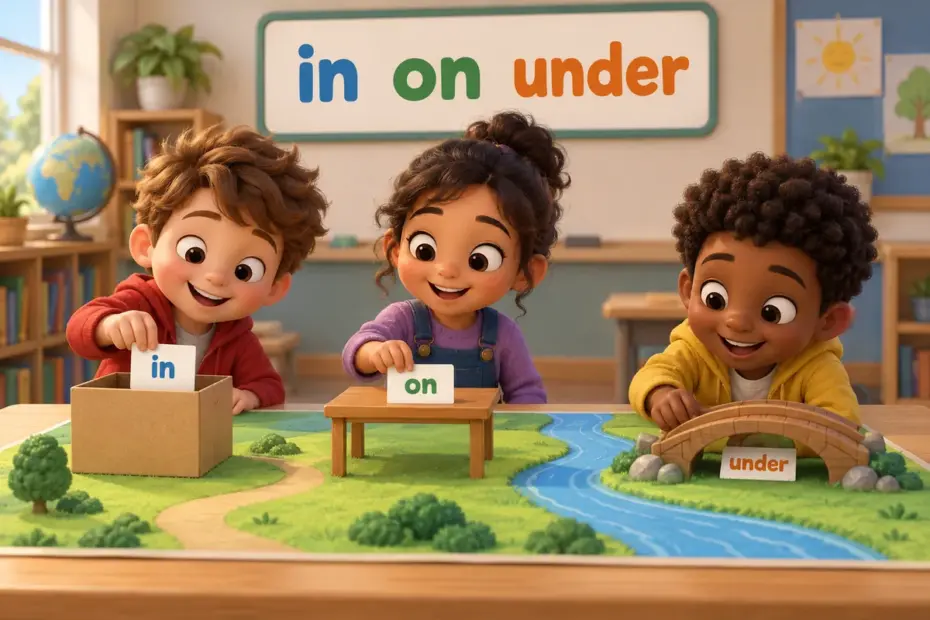
A preposition is a word that links a noun or pronoun to another part of the sentence, usually to show time, place or direction. It almost always has an object, and the pair forms a phrase such as under the shelf or during the meeting. The list below answers the question each word helps you ask.
| Question it answers | Common prepositions | Example |
|---|---|---|
| Where? | in, on, under, behind | The keys are under the cushion. |
| When? | at, on, in, during, after | We meet on Friday. |
| How or with what? | by, with, without | She wrote with a pencil. |
| Direction? | to, into, from, toward | He walked into the hall. |
| Belonging? | of, with, belonging to | The cover of the book is torn. |
On the wider site you can also find animals from a to z, which uses the same ordering idea for a different word group.
Where does a preposition go in a sentence?
A preposition normally comes before its object, and the object can be a single noun or a longer phrase. Some verbs and adjectives lock a preposition into place, so the pairing must be learned as a unit, as in depend on rather than depend of.
| Pattern | Example | What it signals |
|---|---|---|
| preposition + noun | on the shelf | The preposition links a place to the verb. |
| preposition + pronoun object | between you and me | The pronoun takes its object form after the preposition. |
| verb + fixed preposition | depend on, belong to | The pairing is fixed and learned as a unit. |
| adjective + fixed preposition | afraid of, good at | The choice of preposition follows the adjective. |
| preposition at the end | the box I put it in | Natural English allows a stranded preposition. |
The same alphabetical habit helps with adjectives that start with z, a short set you can check quickly.
A to z preposition words in example sentences
The table moves through everyday, workplace and technical registers. Each row names the meaning the preposition adds. On the wider site you can also find animals from a to z, which uses the same ordering idea for a different word group.
| Context | Example sentence | Why this works |
|---|---|---|
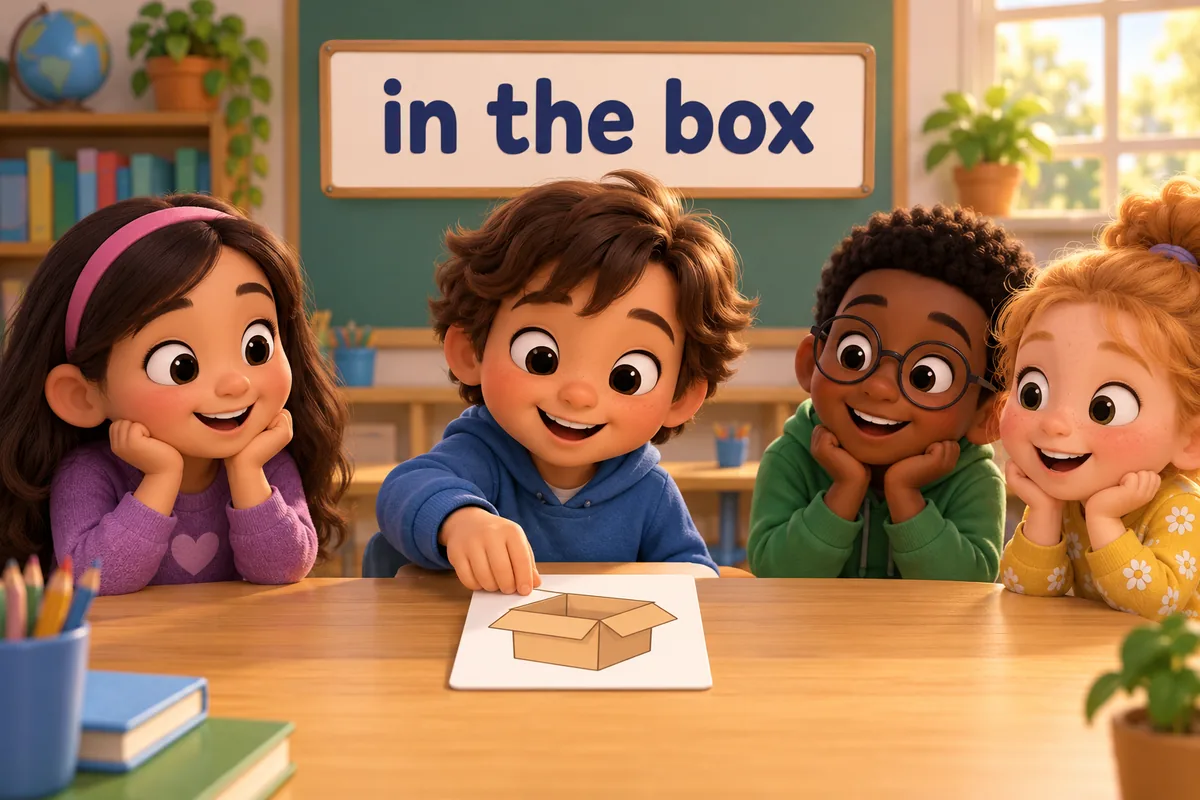
| Classroom | The books are in the cupboard. | in marks a place inside a container. |
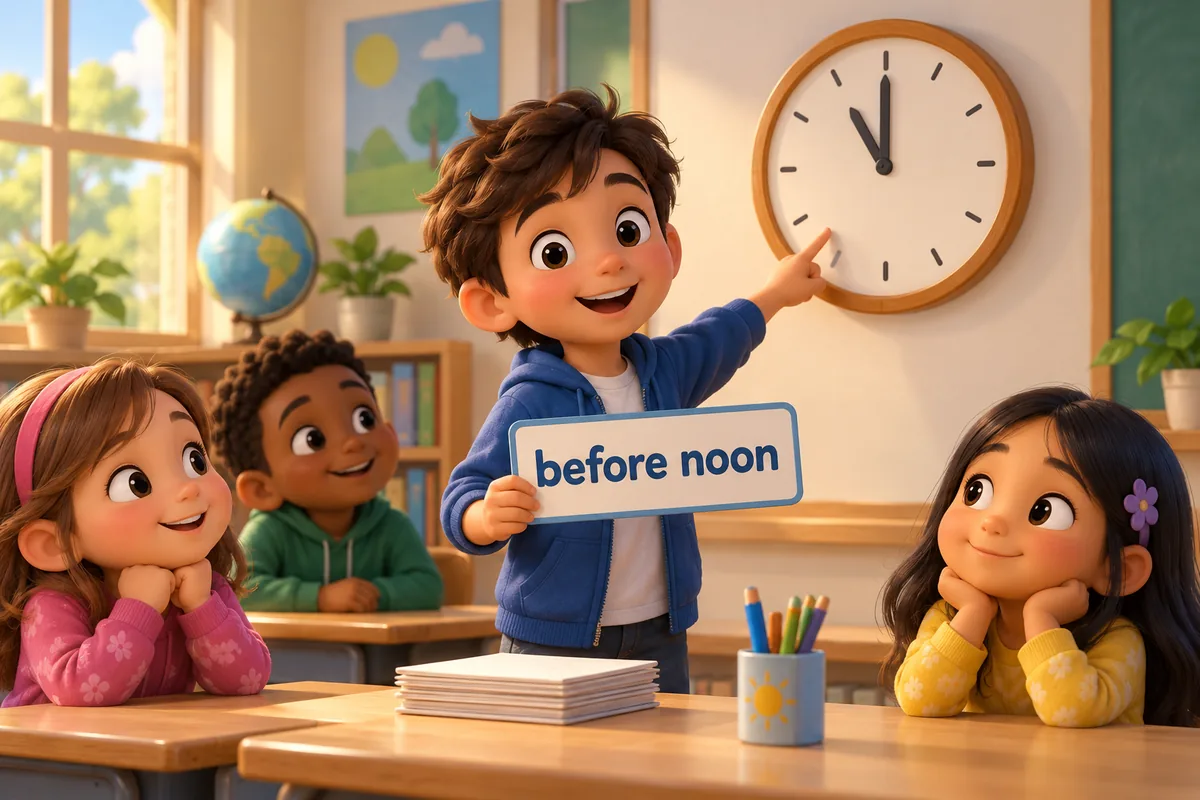
| Work email | Please send the file before noon. | before marks a time limit. |
| Travel | We walked along the river. | along marks a route beside something. |
| News report | The meeting ended after two hours. | after shows a point in time. |
| Conversation | She sat between Sam and Lee. | between marks a position amid two people. |
| Academic writing | The result depends on the sample. | depends on is a fixed verb and preposition pair. |
| Instructions | Press the button with your thumb. | with names the tool used. |
| Story | A lamp hung above the door. | above marks a higher place. |
| Technical writing | The wire runs through the wall. | through marks movement inside a space. |
| Shopping list | The milk is beside the bread. | beside marks a position next to something. |
| Letter writing | We shall meet at nine o clock. | at marks a precise time. |
Ordering by letter also works for language names from a to z, where each entry is a proper noun.
Prepositions vs conjunctions
The two word classes look similar because both can appear at the start of a phrase, but the test is what follows. A preposition is followed by a noun, while a conjunction is followed by a full clause with its own verb.
| Feature | Preposition | Conjunction |
|---|---|---|
| Job | Links a noun to the rest of the sentence | Joins two clauses or words |
| Example | after dinner | after we ate |
| What follows | A noun or pronoun | A full clause with a verb |
| Common words | in, on, at, between | and, but, because, although |
| Test | Followed by a noun, not a verb | Followed by a subject and verb |
| Typical role | Builds a phrase | Builds a clause |
Preposition forms and grammar
Prepositions come in one, two or three words, and the longer ones behave exactly like the short ones. Grammar guides often call the multi-word set complex prepositions, as in in front of or because of, and they take an object like any other.
| Form | Part of speech | Example |
|---|---|---|
| single word (in, on) | preposition | We met in the hall. |
| two words (because of) | complex preposition | We stayed because of the rain. |
| three words (in front of) | complex preposition | He stood in front of the gate. |
| participle form (during) | preposition | She slept during the film. |
| adjective form (opposite) | preposition | The bank is opposite the station. |
A lighter example of the same pattern is the a to z desserts list, which shows how far the format stretches.
The hardest part of this word class is not the meaning but the fixed pairings that no rule predicts. A learner who reasons from the mother tongue will produce depend of or good in, while the natural English is depend on and good at, so these pairs are memorised rather than deduced. Register also shifts the choice: in a text message after is fine, but a formal report may prefer following or subsequent to. When two prepositions both sound possible, the object usually settles it, because arrived at the station and arrived in London each follow a different rule about the size of the place. A dictionary entry is the safest check when the ear cannot decide.
Common mistakes with prepositions
- Incorrect:
She is good in maths.Correct: She is good at maths. Rule: good pairs with at, not in. - Incorrect:
We arrived to the station.Correct: We arrived at the station. Rule: arrive takes at for a place. - Incorrect:
Between you and I.Correct: Between you and me. Rule: a preposition takes the object pronoun me. - Incorrect:
He depends of his brother.Correct: He depends on his brother. Rule: depend on is a fixed pair. - Incorrect:
I will finish until Friday.Correct: I will finish by Friday. Rule: by marks a deadline, while until marks continuous time. - Incorrect:
She is married with a teacher.Correct: She is married to a teacher. Rule: married pairs with to.
Practice using prepositions
- Fill the gap: The cat is hiding ______ the bed. (one place word)
- Fill the gap: We will meet ______ Monday. (one time word)
- Choose: She is afraid (of / from) spiders.
- Correct the error: He arrived to the airport late.
- Build a sentence using between and and about two friends.
- Spot the register: which fits a lab report, (a) The figure depends on the sample, or (b) The figure depends of the sample?
Answers
- under, because it names the place below the bed.
- on, because on is used with days of the week.
- of, because afraid pairs with of.
- He arrived at the airport late, because arrive takes at for a place.
- The prize was shared between Maya and Sam, because between joins two named people with and.
- (a) The figure depends on the sample, because depend on is the fixed pair.
The bottom line
An a to z list of preposition words rewards careful reading more than long memorisation. Most prepositions sit before a noun and answer a question about time, place or direction, and the same word often carries several senses. The few pairs that refuse to translate, such as good at and depend on, are the ones to learn by heart.
Frequently asked questions about prepositions
How many prepositions are in English?
English has around 150 prepositions in common use, though only about 70 appear often. A short core of at, on, in, by, with, for and to covers most writing, and the longer complex prepositions such as in front of are learned later.
Can a sentence end with a preposition?
A preposition can end a sentence in natural English, as in Which shelf did you put it on. The old rule against it comes from Latin grammar and no longer reflects real usage, though formal writing sometimes rearranges the sentence to avoid it.
What is the difference between at, on and in for time?
At marks a precise point such as at noon, on marks a day or date such as on Monday, and in marks a longer stretch such as in July. The size of the time unit decides which one fits, from smallest to largest.
Why do some verbs have fixed prepositions?
Some verbs lock a preposition into the meaning, as in depend on or belong to. The pairing is not logical and cannot be guessed, so learners store the verb and its preposition together as one item rather than translating word by word.