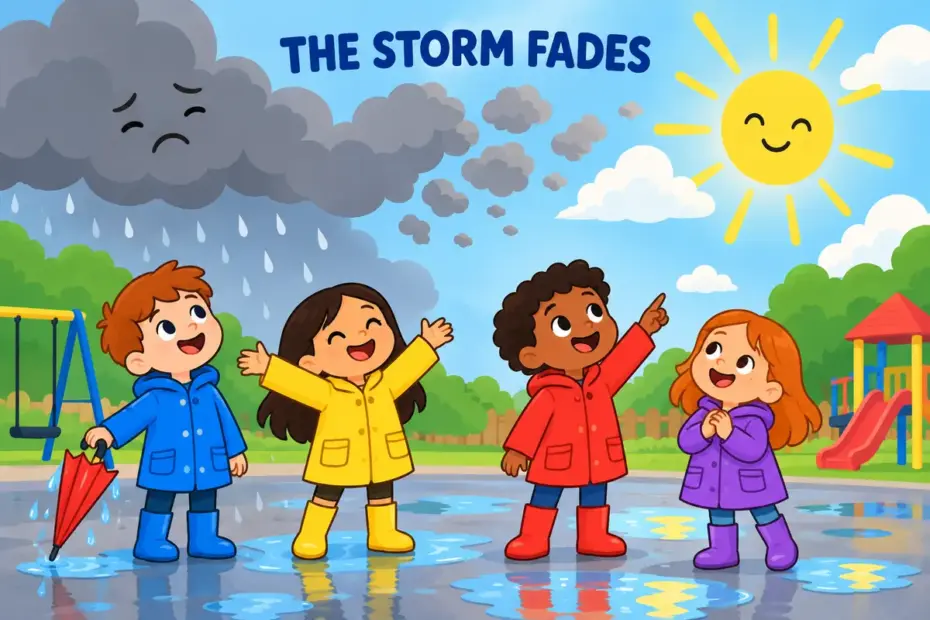
Abate means to become less strong or widespread, or to make something smaller. To use abate in a sentence, name what is fading and let it act as the subject: “By midnight the gale had abated.” The verb also works transitively, as in “The council moved to abate the noise.”
Abate at a glance
- Abate is a verb; its forms are abates, abated, abating and the noun abatement.
- The dominant pattern puts a weather, pain or noise word in the subject slot: the storm abated.
- The transitive sense means to reduce or end something: engineers moved to abate the flooding.
- Abate lives in written, formal and legal English far more than in casual speech.
- The commonest error is attaching a that-clause, as in abated that the picnic was cancelled.
What does abate mean?
Abate is a verb meaning to become less intense or widespread, or to make something less intense. The Cambridge entry for abate records both the intransitive and the transitive sense, and that distinction decides the grammar of the whole sentence. Where a quantity only shrinks without ending, diminish is the closer verb, because abate adds the idea of an intensity easing.
| Sense | Plain meaning | Example sentence |
|---|---|---|
| Become less | Something fades on its own | The downpour finally abated at dusk. |
| Make less | Someone reduces or removes it | The landlord agreed to abate the noise. |
| End a nuisance | An authority stops a harm | The court ordered the factory to abate the pollution. |
One honest limitation is worth stating. Abate is not a synonym for stop. A pain that abates is still present in a smaller form, and only the legal sense carries the idea of ending something entirely. When a thing disappears completely, cease or fade is the plainer choice.
How do you use abate in a sentence?
Choose the frame from the meaning. When the thing itself grows weaker, abate needs no object; when a person or body reduces a harm, abate takes an object. Five patterns cover almost every real sentence. Where a person deliberately tempers something rather than removing it, moderate the flow is the more precise verb.
| Pattern | Example | What it signals |
|---|---|---|
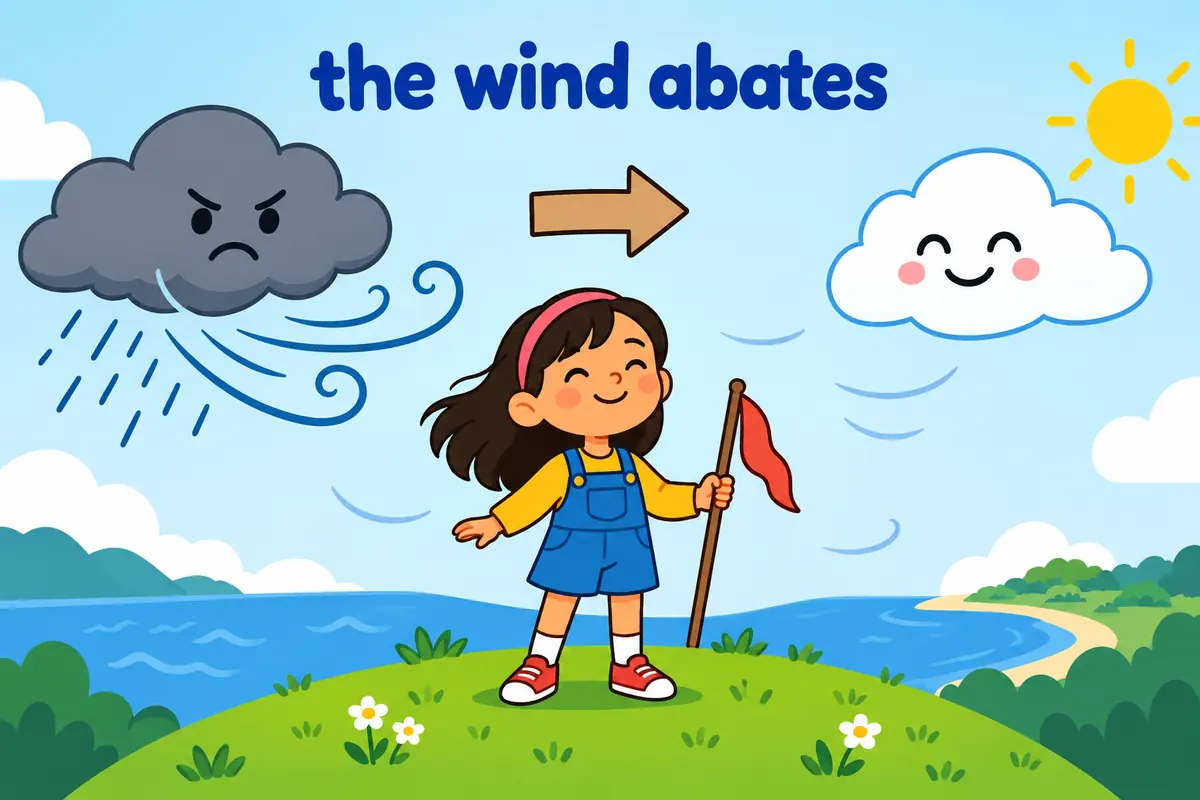
| subject + abate | The wind abated after midnight. | Intransitive: the thing itself eases. |
| abate + object | Engineers acted to abate the flooding. | Transitive: a body reduces a harm. |
| show no sign of abating | The heat showed no sign of abating. | A fixed phrase for something still going on. |
| abate + to + level | Her fever abated to normal by morning. | A measurable drop to a stated point. |
| be abated | The tax was abated for small firms. | Passive and legal, with the authority unnamed. |
Abate in a sentence: examples across contexts
Abate changes register more than meaning. The eight sentences below keep one verb while moving from a classroom to a legal filing, and each names the thing that is fading.
| Context | Example sentence | Why this works |
|---|---|---|
| Classroom | Our excitement did not abate until the bell rang. | An abstract feeling takes the subject slot naturally. |
| Workplace email | The backlog abated once the new scanner arrived. | A concrete cause explains the easing. |
| News report | The flooding abated after two days of pumping. | Names the event and the remedy, as reporting requires. |
| Legal writing | The tenant asked the court to abate the nuisance. | Uses the transitive legal sense rather than the weather one. |
| Medical note | The rash abated within an hour of the dose. | A time span shows the speed of the improvement. |
| Travel writing | The winds abate by late afternoon, so plan the crossing for dawn. | Turns the pattern into practical advice. |
| Historical account | Public anger showed no sign of abating that winter. | Uses the set phrase for a mood that persists. |
| Conversation | The noise abated as the last guests left. | A vivid everyday subject keeps the verb alive in speech. |
Only the last sentence belongs in ordinary speech. That register split is the clearest signal of where abate lives and where a simpler verb should take over.
Abate vs subside
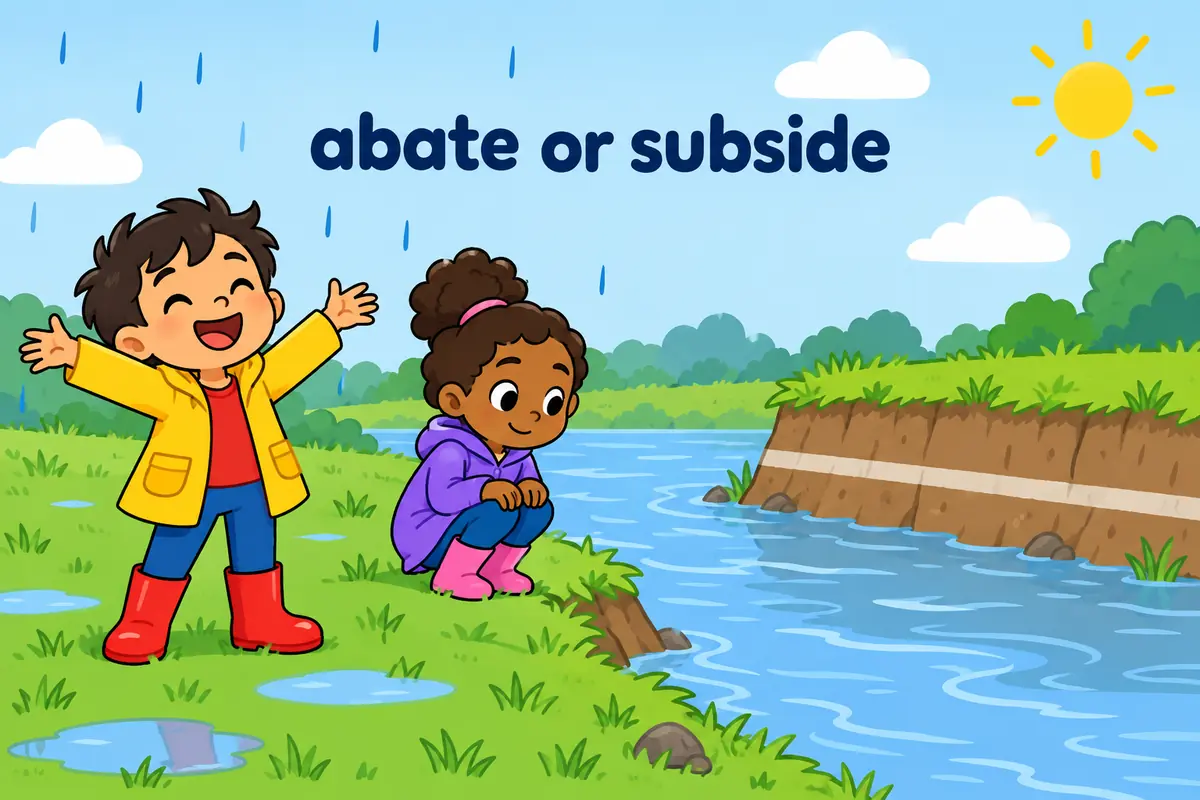
Abate and subside both describe something easing, and they are not interchangeable. subside pictures a return to a lower, calmer level, like floodwater sinking; abate pictures an intensity thinning out.
| Attribute | abate | subside |
|---|---|---|
| Core job | Grow less intense or widespread | Sink back to a lower, calmer level |
| Typical subject | Weather, pain, noise, anger | Floodwater, swelling, laughter, a wave |
| Transitive use | Also transitive: abate a nuisance | Almost never transitive |
| Register | Formal, legal and journalistic | Neutral to literary |
| What it implies | An intensity thinning | A return to a former state |
Verdict: choose subside when water or swelling returns to a normal level, and abate when a storm, pain or clamour loses its force without vanishing.
Word forms and grammar of abate
Abate inflects regularly, and its noun abatement is common in legal and business writing because it names the reduction itself. The table also lists the related adjective learners meet in the fixed phrase unabated.
| Form | Part of speech | Example |
|---|---|---|
| abate | verb, base form | The rain should abate by evening. |
| abates | verb, third person singular | The pain abates after the second dose. |
| abated | verb, past and past participle | The storm had abated before dawn. |
| abating | verb, present participle | The wind is abating at last. |
| abatement | noun | The city announced a rent abatement. |
| unabated | adjective | Demand continued unabated. |
Note that unabated means without any easing at all, so it is the opposite of the verb rather than another form of it.
Common mistakes with abate
- Incorrect:
The rain abated that the picnic was cancelled.Correct: The rain eased, so the picnic was cancelled. Rule: Abate never takes a that-clause; use ease or ease off before a clause. - Incorrect:
They abated the storm.Correct: They waited for the storm to abate. Rule: The transitive sense needs a harm a person can reduce, not the weather itself. - Incorrect:
The noise abated down the street.Correct: The noise abated along the street. Rule: Abate takes no directional phrase; use fade for movement away. - Incorrect:
His anger was abated by the apology.Correct: His anger abated after the apology. Rule: Feelings read better in the active intransitive pattern. - Incorrect:
We must abate to the pressure.Correct: We must yield to the pressure. Rule: Abate does not mean give in; that idea belongs to yield or relent.
Practice using abate
Work through the six items, then read the reasoning rather than only the answer.
- Fill the gap: The cheering finally ______ once the captain raised a hand.
- Choose the better word: The floodwater began to (abate / subside) back toward the riverbank.
- Correct the error: The committee abated that the scheme was too costly.
- Build a sentence: use show no sign of abating about a heatwave.
- Spot the register: which belongs in a legal notice — the tenant requests the court to abate the nuisance, or the noise totally stopped, seriously?
- Rewrite with the noun: The council reduced the fee for pensioners. Use abatement instead.
Answers
- abated — the cheering is the thing that grows weaker, so no object is needed.
- subside — water returns to a lower level, which is the picture subside draws.
- The committee decided that the scheme was too costly — abate cannot take a that-clause.
- Model answer: The heat showed no sign of abating, so the match moved to the evening.
- The tenant requests the court to abate the nuisance — a legal notice stays formal and avoids totally.
- The council announced a fee abatement for pensioners — the noun needs an article and names the reduction.
The bottom line
Use abate in a sentence when something intense grows weaker, and keep the fading thing as the subject. The two nuances that decide most sentences are these: the intransitive pattern needs no object, while the transitive sense needs a harm a person can actually reduce. Where a quantity falls gradually over time, decline is the more common and plainer verb.
Frequently asked questions about abate
Is abate a formal word?
Abate sits in written, legal and journalistic English, where a storm or a nuisance is the subject of the sentence. In everyday speech most people say the noise died down instead. Writing the pain abated in a text message sounds slightly stiff, while a weather report would use exactly that wording.
What is the noun form of abate?
The noun is abatement, and it names the reduction itself rather than the act of someone reducing something. A rent abatement is a lowering of rent, and a noise abatement order requires the noise to be cut. The noun is far more common in official writing than the verb.
Does abate mean stop completely?
No. A pain that abates is still there in a weaker form, and a storm that abates has not necessarily ended. Only the legal sense of abating a nuisance carries the idea of stopping a harm. When something vanishes entirely, cease, stop or disappear is the clearer word.
Can abate be used for feelings?
Yes, and feelings are one of its commonest subjects. Anger, fear, excitement and grief all abate in natural sentences, as in their worry abated when the call came. Keep those sentences intransitive and active rather than passive, because the passive form reads as though somebody did the easing.
Have you ever come across the word “abate” in a text and found yourself uncertain about its meaning? In simple terms, when something lessens or decreases in intensity, we can say it abates. This verb is often used to describe the diminishing of something, like winds abating after a storm.
Understanding how to use “abate” in sentences can greatly enhance your writing skills and help you communicate more effectively. By seeing examples of how this word is applied in context, you can grasp its nuances and feel more confident incorporating it into your own vocabulary. Let’s explore how to construct sentences with “abate” to express the idea of reduction or subsiding.
7 Examples Of Abate Used In a Sentence For Kids
- The rain will abate soon.
- Let’s wait for the noise to abate.
- I hope your cold will abate quickly.
- Abate your laughter during class.
- Please, abate your excitement a little.
- The wind will abate in the evening.
- We should abate our use of plastic.
14 Sentences with Abate Examples
- The noise from the party next door finally abated around midnight.
- I hope the rain will abate before our cricket match this evening.
- My excitement for the upcoming music festival shows no signs of abating.
- The stress of final exams will only abate once they are over.
- I tried meditating to help abate my anxiety before the big presentation.
- The professor’s strict attendance policy did not abate throughout the semester.
- I need to find a way to abate my cravings for junk food while studying.
- My desire to travel and explore new places does not seem to abate.
- The hot weather finally started to abate with the arrival of the monsoon season.
- I wish the noise level in the library would abate so I can focus on studying.
- The constant notifications on my phone need to abate if I want to concentrate on my studies.
- My enthusiasm for joining the debate club did not abate even after the first few challenging rounds.
- My headache started to abate after taking a short nap in between classes.
- I hope the price of textbooks will abate so students can afford them more easily.
How To Use Abate in Sentences?
To use Abate in a sentence, follow these steps:
-
Understand the meaning: Abate means to become less intense or widespread. For example, “The storm will abate by evening.”
-
Identify a suitable context: Think of a situation where something is diminishing or decreasing in intensity or significance.
-
Construct a sentence: Begin your sentence with the subject followed by the verb Abate. For example, “The noise from the construction site finally started to abate.”
-
Use modifiers if needed: You can add adverbs or adjectives to provide more context to your sentence. For instance, “The doctor prescribed medication to help abate the patient’s pain quickly.”
-
Check for correct usage: Ensure that Abate is used in a grammatically correct manner within your sentence.
-
Practice using Abate in different sentences: Try constructing several sentences using the word to become more comfortable with its usage.
-
Expand your vocabulary: Explore synonyms of Abate such as decrease, lessen, diminish, or reduce to enhance your language skills.
By following these steps and practicing regularly, you will be able to confidently use Abate in a sentence and improve your overall communication skills.
Conclusion
In conclusion, the examples provided showcase various ways in which the word “abate” can be used in sentences. Whether describing a diminishing storm, a decrease in intensity, or a reduction in a feeling, the word “abate” conveys the idea of something lessening or becoming less severe over time. These examples illustrate the versatility of the word and its application in both literal and metaphorical contexts.
Overall, the word “abate” is a useful term for expressing the idea of something diminishing or decreasing in intensity. By incorporating this word into one’s vocabulary, one can effectively convey the concept of something lessening or subsiding in a clear and concise manner.