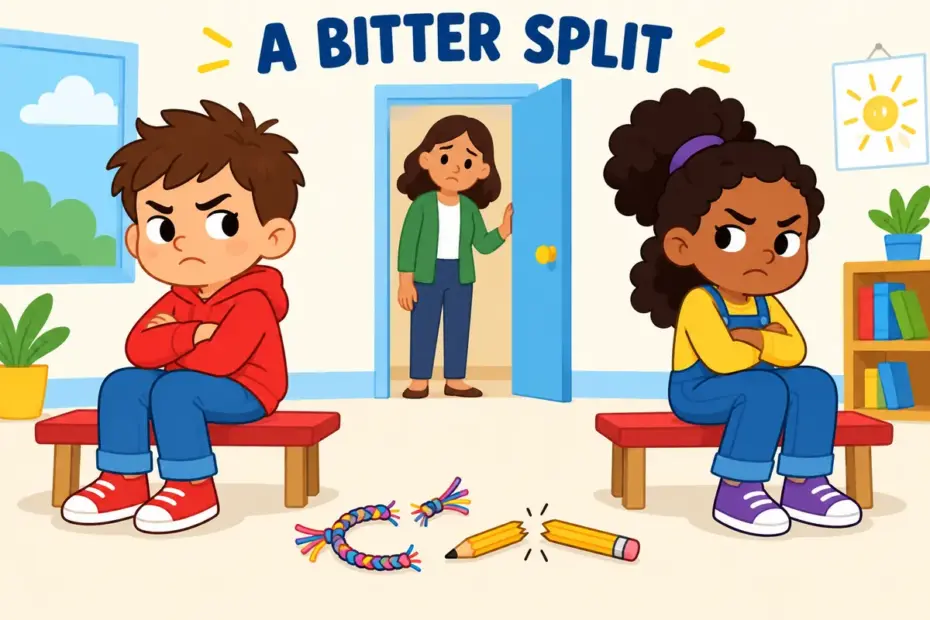
Acrimonious is an adjective describing an argument, dispute or split that is bitter and full of ill feeling. To use acrimonious in a sentence, attach it to the disagreement rather than the person: “an acrimonious debate.” It names the tone of a conflict, and it belongs to serious reporting and formal writing.
acrimonious at a glance
- Acrimonious is an adjective meaning bitter and angry in tone.
- Its forms are acrimonious, acrimoniously and the noun acrimony.
- It usually modifies words such as debate, divorce, dispute, split and exchange.
- It describes the manner of a conflict, not one person’s character.
- The commonest error is attaching it to a person instead of the argument.
What does acrimonious mean?
Acrimonious is an adjective meaning bitter, angry and full of ill feeling, used above all of arguments, disputes and partings. The Cambridge entry for acrimonious records this tone sense. It is stronger than contentious: a contentious debate is one people disagree in, while an acrimonious one leaves them hostile.
| Sense | Plain meaning | Example sentence |
|---|---|---|
| Bitter in tone | Full of resentment and ill feeling | The talks turned acrimonious. |
| Angry and prolonged | A quarrel that leaves lasting hurt | an acrimonious divorce |
| Spiteful | Sharp words aimed to wound | an acrimonious exchange of letters |
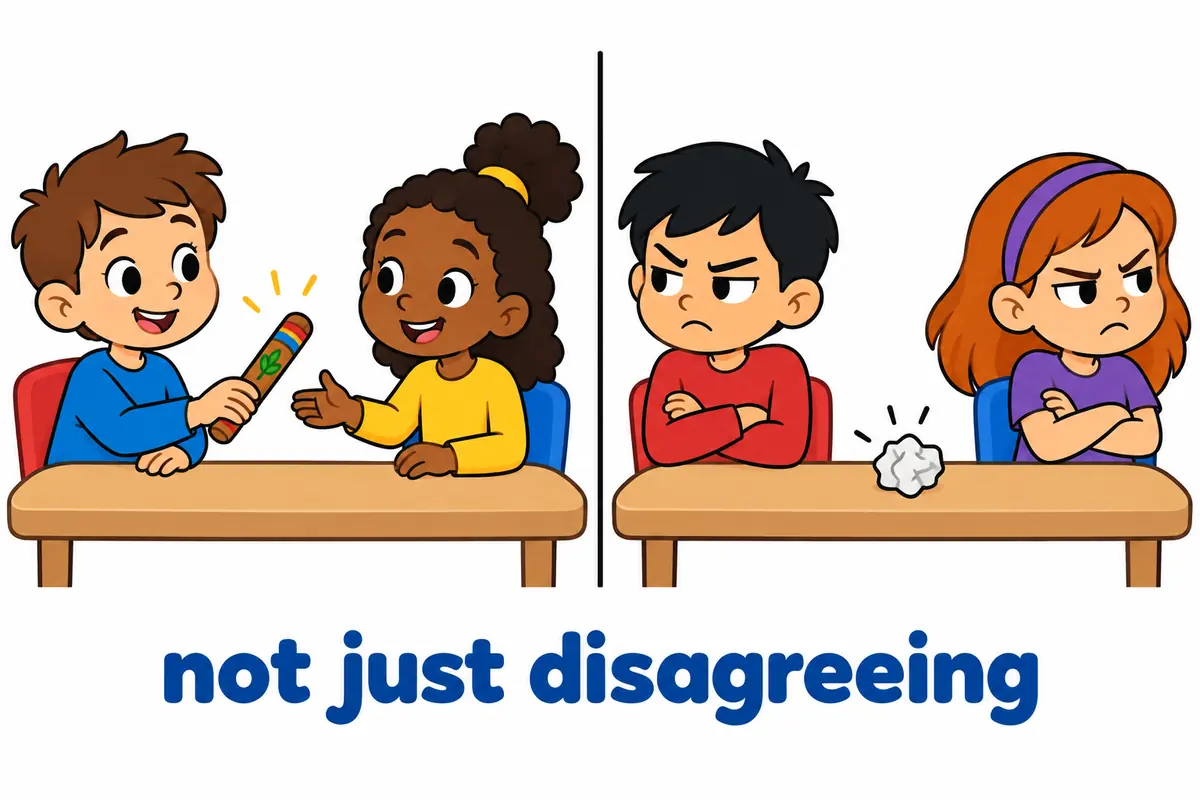
Acrimonious does not mean simply heated. A heated argument can stay good-natured, but an acrimonious one carries resentment that outlasts the discussion. It also describes the conflict rather than a person’s character, so a bitter person is not acrimonious; the argument is.
How do you use acrimonious in a sentence?
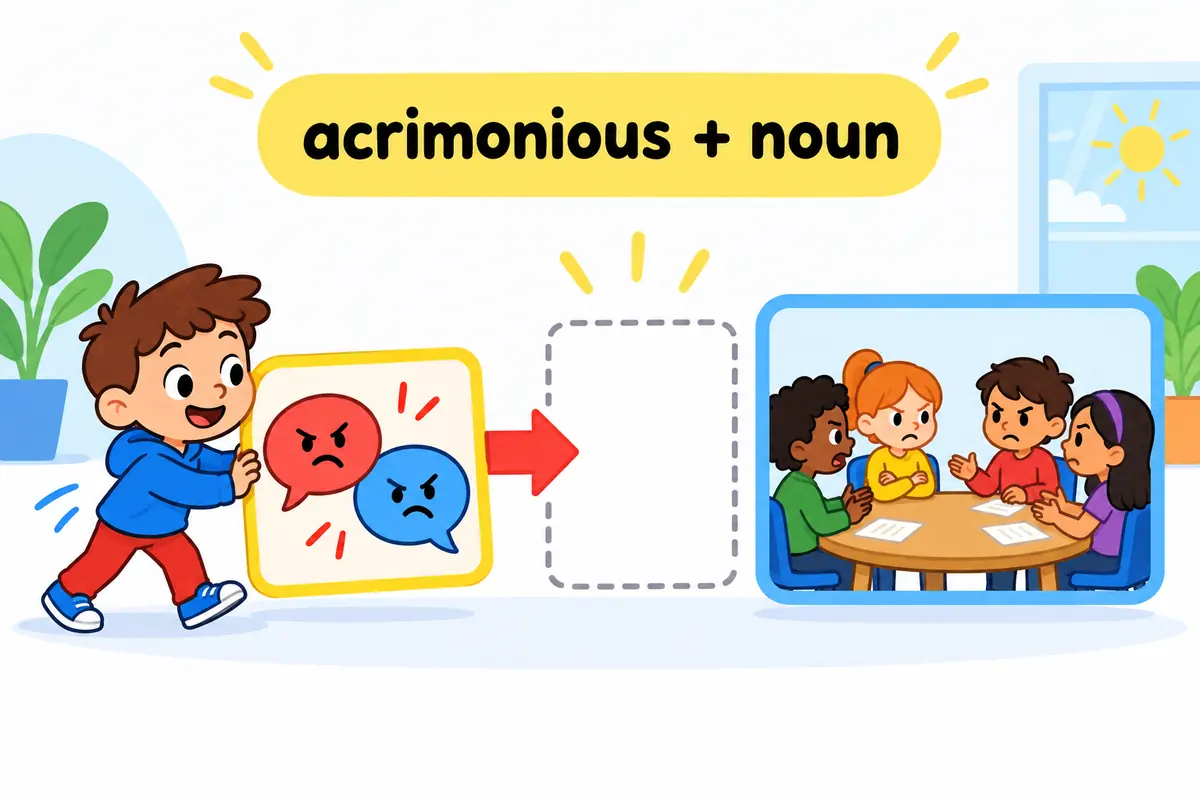
The adjective sits before the noun it describes or follows a linking verb. It most often pairs with words such as debate, dispute, divorce, split and exchange, and it can be graded with increasingly.
| Pattern | Example | What it signals |
|---|---|---|
| acrimonious + noun | an acrimonious debate | The usual place, before the noun. |
| turn/become + acrimonious | The meeting turned acrimonious. | Shows a change of tone. |
| increasingly + acrimonious | The dispute grew increasingly acrimonious. | Marks escalation over time. |
| acrimonious + noun + between + parties | an acrimonious split between the partners | Names the people involved. |
| the most acrimonious + noun | one of the most acrimonious campaigns on record | Superlative used for comparison. |
acrimonious in a sentence: examples across contexts
Acrimonious keeps the same meaning wherever it appears, and it always reports the mood of an exchange. The nine sentences below run from a classroom to a court report, and each names the conflict and its bitterness.
| Context | Example sentence | Why this works |
|---|---|---|
| Classroom | The class debate stayed calm, but the club meeting turned acrimonious. | Contrasts tone within one setting. |
| Workplace email | Please keep the thread civil; the last exchange was acrimonious. | Names tone as a warning. |
| News report | The talks ended in an acrimonious deadlock. | Compresses outcome and mood. |
| Legal writing | The parties described an acrimonious breakdown in negotiations. | Reports tone as evidence. |
| Academic prose | The review records an acrimonious split within the movement. | Uses the adjective analytically. |
| Conversation | Their divorce was acrimonious and took two years. | The everyday register for the word. |
| History essay | The congress closed after an acrimonious debate. | Formal, period writing. |
| Sports report | The transfer became acrimonious when the fee leaked. | Applies the tone to sport. |
| Business | The partnership dissolved after an acrimonious dispute. | A common commercial context. |
The word reports the mood of an event, which is why it attaches to meetings, talks and splits rather than to individuals.
acrimonious vs bitter
Bitter and acrimonious overlap, but bitter can describe a taste or a long private feeling, while acrimonious is almost always about the manner of an exchange. caustic is sharper still: it describes remarks that burn.
| Attribute | acrimonious | bitter |
|---|---|---|
| Scope | The tone of a shared conflict | A feeling, or a taste |
| Typical noun | debate, dispute, divorce | disappointment, irony, taste |
| Duration | The event, often short | Can last for years |
| Public or private | Usually a shared, observed event | Often private and personal |
| Neutral use | Never; it always criticises the tone | Yes; bitter chocolate is neutral |
Verdict: choose acrimonious when the exchange itself is sour, and bitter when the feeling is personal or the meaning is literal.
Word forms and grammar of acrimonious
Acrimonious is the adjective; its noun acrimony names the bitterness itself, and the adverb acrimoniously describes how something was said. The table gives all three, and it also lists the stronger word vitriolic.
| Form | Part of speech | Example |
|---|---|---|
| acrimonious | adjective | The debate turned acrimonious. |
| acrimoniously | adverb | The pair parted acrimoniously. |
| acrimony | noun | The talks ended in acrimony. |
| acrimoniousness | noun, rare | Prefer acrimony to the clumsy acrimoniousness. |
Where the feeling is lasting hatred rather than a sharp tone, rancorous and hostile are the better words.
Common mistakes with acrimonious
- Incorrect:
He is an acrimonious manager.Correct: He manages through acrimonious exchanges. Rule: The adjective describes the conflict, not the person. - Incorrect:
The weather was acrimonious.Correct: The weather was harsh. Rule: Acrimonious applies to speech, disputes and feelings, not weather. - Incorrect:
The acrimonious ended at last.Correct: The acrimonious dispute ended at last. Rule: An adjective needs the noun it modifies. - Incorrect:
Their meeting was very acrimonious and friendly.Correct: Their meeting was acrimonious throughout. Rule: Acrimonious already means hostile, so friendly contradicts it. - Incorrect:
The argument became acrimony.Correct: The argument became acrimonious. Rule: Use the adjective after become; acrimony is the noun.
Practice using acrimonious
Work through the six items, then check the reasoning rather than only the answer.
- Fill the gap: The negotiations grew increasingly ______ as the deadline passed.
- Choose the better word: After the vote, the two sides parted (acrimonious / acrimoniously).
- Correct the error: She is a very acrimonious colleague.
- Build a sentence: use an acrimonious split about two business partners.
- Spot the register: which fits a news report — talks ended in an acrimonious deadlock, or the talks were really catty?
- Rewrite with the noun: The debate became acrimonious. Use acrimony.
Answers
- acrimonious — the adjective follows grew to describe the tone of the negotiations.
- acrimoniously — parted is a verb, so it takes the adverb.
- Her colleagues describe many acrimonious exchanges — the adjective belongs to the conflict, not the person.
- Model answer: The firm closed after an acrimonious split between the two founders.
- Talks ended in an acrimonious deadlock — a news report keeps the formal adjective.
- The debate ended in acrimony — the noun names the bitterness itself.
The bottom line
Use acrimonious in a sentence to describe a dispute, debate or split that is bitter and hostile in tone. The two points that decide most sentences are these: the adjective describes the conflict rather than the people, and it implies lasting resentment rather than mere disagreement. Where the feeling is personal rather than shared, bitter is the closer word.
Frequently asked questions about acrimonious
What does acrimonious mean in a divorce?
An acrimonious divorce is one marked by bitterness, hostility and hurtful exchanges rather than a calm separation. The adjective describes the manner of the proceedings, not the feelings of one spouse. Reports use it when negotiations break down, accusations fly and the parting leaves lasting resentment on both sides.
Is acrimonious the same as bitter?
They overlap, but bitter is broader. Bitter can describe a taste or a private, long-held feeling, while acrimonious almost always describes the tone of a shared exchange such as a debate or a split. Use acrimonious when the conflict itself is sour, and bitter when the feeling is personal or literal.
What is the noun form of acrimonious?
The noun is acrimony, meaning bitterness of feeling or tone, as in the talks ended in acrimony. The adverb acrimoniously describes how something was done, as in the pair parted acrimoniously. The rare noun acrimoniousness exists but is clumsy, so writers prefer acrimony.
Can a person be described as acrimonious?
It is not the natural use. The word describes the conflict, so the acrimonious debate is idiomatic while an acrimonious colleague sounds slightly off. If you mean a person is bitter or hostile, use those adjectives directly, and keep acrimonious for the exchange, the split or the tone.
Have you ever engaged in a heated debate that turned acrimonious? The word “acrimonious” is often used to describe discussions or arguments that become bitter, angry, and filled with resentment.
When a conversation takes a turn and becomes acrimonious, a once civil exchange can quickly escalate into a hostile and unpleasant interaction. People involved in such discussions often express strong negative emotions and may resort to personal attacks or harsh language.
7 Examples Of Acrimonious Used In a Sentence For Kids
- The children had an acrimonious argument over who gets to play with the toy first.
- The siblings had an acrimonious fight about which TV show to watch.
- The friends had an acrimonious debate about who is the fastest runner among them.
- The students had an acrimonious discussion over which game to play during recess.
- The classmates had an acrimonious disagreement about the best color for their drawing.
- The cousins had an acrimonious quarrel over who gets to sit in the front seat of the car.
- The teammates had an acrimonious dispute about which player should be the captain of their team.

14 Sentences with Acrimonious Examples
- The debate between the two student leaders turned acrimonious as they exchanged heated arguments.
- The faculty meeting became acrimonious when discussing the changes to the examination pattern.
- The group project turned acrimonious when one member refused to contribute.
- The competition for the prestigious internship led to an acrimonious atmosphere among the students.
- The acrimonious breakup between two friends divided their mutual friend group.
- The election for the student council turned acrimonious as accusations of misconduct were thrown around.
- The discussion on campus policies took an acrimonious turn as students voiced their opposing views.
- The group study session became acrimonious when one student criticized another’s way of studying.
- The farewell party for the graduating seniors took an acrimonious turn when a disagreement erupted.
- The sports tournament between different college teams ended in an acrimonious dispute over the final score.
- The selection process for the college magazine’s editorial team became acrimonious with accusations of favoritism.
- The argument over budget allocation in the student council meeting turned acrimonious as tempers flared.
- The tiff between roommates over cleanliness escalated into an acrimonious conflict.
- The debate competition grew acrimonious as participants clashed over the judging criteria.

How To Use Acrimonious in Sentences?
Acrimonious means having a sharp, bitter, or harsh quality, especially in speech or debate. When using “Acrimonious” in a sentence, it is important to consider the context in which the word is being used. Here is a simple guide on how to use “Acrimonious” effectively:
- Identify the situation: Look for scenarios where there is a heated argument, rivalry, or conflict. These situations often involve strong emotions and harsh words, which are characteristic of acrimonious interactions.
- Choose your words: When describing a situation or conversation as “Acrimonious,” make sure to convey the sense of bitterness or sharpness involved. For example, “The two colleagues had an acrimonious argument during the meeting.”
- Provide context: To help readers or listeners understand the intensity of the situation, it is beneficial to provide additional details or examples that highlight the acrimony present. For instance, “The divorce proceedings turned acrimonious as they battled over custody of their children.”
- Use in writing or speech: Incorporate “Acrimonious” into your writing or speech when you want to emphasize the negativity or hostility of a situation. Remember to consider the tone and impact of the word within the overall context of your communication.
By following these guidelines, you can effectively incorporate “Acrimonious” into your vocabulary and convey the appropriate sense of bitterness or harshness in your descriptions.

Conclusion
In conclusion, acrimonious sentences are characterized by their bitter or sharp tone, often conveying hostility or resentment. These types of sentences aim to express strong disapproval, anger, or conflict, and can be observed in various situations where there is a heated argument, feud, or disagreement. It is important to recognize and understand acrimonious language as it can have a negative impact on communication and relationships, leading to further tension and animosity.
By being mindful of the use of acrimonious sentences and opting for more respectful and constructive language, individuals can foster better understanding and resolution in conflicts. Effective communication, with a focus on clear and non-hostile expression, can lead to more productive discussions and healthier interactions, ultimately promoting mutual respect and harmony.


