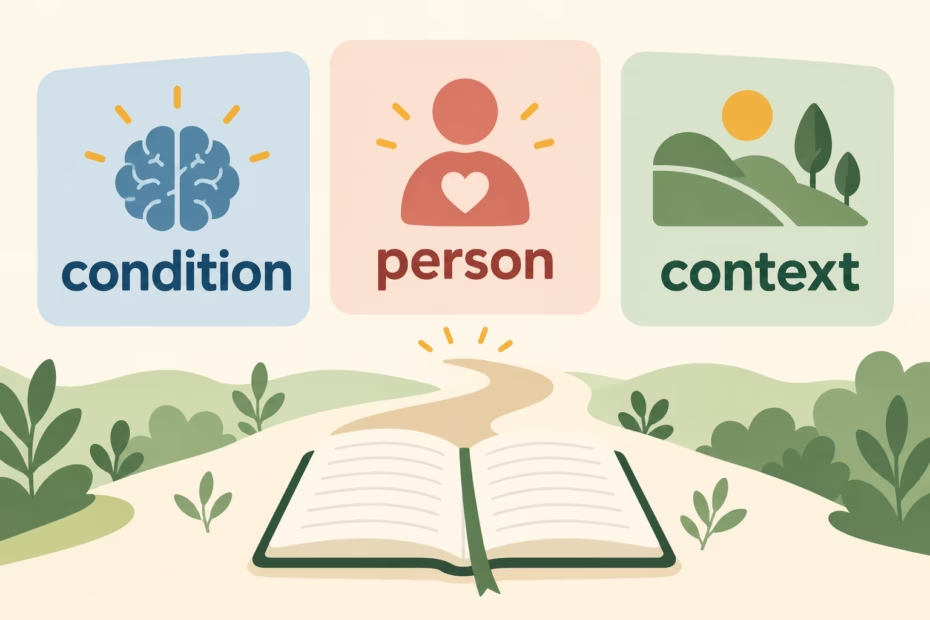
Adjectives for addiction should describe a pattern, experience, or effect rather than reduce a person to a diagnosis. Words such as compulsive, persistent, disruptive, and treatable may fit a specific context; when writing about a person, person-first wording such as “a person with a substance use disorder” is usually more respectful and precise.
- Describe a condition or pattern: persistent, compulsive, harmful, or treatable—when supported by context.
- Describe an experience: intense cravings or disruptive effects, without assuming everyone has the same experience.
- Describe a person: use person-first phrases and the language the individual prefers.
- Be accurate: adjectives are not clinical diagnoses or interchangeable synonyms.
- Be specific: show what happened and when instead of relying on a sweeping label.
What adjectives can describe addiction accurately?
The most useful adjectives describe a particular feature or effect, not a person’s worth or character. Addiction and substance use disorder (SUD) are related terms, but a clinician determines whether a diagnosis applies; a writer should not diagnose from an adjective list.
Use an adjective only when it fits the sentence and the available evidence. Persistent describes a pattern continuing over time; compulsive can describe behavior experienced as difficult to control; disruptive names an effect on work, school, health, or relationships; and treatable describes the possibility of care, not a guaranteed outcome.
| Adjective or phrase | What it describes | Careful example |
|---|---|---|
| Compulsive | A behavior or urge experienced as difficult to control | “The report describes compulsive use despite serious consequences.” |
| Persistent | A pattern continuing across time | “Persistent cravings can be part of one person’s account.” |
| Disruptive | An effect on daily activities or relationships | “The pattern became disruptive to her work schedule.” |
| Harmful | A documented negative consequence | “The harmful effects included missed classes and financial strain.” |
| Intense | The reported strength of an experience | “He described intense cravings during that period.” |
| Chronic | A condition described as long-lasting or recurring, where medically appropriate | “The source describes SUD as a chronic, treatable condition.” |
| Treatable | The availability of treatment, not a promised result | “Substance use disorders are treatable, though care needs differ.” |
| Isolating | A reported social effect, not a universal feature | “She said the experience felt isolating before she found support.” |
These words are not a diagnostic checklist. Severe has a clinical meaning when used as a substance-use-disorder severity specifier, so reserve it for a source or professional assessment that supports it. Avoid attaching it to a person based on an impression.
How should you describe a person affected by addiction?
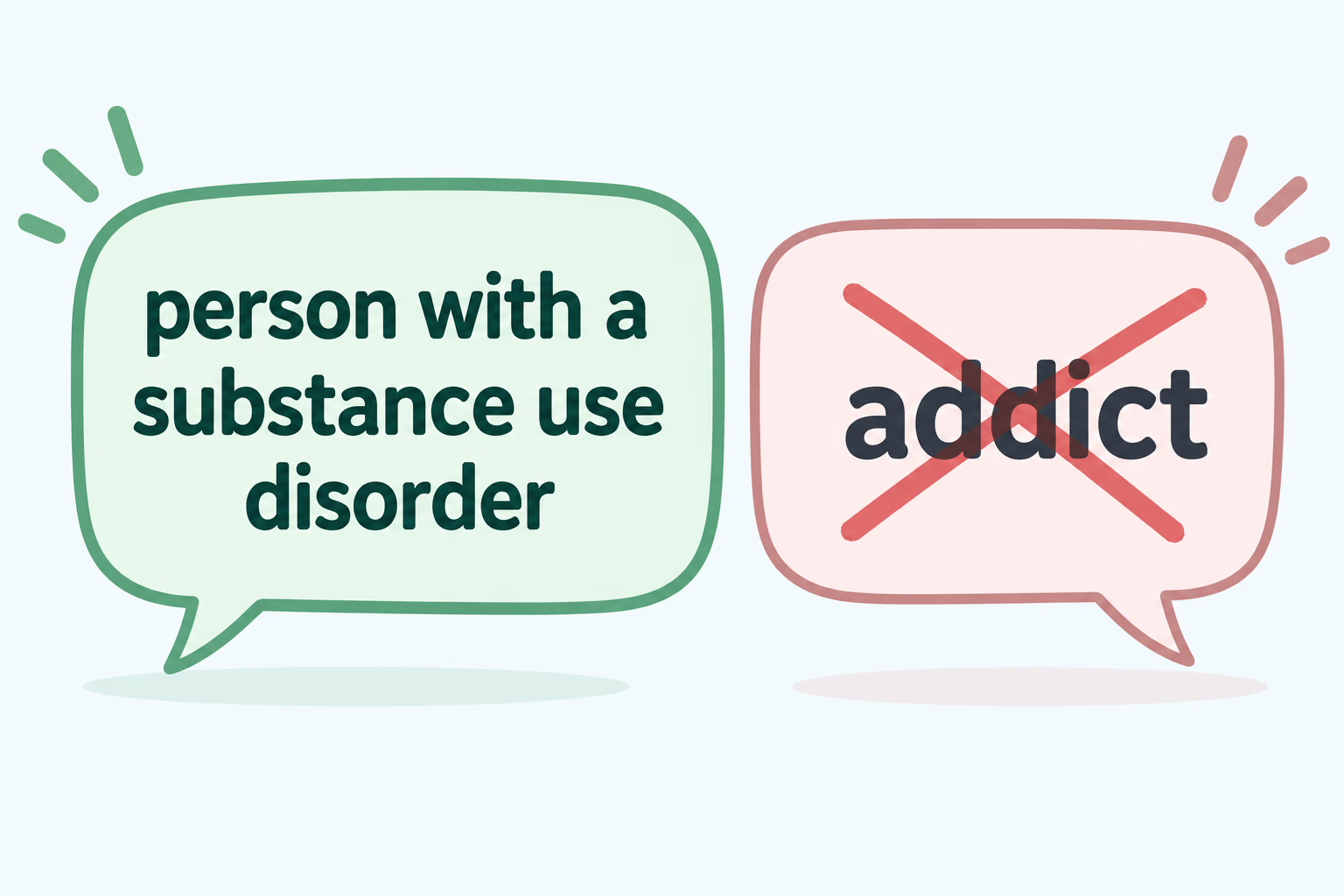
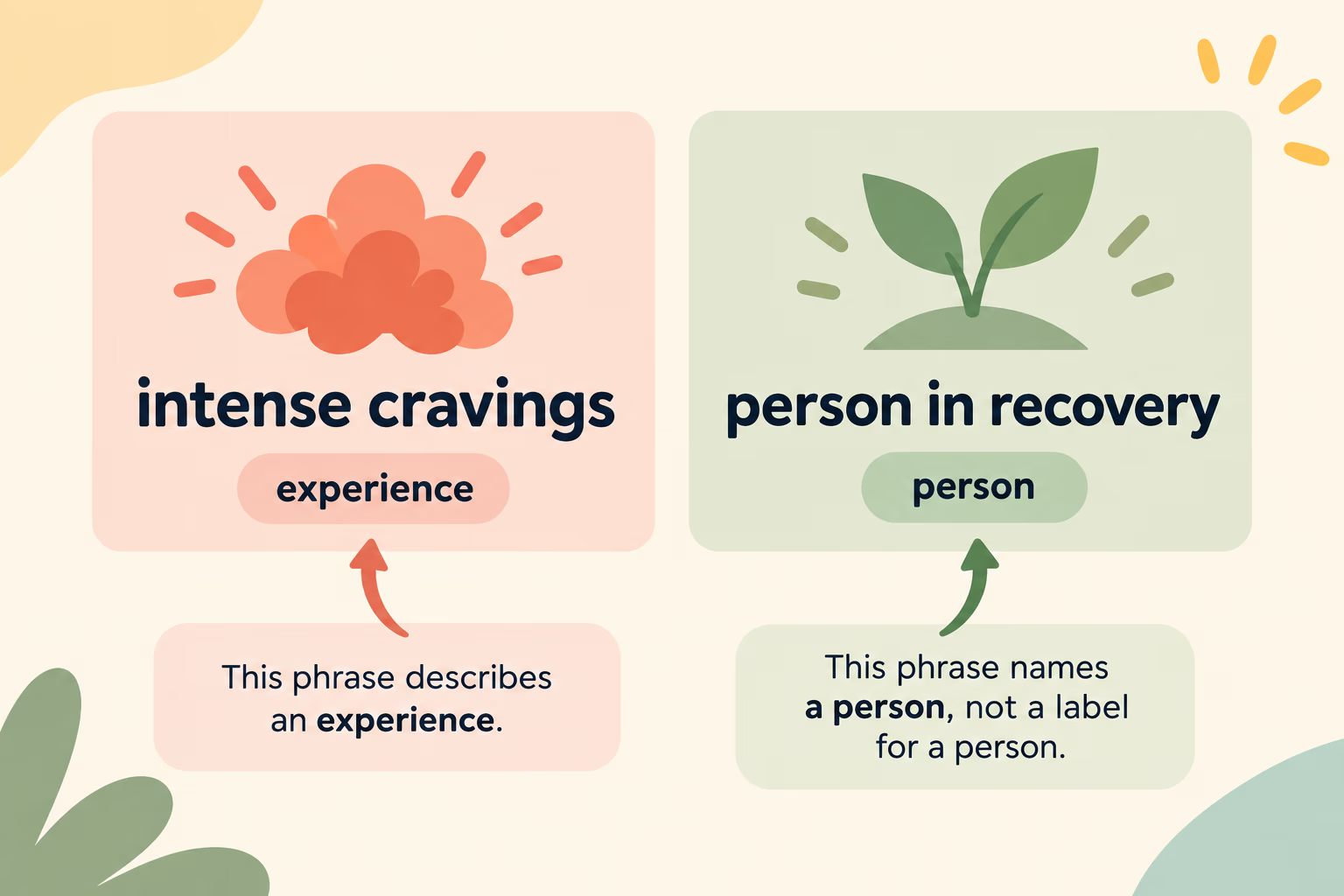
Put the person before the condition: “a person with a substance use disorder,” “a person with alcohol use disorder,” or “a person in recovery.” NIDA, CDC, and SAMHSA recommend person-first language because labels can reinforce stigma and may make it harder for someone to seek or receive care.
When possible, ask how someone wants their experience described. Some people use identity-first terms for themselves; an outside writer should not assume that personal preference applies to everyone. If you do not know the person’s preference, choose neutral, person-first language and include only details relevant to the story.
| Avoid as a label | More precise option | Why it helps |
|---|---|---|
| “an addict” | “a person with a substance use disorder” | Names the person before the health condition. |
| “drug abuser” | “a person who uses drugs” or a specific clinical term | Avoids language that implies moral blame. |
| “clean” or “dirty” test | “negative” or “positive” test result | Reports the result without judging the person. |
| “clean” or “former addict” | “in recovery,” “in remission,” or “not currently using,” as accurate | Describes a current status without a stigmatizing contrast. |
| “drug habit” | “substance use” or “substance use disorder,” when clinically accurate | Avoids minimizing a health condition as a simple habit. |
Terminology varies by audience and changes over time. NIDA notes that context matters and encourages clinicians to use terms that focus on the person and describe the clinical situation accurately; CDC also lists person-first alternatives to labels such as “addict” and “user.” In a personal narrative, preserve a speaker’s quoted words when necessary, then make clear that they are that person’s words rather than a general label.
Which adjectives fit different writing contexts?
The right word depends on whether you are describing a health condition, an experience, a consequence, or a recovery process. A school essay, news story, personal account, and clinical note need different levels of detail, but each should avoid turning one behavior into a judgment about a whole person.
| Context | Useful wording | Example |
|---|---|---|
| Health or research writing | clinically specific, persistent, treatable | “The study examines treatment for opioid use disorder.” |
| Personal experience | intense, frightening, exhausting—if the speaker uses those words | “He described the cravings as intense.” |
| Daily-life effects | disruptive, costly, isolating—when supported | “The missed appointments disrupted the care plan.” |
| Recovery or support | ongoing, individual, supported, gradual | “Her recovery process is ongoing and shaped around her needs.” |
| Fiction or classroom examples | specific action plus a neutral adjective | “The character describes the urge as persistent.” |
Words such as resilient, courageous, and hopeful can describe a person’s qualities or outlook when those descriptions fit; they are not positive adjectives for addiction itself. Likewise, avoid suggesting that a person must feel inspired, empowered, or grateful to be in recovery. Recovery experiences vary, and no adjective captures everyone’s account.
Are there positive adjectives for addiction?
Addiction itself is not usefully classified as positive or negative for a vocabulary list. If you mean words connected with recovery, describe the person, support, or process instead: supportive care, ongoing recovery, resilient person, or hopeful outlook. These phrases avoid framing a health condition as a character trait.
“Transformative” or “empowering” may describe how an individual interprets a period of treatment or recovery, but they should not be presented as universal outcomes. Ask whether the person uses that description or attribute it to a source. A sentence such as “She called the support group empowering” is clearer than “Addiction is empowering.”
How do you choose a precise adjective?
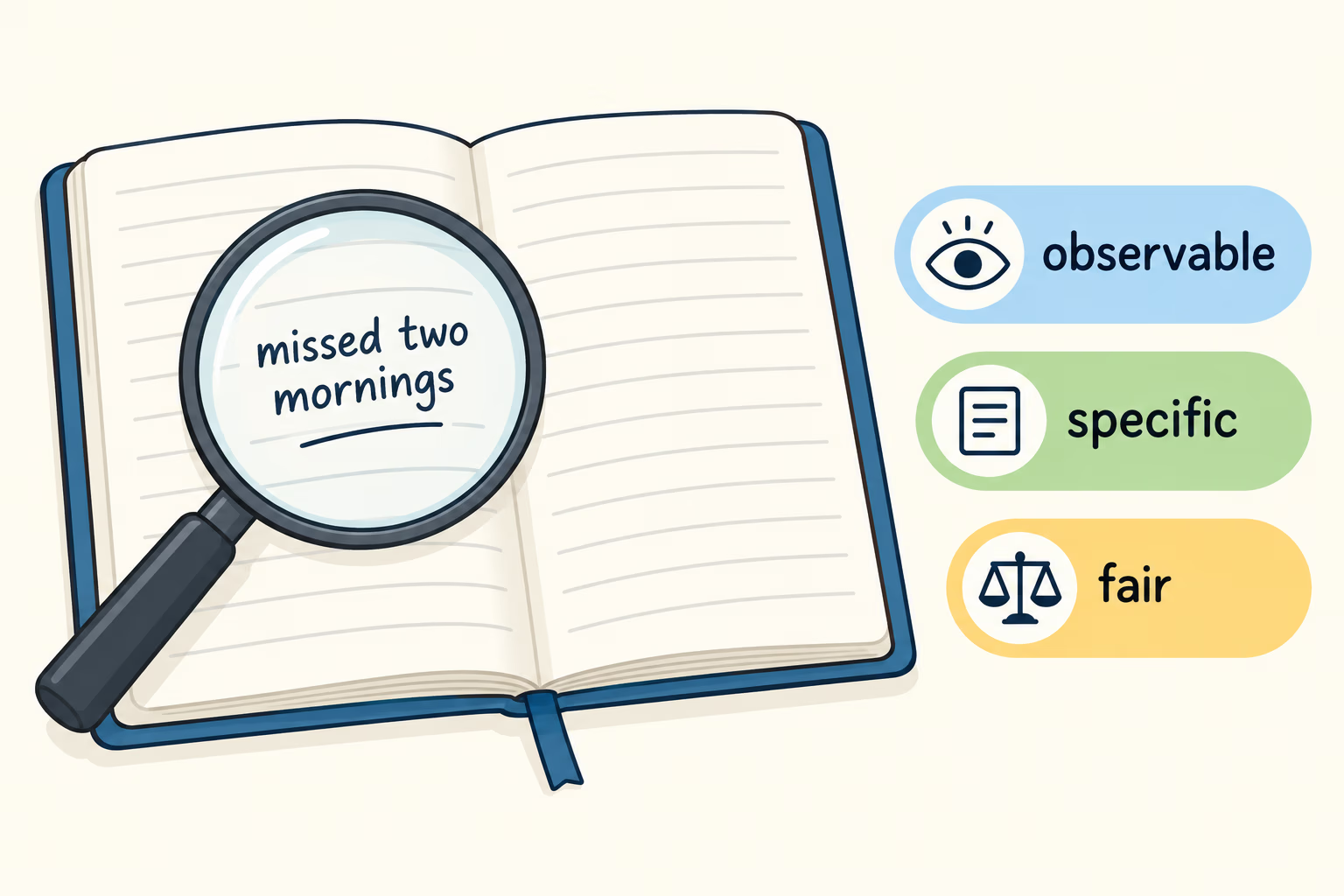
Choose an observable detail first, then select the adjective that describes only what that detail supports. A useful editing check is to ask: What exactly happened? Whose perspective is this? Does the word describe an experience, an effect, or a person?
- Name the subject: identify whether your sentence is about a condition, a behavior, an effect, or a person.
- Use evidence: include a reported experience or observable event, such as missed appointments or a person’s own description of cravings.
- Limit the scope: use a time phrase such as “during that month” if the pattern is not known to be constant.
- Check for stigma: remove blame, insults, and “good/bad person” assumptions.
- Re-read for accuracy: replace clinical-sounding terms with plain description unless a reliable source supports the clinical wording.
For example, “He is unreliable” turns missed appointments into a broad judgment. “He missed two appointments in March while arranging transportation” states a narrower fact and leaves room for context. If the person themselves calls the situation “overwhelming,” you can quote or attribute that adjective rather than presenting it as an outside assessment.
What words should you avoid when writing about addiction?
Avoid labels that equate a person with a condition or imply that substance use is a moral failure. NIDA, CDC, and SAMHSA list terms such as “addict,” “junkie,” “alcoholic,” “user,” and “drug abuser” among language to avoid in health communication; they recommend alternatives such as “person with a substance use disorder” or “person who uses drugs.”
Also avoid “clean” and “dirty” when describing a toxicology result or a person’s recovery status. Use the factual result—such as “positive test” or “negative test”—or a precise status phrase such as “in recovery,” when accurate. Avoid weak, bad, hopeless, or irresponsible as assumptions about a person; describe a documented action instead.
This language guidance does not require hiding harms. Writers can state specific consequences directly—missed work, a health complication, or financial loss—while avoiding language that shames people or implies that every person has the same experience.
Are “addiction,” “dependence,” and “craving” synonyms?
No. Addiction, dependence, and craving are related words, but they do not mean the same thing in every context. A craving is a strong urge; dependence can refer to physical adaptation or other forms of reliance depending on context; and a substance use disorder is a clinical diagnosis based on criteria, not a single adjective or synonym.
The original list below groups some related nouns as synonyms and antonyms. Keep that section for historical continuity, but do not use it as a clinical glossary: detoxification is a process, not the opposite of addiction; recovery is a process or status, not a simple antonym; and self-control or abstinence do not establish or rule out a diagnosis by themselves.
Frequently asked questions about adjectives for addiction
What are neutral adjectives for addiction?
Neutral choices can include persistent, compulsive, disruptive, and treatable, when the context supports them. A more neutral sentence often describes the pattern or effect directly, such as “the pattern disrupted work attendance,” instead of applying a broad adjective to the person.
What is a respectful way to describe someone with addiction?
Use “a person with a substance use disorder,” “a person with alcohol use disorder,” or “a person in recovery,” as accurate. If you can, follow the person’s own preference. Avoid labels such as “addict” or “user” in general narration because they reduce a person to one aspect of their life.
Can I call addiction destructive?
You can use destructive when you are describing a specific documented effect, but it can sound sweeping when applied to every person or situation. Name the consequence when possible: “the pattern damaged their finances” is more informative than “addiction is destructive.”
Is “addictive” the same as “addicted”?
No. Addictive usually describes something that may cause or encourage addiction, such as a substance or behavior; addicted labels a person or state and may be stigmatizing. In respectful health writing, prefer a specific phrase such as “a person with a substance use disorder” when that description is clinically appropriate.
What adjectives describe recovery?
Words such as ongoing, individual, supported, and gradual can describe aspects of a recovery process, but no single path is universal. Words such as hopeful or empowering should reflect the person’s own view rather than an assumption about how recovery feels.
Sources and further reading
- NIDA: Words Matter—Terms to Use and Avoid When Talking About Addiction — person-first language and non-stigmatizing alternatives.
- CDC: Stigma—Beyond the Numbers — stigma, language, treatment, and recovery context.
- SAMHSA: Stigma and Language — language and barriers to treatment seeking.
- SAMHSA: Connecting Communities to Substance Use Services — person-first wording examples.
- CDC: Examples of Non-Stigmatizing Language and Alternatives — phrase alternatives for health communication.
Preserved original article
Editorial note: The text below is retained exactly from the earlier version. Its “positive” and “negative” adjective categories and its synonym/antonym list are not clinical terminology; in particular, detoxification is a process, not an antonym for addiction. Some labels and broad claims in that source do not reflect current person-first health-communication guidance. The new sections above clarify those limits; the preserved text is included for transparency, not as medical advice.

Addiction is a complex and often misunderstood phenomenon that affects millions of individuals worldwide. As someone who has dedicated years to studying and understanding addiction, I have come to realize the importance of using descriptive adjectives to accurately convey the nature of this struggle. In this article, I will provide you with a comprehensive list of adjectives that can be used to describe addiction, along with examples to illustrate their usage. Whether you are a researcher, a therapist, or simply someone seeking to better understand addiction, these adjectives will help you articulate the nuances and complexities of this pervasive issue.
When it comes to addiction, finding the right words to describe its impact can be challenging. That’s why I have compiled a collection of adjectives that capture the essence of addiction, from its destructive nature to the overwhelming cravings that accompany it. By using these adjectives, you can paint a vivid picture of the various aspects of addiction and shed light on the experiences of those who struggle with it. Whether you are writing an academic paper, a personal blog post, or simply engaging in a conversation about addiction, these descriptive words will enhance your communication and deepen your understanding of this widespread issue.
In the following sections, I will present you with a diverse range of adjectives that can be used to describe addiction. From the intense and all-consuming to the subtle and insidious, these words will help you convey the multifaceted nature of addiction. So, let’s dive in and explore the rich vocabulary that can bring depth and clarity to discussions about addiction.
How to Describe addiction? – Different Scenarios
Describing addiction accurately is crucial in understanding its impact and helping others comprehend its complexities. Let’s explore different scenarios and approaches to describing addiction:
- Intense and All-Consuming: Addiction can be described as an overpowering force that consumes every aspect of a person’s life. It’s like being trapped in a cycle of uncontrollable cravings and compulsive behavior.
- Example: “Addiction grips the individual, leaving them completely consumed by their desire for the substance.”
- Deceptive and Insidious: Addiction often starts subtly and slowly takes hold, deceiving both the individual and those around them. It’s like a hidden enemy that gradually erodes one’s well-being.
- Example: “Addiction creeps into one’s life, disguised as temporary relief, until it stealthily takes control.”
- Chaotic and Destructive: Addiction can lead to a chaotic lifestyle, characterized by broken relationships, financial instability, and a disregard for personal responsibilities. It leaves a trail of destruction in its wake.
- Example: “Addiction wreaks havoc on all aspects of a person’s life, leaving behind a trail of shattered dreams and broken bonds.”
- Lonely and Isolating: Addiction often isolates individuals, cutting them off from their loved ones and support systems. It creates a deep sense of loneliness and detachment from the outside world.
- Example: “Addiction wraps its arms around the individual, separating them from the warmth and love of their relationships, leaving them desolate and alone.”
- Struggle and Resilience: Describing addiction as a struggle highlights the internal battles faced by individuals fighting to overcome their addiction. It also acknowledges their courage and resilience in the face of adversity.
- Example: “Addiction is a relentless struggle, but it showcases the indomitable spirit of those who choose to fight back and reclaim their lives.”
- Gradual and Sneaky: Addiction can develop slowly over time, starting with occasional use and eventually becoming a habitual and addictive behavior. It’s like a subtle intruder that gradually takes over.
- Example: “Addiction starts as an innocent indulgence, slowly growing its roots until it firmly entangles the individual in its grip.”
Describing Words for addiction in English
In this section, I’d like to share with you a variety of descriptive words that can be used to talk about addiction. These words can help paint a vivid picture and convey the complexity of this topic.
Let’s take a look at some examples of adjectives that are commonly used to describe addiction:
- Intense: Addiction is often described as an intense craving or desire for something. It’s like a strong, overpowering force that consumes a person’s thoughts and actions.
- All-consuming: Addiction can be all-consuming, meaning it takes over every aspect of a person’s life. It becomes their primary focus and can lead to neglecting other important responsibilities.
- Deceptive: Addiction can be deceptive because it can start off innocently or go unnoticed at first. It slowly creeps into a person’s life, often disguising itself as something harmless or enjoyable.
- Insidious: Similar to being deceptive, addiction can also be described as insidious. It gradually and subtly takes hold of someone’s life, making it difficult to recognize until it has already become a problem.
- Chaotic: Addiction can bring chaos into a person’s life. It disrupts routines, causes instability, and can lead to unpredictable and erratic behavior.
- Destructive: Addiction has a destructive impact on individuals and their relationships. It can lead to physical and emotional harm, damaging not only the person struggling with addiction but also those around them.
- Lonely: Addiction can create feelings of loneliness and isolation. It can make a person feel detached from others and trapped in their own struggle.
- Gradual: Addiction often develops gradually, starting with occasional use and slowly escalating over time. It’s important to recognize the early signs and address them before the addiction becomes more severe.
By using these descriptive words, we can enhance our understanding and communication about addiction. They help us grasp the complexities of this issue and convey its impact effectively. Whether you’re discussing addiction with a friend, a loved one, or in an educational setting, these words can bring depth and clarity to the conversation.
Next, let’s explore some real-life examples and scenarios to see how these adjectives can be applied in context.
Adjectives for addiction
Positive Adjectives for Addiction with Examples
When it comes to describing addiction, there are both positive and negative adjectives that can be used. While the negative adjectives highlight the destructive nature of addiction, positive adjectives can shed light on the potential for change and recovery. Here are some positive adjectives to describe addiction:
| Adjective | Example Sentence |
|---|---|
| Transformative | Addiction can be a transformative experience that leads to personal growth and resilience. |
| Empowering | Overcoming addiction can be an empowering journey of self-discovery and strength. |
| Resilient | Surviving addiction requires a resilient spirit and unwavering determination. |
| Life-changing | Conquering addiction can have a profound, life-changing impact on individuals and their loved ones. |
| Enlightening | Addiction recovery can be an enlightening process that opens doors to a brighter future. |
| Empathetic | Understanding addiction fosters empathy towards those struggling with these challenges. |
| Motivating | Overcoming addiction can be a motivating force to become the best version of oneself. |
| Inspiring | The stories of recovery and resilience can be truly inspiring, giving hope to others facing addiction. |
| Courageous | The journey of addiction recovery requires immense courage and bravery. |
| Liberating | Breaking free from addiction can be a liberating experience, allowing individuals to reclaim their lives. |
| Transformational | Addiction recovery can be a transformational journey that leads to personal growth and self-rediscovery. |
| Rewarding | The process of overcoming addiction can be incredibly rewarding, and the benefits extend to all areas of life. |
Negative Adjectives for Addiction with Examples
While it’s important to acknowledge the potential for growth and change in addiction, it’s equally crucial to recognize the negative aspects. Addiction can have a devastating impact on individuals and their loved ones. Here are some negative adjectives to describe addiction:
| Adjective | Example Sentence |
|---|---|
| Destructive | Addiction is a destructive force, wreaking havoc on individuals and their relationships. |
| Debilitating | The grip of addiction can be debilitating, robbing individuals of their physical and mental well-being. |
| Isolating | Addiction can be an isolating experience, leading to feelings of loneliness and detachment. |
| Chaotic | Addiction often brings chaos into individuals’ lives, disrupting routines and causing instability. |
| Consuming | Addiction can become all-consuming, taking over every aspect of an individual’s life. |
By using these adjectives, we can better convey the complexity and impact of addiction. It’s important to understand the nuances of addiction and address it with sensitivity and empathy.
Synonyms and Antonyms with Example Sentences
Synonyms for addiction
When it comes to describing addiction, there are several synonyms that can be used to paint a vivid picture and convey its complexity. Here are some common synonyms for addiction:
- Dependency: Dependency refers to the state of being dependent on a substance or behavior. For example, “She developed a dependency on pain medication after her surgery.”
- Compulsion: Compulsion describes the irresistible urge to engage in a particular behavior or consume a substance. For example, “His compulsion to gamble led to severe financial problems.”
- Craving: Craving refers to an intense desire or longing for something. For example, “Her craving for nicotine made it difficult for her to quit smoking.”
- Obsession: Obsession is a persistent, intrusive thought or desire that dominates a person’s thinking. For example, “His obsession with cleanliness became detrimental to his relationships.”
- Fixation: Fixation is an excessive preoccupation or attachment to a particular substance or behavior. For example, “Her fixation on social media consumed most of her time.”
Antonyms for addiction
On the other hand, when we want to describe the opposite of addiction or a lack of dependency, we can use antonyms. Here are some antonyms for addiction:
- Freedom: Freedom refers to the state of not being dependent on a substance or behavior. For example, “He celebrated his newfound freedom from alcohol addiction.”
- Self-control: Self-control is the ability to control one’s impulses and resist engaging in addictive behaviors. For example, “Through self-control, she was able to overcome her addiction to shopping.”
- Abstinence: Abstinence refers to the practice of refraining from engaging in addictive behaviors or consuming certain substances. For example, “He maintained his abstinence from drugs through a strong support system.”
- Detoxification: Detoxification is the process of removing toxins from the body, often used to describe the initial phase of overcoming addiction. For example, “She underwent detoxification to cleanse her body from drug addiction.”
- Recovery: Recovery signifies the process of returning to a healthy and balanced state after overcoming addiction. For example, “His journey to recovery involved therapy, support groups, and a commitment to sobriety.”
Remember, using these synonyms and antonyms can help enhance understanding and communication about addiction in a more descriptive and nuanced manner.
Conclusion
Describing addiction accurately is crucial for effective communication and understanding. Throughout this article, we have explored various adjectives that can be used to paint a vivid picture and convey the complexity of addiction. By utilizing synonyms such as dependency, compulsion, craving, obsession, and fixation, we can provide a more nuanced description of addiction.
Additionally, incorporating antonyms like freedom, self-control, abstinence, detoxification, and recovery allows us to highlight the contrasting aspects of addiction and emphasize the journey towards overcoming it.
Using these descriptive words not only enhances our understanding of addiction but also facilitates meaningful conversations and empathy towards those struggling with it. By expanding our vocabulary and choosing the right words, we can create a more accurate and comprehensive portrayal of addiction.
Remember, words have power. By choosing the right adjectives, we can contribute to a more compassionate and informed dialogue surrounding addiction. Let us continue to educate ourselves and others, fostering a greater understanding and support for those impacted by addiction.


