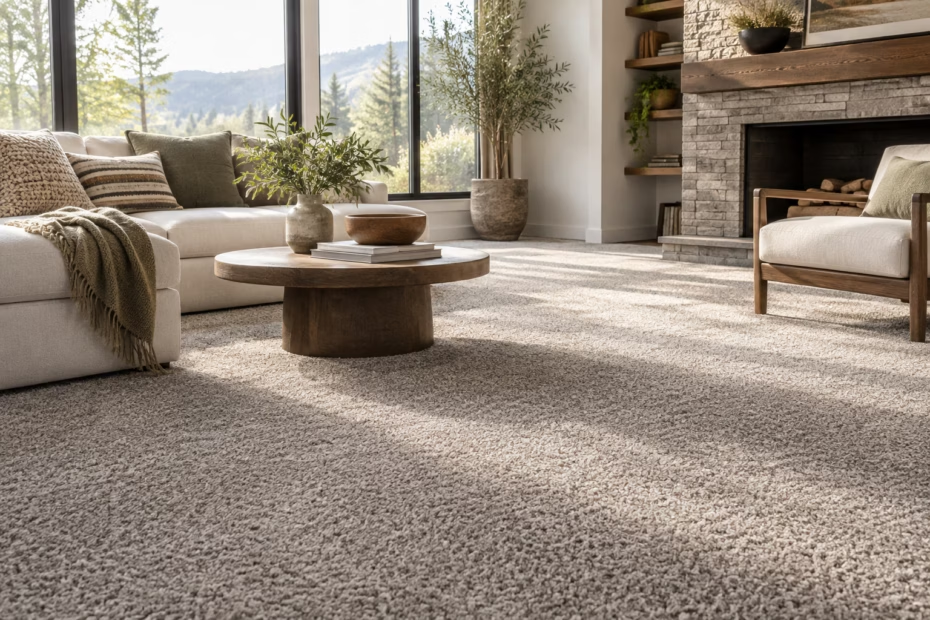
Carpet Adjectives: Describe What You Can See and Feel
A useful carpet description points to a real feature: the pile feels plush, the color is blue-gray, or the pattern is tonal. For product listings and room descriptions, choose words that match the sample instead of stacking general praise such as “beautiful, amazing, luxurious.” A specific phrase like “a low, tightly looped carpet in a warm sand color” gives a reader a clearer picture.
Carpet construction and fiber affect how a surface looks and performs. The Carpet and Rug Institute lists nylon, polyester, polypropylene (olefin), triexta, and wool among common pile fibers; each can differ in texture retention, stain and soil resistance, colorfastness, and cleanability. Those qualities depend on the product, so use a performance adjective such as durable or stain-resistant only when a label, specification, or test supports it.
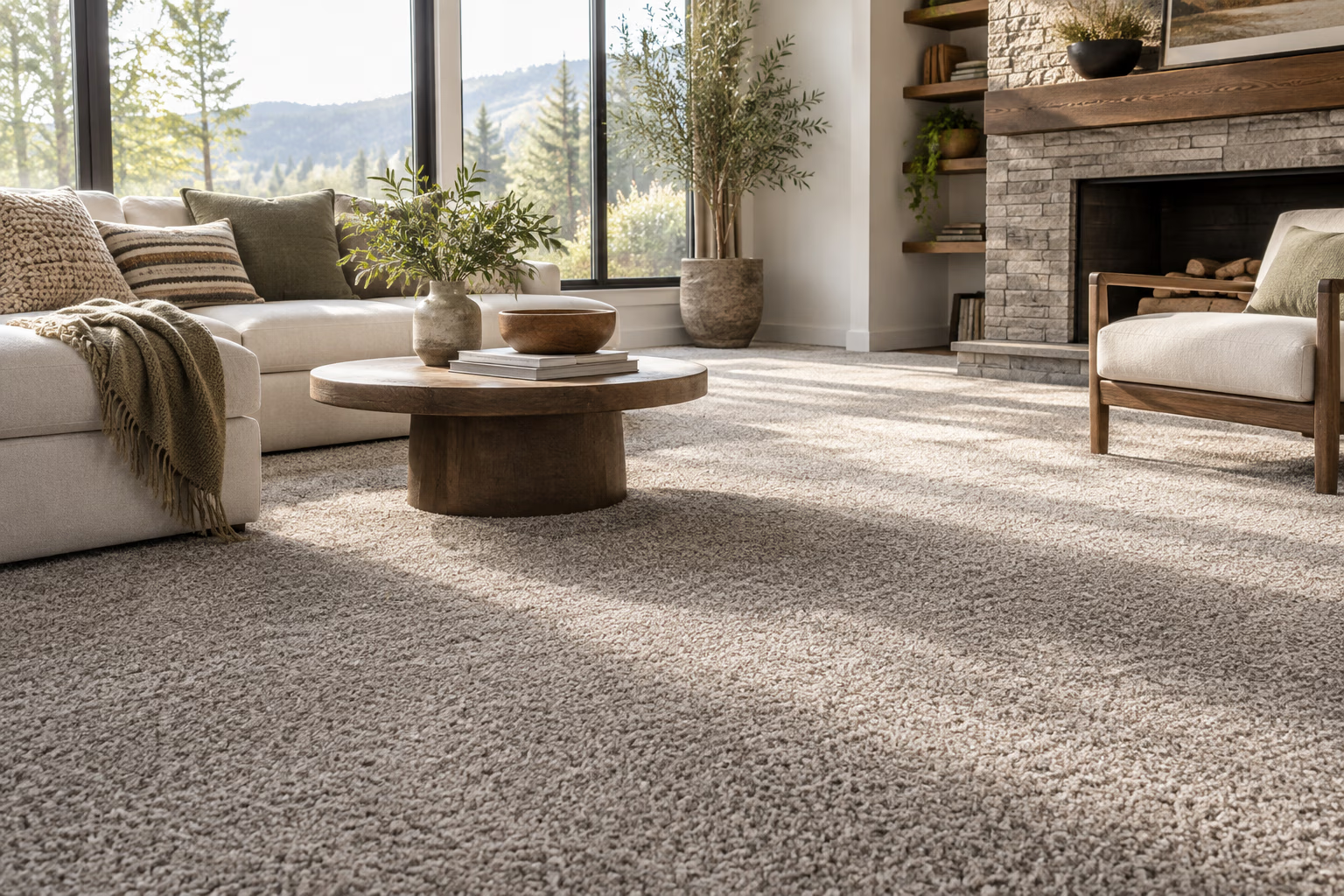
Carpet Words by Attribute
Use this vocabulary list to identify a particular quality. A carpet can fit several groups at once—for example, a low-pile, tightly looped, heathered gray carpet.
| What you notice | Useful adjectives | What the words suggest |
|---|---|---|
| Feel and surface | soft, plush, velvety, coarse, nubby, smooth | How the pile feels to the touch; “velvety” is a comparison, not a fiber type. |
| Pile and construction | low-pile, deep-pile, looped, cut-pile, dense, flatwoven | The height or visible construction of the surface. |
| Color | ivory, charcoal, rust-colored, muted, saturated, multicolored | The hue, intensity, or number of colors. |
| Pattern | plain, speckled, striped, geometric, floral, tonal | The arrangement and contrast of visible design elements. |
| Condition | clean, fresh-looking, worn, faded, matted, stained | The carpet’s present appearance; a condition word is not a judgment about quality. |
Distinguish Similar Carpet Adjectives
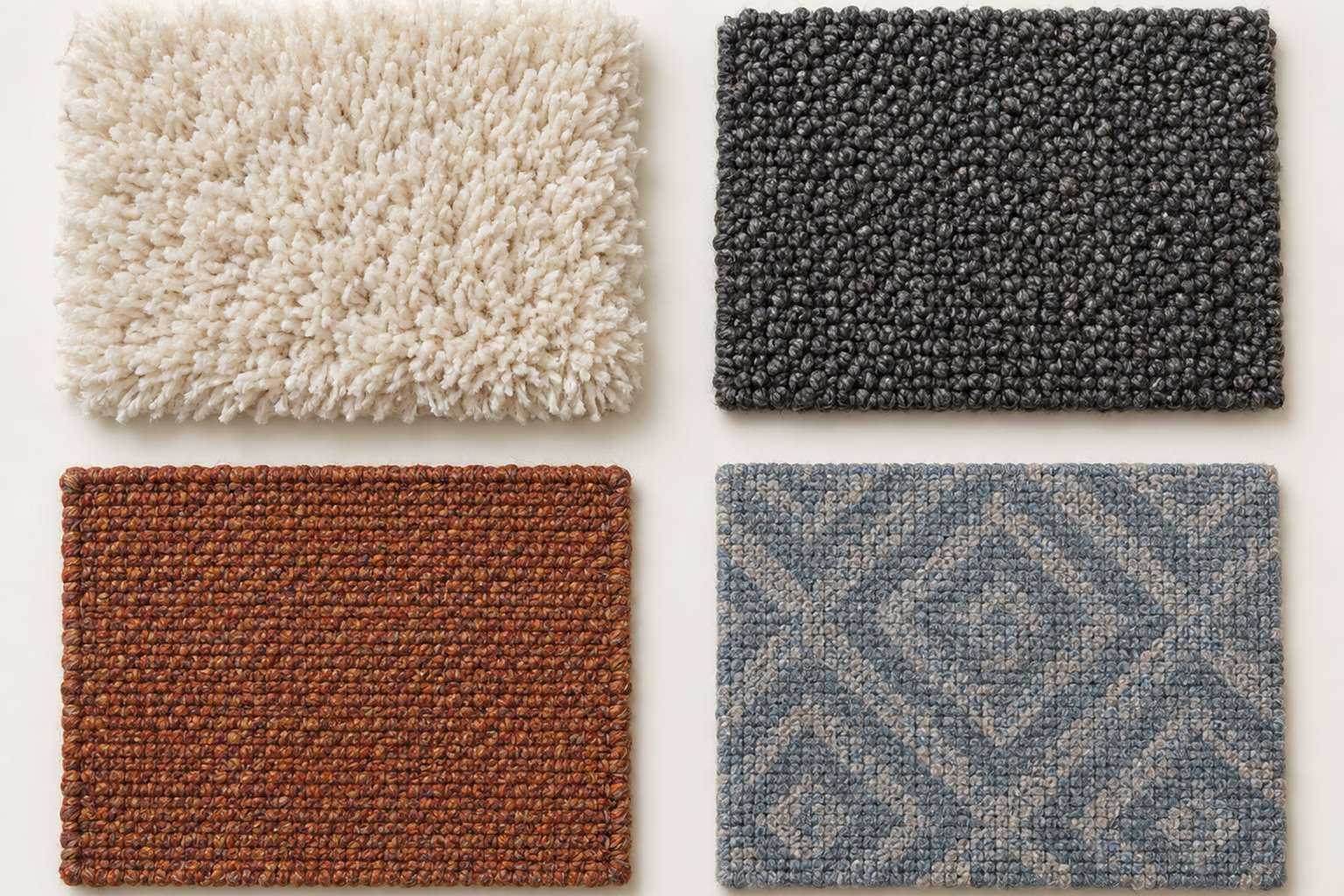
Plush and thick are related but describe different impressions: plush usually suggests a soft, cushioned surface, while thick points to depth or substantial construction. A carpet may look thick yet feel firm. Shaggy refers to a noticeably long, loose-looking pile; it is not simply another word for soft.
Loop-pile carpet has yarn formed into loops, while cut-pile carpet has the loop tops cut. Some designs combine the two. Use these terms when you can see or verify the construction; a close-up or product specification is more reliable than guessing from a room photo. “Textured” is broader and can refer to a visibly varied surface without naming how it was made.
Color words also need care. Heathered describes small, blended flecks or mixed yarn colors; solid usually means one dominant color, even when the fibers show slight variation. Neutral is relative to the room and palette, not a fixed color family. Instead of calling a carpet “light,” name its color and value: “pale warm gray” or “dark blue-green.”
Choose Words for the Room and the Reader
For a bedroom, words such as soft, quiet-looking, or plush may communicate the intended feel. A hallway description might focus on low-pile, patterned, or closely looped. A playroom listing can call a carpet cheerful or colorful if its appearance supports that impression. These are descriptions, not promises about safety, comfort for every person, or wear life.
When writing a product description, separate observation from a claim. “The carpet is a muted green with a small diamond pattern” is directly visible. “The carpet resists stains” is a performance claim and should be checked against the manufacturer’s information for that exact product. Fiber alone does not establish every product’s durability, maintenance needs, or resistance to staining.
Examples of Precise Carpet Descriptions
- Texture: “The soft, low-pile carpet feels smooth underfoot and has a close, even surface.”
- Color and pattern: “A muted blue-gray ground and fine ivory stripes give the carpet a calm, orderly look.”
- Construction: “The tightly looped surface has a compact texture that differs from the room’s deep cut pile rug.”
- Condition: “The hallway carpet is visibly worn along the center path, while the color near the wall remains brighter.”
- Balanced review: “The plush pile feels comfortable, though its pale color makes dust and footprints easy to notice.”
To make a description more useful, combine one measurable or visible detail with one impression: “The dense, rust-colored carpet makes the small sitting room feel warmer.” The color and density are concrete observations; “warmer” describes the room’s visual effect.
Use Maintenance Words Carefully
Words such as clean, fresh, soiled, and stained describe current appearance. Regular vacuuming and appropriate periodic cleaning help maintain carpet, but the method should follow the product maker’s instructions. The Carpet and Rug Institute notes that natural-fiber carpets may need specialized care, so avoid implying that every carpet can be cleaned the same way. Do not call a carpet “easy to clean” or “stain-proof” unless reliable product information backs up the claim.
For a description of a used carpet, be precise about what you see: “faded beside the window,” “flattened in the doorway,” or “free of visible stains” is more informative than “bad” or “like new.” Avoid treating a clean appearance as proof of indoor-air quality. The U.S. Environmental Protection Agency emphasizes regular, effective carpet maintenance for appearance and indoor air considerations; it also advises following manufacturer guidance and industry standards for cleaning frequency.
Frequently Asked Questions
What are the best adjectives for carpet?
Good choices include plush, soft, low-pile, looped, heathered, geometric, muted, and worn. Pick the word that names the feature you want readers to picture.
What is the difference between plush and shaggy carpet?
Plush describes a soft, cushioned impression, often from a dense pile. Shaggy describes a longer, looser-looking pile. A carpet can be soft without being shaggy.
Can I describe carpet as durable or stain-resistant?
Yes, when reliable information for the specific carpet supports the claim. Fiber, pile construction, backing, treatments, and care all affect performance, so avoid assuming that one feature guarantees the result.
How can I describe an old carpet neutrally?
Name the visible condition: faded, matted, flattened, frayed, or stained. Add where the change appears, such as “flattened near the doorway,” rather than relying on a vague label.
Sources and Further Reading
The Carpet and Rug Institute’s guide to selecting carpet explains common fibers, pile styles, and how fiber attributes vary. Its cleaning and maintenance guidance describes routine care and special attention for some rugs. The U.S. EPA’s carpet-cleaning frequency clarification says to follow manufacturer recommendations and industry standards; the agency notes that a frequency table circulating with an older letter was not an official EPA recommendation.

When it comes to describing carpets, the right adjectives can make all the difference. Whether you’re trying to sell a carpet or simply want to convey its beauty and quality, having a repertoire of descriptive words is essential. In this article, I’ll be sharing a list of adjectives that you can use to bring your carpets to life. From luxurious and plush to vibrant and patterned, these adjectives will help you capture the essence of any carpet. So, let’s dive in and explore the world of carpet adjectives together!
A carpet can transform a room, adding warmth, comfort, and style. But how do you accurately describe its characteristics? That’s where adjectives come in. With the right words, you can paint a vivid picture of the texture, color, and overall feel of a carpet. In this article, I’ll be providing you with a comprehensive list of adjectives that will help you do just that. Whether you’re a homeowner looking to revamp your space or a designer searching for the perfect carpet, these adjectives will guide you in making the right choice. So, let’s get started and discover the power of descriptive words for carpets.
How to Describe carpet? – Different Scenarios
When it comes to describing a carpet, it’s important to choose the right adjectives that accurately convey its characteristics. Whether you’re a homeowner looking to revamp your space or a designer searching for the perfect carpet, here are some different scenarios and the adjectives you can use to describe the carpets:
1. Texture:
- Plush: A deep, luxurious pile that feels like sinking into a cloud.
- Shaggy: Thick, long fibers that invite bare feet to sink in and wiggle.
- Woven: Tightly knit threads that create a smooth, almost tapestry-like feel.
- Textured loop: Small, raised loops that add visual interest and provide traction.
- Flatweave: Tightly packed, low-profile fibers that offer a modern, minimalist feel.
2. Color:
- Earthy tones: Warm beiges, rich browns, and calming greens that evoke a sense of nature.
- Jewel tones: Bold emeralds, vibrant sapphires, and fiery rubies that add a touch of drama.
- Muted pastels: Soft pinks, calming blues, and gentle lavenders that create a serene atmosphere.
- Monochrome: A single, dramatic shade that makes a bold statement.
- Multicolored: A playful mix of hues that adds energy and personality.
3. Pattern:
- Geometric: Clean lines, shapes, and angles that create a modern feel.
- Floral: Delicate blooms and sprawling vines that add a touch of nature’s beauty.
- Paisley: Swirling motifs and intricate designs that evoke a timeless elegance.
- Striped: Bold lines that add movement and energy to a space.
- Solid: A single, uninterrupted color that creates a clean and sophisticated look.
4. Durability:
- Resilient: Able to withstand high traffic and wear, perfect for busy families and pets.
- Stain-resistant: Easy to clean and maintain, ideal for spills and messes.
- Fade-resistant: Retains its color even in direct sunlight, perfect for sunny rooms.
- Luxuriously soft: Provides ultimate comfort underfoot, ideal for bedrooms and living areas.
- Eco-friendly: Made from sustainable materials, perfect for environmentally conscious consumers.
Remember, the right adjectives can bring a carpet to life and help others visualize its beauty and quality. By accurately describing the texture, color, pattern, and durability of a carpet, you can make informed choices when selecting the perfect one for your space.
Now that you have a better understanding of how to describe carpets in different scenarios, you can confidently communicate your preferences and requirements when shopping for a new carpet. With the right adjectives in mind, you’ll be able to find a carpet that perfectly complements your style and enhances the overall aesthetic of your space.
Describing Words for carpet in English
As an expert in carpets, I understand the importance of choosing the right descriptive words to convey the characteristics of a carpet. Using adjectives effectively can help others visualize the beauty and quality of a carpet. In this section, I will provide you with a range of describing words for carpets in English. Let’s dive in!
Texture:
- Soft
- Silky
- Plush
- Cozy
- Velvety
Color:
- Vibrant
- Rich
- Bold
- Subtle
- Neutral
Pattern:
- Geometric
- Floral
- Striped
- Abstract
- Herringbone
Durability:
- Sturdy
- Resilient
- Long-lasting
- Durable
- Hardwearing
Remember, when choosing adjectives, consider the overall atmosphere and style of the space the carpet will be placed in. For example, if you’re aiming for a cozy and warm feeling, you may want to use words like “soft”, “cozy”, and “plush”. On the other hand, if you prefer a more modern and bold look, adjectives such as “vibrant”, “bold”, and “geometric” would be suitable.
To help you better understand how these adjectives can be used, here are some examples:
Example 1:
- “The carpet in the living room is so soft, it feels like walking on clouds.”
- “The vibrant colors of the carpet in the playroom create a lively and energetic atmosphere.”
Example 2:
- “With its elegant floral pattern, the carpet in the bedroom adds a touch of sophistication.”
- “The bold stripes of the carpet in the office make a stylish statement.”
Using descriptive adjectives is a powerful way to showcase the unique features of a carpet. They help capture attention and create a visual representation for others to imagine. By implementing these describing words, you can communicate the specific qualities of a carpet and ensure a successful selection process.
Now that we have explored various describing words for carpets, let’s move on to the next section where we will discuss the important factors to consider when choosing a carpet.
Adjectives for carpet
When it comes to describing carpets, the right adjectives can make all the difference. These descriptive words help us visualize the texture, color, pattern, and durability of a carpet. As a homeowner or designer, it’s important to choose the perfect carpet for your space. Let’s explore some positive and negative adjectives that can accurately convey the characteristics of a carpet.
Positive Adjectives for Carpet
- Plush – Soft and luxurious, like walking on clouds.
- Stain-resistant – Can withstand spills and stains without leaving a mark.
- Durable – Built to last and handle high foot traffic.
- Cozy – Creates a warm and inviting atmosphere.
- Elegant – Adds sophistication and style to any room.
- Vibrant – Rich and vivid colors that stand out.
- Soft – Gentle to the touch and comfortable underfoot.
- Lustrous – Shiny and reflective, enhancing the overall look.
- Silky – Smooth texture that adds a touch of luxury.
- Thick – Provides a cushioned and plush feel.
- Breathable – Allows for good air circulation, keeping the room fresh.
- Easy to clean – Hassle-free maintenance for a busy lifestyle.
Here are some examples of how these adjectives can be used in sentences:
- The plush carpet in the living room made the space feel incredibly cozy.
- With its stain-resistant properties, this carpet is perfect for homes with kids and pets.
- The durable carpet in the hallway withstands heavy foot traffic without showing any wear and tear.
- The elegant carpet in the dining room added a touch of sophistication to the space.
- Worn-out – Shows signs of aging and use.
- Faded – Colors have lost their vibrancy over time.
- Uncomfortable – Harsh texture that is not pleasant to walk on.
- Stained – Marks and discoloration that are difficult to remove.
- Smelly – Odor that lingers due to poor maintenance.
It’s important to note that different carpets may have varying characteristics, and what may be considered negative for one person might be acceptable to another. The choice of adjectives ultimately depends on personal preferences and specific needs.
Selecting the perfect carpet requires careful consideration of its characteristics. Using the right adjectives can help you accurately describe the texture, color, pattern, and durability of a carpet. Whether you’re looking for a plush and cozy feel or a durable and elegant option, there’s a carpet out there to suit your style and needs.
Remember to take into account the specific requirements of your space and choose a carpet that fits your lifestyle.
Synonyms and Antonyms with Example Sentences
Synonyms for Carpet
When it comes to describing carpets, there are plenty of synonyms that can add depth and color to your descriptions. Here are some synonyms that you can use to better convey the characteristics of a carpet:
- Plush – Soft and luxurious
- Cozy – Warm and comfortable
- Lush – Rich and thick
- Sumptuous – Opulent and extravagant
- Velvety – Smooth and silky
- Pampering – Indulgent and soothing
- Fluffy – Light and airy
For example, instead of saying “The carpet is comfortable,” you can say “The carpet is cozy, like walking on a cloud.”
Antonyms for Carpet
Sometimes, you may want to describe the negative aspects of a carpet, or simply contrast it with other options. Here are a few antonyms for carpet that you can use to provide a more well-rounded description:
- Barren – Empty and bare
- Hard – Firm and unyielding
- Rough – Coarse and uneven
- Slick – Smooth and slippery
- Sparse – Thin and scattered
For instance, instead of saying “The carpet is smooth,” you can say “The carpet is not rough, but velvety to the touch.”
Remember, the choice of adjectives ultimately depends on personal preferences and the specific requirements of your space. By using a variety of synonyms and antonyms, you can create vivid and engaging descriptions of carpets that accurately depict their texture, color, and overall appeal.
Conclusion
Describing carpets with the right adjectives is crucial in capturing their essence and creating engaging descriptions. Throughout this article, we have explored a range of synonyms and antonyms that can be used to convey the unique characteristics of carpets.
Positive adjectives like plush, cozy, lush, and sumptuous evoke a sense of luxury and comfort, while words like velvety, pampering, and fluffy emphasize the softness and indulgence of a carpet. On the other hand, antonyms such as barren, hard, rough, and slick can be used to describe negative aspects or provide a contrast with other options.
It is important to remember that the choice of adjectives ultimately depends on personal preferences and specific requirements. By using a variety of synonyms and antonyms, we can create vivid and captivating descriptions that truly capture the essence of a carpet.
So, whether you’re writing a product description, a blog post, or simply trying to convey the beauty of a carpet, make sure to choose your adjectives wisely. Let the words paint a picture and transport your readers to a world of comfort and style.


