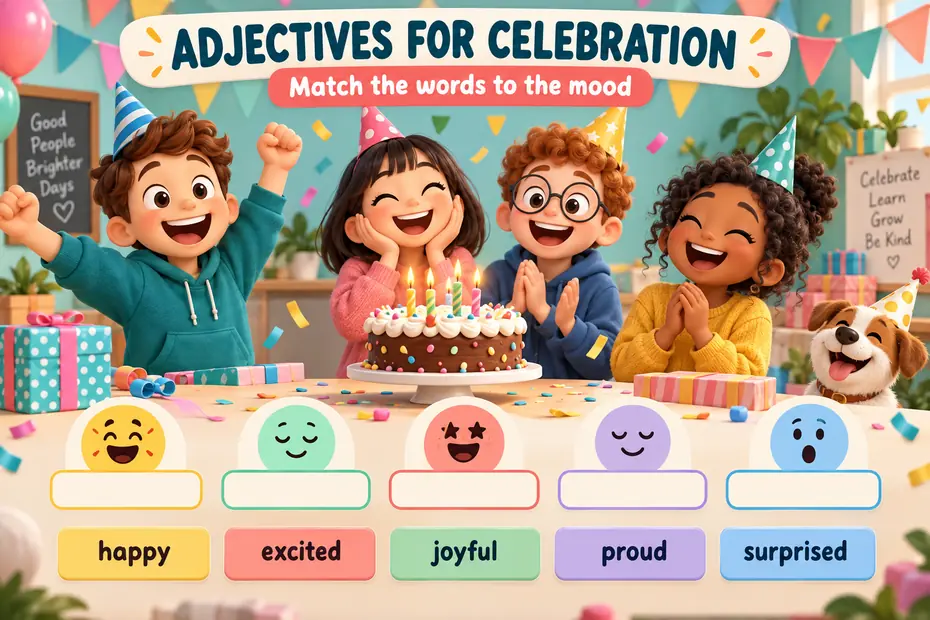
Which adjectives work for a celebration?
Adjectives for a celebration should match the event’s mood, energy, scale, and style. Joyful describes happiness, lively describes activity, festive suggests a celebratory atmosphere, and intimate describes a close gathering. A celebration can also be quiet, low-key, or bittersweet; loud excitement is not a requirement for marking something meaningful.
- Use joyful or joyous for happiness.
- Use lively or exuberant for visible energy.
- Use festive for a celebratory atmosphere or appearance.
- Use intimate, modest, or low-key for an understated gathering.
- Use formal or elegant for the event’s style rather than its size.
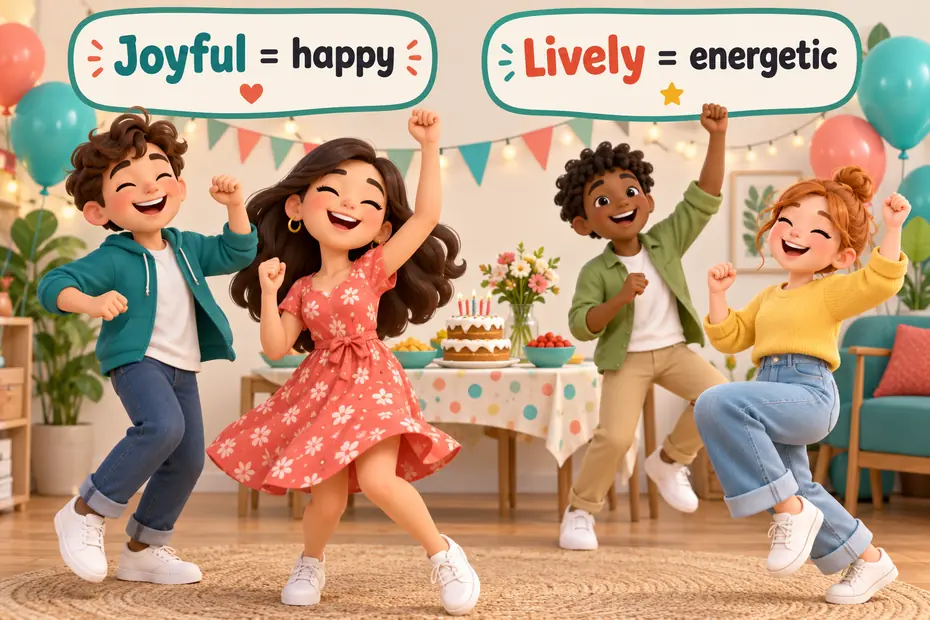
Clarification of the older vocabulary lists below: festive and joyous are adjectives describing a celebration, not synonyms for the noun celebration. Likewise, gloomy and somber describe moods rather than automatically serving as noun antonyms. An intimate or low-key event can be happy and successful. Choose words from the actual experience instead of treating every quiet gathering as disappointing.
Adjectives for celebration by meaning
Choose the aspect you want the reader to notice first. One word rarely describes the entire event, and different details may need different adjectives: colourful decorations, cheerful guests, and a moving speech.
| Aspect | Useful adjectives | Original example |
|---|---|---|
| Happiness | Joyful, joyous, cheerful, jubilant | The jubilant crowd celebrated the team’s win. |
| Energy | Lively, exuberant, spirited, energetic | The lively celebration continued with music and dancing. |
| Appearance | Festive, colourful, elegant, glittering | Festive bunting brightened the community hall. |
| Closeness | Intimate, warm, heartfelt | They held an intimate celebration with close friends. |
| Scale | Small, modest, grand, lavish | The modest celebration included homemade cake. |
| Formality | Formal, casual, relaxed | A relaxed celebration followed the ceremony. |
| Mixed emotion | Bittersweet, reflective, poignant | The farewell celebration was joyful but bittersweet. |
Grand emphasizes scale or impressiveness; lavish suggests generous spending or abundance. Neither guarantees that guests enjoyed themselves. Similarly, memorable says the event stayed in someone’s memory, but does not specify whether it was enjoyable. Pair it with a reason: “The memorable celebration ended with an unexpected reunion.”
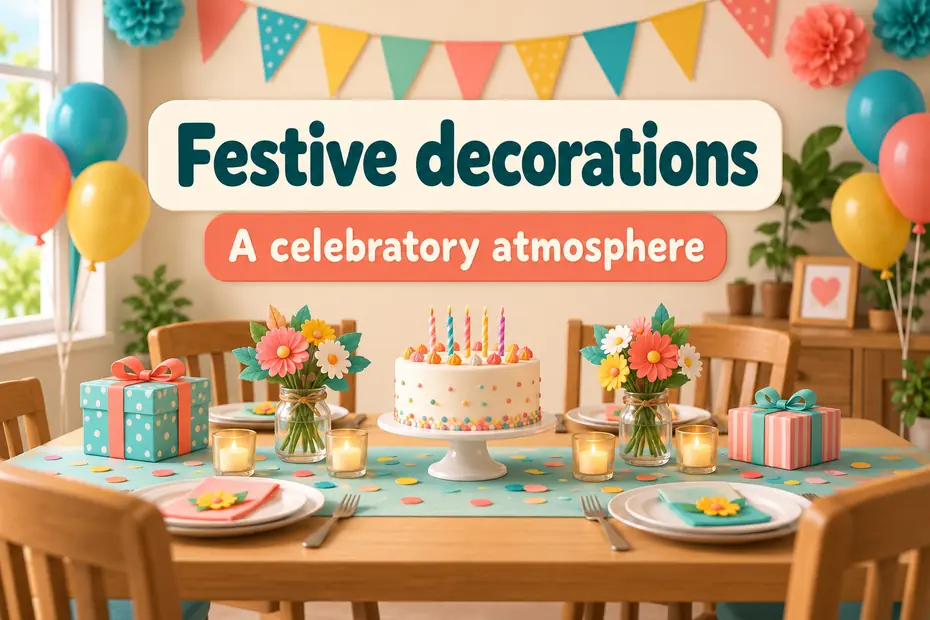
How do joyful, lively, and festive differ?
Joyful describes happiness, lively describes energy or activity, and festive connects the atmosphere with celebration. These meanings overlap, but they answer different questions. A quiet dinner can be joyful; a room full of dancing can be lively; a decorated hall can look festive before anyone arrives.
Jubilant is especially useful for happiness expressed after a success, such as winning a competition or reaching a goal. Exuberant suggests overflowing enthusiasm expressed openly. Heartfelt describes sincerity, especially in thanks, speeches, or wishes. “The heartfelt toast moved the guests” is more precise than using heartfelt for every decoration and activity.
Use the adjective on the noun it best describes. “The guests were jubilant” identifies the people’s emotion. “The decorations were festive” identifies the visual atmosphere. “The celebration was lively” describes the event’s overall activity. Making these connections keeps the scene concrete rather than turning every noun into a list of praise words.
How can you describe a quiet celebration?
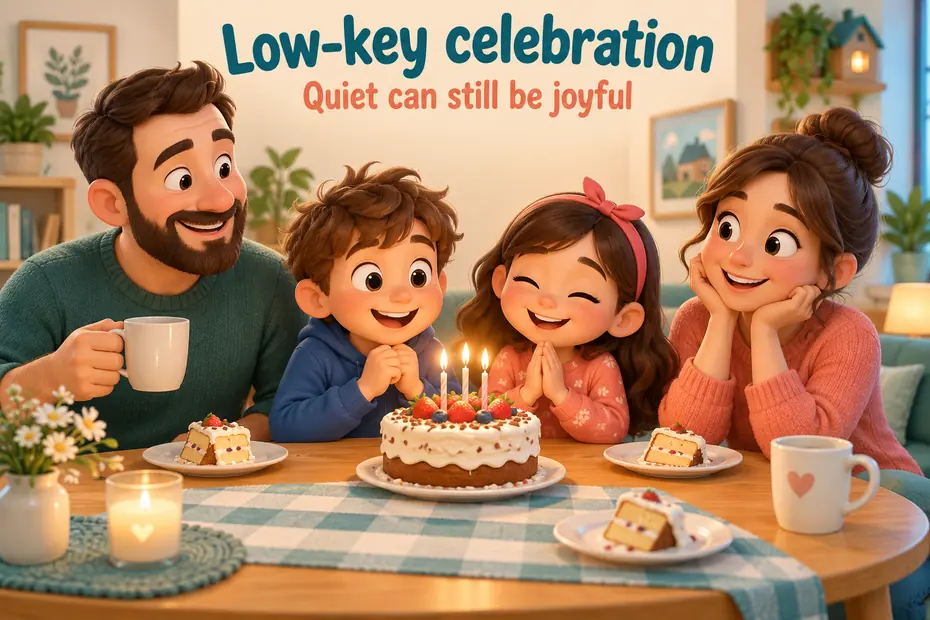
Use low-key, intimate, relaxed, modest, or understated when a celebration is deliberately restrained. Low-key suggests little fuss or attention; intimate emphasizes closeness among the people present. A large gathering may have a relaxed atmosphere, so relaxed does not necessarily mean small.
“We planned a low-key birthday celebration at home” sets expectations without criticizing the event. “Their intimate anniversary dinner included four close friends” identifies the social scale. By contrast, lacklustre means disappointing in energy or quality; use it only when that is the actual judgment you intend. Quiet and unsuccessful are separate ideas.
Original celebration sentence examples
- The joyful celebration brought three generations together.
- Children added colourful paper flowers to the festive table.
- A lively celebration followed the school performance.
- The team’s jubilant supporters cheered outside the stadium.
- The couple chose an intimate celebration in their garden.
- We enjoyed a relaxed celebration with music and shared food.
- Her heartfelt speech thanked everyone who had helped.
- The formal celebration began with a short welcome.
- A bittersweet celebration marked our teacher’s retirement.
- The lavish celebration included an elaborate dinner.
For a descriptive paragraph, select one mood word and support it with a visible detail. Instead of “The party was wonderful, amazing, and delightful,” write “The celebration was lively: guests danced between the tables while children clapped along.” The second version explains the judgment and gives the reader something to picture.
Keep cultural and personal assumptions out of the description. A celebration does not require fireworks, alcohol, dancing, or expensive decorations. Describe the particular gathering, and use a host’s invitation or firsthand information to identify expected activities. An adjective sets a tone; it does not replace practical event details such as time, location, or dress requirements.
Frequently asked questions
Are joyful and joyous interchangeable?
They overlap strongly because both describe happiness. Joyful works naturally for people, sounds, expressions, and occasions; joyous is also common with occasions and celebrations. Choose the word that sounds natural in the sentence, and avoid stacking both merely to repeat the same idea without adding another detail.
Is celebratory an adjective?
Yes. Celebratory means connected with celebrating: a celebratory meal, a celebratory speech, or a celebratory mood. Celebration is a noun naming the event or act. “They shared a celebratory meal” describes the meal’s purpose; “They held a celebration” names the event directly.
Can a celebration be bittersweet?
Yes. Bittersweet fits occasions combining happiness with sadness, such as a farewell or retirement. “The celebration was bittersweet because we were proud of her achievement but sad to see her leave” explains both sides. It does not mean the celebration failed or that participants felt exactly the same way.
What is a neutral alternative to an amazing celebration?
Use a factual descriptor such as annual, community, family, birthday, or anniversary, then add a relevant mood or scale word. “A small family celebration” identifies the gathering without promising an exceptional experience. If you use amazing, explain what impressed you rather than treating it as an objective measurement.
Sources: Cambridge Dictionary: joyous; Cambridge: festive; Cambridge: low-key; Cambridge: celebration. Examples are original.
Planning a celebration and want to make it extra special? Look no further! In this article, I’ll be sharing a variety of adjectives that will help you describe your celebration in the most vibrant and exciting way possible. From lively and exuberant to elegant and sophisticated, these adjectives will add a touch of flair to your event. So whether you’re organizing a birthday party, a wedding, or any other festive gathering, get ready to elevate your celebration with these descriptive words.
When it comes to celebrations, the right choice of adjectives can make all the difference. Imagine the atmosphere of your event being described as jubilant, where laughter and joy fill the air. Or perhaps you’re aiming for a more refined affair, with an ambiance that is elegant and enchanting. By incorporating these adjectives into your event planning, you’ll be able to create a memorable experience that perfectly captures the spirit of celebration.
How to Describe celebration? – Different Scenarios
So, you’re planning to describe a celebration. Whether it’s a birthday party, a wedding, or a holiday gathering, choosing the right words to capture the spirit of the event can make all the difference. In this section, I’ll provide you with some examples of adjectives you can use to describe different scenarios of celebration.
- Birthday Party
When describing a birthday party, it’s important to convey the excitement and joy that come with celebrating another year of someone’s life. Here are some adjectives to help you bring that energy to life:
- Vibrant: The birthday party was filled with vibrant decorations and colorful balloons.
- Lively: The lively music and energetic dancing kept the partygoers entertained all night.
- Fun-filled: The fun-filled activities, including games and a photo booth, made the birthday party memorable.
- Wedding
Weddings are often seen as a celebration of love and commitment. To describe a wedding, you’ll want to use adjectives that evoke elegance and romance:
- Exquisite: The exquisite floral arrangements and beautifully decorated venue created a dreamlike atmosphere.
- Romantic: The couple shared a romantic first dance under a canopy of twinkling lights.
- Glamorous: The bride looked stunning in her glamorous wedding gown, and the reception was held in a grand ballroom.
- Holiday Gathering
Holiday gatherings are all about celebrating traditions and spending time with loved ones. Here are some adjectives that capture the warmth and joy of these festive occasions:
- Cheerful: The cheerful laughter and jolly atmosphere filled the air during the holiday gathering.
- Festive: The festive decorations, including twinkling lights and colorful ornaments, added to the holiday spirit.
- Heartwarming: The heartwarming tradition of exchanging gifts brought smiles to everyone’s faces.
Remember, the key to describing a celebration is to choose adjectives that accurately represent the atmosphere and emotions of the event. Whether it’s a birthday party, a wedding, or a holiday gathering, using the right words can help paint a picture in the reader’s mind and make the celebration come alive.
Now that you have some examples of adjectives to use in different scenarios of celebration, it’s time to put them into practice. Let your creativity flow and choose the words that best capture the essence of the celebrations you want to describe.
Describing Words for celebration in English
When it comes to celebrating special moments, finding the right words to describe the atmosphere and emotions of the event can make all the difference. Adjectives play a crucial role in capturing the essence of a celebration and bringing it to life in the reader’s mind. In this section, I will share a variety of descriptive words that can be used to enhance your descriptions of celebrations. So let’s dive in!
Adjectives for Birthday Parties:
- Vibrant: A birthday party filled with energy, excitement, and vivid colors.
- Lively: A celebration where everyone is alive with joy, laughter, and music.
- Fun-filled: A party packed with laughter, games, and non-stop amusement.
Adjectives for Weddings:
- Exquisite: A wedding characterized by elegance, beauty, and meticulous attention to detail.
- Romantic: A celebration that exudes love, passion, and enchantment.
- Glamorous: A wedding with a touch of luxury, style, and sophistication.
- Cheerful: A festive atmosphere that radiates happiness, merriment, and joy.
- Festive: A celebration adorned with decorations, lights, and a sense of shared excitement.
- Heartwarming: An occasion that fills the heart with warmth, love, and a sense of togetherness.
As you can see, choosing the right adjectives can truly enhance the description of a celebration, allowing the reader to visualize the atmosphere and experience the emotion. Remember, it is crucial to select adjectives that accurately represent the event and reflect its unique qualities.
I hope these examples serve as a helpful guide when describing celebrations. Keep in mind the specific emotions, settings, and themes associated with each type of celebration and choose adjectives accordingly. Don’t be afraid to get creative and experiment with new descriptive words to paint a vivid picture for your readers.
Adjectives for celebration
Adjectives for Celebration
Positive Adjectives for Celebration with 12 Example Sentences
When it comes to describing celebrations, we want to capture the joy and excitement that fill the air. Here are some positive adjectives that can help us paint a vibrant picture of a festive event:
- Exhilarating: The roller coaster ride at the amusement park was exhilarating.
- Euphoric: We felt euphoric as the confetti rained down at the New Year’s Eve party.
- Delightful: The aroma of freshly baked cookies was delightful at the holiday gathering.
- Enchanting: The bride looked enchanting in her flowing white gown on her wedding day.
- Lively: The music and dancing created a lively atmosphere at the birthday party.
- Vibrant: The colorful decorations added a vibrant touch to the room.
- Blissful: We had a blissful time on the tropical island during our honeymoon.
- Thrilling: The fireworks display was thrilling, lighting up the night sky.
- Joyful: The children’s laughter filled the room, creating a joyful ambiance.
- Magical: The magician’s tricks were truly magical, mesmerizing the audience.
- Radiant: The sunset painted a radiant backdrop for the beach wedding ceremony.
- Heartwarming: The heartfelt speeches brought tears to our eyes at the retirement celebration.
Negative Adjectives for Celebration with 5 Example Sentences
While most celebrations are filled with happiness, there can be moments of disappointment or sadness. Here are some negative adjectives that may be used to describe these emotions during a celebration:
- Disappointing: The rain put a damper on our outdoor picnic celebration.
- Mournful: The memorial service was a mournful occasion as we remembered our loved ones.
- Awkward: The awkward silence filled the room after the failed surprise at the party.
- Tense: The family gathering became tense when arguments started to arise.
- Lonely: The solitary figure sitting at the corner table looked lonely at the holiday party.
Remember, adjectives are a powerful tool to bring celebrations to life. Choosing the right ones allows us to evoke emotions and create vivid descriptions that engage our readers. Let’s continue exploring the world of adjectives to enhance our storytelling and capture the essence of every celebration.
Synonyms and Antonyms with Example Sentences
Synonyms for celebration
When it comes to describing celebrations, a wide range of adjectives can be used to capture the joyful spirit and excitement of the occasion. Here are some synonyms that you can use to enhance your storytelling and make your descriptions more vibrant:
- Festive – The atmosphere was festive as everyone gathered to celebrate the holiday.
- Joyous – It was a joyous celebration filled with laughter and happiness.
- Lively – The party had a lively vibe, with music playing and people dancing.
- Jubilant – The crowd was jubilant, cheering and applauding the performers.
- Exuberant – The celebration was exuberant, with people expressing their excitement through singing and dancing.
Using these synonyms can add depth and variety to your writing, making your descriptions more engaging and capturing the essence of a joyous celebration.
Antonyms for celebration
In contrast to the positive moments of a celebration, there are also times when the mood might not be as joyful. Here are some antonyms that can be used to describe moments of disappointment or sadness during a celebration:
- Somber – The mood turned somber when they realized their plans had fallen through.
- Disheartening – It was disheartening to see the rain ruin the outdoor celebration.
- Gloomy – The atmosphere felt gloomy as everyone tried to keep up their spirits despite the setback.
- Lackluster – The performance was lackluster, failing to bring the expected excitement to the celebration.
- Dismal – The overall experience was dismal, leaving everyone feeling unsatisfied.
Using these antonyms can help you create a more well-rounded and realistic portrayal of a celebration, emphasizing that not every moment is full of joy and highlighting the range of emotions that can be experienced during such events.
Conclusion
Using adjectives to describe and enhance celebrations is essential in capturing the true essence of joyous occasions. Throughout this article, we have explored a variety of positive adjectives that can be used to paint a vivid picture of the atmosphere, emotions, and specific moments during a celebration. We have also touched upon negative adjectives that can be employed to describe moments of disappointment or sadness, adding depth to our descriptions.
Additionally, we have introduced synonyms and antonyms for the word “celebration” and provided example sentences for each. By incorporating these alternatives, we can further enrich our writing and create more engaging descriptions.
Adjectives play a crucial role in bringing celebrations to life on paper. They allow us to convey the energy, excitement, and emotions experienced during these special moments. So, whether you are writing a story, a poem, or simply sharing your experiences, don’t hesitate to utilize the power of adjectives to make your descriptions more vibrant and captivating.


