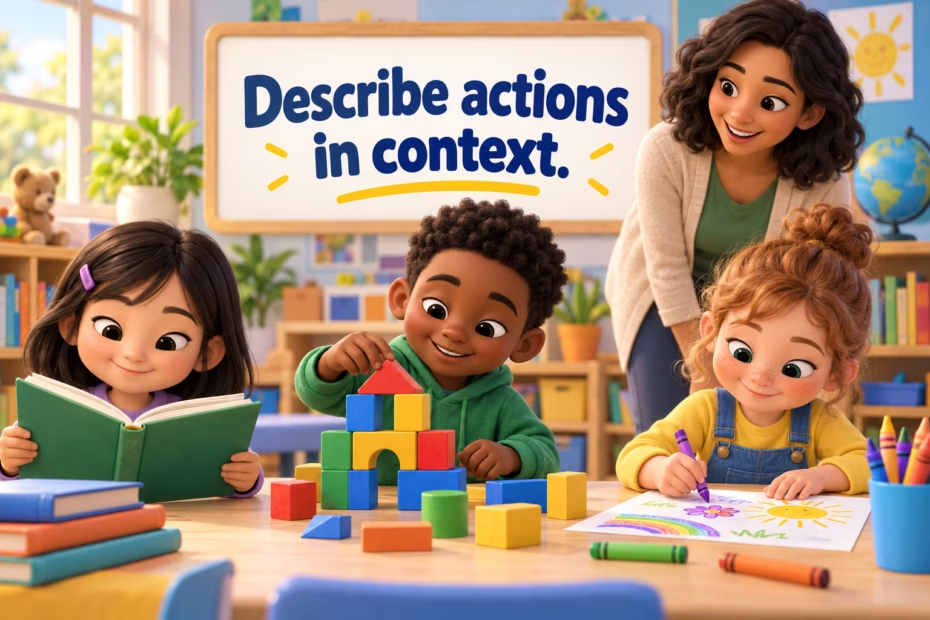
Adjectives for children can describe appearance, actions, feelings, interests, or strengths. For fair and useful descriptions, choose words that fit the situation and explain what you observed; a moment of behavior does not define a child’s whole identity.
- Use observable details such as “asked three questions” before broad judgments such as “curious.”
- Describe a strength in context: “kept trying a new puzzle” is more specific than “brilliant.”
- Children differ in temperament, communication, interests, and pace of development.
- When discussing development, an adjective is not a screening tool or diagnosis.
How to Describe Children? – Different Scenarios
When it comes to describing children, there are various scenarios that we encounter. As a preschool teacher, it is important to have a wide range of adjectives at our disposal to accurately describe children in different situations. In this section, I will provide you with some tips and examples on how to effectively describe children in various scenarios.
1. Describing a child’s appearance:
When describing a child’s appearance, it’s important to use words that are positive and age-appropriate. Here are some adjectives that can be used to describe a child’s appearance:
- Adorable: The child has a charming and lovable appearance.
- Cute: The child has a pleasant and endearing look.
- Energetic: The child has a lively and active appearance.
- Bright-eyed: The child has alert and lively eyes.
- Rosy-cheeked: The child has flushed and healthy-looking cheeks.
2. Describing a child’s behavior:
When describing a child’s behavior, it’s important to be specific and descriptive. Here are some adjectives that can be used to describe a child’s behavior:
- Curious: The child is eager to learn and explore.
- Polite: The child is well-mannered and respectful.
- Playful: The child enjoys engaging in imaginative and lively activities.
- Helpful: The child is willing to assist and support others.
- Independent: The child is self-reliant and capable of doing tasks on their own.
3. Describing a child’s personality:
When describing a child’s personality, it’s important to highlight their unique traits and characteristics. Here are some adjectives that can be used to describe a child’s personality:
- Kind: The child is caring and considerate towards others.
- Creative: The child has a vivid imagination and enjoys expressing themselves artistically.
- Confident: The child believes in their abilities and is self-assured.
- Curious: The child has a strong desire to learn and discover new things.
- Friendly: The child is sociable and enjoys making friends.
Describing Words for Children in English
When it comes to describing children in English, it’s important to choose words that are positive, age-appropriate, and reflect their unique qualities. In this section, I will provide you with a variety of adjectives that can be used to describe children in different scenarios. Whether you’re a preschool teacher introducing new words or a parent looking to expand your child’s vocabulary, these descriptive words for children will come in handy.
Appearance:
- Cute: Children often have adorable features that make them irresistibly cute.
- Energetic: Their appearance can exude a vibrant and lively energy.
- Expressive: Their faces may be full of expressions, conveying a range of emotions.
- Bright-eyed: Their eyes are often bright and filled with curiosity.
- Smiley: Children have the ability to light up a room with their infectious smiles.
Behavior:
- Playful: Children love to engage in fun and imaginative play.
- Helpful: They often seek opportunities to lend a hand and be of assistance.
- Curious: Children have a natural curiosity that drives them to explore and learn.
- Cooperative: They show a willingness to work together and get along with others.
- Enthusiastic: Children approach activities and experiences with enthusiasm and excitement.
Personality:
- Creative: Children have vivid imaginations and a knack for expressing themselves artistically.
- Kind: They display empathy and compassion towards others.
- Inquisitive: Children ask many questions and have a desire to understand the world around them.
- Resilient: They demonstrate the ability to bounce back from setbacks and adapt to new situations.
- Confident: Children can be self-assured and believe in their own abilities.
Remember, when describing children, it’s essential to choose words that uplift and inspire. By using positive and age-appropriate language, we can encourage their self-esteem and promote their overall well-being.
Adjectives for Children
As a preschool teacher, I know how important it is to teach children a wide range of vocabulary, including descriptive adjectives. Using adjectives to describe children can help them develop a strong sense of self and expand their understanding of the world around them. In this section, I will provide you with a list of positive adjectives for children, followed by some examples of negative adjectives. Let’s dive in!
Positive Adjectives for Children with 12 Example Sentences
It’s essential to use positive adjectives when describing children, as it helps to build their self-esteem and encourages them to embrace their unique qualities. Here are twelve positive adjectives that you can use to describe children:
| Adjective | Definition | Example Sentence |
|---|---|---|
| Creative | Having the ability to think outside the box | My child is creative and loves to draw imaginative pictures. |
| Confident | Feeling sure of oneself | I am proud to see my student stand up and speak confidently. |
| Energetic | Full of energy and enthusiasm | The children in my class are always energetic and eager to learn. |
| Funny | Humorous and able to make others laugh | He can be funny at times, always making his classmates giggle. |
| Helpful | Willing to assist others | She is always helpful, lending a hand to her friends when they need it. |
| Playful | Enjoying playtime and having fun | They love being playful, often engaging in imaginative games together. |
| Kind | Showing a friendly and caring nature | My student is kind and compassionate towards others. |
| Curious | Eager to learn and explore | The children in my class are curious and ask thought-provoking questions. |
| Brave | Showing courage in the face of challenges | He is brave and never backs down from trying new things. |
| Loving | Expressing affection and care | She has a loving nature and always shares hugs with her friends. |
| Polite | Displaying good manners and respect | They are polite and always say “please” and “thank you.” |
| Intelligent | Possessing the ability to think and understand complex ideas | My child is intelligent and quickly grasps new concepts. |
Remember, when using these adjectives, make sure to tailor them to the child you are describing and provide specific examples to illustrate their qualities.
Negative Adjectives for Children with 5 Example Sentences
While it’s important to focus on positive adjectives, it’s also necessary to be aware of negative adjectives and the impact they can have on a child’s self-esteem. Here are five negative adjectives to be cautious of:
- Disobedient: Not following rules or instructions.
- Lazy: Unwilling to work or make an effort.
- Impatient: Not able to wait calmly.
- Moody: Having unpredictable and often changing moods.
- Stubborn: Unwilling to change or compromise.
As educators, we should strive to guide and support children, emphasizing their strengths while gently addressing any challenging behaviors they may exhibit. Using positive language and focusing on growth and development can make a significant difference in a child’s self-perception and overall well-being.
I hope this section has provided you with useful adjectives to describe children in a positive and meaningful way. Remember, the words we use to describe children can shape their perception of themselves and influence their future success.
Synonyms and Antonyms with Example Sentences
When it comes to describing children, it’s important to use age-appropriate and positive language that uplifts and inspires them. Describing children in a positive and affirming way can have a significant impact on their self-esteem and overall well-being. In this section, I will provide you with a list of adjectives that can be used to describe children, along with examples in sentences.
Synonyms for Children
When describing children, you can use a variety of adjectives to capture their different characteristics. Here are some synonyms that can be used to describe children in various scenarios:
| Adjective | Definition | Example Sentence |
|---|---|---|
| Energetic | Full of energy and enthusiasm | The children in the playground were energetic. |
| Playful | Lively and full of fun | The kids played together in a playful manner. |
| Curious | Inquisitive and eager to learn | The child’s curious nature made them ask many questions. |
| Imaginative | Creative and full of imaginative ideas | The little girl had an imaginative playtime with her toys. |
| Kind | Showing concern and consideration for others | The child was always kind and helpful to their friends. |
Antonyms for Children
To provide a balanced perspective, let’s also look at some antonyms ‚Äì adjectives that describe the opposite of certain characteristics in children. While it’s important to focus on positive attributes, it can also be helpful to recognize contrasting feelings or behaviors. Here are some antonyms that can be used to describe children:
| Adjective | Definition | Example Sentence |
|---|---|---|
| Shy | Timid or hesitant in social settings | The child was shy and preferred to play alone. |
| Quiet | Soft-spoken or making little noise | The baby was quiet during the nap time. |
| Serious | Showing maturity and solemn behavior | The young boy had a serious expression on his face. |
| Cautious | Careful and hesitant | The child was cautious when trying a new activity. |
| Inattentive | Not paying attention or easily distracted | The student was inattentive during class. |
Remember, as educators and caregivers, it’s important to focus on a child’s strengths and abilities while using descriptive adjectives. By shaping their perception of themselves through positive language, we can greatly influence their future success.
Now that you have a list of adjectives to describe children and examples of how to use them in sentences, you can enhance your teaching strategies and help children develop a wider range of vocabulary. Using the right adjectives will not only improve their language skills but also boost their confidence and self-esteem.
Continue reading to discover more tips and examples on effectively describing children in various scenarios without using a conclusion paragraph.
Conclusion
Describing children can be a powerful way to shape their perception of themselves and influence their future success. In this article, I have provided tips and examples on how to effectively describe children in various scenarios. We have explored adjectives for describing a child’s appearance, behavior, and personality, emphasizing the importance of using positive and age-appropriate language.
By using adjectives such as energetic, playful, curious, imaginative, and kind, we can highlight the unique qualities and strengths of children. Conversely, we can also consider antonyms like shy, quiet, serious, cautious, and inattentive to provide a balanced perspective.
As educators, it is our responsibility to guide and support children, focusing on their strengths and using positive language. By doing so, we can help shape their self-perception and foster a sense of confidence and self-worth. Remember, the words we choose to describe children have a profound impact on their development and future success.
So, let’s continue to use descriptive adjectives thoughtfully and purposefully, creating a positive and empowering environment for children to thrive.
The lists above are vocabulary examples, not fixed descriptions or developmental assessments. Words such as “shy,” “active,” or “stubborn” do not explain why a child acted a certain way or predict how they will act in every setting. When giving feedback, name what happened and when; use an adjective only as a tentative summary of that observation. Appearance alone cannot establish a child’s health, ability, or personality. For development concerns, discuss specific observations over time with the child’s health care provider.
How can you describe a child without turning a moment into a label?
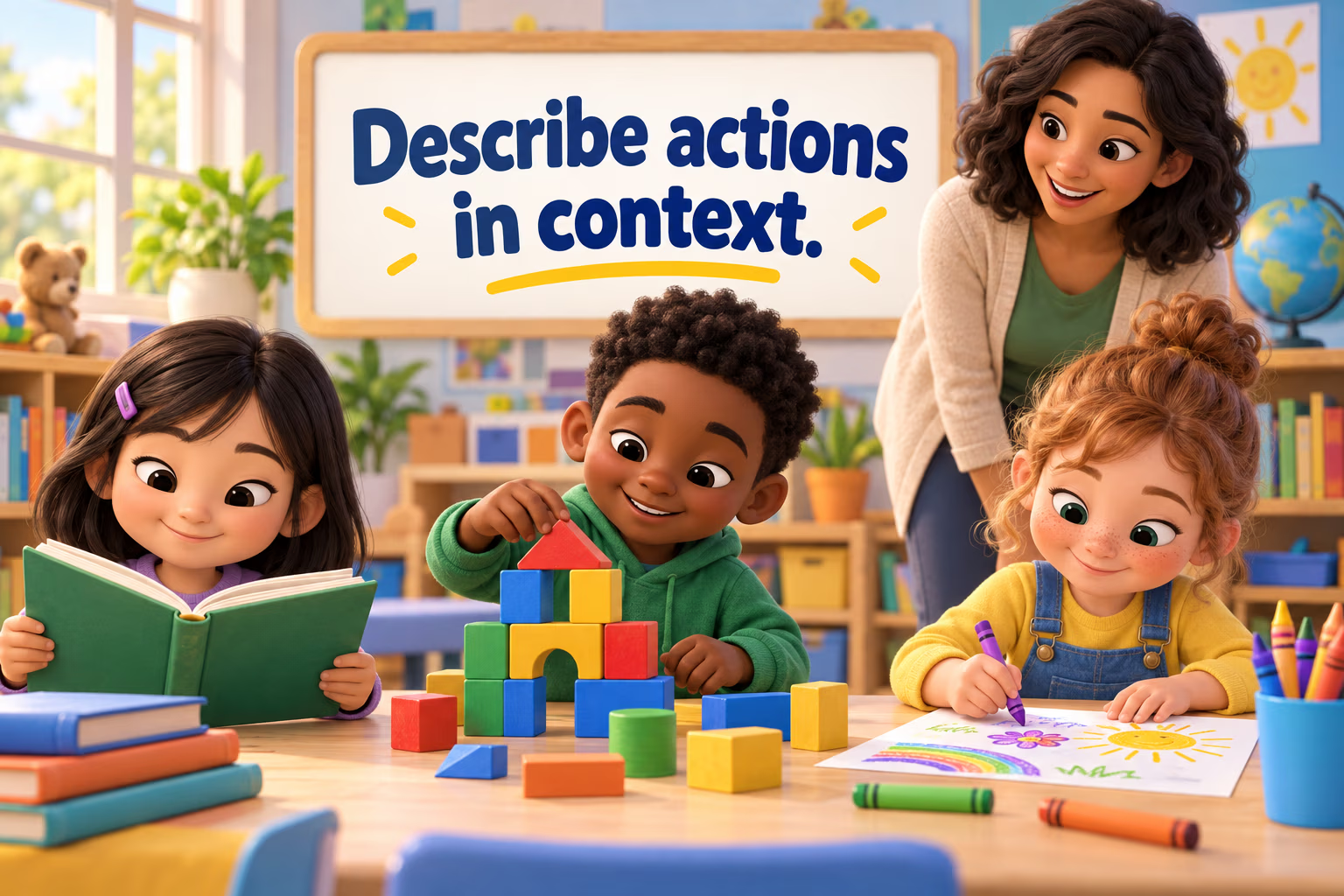
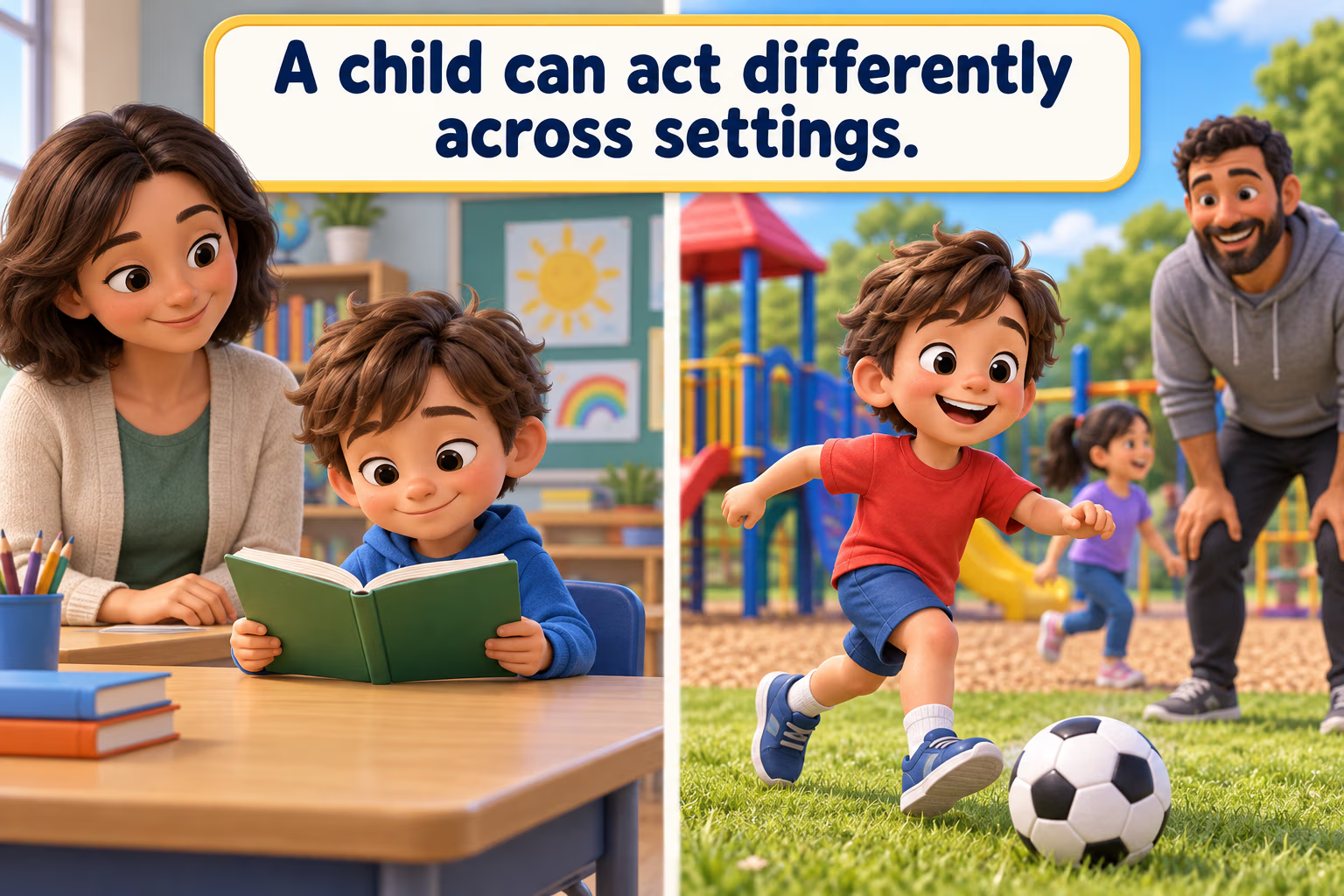
Describe the action, setting, and support you saw before summarizing it with an adjective. “Maya waited while two classmates chose materials, then offered them the blue paper” gives more useful evidence for patient or considerate than “Maya is always patient.” A child can act differently across settings and days.
Use a simple sequence: name the observable action, add its context, and choose a word only if it adds meaning. For example, “During cleanup, Leo sorted the blocks by color without a reminder” supports “organized” in that moment. Avoid “always” and “never,” which turn a brief observation into a claim about the child’s entire character.
Which adjectives are useful for different kinds of observations?
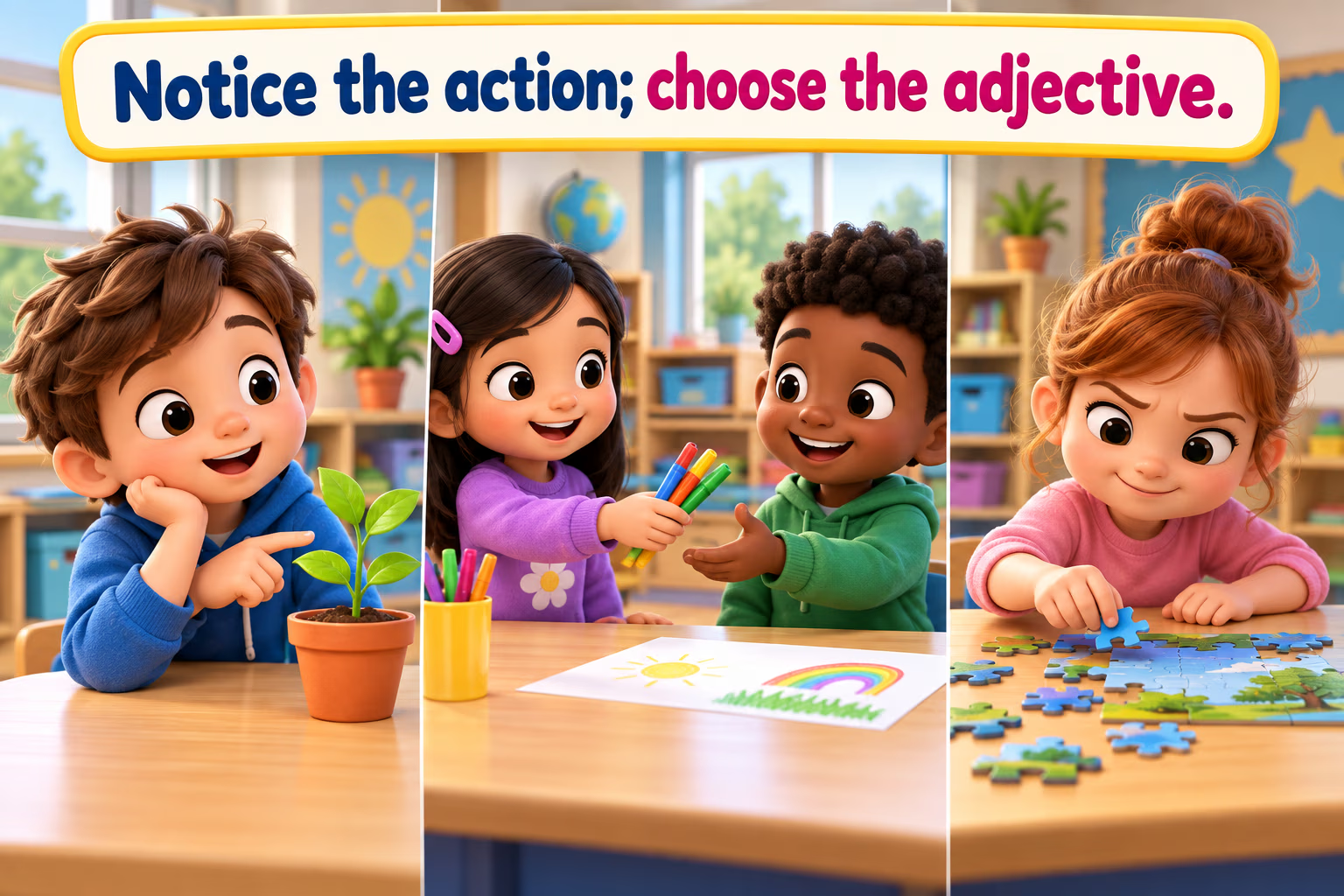
| What you noticed | Possible adjective | Specific wording |
|---|---|---|
| Returns to a challenging task | Persistent | “You tried a different way to fit the pieces.” |
| Asks questions while exploring | Curious, inquisitive | “You asked how the seed gets water.” |
| Offers materials to a peer | Generous, considerate | “You offered Sam another marker.” |
| Shares an original idea in play | Imaginative, creative | “You made the blocks into a train station.” |
| Tries a familiar task independently | Independent, resourceful | “You opened the lunch container after trying its tab.” |
These are examples, not fixed classifications. Match the adjective to evidence, and ask what the child intended when the situation is unclear. The American Academy of Pediatrics describes temperament through dimensions such as activity level and approach to new situations; these patterns help explain differences, but no shorthand captures a whole child.
How should adults choose words for feedback?
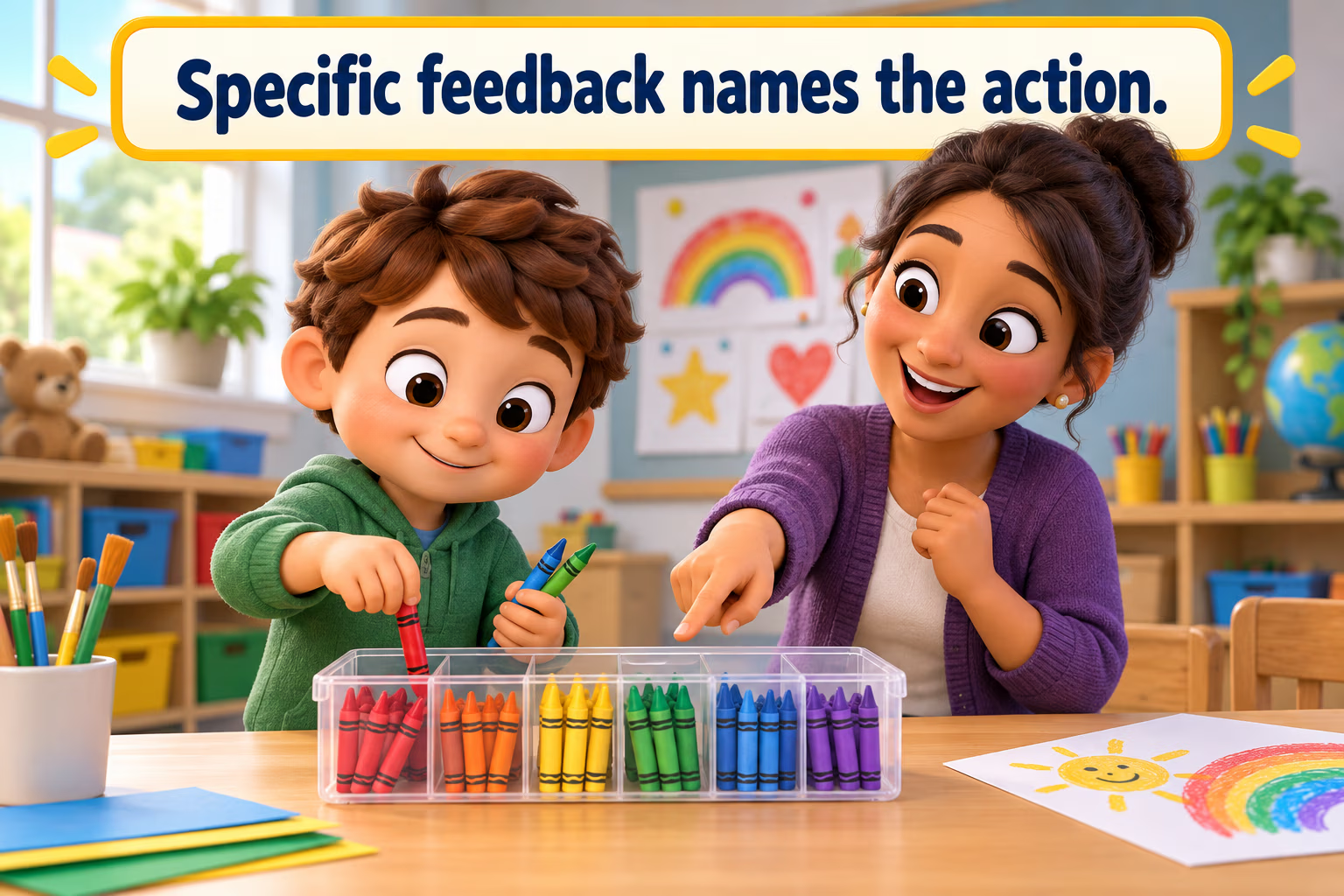
Specific feedback tells a child which action an adult noticed and makes the description easier to understand. The American Academy of Pediatrics recommends describing a young child’s behavior and praising real effort; its example names the blocks a child is stacking. In a classroom conflict, NAEYC recommends briefly stating the behavior and helping the child identify feelings before explaining its implications and guiding the child toward an alternative.
- Say what happened: “You put the crayons back in the box.”
- Name a relevant quality: “That was helpful; your table group can find them next time.”
- Describe difficulty without defining the child: “You shouted when the game ended; let’s find a way to say you’re upset.”
- Make room for the child’s view: ask whether “proud,” “frustrated,” or another feeling fits.
For babies and young children, responsive back-and-forth interaction supports early communication and social skills. Harvard’s Center on the Developing Child describes “serve and return”: adults notice a child’s sounds, gestures, focus, or feelings and respond in a connected way. Naming what a young child sees or does can also support language learning.
When should a description lead to a development question?
Words such as “quiet,” “active,” or “cautious” describe impressions; they do not show whether a child is meeting a milestone or needs support. The CDC says developmental monitoring involves observing how a child grows and changes over time in play, learning, speech, behavior, and movement. If you have a concern, share concrete examples with the child’s health care provider rather than relying on a label or a single comparison.
Frequently asked questions about adjectives for children
What is a positive adjective for a child?
Useful choices include curious, thoughtful, playful, persistent, and resourceful, when the word matches an observed example. “You kept testing different ways to build the bridge” gives a reason for calling a child persistent and avoids implying that one adjective describes every situation.
How can I describe a child’s behavior objectively?
State what the child did, when it happened, and any relevant context: “During story time, Noor listened, then asked why the character left.” This is more objective than “Noor is a good listener” because another adult can understand the specific action without treating it as a permanent trait.
Should adults call a child shy or difficult?
Prefer the behavior and setting: “She watched the group before joining” or “He found cleanup hard after outdoor play.” Broad labels can leave out what changed, what the child was communicating, and what support helped. If a pattern worries you, discuss repeated observations with a trusted professional.
Do adjectives show whether a child is developing typically?
No. Adjectives are descriptive words, not developmental assessments. The CDC’s milestone resources help families and providers monitor development over time; a health care provider can discuss screening when a parent, caregiver, or teacher has a concern.