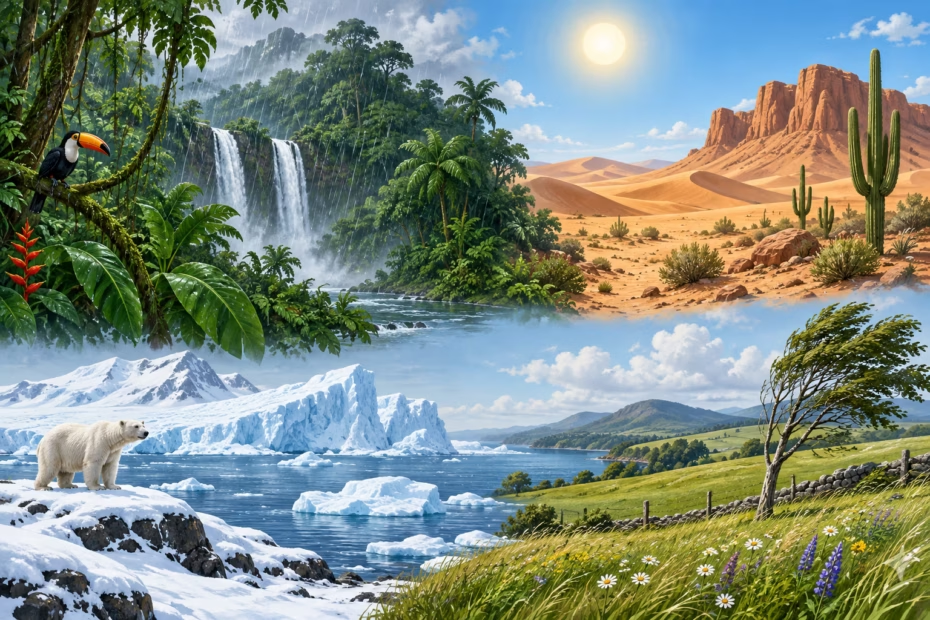
Climate adjectives by pattern
Climate adjectives describe usual conditions over time, such as temperature, moisture, and seasonal pattern. Choose words that name the feature you mean: arid describes little precipitation, humid describes moisture in the air, and temperate suggests moderate conditions. A place can fit more than one description.
| Adjective | What it describes | Example |
|---|---|---|
| arid | Very little precipitation | The arid region receives little rain in a typical year. |
| humid | Moisture in the air; often used for persistently moist conditions | The humid coastal climate feels damp through much of summer. |
| dry | Low precipitation or moisture, depending on context | A dry climate supports drought-tolerant plants. |
| maritime | Strongly influenced by the nearby ocean | The maritime climate has relatively moderated temperatures. |
| continental | Farther from the ocean’s moderating influence, often with larger seasonal temperature ranges | The continental climate has warm summers and cold winters. |
| seasonal | Conditions that change distinctly through the year | Its seasonal climate brings wet summers and drier winters. |
| mild | Relatively moderate temperatures | Mild winters are typical, although occasional cold snaps occur. |
| variable | Noticeable differences across seasons or years | The variable climate makes long-term averages useful context. |
| tropical | A broad warm-region climate category; rainfall patterns vary | The tropical climate has a distinct wet season. |
| polar | Very cold conditions across the year | Polar climates have long, cold winters. |

Choose words that describe a climate accurately
Climate is the long-term pattern of weather for a place; weather is what happens at a particular time. NOAA explains that climate descriptions draw on long-term records of temperature, precipitation, humidity, sunshine, and wind, and that climate normals often summarize 30-year periods (NOAA National Centers for Environmental Information; NOAA Climate.gov). So a single storm can be stormy weather, while rainy or wet describes a climate only when it reflects a usual pattern.
For precise descriptions, name the feature and add a place or season: “a dry summer climate,” “a humid coastal climate,” or “a mild maritime climate.” Avoid treating impressions such as pleasant, brutal, or beautiful as measurements; they express a viewpoint. Also avoid implying that all tropical places are rainy year-round or all deserts are hot: climate varies by location and season.
Climate and weather words are not interchangeable
Words such as sunny, stormy, chilly, and blistering often describe a day’s weather or a short spell. They can describe a climate when qualified as a recurring or typical pattern, such as “frequently sunny” or “a climate with chilly winters.” Use humid for moisture in the air, wet for frequent or abundant precipitation, and windy for a recurring wind pattern; they refer to related but different features.

Are there antonyms for climate?
Season, environment, habitat, and landscape are related terms, not antonyms of climate. To express a contrast, name an opposite quality: arid and humid can contrast moisture levels; mild and harsh can contrast a writer’s evaluation; warm and cold contrast temperature. These pairs are context-dependent rather than exact opposites in every use.
Frequently asked questions
What are good adjectives to describe climate?
Useful choices include arid, humid, dry, maritime, continental, seasonal, mild, variable, tropical, and polar. Select a word that matches the feature you want to describe.
Is “hot” a climate adjective?
It can describe usual high temperatures, but by itself it may refer to today’s weather. For clarity, say “a hot climate” or identify the season or region.
What is the difference between a humid and a wet climate?
Humid describes moisture in the air. Wet usually describes frequent or abundant precipitation. A place may be humid without having heavy rain every day.
Can climate be described as pleasant?
Yes, in opinion-based writing. For an objective description, specify measurable patterns such as mild winters, low rainfall, or frequent sunshine.
Are “weather” and “climate” synonyms?
They are related but not interchangeable: weather is short-term atmospheric conditions, while climate describes long-term patterns.
Sources: NOAA NCEI, “What’s the Difference Between Weather and Climate?”; NOAA Climate.gov, “What’s the Difference between Climate and Weather?”; NOAA U.S. Climate Normals.
Original adjective examples and lists

When it comes to describing the climate, words have the power to paint a vivid picture. From scorching summers to icy winters, the right adjectives can capture the essence of a particular climate and transport you to a different world. In this article, I’ll be exploring a range of adjectives that can be used to describe various types of climates. Whether you’re a writer looking to add depth to your descriptions or simply someone fascinated by the intricacies of weather, this guide will provide you with a plethora of descriptive words to enhance your understanding and storytelling. So let’s dive in and discover the colorful world of adjectives for climate!
How to Describe climate? – Different Scenarios
When it comes to describing climate, choosing the right adjectives is key to painting a vivid and accurate picture. Whether you want to transport your readers to a tropical paradise or convey the harshness of a winter storm, using descriptive words can enhance understanding and storytelling about climate. In this section, I’ll provide you with examples of adjectives to describe different climate scenarios.
- Tropical Climate
- Arctic Climate
- Mediterranean Climate
- Desert Climate
- Temperate Climate
By using these adjectives, you can effectively describe different climate scenarios and engage your readers. Remember to choose your words wisely, keeping in mind the characteristics and unique features of each climate. So, whether you’re writing a story, teaching a lesson, or simply wanting to enhance your descriptions, these adjectives will help bring the world of climate to life.
Describing Words for climate in English
When it comes to describing different climates, choosing the right adjectives can make all the difference. It’s important to use words that accurately paint a vivid picture and engage your audience. In this section, I’ll provide you with a list of descriptive adjectives for various climate scenarios, along with examples to help you understand how to use them effectively.
1. Tropical Climate
A tropical climate is characterized by high temperatures and abundant rainfall throughout the year. Here are some adjectives you can use to describe this type of climate:
- Hot and humid
- Steamy
- Lush
- Rainforest-like
- Exotic
- Vibrant
Example: “In the tropical rainforest, it’s hot and humid all year round, with lush greenery and vibrant wildlife.”
2. Arctic Climate
The arctic climate is known for its extremely cold temperatures and icy conditions. Here are some words to describe this type of climate:
- Freezing
- Frosty
- Harsh
- Snowy
- Glacial
- Polar
Example: “The arctic climate is freezing cold, with snow-covered landscapes and polar bears roaming in search of food.”
3. Mediterranean Climate
The Mediterranean climate is characterized by hot, dry summers and mild, wet winters. Here are some adjectives that capture the essence of this climate:
- Sunny
- Warm
- Dry
- Mediterranean
- Coastal
- Temperate
Example: “The Mediterranean climate boasts long, sunny days, warm temperatures, and dry summers perfect for relaxing on the coastal beaches.”
4. Desert Climate
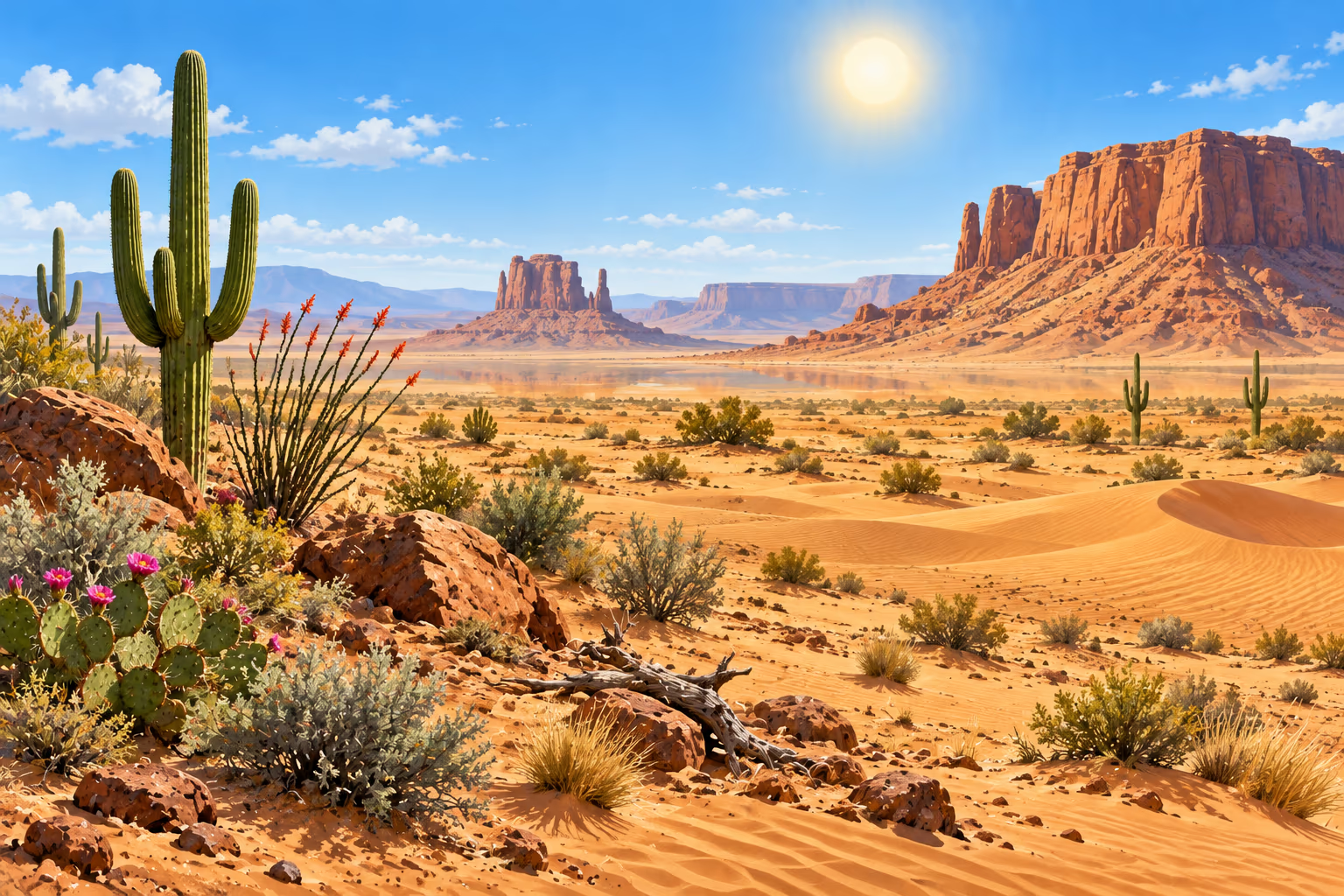
Deserts are known for their extreme heat and lack of rainfall. Here are some words to describe this harsh climate:
- Arid
- Barren
- Sweltering
- Dusty
- Sahara-like
- Brutal
Example: “The desert climate is arid and barren, with sweltering heat and swirling dust storms creating a brutal environment for survival.”
5. Temperate Climate
A temperate climate is characterized by moderate temperatures and distinct seasons. Here are some adjectives that capture the essence of this climate:
- Mild
- Pleasant
- Four-seasons
- Balmy
- Comfortable
- Versatile
Example: “In a temperate climate, you can expect mild and pleasant weather with distinct seasons, making it a versatile environment for outdoor activities.”
Adjectives for climate
Positive Adjectives for Climate with 12 Example Sentences
When it comes to describing climate, there are many positive adjectives that can paint a vivid picture for your audience. Here are twelve examples of positive adjectives you can use:
| Adjective | Example Sentence |
|---|---|
| Sunny | Today is a sunny day, perfect for outdoor activities. |
| Breezy | The breezy weather makes it pleasant to be outside. |
| Gentle | The gentle breeze rustled through the leaves. |
| Invigorating | The invigorating air fills me with energy and freshness. |
| Refreshing | A dip in the refreshing lake is just what I needed. |
| Balmy | The balmy evenings are ideal for a leisurely stroll. |
| Serene | The serene atmosphere of the beach is so relaxing. |
| Idyllic | The idyllic countryside offers a peaceful escape from the city. |
| Enchanting | The enchanting aroma of flowers fills the air. |
| Pleasant | It’s such a pleasant climate for spending time outdoors. |
| Mild | The mild temperatures make it comfortable to be outside. |
| Picturesque | The picturesque landscape is a delight to the eyes. |
Negative Adjectives for Climate with 5 Example Sentences
While we cherish the beauty of different climates, there are also negative adjectives that can be used to describe them. Here are five examples of negative adjectives for climate:
| Adjective | Example Sentence |
|---|---|
| Stormy | The stormy weather prevented us from going out. |
| Chilly | The chilly wind sends shivers down my spine. |
| Humid | The humid air makes it hard to breathe. |
| Blistering | The blistering heat is unbearable. |
| Freezing | The freezing temperatures made me shiver. |
These adjectives provide a range of descriptions that can enhance your writing when discussing climate. Whether you want to convey the beauty of a sunny day or the challenges of harsh weather, using the right adjectives can bring your descriptions to life.
Synonyms and Antonyms with Example Sentences
Synonyms for Climate
Synonyms and Antonyms with Example Sentences
When it comes to describing climate, choosing the right words can make a significant difference in how vividly you paint a picture for your readers. Here are some synonyms for climate that you can use to add variety and depth to your writing:
| Synonym | Definition |
|---|---|
| Weather | The state of the atmosphere at a specific time and place |
| Conditions | The prevailing weather patterns and elements in a particular area |
| Atmosphere | The composite of gases surrounding the Earth, including the weather conditions |
| Temperature | The measure of heat or cold in a place |
- The weather in California is generally warm and sunny.
- Extreme conditions such as heatwaves or blizzards can have a significant impact on people’s lives.
- The tropical atmosphere in the Caribbean is perfect for a beach vacation.
- In the desert, the temperature can reach scorching levels during the day.
Antonyms for Climate
To provide a comprehensive picture of climate, it’s essential to be aware of antonyms – words that convey the opposite meaning. Here are some antonyms for climate:
| Antonym | Definition |
|---|---|
| Season | A division of the year marked by changes in weather, ecology, and hours of daylight |
| Environment | The total surroundings, including living and non-living elements, that influence an organism |
| Habitat | The natural environment in which an organism lives |
| Landscape | The visible features of an area of land, often influenced by climate |
- Winter is a cold season marked by low temperatures and snowfall.
- The coastal environment is characterized by its proximity to the ocean, with salty air and coastal winds.
- Polar bears are well-adapted to their icy habitat in the Arctic.
- The arid landscape of the desert is characterized by sand dunes and minimal vegetation.
By incorporating these synonyms and antonyms for climate into your writing, you can create a more engaging and dynamic description of different weather conditions and environments. Remember, the right choice of words can truly bring your climate descriptions to life, whether you’re writing for a kindergarten audience or beyond.
Conclusion
Choosing the right adjectives to describe different climates is crucial in creating engaging and dynamic descriptions. Throughout this article, we have explored a variety of synonyms and antonyms for climate, providing example sentences for each. These synonyms, such as weather, conditions, atmosphere, and temperature, allow us to paint a vivid picture of the environment we are describing. On the other hand, antonyms like season, environment, habitat, and landscape offer contrasting perspectives that can add depth to our writing.
By incorporating these adjectives into our descriptions, we can capture the essence of different weather conditions and environments. Whether we are describing a scorching desert or a serene mountain range, the right choice of adjectives can transport our readers to these places, allowing them to experience the climate firsthand.
Remember, the power of words lies in their ability to evoke emotions and create imagery. So, next time you are writing about climate, explore the vast array of adjectives available to you and watch your descriptions come to life.


