Adjectives for Creation: Words for Process & Result
Adjectives for creation describe either the act of making something or the work produced. A process can be collaborative, deliberate, or experimental, while a finished creation can be original, intricate, or evocative. Choosing the right group makes descriptions clearer for art, music, writing, design, or invention.
Key facts at a glance
- Creation can mean the act of making something or the thing that was made.
- Creative describes an imaginative person, process, or approach.
- Created describes something brought into existence; it does not automatically mean original or inventive.
- Innovative suggests a new idea, method, or approach rather than merely a recent result.
- Specific adjectives such as intricate or collaborative explain what makes the work or process distinctive.
What does “creation” mean as a noun?
“Creation” can name the act of making or producing, and it can name the thing made. Merriam-Webster lists both senses, including “the act of making, inventing, or producing” and an original work of art. Adjectives should match which sense the sentence intends.
Compare “the collaborative creation of the mural,” which describes how it was made, with “the intricate creation on the wall,” which describes the result. That distinction prevents a description of the process from being mistaken for a judgment about the finished work.
Adjectives for the process of creating
Use process adjectives to describe how the work came together. Collaborative highlights multiple contributors, iterative points to repeated rounds of revision, and spontaneous suggests an unplanned beginning.
| Adjective | What it emphasizes | Example |
|---|---|---|
| collaborative | Work shared by contributors | The collaborative creation brought illustrators and students together. |
| deliberate | Planned decisions and careful intent | A deliberate process shaped the clear layout. |
| iterative | Repeated testing and revision | The iterative creation changed after each user test. |
| spontaneous | Unplanned, immediate making | A spontaneous sketch became the starting point for a larger project. |
| experimental | Trying unfamiliar methods or materials | The experimental process combined ink, paper, and digital collage. |
| meticulous | Careful attention to small decisions | Meticulous craftsmanship shows in the fine stitching. |
Adjectives for a finished creation
Describe a finished work by the qualities readers can observe. Original highlights distinctive ideas, intricate points to fine detail, evocative describes the associations or emotions it brings to mind, and balanced describes an arranged composition.
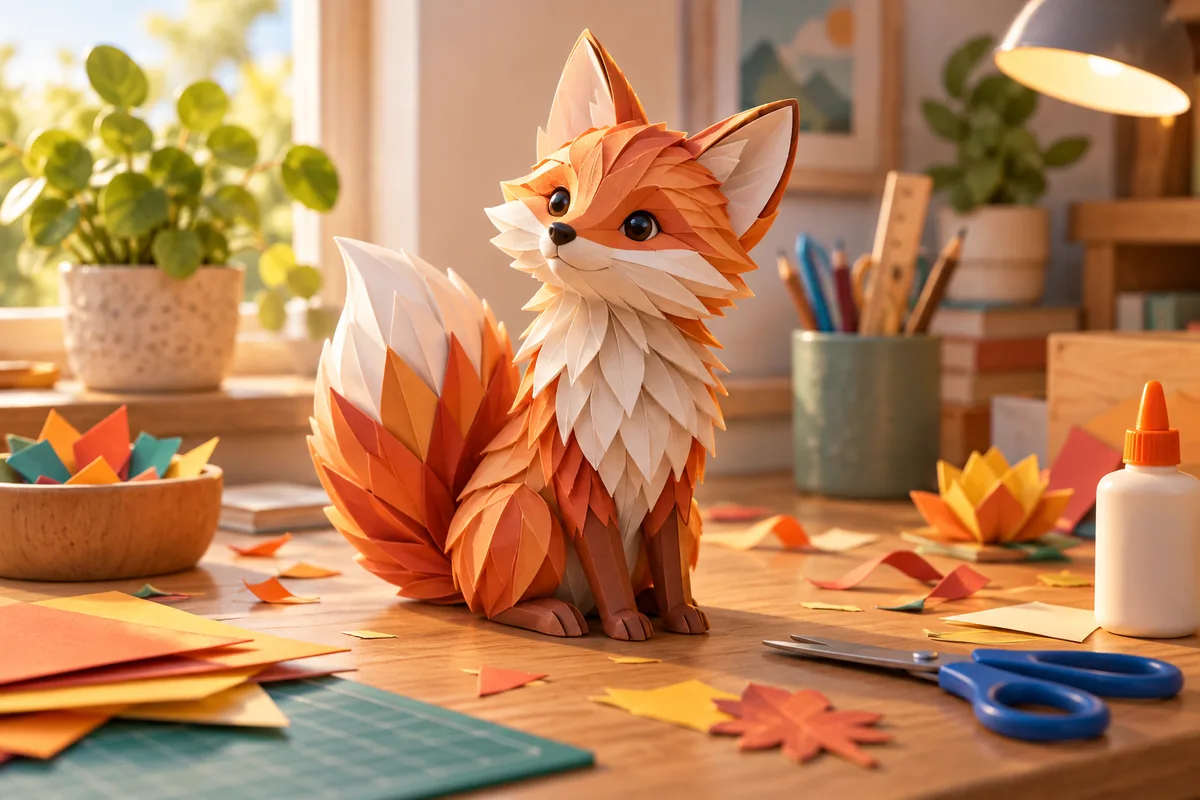
Words such as beautiful, impressive, or masterful are evaluations; they work best when the sentence explains why. “The intricate paper sculpture uses repeated folded shapes” gives a concrete reason, while “a wonderful creation” only states approval.
How do creative, created, and innovative differ?
Creative describes the ability, approach, or process of producing ideas or work; created means something has been made; innovative says that a method or result introduces a new idea or approach. A creation can be handmade and newly created without being innovative.
Use “a creative redesign” for an imaginative approach, “a newly created pattern” to report that someone made it, and “an innovative redesign” only when the design meaningfully introduces a new solution. This difference keeps praise accurate and avoids using innovative as a generic synonym for new.
Which adjectives fit art, music, writing, and invention?
Choose the adjective by medium and purpose. A visual artwork might be bold, subtle, or intricate; music might be lyrical, rhythmic, or restrained; writing might be imaginative, precise, or evocative; an invention might be practical, ingenious, or innovative.
There is no single “best” adjective for creation across every field. Name the medium, then select the attribute you can explain: materials, structure, method, originality, or effect on its audience.
Conclusion: choose adjectives for creation by meaning
The clearest adjectives for creation separate how something was made from what the finished work is like. Use collaborative or iterative for a process, intricate or evocative for a result, and innovative only when the work brings a new approach. A specific reason makes evaluation useful.
Frequently asked questions
What is a positive adjective for creation?
Original, imaginative, inventive, and evocative can praise a creation, depending on what the work does. Original emphasizes distinctiveness; evocative describes the associations or feelings it brings to mind. Add a concrete example to make the evaluation clear.
What adjective describes the act of making something?
Creative, collaborative, deliberate, and iterative can describe the act or process of making something. Choose according to how the work was developed: shared among contributors, carefully planned, or refined through repeated rounds.
Is creative the same as innovative?
No. Creative means involving imagination or original ideas; innovative emphasizes introducing a new idea, method, or solution. A process can be creative without changing existing practice, while an innovative creation makes a meaningful departure from what came before.
Can “creation” mean a finished work?
Yes. “Creation” can refer to the act of making something or the result, such as an artwork, design, or invention. Context clarifies the sense: “the creation of the mural took months” describes the process, while “the mural is her latest creation” names the finished work.
As a writer, I understand the power of words and how they can bring life to our thoughts and ideas. When it comes to describing the act of creation, the right adjectives can make all the difference. From the exhilarating process of bringing something new into existence to the awe-inspiring beauty of artistic expression, there are countless adjectives that can capture the essence of creation.
Imagine the feeling of crafting a masterpiece with your hands, the satisfaction of seeing your vision come to life. Whether it’s a painting, a sculpture, or a piece of music, the adjectives we use to describe these creations can evoke a range of emotions. Words like “inspiring,” “innovative,” and “breathtaking” can transport us to a world where imagination knows no bounds.
In this article, I’ll explore a variety of adjectives that can be used to describe creation in all its forms. From the delicate intricacy of a handmade quilt to the explosive energy of a fireworks display, we’ll delve into the world of descriptive words and their power to paint a vivid picture. So, join me as we embark on a journey through the realm of adjectives for creation, where every word has the potential to bring our imaginative endeavors to life.
How to Describe creation? – Different Scenarios

When it comes to describing creation, there is an array of adjectives that can help paint a vivid picture. Whether it’s the creation of a breathtaking painting, a beautiful melody, or a captivating story, choosing the right words is essential in capturing the essence of the creative process. Let’s explore some adjectives that can be used to describe creation in different scenarios:
1. Visual Arts
- Vibrant: The artist skillfully used bold and vibrant colors to bring the painting to life.
- Intricate: The artwork showcased intricate details, revealing the artist’s attention to every little aspect.
- Expressive: The brushstrokes were expressive, conveying the artist’s emotions and intentions.
- Mesmerizing: The painting had a mesmerizing effect, drawing the viewers into its captivating world.
2. Music
- Euphoric: The melody swept through the room, creating a euphoric atmosphere that lifted everyone’s spirits.
- Harmonious: The combination of different instruments created a harmonious composition that was pleasing to the ears.
- Rhythmic: The beat was infectious, making everyone tap their feet and move to the rhythm.
- Soulful: The singer’s soulful voice touched the audience’s hearts, evoking deep emotions.
3. Storytelling
- Captivating: The author weaved a captivating tale that kept the readers hooked from beginning to end.
- Imaginative: The story took the readers on an imaginative journey to a magical world full of wonders.
- Profound: The writer explored profound themes, leaving the readers with valuable insights and thoughts to ponder.
- Engaging: The narrative was engaging, keeping the readers eagerly turning each page to unravel the next twist.
- Delectable: The chef prepared a delectable dish that tantalized the taste buds with its flavors and textures.
- Exquisite: The presentation of the dessert was exquisite, resembling a work of art on the plate.
- Savory: The savory aroma filled the room, making everyone’s mouths water in anticipation.
- Indulgent: The decadent dessert was an indulgent treat, satisfying every sweet craving.
Describing Words for creation in English
When it comes to describing the act of creation, choosing the right adjectives can make a world of difference. Whether it’s in the visual arts, music, storytelling, or culinary arts, the words we use can help convey the essence and beauty of the creative process. In this section, I’ll provide you with a variety of adjectives that will help capture the magic of creation in different scenarios. So let’s dive right in!

Visual Arts
When it comes to describing creations in the visual arts, there are various adjectives that can evoke the impact and beauty of a piece of art. Here are a few examples:
- Vibrant: A piece of art that is full of life, energy, and bright colors.
- Mesmerizing: Artwork that captivates and holds your attention with its enchanting quality.
- Euphoric: Describing art that elicits a feeling of intense happiness and joy.
- Captivating: Art that has a compelling and irresistible appeal, drawing you in.
Music
Music has the power to stir emotions and transport us to different realms. Here are some adjectives to describe the creations in the world of music:
- Enchanting: Music that has a magical and captivating quality.
- Melancholic: Evoking a feeling of sadness or longing through its poignant melodies.
- Upbeat: Describing music that is lively, joyful, and energetic.
- Soul-stirring: Music that touches the deepest parts of our hearts and moves us profoundly.
Storytelling
Words are the building blocks of storytelling, and the right adjectives can bring a story to life. Here are a few adjectives that can help describe creations in storytelling:
- Imaginative: Storytelling that takes you on a journey to vibrant and fantastical worlds.
- Intriguing: Captivating and arousing curiosity through twists and turns.
- Gripping: A story that holds your attention and keeps you on the edge of your seat.
- Heartwarming: Describing a story that brings a sense of warmth, love, and tenderness.
- Delectable: Food that
Adjectives for creation
As a writer, I understand the power of choosing the right adjectives to describe the act of creation. Whether it’s in visual arts, music, storytelling, or culinary arts, the right words can capture the essence and impact of any creative endeavor. In this section, I’ll explore a range of adjectives that can be used to vividly describe the process of creation.

Positive Adjectives for Creation
When it comes to capturing the beauty and impact of a creation, positive adjectives can help paint a vibrant picture. Here are 12 examples of positive adjectives that can be used to describe the act of creation:
| Adjective | Definition | Example Sentence |
|---|---|---|
| Vibrant | Full of life and energy | The painting was vibrant, with bold colors that jumped off the canvas. |
| Mesmerizing | Fascinating or captivating | The dancer’s performance was mesmerizing, leaving the audience spellbound. |
| Euphoric | Intensely joyful or ecstatic | The musician felt a sense of euphoria as the crowd cheered for their performance. |
| Captivating | Holding the attention or interest | The novel had a captivating storyline that kept readers hooked until the very end. |
| Enchanting | Delightfully charming or attractive | The garden was filled with enchanting flowers that seemed to sparkle in the sunlight. |
| Melancholic | Expressing sadness or nostalgia | The photographer captured the melancholic beauty of the sunset in their stunning landscape photo. |
| Upbeat | Lively and cheerful | The song had an upbeat melody that made everyone want to dance. |
| Soul-stirring | Emotionally powerful or moving | The actress delivered a soul-stirring monologue that brought the audience to tears. |
| Imaginative | Creative and full of imagination | The artist’s imaginative sculptures transported viewers to another world. |
| Intriguing | Arousing curiosity or interest | The film had an intriguing plot twist that kept viewers guessing until the very end. |
| Gripping | Intensely engaging or compelling | The play was gripping, with every scene keeping the audience on the edge of their seats. |
| Heartwarming | Evoking feelings of warmth and happiness | The children’s choir’s performance was heartwarming and brought smiles to everyone’s faces. |
Negative Adjectives for Creation
While positive adjectives are often associated with creation, there are also negative adjectives that can be used to convey a different tone or mood. Here are 5 examples of negative adjectives that can be used to describe the act of creation:
| Adjective | Definition | Example Sentence |
|---|---|---|
| Chaotic | Disorderly or lacking order | The artist’s studio was chaotic, with paint splatters and unfinished projects everywhere. |
| Dreadful | Extremely bad or unpleasant | The novel had a dreadful ending that left readers feeling unsatisfied. |
| Clumsy | Awkward or lacking grace | The chef’s attempt at plating the dish was clumsy, with ingredients scattered haphazardly. |
| Incoherent | Lacking clarity or logical connection | The musician’s improvisation was incoherent, with disjointed melodies that didn’t blend well. |
| Disappointing | Failing to meet expectations or hopes | The art exhibition was disappointing, with lackluster pieces that didn’t leave a lasting impression. |
The right choice of adjectives can bring life and depth to descriptions of creations in various fields. Whether it’s using positive adjectives to highlight the beauty and impact, or negative adjectives to convey a different tone or mood, adjectives play a crucial role in capturing the essence of any creative endeavor.
Synonyms and Antonyms with Example Sentences

Synonyms for creation
When it comes to describing the act of creation, there are various synonyms that can help us convey a range of emotions and sensations. Here are some examples of synonyms that can bring life and depth to our descriptions:
| Synonym | Definition | Example Sentence |
|---|---|---|
| Vibrant | Full of energy and life | The artist’s brushstrokes brought the painting to life, creating a vibrant and energetic atmosphere. |
| Mesmerizing | Captivating and enchanting | The dancer’s graceful movements were mesmerizing, leaving the audience in awe. |
| Euphoric | Filled with intense happiness and excitement | As the music played, I experienced an euphoric state, where everything felt magical and blissful. |
| Captivating | Holding one’s attention and interest | The writer’s storytelling skills were truly captivating, transporting readers to a different world. |
| Melancholic | Expressing a feeling of sadness or pensive thought | The pianist’s melancholic melody resonated deep within me, evoking a sense of nostalgia and reflection. |
| Imaginative | Displaying a creative and inventive mind | The chef’s imaginative use of ingredients in his dish resulted in a unique and unexpected flavor combination. |
Antonyms for creation
Just as there are positive adjectives to describe creation, there are also antonyms that can convey a different tone or mood. Here are a few examples of antonyms for creation:
| Antonym | Definition | Example Sentence |
|---|---|---|
| Chaotic | Disorganized and lacking order | The painter’s strokes seemed random and chaotic, resulting in a messy and confusing artwork. |
| Dreadful | Causing fear, dismay, or distress | The playwright’s latest play was received with dreadful reviews, disappointing both critics and audiences alike. |
| Clumsy | Lacking grace, coordination, or skill | The amateur baker’s attempts at creating a cake were clumsy, resulting in a lopsided and uneven dessert. |
| Incoherent | Lacking clarity or logical connection | The poet’s words seemed scattered and incoherent, making it difficult to understand the underlying meaning. |
| Disappointing | Failing to fulfill expectations or hopes | The magician’s performance fell short, leaving the audience disappointed and unimpressed. |
By carefully selecting the right adjectives to describe creation, we can effectively communicate the emotions, sensations, and qualities associated with various forms of artistic expression. Whether it’s the vibrant colors of a painting, the captivating melody of a song, or the imaginative flavors of a dish, adjectives play a crucial role in bringing these creations to life in the minds of others.
Conclusion
Choosing the right adjectives to describe the act of creation is crucial in effectively communicating the emotions, sensations, and qualities associated with different forms of artistic expression. By carefully selecting descriptive words, we can bring our creations to life in the minds of others.
Throughout this article, we have explored synonyms and antonyms that can be used to vividly describe the process of creation in various fields such as visual arts, music, storytelling, and culinary arts. These adjectives provide a powerful tool to capture the essence of our creative endeavors.
Whether we are painting a masterpiece, composing a symphony, crafting a compelling story, or preparing a delicious dish, the adjectives we choose can enhance the impact and understanding of our creations. They enable us to convey the vibrant colors, harmonious melodies, captivating narratives, and tantalizing flavors that make our work unique and memorable.
By harnessing the power of descriptive words, we can elevate our creative expressions and forge a deeper connection with our audience. So, let’s continue to explore the vast array of adjectives available to us and unleash the full potential of our artistic endeavors.


