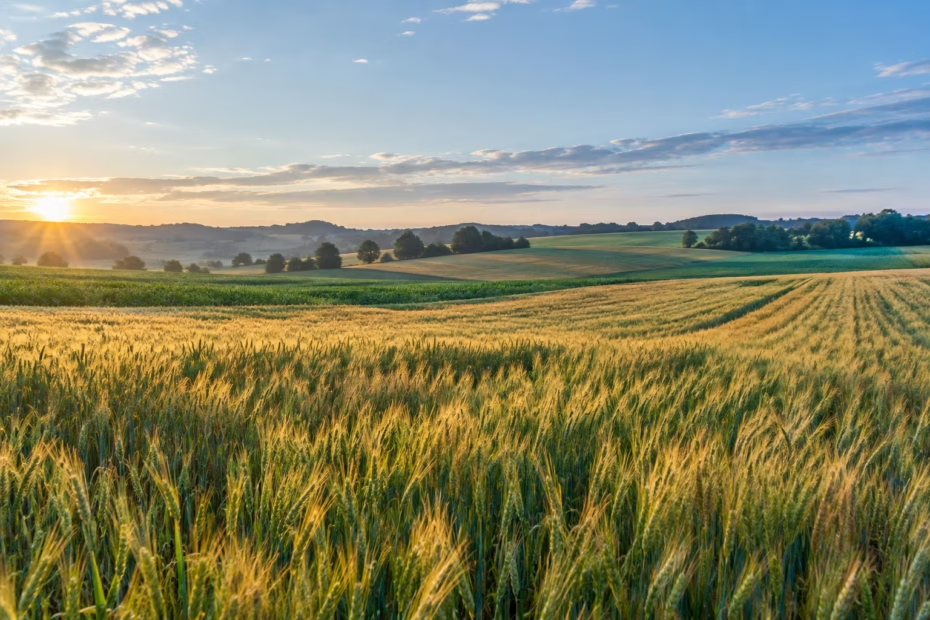
A useful field description tells readers what kind of field it is and which detail matters: its size, plants, surface, weather, or condition. A meadow, a cultivated plot, and a sports ground may all be called fields, but they call for different word choices. Cambridge Dictionary gives both land and sports-ground senses of field; Collins also lists land used for crops and grass areas for sport. The examples below focus on literal outdoor fields, while a final note covers the abstract sense of a field of study.
Field Adjectives by Meaning
Instead of piling on several near-synonyms, choose one adjective that names the feature you want readers to notice. These groups separate words about space, growth, color, and condition.
| What you want to describe | Useful adjectives | Example |
|---|---|---|
| Size and openness | wide, broad, spacious, expansive, vast | A wide field opened beyond the last row of houses. |
| Shape and ground | level, flat, sloping, rolling, uneven | The rolling field dipped behind a line of trees. |
| Plant growth | grassy, lush, verdant, overgrown, weed-filled | A grassy field bordered the footpath. |
| Crops and use | cultivated, planted, fallow, harvested, irrigated | The harvested field was dotted with straw bales. |
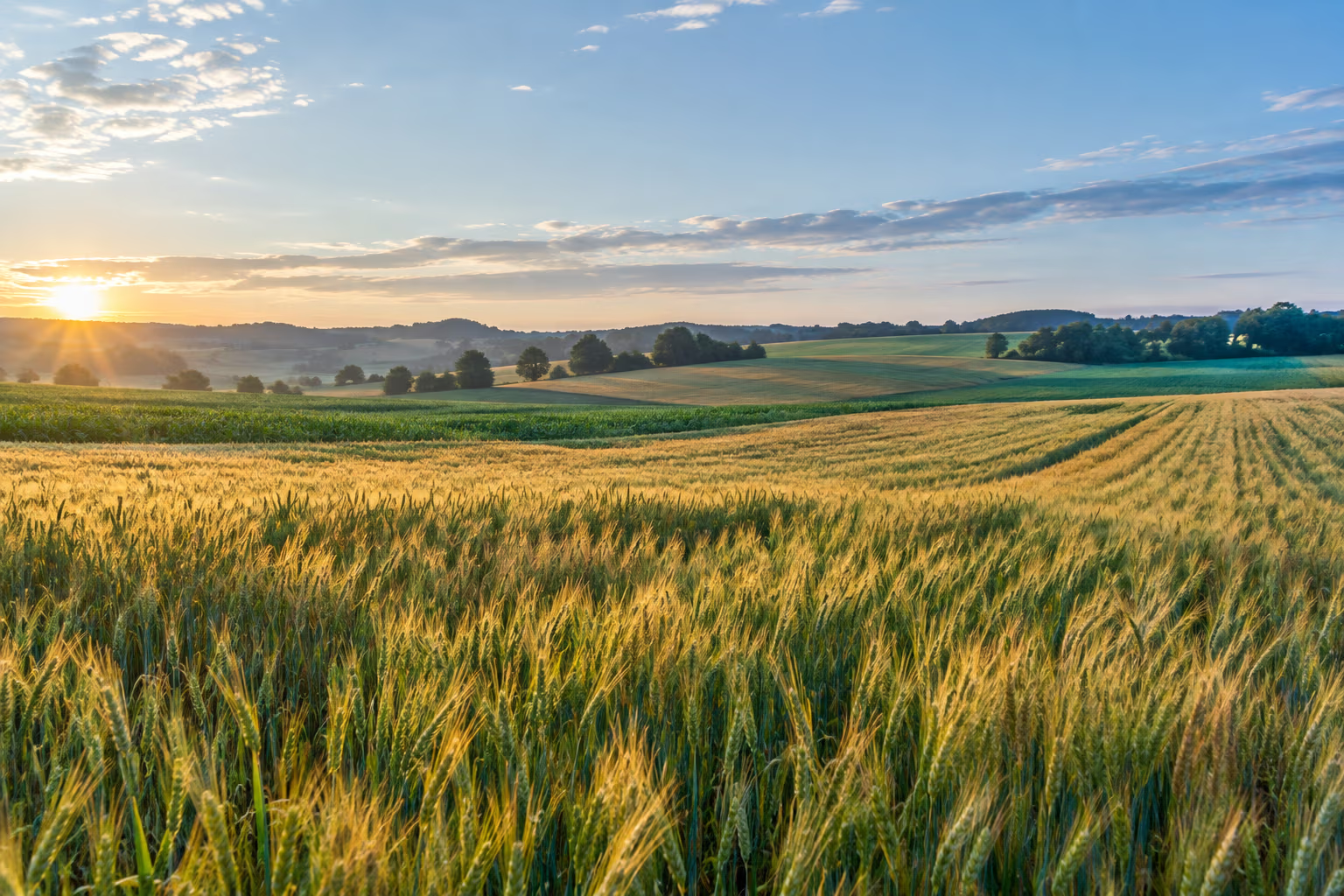
| Color and season | green, golden, brown, snow-covered, flower-filled | A golden field glowed in the afternoon sun. |
| Moisture and surface | dry, damp, muddy, waterlogged, firm | The muddy field left deep prints on our boots. |
| Care and condition | well-kept, tended, neglected, barren, productive | The well-kept field had short grass and clear boundaries. |
Adjectives for a Field’s Size, Shape, and Setting
Words for scale are not interchangeable in every sentence. Wide and broad emphasize distance from one side to another; expansive and vast suggest a larger impression of space. Open tells us that the view is unobstructed, while remote tells us that the field is far from places or people. For a small field, compact or enclosed may be more accurate than “vast.”
Shape words help a reader picture the ground. A level or flat field is even; a sloping field rises or falls; a rolling field has a series of gentle rises and dips. An uneven field may be lumpy or difficult to cross. Use fenced when a fence is a visible feature and bordered when you want to identify what runs along its edge.
For example: “The narrow, sloping field was bordered by a stone wall.” Each adjective adds a separate fact: width, angle, and boundary. “A beautiful, lovely, pretty field” repeats a general judgment and gives less information.
Adjectives for Crops, Grass, and Soil
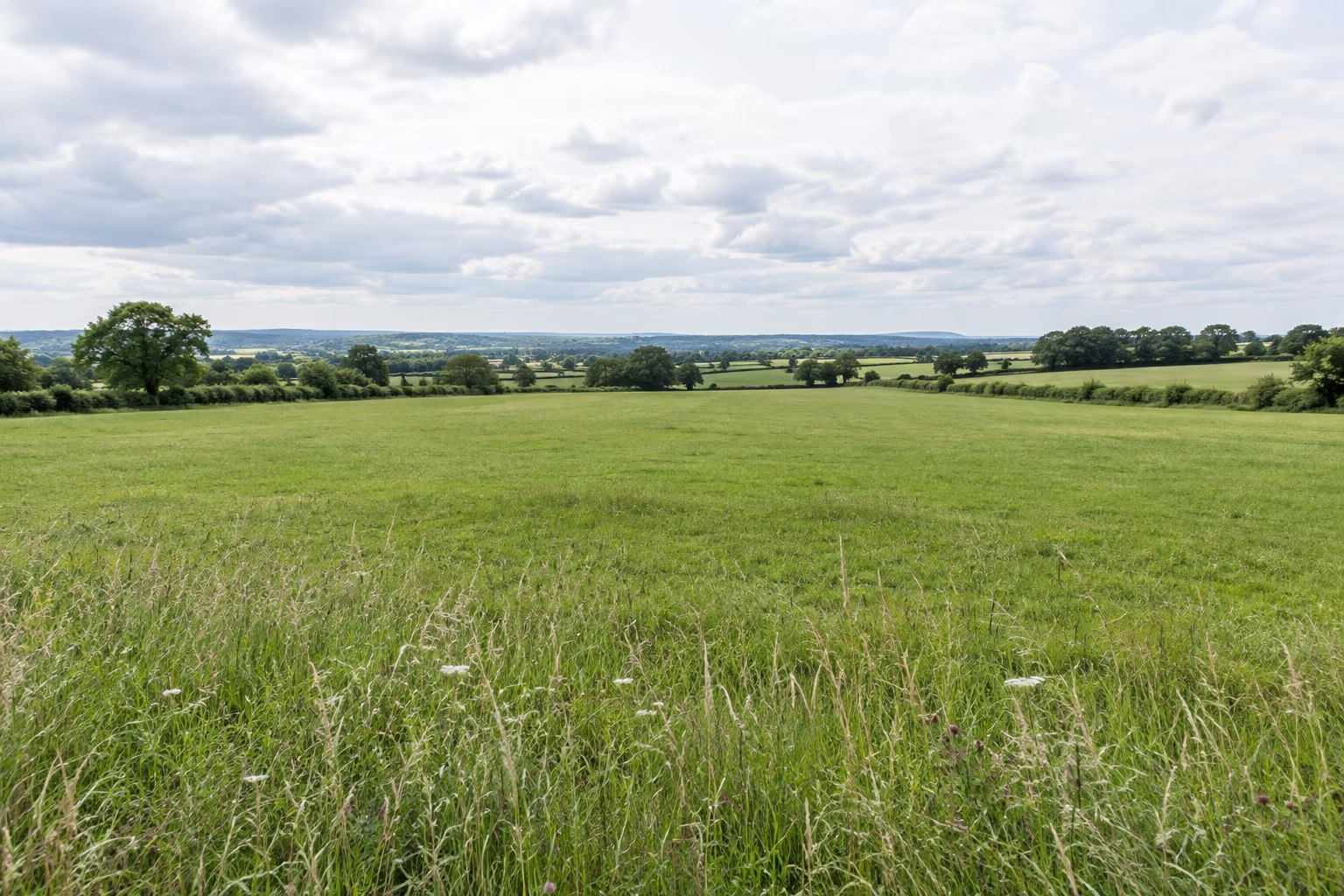
Describe what is growing before reaching for a mood word. A grassy field is covered with grass; a flowering or wildflower-filled field has visible blooms. Lush and verdant suggest abundant green growth, while sparse describes vegetation that is thin or scattered. Overgrown usually implies that plants have grown beyond the level of care or control wanted for that place; it does not simply mean “full of plants.”
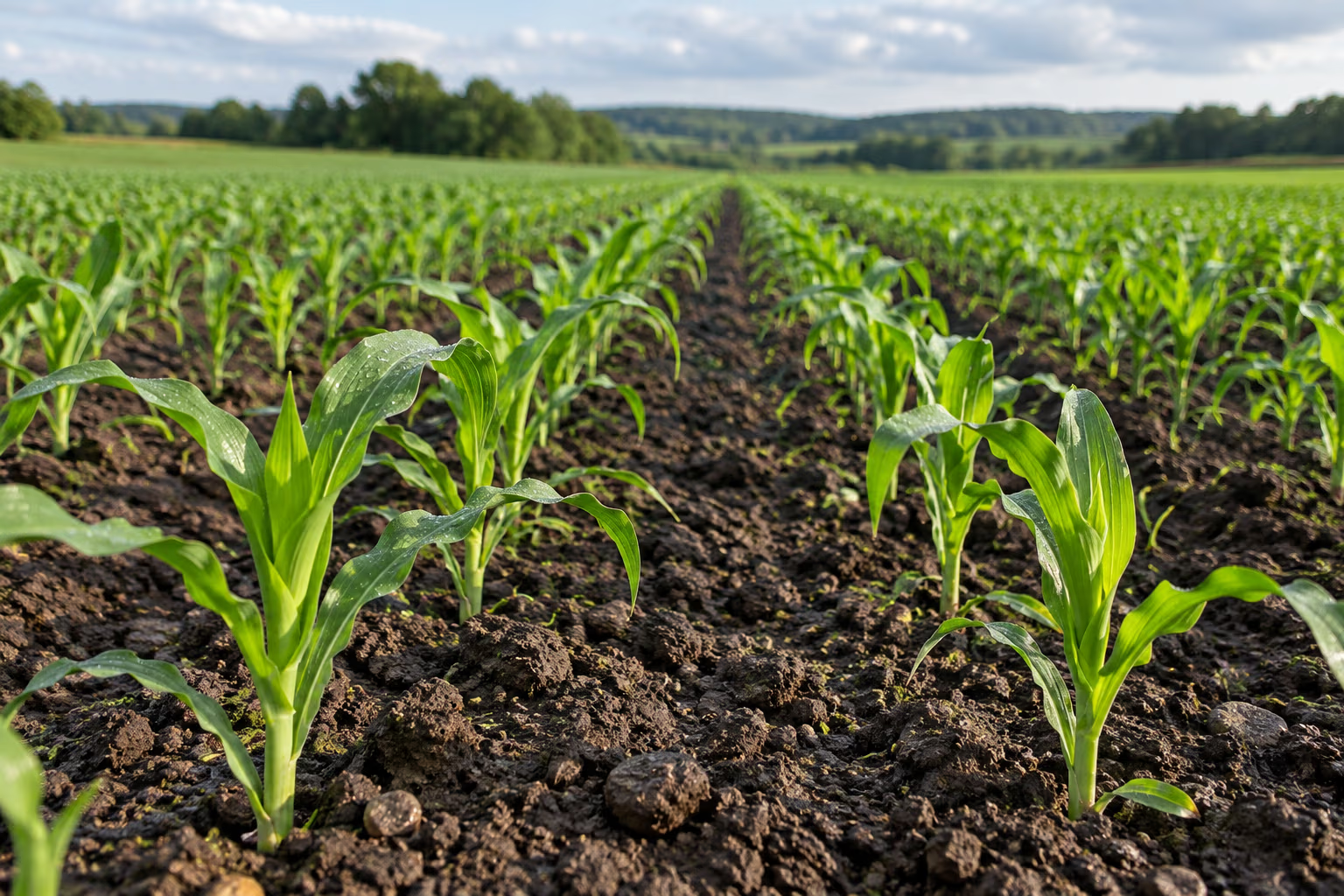
In a farming context, cultivated means prepared or used for growing crops, and planted says seeds or young plants have been put in the ground. A fallow field is left unplanted for a period, often as part of farm management; it is not automatically abandoned or infertile. Harvested describes a field after its crop has been gathered. Productive is a judgment about output, so it is stronger when supported by a detail such as healthy plants or a good yield.
Soil and moisture words make the scene more concrete. A dry field may have parched ground; a damp one is slightly wet; a muddy field has soft, wet soil at the surface. Waterlogged indicates that too much water has saturated the ground, while well-drained suggests water does not remain pooled for long. These are descriptions of conditions, not proof of soil quality or crop health by themselves.
Adjectives for a Sports Field
A sports field can be level, well-maintained, firm, soft, muddy, or worn, depending on its surface and use. A marked field has visible lines; a waterlogged one may be unsuitable for play after heavy rain. To describe a match setting, use details such as “the damp grass,” “the freshly painted touchlines,” or “the uneven patch near the goal” rather than relying on a broad label like “bad.”
Some familiar compounds name the type of field rather than describe its qualities: football field, baseball field, school field, and artificial-turf field. These are still useful modifiers, but they answer “which kind?” A phrase like “a muddy school field” combines type and condition. For a surface that is synthetic, artificial or synthetic is more precise than fake, which can sound dismissive.

Positive and Negative Field Adjectives
Positive and negative descriptions depend on the purpose of the field. A wild, uneven meadow can be attractive to a visitor but inconvenient for a game. A freshly ploughed field may look rough while being ready for planting. Choose a word that explains the point of view or practical effect.
| Adjective | Meaning or tone | Example sentence |
|---|---|---|
| Idyllic | Peaceful and pleasing, often in an idealized way | They ate lunch beside an idyllic field of daisies. |
| Productive | Useful for producing a crop or other result | The productive field yielded enough hay for the winter. |
| Pristine | Very clean or apparently untouched | Beyond the gate lay a pristine stretch of grass. |
| Neglected | Not receiving the care it needs | The neglected field was choked with brambles. |
| Barren | Having little or no plant growth | A barren patch of ground remained after the fire. |
| Rough | Uneven or not smooth; may describe ground or surface | The rough field made the tractor ride slowly. |
Use bare for ground with little cover, barren for ground that supports little growth, and neglected when lack of care is the point. Desolate adds a lonely or bleak impression, so reserve it for writing that needs that mood.
Field Adjectives in Sentences
- At sunrise, a misty, open field faded into the hills.
- Children crossed the uneven, grassy field to reach the playground.
- After the storm, the waterlogged field shone beneath a gray sky.
- Rows of young, healthy plants covered the cultivated field.
- The harvested field looked golden where straw remained between the furrows.
- Players avoided the worn area near the goal on the muddy field.
- A remote, windswept field stood beyond the last farmhouse.
- The small, enclosed field was ideal for grazing a few sheep.
Choosing the Right Adjective
Before selecting an adjective, decide which sense of field you mean. For open land, name its visible plants, shape, color, or condition. For a sports ground, mention the surface, markings, or maintenance. In phrases such as “the field of medicine” or “a competitive field,” field means an area of work or study, so adjectives such as specialized, emerging, competitive, or interdisciplinary may fit instead. A crop adjective like fertile would not describe that abstract meaning.
A quick editing check helps: Does the adjective tell the reader something observable or meaningful? Could a more specific word replace “nice,” “bad,” or “beautiful”? Do two words repeat the same idea? “Vast and spacious” may be redundant, while “vast and flower-filled” gives separate information. Pairing one precise adjective with a concrete detail usually creates a clearer picture than adding a longer string of modifiers.

When it comes to describing a field, there are a plethora of adjectives that can be used to paint a vivid picture. Whether you’re talking about a lush green meadow or a vast open plain, the right adjectives can bring the scene to life in the reader’s mind. In this article, I’ll be sharing a collection of descriptive words that can be used to enhance your writing and make your descriptions more engaging. From words that evoke a sense of tranquility to those that convey the wild beauty of nature, we’ll explore a variety of adjectives that will help you capture the essence of a field.
One of the most common adjectives used to describe a field is “lush.” This word conveys a sense of abundant growth and vibrant greenery, painting a picture of a field teeming with life. For example, you could say, “The field was a lush expanse of emerald, with grasses swaying in the gentle breeze.” Another adjective that can be used to describe a field is “expansive.” This word suggests a wide and open space, giving the impression of a field that stretches as far as the eye can see. For instance, you might say, “The field extended as far as the horizon, an expansive canvas of endless possibilities.” By incorporating these adjectives into your writing, you can create vivid and captivating descriptions that transport your readers to the serene beauty of a field.
How to Describe field? – Different Scenarios
When it comes to describing a field, there are various scenarios to consider. Whether you’re writing a story, painting a picture with words, or simply trying to create a vivid description, the right choice of adjectives can make all the difference. Here are some different scenarios and examples of how you can describe a field:
1. Size and Extent
- Expansive: The field stretched as far as the eye could see, with its lush green carpet extending as if reaching towards the horizon.
- Vast: The vast field spread out before me, its endless expanse of golden wheat gently swaying in the breeze.
- Endless: I stood in awe as I gazed at the seemingly endless field, its beauty captivating my senses.
2. Colors and Textures
- Lush: The field was a lush tapestry of vibrant greens, dotted with colorful wildflowers that danced in the gentle wind.
- Verdant: The field was a verdant paradise, with its emerald hues painting a picture of tranquility and life.
- Golden: The field shimmered in a golden hue as the setting sun cast its warm light upon the swaying grains.
- Tranquil: The field was a tranquil oasis, filled with the sweet melody of chirping birds and the gentle rustling of leaves.
- Serene: The field exuded a sense of serenity, where the only sounds to be heard were the soft whispers of the wind and the occasional buzzing of bees.
- Alive: As I walked through the field, I could feel the vibrant energy that filled the air, a testament to the bustling ecosystem thriving within its boundaries.
By incorporating these descriptive words into your writing, you can transport your readers to the serene beauty of a field. Whether it’s the size, colors, or atmosphere, each scenario offers a unique opportunity to create captivating descriptions. Experiment with these adjectives and let your imagination soar as you paint a vivid picture of a field that comes alive in the minds of your readers.
Describing Words for field in English
Fields are not just empty spaces; they are teeming with life and beauty. Describing a field can help paint a vivid picture in the reader’s mind. Here are some adjectives that can be used to describe a field, along with examples:
- Spacious: When a field is large and open, we can describe it as expansive or vast. For example, “The field stretched out before me, its expansiveness seeming to go on forever.”
- Lush: If a field is green and abundant with vegetation, it can be described as lush or verdant. For instance, “As I walked through the field, I was surrounded by lush grasses and vibrant flowers.”
- Golden: During harvest season, a field filled with ripened crops can be described as golden or bountiful. Picture this: “The sun cast a warm glow on the golden field, creating a breathtaking sight.”
- Peaceful: A quiet and serene field can be described as peaceful or tranquil. Imagine this: “I sat in the middle of the field, enjoying the peacefulness and the gentle rustling of the grass.”
- Romantic: When a field is filled with wildflowers, it can evoke a sense of romance. Use words like wild or romantic to convey this feeling. For example, “We walked hand in hand through the romantic field, surrounded by a sea of wildflowers.”
Remember, when describing a field, it’s important to use adjectives that effectively capture its essence. Whether it’s the size, color, or overall atmosphere, the right words can transport your readers to the beauty and tranquility of a field.
| Adjective | Example Sentence |
|---|---|
| Spacious | The field stretched out before me, its expansiveness seeming to go on forever. |
| Lush | As I walked through the field, I was surrounded by lush grasses and vibrant flowers. |
| Golden | The sun cast a warm glow on the golden field, creating a breathtaking sight. |
| Peaceful | I sat in the middle of the field, enjoying the peacefulness and the gentle rustling of the grass. |
| Romantic | We walked hand |
Adjectives for field
When it comes to describing a field, there are a wide variety of adjectives that can be used to paint a vivid picture in the reader’s mind. A field can evoke feelings of peace, tranquility, and beauty, and the right choice of adjectives can effectively capture these qualities. In this section, I’ll explore positive and negative adjectives that can be used to describe a field, along with example sentences for each.
Positive Adjectives for Field with Example Sentences
- Spacious: The field stretched out before me, its vast expanse making me feel free.
- Lush: The field was filled with vibrant green grass and colorful wildflowers, creating a lush and vibrant landscape.
- Golden: As the sun set, the field was bathed in a golden light, casting a magical glow over everything.
- Peaceful: Walking through the field, I felt a sense of peace and serenity, away from the chaos of everyday life.
- Romantic: The field was the perfect setting for a romantic picnic, with its soft breeze and beautiful surroundings.
- Tranquil: Sitting in the field, I was surrounded by the tranquility of nature, the only sound being the gentle rustling of leaves.
- Idyllic: The field appeared straight out of a storybook, with its picturesque scenery and charming simplicity.
- Serene: Standing in the field, I couldn’t help but feel a deep sense of calm and tranquility washing over me.
- Bucolic: The field had a rustic charm, with its rolling hills, grazing livestock, and old-fashioned charm.
- Breath-taking: The field was simply breath-taking, with its sweeping views and natural beauty.
- Invigorating: Walking through the field, the fresh air and wide open space filled me with a renewed sense of energy.
- Enchanting: The field had a whimsical quality to it, as if it were enchanted with a touch of magic.
- Barren: The field was desolate and empty, with no signs of life or vegetation.
- Windswept: The field felt harsh and exposed, with the strong winds whipping through the open space.
- Overgrown: The field had become overgrown with weeds and tall grass, making it difficult to navigate through.
- Muddy: The field was a muddy mess, with the recent rainfall turning it into a soggy and messy terrain.
- Neglected: The field had been left unattended, with patches of dead grass and unkempt vegetation.
Synonyms and Antonyms with Example Sentences
Synonyms for Field
When it comes to describing a field, there are various synonyms that can help us capture its essence. Here are some synonyms for “field” along with example sentences to illustrate their usage:
| Synonym | Example Sentence |
|---|---|
| Meadow | I love picnicking in the meadow surrounded by colorful flowers. |
| Pasture | The cows grazed peacefully in the lush pasture. |
| Prairie | The prairie stretched out as far as the eye could see, with tall grass swaying in the breeze. |
| Plain | The vast plain appeared endless, with no hills or trees in sight. |
| Paddock | The horses raced around the fenced-in paddock. |
| Greensward | Families enjoyed playing on the soft greensward during a sunny afternoon. |
By using these synonyms, we can add variety and vividness to our descriptions of fields, capturing different aspects of their beauty, tranquility, and openness.
Antonyms for Field
While fields have many positive qualities, they can also possess negative characteristics. Here are some antonyms for “field” that describe the less desirable aspects:
| Antonym | Example Sentence |
|---|---|
| Barren | The barren field was devoid of any signs of life. |
| Wasteland | The abandoned lot resembled a wasteland, with weeds and debris scattered everywhere. |
| Overgrown | The once pristine field had become overgrown with tall grass and weeds. |
| Muddy | After the rainstorm, the field turned into a muddy mess, making it difficult to walk through. |
| Neglected | The neglected field was filled with trash and had patches of dried-out grass. |
These antonyms provide a contrasting perspective, highlighting the less appealing aspects of a field. By using a combination of positive and negative adjectives, we can create a well-rounded description that accurately portrays the various characteristics of a field.
Remember, the right choice of words can greatly enhance our descriptions, allowing us to paint a vivid picture for our readers.
Conclusion
Describing a field can be a delightful exercise, as it allows us to appreciate the beauty and diversity of nature. In this article, we explored various adjectives that can be used to paint a vivid picture of a field. We discussed synonyms such as “meadow,” “pasture,” “prairie,” and “plain,” each capturing a different aspect of a field’s charm and openness. On the other hand, we also explored antonyms like “barren,” “wasteland,” and “overgrown,” which highlight the less desirable qualities of a field.
By using a combination of positive and negative adjectives, we can create a well-rounded description that truly reflects the essence of a field. Whether it’s a lush meadow or a vast prairie, a field can evoke a sense of tranquility, freedom, and natural beauty.
So the next time you find yourself in the presence of a field, take a moment to observe its unique characteristics and choose your adjectives wisely. Let your words transport your readers to the serene and picturesque landscapes that fields have to offer.


