Adjectives for Glass: Quick Guide
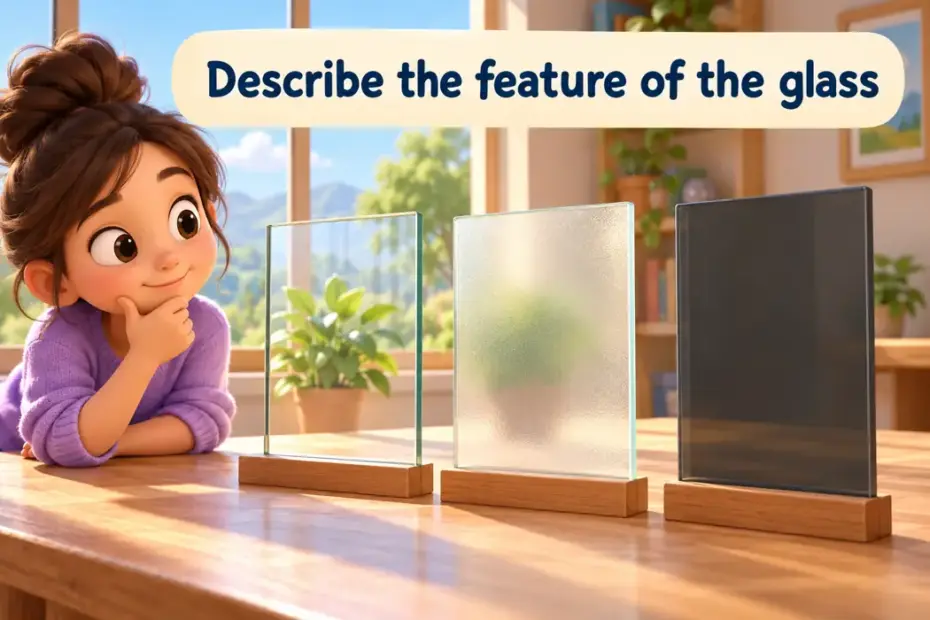
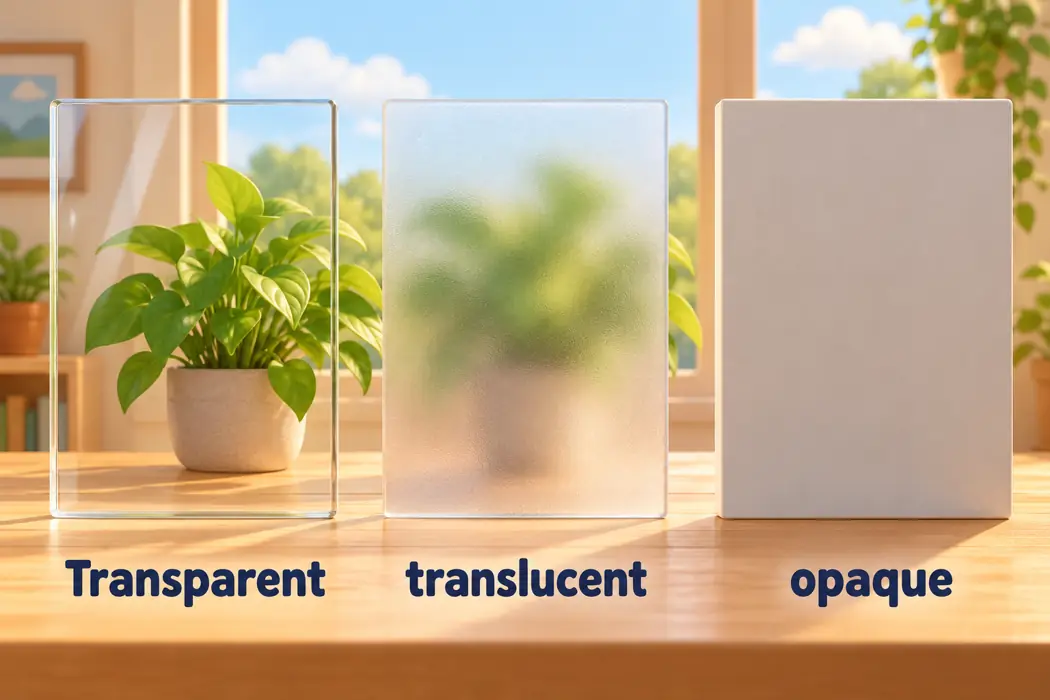
The best adjective for glass depends on the feature you want readers to picture. Use transparent when someone can see clearly through it, translucent when light passes through but the view is obscured, and opaque when light does not pass through. For other details, choose a word for the glass’s color, finish, pattern, construction, or condition.
- Clarity: clear, transparent, translucent, opaque, frosted.
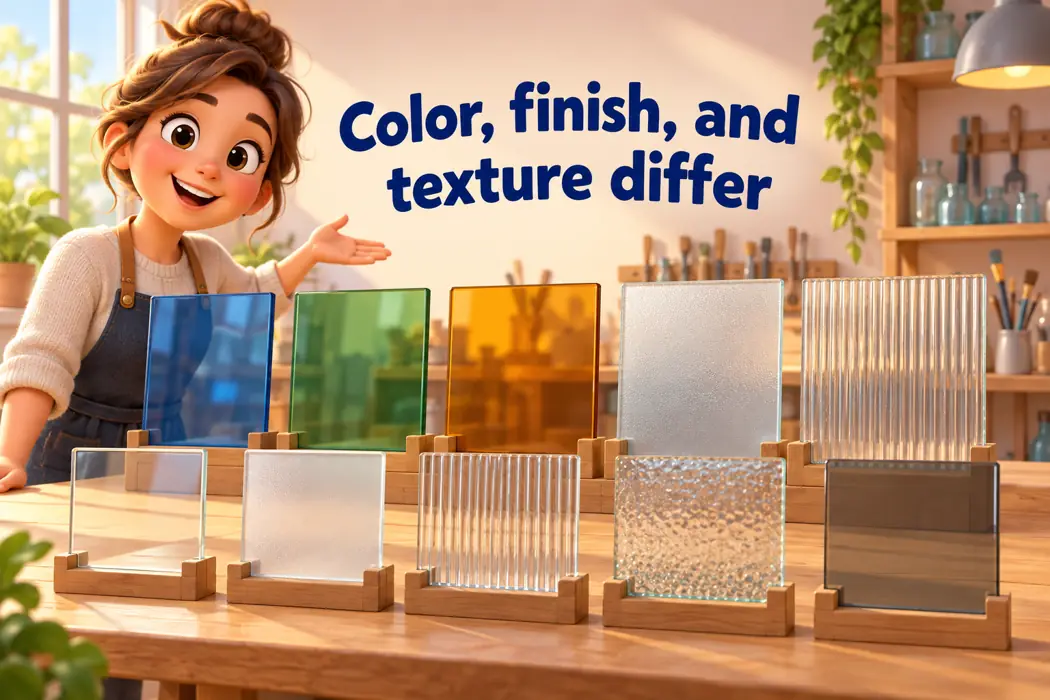
- Color: colorless, tinted, amber, cobalt-blue, green, stained.
- Surface or pattern: smooth, glossy, polished, etched, ribbed, textured.
- Construction: tempered (also called toughened), laminated, leaded.
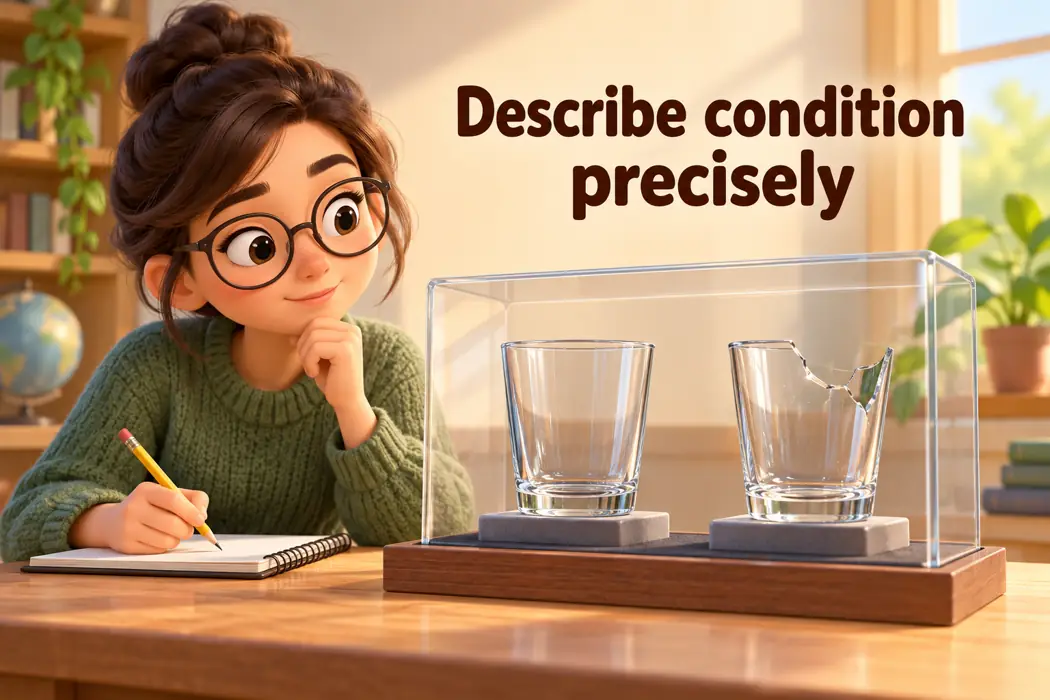
- Condition: brittle, fragile, cracked, chipped, intact.
Choose an Adjective That Says What You Mean
Glass can be described in several ways at once. A pane might be tinted and transparent, or textured and translucent. Naming the observed quality is more useful than stacking near-synonyms such as “clear, see-through, transparent glass.”
Transparent, translucent, or opaque?
These words describe how glass handles light and visibility. Transparent means a viewer can see through the material clearly. Translucent means that light passes through, but details on the other side are not seen clearly. Opaque describes material that prevents light from passing through. For instance, a clear window may be transparent, a privacy pane may be translucent, and a painted glass panel may be opaque. The exact result depends on the glass and any surface treatment.
Cambridge Dictionary distinguishes clear visibility through a transparent object from the partial light transmission of a translucent one, and defines opaque material as preventing light from traveling through. Pilkington’s glass glossary similarly explains that translucent glass lets light through while obscuring a clear view.
Clear and colorless are different
Clear often refers to how easily someone can see through glass; colorless refers to the absence of a noticeable hue. A blue-tinted pane can still be transparent if the view through it remains clear. Conversely, colorless glass can look hazy if its surface or finish scatters light. Choose the adjective that describes the feature that matters in your sentence.
Adjectives for Glass by Color and Finish
Color words help readers visualize glassware, windows, ornaments, or artwork. Try amber, cobalt-blue, green, smoky-gray, or tinted when those details are visible. Use stained glass for a decorative glasswork style rather than as a general synonym for colored glass: Stained-glass panels can be assembled from colored pieces supported by cames, though specific methods differ.
Surface words describe appearance or texture. Glossy and polished suggest a smooth, reflective finish; etched describes a surface with a design or treated area; ribbed and patterned name visible forms. Frosted is useful when the finish softens or obscures a view. When the surface is actually rough to the touch, textured may be more precise than a purely visual word like shimmering.
Construction and Condition Words
Some adjectives name how a glass product is made rather than how it looks. Tempered or toughened glass has been heat-treated; the Pilkington glossary says this process increases strength and affects how the glass breaks. Laminated glass combines layers with an interlayer that can hold pieces together if the glass breaks. These are specific construction terms, not promises that glass cannot break. Use them only when you know the material has that construction.
Brittle and fragile both signal that an item is easily broken or damaged, but they describe a condition or vulnerability, not its color or clarity. They may fit a thin ornament or a damaged glass object, but they do not describe every pane or glass product. Avoid absolute words such as unbreakable unless the context supports that literal claim.
Examples of Adjectives for Glass in Sentences
- “Morning light crossed the transparent glass and landed on the table.”
- “A translucent panel softened the view into the garden.”
- “The opaque glass door hid the storage shelves behind it.”
- “She set a cobalt-blue vase beside the colorless drinking glass.”
- “The polished glass surface reflected the pendant lights.”
- “A ribbed glass shade cast narrow lines across the wall.”
- “The stained-glass panel combined blue, amber, and green pieces.”
- “The label specified laminated glass for the display case.”
- “He wrapped the fragile glass ornament before packing it.”
- “The chipped glass edge caught the afternoon light.”
Frequently Asked Questions
What is a good adjective for glass that lets light through but blurs the view?
Translucent is usually the precise choice. It says light passes through while a clear view is obscured. Transparent suggests the opposite: details can be seen clearly through the material.
Is clear glass the same as colorless glass?
Not exactly. Clear commonly describes visibility, while colorless describes hue. Glass can have a tint and still be transparent, or be colorless but not completely clear.
Can I call glass brittle or fragile?
Yes, when you mean that a particular item is easy to break or damage. If your sentence is about light, color, or finish, a word such as transparent, tinted, or textured will be more specific.
Use Precise Adjectives for Glass
Start with the feature you can observe: how clearly the glass transmits a view, what color it appears, what its surface looks like, or how it was constructed. A specific adjective such as translucent, amber, ribbed, or laminated gives readers a clearer picture than a broad list of overlapping descriptors.
Glass is a versatile and fascinating material that has been used for centuries in various applications. From windows to decorative pieces, glass adds beauty and functionality to our surroundings. But have you ever stopped to think about the different qualities and characteristics that glass can possess? In this article, I’ll explore a range of adjectives that can be used to describe glass, along with examples to help you understand their meanings.
When it comes to describing glass, there are numerous adjectives that can be used to paint a vivid picture. Whether you’re talking about the clarity, texture, or color of glass, there’s a word to capture its essence. From “crystal-clear” to “frosted,” these adjectives help us appreciate the unique qualities of glass and how they contribute to its overall aesthetic appeal.
So, if you’re curious to expand your vocabulary and learn more about the descriptive words associated with glass, read on. In the following sections, I’ll delve into different categories of adjectives and provide examples to showcase their usage. Get ready to see glass in a whole new light as we explore the world of adjectives that bring this remarkable material to life.
How to Describe glass? – Different Scenarios
When it comes to describing glass, there are many different scenarios to consider. Glass can be described based on its appearance, texture, color, and more. By using descriptive words, we can help paint a clear picture of what glass looks like and how it feels. Here are some examples of how to describe glass in different scenarios:
- Appearance: Glass can have a variety of appearances, ranging from transparent to opaque. Here are some adjectives to describe the appearance of glass:
- Texture: The texture of glass is smooth and hard, but it can also have different patterns or features. Here are some adjectives to describe the texture of glass:
- Color: While glass is often transparent, it can also come in a variety of colors. Here are some adjectives to describe the color of glass:
- Function: Glass can serve different functions depending on its purpose. Here are some adjectives to describe the function of glass:
Remember, when describing glass, it’s important to use adjectives that accurately depict its qualities. By choosing the right words, we can effectively convey the unique characteristics of glass and help others visualize it in their minds.
Describing Words for glass in English
Glass is a versatile material with unique characteristics that can be described using a variety of adjectives. When it comes to describing glass, there are several aspects to consider, including its appearance, texture, color, and function.
Appearance:
Glass can be described in terms of its appearance, which includes its transparency or opaqueness, as well as any patterns or designs it may have. Here are some adjectives that can be used to describe the appearance of glass:
- Clear
- Transparent
- Opaque
- Frosted
- Patterned
- Etched
- Stained
- Colored
Texture:
The texture of glass refers to how it feels to the touch. Glass can have a smooth, glossy surface or a rough, textured surface. Here are some adjectives that can be used to describe the texture of glass:
- Smooth
- Glossy
- Shiny
- Polished
- Textured
- Rough
- Frosted
Color:
Glass comes in a wide range of colors, from clear to vibrant and everything in between. Here are some adjectives that can be used to describe the color of glass:
- Clear
- Translucent
- Tinted
- Stained
- Amber
- Cobalt
- Emerald
- Ruby
Function:
Glass is not just aesthetically pleasing, but it also serves various functions. Depending on its purpose, glass can be described using different adjectives. Here are some examples:
- Drinking glasses: Tall, short, wide, narrow, sturdy, delicate
- Windows: Large, small, double-paned, energy-efficient
- Mirrors: Reflective, framed, full-length
- Vases: Elegant, decorative, tall, wide-mouthed
Remember, using accurate adjectives is essential to effectively convey the unique characteristics of glass. Whether you’re discussing its appearance, texture, color, or function, these adjectives will help paint a vivid picture of glass in the minds of your readers.
Stay tuned to the next section, where we will explore more interesting aspects of glass and the adjectives that can be used to describe them.
Adjectives for glass
Glass is a versatile material that can be described in various ways based on its characteristics. In this section, I’ll explore the different adjectives that can be used to describe glass. By using accurate and descriptive adjectives, we can effectively convey the unique properties of this fascinating material.
Positive Adjectives for Glass with 12 Example Sentences
Glass can be described using a range of positive adjectives that highlight its beauty, transparency, and functionality. Here are some examples of positive adjectives that can be used to describe glass:
| Adjective | Example Sentence |
|---|---|
| Transparent | The glass window allows sunlight to fill the room. |
| Lustrous | The crystal glassware sparkled on the table. |
| Sleek | The modern glass building stood tall and elegant. |
| Crystal-clear | The water in the glass was crystal-clear. |
| Brilliant | The stained glass artwork was vibrant and brilliant. |
| Smooth | I ran my fingers over the smooth glass surface. |
| Reflective | The glass mirror reflected my reflection perfectly. |
| Pristine | The display case was filled with pristine glass sculptures. |
| Translucent | The frosted glass provided a soft, translucent glow. |
| Glittering | The chandelier was adorned with glittering glass crystals. |
| Immaculate | The glass table was kept in immaculate condition. |
| Enchanting | The glass art installation created an enchanting ambiance. |
Using these positive adjectives, we can effectively describe the captivating qualities of glass.
Negative Adjectives for Glass with 5 Example Sentences
While glass is a remarkable material, there are also negative adjectives that can be used to describe specific aspects or situations involving glass. Here are some examples of negative adjectives that can be used to describe glass:
| Adjective | Example Sentence |
|---|---|
| Fragile | Be careful with that delicate glass vase. |
| Shattered | The glass window shattered during the storm. |
| Cloudy | The old glass had a cloudy appearance. |
| Scratched | The glass surface was covered in deep scratches. |
| Fragments | I carefully swept up the broken glass fragments. |
By using these negative adjectives, we can effectively communicate the delicate nature or potential issues related to glass.
Synonyms and Antonyms with Example Sentences
Synonyms for glass
When describing glass, we have a variety of words we can use to convey its characteristics. Here are some synonyms that can be used to describe glass:
- Transparent: Glass allows light to pass through it clearly.
- Translucent: Glass allows some light to pass through, but not as much as transparent glass.
- Shiny: Glass has a smooth and reflective surface.
- Smooth: Glass feels even and flat when touched.
- Clear: Glass is free from any marks or opaqueness.
- Brittle: Glass can break easily.
- Fragile: Glass is delicate and can be damaged easily.
Let’s see these words in action:
- The transparent glass window let the sunshine into the room.
- The translucent glass was perfect for providing privacy while still allowing light to enter.
- The shiny glass table reflected the room’s elegant decor.
- She ran her fingers along the smooth surface of the glass vase.
- The clear glass in the picture frame showcased the photograph beautifully.
- He accidentally dropped the glass, and it shattered into brittle pieces.
- The package had a fragile label to ensure careful handling of the glass item.
Antonyms for glass
To provide a balanced perspective, let’s also explore antonyms for glass. These words describe qualities that are the opposite of glass:
- Opaque: Glass that is not translucent or transparent.
- Rough: Glass that has an uneven or coarse surface.
- Dull: Glass that reflects little light and lacks shine.
- Sturdy: A material that is strong and not easily broken.
- Flexible: A material that bends or can be deformed without breaking.
Let’s see how these words can be used in sentences:
- The window film made the glass opaque, providing privacy and reducing glare.
- The rough surface of the glass made it difficult to clean the smudges.
- The old wine glass had lost its shine and looked rather dull.
- The tempered glass was incredibly sturdy and could withstand high impact.
- The plastic cup was flexible and didn’t shatter when it fell.
By using these synonyms and antonyms, we can effectively describe the various aspects of glass, from its appearance to its functionality. Whether we want to highlight its beauty and transparency or discuss its fragility and opaqueness, the right adjectives can help us convey our message accurately.
Remember, as educators, it’s essential to choose words that are age-appropriate and easy for children to understand. Describing glass with the right adjectives can enhance children’s vocabulary while making the learning process engaging and fun.
Conclusion
Describing glass is not as simple as it may seem. Throughout this article, I have explored the various aspects of glass that can be described, such as its appearance, texture, color, and function. I have provided a wide range of adjectives that can be used to effectively convey these qualities.
In addition, I have delved into the world of synonyms and antonyms for glass, offering examples of both positive and negative adjectives that can be used to describe this versatile material. By using these adjectives, we can paint a vivid picture of glass and communicate its unique qualities to others.
It is important to remember that using the right adjectives can make a significant impact in how we communicate about glass. Whether we are describing its sleek appearance, smooth texture, vibrant color, or practical function, the right choice of words can bring our descriptions to life.
By utilizing the adjectives discussed in this article, we can effectively communicate the qualities and potential issues related to glass. So, the next time you encounter glass, remember to choose your adjectives wisely to capture its true essence.


