
Adjectives for Hearing: Words to Describe Sound
Adjectives for hearing describe a sound’s loudness, pitch, timbre, duration, pattern, or speed. Instead of calling a noise “good” or “bad,” choose a word tied to the feature you notice: a soft whisper, a high-pitched beep, or a steady rhythm.
Key facts at a glance
- Loud and soft describe intensity or perceived volume.
- High-pitched and low-pitched describe relative pitch, not loudness.
- Timbre words such as mellow, raspy, or bright describe sound quality.
- Rhythmic and irregular describe repetition or pattern.
- Pair a sound adjective with the source and context for a precise image.
Which adjectives describe sound volume and pitch?
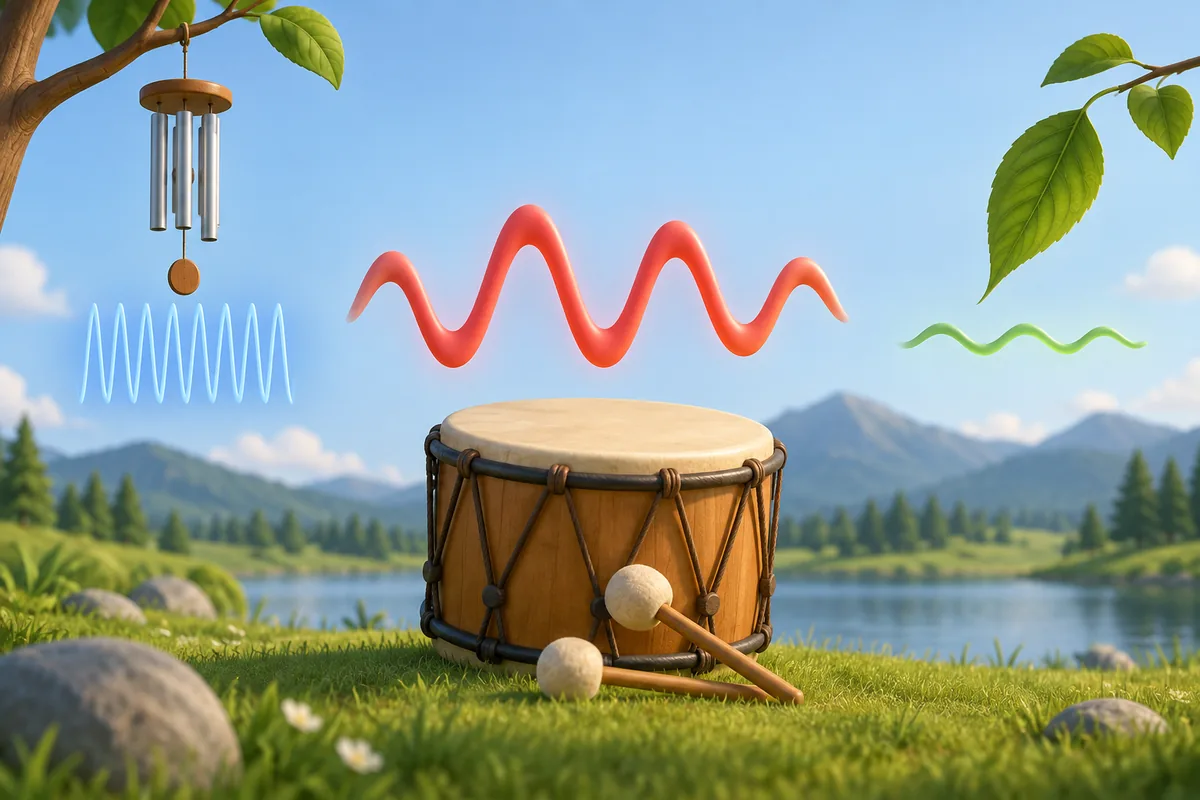
Use loud, quiet, soft, or faint for intensity; use high-pitched or low-pitched for pitch. These features are different: a high-pitched sound can be quiet, and a low-pitched sound can be loud.
Examples make the contrast clear: “A faint, high-pitched whistle came from the hallway” describes both low intensity and high pitch. “A loud, low drumbeat filled the gym” names the opposite combination. Avoid using “high” alone for volume if pitch is intended.
What words describe timbre or tone quality?
Timbre is the quality that helps listeners distinguish sounds with similar pitch and loudness. Useful adjectives include mellow, raspy, clear, muffled, shrill, and resonant. Some are subjective, so pair them with a source or comparison.
For instance, “The singer’s raspy voice gave the line a worn, intimate quality” is more informative than “The voice sounded strange.” “Muffled” suggests reduced clarity, while “shrill” often signals a high, piercing sound; choose only the quality that fits.
How do you describe rhythm, duration, and speed?
Use steady, rhythmic, or irregular to describe a repeating pattern; use brief or prolonged for duration; and use rapid or slow for repetition speed. The National Park Service’s sound vocabulary groups duration, intensity, pitch, timbre, pattern, and speed as useful sound-event features.
A sentence can combine dimensions without stacking too many adjectives: “A rapid, irregular tapping stopped after a brief burst.” The adjectives identify speed, pattern, and duration. Adding the source—“from the loose window latch”—helps the reader imagine the event.

How can you choose a precise sound adjective?
First identify the feature you want readers to imagine: volume, pitch, quality, timing, or pattern. Then select one adjective for that feature and add the source. “A low, steady hum came from the refrigerator” gives readers more information than “a weird noise came from somewhere.”
Sound words can be subjective: a “bright” violin tone may sound pleasing to one listener and sharp to another. For technical descriptions, state observable details such as pitch range, duration, or repetition. For creative writing, sensory or emotional words can work when the surrounding scene supports them.
Frequently asked questions
What are three adjectives for sound?
Three useful adjectives are loud, high-pitched, and mellow. Loud describes intensity, high-pitched describes pitch, and mellow describes timbre. Because they describe different features, you can combine them when each word accurately fits the sound in context. The short list is easy to remember.
What adjective describes a quiet sound?
Quiet, soft, and faint can describe sounds with low perceived intensity. “Faint” often suggests a sound is difficult to hear from a distance, while “soft” can also describe a gentle quality. Choose the word that best matches your scene for the reader.
What is the difference between pitch and volume?
Pitch describes whether a sound seems high or low; volume or intensity describes how loud or soft it seems. A tiny high beep can have high pitch but low volume, while a loud bass drum has strong volume and low pitch.
How many adjectives should describe one sound?
Use enough adjectives to convey distinct features, usually two or three for a concise description. “A soft, wavering flute note” gives volume, timbre, and movement; adding many near-synonyms can obscure the image. Include the sound’s source when it helps readers picture the scene.
Conclusion
Use adjectives for hearing examples to choose accurate, specific language and make the intended meaning clear from context.
Have you ever wondered how to accurately describe the sounds you hear? Whether it’s the soothing melody of a song or the deafening roar of a crowd, finding the right words to capture the essence of a sound can be a challenge. That’s where adjectives for hearing come in. In this article, I’ll be sharing a comprehensive list of descriptive words that will help you express the different qualities of sounds you encounter in your day-to-day life. From soft whispers to thunderous explosions, get ready to expand your vocabulary and enhance your descriptions of the auditory world around you.
When it comes to describing sounds, adjectives play a crucial role in painting a vivid picture in the reader’s mind. By using the right words, you can transport your audience to the very moment you experienced that sound. Imagine being able to convey the gentle rustling of leaves, the piercing screech of a car alarm, or the rhythmic thumping of a heartbeat. With this extensive collection of adjectives for hearing, you’ll be equipped with the tools to bring your writing to life and captivate your readers with sensory details that truly resonate.
So, whether you’re a writer looking to add more depth to your descriptions or simply someone who appreciates the beauty of language, this article is for you. Get ready to explore the world of adjectives for hearing and discover how these powerful words can transform your writing and enrich your sensory experiences. Let’s dive in and explore the vast array of descriptive words that will elevate your descriptions of the auditory world.
How to Describe hearing? – Different Scenarios

As a writer, I find adjectives to be incredibly useful in conveying the qualities of sound and creating a vivid sensory experience for readers. When it comes to describing hearing, there are various scenarios that call for different adjectives to bring those sounds to life. Let’s explore some examples:
- Nature Sounds: Imagine standing in a peaceful forest, listening to the soothing sounds of nature. To describe the sounds you hear, you can use adjectives like:
- City Sounds: In contrast to the tranquility of nature, the city is a bustling hub of activity. To capture the essence of urban sounds, consider using adjectives such as:
- Musical Sounds: Music has a language of its own, and describing the sounds it produces can transport readers to a world of rhythm and melody. Use adjectives like:
- Emotional Sounds: Some sounds can evoke strong emotions and create a lasting impact on our minds. When describing these sounds, consider adjectives that convey the various emotions they elicit, such as:
By using these descriptive adjectives, you can paint a captivating picture in the minds of your readers and make them feel as if they were experiencing the sounds themselves.
Remember, the key to effectively describing hearing is to carefully select adjectives that convey the specific qualities of the sound and evoke the desired emotional response. Experiment with different adjectives to find the perfect match for each scenario, and let your words transport your readers to the world of sound.
Describing Words for hearing in English
When it comes to describing the sense of hearing, there are a wide variety of adjectives that can be used to bring sounds to life. Whether it’s the rustle of leaves, the honking of cars, or the melodious notes of a piano, choosing the right words can transport your readers to the world of sound. In this section, I will provide you with some examples of adjectives that can be used to describe different sounds.
Nature Sounds
Nature is full of captivating sounds that can inspire and calm our senses. When describing nature sounds, consider using adjectives like:
- Gentle: The gentle pitter-patter of raindrops on the windowpane.
- Rustling: The rustling of leaves in the breeze.
- Melodic: The melodic chirping of birds on a sunny morning.
- Roaring: The roaring of waves crashing against the shore.
City Sounds
The hustle and bustle of city life can be both exciting and overwhelming. To capture the essence of city sounds, try using adjectives such as:
- Lively: The lively chatter of people in a crowded marketplace.
- Honking: The constant honking of cars in city traffic.
- Distant: The distant rumble of trains passing by.
Musical Sounds
Music has a language of its own, and describing musical sounds can be a unique challenge. Here are some adjectives that can help:
- Harmonious: The harmonious blend of instruments in an orchestral performance.
- Euphoric: The euphoric crescendo of a powerful symphony.
- Soulful: The soulful notes of a blues guitarist.
Emotional Sounds
Sounds can evoke a range of emotions, from joy to fear, and everything in between. Here are some adjectives to describe emotional sounds:
- Joyful: The joyful laughter of children at play.
- Eerie: The eerie howl of the wind on a stormy night.
- Heartbreaking: The heartbreaking sob of grief.
Adjectives for hearing
As a writer, it’s crucial to choose the right adjectives to vividly describe the sounds we hear. Adjectives bring life to our writing and help our readers experience the world of sound. In this section, I’ll explore positive and negative adjectives that can be used to describe various sounds, along with example sentences.

Positive Adjectives for Hearing
When describing pleasant sounds, it’s important to use positive adjectives that evoke joy, tranquility, or excitement. Here are twelve examples of adjectives that can enhance your descriptions of sounds:
| Adjective | Example Sentence |
|---|---|
| Melodious | The bird’s song was melodious and filled the air with joy. |
| Soothing | The sound of raindrops on the roof was soothing to my ears. |
| Harmonious | The orchestra’s performance was harmonious and captivating. |
| Blissful | The laughter of children playing was blissful and carefree. |
| Serene | The wind rustling through the trees created a serene atmosphere. |
| Enchanting | The sound of waves crashing against the shore was enchanting. |
| Heavenly | The opera singer’s voice was heavenly, filling the room with beauty. |
| Invigorating | The energetic beats of the drum were invigorating and captivating. |
| Uplifting | The motivational speech had an uplifting tone that inspired the audience. |
| Resonant | The sound of the bells was resonant and echoed throughout the valley. |
| Captivating | The jazz musician’s improvisation was captivating and mesmerizing. |
| Tranquil | The gentle babbling brook created a tranquil and peaceful ambiance. |
Negative Adjectives for Hearing
Not all sounds are pleasant. Sometimes, we encounter noises that are annoying, grating, or even distressing. Here are five examples of negative adjectives that can help describe such sounds:
| Adjective | Example Sentence |
|---|---|
| Grating | The screeching of the chalk on the blackboard was grating to my ears. |
| Jarring | The sudden clanging of the pots and pans was jarring and unsettling. |
| Nerve-wracking | The constant honking of car horns in traffic was nerve-wracking. |
| Dissonant | The clash of the cymbals created a dissonant and discordant sound. |
| Piercing | The high-pitched scream was piercing and sent shivers down my spine. |
By carefully selecting the right adjectives, we can effectively convey the qualities of different sounds and immerse our readers in the world of hearing.
Synonyms and Antonyms with Example Sentences
Synonyms for Hearing
When it comes to describing the sense of hearing, there are various synonyms that can be used to add depth and richness to our descriptions. Here are some alternatives to the word “hearing” that can be used in different contexts:
- Listening: This synonym emphasizes the act of paying attention to sounds around us. For example, “I enjoyed listening to the birds chirping in the morning.”
- Audition: This term is often used in formal or professional settings when referring to the process of evaluating someone’s ability to perceive sounds. For example, “She aced her audition for the school choir.”
- Reception: This word refers to the process of receiving and perceiving sounds. For example, “The radio signals were crystal clear, and the reception was excellent.”
Utilizing these synonyms can make our descriptions more engaging and help create a vivid picture in the reader’s mind.
Antonyms for Hearing
Just as there are synonyms to describe the sense of hearing, there are also antonyms which represent the opposite meaning. Here are a few antonyms for “hearing”:
- Deafness: This term refers to the state of not being able to hear or perceive sounds. For example, “She was born with congenital deafness and relies on sign language to communicate.”
- Silence: While it may not directly mean the absence of hearing, silence can be considered the absence of any discernible sounds. For example, “The library was filled with silence, creating a tranquil atmosphere.”
- Muteness: This word describes the condition of being unable to speak or produce sounds. For example, “The muteness of the room added to the tension in the air.”
Using antonyms can help provide contrast in our descriptions and broaden the range of emotions and experiences we can convey.
By incorporating these synonyms and antonyms into our writing, we can enhance our ability to describe the sense of hearing and engage our readers in a more immersive experience.
Conclusion
Understanding the power of adjectives in describing the sense of hearing can greatly enhance our ability to engage readers in a more immersive experience. By incorporating synonyms such as “listening,” “audition,” and “reception,” we can add depth and variety to our descriptions. These alternatives not only make our writing more engaging, but also allow us to paint a clearer picture of the auditory experience.
Additionally, the use of antonyms such as “deafness,” “silence,” and “muteness” provides contrast and expands the range of emotions and experiences we can convey. By incorporating these opposites, we can create a more dynamic and evocative portrayal of the sense of hearing.
By utilizing these adjectives, we can bring our descriptions to life and transport our readers into the world we are creating. So, whether we are writing a story, a poem, or a descriptive piece, let’s remember the power of adjectives in capturing the essence of sound and engaging our readers’ senses.


