Adjectives for lightning work best when they identify what you can observe or clearly name a person’s response. A flash may be bright, branching, brief, or distant; “terrifying” describes a reaction, while “destructive” should be reserved for lightning that caused damage. Naming the feature makes a description more precise than stacking general words such as powerful and dramatic.
Safety: At the first sight of lightning or when you hear thunder, get inside a substantial building with electricity or plumbing, or an enclosed metal-topped vehicle with the windows up. Wait 30 minutes after the last thunder before going back outside; small sheds and rain shelters are not safe substitutes (National Weather Service outdoor lightning safety; lightning tips).

How can you describe lightning precisely?
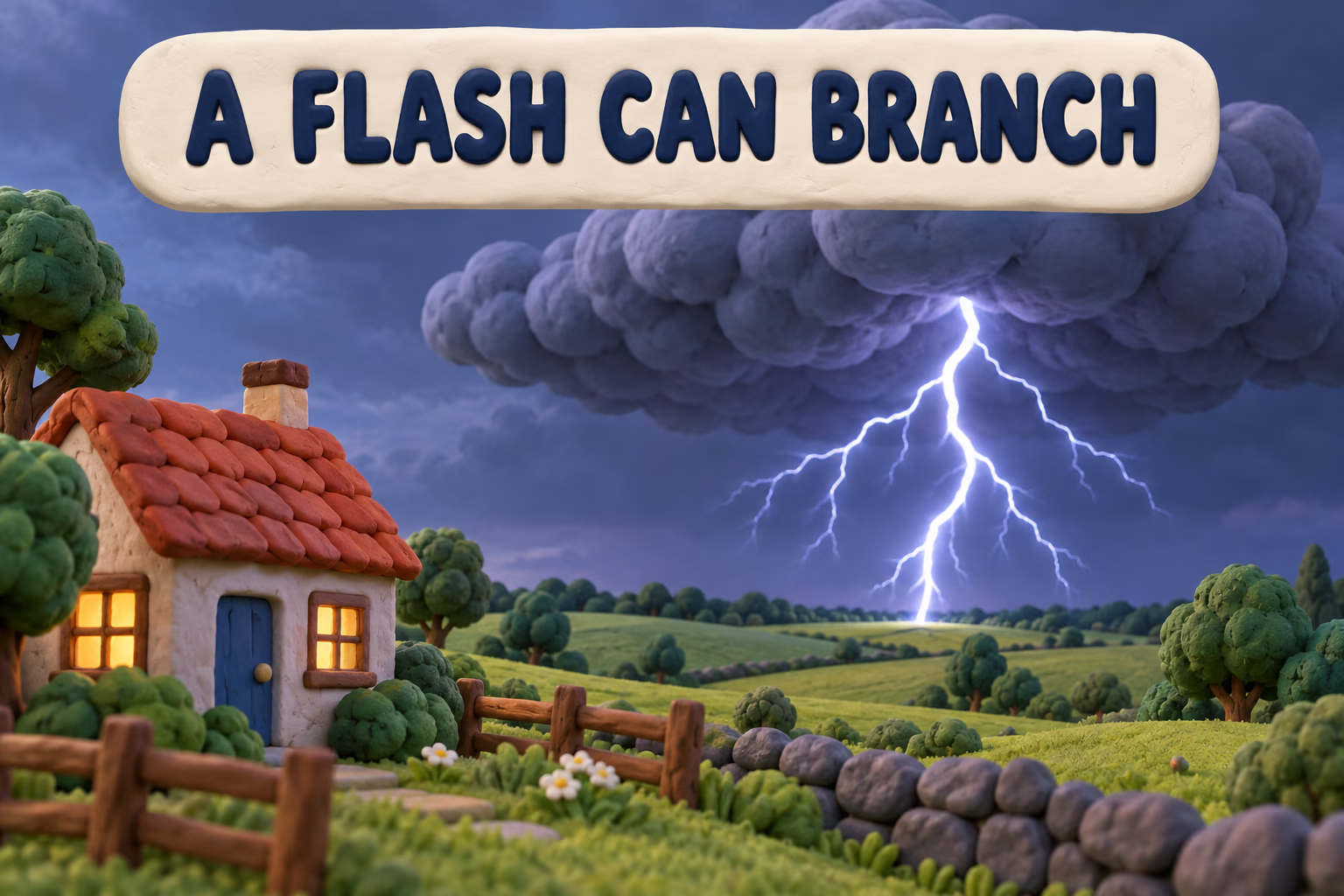
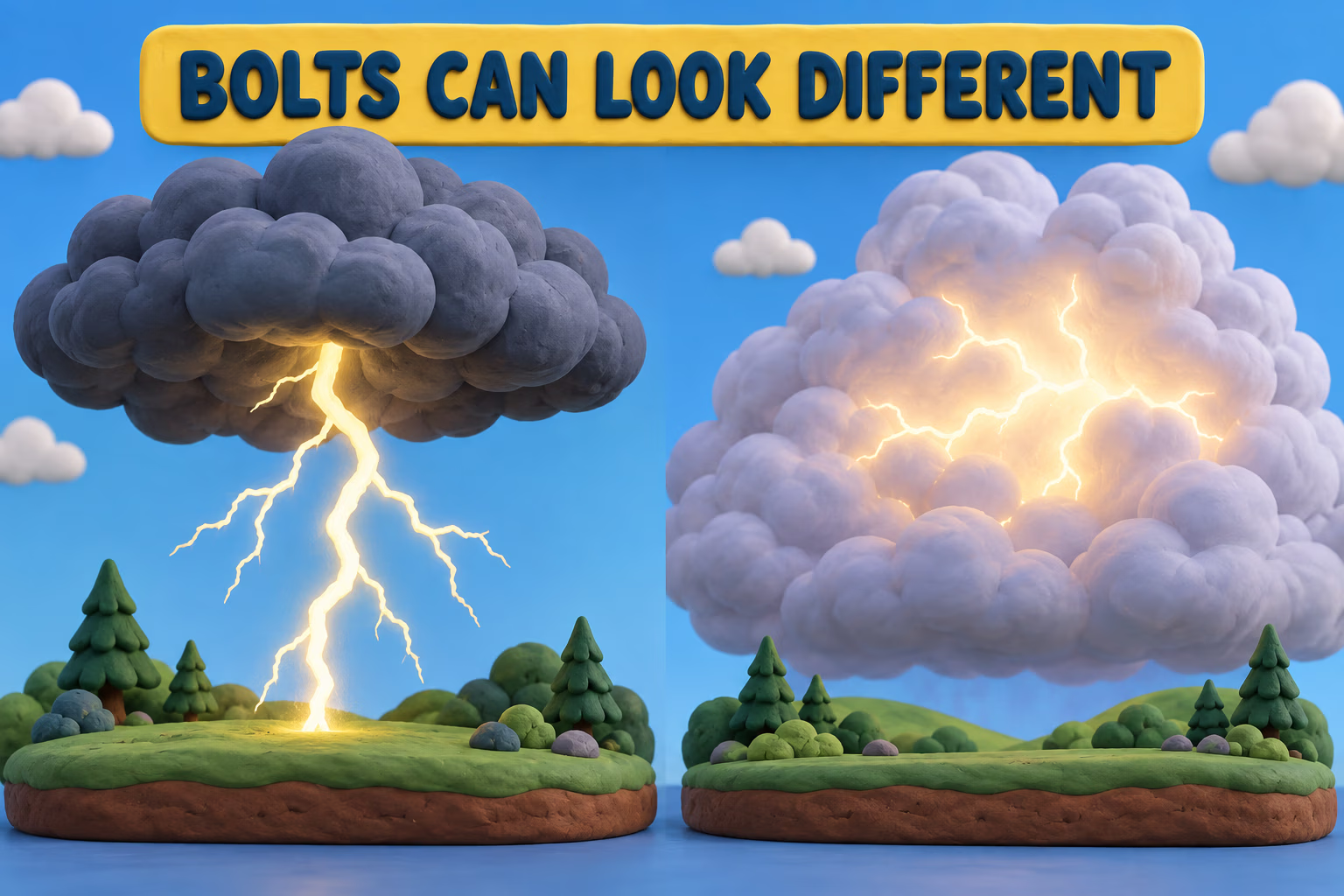
Start with a visible feature: bright or brilliant for light, branched or forked for shape, and brief or repeated for how the flashes appear over time. Use a comparison only when it clarifies what the reader would see. Lightning flashes can branch, and cloud-to-ground and in-cloud flashes can look different; these are observations, not judgments about how safe a storm is.
What is the difference between lightning and thunder?
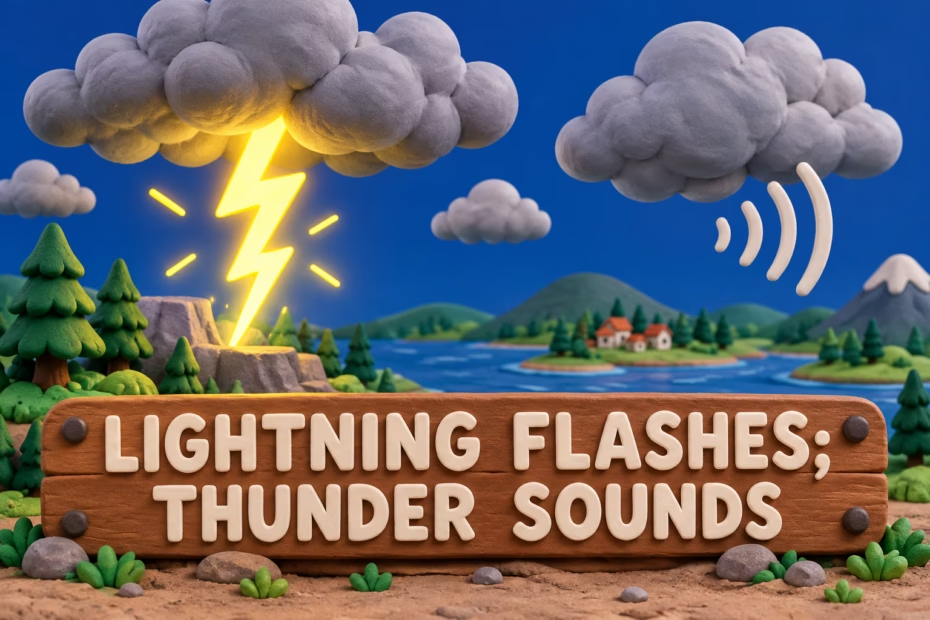
Lightning is the electrical discharge and the bright flash we see. Thunder is the sound created as air along the lightning channel heats rapidly, expands, then cools and contracts. So crackling can describe a sound of thunder, but it does not describe a sound made by the visible lightning itself. The National Weather Service explains both the types of flashes and how thunder forms.
Are positive and negative adjectives antonyms of lightning?
No. These labels group a writer’s impression; they are not opposite meanings of the noun lightning. The same flash might look dazzling to one observer and alarming to another. Separate the observed event from its impact and from your response:
| What the word describes | Examples | Example in context |
|---|---|---|
| Visible appearance | bright, brilliant, branching, jagged | “Jagged flashes appeared beyond the ridge.” |
| Pattern or timing | repeated, brief, sudden, distant | “Brief flashes lit the clouds at intervals.” |
| Physical impact | damaging, destructive | Use these only when a strike or its consequences are established. |
| Observer’s response | alarming, awe-inspiring, terrifying | “The sudden flash was alarming to the hikers.” |
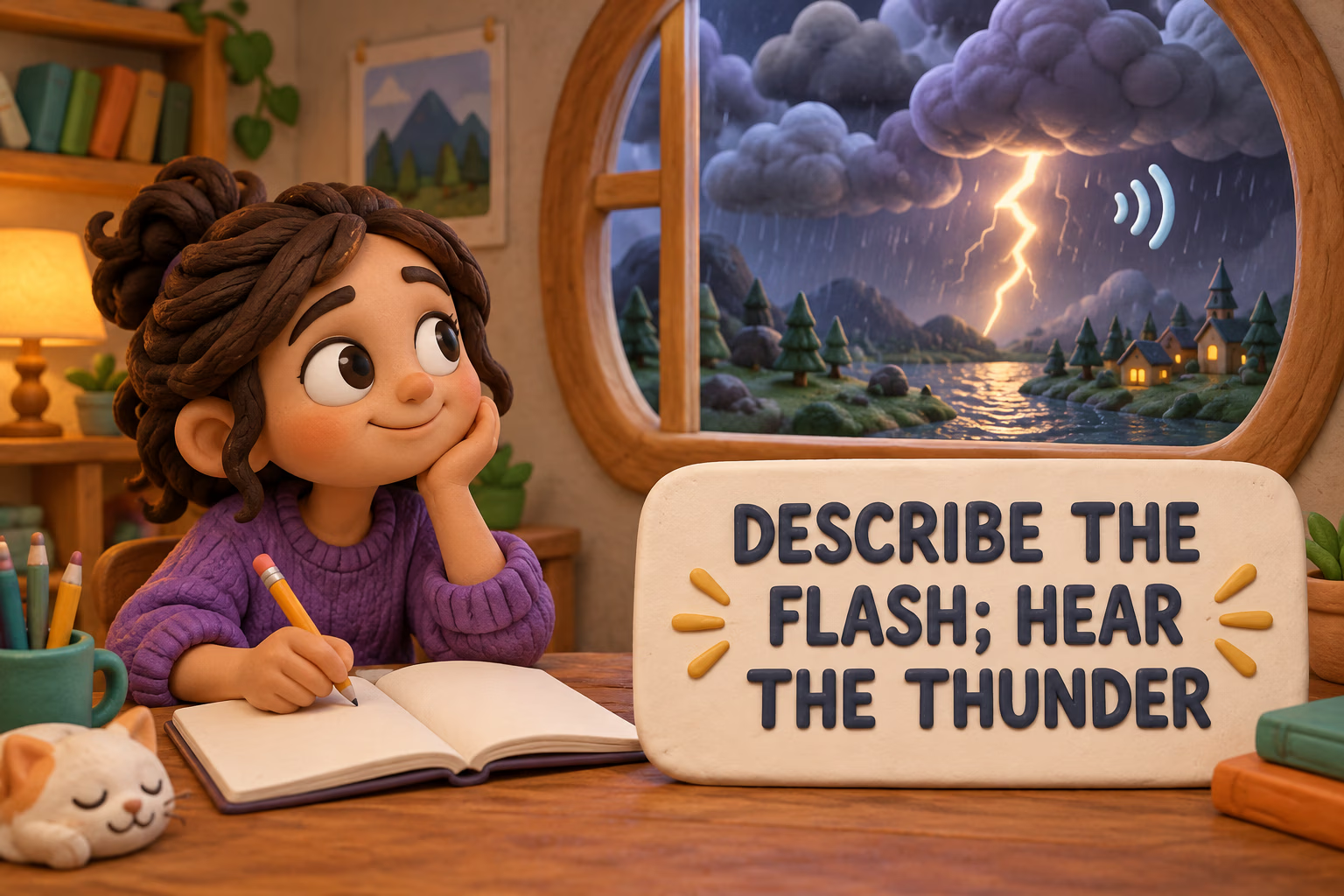
Describe the event without implying that it is safe to watch lightning from an exposed place. Sources: National Weather Service, types of lightning flashes, how thunder forms, outdoor lightning safety, lightning safety guidance, and lightning tips.
Note on the original section below: Its “synonyms for lightning” are descriptive words, not words with the same meaning as lightning; its positive and negative groupings describe subjective impressions, not true antonyms. It also uses “crackling lightning” for a sound, though crackling can describe thunder, which is produced as air rapidly heats and expands along a lightning channel. The original wording and examples are retained unchanged.
Lightning, with its awe-inspiring power and electrifying presence, has captivated human imagination for centuries. As a natural phenomenon that combines the beauty of light and the force of nature, lightning is a sight to behold. But how can we put into words the intensity and magnificence of this electrifying display? In this article, I’ll explore a range of adjectives that can help us describe lightning in all its dazzling glory. From crackling and dazzling to fierce and brilliant, these adjectives will paint a vivid picture of the electrifying beauty that is lightning. So, let’s dive in and discover the perfect words to capture the essence of this natural wonder.
How to Describe lightning? – Different Scenarios
Lightning in the Night Sky
- Dazzling: The burst of light from lightning illuminates the night sky, creating a dazzling spectacle.
- Ethereal: Lightning’s glow against the dark backdrop of the night sky gives it an ethereal quality.
- Electrifying: The sudden bright flash and crackling sound make lightning an electrifying presence in the night.
- Dramatic: Lightning’s dramatic presence can’t be denied as it lights up the entire horizon.
| Adjective | Example Sentence |
|---|---|
| Dazzling | The lightning was dazzling to behold. |
| Ethereal | The ethereal glow of lightning enchanted the sky. |
| Electrifying | The electrifying flash of lightning illuminated the darkness. |
| Dramatic | The lightning created a dramatic effect across the night sky. |
Lightning in a Thunderstorm
- Fierce: Lightning strikes with fierce intensity, lighting up the sky during a thunderstorm.
- Powerful: The powerful bolts of lightning command attention during a storm, symbolizing nature’s force.
- Crackling: The crackling sound that accompanies lightning adds an element of excitement and anticipation.
- Magnificent: Lightning’s magnificent display during a thunderstorm captivates our senses.
| Adjective | Example Sentence |
|---|---|
| Fierce | The fierce lightning illuminated the stormy sky. |
| Powerful | The powerful bolts of lightning cracked through the stormy atmosphere. |
| Crackling | The crackling lightning added an electric atmosphere to the storm. |
| Magnificent | The lightning’s magnificent display awed everyone who witnessed it. |
- Dynamic: Lightning in nature is a dynamic and ever-changing spectacle, painting the sky in vibrant colors.
- Majestic: The majestic bolts of lightning stretch across the sky, showcasing nature’s grandeur.
- Enchanting: There’s something enchanting about the way lightning dances across the horizon, captivating our gaze.
Describing Words for lightning in English
When it comes to describing lightning, there are a variety of words that capture its awe-inspiring nature. Here are some adjectives that can be used to paint a vivid picture of this incredible natural phenomenon.
- Dazzling: Lightning can be described as dazzling when it lights up the sky with its brilliant flashes. It’s like nature’s own fireworks display, captivating anyone who is lucky enough to witness it.
- Ethereal: There’s something ethereal about lightning, as if it exists in a realm beyond our own. Its mysterious beauty adds an element of enchantment to the night sky.
- Electrifying: Lightning is truly electrifying, both literally and figuratively. Its powerful bolts of electricity can be felt in the air, and they never fail to leave us in awe of nature’s immense energy.
- Dramatic: There’s no denying that lightning is dramatic. The sudden crackling sound followed by a flash of light can create a sense of excitement and drama in the atmosphere.
- Fierce: Lightning can also be described as fierce, symbolizing the raw power of nature. Its bolts can strike with intensity and force, leaving a lasting impression on all who witness it.
- Powerful: Lightning packs a powerful punch. Its bolts can reach temperatures hotter than the surface of the sun and carry immense amounts of electrical energy.
- Crackling: The sound of thunder accompanying lightning is often described as crackling. It’s like the sky itself is rumbling, adding to the intensity of the moment.
- Magnificent: Lightning is undeniably magnificent. Its vast and striking displays can leave us truly mesmerized by the wonders of the natural world.
These adjectives help us capture the essence of lightning in various situations, whether it’s the dazzling display in the night sky, the fierce power of a thunderstorm, or the dynamic beauty of nature in action.
To summarize, lightning can be described as dazzling, ethereal, electrifying, dramatic, fierce, powerful, crackling, and magnificent. Each of these descriptive words helps convey the awe-inspiring nature of this natural wonder.
Remember to keep these words in mind when you teach kids about lightning and expose them to the wonders of the world around us.
Adjectives for lightning
Positive Adjectives for lightning with 12 Example Sentences
When describing lightning in a positive light, there are several adjectives that can capture its awe-inspiring nature. Here are twelve examples along with their usage in sentences:
| Adjective | Example Sentence |
|---|---|
| Dazzling | The lightning was dazzling, illuminating the night sky. |
| Ethereal | The ethereal lightning flickered gracefully overhead. |
| Electrifying | The storm filled the air with an electrifying lightning display. |
| Dramatic | The storm’s dramatic lightning lit up the entire horizon. |
| Fierce | The lightning’s fierce bolts slashed through the darkness. |
| Powerful | The sky was ablaze with powerful bolts of lightning. |
| Crackling | The sound of crackling lightning filled the stormy air. |
| Magnificent | It was a magnificent sight to behold as lightning danced across the sky. |
| Dynamic | The dynamic lightning show was like nature’s own fireworks. |
| Majestic | The majestic lightning took center stage amidst the storm. |
| Enchanting | The enchanting lightning display mesmerized everyone. |
| Brilliant | The stars paled in comparison to the brilliant lightning. |
Negative Adjectives for lightning with 5 example sentences
While lightning can be a captivating natural phenomenon, there are also times when it is described using negative adjectives. Here are five examples along with their usage in sentences:
| Adjective | Example Sentence |
|---|---|
| Menacing | The menacing lightning bolts struck fear in our hearts. |
| Terrifying | The terrifying lightning storm sent shivers down our spines. |
| Destructive | The destructive power of lightning caused extensive damage. |
| Intense | The intense lightning storm filled us with unease. |
| Alarming | The alarming lightning flashes illuminated the dark clouds. |
As a teacher, you can use these adjectives to teach students about lightning and its various qualities. By exposing them to the wonders of the natural world, you can inspire curiosity and a deeper appreciation for the beauty and power of lightning.
Synonyms and Antonyms with Example Sentences
Synonyms for lightning
When it comes to describing lightning, there are many synonyms we can use to convey its unique characteristics. Here are some alternative words you can use to capture the awe-inspiring nature of lightning:
- Dazzling: The lightning was dazzling as it lit up the night sky.
- Ethereal: The ethereal glow of the lightning created an otherworldly atmosphere.
- Electrifying: The electrifying burst of lightning sent shivers down my spine.
- Dramatic: The dramatic display of lightning illuminated the dark storm clouds.
- Fierce: The fierce bolts of lightning danced across the horizon.
- Powerful: Witnessing the powerful strikes of lightning reminded me of nature’s might.
- Crackling: The crackling sound of lightning echoed through the thunderstorm.
- Magnificent: The magnificent lightning bolts were a sight to behold.
- Dynamic: The dynamic energy of the lightning filled the air with excitement.
- Majestic: The majestic lightning arced across the sky, captivating everyone’s attention.
- Enchanting: The enchanting lightning display mesmerized us with its beauty.
- Brilliant: The brilliant flashes of lightning illuminated the landscape.
Antonyms for lightning
While lightning can be described in positive terms, it’s important to also acknowledge its potentially negative aspects. Here are some antonyms that can be used to describe lightning in a different light:
- Menacing: The menacing lightning intimidated us with its ominous presence.
- Terrifying: The terrifying lightning bolts sent fear coursing through our veins.
- Destructive: The destructive nature of the lightning caused damage to trees and structures.
- Intense: The intense bursts of lightning created a tense atmosphere.
- Alarming: The alarming lightning strikes reminded us of the power of nature.
Remember, using these adjectives when teaching children about lightning can inspire curiosity and a deeper appreciation for its beauty and power.
Conclusion
Describing lightning can be a captivating and exhilarating experience. Throughout this article, we have explored a range of adjectives that can be used to vividly depict the nature of lightning. From positive words like dazzling, ethereal, and electrifying to negative terms such as menacing and intense, these adjectives allow us to paint a complete picture of the awe-inspiring power and beauty of lightning.
By incorporating these adjectives into our descriptions, we can engage our readers’ senses and evoke a deeper appreciation for the magnificence of lightning. Whether we are teaching children about the wonders of nature or simply seeking to convey the intensity of a thunderstorm, these adjectives serve as powerful tools to capture the essence of lightning.
Remember, when using these adjectives, it is important to provide context and create vivid imagery through example sentences. This will help to enhance the reader’s understanding and create a more immersive experience.
So, the next time you witness a lightning storm, don’t just describe it as “bright” or “loud.” Instead, reach for these descriptive adjectives and let your words ignite the imagination of your audience.


