How to Choose the Right Adjectives for Mountains
A useful mountain description gives the reader something they can picture. Start with one observable feature—shape, height, color, surface, or weather—then add a word for the mood only if it fits. “A serrated ridge rose above the shadowed valley” is more specific than a string of broad praise such as “majestic, beautiful, and breathtaking.”
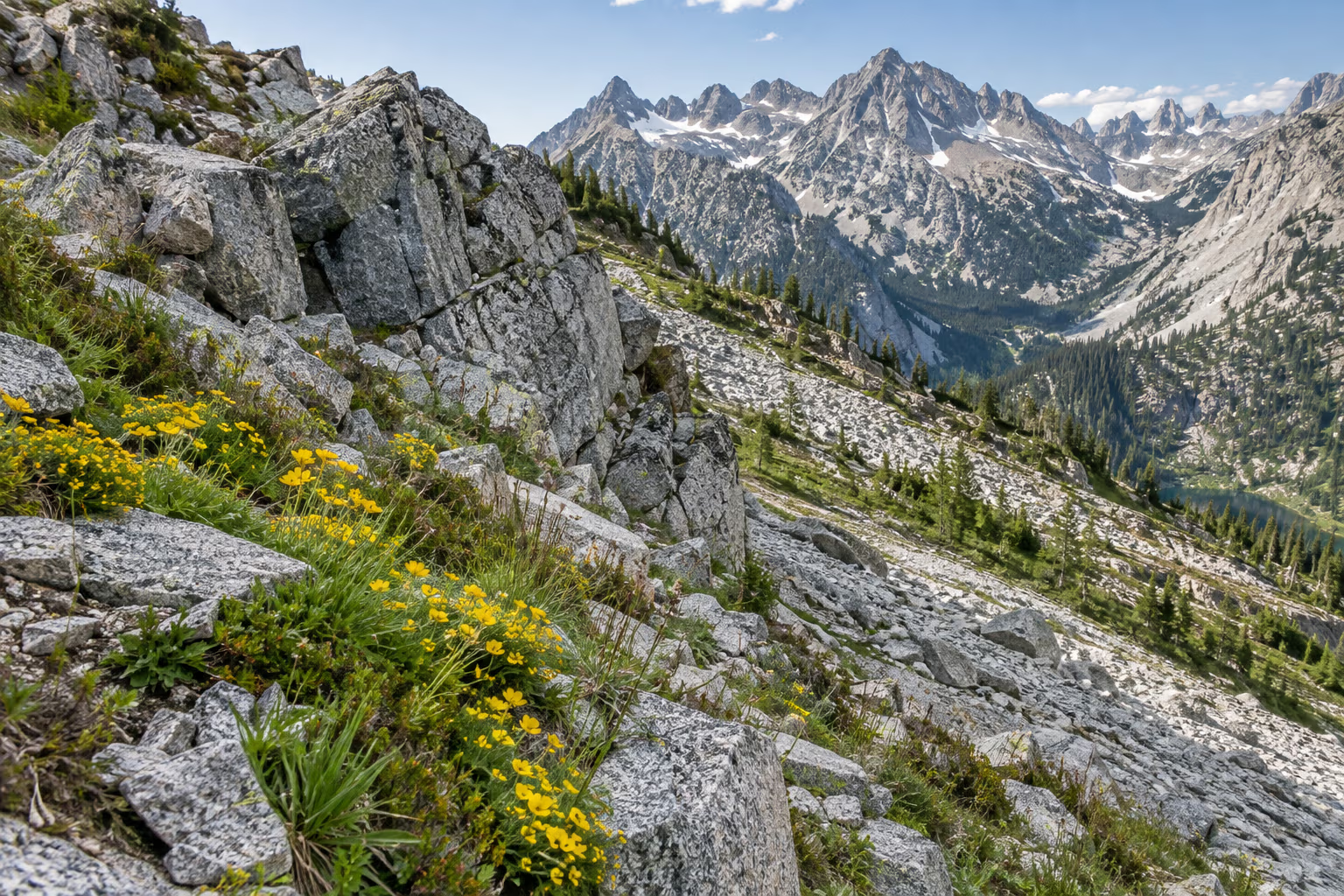
The same mountain can look different as light and weather change. A clear morning may reveal a craggy outline; cloud can make the upper slopes seem veiled; evening light may turn bare rock golden. The most effective adjective is the one that helps a reader see the scene you mean.
Mountain Adjectives by What They Describe
Shape, height, and landform
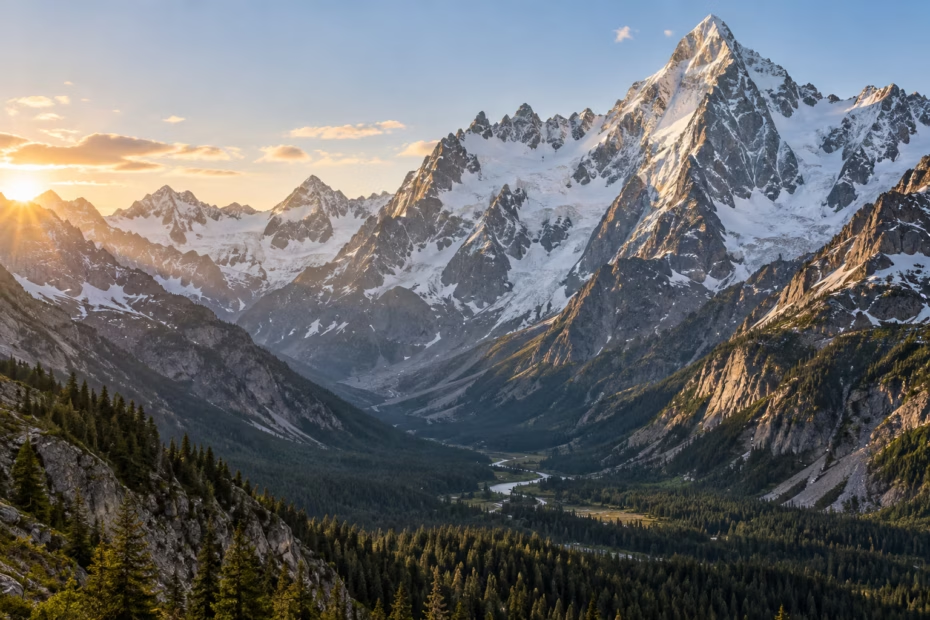
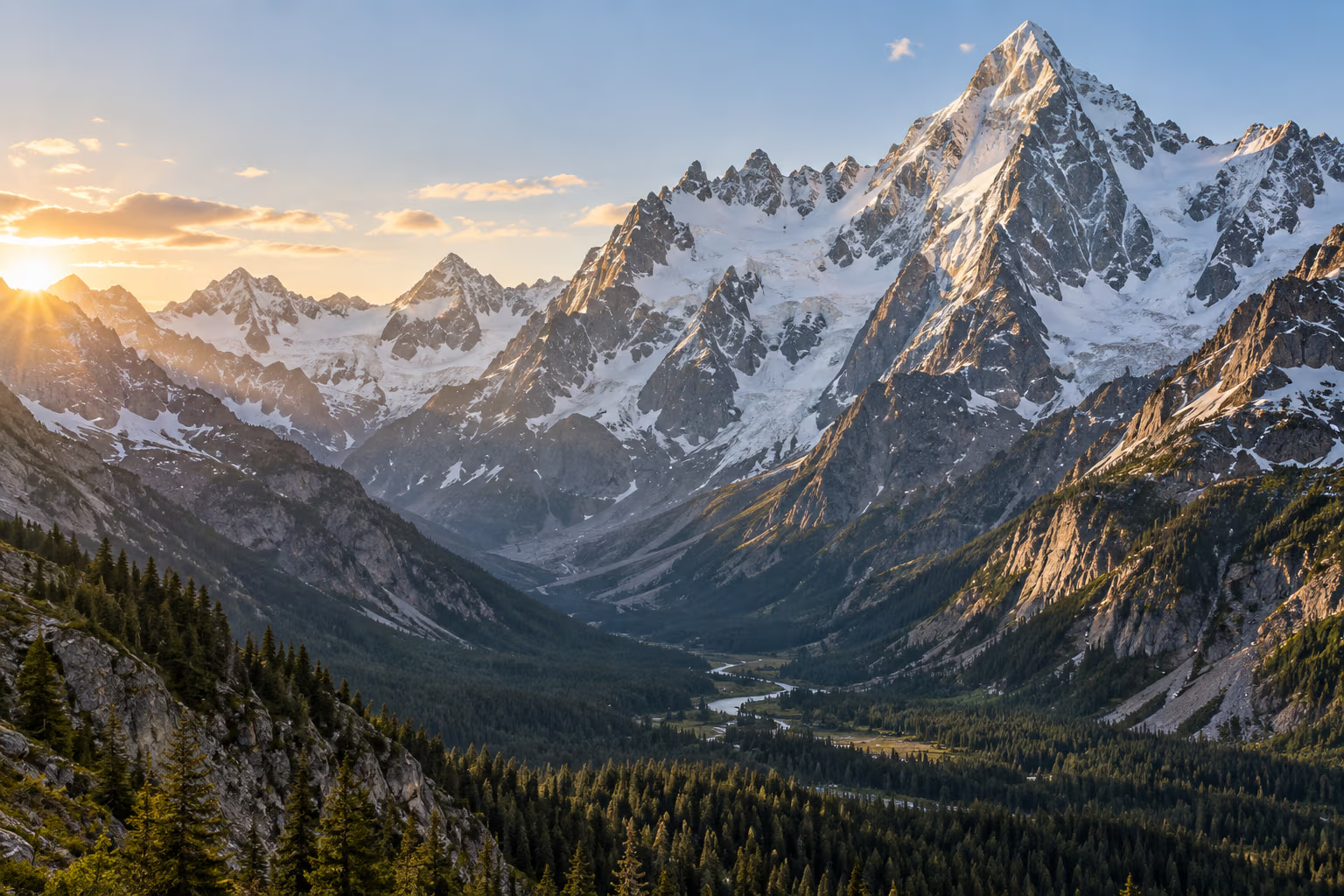
Choose a shape word that matches the outline. Pointed, pyramidal, and spire-like suggest steep peaks; rounded and dome-shaped suggest smoother summits; jagged, serrated, and craggy fit broken ridgelines. Towering describes a mountain that seems very high from a nearby viewpoint, while lofty often sounds more literary. These words describe appearance, not a measured elevation.
- Jagged peaks cut across the pale evening sky.
- A rounded summit rose beyond the rolling foothills.
- The narrow ridge looked serrated against the clouds.
- From the valley floor, the towering cliffs seemed almost vertical.
Some landform terms are more exact than everyday adjectives. A ridge is a long, narrow high area; a summit is the highest point of a mountain or hill; and a valley is lower land between higher areas. In glaciated landscapes, an arête is a sharp ridge and a cirque is a steep-walled hollow near a valley head. Use these terms when the feature is actually present rather than as decorative synonyms. The USGS glossary and National Park Service materials provide examples of these glacial landforms.
Rock, vegetation, and color
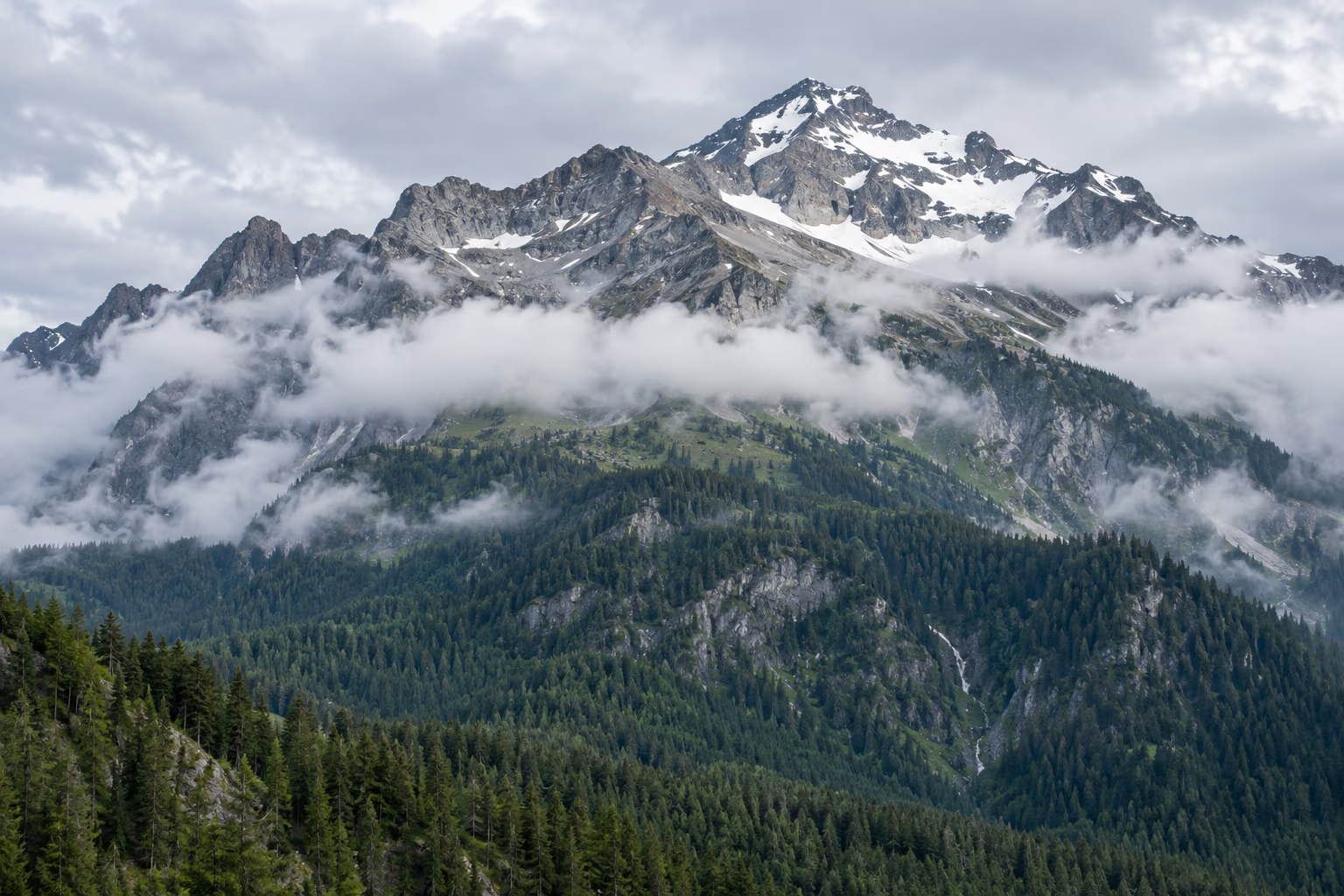
Surface words help distinguish one slope from another. Try rocky, bare, gravelly, stony, or ice-covered for the ground; forested, pine-clad, grassy, or flower-speckled for vegetation. Color words work best when attached to a visible object: rust-colored scree, dark granite, green foothills, or white snowfields. Avoid implying that every mountain has one typical color; rock type, plants, season, and light all affect what a viewer sees.
- Gray, fractured rock bordered the narrow trail.
- Flower-speckled meadows softened the base of the slope.
- A dark, forested ridge stood behind the sunlit snowfield.
- Loose, rust-colored scree covered the exposed upper slope.
Weather, light, and visibility
Weather adjectives describe conditions at a particular time, not permanent qualities of the mountain. A peak may be misty, cloud-wrapped, wind-scoured, snow-dusted, or sunlit in one scene and clear in the next. Hazy can describe distant air; shrouded suggests that cloud or mist obscures much of the view. Words such as alpine refer to a high-elevation environment, but the exact boundary varies with region and climate. Treeline is also not at one universal altitude; the National Park Service notes that local temperature, snow, moisture, latitude, and exposure affect it.
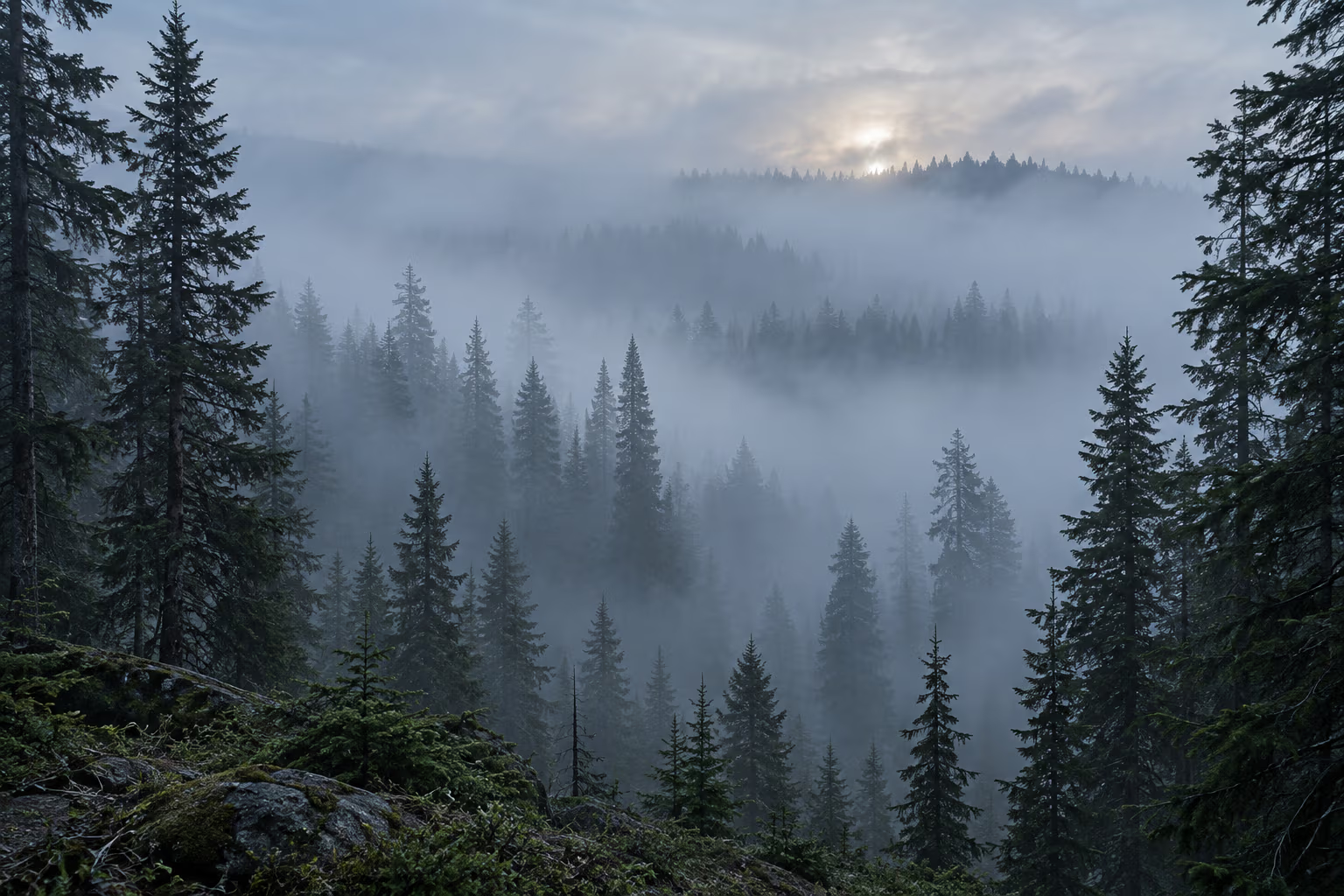
- Mist-veiled slopes faded into the distance after the rain.
- Wind-scoured snow exposed dark rock along the ridge.
- Sunlit peaks glowed above a cloud-filled valley.
- The hazy range looked blue from across the plain.
Mood and atmosphere
Words such as serene, dramatic, intimidating, remote, and imposing describe the impression a scene creates. They are subjective, so pair them with the detail that caused the impression: “The silent, fog-bound pass felt remote” explains more than “The mountain was mysterious.” A steep drop may feel intimidating to a hiker, while the same view may feel exhilarating to someone watching from a safe overlook.
- The immense, silent range made the campsite feel remote.
- Sunlight breaking through the storm gave the scene a dramatic quality.
- The sheltered basin felt peaceful after the exposed climb.
- From the trail, the cliff face looked intimidating.
Quick Guide: Which Word Fits?
| If you notice… | Try words such as… | Example |
|---|---|---|
| A broken, uneven outline | jagged, craggy, serrated | A jagged ridge rose above the pass. |
| A smooth, curved top | rounded, domed, rolling | Rounded peaks softened the horizon. |
| High, bare rock | rocky, exposed, craggy | Exposed rock gleamed after the rain. |
| Cloud hiding part of the view | misty, veiled, shrouded | The shrouded summit appeared and vanished. |
| Snow on a peak | snow-capped, snow-dusted, icy | Snow-capped peaks reflected the morning light. |
| A strong emotional impression | imposing, serene, dramatic | The imposing cliffs framed the narrow trail. |
Tips for Stronger Mountain Descriptions
- Use a viewpoint. A mountain may seem towering from the valley and less imposing from a distant plain.
- Choose one precise detail. Replace “beautiful mountain” with “a snow-bright summit above a dark pine forest.”
- Separate fact from feeling. “Steep” describes a slope; “daunting” describes a viewer’s response to it.
- Watch for false synonyms. A ridge, summit, cliff, slope, and valley are different features, not interchangeable names for a mountain.
- Avoid stacking near-synonyms. Two or three complementary details usually create a clearer image than a long string of praise.
Mountain Adjectives for Different Writing Tasks
For a story, combine one physical detail with a mood: “A narrow, cloud-veiled ridge made the crossing feel uncertain.” In a travel description, focus on what a visitor can see: “The trail climbs past pine-covered slopes to a rocky overlook.” For a science report, favor observable or technical wording—high-elevation, glaciated, forested, or snow-covered—and avoid relying on judgments such as “beautiful” or “majestic.”
For younger readers, simple words can still be vivid: tall, rocky, green, steep, and snowy. Add a short comparison or action: “The steep path wound up the green mountain.” For more advanced writing, words such as precipitous, undulating, and wind-scoured can add precision when they match the scene.
Sources and Further Reading
- U.S. Geological Survey: Glacier National Park geology and glacial landforms
- National Park Service: Aspect, treeline, and climate
- U.S. Geological Survey: Geologic terms glossary
Frequently Asked Questions
What are some good adjectives for mountains?
Useful choices include rugged, jagged, towering, snow-capped, forested, misty, and serene. Select a word that describes a visible feature or a clearly stated mood.
What is a more precise alternative to “beautiful”?
Name the detail that makes the mountain attractive to you: a sunlit summit, green foothills, snow-bright ridge, or clear view across the valley. The concrete detail lets readers form their own impression.
Can “majestic” describe any mountain?
It can express admiration, but it is an opinion rather than a measurable feature. In factual description, pair it with evidence—such as height, scale, or a broad view—or choose a more literal adjective.
How do I describe a mountain for children?
Use familiar words and simple details: a tall mountain, a steep path, a rocky peak, green trees, or white snow. Then show what happens: “We followed the steep path to the snowy top.”

Original Mountain Word Lists and Examples
The original examples and adjective tables follow below as published source material.
When it comes to describing the majestic beauty of mountains, words often fall short. But with the right adjectives, we can capture the breathtaking allure of these natural wonders. In this article, I’ll be sharing a collection of adjectives that perfectly encapsulate the awe-inspiring qualities of mountains. From towering peaks to serene valleys, these words will help you paint a vivid picture of these magnificent landscapes.
Imagine standing at the foot of a colossal mountain, its rugged surface reaching towards the heavens. How would you describe such a sight? With adjectives like “majestic,” “towering,” and “grand,” you can convey the sheer magnitude and grandeur of these natural giants. But mountains are not just about their size; they also possess an air of mystery and tranquility. Words like “serene,” “peaceful,” and “ethereal” capture the serene atmosphere that often surrounds these majestic formations.
Whether you’re a writer looking to add depth to your descriptions or simply an admirer of nature’s wonders, this article will provide you with a variety of adjectives to bring the beauty of mountains to life. So, let’s dive into the world of mountains and discover the perfect words to describe their awe-inspiring presence.
When it comes to describing mountains, there are numerous scenarios to consider. Each scenario presents a unique perspective and allows us to focus on specific aspects of these majestic natural wonders. Here are some different scenarios that can help you paint a vivid picture of mountains in your writing:
How to Describe mountains? – Different Scenarios
1. Describe the Physical Appearance
To describe the physical appearance of mountains, focus on their shape, size, and structure. Here are a few examples:
- Towering peaks
- Jagged mountain ridges
- Gentle slopes that stretch for miles
- Massive rock formations
- Snow-capped summits
- Steep cliffs and precipices
2. Portraying the Colors and Textures:
Mountains showcase various colors and textures that add to their unique charm. Here are a few ways to describe them:
- Verdant green valleys
- Earthy brown and rocky surfaces
- Vibrant wildflowers dotting the landscape
- Glistening white snowfields
- Moss-covered boulders
- Icy blue glaciers
3. Conveying the Atmosphere and Weather:
The weather and atmosphere surrounding mountains play a significant role in shaping their character and appeal. Consider these examples:
- Crisp mountain air, tinged with the scent of pine
- Misty mornings cloaking the peaks
- Clear blue skies stretching over the summits
- Dramatic thunderstorms rumbling through the valleys
- Golden sunlight painting the mountains in warm hues during sunrise or sunset
4. Eliciting Emotions and Sensations:
Mountains often evoke strong emotions and sensations. Use these adjectives to bring those feelings to life:
- Awe-inspiring
- Majestic
- Serene
- Peaceful
- Ethereal
- Transcendent
By employing these adjectives and considering various scenarios, you can effectively describe the beauty and grandeur of mountains. Whether you’re writing a poem, a story, or simply enjoying a conversation about nature, these words will help you paint a vivid picture in the mind of your audience.
Remember, when describing mountains, tap into your creativity and imagination. Use the power of language to transport your readers to these breathtaking landscapes and allow them to experience the wonders of nature through your words.
Let’s move on to the next section to explore more adjectives that can be used to describe mountains in different ways.
Describing Words for mountains in English
When it comes to describing mountains, there are a plethora of adjectives that can capture the beauty and splendor of these majestic landforms. From the towering peaks to the breathtaking landscapes, I will guide you through a list of descriptive words that will bring mountains to life. Let’s dive in!
Adjectives for Size and Shape:
- Gigantic: Mountains can be enormous and awe-inspiring in their size, evoking a sense of grandeur.
- Majestic: This word captures the regal and majestic nature of mountains, showcasing their magnificence.
- Sculpted: Describing mountains as “sculpted” highlights their intricate and carefully formed features.
- Undulating: Some mountains possess gentle slopes that undulate gracefully, creating a rolling and picturesque beauty.
Adjectives for Color and Texture:
- Verdant: Mountains covered in lush green vegetation exhibit a vibrant and refreshing appearance.
- Snow-capped: This term is perfect for mountains adorned with a pristine blanket of glistening snow at their peaks.
- Rocky: When describing rugged and rocky mountainsides, this adjective paints a picture of raw and untamed terrain.
- Crystalline: Sparkling like crystals, some mountains possess a clear and crystalline quality, radiating beauty.
Adjectives for Atmosphere and Weather:
- Serene: This adjective captures the calm and tranquil atmosphere that often surrounds mountains.
- Misty: When mist gently blankets mountains, it adds an element of mystery and enchantment to the scenery.
- Breathtaking: Use this word to describe the awe-inspiring and captivating views offered by mountains.
- Invigorating: Mountains can provide an invigorating experience as fresh air and cool breezes embrace you.
- Awe-inspiring: Mountains have the power to leave us in awe, overwhelmed by their beauty and magnitude.
- Peaceful: Describing mountains as peaceful conveys a sense of tranquility and harmony with nature.
- Humbling: These towering giants can make us feel small and humble, reminding us of the grandeur of the world.
- Euphoric: The exhilarating feeling of standing atop a mountain peak can be described as euphoric.
Adjectives for mountains
Positive Adjectives for Mountains
When I think of mountains, many positive adjectives come to mind. Here are some words that perfectly capture the beauty and grandeur of these magnificent landscapes:
| Adjective | Definition | Example Sentence |
|---|---|---|
| Majestic | Having grandeur or beauty | The view from the top of the mountain was absolutely majestic. |
| Breathtaking | Astonishing or awe-inspiring | The breathtaking sunset painted the mountain peaks in vibrant colors. |
| Serene | Calm and peaceful | Standing on the edge of the cliff, I felt the serene beauty of the mountains. |
| Towering | Extremely tall or high | We were surrounded by towering mountains that seemed to touch the sky. |
| Picturesque | Visually charming or quaint | The tiny village nestled among the picturesque mountains was like a postcard. |
These adjectives not only describe the physical qualities of mountains but also evoke a sense of wonder, tranquility, and awe that they inspire within us.
Negative Adjectives for Mountains
While mountains are often seen as majestic and awe-inspiring, there are also negative adjectives to describe them. These words may convey a sense of danger, harshness, or difficulty associated with mountainous terrains:
| Adjective | Definition | Example Sentence |
|---|---|---|
| Treacherous | Hazardous or dangerous | Climbing the steep peaks was a treacherous task. |
| Barren | Empty or lacking vegetation | The barren mountainside offered no shelter from the scorching sun. |
| Harsh | Severe or unforgiving | The harsh winds whipped through the mountain pass relentlessly. |
| Inhospitable | Unwelcoming or unfavorable | The inhospitable terrain made it challenging for any settlement. |
| Treacherous | Hazardous or dangerous | Climbing the steep peaks was a treacherous task. |
These adjectives remind us that mountains can pose challenges and can be unforgiving in their wild and rugged nature. However, they also add to the sense of adventure and excitement that exploring these natural wonders can bring.
As you teach easy words to kids, it’s important to introduce them to the diverse vocabulary associated with mountains. Using these descriptive adjectives, you can help them appreciate and understand the beauty and power of these magnificent landscapes.
Synonyms and Antonyms with Example Sentences
Synonyms for mountains
Mountains are magnificent natural wonders, and there are several synonyms that capture their unique beauty and grandeur. Here are some synonyms for mountains along with example sentences:
| Synonym | Example Sentence |
|---|---|
| Peaks | The towering peaks of the mountain range were covered in a blanket of snow. |
| Summits | We reached the summits of the mountains and were rewarded with breathtaking views. |
| Ranges | The majestic ranges stretched as far as the eye could see. |
| Hills | The green hills nestled amidst the mountains added to the picturesque landscape. |
| Cliffs | We stood on the edge of the cliff, gazing down at the valleys below. |
Antonyms for mountains
While mountains symbolize beauty and grandeur, there are also antonyms that describe the absence or opposite characteristics. Here are some antonyms for mountains along with example sentences:
| Antonym | Example Sentence |
|---|---|
| Valleys | The valleys between the mountains were lush and filled with vibrant flora. |
| Plains | As we descended from the mountains, we entered the expansive plains that stretched until the horizon. |
| Lowlands | The lowlands provided a stark contrast to the towering mountains in the distance. |
| Plateaus | The plateaus were flat and offered a panoramic view of the surrounding landscape. |
| Beaches | Far from the mountains, we found solace in the soft sandy beaches along the coast. |
Exploring the vast array of synonyms and antonyms for mountains can help us appreciate the diverse and captivating nature of these awe-inspiring landscapes. By using descriptive vocabulary, we can paint a vivid picture of mountains for children, fostering their curiosity and appreciation for the natural world.
Conclusion
In this article, we have explored the various ways to describe mountains using adjectives. By providing a comprehensive list of synonyms and antonyms, we have expanded our vocabulary and gained a deeper understanding of the natural beauty and characteristics of mountains.
From the majestic peaks and summits to the sprawling ranges and hills, each adjective paints a vivid picture of the awe-inspiring landscapes that mountains offer. Conversely, the antonyms, such as valleys, plains, lowlands, plateaus, and beaches, remind us of the contrasting features that exist in the world around us.
By encouraging children to explore this diverse vocabulary, we can foster a greater appreciation for the natural world. Through descriptive language, we can help them visualize and connect with the magnificence of mountains, instilling a sense of wonder and curiosity.
So, whether you find yourself standing at the foot of a towering cliff or gazing out at a serene valley, take a moment to reflect on the power of words and how they can enhance our understanding and appreciation of the world’s most breathtaking landscapes.


