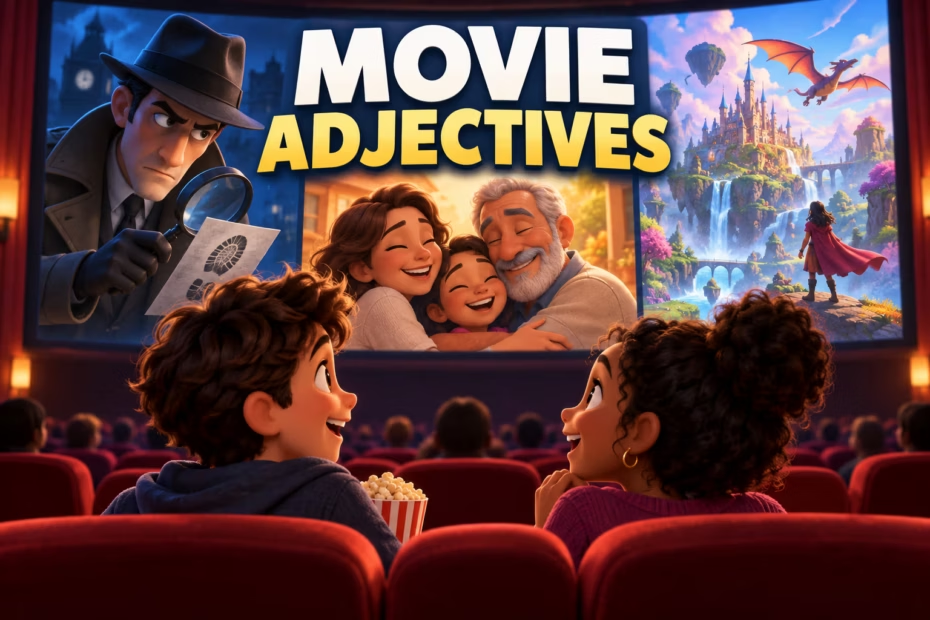
Adjectives for movies work best when they name a specific effect and point to a film feature that created it. Call a mystery gripping if it holds your attention, visually striking if its framing or color stands out, or heartwarming if its relationships prompt that reaction. These are useful judgments, not universal scores.
Key Facts at a Glance
- Choose an adjective for a film element, such as its story, pacing, acting, visuals, sound, or emotional effect.
- Support an evaluation with an observable clue, such as rapid cuts, muted dialogue, close framing, or a repeated image.
- Action-packed describes activity; it does not prove that a movie is well made or enjoyable.
- Slow-burning describes gradual development, while gripping describes how strongly a film holds a viewer’s attention.
- Use phrases such as “I found the scene moving” to distinguish a personal reaction from a claim about every viewer.
How to Choose an Adjective for a Movie
Start with what the film does, then choose the word that describes its effect. A review can move from an observable choice—such as a long pause, a tight close-up, or a sudden sound cue—to an opinion about how that choice felt. Film-analysis guides from the University of Wisconsin–Whitewater and the University of Pennsylvania treat camera work, editing, composition, light, and sound as separate features worth noticing.
| Film element | Useful adjectives | What to notice |
|---|---|---|
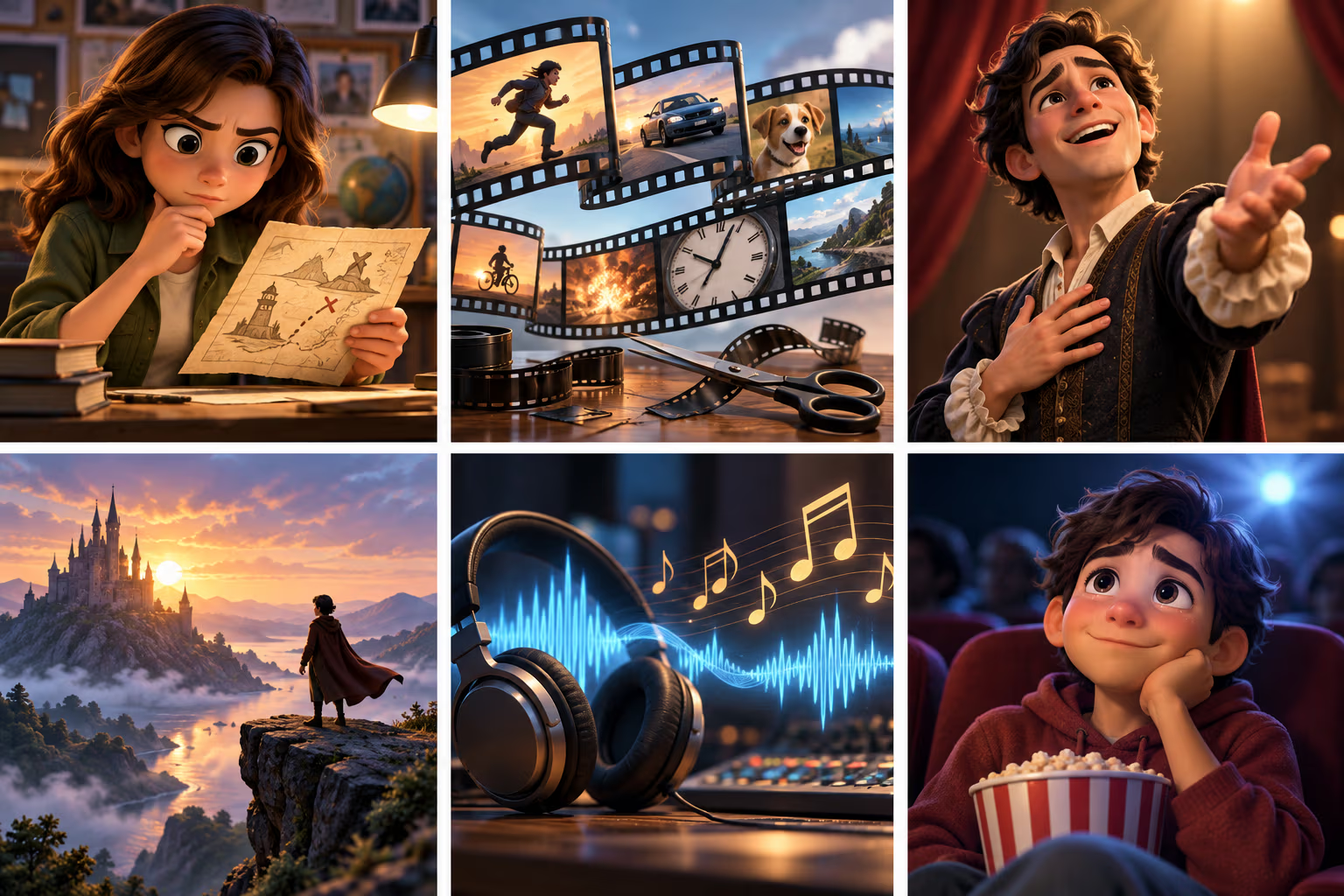
| Story and plot | Intriguing, predictable, confusing, thought-provoking | Clues, character choices, the order of events, and whether the ending follows the setup. |
| Pacing and editing | Fast-paced, slow-burning, gripping, uneven | Shot length, cut rhythm, pauses, repetition, and how quickly tension develops. |
| Performances | Convincing, understated, expressive, wooden | Dialogue delivery, gesture, timing, and how actors respond to one another. |
| Cinematography and design | Visually striking, atmospheric, intimate, muddy | Framing, camera movement, focus, light, color, setting, and composition. |
| Sound and music | Immersive, haunting, discordant, overpowering | Dialogue clarity, ambient sound, music, silence, and the balance between them. |
| Mood and emotional effect | Heartwarming, moving, chilling, hilarious | The reaction the scene produced for you; another viewer may respond differently. |
These categories are descriptive lenses, not a scoring system. A low-angle shot, a quiet soundtrack, or fast editing is an observable choice; whether that choice feels dramatic, immersive, or jarring is an interpretation. The University of Wisconsin–Whitewater Film Studies Analysis Guide outlines cinematography, editing, mise-en-scène, and sound, while Penn’s Reading Films guide asks readers to notice framing, editing rhythm, light, color, and soundtrack.
How to Make a Movie Description More Specific
A useful review sentence connects a detail to an adjective and explains the reaction: “The [film element] felt [adjective] because [observable detail].” This pattern gives readers more information than a rating word by itself.
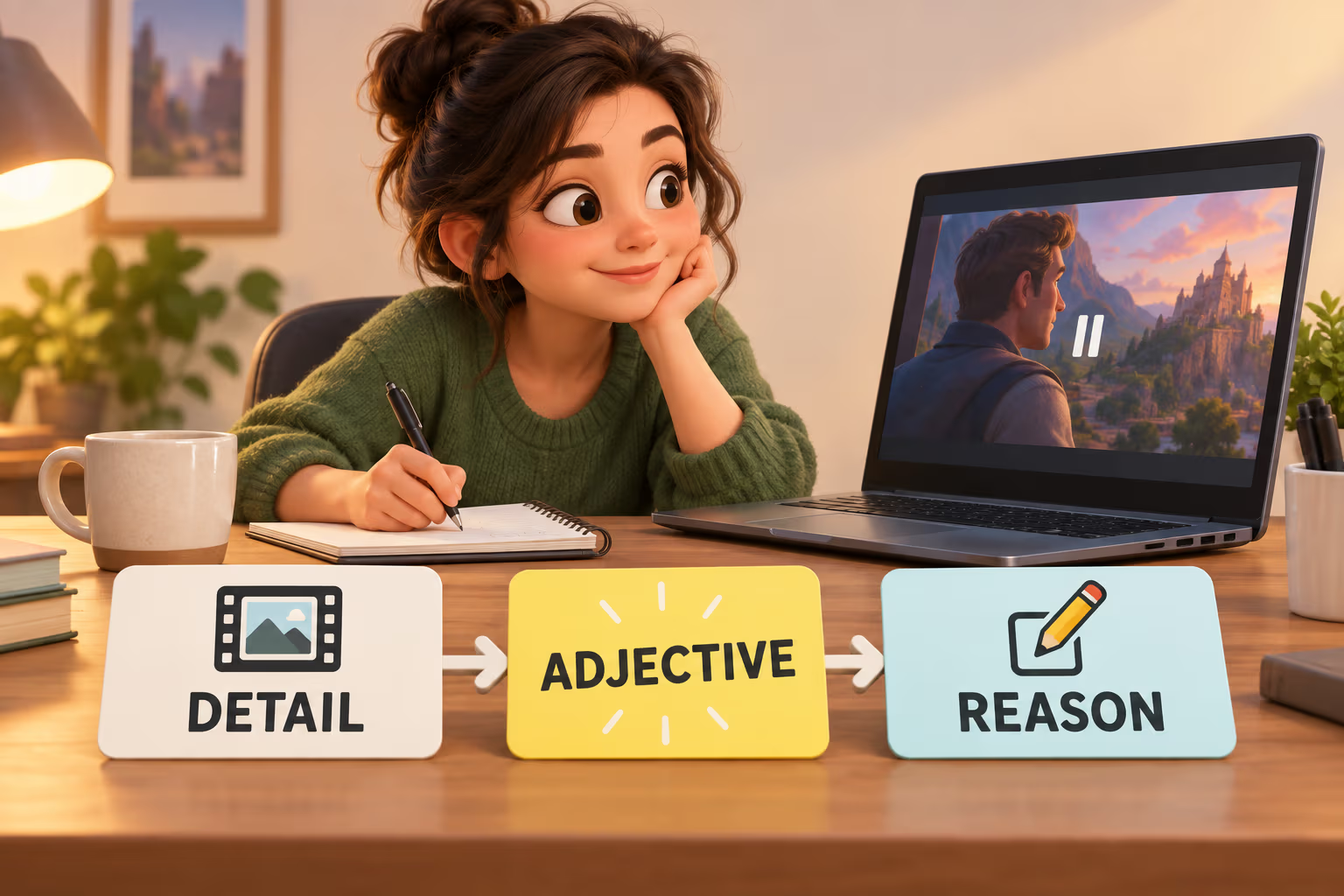
- Name the element. Decide whether you mean the plot, pacing, performance, image, sound, or mood.
- Choose a precise word. Use slow-burning for gradual development, gripping for sustained attention, and thrilling for strong excitement.
- Point to evidence. Mention a repeated clue, a long unbroken shot, muted dialogue, a sudden cut, or a shift in lighting without revealing a twist.
- Mark opinion as opinion. “I found the final conversation moving” is clear about the reviewer’s response; “the scene is moving to everyone” makes an unsupported universal claim.
| General reaction | More specific description |
|---|---|
| “The movie was boring.” | “I found the middle section slow because several scenes repeated the same argument without changing the stakes.” |
| “The movie looked beautiful.” | “The cool blue lighting and wide frames made the empty station feel atmospheric.” |
| “The film was confusing.” | “The story felt hard to follow because it moved between timelines without clear visual cues.” |
| “The acting was good.” | “The lead performance felt understated; small pauses carried more emotion than the dialogue.” |
Pacing, Genre, and Quality Describe Different Things
A movie’s pace or genre does not settle whether it is effective. Action-packed tells readers that a film has frequent action; fast-paced describes its rhythm. Neither word says whether the story is coherent, the performances are convincing, or the experience suits a particular viewer.
| Word | What it describes | What it does not guarantee |
|---|---|---|
| Action-packed | Frequent action scenes or events. | That the plot is clear or the movie is exciting to every viewer. |
| Slow-burning | Gradual development of characters, clues, or tension. | That the film is dull; a slow build can still be absorbing. |
| Gripping | A story or scene that holds a viewer’s attention. | That every viewer will be equally engaged. |
| Thrilling | A strong sense of excitement. | That the film is suspenseful in every scene or has a fast pace. |
| Predictable | A viewer’s judgment that events are easy to foresee. | That a familiar outcome cannot be satisfying or intentional. |
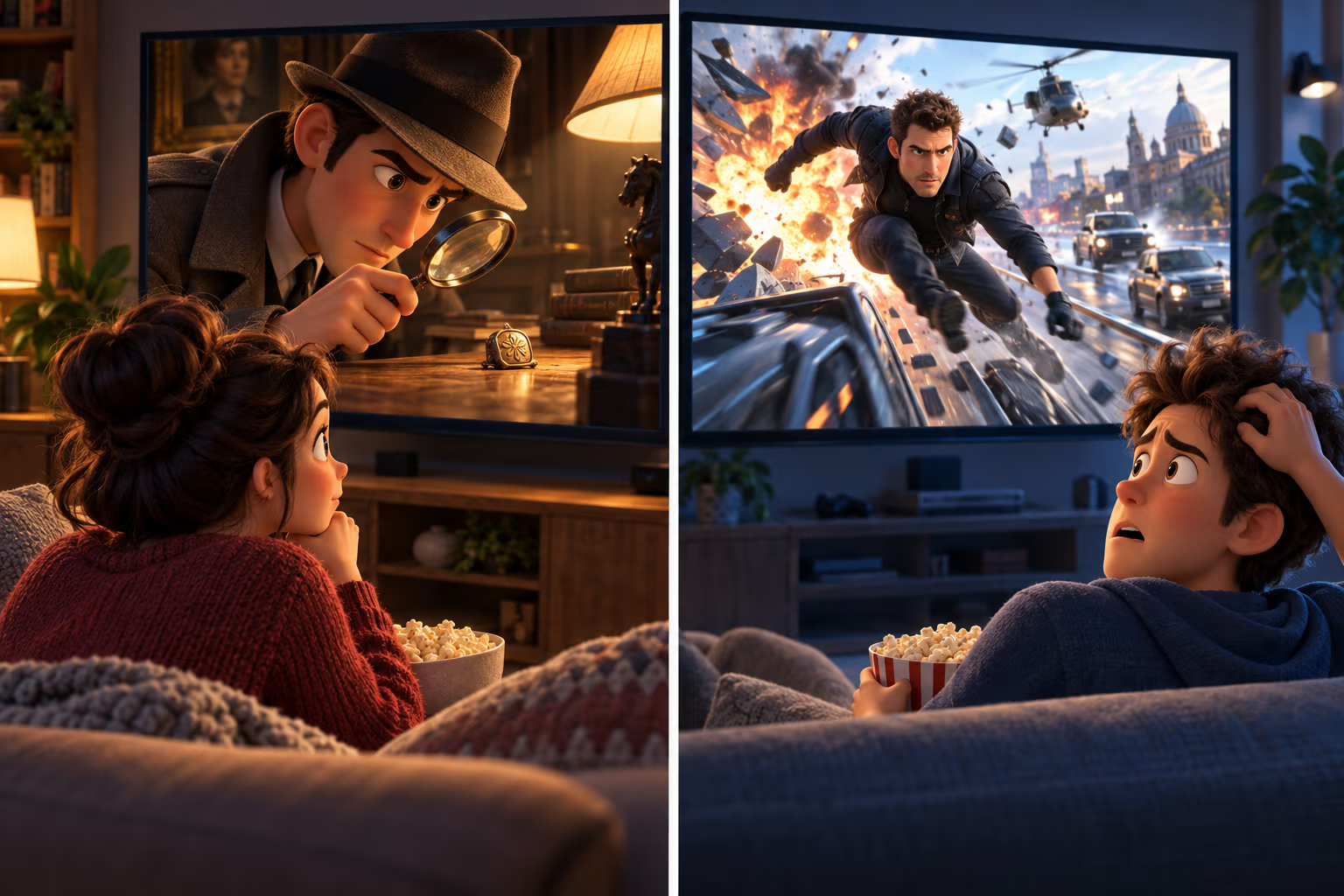
Cambridge Dictionary defines thrilling as extremely exciting and gripping as so interesting or exciting that it holds attention. The meanings overlap, but they highlight different effects: a chase may be thrilling because it feels exciting, while a quiet mystery may be gripping because its clues keep a viewer curious. Use the word that matches the reaction you mean.
Positive and Critical Movie Adjectives
Positive and critical adjectives become more helpful when they identify a strength or limitation instead of rating the whole movie without explanation. Choose a word that matches the element you observed, and make clear when the evaluation is your own.
- For story: inventive, layered, formulaic, or muddled.
- For pacing: brisk, well-paced, meandering, or uneven.
- For performances: nuanced, charismatic, wooden, or unconvincing.
- For visuals: atmospheric, expressive, cohesive, or flat.
- For sound: immersive, evocative, discordant, or overpowering. For a separate sound-word bank, see adjectives for sound.
One preserved table below displays the corrupted text clich√©. The correct spelling is cliché; Cambridge defines a cliché as an idea or expression used so often that it is no longer original. The source error remains in the preserved material, while the corrected spelling and meaning are supplied here.
Spoiler-Light Examples of Movie Adjectives
These examples describe a reaction and a visible or audible clue without revealing a major plot turn:
- “The opening was intriguing because it introduced a mystery before explaining its stakes.”
- “I found the family story heartwarming; brief scenes of shared routines made the relationships feel lived-in.”
- “The low-key lighting and narrow frames made the apartment feel claustrophobic.”
- “The soundtrack was immersive because quiet room tone gave way to music only when the tension changed.”
- “The comedy was uneven: the visual jokes landed, but repeated dialogue slowed the middle section.”
For a recommendation, pair a mood with an audience fit: “If you enjoy mysteries that reveal clues gradually, this slow-burning story may suit you.” A recommendation is more useful when it describes what a viewer can expect than when it promises that everyone will love the film.
Original Examples and Source Material (Preserved)
The original paragraphs, 28 list items, 34 table rows, and examples are reproduced exactly below, including the source’s encoding error. The revised guidance above adds context while keeping the original material available for reference.
Movies have the incredible power to transport us to different worlds, evoke a range of emotions, and leave a lasting impact on our lives. But have you ever struggled to find the right words to describe a movie? Fear not, because I’m here to help you expand your cinematic vocabulary with a collection of adjectives that perfectly capture the essence of different films. From thrilling and heartwarming to thought-provoking and mesmerizing, these describing words will help you articulate your movie experiences like never before. Imagine watching a suspenseful thriller that keeps you on the edge of your seat, or a heartwarming romance that tugs at your heartstrings. How would you describe these movies to your friends? With the right adjectives, you can paint a vivid picture and convey the emotions that the film elicits. Whether it’s a visually stunning masterpiece, a hilarious comedy that leaves you in stitches, or a gripping drama that leaves you pondering life’s big questions, these adjectives will help you capture the essence of any movie and express your thoughts with precision. So, get ready to enhance your movie discussions and reviews with a treasure trove of descriptive words. Let’s dive into the world of adjectives for movies and explore how they can elevate your cinematic experiences to new heights.How to Describe movies? – Different Scenarios
When it comes to describing movies, there are various scenarios that we encounter. Whether we want to share our thoughts on a recent blockbuster or recommend a heartwarming film to a friend, using the right adjectives can make all the difference. Let’s explore different scenarios and see how we can effectively describe movies in each situation:1. Recommending a movie:
When recommending a movie to someone, it’s important to capture the essence of the film and convey why it’s worth watching. Here are some adjectives you can use to describe movies and pique the interest of your friends:- Captivating: This movie will hold your attention from beginning to end.
- Enchanting: Prepare to be enchanted by the magical world portrayed in this film.
- Intriguing: The plot of this movie will keep you guessing till the very end.
- Uplifting: Get ready to be inspired and uplifted by the heartfelt story of this film.
- Gripping: You won’t be able to look away from the intense and gripping scenes in this movie.
2. Writing a movie review:
When writing a movie review, it’s crucial to provide a detailed analysis and express your opinion clearly. Here are some adjectives you can use to describe movies and convey your thoughts effectively:- Brilliant: This movie is a shining example of exceptional storytelling and cinematography.
- Powerful: Prepare to be moved by the raw and powerful performances of the cast.
- Thought-provoking: This film will leave you with deep thoughts and profound questions.
- Visually stunning: The visuals in this movie are breathtaking and visually captivating.
- Spellbinding: Get ready to be entranced by the mesmerizing plot and engaging characters.
- Hilarious: This movie will have you laughing out loud from start to finish.
- Heartwrenching: Be prepared to shed a tear or two while watching this emotionally charged film.
- Mind-blowing: The twists and turns in this movie will leave you shocked and amazed.
- Inspirational: This film will leave you feeling motivated and inspired to chase
Describing Words for movies in English
When it comes to talking about movies, using the right adjectives can make all the difference in expressing our thoughts and capturing the essence of a film. Choosing the appropriate adjectives allows us to convey the emotions, experiences, and overall impact that a movie has on us. By using descriptive words, we can effectively communicate our opinions and recommendations to others. Here are some adjectives that can help you describe movies in English:- Thrilling: Describes a movie that is exciting, suspenseful, and keeps you on the edge of your seat.
- Heartwarming: Portrays a film that is touching, emotional, and leaves you with a warm feeling inside.
- Hilarious: Used to describe a comedy that is extremely funny and guaranteed to make you laugh.
- Gripping: Refers to a movie that holds your attention tightly, engrossing you in its storyline.
- Visually stunning: Describes a film that is visually impressive, with breathtaking cinematography and stunning visuals.
- Intriguing: Used to portray a movie that is mysterious, captivating, and piques your curiosity.
- Thought-provoking: Describes a film that makes you think deeply, raising important questions or exploring complex themes.
- Action-packed: Refers to a movie that is filled with intense action sequences, keeping you entertained from start to finish.
- Chilling: Portrays a movie that is ominous, eerie, and sends shivers down your spine.
- Moving: Describes a film that is emotionally impactful, evoking strong emotions and leaving a lasting impression.
Adjectives for movies
As an avid movie lover, I understand the power of using the right adjectives to describe the films we watch. Whether you’re recommending a movie to a friend or writing a movie review, choosing the appropriate adjectives can greatly enhance the way we talk about movies and effectively convey our thoughts and experiences. In this section, I’ll provide you with a list of adjectives that can be used to describe movies, categorized as positive and negative adjectives.Positive Adjectives for Movies with Examples
When it comes to expressing our enjoyment and appreciation for a movie, positive adjectives are key. They help us convey the excitement, emotions, and satisfaction that a film brings. Here are some examples of positive adjectives for movies:| Adjective | Example Sentence |
|---|---|
| Thrilling | The movie had me on the edge of my seat from start to finish. |
| Heartwarming | It’s a heartwarming film that will leave you feeling warm and fuzzy inside. |
| Hilarious | Prepare to laugh out loud with this hilarious comedy. |
| Gripping | The intense plot and suspenseful scenes make it a gripping thriller. |
| Visually stunning | The cinematography is breathtaking and makes the movie visually stunning. |
Negative Adjectives for Movies with Examples
While we all hope to enjoy every movie we watch, there are times when a film falls short of our expectations. Negative adjectives come in handy when we need to express our disappointment or critique a movie. Here are some examples of negative adjectives for movies:| Adjective | Example Sentence |
|---|---|
| Disappointing | The movie had potential, but it turned out to be disappointing. |
| Boring | Unfortunately, the movie was quite boring and failed to captivate my attention. |
| Predictable | The plot twists were predictable, which made the movie less engaging. |
| Cliché | The movie was filled with clichés and lacked originality. |
| Mediocre | It was a mediocre film that didn’t leave a lasting impression. |
Synonyms and Antonyms with Example Sentences
Synonyms for Movies
When it comes to describing movies, finding the right adjectives can make all the difference in effectively conveying their essence. Here are some synonyms that you can use to enhance your descriptions:| Synonym | Definition |
|---|---|
| Thrilling | Filled with excitement and suspense |
| Heartwarming | Evokes feelings of warmth and happiness |
| Hilarious | Laugh-out-loud funny |
| Gripping | Captivating and holds your attention |
| Visually stunning | Beautiful and captivating to look at |
| Intriguing | Fascinating and thought-provoking |
| Thought-provoking | Stimulates deep thought and contemplation |
| Action-packed | Full of exciting and intense events |
| Chilling | Sends shivers down your spine |
| Moving | Evokes strong emotions and touches your heart |
- “The thrilling action sequences in the movie had me on the edge of my seat.”
- “The heartwarming story of friendship left me with a smile on my face.”
Antonyms for Movies
In addition to using synonyms, incorporating antonyms can provide a contrasting perspective when describing movies. Here are some antonyms that you can use to convey different aspects:| Antonym | Definition |
|---|---|
| Boring | Lacking excitement or interest |
| Uninspiring | Fails to motivate or captivate |
| Dull | Lacking in brightness or excitement |
| Predictable | Easily foreseen or expected |
| Disappointing | Fails to meet expectations |
| Repetitive | Involving the same elements or actions repeatedly |
| Confusing | Difficult to understand or follow |
| Mediocre | Average or ordinary |
| Unremarkable | Lacking distinction or significance |
| Unemotional | Devoid of emotional impact |
- “The movie was predictable, with a storyline that offered no surprises.”
- “I found the film to be unremarkable, lacking the emotional depth I was expecting.”
Conclusion
Choosing the right adjectives to describe movies is crucial in effectively conveying the essence of a film. In this article, I have provided a comprehensive list of synonyms and antonyms that can be used to accurately express one’s thoughts and experiences. From thrilling and heartwarming to hilarious and visually stunning, these adjectives capture the various aspects of a movie and help create a vivid picture for readers. It is important to remember that the adjectives we choose have the power to engage readers and provide them with a clear understanding of what to expect from a film. By using descriptive words such as gripping, intriguing, thought-provoking, and action-packed, we can pique the interest of our audience and entice them to watch the movie. On the other hand, using antonyms like boring, uninspiring, dull, and predictable can help readers avoid disappointment by managing their expectations. By being mindful of the adjectives we use, we can ensure that our descriptions accurately reflect the movie’s qualities and help readers make informed decisions. The adjectives we select play a significant role in describing movies. By choosing the right words, we can engage our audience, provide a clear understanding of the film, and enhance their overall movie-watching experience.Frequently Asked Questions About Adjectives for Movies
What are good adjectives for movies?
Good adjectives name a movie feature or a viewer’s response. Use intriguing for a plot that raises questions, atmospheric for effective lighting or setting, convincing for a believable performance, or uneven for a film whose sections vary in quality. Add a concrete detail so readers know why the word fits.
How can I describe a movie without spoilers?
Describe the film’s style, mood, or technique rather than a late plot event. You might call a mystery slow-burning because it reveals clues gradually, or say its cool lighting creates an eerie mood. A brief note about framing, editing, sound, or performance can explain your reaction without giving away the ending.
What is the difference between “thrilling” and “gripping”?
Thrilling emphasizes strong excitement; gripping emphasizes holding someone’s attention. A fast chase may feel thrilling, while a quiet investigation may be gripping because each new clue raises another question. A scene can be both, but the words describe different parts of the viewing experience.
Is “action-packed” a positive adjective?
Action-packed describes a movie with many action events; it is not automatically a quality judgment. A viewer who enjoys frequent set pieces may use it positively, while someone seeking character development may not. Explain whether you mean the film is exciting, hard to follow, or simply full of action.
How do you spell “cliché”?
The standard spelling is cliché, with an acute accent over the final e; cliche without the accent is also used in English. The word means an overused idea or expression. The preserved source contains the garbled form “clich√©,” which is corrected in the guidance above but left intact in the source block.
Conclusion: Choose Adjectives for Movies with Evidence
Adjectives for movies are clearest when they connect a judgment to a film feature: an intriguing plot, atmospheric lighting, an understated performance, or a gripping sequence. Separate pace and genre from quality, avoid treating taste as universal, and give one spoiler-light detail that explains why the adjective fits.
Sources and Further Reading
- University of Wisconsin–Whitewater, Film Studies Analysis Guide — defines cinematography, editing, mise-en-scène, and sound as film-analysis categories.
- Duke University Writing Studio, Film Review — describes reviews as combining personal response with analysis of formal techniques and thematic content.
- University of Pennsylvania, Reading Films — prompts attention to camera framing, editing rhythm, composition, light, color, and soundtrack.
- Cambridge Dictionary: “thrilling”, “gripping”, and “cliché” — word meanings and distinctions.