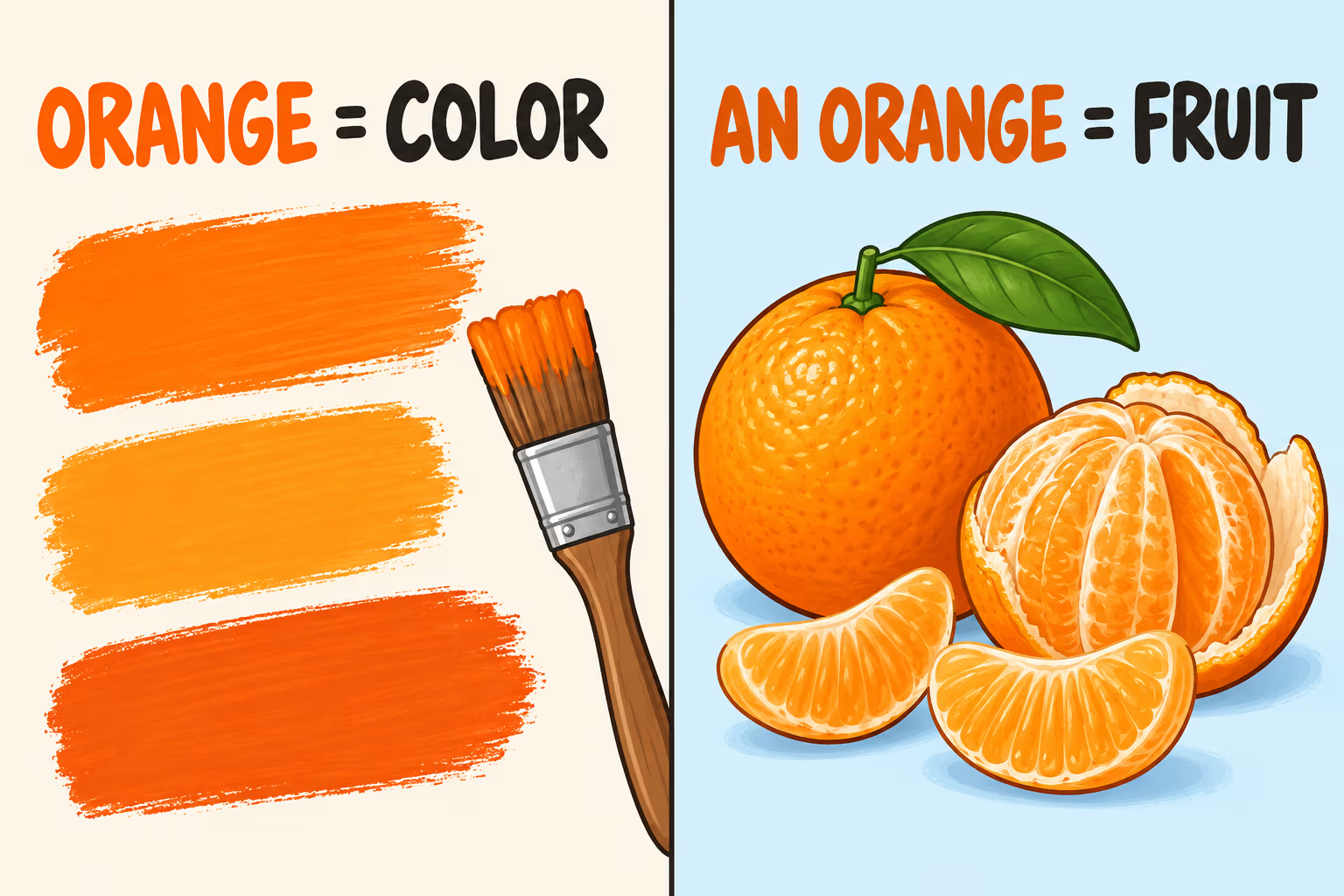
Adjectives for orange depend on whether orange means the color or the fruit. For a color, words such as vivid, pale, and reddish describe appearance; for the fruit, juicy, sweet, and citrusy describe qualities you can taste or smell.
Orange adjectives at a glance
- Color and shade: vivid, pale, bright, dark, muted, reddish, golden, burnt.
- Fruit and flavor: juicy, sweet, tangy, fragrant, fresh, seedless.
- Impression or effect: cheerful, warm, energetic, bold, attention-getting.
- Use a concrete detail: “a muted orange wall” tells readers more than “a nice orange wall.”
- Context matters: the same color may feel lively in a small accent and overwhelming across a large surface.
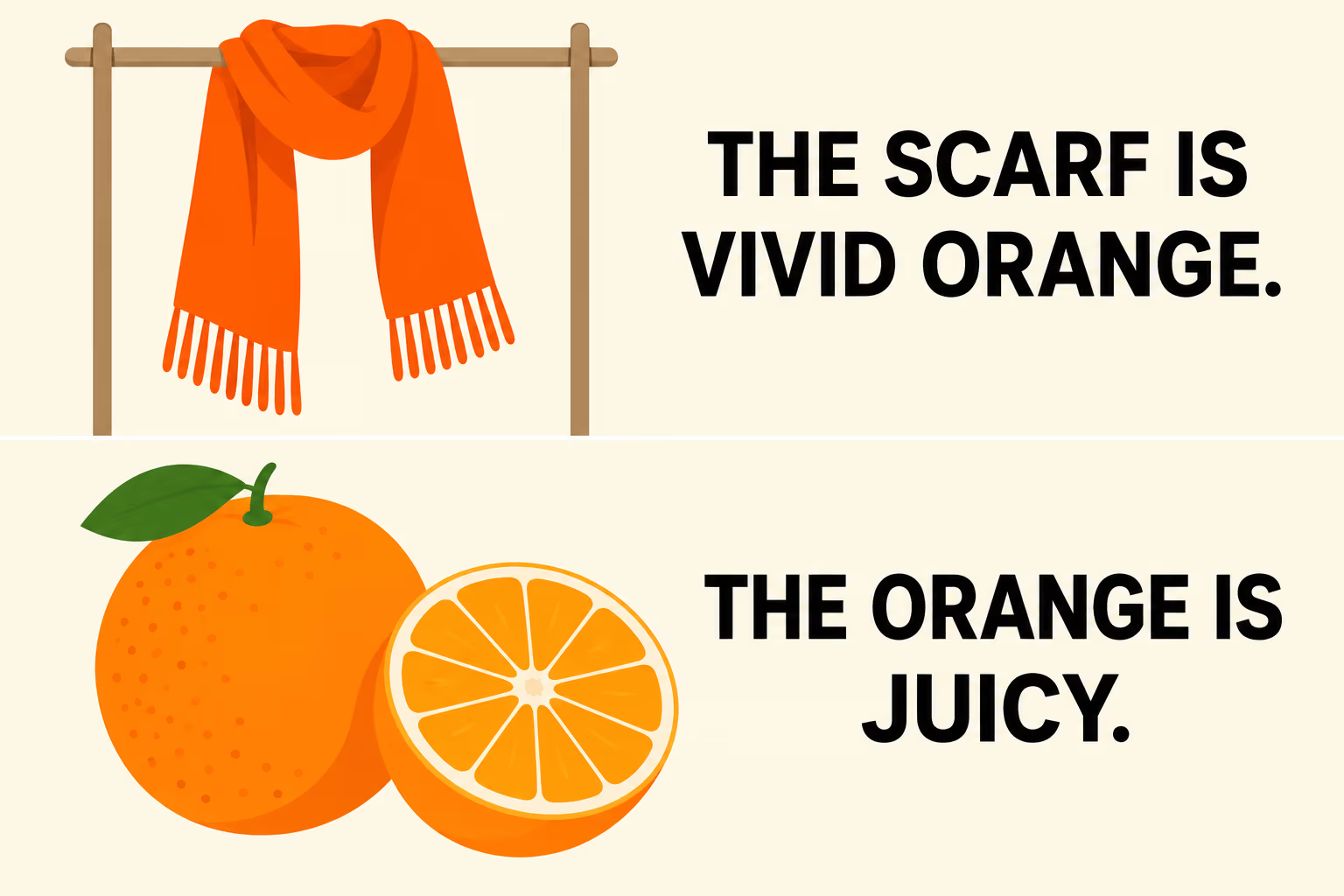
The word orange names both a fruit and a color, as Cambridge Dictionary records in separate entries. The noun in “an orange” usually points to the fruit; the adjective in “an orange scarf” describes the scarf’s color. Nearby shade names can make either meaning more specific.

Which adjectives describe the color orange?
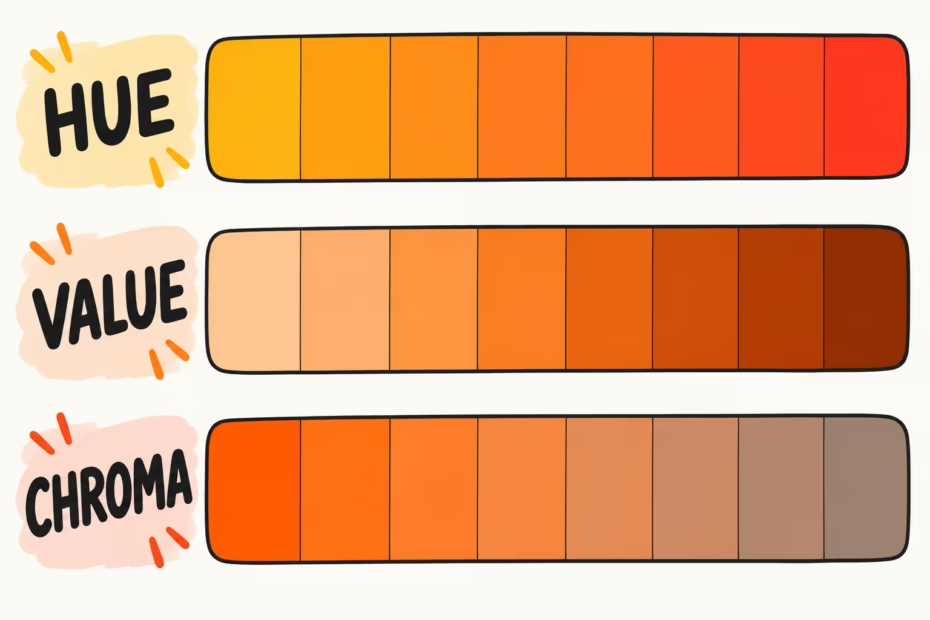
For a precise color description, say what changes: its hue, lightness, or intensity. Munsell’s color system separates these attributes into hue, value, and chroma; those terms offer a practical way to choose words rather than stacking vague synonyms.
| What you notice | Useful adjectives | Example |
|---|---|---|
| Hue, or its position between red and yellow | reddish, yellowish, golden | “The sunset cast a reddish-orange light.” |
| Lightness or darkness | pale, light, deep, dark | “Pale orange trim brightened the hallway.” |
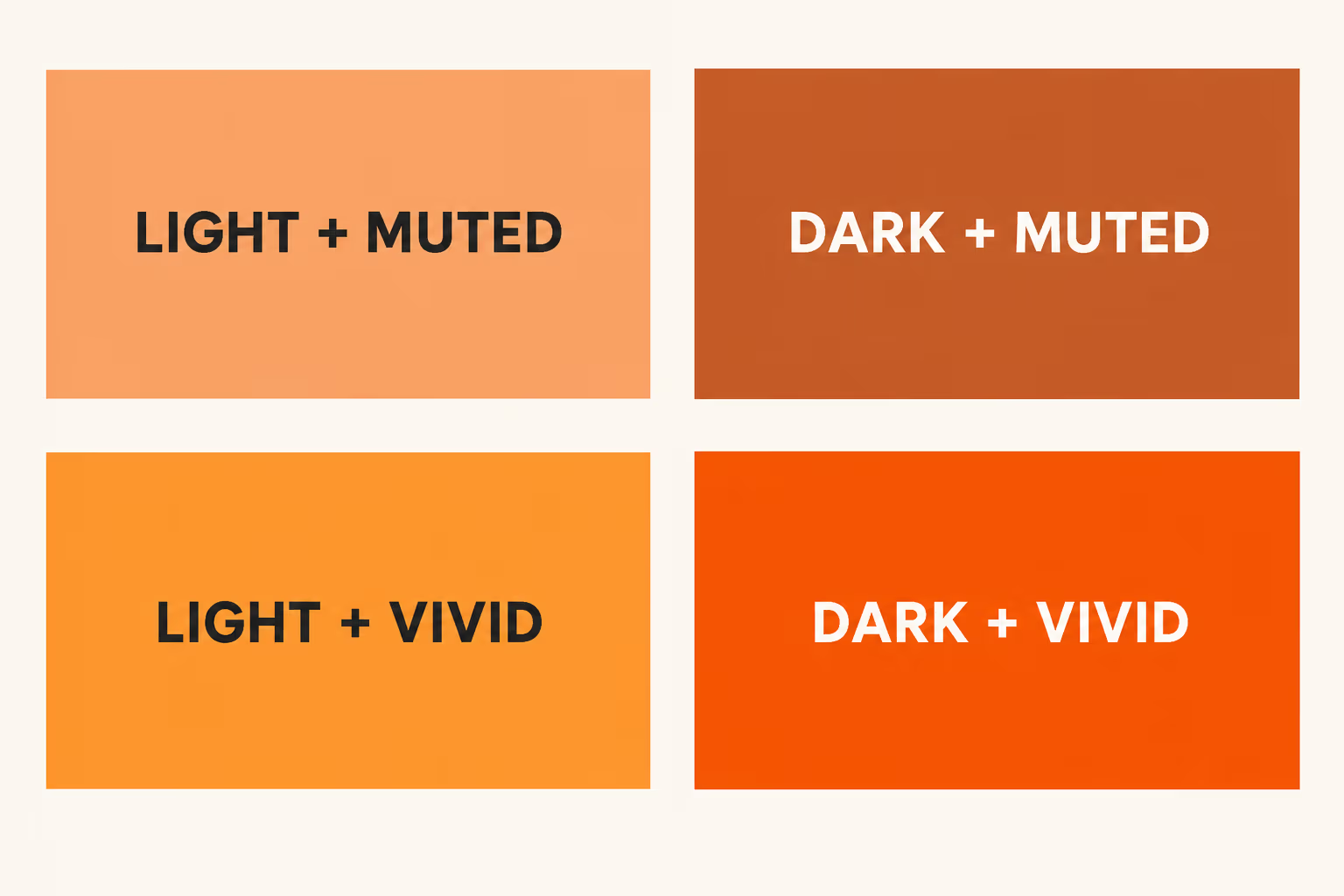
| Strength or intensity | vivid, bright, muted, subdued | “A muted orange cover keeps the design calm.” |
| Browned or earthy appearance | burnt, rust-colored, ochre-toned | “Burnt orange cushions warmed the room.” |
| Named shade families | amber, apricot, tangerine, coral | “The label uses a coral-orange accent.” |
Shade names are useful approximations, not exact interchangeable matches: amber often leans golden, apricot suggests a softer peachy orange, and rust suggests a darker, earthier tone. A screen, printed surface, pigment, or lighting can shift how a shade appears, so use a sample or color code when an exact match matters.
Which adjectives describe an orange fruit?
For the fruit, choose words about flavor, texture, smell, appearance, or condition. Juicy describes its flesh, fragrant describes its smell, and ripe describes its stage of maturity; none is a color synonym.
| Fruit quality | Adjectives | Example |
|---|---|---|
| Flavor | sweet, tart, tangy, mildly bitter | “The juice tasted sweet with a tangy finish.” |
| Texture and juice | juicy, tender, pulpy, firm | “The juicy segments made a refreshing snack.” |
| Aroma | citrusy, fragrant, zesty | “Fresh orange zest added a fragrant note.” |
| Freshness or maturity | fresh, ripe, underripe, overripe | “Choose a ripe fruit for a softer, sweeter taste.” |
| Physical features | seedless, thick-skinned, round, small | “The thick-skinned fruit was easy to peel.” |
Flavor varies by cultivar, growing conditions, storage, and ripeness. If you have not tasted a particular orange, avoid presenting a taste adjective as a guaranteed fact; “described as sweet” or “often tangy” leaves room for natural variation. “Citrusy” can refer to a citrus-like flavor or aroma, while “orange-colored” explicitly refers to color.
How do you choose the right adjective?
Start with the thing you are describing and the detail you want the reader to picture. A designer might need hue and intensity, while a recipe writer needs flavor and texture. If the adjective expresses a reaction, make clear that it is an impression rather than a universal property.
- Name the subject. Is it orange paint, a fruit, clothing, a flower, or a feeling created by a scene?
- Pick an observable quality. Use pale for lightness, reddish for hue, or juicy for the fruit’s flesh.
- Check the context. “Bold” can describe strong color or design impact; it does not specify a measurable shade.
- Prefer evidence over assumption. Taste before calling fruit sweet, and consider lighting before describing a color sample.
- Use a comparison if needed. “More yellow than the first swatch” can be clearer than “golden” when readers need a direct match.
For example, “The orange chair is cheerful” combines an objective color with a subjective response. A more specific version is “The vivid orange chair adds a high-contrast accent to the blue room.” Blue and orange are complementary on a traditional color wheel, according to the National Gallery of Art; that describes a visual relationship, not a promise that every viewer will find the pairing attractive.
Are there true antonyms for orange?
There is no single antonym for orange as a color or as a fruit. On a color wheel, blue is often described as orange’s complement, but a complementary color is not a dictionary opposite. Words such as pale, dull, muted, and neutral describe qualities or effects; they do not mean “not orange.”
Likewise, a color can be called garish, overbearing, or tacky as a judgment about its use. These terms express a person’s opinion and depend on design, lighting, and audience. Calling every vivid orange “bad” or every soft orange “pleasant” turns a contextual reaction into an unsupported rule.
What are some example sentences with orange adjectives?
| Sentence | What the adjective describes |
|---|---|
| “A vivid orange ribbon marked the entrance.” | Vivid describes color intensity. |
| “The muted orange wall softened the room’s palette.” | Muted describes the color’s subdued appearance; “softened” describes its effect in context. |
| “We shared a juicy orange after lunch.” | Juicy describes the fruit. |
| “A fragrant orange peel scented the kitchen.” | Fragrant describes aroma. |
| “The artist chose a golden-orange sky for the background.” | Golden says the shade leans toward yellow. |
Frequently asked questions
What is another word for orange?
For the color, amber, tangerine, apricot, rust, or coral can name nearby shades, but each suggests a different hue or tone. For the fruit, use a specific variety name only when known. These terms are related choices, not exact substitutes in every sentence.
Is “juicy” an adjective for orange?
Yes, when orange means the fruit. “A juicy orange” describes fruit with plentiful juice. It does not describe the color; for that meaning, use an adjective such as vivid, pale, or reddish. The noun being modified makes the distinction clear.
What color contrasts with orange?
Blue is commonly shown opposite orange on a traditional color wheel, making them complementary colors in that model. The exact contrast depends on the particular shades and display conditions. “Complementary” names a color relationship; it does not make blue the antonym of orange.
Can orange be described as warm or cheerful?
Yes, those words can describe a viewer’s impression or a color’s use in a particular design. They are not objective measurements and do not apply to every orange object or audience. Pair the impression with a concrete cue, such as “the vivid orange sign feels energetic against the dark background.”
Choose adjectives for orange with precision
The best adjectives for orange name the subject and the detail that matters: color, shade, flavor, aroma, texture, or impression. Use vivid or pale for color, juicy or tangy for fruit, and explain subjective reactions through context. This keeps descriptions clear without treating related words as exact synonyms or antonyms.
A note about the original source material
The original article is preserved below, including its examples, lists, and table markup. Its “positive,” “negative,” “synonym,” and “antonym” labels are broad legacy categories rather than strict linguistic opposites; some listed words describe fruit flavor or aroma, while others describe color, personal impression, or a design judgment. Its final negative-adjective table also ends mid-example. Read those preserved entries as source material, not as verified definitions or universal claims.
When it comes to the color orange, it’s hard not to feel a burst of energy and warmth. Whether it’s the vibrant hue of a sunset or the juicy flesh of a ripe fruit, orange has a way of captivating our senses. In this article, I’ll be exploring a variety of adjectives that can be used to describe this dynamic color. From fiery and bold to soft and subtle, these words will help you paint a vivid picture with your descriptions. So, let’s dive in and discover the many shades of orange!How to Describe orange? – Different Scenarios
When it comes to describing the color orange, there are many adjectives that can be used to paint a vivid picture. Whether you want to describe an orange fruit, a sunset, or even someone’s outfit, here are some adjectives that can help you bring your descriptions to life:- Vibrant: Orange is a vibrant color that grabs your attention. It’s energetic and full of life.
- Warm: Orange has a warm tone that reminds you of cozy fires and sunny days.
- Citrusy: If you’re describing an orange fruit, you can use the adjective “citrusy” to capture its refreshing and tangy qualities.
- Bold: Orange is a bold and daring color that stands out in any setting.
- Playful: Orange has a playful and youthful vibe that brings a sense of joy and enthusiasm.
- Autumnal: As the color of fall leaves and Halloween pumpkins, orange is often associated with the autumn season.
- Tropical: When describing an orange sunset or a tropical paradise, you can use the adjective “tropical” to convey a sense of exotic beauty.
- Zesty: Similar to “citrusy”, “zesty” is a great word to describe the tangy and refreshing taste of an orange.
- Energetic: Orange is a vibrant color that can evoke feelings of energy and excitement.
- Radiant: Describing something as “radiant orange” gives the impression of intense brightness and glow.
- The vibrant orange color of the sunset painted the sky
Describing Words for orange in English
When it comes to describing the color orange, there are several adjectives that come to mind. These descriptive words help us paint a vivid picture and convey the characteristics associated with this vibrant hue. Let’s explore some of the adjectives commonly used to describe orange:- Vibrant: Orange is often described as vibrant because it is a bold, eye-catching color that stands out in a crowd. Whether it’s an orange sunset or a bright orange flower, this adjective perfectly captures the lively and energetic nature of the color.
- Warm: The color orange is often associated with warmth and comfort. It brings to mind cozy and inviting feelings, like a crackling fireplace on a chilly evening. When used to describe objects or settings, the adjective “warm” helps convey a sense of comfort and positivity.
- Juicy: When we think of the color orange, juicy fruits like oranges, tangerines, and peaches often come to mind. This adjective perfectly describes the fresh and succulent nature of the color. It evokes a sensory experience and creates a vivid mental image of something sweet and delicious.
- Cheerful: Orange is a cheerful color that brings a sense of joy and happiness. It radiates positivity and optimism, making it a perfect adjective to describe anything that exudes a bright and upbeat energy. Whether it’s a sunny day or a cheerful piece of artwork, the adjective “cheerful” captures the essence of orange’s uplifting nature.
- Energetic: Orange is a color that is full of energy and enthusiasm. It is often associated with action, excitement, and high levels of motivation. When used to describe a person, object, or event, the adjective “energetic” helps convey a sense of liveliness and dynamism.
- Playful: The color orange is often associated with playfulness and creativity. It sparks imagination and encourages a sense of fun and adventure. When used as an adjective, “playful” brings to mind activities, objects, or environments that are lively, entertaining, and full of joy.
- Bold: Orange is a bold and attention-grabbing color that makes a statement. It is impossible to ignore its presence. When used to describe something, the adjective “bold” emphasizes its strong, daring, and confident qualities.
Adjectives for orange
Positive Adjectives for Orange with 12 Example Sentences
Orange is a color that often evokes positive emotions and associations. Here are some adjectives to describe orange in a positive light:- Vibrant: The orange sunset painted the sky with vibrant hues.
- Warm: The cozy fire emitted a warm glow that filled the room.
- Juicy: The ripe orange was bursting with juicy goodness.
- Cheerful: The bright orange flowers brought a cheerful atmosphere to the garden.
- Energetic: The orange sports car zoomed down the highway with incredible energy.
- Playful: The little kitten pounced on the orange ball, enjoying its playful nature.
- Bold: The artist used bold strokes of orange to create a captivating masterpiece.
- Refreshing: The cold glass of orange juice was incredibly refreshing on a hot summer day.
- Lively: The orange decor gave the room a lively and energetic feel.
- Invigorating: The scent of orange essential oil was invigorating and rejuvenating.
- Enthusiastic: The orange team showed great enthusiasm and determination.
- Radiant: The bride looked radiant in her orange wedding dress.
Negative Adjectives for Orange with 5 Example Sentences
Despite its positive associations, orange can also be described using negative adjectives. Here are a few examples:- Overbearing: The orange walls in the room were a bit overbearing and overpowering.
- Garish: The combination of orange and neon green created a garish effect.
- Artificial: The orange-flavored candy had an artificial taste that was hard to ignore.
- Unappealing: The brownish-orange color of the food made it unappealing to the eyes.
- Tacky: The orange plastic chair in the waiting room looked tacky and out of place.
Positive Adjectives for Orange
| Adjective | Example Sentence |
|---|---|
| Vibrant | The orange sunset painted the sky with vibrant hues. |
| Warm | The cozy fire emitted a warm glow that filled the room. |
| Juicy | The ripe orange was bursting with juicy goodness. |
| Cheerful | The bright orange flowers brought a cheerful atmosphere to the garden. |
| Energetic | The orange sports car zoomed down the highway with incredible energy. |
| Playful | The little kitten pounced on the orange ball, enjoying its playful nature. |
| Bold | The artist used bold strokes of orange to create a captivating masterpiece. |
| Refreshing | The cold glass of orange juice was incredibly refreshing on a hot summer day. |
| Lively | The orange decor gave the room a lively and energetic feel. |
| Invigorating | The scent of orange essential oil was invigorating and rejuvenating. |
| Enthusiastic | The orange team showed great enthusiasm and determination. |
| Radiant | The bride looked radiant in her orange wedding dress. |
| Adjective | Example Sentence |
|---|---|
| Overbearing | The orange walls in the room were a bit overbearing and overpowering. |
| Garish | The combination of orange and neon green created a garish effect. |
| Artificial | The orange-flavored candy had an artificial taste that was hard to ignore. |
| Unappealing | The brownish-orange color of the food made |
Synonyms and Antonyms with Example Sentences
Synonyms for orange
When describing the color orange, there are several synonyms that can be used to add variety and depth to your descriptions. Here are some synonyms for orange, along with example sentences to illustrate their usage:| Synonym | Example Sentence |
|---|---|
| Vibrant | The sunset painted the sky with vibrant shades of orange. |
| Warm | The cozy fireplace emitted a warm glow of orange light. |
| Juicy | The orange slices were so juicy, the juice dripped down my chin. |
| Cheerful | The room was decorated with cheerful orange balloons for the party. |
| Energetic | The runner crossed the finish line with an orange burst of energetic speed. |
| Playful | The children giggled and played in the orange leaves during autumn. |
| Bold | She chose a bold orange dress that caught everyone’s attention. |
| Refreshing | The orange juice was cold and refreshing on a hot summer day. |
| Lively | The party was filled with lively music and dancing in shades of orange. |
| Invigorating | The scent of freshly squeezed oranges was invigorating in the morning. |
| Enthusiastic | The team gave an enthusiastic cheer as they scored the winning goal. |
| Radiant | The sunrise painted the sky in a radiant hue of orange and pink. |
Antonyms for orange
In contrast to positive adjectives, there are also antonyms that can be used to describe the color orange in a negative or contrasting way. Here are some antonyms for orange:- Pale: The pale orange sunset faded into the horizon.
- Dull: The old paint had a dull, faded orange color.
- Muted: The artist used muted shades of orange to create a subtle effect.
- Subdued: The sunset cast a subdued orange glow over the landscape.
- Neutral: The room was painted a neutral color to tone down the orange accents.


