Useful adjectives for a problem solver include resourceful, analytical, persistent, innovative, methodical, adaptable, and collaborative. Choose the word that matches an observable action: for example, an analytical colleague compares evidence, while a resourceful one finds a workable path with limited tools. Specific behavior makes the description clearer than a trait label alone.
Choose a word by the behavior
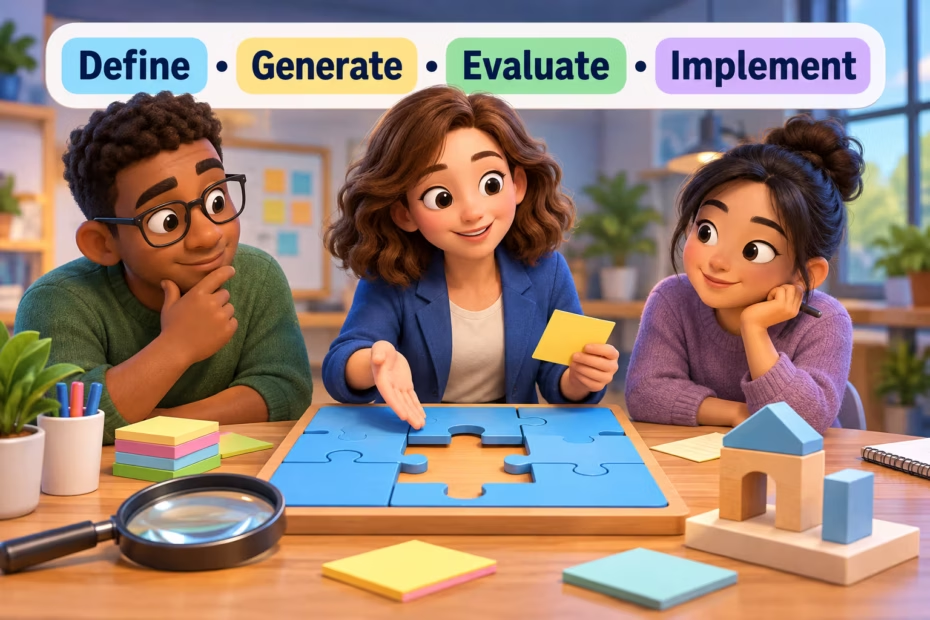
A problem solver identifies an issue, develops possible responses, weighs them, and acts on a choice. The University of California, Berkeley’s problem-solving competency describes a four-part process: define the problem, generate alternatives, evaluate and select alternatives, and implement a solution. The strongest adjective names which part a person handled well.
| Adjective | Use it when the person… | Evidence to mention |
|---|---|---|
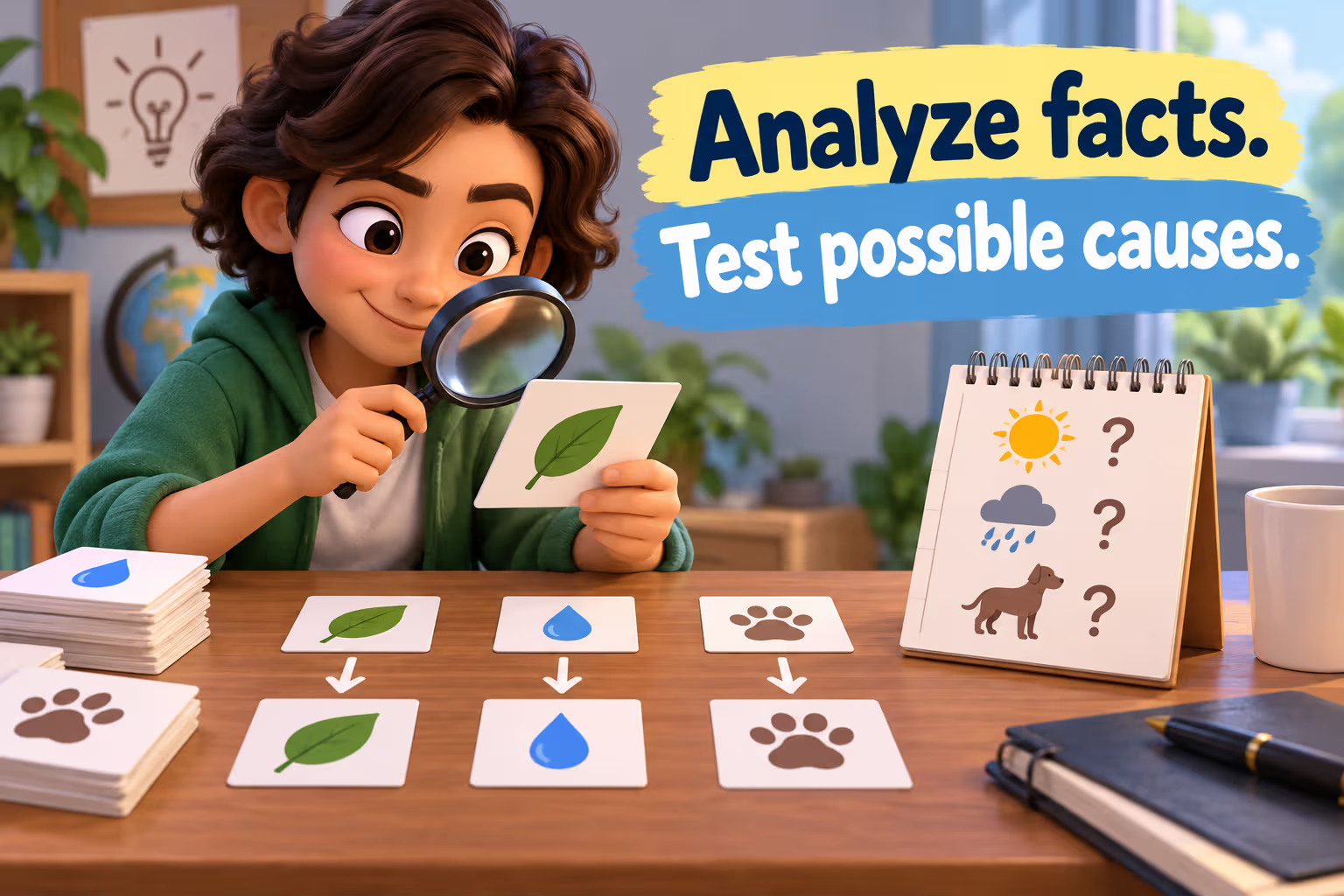
| Analytical | examines details and relationships | checked data, separated symptoms from causes |
| Resourceful | uses available tools or people inventively | found a feasible workaround within a constraint |
| Innovative | introduces a new method or idea | tested a different approach and what changed |
| Persistent | continues through difficulty | adapted after a setback and completed the task |
| Methodical | follows an orderly process | documented steps, checked assumptions, reviewed results |
| Collaborative | solves an issue with others | invited relevant viewpoints and aligned on next steps |
| Pragmatic | selects a workable, proportionate response | balanced impact, time, risk, and available resources |
| Adaptable | changes course when evidence shifts | revised the plan after new information arrived |
These words overlap, but they are not interchangeable. Analytical points to careful examination; resourceful emphasizes finding a way to reach a goal; innovative means using new methods or ideas. Persistent signals continued effort, though it can suggest unreasonable insistence in some contexts. Describe what persistence accomplished and when it was appropriate.
How can you describe problem-solving skills?
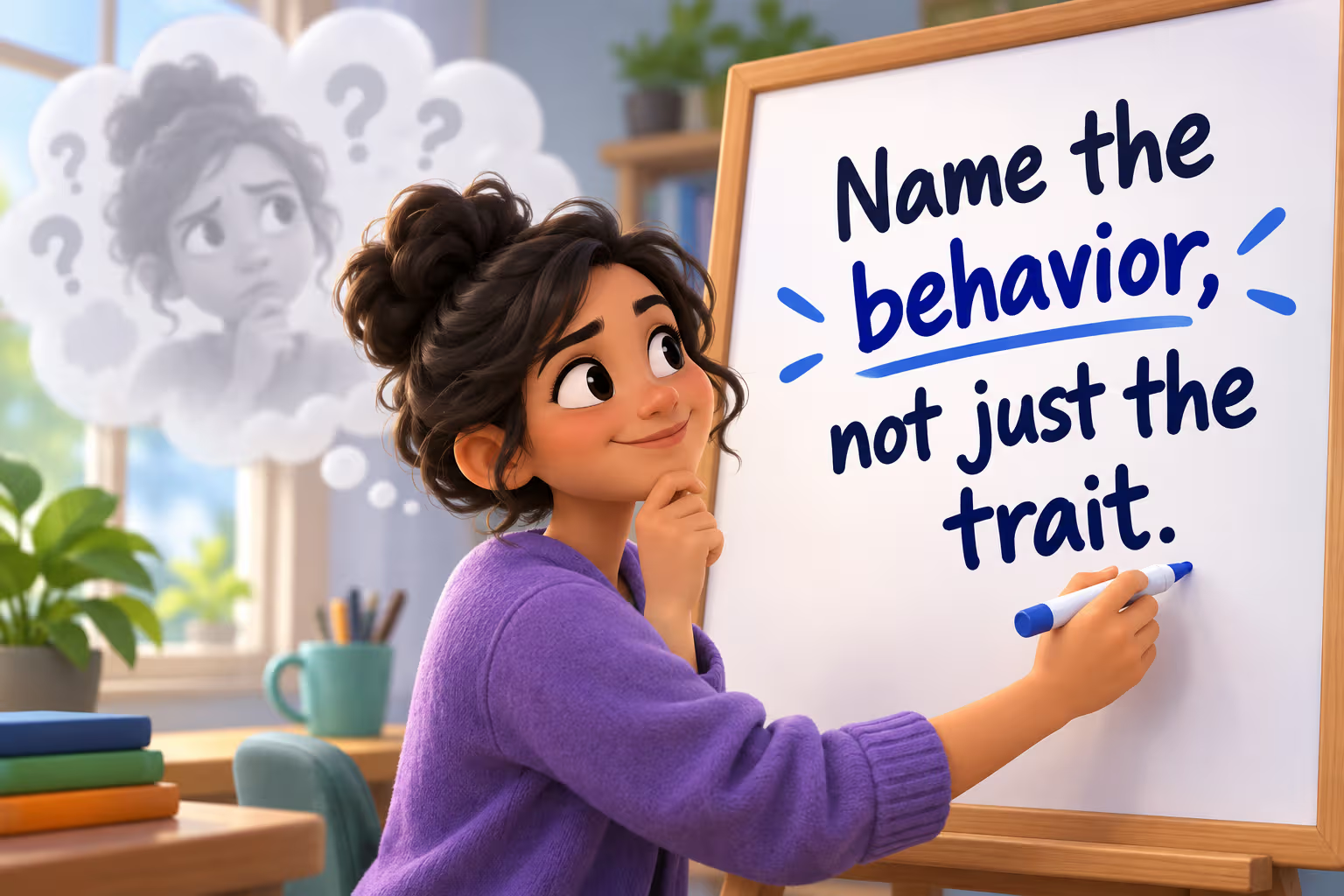
Pair one precise adjective with a short example that shows the action and result. “Analytical” is a useful label; “analyzed three months of support requests, found a repeat login error, and helped reduce duplicate tickets” gives a reader evidence to assess. Include numbers only when you can verify them, and credit collaborators when the result was shared.
In a résumé or job application
Use the adjective in a skills summary only when the experience section supports it. A concise pattern is action + problem or constraint + method + verified result: “Resourceful coordinator who reorganized a delayed event schedule using existing staff and restored all sessions by the next morning.” If you cannot name the method or outcome, replace the broad claim with a concrete responsibility.

In an interview or recommendation
For an interview answer, explain the situation, your specific responsibility, the steps you took, and the result. A colleague described as collaborative should have listened, shared information, or coordinated a decision; “team player” alone does not show how the person contributed. Recommendations are more credible when they name a bounded example instead of claiming someone can solve every problem.
Which adjective fits your example?
Start with the action you observed, then select the adjective. Use analytical for evidence and reasoning, creative or innovative for original approaches, resourceful for effective use of available means, persistent for continued effort, and adaptable for a justified change of plan. One example may support more than one word, but explain the difference: a person can be both analytical in diagnosis and resourceful in implementation.
Problem solving is not always an individual strength. A complex issue may require technical knowledge, authority, time, or help from others; a good solver recognizes limits and escalates safety, legal, or specialist concerns. Nor is a novel idea automatically an improvement: test whether it meets the actual need and check for unwanted effects after implementation.
Frequently asked questions
What is the best adjective for a problem solver?
Resourceful is a strong general choice when someone finds effective ways through a difficult situation. Choose analytical for careful reasoning, innovative for a new method, persistent for continued effort, or collaborative for solving a challenge with others. Match the word to evidence rather than treating one adjective as universally best.
How do I describe a problem solver on a résumé?
Use a specific adjective in a sentence that names the issue, your action, and a verifiable result. For example: “Analytical assistant who compared weekly inventory reports, identified a recurring entry error, and corrected the handoff checklist.” Avoid unsupported claims such as “exceptional problem solver” without a concrete example.
Are creative and analytical problem solvers different?
Creative problem solving generates possibilities; analytical problem solving examines details and weighs evidence. A complete process can use both: generate several approaches, compare their likely effects and constraints, choose one, and review the result. These describe approaches to a task, not fixed personality types.
Can persistent have a negative meaning?
Yes. Cambridge notes that persistent effort can mean determined continuation, sometimes in an unreasonable way. In a workplace description, show that continued effort was useful: the person adjusted after feedback, kept the goal in view, and stopped or escalated when evidence showed the approach was not working.
More adjectives and examples
Are you a natural problem solver? Do you have a knack for finding solutions to even the most complex challenges? If so, you’ll be thrilled to discover a whole array of adjectives that perfectly describe your problem-solving abilities. In this article, I’ll introduce you to a variety of powerful and descriptive words that capture the essence of a skilled problem solver. From resourceful and innovative to analytical and persistent, these adjectives will help you articulate your problem-solving skills with confidence and precision. Let’s dive in and explore the world of adjectives for problem solvers together!
How to Describe problem solver? – Different Scenarios
When it comes to describing a problem solver, there are several adjectives that can help paint a clear picture of their abilities. In different scenarios, these words can highlight specific qualities and skills that make someone an effective problem solver. Let’s explore various situations and the corresponding adjectives that can be used.
1. Resourceful
In situations where a problem solver needs to think creatively and find solutions using available resources, the word “resourceful” comes to mind. This adjective describes someone who is adaptable and knows how to make the best use of what they have. For example, imagine a project where materials are limited, and the problem solver manages to find innovative ways to complete it. They demonstrate resourcefulness by finding alternative solutions and making the most of the resources at hand.
2. Analytical
In scenarios that require careful examination and logical thinking, the word “analytical” effectively captures the problem solver’s approach. This adjective highlights their ability to break down complex problems into smaller, manageable parts. They possess strong critical thinking skills and can identify patterns and connections that help them arrive at the right solution. An analytical problem solver is patient, methodical, and systematic in their problem-solving process.
3. Persistent
When faced with obstacles and challenges, a problem solver with a persistent nature can make all the difference. This adjective describes someone who does not easily give up and continues to persevere until they find a solution. A persistent problem solver exhibits determination, resilience, and the ability to adapt their approach when faced with setbacks. Their unwavering commitment to solving a problem ensures that they explore multiple avenues and exhaust all possible options.
4. Innovative
In today’s ever-changing world, innovation is a highly valued skill. An innovative problem solver embraces new ideas and approaches to find unique solutions. They are not afraid to think outside the box and challenge traditional methods. By being open-minded and constantly seeking new perspectives, they bring a fresh and creative approach to problem-solving. An innovative problem solver is curious, imaginative, and always looking for opportunities to improve existing solutions.
Describing Words for problem solver in English
As a problem solver, there are certain adjectives that can accurately describe your skills and qualities. These words can help others understand the valuable contributions you bring to a team or project. Let’s explore some describing words that highlight the qualities of a skilled problem solver:
Resourceful
A resourceful problem solver is someone who is able to find creative solutions, even when faced with limited resources or constraints. They have a knack for thinking outside the box and finding innovative ways to overcome obstacles. For example:
| Adjective | Example |
|---|---|
| Resourceful | I was faced with a tight deadline, but I quickly brainstormed alternative approaches and found a way to complete the project ahead of schedule. |
Analytical
An analytical problem solver approaches challenges with a logical and systematic mindset. They excel at breaking down complex problems into smaller, more manageable parts, allowing them to identify patterns and relationships. This analytical approach helps them make well-informed decisions. For example:
| Adjective | Example |
|---|---|
| Analytical | When faced with a data analysis problem, I carefully examined the information, identified key variables, and used statistical techniques to draw meaningful conclusions. |
Persistent
A persistent problem solver demonstrates a strong sense of determination and perseverance. They are not easily discouraged by setbacks and obstacles. Instead, they maintain a positive attitude, adapt their strategies, and keep pushing forward until they find a solution. For example:
| Adjective | Example |
|---|---|
| Persistent | Despite multiple failed attempts, I remained persistent and continued to refine my approach until I finally solved the complex puzzle. |
Innovative
An innovative problem solver is someone who thinks creatively and brings new ideas to the table. They are not afraid to challenge the status quo and explore unconventional approaches. Their fresh perspective often leads to breakthrough solutions. For example:
| Adjective | Example |
|---|---|
| Innovative | I introduced a new software tool that streamlined our workflow, resulting in a significant increase in productivity and efficiency. |
By using these describing words, you can effectively convey your skills and qualities as a problem solver. Whether you are resourceful, analytical, persistent, innovative, or a combination of these traits, your ability to solve problems efficiently will make you an invaluable asset to any team or organization.
Adjectives for problem solver
As a skilled problem solver, I possess a variety of qualities that enable me to tackle challenges with confidence and efficiency. In this section, I will explore different adjectives that can be used to describe the attributes of a problem solver, along with examples to illustrate their relevance. Let’s dive in!
Positive Adjectives for Problem Solver
- Resourceful: A resourceful problem solver is able to think creatively and find smart solutions using the resources available to them. For example:
- Analytical: An analytical problem solver approaches issues by breaking them down into smaller components and examining them systematically. Here’s an example:
- Persistent: A persistent problem solver demonstrates determination and perseverance in finding solutions, even when faced with obstacles. Consider this example:
- Innovative: An innovative problem solver thinks outside the box and brings fresh ideas to the table. Here’s an example:
- Adaptable: An adaptable problem solver is flexible and able to adjust their strategies based on changing circumstances. Consider this example:
- Logical: A logical problem solver approaches challenges by employing rational thinking and reasoning. For example:
- Open-minded: An open-minded problem solver is receptive to different perspectives and ideas, fostering collaboration and innovation. Consider this example:
- Inflexible: An inflexible problem solver, unwilling to consider alternative approaches, may struggle to find effective solutions. Here’s an example:
- Impulsive: An impulsive problem solver may rush into decisions without careful consideration, leading to ineffective outcomes. Consider this example:
- Overwhelmed: An overwhelmed problem solver can become paralyzed by the magnitude of a challenge, hindering their ability to find solutions. For example:
- Indecisive: An indecisive problem solver may struggle to make timely decisions, causing delays in problem resolution. Consider this example:
- Overconfident: An overconfident problem solver may overlook potential pitfalls or fail to consider alternative solutions. Here’s an example:
Throughout my problem-solving journey, I strive to embody the positive adjectives that enable me to navigate challenges efficiently. By avoiding the negative adjectives and continuously honing my skills, I can consistently deliver effective and innovative solutions in any situation.
Synonyms and Antonyms with Example Sentences
Synonyms for problem solver
As a skilled problem solver, I possess a range of qualities and skills that enable me to tackle challenges and find effective solutions. Here are some synonyms that highlight these traits:
- Resourceful: I have the ability to find creative solutions and make the most of available resources. For example, when faced with a limited budget, I’ll find innovative ways to achieve the desired outcome.
- Analytical: I excel at breaking down complex problems into smaller, manageable parts. This allows me to analyze each component and identify the root causes. By taking a systematic approach, I can develop well-informed solutions.
- Persistent: I am determined and tenacious when it comes to solving problems. I don’t give up easily and will continue to explore different strategies until I find the most effective solution. For instance, I’ll keep experimenting and refining my approach until I achieve the desired result.
- Innovative: I am always seeking new ideas and approaches to problem-solving. This enables me to think outside the box and come up with unconventional solutions. By embracing innovation, I can tackle challenges from a fresh perspective.
- Adaptable: I am flexible and open to change, which allows me to navigate through unexpected obstacles. By being adaptable, I can modify my strategies and approaches as needed to overcome challenges and achieve the best outcome.
- Logical: I rely on logical thinking and reasoning to address problems. By using evidence and sound judgment, I can make well-informed decisions. This logical approach helps me to avoid impulsive actions and consider all relevant factors.
- Open-minded: I value different perspectives and ideas, which enables me to think more broadly and creatively. By being open-minded, I can consider alternative solutions and collaborate with others to find the best way forward.
Antonyms for problem solver
While positive adjectives help describe effective problem solvers, it is important to be aware of negative qualities that can hinder problem-solving abilities. Here are some antonyms to avoid:
- Inflexible: Being inflexible can limit one’s ability to adapt to new situations and find creative solutions. It is essential to remain open to different approaches and ideas.
- Impulsive: Acting impulsively can lead to hasty decisions without a thorough analysis of the problem. Taking the time to think through a situation ensures a more thoughtful and effective response.
- Overwhelmed: Feeling overwhelmed can hinder problem-solving abilities as it can cloud judgment and decision-making. Learning to manage stress and break down problems into smaller tasks helps maintain focus.
- Indecisive: Being indecisive prolongs the problem-solving process and delays finding a resolution. Developing the skills to make informed decisions promptly is crucial for effective problem-solving.
- Overconfident: Overconfidence can lead to overlooking potential issues or dismissing alternative solutions. Being open to feedback and considering different perspectives is essential for successful problem-solving.
By embodying positive adjectives and avoiding negative ones, I can consistently deliver effective and innovative solutions. These synonyms and antonyms provide a guide for enhancing problem-solving skills and approaching challenges with confidence.
Conclusion
In this article, we have explored a range of adjectives that can be used to describe a skilled problem solver. By highlighting qualities such as resourcefulness, analytical thinking, persistence, innovation, adaptability, logical reasoning, and open-mindedness, we have provided a comprehensive overview of the attributes that make a problem solver effective.
Throughout the article, we have also emphasized the importance of embodying these positive adjectives and avoiding negative ones that can hinder problem-solving abilities. By steering clear of traits like inflexibility, impulsiveness, feeling overwhelmed, indecisiveness, and overconfidence, problem solvers can consistently deliver effective and innovative solutions.
Moreover, we have provided examples of how each adjective can be applied in real-life situations, demonstrating the practical relevance of these descriptive words. By incorporating synonyms and antonyms for problem solvers, we have also highlighted how expanding our vocabulary can enhance problem-solving skills and enable us to approach challenges with confidence.
By understanding and utilizing these adjectives, individuals can not only become better problem solvers but also develop a reputation for their ability to tackle complex issues with ease.


