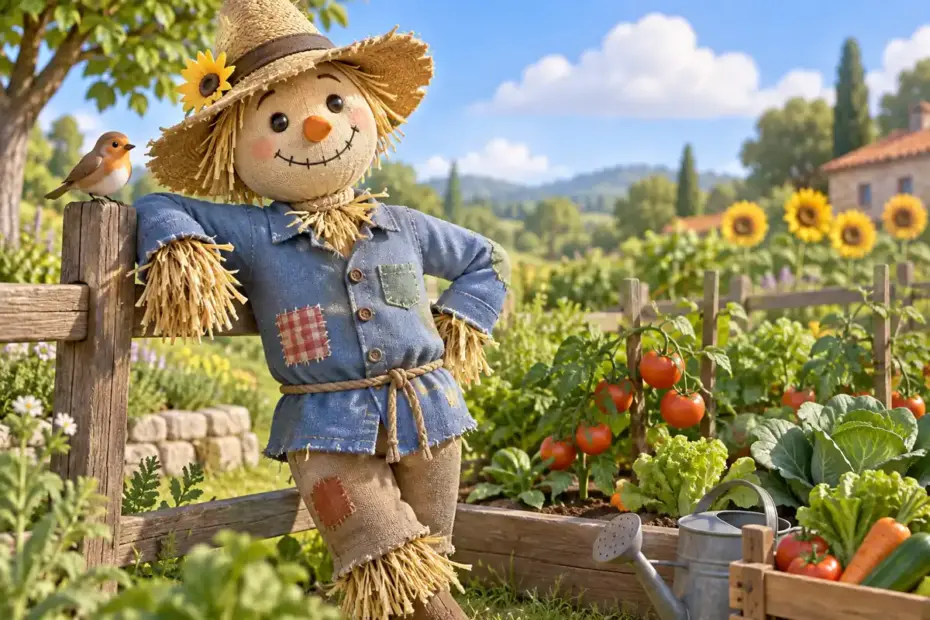
Adjectives for Scarecrow: 40+ Descriptive Words
Scarecrow adjectives describe visible details such as clothing, shape, material, condition, and mood. Words like ragged, straw-filled, crooked, colorful, and whimsical help readers picture a figure in a field or story. Choose observable traits first, then add a mood word when the scene supports it.
Key facts at a glance
- A scarecrow is a human-shaped figure traditionally placed in fields to frighten birds.
- Appearance words describe clothing, shape, material, and condition.
- Mood words such as eerie or cheerful reflect the scene and the writer’s point of view.
- Specific combinations create a clearer image than a long string of near-synonyms.
Which adjectives describe a scarecrow?
Useful adjectives for a scarecrow include ragged, patched, straw-filled, lanky, crooked, sun-faded, floppy, rustic, cheerful, and eerie. The best choice depends on what the figure looks like and how the scene should feel. A scarecrow may be comic in a garden, unsettling at dusk, or simply weather-beaten after a season outdoors.
| Detail | Adjectives | Example phrase |
|---|---|---|
| Clothing | patched, ragged, faded, oversized | a patched blue shirt |
| Shape or pose | lanky, crooked, lopsided, slumped | a lopsided figure |
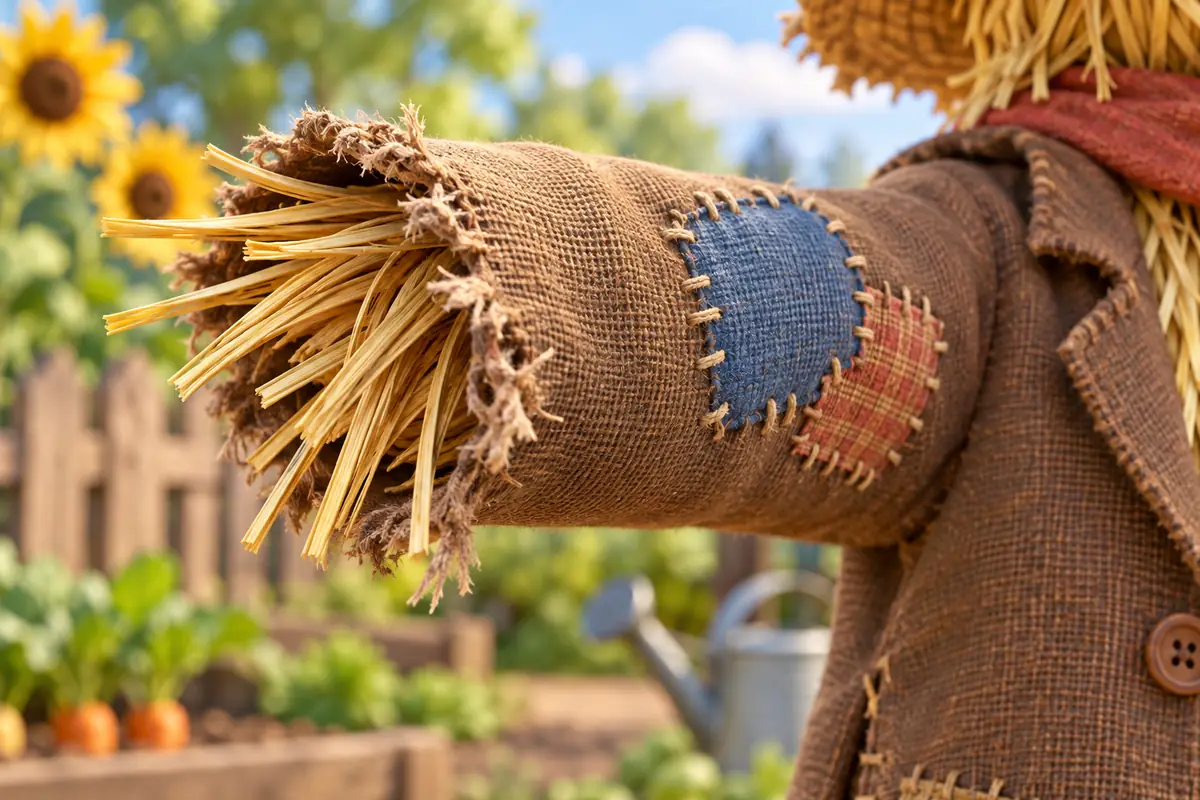
| Material or texture | straw-filled, rough, brittle, floppy | a straw-filled sleeve |
| Mood | whimsical, eerie, comical, cheerful | an eerie silhouette |
How do you choose the right scarecrow adjective?
Choose an adjective by identifying a detail the reader can picture: a frayed cuff, a bent hat, straw showing at the wrist, or a stiff posture. Then decide whether the sentence needs a neutral description or a mood. “Weather-beaten” describes condition, while “menacing” describes the effect the figure has on an observer.
- List two observable features, such as a floppy hat and patched coat.
- Select one strong adjective for each feature.
- Add a mood word only if the setting supports it.
- Read the sentence aloud and remove any adjective that repeats the same idea.
This approach keeps a description specific. “A ragged, patched, weather-beaten scarecrow” may be redundant unless each word adds a separate detail; “a patched scarecrow with a sun-faded coat” gives the reader more information.
What is the difference between appearance and mood words?
Appearance adjectives name traits a reader could observe, while mood adjectives express an impression. “Crooked,” “straw-filled,” and “faded” point to shape, material, and condition; “spooky,” “friendly,” and “whimsical” tell how the scarecrow feels to the narrator or audience.
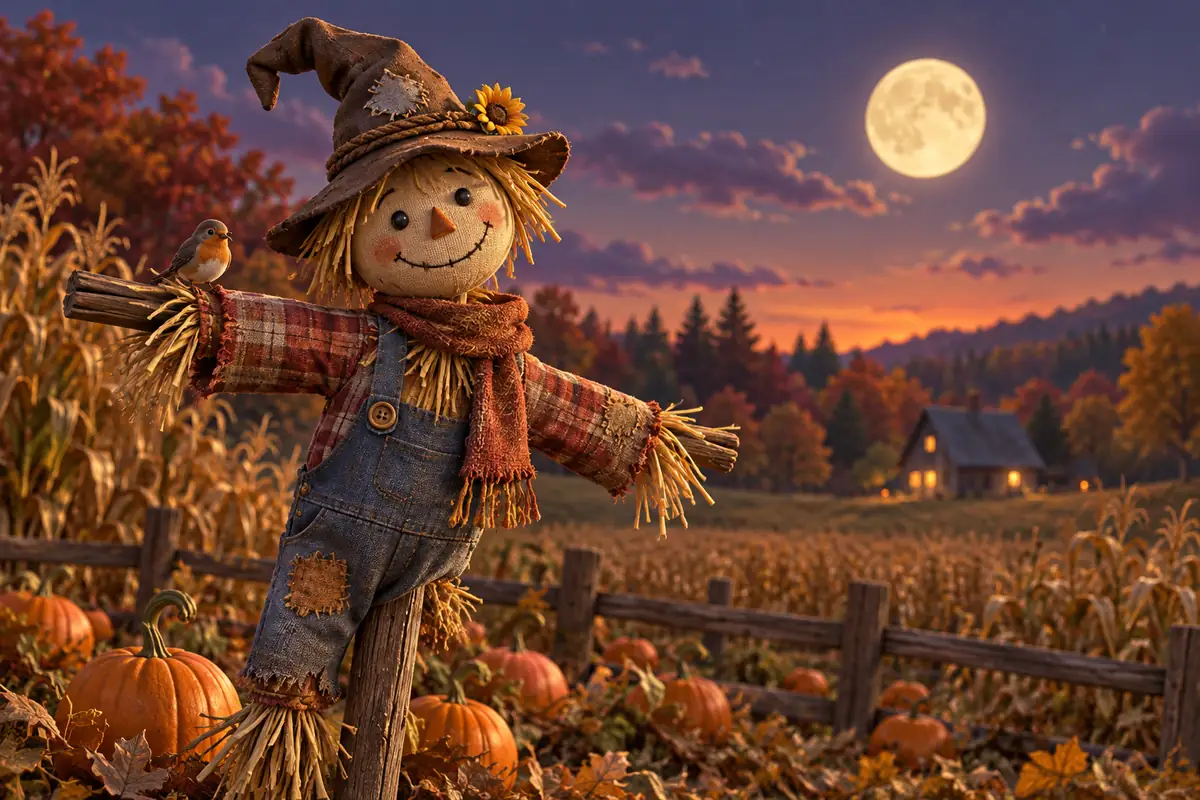
Writers can combine both kinds when the scene gives a reason. “A crooked, eerie scarecrow stood beneath the bare tree” links a visible posture with the atmosphere. In an informational description, favor observable traits; in fiction, a subjective mood word can guide the reader’s response.
Can adjectives make a scarecrow description more vivid?
Yes. Two or three precise adjectives can make a scarecrow easy to imagine, especially when they describe different qualities. “A lanky scarecrow wore a floppy straw hat and a sun-faded jacket” gives shape, clothing, and condition without piling on similar words.
Adjectives do not prove that a scarecrow actually deters birds. Cambridge defines a scarecrow as a human-shaped model traditionally put in a field to frighten birds, but real results can vary. For a classroom or story description, describe the figure’s design; avoid claiming a particular effect unless a source or observation supports it.
Frequently asked questions
What are three good adjectives for a scarecrow?
Ragged, straw-filled, and crooked are three useful adjectives because each describes a different visible feature. “Ragged” suggests worn clothing, “straw-filled” names the stuffing, and “crooked” describes shape or posture. For a playful scene, replace one with “whimsical” or “cheerful” instead.
What is a scary adjective for a scarecrow?
“Eerie” is a useful scary adjective when the scarecrow appears in a quiet or dim setting. “Menacing” is stronger and suggests a threat, while “spooky” sounds more playful. Choose the word that matches the scene; a bright garden may make the same figure seem comic instead.
How do you describe a scarecrow’s clothes?
Describe material, fit, color, or condition: a patched coat, an oversized shirt, a sun-faded jacket, or a ragged sleeve. One specific garment often creates a clearer picture than several broad words such as “old” and “worn.” Add color only when it matters to the scene.
Is straw-filled an adjective for a scarecrow?
Yes. “Straw-filled” is a compound adjective that describes stuffing or texture, as in “a straw-filled scarecrow.” Not every scarecrow is made with straw, so use the word only when that material is part of the design. “Stuffed” is a broader alternative when the filling is unknown.
Conclusion
Adjectives for scarecrow descriptions work best when they name separate traits: patched clothing, a crooked pose, straw-filled sleeves, or an eerie mood. Pick observable words before subjective ones, and use only details that fit the figure. That keeps a short sentence vivid without making it crowded.
Hey there! Looking to add some descriptive flair to your scarecrow? Well, you’ve come to the right place! In this article, I’ll be sharing a list of adjectives that will help you bring your scarecrow to life. From spooky and menacing to charming and whimsical, these words will help you create the perfect scarecrow that will capture the attention of all who pass by. So, let’s dive in and explore the world of adjectives for scarecrows!
When it comes to scarecrows, there are endless possibilities for customization. Whether you’re going for a traditional, rustic look or something more unique and eye-catching, the right adjectives can make all the difference. Imagine a scarecrow that is not just “scary,” but “terrifying” or “haunting.” Or perhaps you want to create a scarecrow that is “welcoming” or “playful.” With the right adjectives, you can truly make your scarecrow stand out and become a focal point in your garden or field.
So, get ready to unleash your creativity and transform your scarecrow into a work of art. In the following sections, I’ll be providing you with a wide range of adjectives along with examples to inspire your scarecrow-making journey. Let’s get started, shall we?
How to Describe scarecrow? – Different Scenarios
When it comes to describing scarecrows, there are a multitude of adjectives that can be used to bring these fascinating characters to life. Whether you’re looking to create a traditional scarecrow or something more unique, choosing the right adjectives can help you customize your scarecrow and make it stand out. Let’s explore different scenarios and the adjectives that can be used to describe scarecrows in each one:
1. Traditional Scarecrow
A traditional scarecrow is often associated with a classic, rustic look. Here are some adjectives that can be used to describe a traditional scarecrow:
- Quaint: A traditional scarecrow exudes a charming and old-fashioned charm.
- Weathered: It has a worn and rugged appearance, as if it has withstood the test of time.
- Sturdy: A traditional scarecrow is solidly built, designed to withstand harsh weather conditions.
- Homely: It has a cozy and comforting vibe, evoking a sense of warmth and familiarity.
- Tattered: The scarecrow’s clothing and accessories may have seen better days, giving it a well-loved look.
2. Whimsical Scarecrow
For those who prefer a more imaginative and whimsical scarecrow, a different set of adjectives can be used to describe its unique characteristics:
- Playful: A whimsical scarecrow has a fun and lighthearted demeanor.
- Colorful: It delights the eyes with a vibrant palette of colors.
- Quirky: The scarecrow may have unconventional features or accessories that add a touch of uniqueness.
- Enchanting: It captures a sense of magic and wonder, casting a spell on all who see it.
- Cheerful: The whimsical scarecrow brings a smile to everyone’s face with its joyful presence.
- Menacing: The scarecrow exudes a sense of threat or danger, instilling fear in those who encounter it.
- Grim: It has a dark and ominous presence, sending shivers down the spine.
- Sinister: The scarecrow’s appearance and features are unsettling and suggest evil intentions.
Describing Words for scarecrow in English
When it comes to describing scarecrows, there are a variety of adjectives that can be used to bring these fascinating creations to life. Whether you’re describing a traditional scarecrow, a whimsical one, or a menacing one, the right choice of words can paint a vivid picture in the reader’s mind. Let’s take a look at some describing words that can be used to capture the essence of scarecrows:
Traditional Scarecrows:
- Ragged: Patchwork clothes stitched together with worn thread, each imperfection bearing the marks of time and labor.
- Sun-bleached: Straw filling peeking through faded fabric, a testament to long days guarding fields under the watchful sun.
- Windswept: Arms outstretched in a perpetual dance with the breeze, swaying gently above the crops.
- Patchwork: A stitched tapestry of mismatched fabrics, each piece telling a silent story of its origin.
- Weathered: Worn by the elements, its imperfections imbued with a rustic charm and quiet resilience.
Whimsical Scarecrows:
- Mismatched: A mismatched hat perched atop a crooked grin, creating an air of playful mischief.
- Colorfully Adorned: Buttons for eyes, a sunflower tucked behind the ear, each detail adding a touch of whimsical charm.
- Smiling: A painted grin stretched wide, welcoming crows and passersby with a lighthearted cheer.
- Posable: Arms akimbo or raised in greeting, imbued with a sense of childlike wonder and playful energy.
- Patchwork Quilt: Made from vibrant scraps of fabric, each square bursting with color and personality.
Menacing Scarecrows:
- Tattered: Torn clothes hanging loosely, revealing straw stuffing like exposed bones.
- Gloom-eyed: Painted eyes gleaming with an unsettling glint, reflecting an emptiness within.
- Menacing Grin: A twisted smile stitched onto weathered burlap, sending shivers down the spine.
- Scarecrow Army: A legion of ragged figures standing sentinel, their collective presence evoking an unsettling sense of unease.
- Shadowy Silhouette: Standing tall against the setting sun, casting an elongated, ominous shadow that stretches across the field.
Choosing the right adjectives can help bring scarecrows to life and convey their unique qualities. Whether you’re describing a traditional scarecrow with its rustic charm, a whimsical scarecrow with its playful nature, or a menacing scarecrow with its sinister allure, the right words can create a vivid picture in the reader’s mind. Picking the perfect adjectives is key to capturing the essence of these fascinating and versatile figures.
Adjectives for scarecrow
Positive Adjectives for Scarecrow with 12 Example Sentences
When it comes to describing scarecrows, there are plenty of positive adjectives that can capture their charming and rustic qualities. Here are 12 examples of adjectives you can use to describe scarecrows in a positive light:
- Quaint: The quaint scarecrow stood proudly in the field, its straw hat tilted just right.
- Welcoming: The welcoming scarecrow had a smile on its face that made everyone feel at ease.
- Endearing: The endearing scarecrow had patches on its worn-out clothes, adding to its character.
- Nostalgic: The nostalgic scarecrow reminded me of a simpler time, when life was slower and more peaceful.
- Diligent: The diligent scarecrow never failed to do its job, scaring away the birds from the crops.
- Stoic: The stoic scarecrow stood tall amidst the gusty winds, unaffected by the elements.
- Resilient: The resilient scarecrow withstood harsh weather conditions, a testament to its durability.
- Gentle: The gentle scarecrow seemed to have a calming presence, creating a serene atmosphere.
- Cheerful: The cheerful scarecrow was adorned with colorful ribbons and flowers, spreading joy to all who passed by.
- Rustic: The rustic scarecrow was made of tattered burlap and old wooden materials, adding to its rustic charm.
- Wholesome: The wholesome scarecrow symbolized the simplicity and beauty of rural life.
- Magical: The magical scarecrow seemed to come to life at night, filling the fields with enchantment.
Negative Adjectives for Scarecrow with 5 Example Sentences
While scarecrows are often portrayed in a positive light, there are also negative adjectives that can be used to describe them in a more menacing way. Here are 5 examples of negative adjectives for scarecrows:
- Menacing: The menacing scarecrow seemed to stare into your soul with its piercing eyes.
- Sinister: The sinister scarecrow lurked in the shadows, sending a shiver down my spine.
- Dreadful: The dreadful scarecrow stood tall, causing fear to grip those who dared to cross its path.
- Foreboding: The foreboding scarecrow gave off an unsettling aura, making me hesitate to approach it.
- Eerie: The eerie scarecrow seemed to have a haunting presence, giving the nearby fields a creepy atmosphere.
Remember, when choosing adjectives to describe scarecrows, it is important to consider the context and purpose. Whether you want to highlight their charm and whimsy or capture their more menacing qualities, adjectives play a crucial role in capturing the essence of these fascinating figures.
Synonyms and Antonyms with Example Sentences
Synonyms for Scarecrow
When it comes to describing scarecrows, there are a variety of adjectives that can be used to capture their unique qualities. Here are some synonyms that can help you paint a vivid picture of these fascinating figures:
- Hay-Man: With its construction primarily made of hay, the scarecrow can be aptly described as a hay-man. It evokes an image of a figure stuffed with straw, standing tall in the fields.
Example Sentence: The hay-man stood stoically in the cornfield, its outstretched arms warding off any unwelcome guests.
- Straw Effigy: Another way to describe a scarecrow is as a straw effigy. This term emphasizes the use of straw in its construction, creating a rustic and weathered appearance.
Example Sentence: The straw effigy swayed gently in the breeze, its tattered clothes and worn hat adding to its rustic charm.
- Field Guardian: Scarecrows are often seen as protectors of the fields, keeping birds and other pests at bay. Describing them as field guardians highlights their important role in crop preservation.
Example Sentence: The diligent field guardian stood tall amidst the golden wheat, its presence instilling a sense of safety in the farmer’s heart.
- Corn Deterrent: Scarecrows are commonly found in cornfields, where they serve as deterrents to hungry crows. Referring to them as corn deterrents emphasizes their role in keeping these feathered intruders away from the crops.
Example Sentence: The corn deterrent swayed in the wind, its presence warding off any crows attempting to feast on the farmer’s hard-earned corn.
Antonyms for Scarecrow
While scarecrows are often portrayed as friendly, rustic figures, there are also antonyms that can be used to describe them in a more menacing way. Here are some antonyms for scarecrow that emphasize their threatening and sinister qualities:
- Menace: Describing a scarecrow as a menace emphasizes its ability to strike fear into the hearts of intruders. It portrays the scarecrow as a truly formidable figure.
Example Sentence: The menacing scarecrow leer out from the field, its fierce gaze daring anyone to enter the farmer’s territory.
- Nightmarish: A scarecrow can be described as nightmarish to evoke feelings of dread and unease. This adjective paints a picture of a truly frightening and haunting figure.
Example Sentence: The nightmarish scarecrow loomed in the moonlight, its twisted limbs and hollow eyes haunting the dreams of those who dare to wander too close.
- Terrifying: To convey a sense of intense fear, the scarecrow can be described as terrifying. This adjective captures the essence of a scarecrow that sends shivers down one’s spine.
Example Sentence: The terrifying scarecrow stood sentinel in the field, its silent form eliciting screams of fright from those unfortunate enough to encounter it at dusk.
- Sinister: Describing a scarecrow as sinister conveys an air of malevolence and evil. It suggests that there is something dark and foreboding about this figure.
Example Sentence: The sinister scarecrow cast a foreboding shadow over the field, its presence filling the air with an eerie silence.
By using these synonyms and antonyms, you can create a more vivid and dynamic description of scarecrows, whether you want to highlight their charming, rustic qualities or emphasize their more menacing and dreadful attributes.
Conclusion
In this article, we have explored the world of scarecrows and the adjectives that can be used to describe them. By using a variety of descriptive words, we can paint a more vibrant picture of these fascinating and versatile figures.
From the charming and rustic qualities of a “hay-man” or “straw effigy” to the more menacing and dreadful attributes of a “menace” or “terrifying” figure, the range of adjectives available allows us to capture the essence of scarecrows in different scenarios.
By incorporating synonyms like “field guardian” or “corn deterrent,” we can emphasize the protective role scarecrows play in the fields, while antonyms such as “nightmarish” or “sinister” can add a touch of mystery and intrigue.
Whether you are writing a story, creating a piece of art, or simply looking to enhance your vocabulary, these adjectives will help you bring scarecrows to life in a way that is both engaging and memorable.
So go ahead, explore the world of scarecrow adjectives, and let your imagination take flight!


