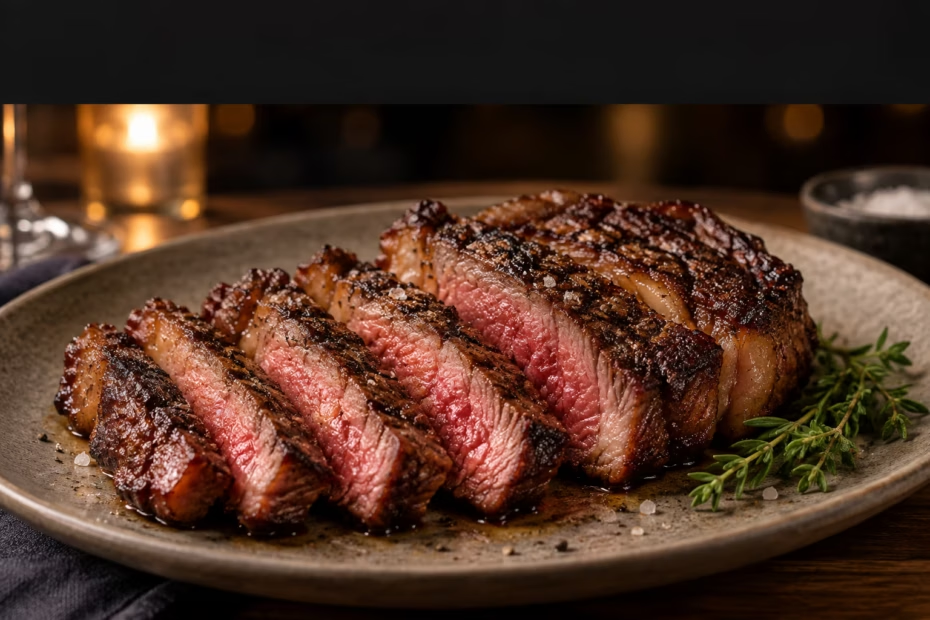
Who doesn’t love a perfectly cooked steak? Whether you prefer it rare, medium, or well-done, there’s no denying the mouthwatering appeal of a juicy piece of beef. But have you ever wondered how to describe the taste, texture, and overall experience of enjoying a delicious steak? In this article, I’ll be sharing a variety of adjectives that can help you paint a vivid picture of your steak-eating experience. From tender and succulent to charred and flavorful, these adjectives will take your steak descriptions to the next level. So, let’s dive in and explore the world of adjectives for steak, complete with examples to tantalize your taste buds.
When it comes to describing a steak, the possibilities are endless. Each cut, seasoning, and cooking method can result in a unique flavor profile that deserves to be celebrated. Whether you’re savoring a ribeye, filet mignon, or T-bone, there are adjectives that can capture the essence of each bite. From buttery and melt-in-your-mouth to robust and savory, these adjectives will help you articulate the sensory experience of enjoying a perfectly cooked steak. So, whether you’re a steak connoisseur or just someone who appreciates a good meal, get ready to enhance your culinary vocabulary with these descriptive words for steak.
There’s nothing quite like sinking your teeth into a perfectly seared steak, and the right adjectives can elevate the experience even further. From tender and juicy to smoky and aromatic, these words will bring your steak descriptions to life. So, whether you’re writing a restaurant review, sharing your culinary adventures on social media, or simply trying to impress your friends with your descriptive skills, this article will equip you with the adjectives you need to capture the essence of a delicious steak. Get ready to tantalize your taste buds and embark on a flavorful journey through the world of steak adjectives.

How to Describe steak? – Different Scenarios

When it comes to describing steak, there are various scenarios where you might want to showcase its deliciousness. Whether you’re writing a restaurant review, sharing your steak experience on social media, or simply impressing others with your culinary vocabulary, it’s important to have an arsenal of descriptive words to capture the essence of the steak. Below are different scenarios and examples of adjectives that you can use to describe steak:
1. In a Restaurant Review:
When writing a restaurant review, describing the steak accurately is key to painting a picture for your readers. Here are some adjectives you can use to describe the taste, texture, and overall experience of eating a steak:
- Tender: The steak was so tender, it practically melted in my mouth.
- Succulent: Each bite of the steak was juicy and full of flavor.
- Flavorful: The steak was seasoned perfectly, creating a burst of delicious flavors.
- Buttery: The steak had a rich, buttery texture that added a touch of indulgence.
2. On Social Media:
Sharing your steak experience on social media is a great way to showcase your culinary adventures. Here are some adjectives that can help you craft a mouth-watering description of your steak:
- Melt-in-your-mouth: The steak was cooked to perfection, making it melt-in-your-mouth tender.
- Robust: The steak had a robust flavor that left me craving for more.
- Savory: Each bite of the steak was savory and satisfying.
- Smoky: The steak had a delicious smoky flavor, adding depth to every bite.
3. Impressing Others:
If you want to impress others with your culinary vocabulary, using descriptive words for steak can elevate your conversation. Here are some adjectives that can impress your friends and colleagues:
- Aromatic: The steak had a fragrant aroma that filled the room.
- Charred: The steak had a perfectly charred crust, adding a delightful smoky taste.
- Rich: The steak had a rich meaty flavor that delighted the palate.
- Juicy: The steak was juicy and succulent, making it the perfect choice for meat lovers.
Describing Words for steak in English

When it comes to describing a delicious and succulent steak, there are a variety of adjectives that can truly capture its essence. From the taste to the texture, each aspect can be beautifully described using the right words. Here are some adjectives that can help paint a vivid picture of your steak-eating experience:
1. Flavorful: A steak that is flavorful is bursting with delicious taste. It’s packed with savory and rich flavors that tantalize your taste buds.
2. Juicy: Juicy is a wonderful word to describe a perfectly cooked steak. It indicates that the steak is moist and tender, with every bite releasing delectable juices.
3. Tender: When a steak is tender, it simply melts in your mouth. It implies that the meat is soft, tender, and easy to chew.
4. Savory: This adjective emphasizes the umami and robust flavors of a steak. It suggests that the meat is incredibly appetizing and deeply satisfying.
5. Succulent: Succulent is used to describe a steak that is moist, juicy, and full of flavor. It conveys a sense of indulgence and pleasure in every bite.
6. Well-seasoned: A well-seasoned steak is one that has been expertly seasoned with herbs, spices, and marinades. It implies that the flavors have been perfectly balanced, resulting in a delicious and well-rounded taste.
7. Mouthwatering: This adjective perfectly describes a steak that looks and smells incredibly appetizing. It evokes a strong desire to take a bite and enjoy the wonderful flavors.
8. Seared: Seared refers to a cooking technique where the steak is quickly cooked at a high temperature to create a caramelized crust. It adds a delicious smoky flavor and gives the steak an enticing appearance.
Adjectives for steak
When it comes to describing a delicious and mouthwatering steak, there are several adjectives that can perfectly capture its taste, texture, and overall experience. Let’s take a closer look at both positive and negative adjectives that can be used to describe a steak, along with some example sentences to help you understand their meaning.

Positive Adjectives for Steak
When a steak is cooked to perfection, it can be described using several positive adjectives. Here are some examples:
- Flavorful: The steak burst with a rich and savory flavor.
- Juicy: Each bite of the steak releases a succulent juicy goodness.
- Tender: The steak was so tender that it melted in my mouth.
- Savory: The steak was seasoned with just the right amount of herbs and spices, creating a savory delight.
- Succulent: The steak was so succulent that it left me craving for more.
- Well-seasoned: The steak was perfectly seasoned, enhancing its taste and aroma.
- Mouthwatering: The steak looked so delicious and smelled so good that it made my mouth water.
- Seared: The steak was beautifully seared to perfection, creating a caramelized crust that added an extra depth of flavor.
Let’s look at these positive adjectives for steak in action:
| Adjective | Example Sentence |
|---|---|
| Flavorful | The steak was incredibly flavorful. |
| Juicy | When I cut into the steak, juice dripped everywhere. |
| Tender | The steak was so tender that I didn’t need a knife. |
| Savory | The savory aroma of the steak filled the room. |
| Succulent | The steak was so succulent, it practically melted in my mouth. |
| Well-seasoned | The steak was perfectly seasoned, with a blend of spices that delighted my taste buds. |
| Mouthwatering | The sight and smell of the steak were absolutely mouthwatering. |
| Seared | The seared steak had a beautiful charred crust. |
Negative Adjectives for Steak
Let’s explore some negative adjectives that might be used to describe a steak that wasn’t cooked or prepared properly:
- Tough: The steak was tough and difficult to chew.
- Dry: The steak lacked moisture and was dry.
- Overcooked: The steak was left on the grill for too long, resulting in an overcooked texture.
- Rubbery: The steak had a rubbery consistency, making it unpleasant to eat.
- Gamey: The steak had a strong and slightly unpleasant taste, resembling game meat.
Here are a few example sentences showcasing the use of these negative adjectives:
| Adjective | Example Sentence |
|---|---|
| Tough | The steak was tough, and I struggled to cut through it. |
| Dry | The steak was so dry that it was hard to swallow. |
| Overcooked | The steak was overcooked and lacked juiciness. |
| Rubbery | The steak had a rubbery texture that was off-putting. |
| Gamey | There was a distinct gamey taste in the steak. |
Remember, these negative adjectives are not ideal descriptions for a perfect steak, but they can be used to describe less desirable experiences with poorly prepared steaks.
Synonyms and Antonyms with Example Sentences
When it comes to describing a delicious steak, there are a variety of adjectives that can be used. In this section, I will provide you with some synonyms and antonyms to help you expand your vocabulary and paint a vivid picture of the steak-eating experience.

Synonyms for steak
Here are some alternative words you can use to describe a flavorful and succulent steak:
| Adjective | Definition | Example Sentence |
|---|---|---|
| Juicy | Full of moisture and tenderness | The steak was so juicy that it practically melted in my mouth. |
| Tender | Easy to cut, chew, and digest | The tender steak was cooked to perfection. |
| Savory | Appetizing and flavorful | The herbs and spices gave the steak a savory taste. |
| Succulent | Moist and tender | The chef prepared a succulent steak that left everyone satisfied. |
| Well-seasoned | Flavored with spices and seasonings | The well-seasoned steak had a perfect balance of flavors. |
| Mouthwatering | Extremely appetizing and tempting | The mouthwatering aroma of the steak filled the room. |
| Seared | Cooked at high heat to form a crust | The seared steak had a delicious outer layer. |
Antonyms for steak
Not all steaks are created equal, and sometimes you may encounter a poorly prepared one. Here are some antonyms that describe negative qualities of a steak:
| Adjective | Definition | Example Sentence |
|---|---|---|
| Tough | Difficult to chew or cut | The steak was so tough that it required extra effort to eat. |
| Dry | Lacking moisture or juiciness | The overcooked steak was dry and lacked flavor. |
| Overcooked | Cooked for too long | The overcooked steak was tough and lacked tenderness. |
| Rubbery | Having a rubber-like texture | The rubbery steak was chewy and unappetizing. |
| Gamey | Having a strong, wild taste | The steak had a gamey flavor that not everyone enjoyed. |
By using these synonyms and antonyms, you can add depth and variety to your vocabulary when describing steaks. Whether it’s a mouthwatering and succulent steak or a tough and overcooked one, these adjectives will help you convey the taste, texture, and overall experience of eating a steak.
How to Choose the Right Adjective for Steak
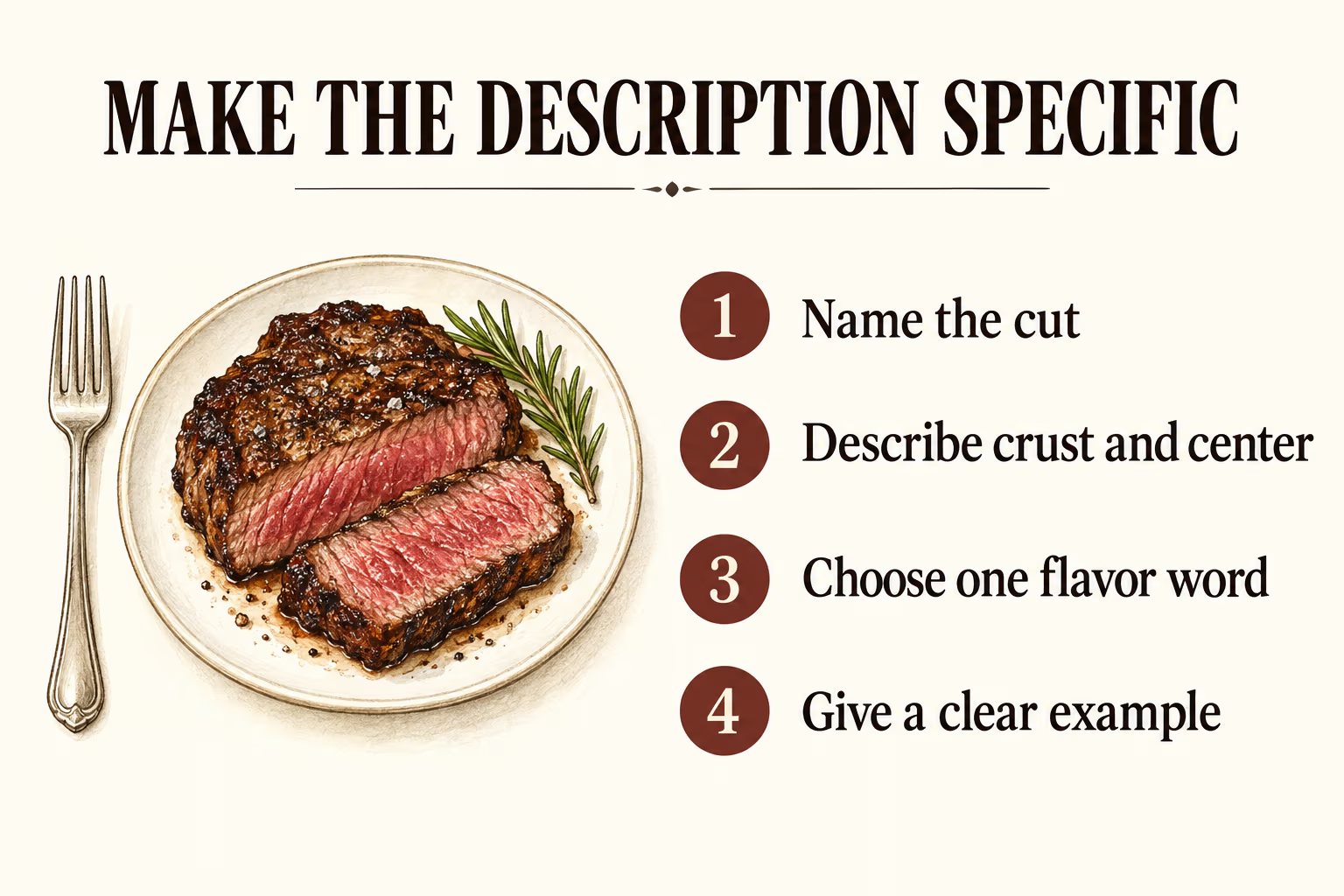
A useful steak description tells readers what you noticed rather than stacking several near-synonyms. Start with one detail about the surface, one about the bite, and one about the flavor. For example: “The strip steak had a peppery, browned crust and a tender center.” If you are describing your own meal, “I found it juicy” makes clear that you are reporting an impression, not promising every steak will taste the same.
Words for Steak Flavor
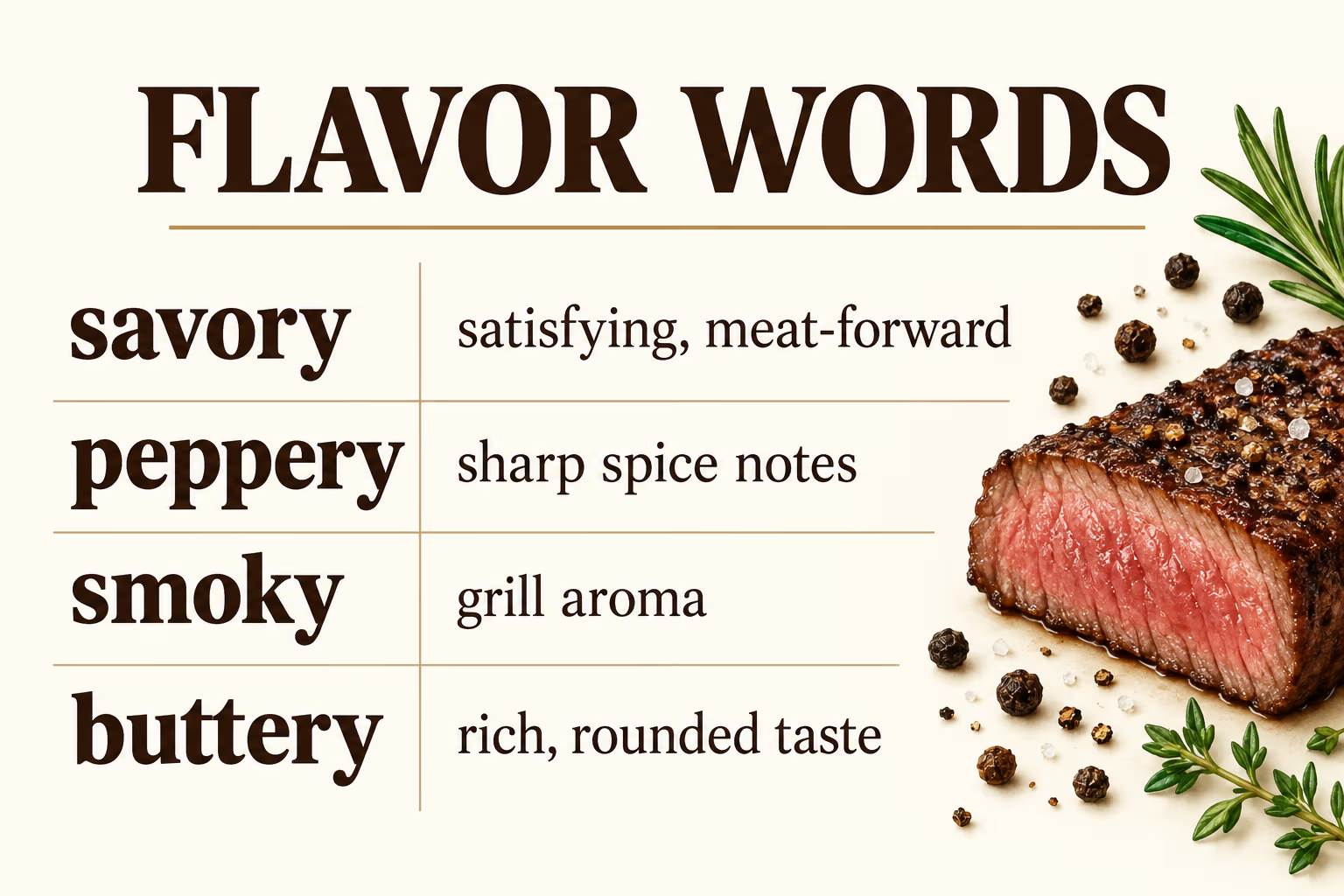
Flavor words identify the taste and aroma that stand out. Beefy means recognizably meaty; savory describes a satisfying, non-sweet taste; peppery points to a noticeable pepper bite; and smoky suggests an aroma or flavor associated with smoke or grilling. Buttery can describe a rich, smooth impression, while herbaceous fits a clear note from herbs. Name the seasoning or cooking method when you know it: “smoky from the grill” is more informative than simply “smoky.”
Words for Texture and Juiciness
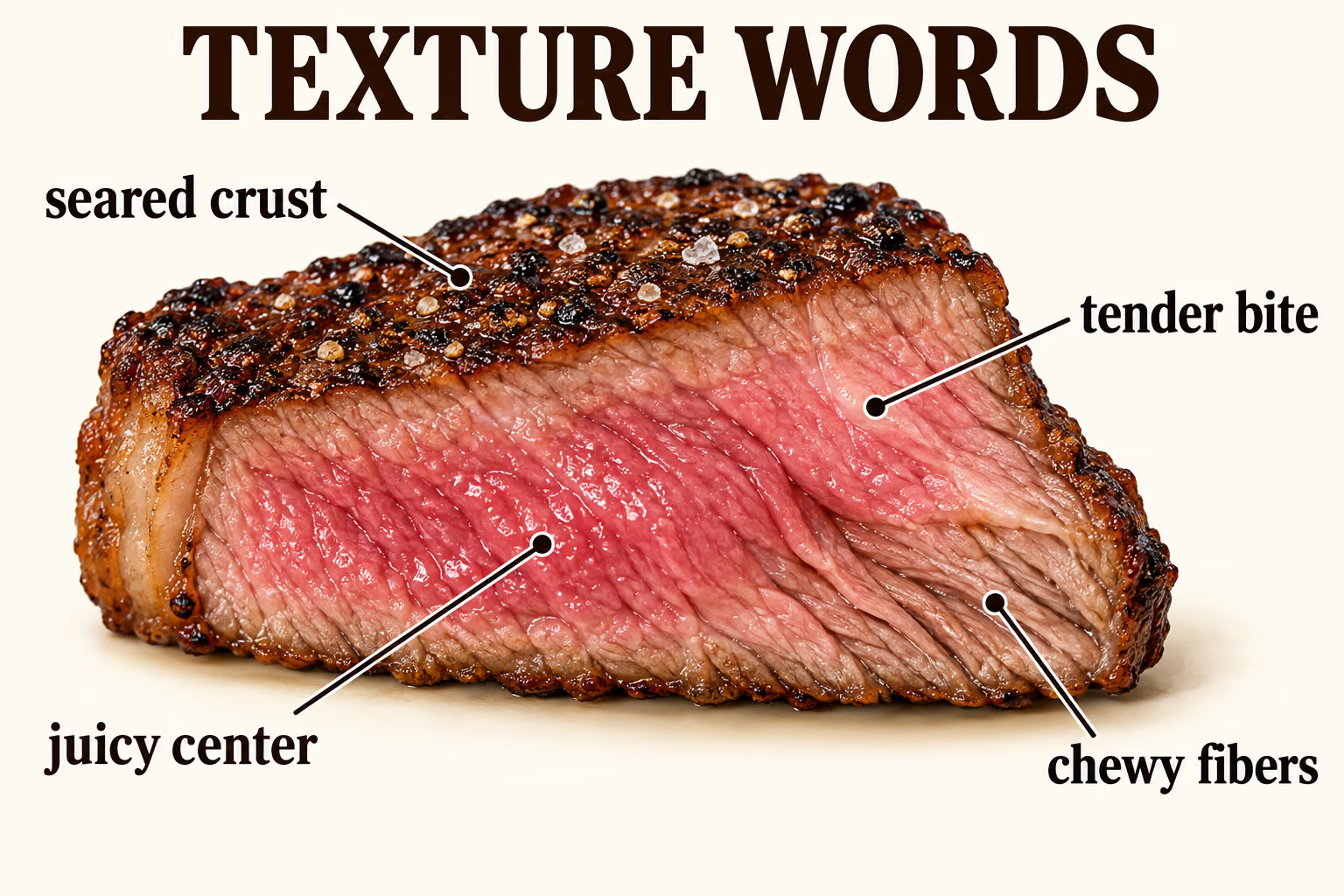
Tender describes a bite that is easy to cut or chew; firm describes more resistance without necessarily calling the steak unpleasant. Chewy signals a longer or more effortful bite, and tough is a stronger negative judgment. Juicy describes moisture released as you bite, while dry describes a lack of that moist impression. These words are related but not interchangeable: a steak can have a juicy bite yet still feel firm, or be tender without having a particularly rich flavor.
Words for Appearance and Cooking
Seared describes a surface browned by high heat; charred suggests darker, sometimes bitter-tasting spots. Golden-brown or deeply browned gives readers a clearer visual than “perfect.” A rosy center describes its appearance, while rare, medium, and well-done name customary doneness categories. Doneness and texture are separate observations, so avoid using “medium” as a synonym for “tender.”
For food safety, appearance and adjectives cannot confirm that meat is safe to eat. USDA FSIS recommends cooking beef steaks to at least 145°F (62.8°C), checking with a food thermometer, then allowing a three-minute rest. Personal preference may lead someone to cook to a higher temperature. Use a thermometer for temperature instead of judging safety by color, smell, or words such as “juicy.”
Match the Description to the Steak
The cut, seasoning, and preparation affect which details are worth mentioning. A ribeye description might focus on its visible marbling and rich impression; a tenderloin description might emphasize its soft bite; a grilled sirloin description could mention a browned edge and pepper seasoning. Those are examples of possible writing choices, not guarantees about every serving. USDA beef quality grades consider several palatability factors, including tenderness, juiciness, flavor, texture, and marbling, but the label does not describe the exact taste of an individual cooked steak.
Keep the details tied to what you observed. Instead of “This steak was amazing,” try “The sirloin was savory, with a crisp seared edge and a firm, juicy center.” If you are unsure about the cut or seasoning, describe only the visible crust and the flavor you can identify.
Steak Description Examples
- Restaurant review: “The ribeye arrived deeply browned, with a peppery crust and a rich, beefy aroma.”
- Menu note: “Grilled sirloin with a smoky edge, rosemary aroma, and a tender sliced center.”
- Balanced feedback: “The steak tasted savory, though its outer edges were drier and chewier than the center.”
- Simple student example: “The steak was juicy and tender, with a browned crust.”
A practical formula is cut or cooking method + surface + texture + one flavor note. For instance: “The grilled flank steak had a charred edge, a chewy bite, and a bright garlic flavor.” Use only details that fit the meal you are describing.
Quick Steak Adjective Word Bank
Choose a word from the category that matches the detail you want readers to picture:
- Rich: full and satisfying, as in “a rich bite with a lingering beef flavor.”
- Robust: strong in flavor, as in “a robust, pepper-forward seasoning.”
- Fragrant: noticeable in aroma, as in “fragrant garlic butter over the sliced steak.”
- Smoky: suggestive of smoke, as in “a smoky aroma from the grill.”
- Buttery: smooth and rich in impression, as in “a buttery finish.”
- Well-seasoned: flavored with seasoning, as in “a well-seasoned crust with black pepper.”
- Silky: very smooth in mouthfeel, as in “a silky sauce alongside the steak.”
- Succulent: moist and appealing, as in “succulent slices served straight from the pan.”
- Crusty: having a firm outside layer, as in “a crusty, browned exterior.”
- Rubbery: unpleasantly springy or resistant, as in “a rubbery bite that was hard to chew.”
- Gamey: an assertive flavor some diners dislike; use it as a personal impression, not an objective defect.
- Overcooked: cooked beyond the writer’s preferred result; explain the effect, such as “dry around the edges.”
Some words describe a quality while others evaluate it. “Peppery” and “smoky” identify flavor notes; “delicious” gives an opinion. Pairing a specific sensory word with a brief explanation helps readers understand both what the steak was like and whether you enjoyed it.
Frequently Asked Questions
What is a good adjective for steak?
Tender, juicy, savory, and well-seasoned are useful positive choices when they accurately describe the steak. Add a concrete detail such as “peppery crust” to make the description more specific.
How do I describe steak texture?
Use tender for an easy-to-chew bite, firm for a noticeable but not necessarily unpleasant resistance, chewy for a bite that takes more work, and dry when it lacks a moist impression. Describe crust and center separately if they differ.
What is the difference between juicy and tender?
Juicy refers to moisture in the bite; tender refers to how easily the meat cuts or chews. One does not automatically mean the other.
Can I use “rare” as an adjective for steak?
Yes. Rare is commonly used for a customary doneness category, as in “a rare steak.” It describes doneness, not tenderness or food safety. Check internal temperature with a food thermometer and follow USDA guidance.
What are negative adjectives for steak?
Tough, dry, rubbery, and overcooked can describe an unsatisfying result. Explain the specific problem, such as “dry at the edges,” so the reader understands what you mean.
Sources: USDA FSIS safe temperature chart; Texas A&M AgriLife Extension on beef grading; Texas A&M AgriLife Extension on meat tenderness.
Conclusion
In this article, I have explored a variety of adjectives that can be used to describe a mouthwatering steak. By incorporating these descriptive words into your culinary vocabulary, you can effectively convey the taste, texture, and overall experience of enjoying a delicious steak.
Throughout the article, I have provided synonyms such as juicy, tender, savory, succulent, well-seasoned, mouthwatering, and seared. These words paint a vivid picture of the delectable qualities that make a steak truly exceptional. On the other hand, I have also discussed antonyms like tough, dry, overcooked, rubbery, and gamey, which describe negative attributes that one would want to avoid when enjoying a steak.
By expanding your repertoire of steak-related adjectives, you can enhance your ability to express your culinary preferences and experiences with precision and clarity. Whether you are a food enthusiast, a chef, or simply someone who appreciates a good steak, these adjectives will undoubtedly enrich your descriptions and conversations about this beloved dish.
So, the next time you savor a perfectly cooked steak, remember to reach for these adjectives to capture its essence and share your gastronomic delight with others.


