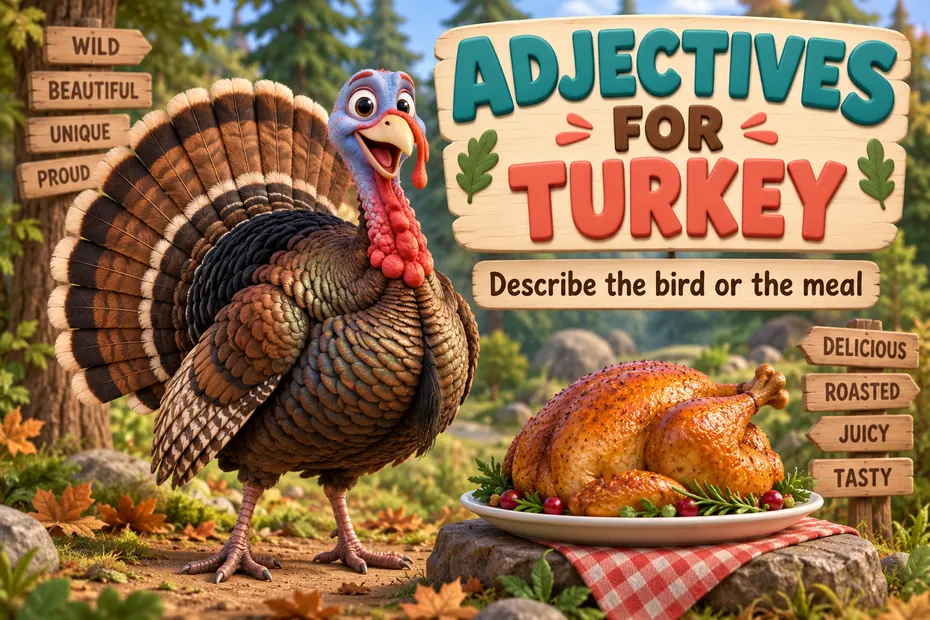
Which adjectives describe turkey best?
Tender, juicy, savory, roasted, smoky, golden, and herb-seasoned describe turkey served as food. For a living turkey, use observable words such as feathered, alert, bronze-feathered, or strutting. Choose the meaning first: a tender roast and an alert woodland bird need different descriptions, even though both use the noun turkey.
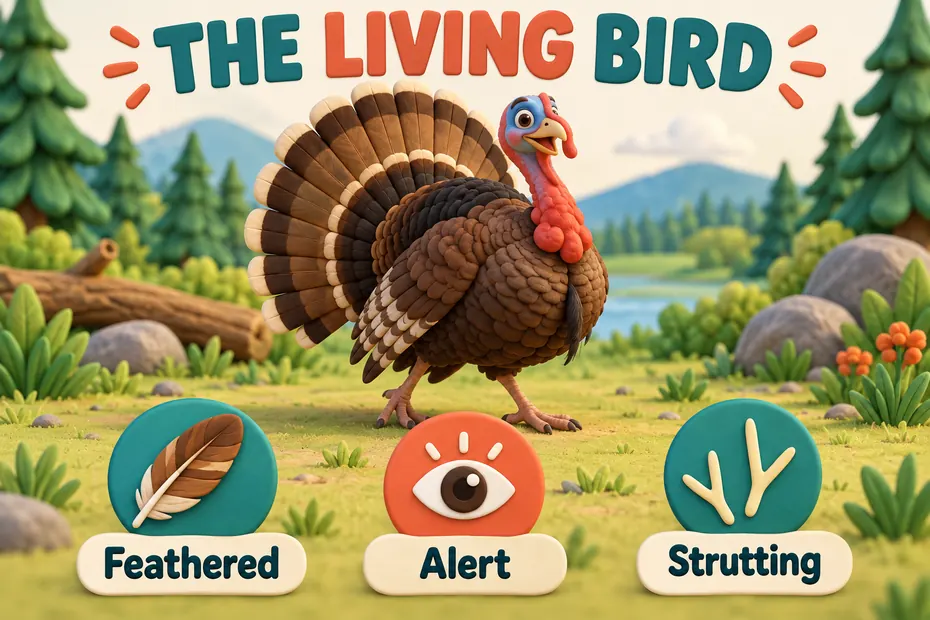
How can you describe the cooked meat precisely?
Separate flavor, texture, appearance, and preparation. Juicy describes moisture; tender describes ease of chewing; smoky describes a flavor or aroma associated with smoke; roasted describes preparation. A food review becomes clearer when it tells readers which quality the writer actually observed instead of combining several positive words without explanation.
| Aspect | Useful words | Original example |
|---|---|---|
| Texture | Tender, firm, dry, chewy | The tender breast meat sliced cleanly. |
| Moisture | Juicy, moist, dry | The juicy thigh meat needed little sauce. |
| Flavor | Savory, smoky, mild, peppery | The peppery turkey paired with a mild gravy. |
| Appearance | Golden, browned, pale | The golden skin contrasted with the pale slices. |
| Preparation | Roasted, smoked, grilled, sliced | Thinly sliced smoked turkey filled the sandwich. |
Do not assume every turkey has these qualities. “Turkey is tender” makes a broad claim; “The roast turkey was tender” reports a particular meal. Different cuts, preparation methods, and serving conditions can produce different results. Describe the portion you tasted, especially if the breast and thigh differed in moisture or texture.
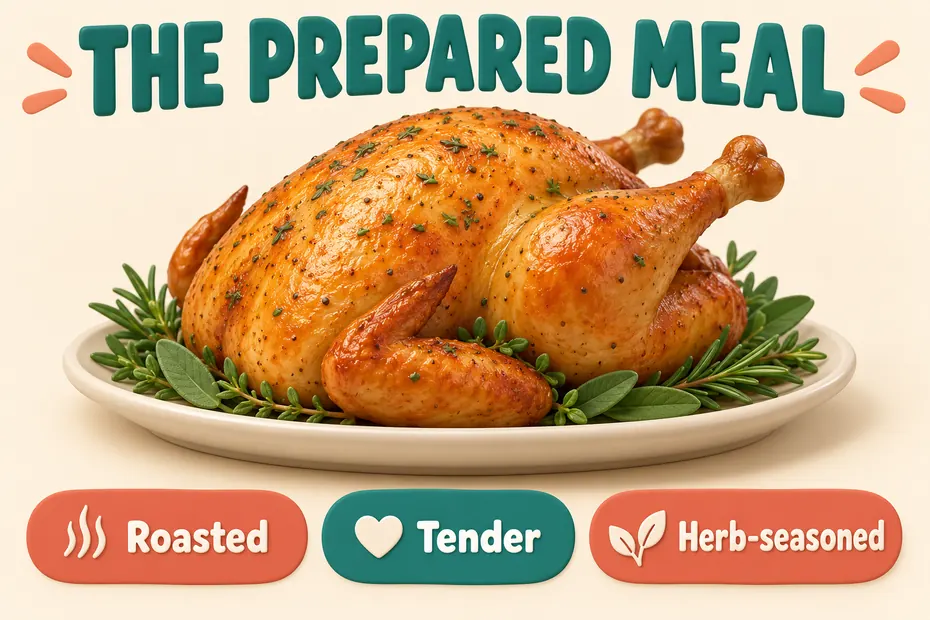
Which words belong together in a food description?
Combine adjectives that contribute different information. “Tender, herb-seasoned roast turkey” describes texture, seasoning, and preparation. “Delicious, tasty, delectable turkey” repeats an evaluation without telling readers much about the meal. The shorter, more specific version usually does more useful work in a menu or review.
- Menu: Herb-seasoned roast turkey with a peppery gravy.
- Food review: The breast was tender, though the outer slices were dry.
- Sandwich description: Thinly sliced smoked turkey with crisp lettuce.
- Personal account: The turkey had browned skin and a mild, savory flavor.
- Balanced criticism: The meat was moist but the seasoning was uneven.
Words such as succulent and mouthwatering add enthusiasm, but a concrete detail should support them. If you call a roast succulent, explain that the slices retained moisture. If you call it aromatic, identify the noticeable herb or seasoning when known. Avoid claiming a specific ingredient based only on a guess about the smell.
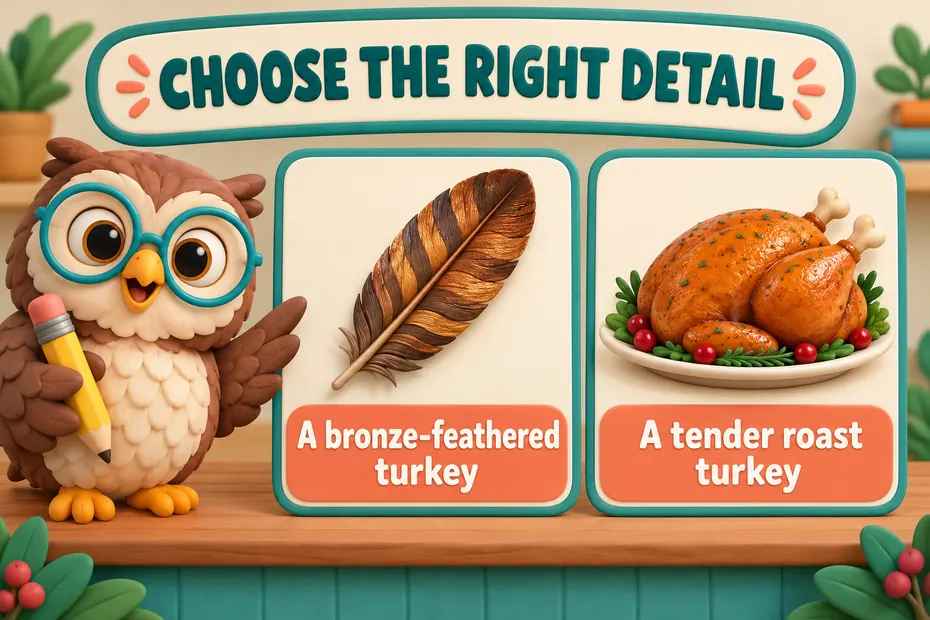
How do you describe a living turkey?
Describe a living turkey through appearance and behavior rather than food qualities. Cornell Lab’s Wild Turkey guide documents ground foraging, conspicuous male displays, and treetop roosting. Those observations can support a vocabulary exercise, but a particular description should still reflect the bird or photograph in front of you.
| Detail | Possible wording | Sentence |
|---|---|---|
| Feathers | Bronze-feathered, dark-feathered | A bronze-feathered turkey stood beside the oak. |
| Posture | Upright, puffed-up | The puffed-up male displayed in the clearing. |
| Movement | Strutting, foraging | The foraging turkey searched the leaf litter. |
| Attention | Alert, watchful | The alert bird lifted its head. |
Distinguish an observation from an interpretation. Alert describes attention visible in posture or movement; proud gives the bird a human attitude. Proud can work in imaginative writing, but it is not the same kind of claim as “The bird spread its tail.” For a factual nature caption, favor the action you can see.
How can you turn the word list into a sentence?
Choose the noun’s meaning, select one or two useful details, and connect them to an observable example. A complete description should tell readers what the turkey is like in this situation. The longest stack of adjectives is rarely the clearest option, particularly when several words describe the same quality.
- Decide whether turkey means the meal, the living bird, or another use.
- Select an aspect: flavor, texture, appearance, action, or preparation.
- Choose a word that fits that aspect.
- Add a contrasting detail if it improves the description.
- Read the sentence to check that it describes this example rather than every turkey.
For instance, revise “The turkey was good” to “The roast turkey was tender and lightly peppered.” Revise “The bird was amazing” to “The dark-feathered turkey strutted across the clearing.” Each revision replaces an unsupported judgment with details readers can imagine or compare.
Frequently asked questions about turkey adjectives
Are juicy and tender synonyms?
Not exactly. Juicy concerns moisture, while tender concerns texture and ease of chewing. A review can use both if both are observed, but one does not automatically prove the other. “Juicy thigh meat with a slightly firm texture” shows how a sentence can distinguish the two qualities instead of treating them as identical.
What is a better word than delicious?
A more informative word depends on what pleased you. Savory describes a flavor impression; tender describes texture; smoky identifies a particular flavor or aroma. Delicious remains useful as an overall judgment, but “tender roast turkey with a smoky flavor” gives the reader more detail than delicious alone.
Should turkey be capitalized?
Use lowercase for the bird or meat except at the start of a sentence: “We served turkey.” The country name is a proper noun and takes a capital. A title may capitalize Turkey according to its title style; that capitalization does not change which meaning the article is discussing.
Are gobbler and hen adjectives?
No. Gobbler and hen are nouns used for types of turkey, rather than ordinary descriptive adjectives such as alert or feathered. “A gobbling turkey” uses a participial form to describe an action. Keep word lists clear about whether an entry names an animal, describes a quality, or describes behavior.
Sources and scope of the examples
The noun’s bird and food meanings were checked against Merriam-Webster’s turkey entry. Bird observations were checked against the Cornell Lab Wild Turkey guide. The meal descriptions are original vocabulary examples, not universal claims about every preparation.

Turkey, the centerpiece of many holiday feasts, is a versatile and delicious meat that can be prepared in countless ways. But have you ever wondered how to describe the taste, texture, and appearance of this culinary delight? In this article, I’ll take you on a journey through a variety of adjectives that perfectly capture the essence of turkey. From succulent and tender to savory and aromatic, these descriptive words will help you paint a vivid picture of the delectable bird. So whether you’re writing a recipe, a food review, or simply want to impress your dinner guests, read on to discover the perfect adjectives to elevate your turkey game.
When it comes to describing turkey, one word that immediately comes to mind is juicy. The succulent meat, with its natural moisture locked in, practically melts in your mouth with every bite. But turkey isn’t just known for its juiciness; it also boasts a tender texture that is both satisfying and comforting. Whether it’s roasted, grilled, or smoked, the meat remains tender, making it a delight to chew and savor. And let’s not forget about the flavor – turkey is often described as savory, with hints of earthiness and richness that make it a true crowd-pleaser. So, whether you’re enjoying a classic Thanksgiving dinner or experimenting with new recipes, these adjectives will help you convey the mouthwatering qualities of turkey.
How to Describe turkey? – Different Scenarios
How to Describe Turkey? – Different Scenarios
When it comes to describing turkey, there are various scenarios where you might need to find the perfect words. Whether you’re writing a recipe, a food review, or trying to impress your dinner guests, choosing the right adjectives can elevate your description to the next level. Let’s explore different scenarios and the appropriate adjectives to describe turkey in each one:
- In a Recipe:
When describing turkey in a recipe, you want to focus on its flavors, textures, and how it complements other ingredients. Here are some adjectives to convey the essence of turkey in a recipe:
- Juicy: Juicy turkey pairs well with flavorful sauces and spices.
- Tender: Tender turkey melts in your mouth, ensuring a delectable dining experience.
- Savory: Savory turkey adds depth and richness to the dish.
- Aromatic: Aromatic turkey fills the kitchen with enticing smells while cooking.
- In a Food Review:
If you’re reviewing a turkey dish, it’s important to capture the overall experience and highlight its standout qualities. Consider using these adjectives in your food review:
- Moist: Moist turkey ensures a succulent and enjoyable bite.
- Flavorful: Flavorful turkey is seasoned perfectly and leaves a lasting impression.
- Well-seasoned: Well-seasoned turkey showcases the chef’s expertise and enhances the taste.
- Mouthwatering: Mouthwatering turkey makes you crave more with each bite.
- To Impress Dinner Guests:
When you want to impress your dinner guests, using descriptive adjectives adds a touch of sophistication and elevates their dining experience. Here are some words to describe turkey that will impress your guests:
- Exquisite: Exquisite turkey showcases your culinary skills and attention to detail.
- Sumptuous: Sumptuous turkey indicates a truly indulgent and luxurious meal.
- Delicious: Delicious turkey is impossible to resist and will leave your guests raving.
- Decadent: Decadent turkey is rich, indulgent, and a true treat for the taste buds.
Describing Words for turkey in English
When it comes to describing the deliciousness of turkey, there are plenty of adjectives that can capture its mouthwatering qualities. Whether you’re a food enthusiast, a chef, or just looking to impress your dinner guests, having a repertoire of descriptive words for turkey can elevate your culinary experience. Let’s explore some adjectives that you can use to describe the taste, texture, and appearance of this delectable bird.
Taste
- Juicy: When perfectly cooked, turkey has a succulent and juicy flavor that is sure to tantalize your taste buds.
- Savory: One of the unique qualities of turkey is its savory taste, which is rich and full of depth.
- Rich: The taste of turkey can be described as rich, especially when paired with tasty gravies or sauces.
- Earthy: Turkey has a slightly earthy flavor that adds a delightful rustic touch to your meal.
- Herb-infused: Many recipes call for spices and herbs to be rubbed or stuffed into the turkey, giving it a fragrant and herb-infused taste.
Texture
- Tender: Turkey, when cooked just right, becomes tender and moist, making it incredibly enjoyable to eat.
- Melt-in-your-mouth: The texture of turkey can be melt-in-your-mouth, especially if it is cooked slowly and to perfection.
- Smooth: Turkey has a smooth texture that adds to its overall appeal, making it a delight to savor.
- Firm: The texture of turkey can also be described as firm, especially if it has been roasted or grilled to attain a slight crispness.
- Fall-off-the-bone: When slow-cooked or braised, turkey can become so tender that it falls off the bone, making it a true delight to enjoy.
- Golden: A properly roasted turkey has a beautiful golden-brown color that adds visual appeal to your plate.
- Glistening: Turkey, when cooked to perfection, has a glistening appearance that is incredibly enticing.
- Crisp: The skin of a well-cooked turkey can have a delightful crispiness, adding to the overall visual appeal.
- Plump: A plump and beautifully cooked turkey is a sight to behold, evoking feelings of anticipation and satisfaction.
Adjectives for turkey
When it comes to describing turkey, there are countless adjectives that can capture its taste, texture, and appearance. Whether you’re writing a recipe, a food review, or simply want to impress your dinner guests, choosing the right adjectives is essential to elevate the description of turkey. Let’s explore some positive and negative adjectives that will help you convey the mouthwatering qualities of turkey.
Positive Adjectives for turkey with 12 Example Sentences
- Juicy: The turkey was cooked to perfection, resulting in juicy, succulent meat.
- Tender: The turkey breast was incredibly tender, melting in my mouth with every bite.
- Savory: The roasted turkey emitted a savory aroma that filled the kitchen.
- Aromatic: The turkey, seasoned with herbs and spices, created an aromatic delight.
- Earthy: The deep, earthy flavor of the turkey was reminiscent of a rustic home-cooked meal.
- Herb-infused: The herb-infused turkey had a delightful burst of flavors in every mouthful.
- Melt-in-your-mouth: The slow-cooked turkey was so tender, it practically melted in my mouth.
- Smooth: The turkey meat had a smooth, delicate texture.
- Firm: The turkey legs were firm and packed with flavor.
- Fall-off-the-bone: The slow-cooked turkey leg was so tender, it easily fell off the bone.
- Golden: The perfectly roasted turkey had a beautiful golden skin.
- Glistening: The turkey, freshly basted with butter, had a glistening, irresistible appearance.
- Dry: Unfortunately, the overcooked turkey was a bit dry and lacked moisture.
- Tough: The turkey breast was disappointingly tough and chewy.
- Blah: The bland seasoning left the turkey lacking in flavor.
- Rubbery: The overcooked turkey had a rubbery texture that was hard to enjoy.
- Burnt: The burnt turkey skin gave it an unpleasant, charred taste.
Synonyms and Antonyms with Example Sentences
Synonyms for turkey
When it comes to describing the taste, texture, and appearance of turkey, there are many synonyms that can add variety and depth to your descriptions. Here are some examples:
| Synonym | Definition | Example Sentence |
|---|---|---|
| Juicy | Full of moisture and delicious liquid | The turkey was so juicy that it practically melted in my mouth. |
| Tender | Easily chewed or cut | The meat was incredibly tender, making it a joy to eat. |
| Savory | Delicious and flavorful | The turkey had a savory aroma that filled the entire room. |
| Aromatic | Having a pleasant or distinctive smell | The herbs and spices gave the turkey an aromatic quality. |
| Earthy | Reminiscent of the natural flavors of the earth | The turkey had an earthy taste, like the forest after a rainfall. |
| Herb-infused | Infused with the flavors of herbs | The turkey was perfectly seasoned with herb-infused butter. |
| Melting | Softening or becoming liquid with heat | The buttery skin of the turkey was melting all over my plate. |
| Smooth | Having an even and consistent texture | The turkey had a smooth, velvety texture that was a delight to eat. |
| Firm | Having a solid and resistant texture | The turkey was firm and held its shape when sliced. |
| Fall-off-the-bone | Cooked so perfectly that the meat comes off the bone easily | The turkey was slow-cooked and so tender that it fell off the bone. |
| Golden | Having a rich, golden-brown color | The turkey came out of the oven with a beautifully golden skin. |
| Glistening | Shining or reflecting light | The turkey was perfectly cooked, glistening with juices. |
These synonyms will help you create vivid and enticing descriptions of turkey that will make your readers’ mouths water.
Antonyms for turkey
While turkey can be delicious and mouthwatering, there are also some antonyms that describe undesirable qualities of the meat. Here are a few examples:
| Antonym | Definition | Example Sentence |
|---|---|---|
| Dry | Lacking moisture | The turkey was overcooked and ended up being dry and tasteless. |
| Tough | Difficult to chew or cut | The turkey was tough and required a lot of effort to eat. |
| Blah | Lacking flavor or interest | The turkey was so blah that it was hard to get excited about eating it. |
| Rubbery | Resembling or having the texture of rubber | The turkey was overcooked and had a rubbery consistency. |
| Burnt | Overheated or charred | Unfortunately, I left the turkey in the oven for too long, and it ended up burnt. |
It’s important to choose the right adjectives to convey the mouthwatering qualities of turkey while avoiding the negative characteristics. By using a combination of positive adjectives and avoiding the negative ones, you can create descriptions that will make your readers hungry and excited to enjoy a delicious turkey meal.
Conclusion
In this article, I have provided a comprehensive list of adjectives that can be used to describe the taste, texture, and appearance of turkey. By incorporating these descriptive words into your culinary descriptions, you can effectively enhance the sensory experience for your readers.
From positive synonyms like juicy, tender, and savory to negative antonyms like dry and tough, it is crucial to choose the right adjectives to accurately convey the mouthwatering qualities of turkey while avoiding the undesirable characteristics. By doing so, you can paint a vivid picture in the minds of your audience, enticing them to indulge in this delectable dish.
Remember, adjectives play a significant role in capturing the essence of any food, and turkey is no exception. Whether you’re describing its aroma, tenderness, or golden appearance, the right choice of words can make all the difference in creating a tantalizing culinary experience.
So, the next time you find yourself writing about turkey, refer back to this list of adjectives to ensure that your descriptions are vivid, enticing, and irresistible. Happy writing and happy cooking!


