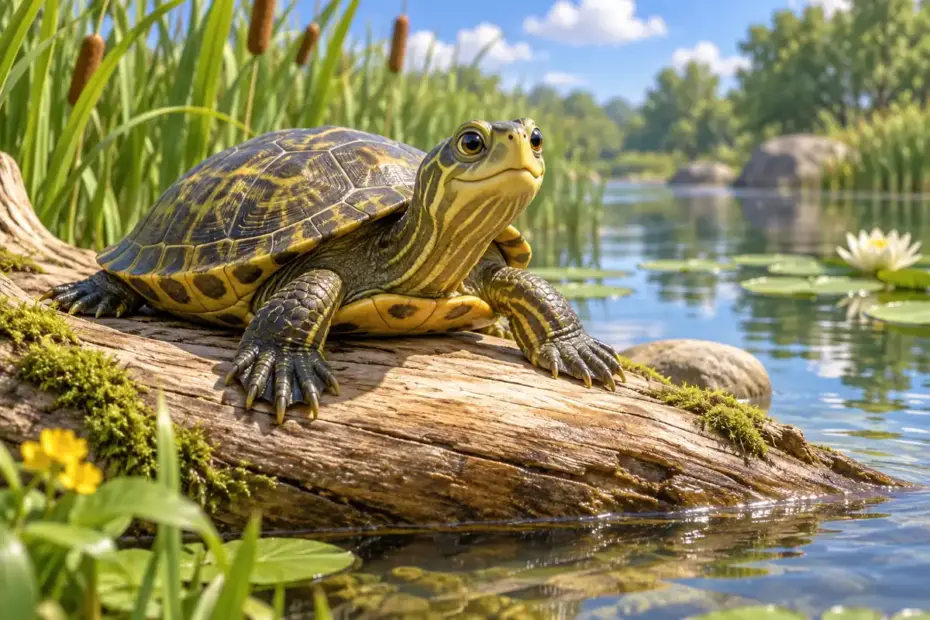
Adjectives for Turtle: Descriptive Word List
Turtle adjectives describe an individual animal’s shell, color, movement, habitat, or behavior. Words such as patterned, domed, web-footed, aquatic, and cautious can make a sentence more vivid, but turtle species vary widely. Use traits you can observe or verify rather than assuming every turtle shares the same features.
Key facts at a glance
- Adjectives can describe shell shape, color, texture, movement, habitat, or behavior.
- Most turtles are aquatic or semi-aquatic, but land-dwelling tortoises differ; exceptions exist.
- Shells vary by species and are part of the animal’s body.
- Precise descriptions identify the animal or observed feature instead of relying on stereotypes.
Which adjectives describe a turtle?
Useful adjectives include shelled, patterned, mottled, striped, spotted, domed, flattened, aquatic, semi-aquatic, terrestrial, web-footed, slow-moving, cautious, and resilient. These words describe different traits, and not every term fits every species. A painted turtle may be colorful, while a tortoise may have a high-domed shell and sturdy, column-like legs.
| Detail | Possible adjectives | Use when |
|---|---|---|
| Shell | domed, flattened, patterned, ridged | the feature is visible and species-appropriate |
| Color or markings | mottled, striped, spotted, olive | the color or pattern is observed |
| Habitat or movement | aquatic, semi-aquatic, terrestrial, web-footed | the animal’s habitat or feet support the word |
| Behavior | cautious, basking, alert, slow-moving | describing an individual in context |
How do you pick accurate turtle adjectives?
Observe the turtle and name a visible feature, or check a reliable species profile before using a habitat or anatomy adjective. A word like flattened may describe many turtle shells, while domed is often associated with tortoises; the Smithsonian notes that these shell differences have exceptions.
- Identify whether the animal is aquatic, semi-aquatic, or land-dwelling.
- Describe shell shape, color, or markings only when visible.
- Use behavior words for an observed action, not as a permanent personality.
- Check the species name when scientific accuracy matters.
This keeps a general writing list useful without suggesting that every turtle is green, slow, or shy.
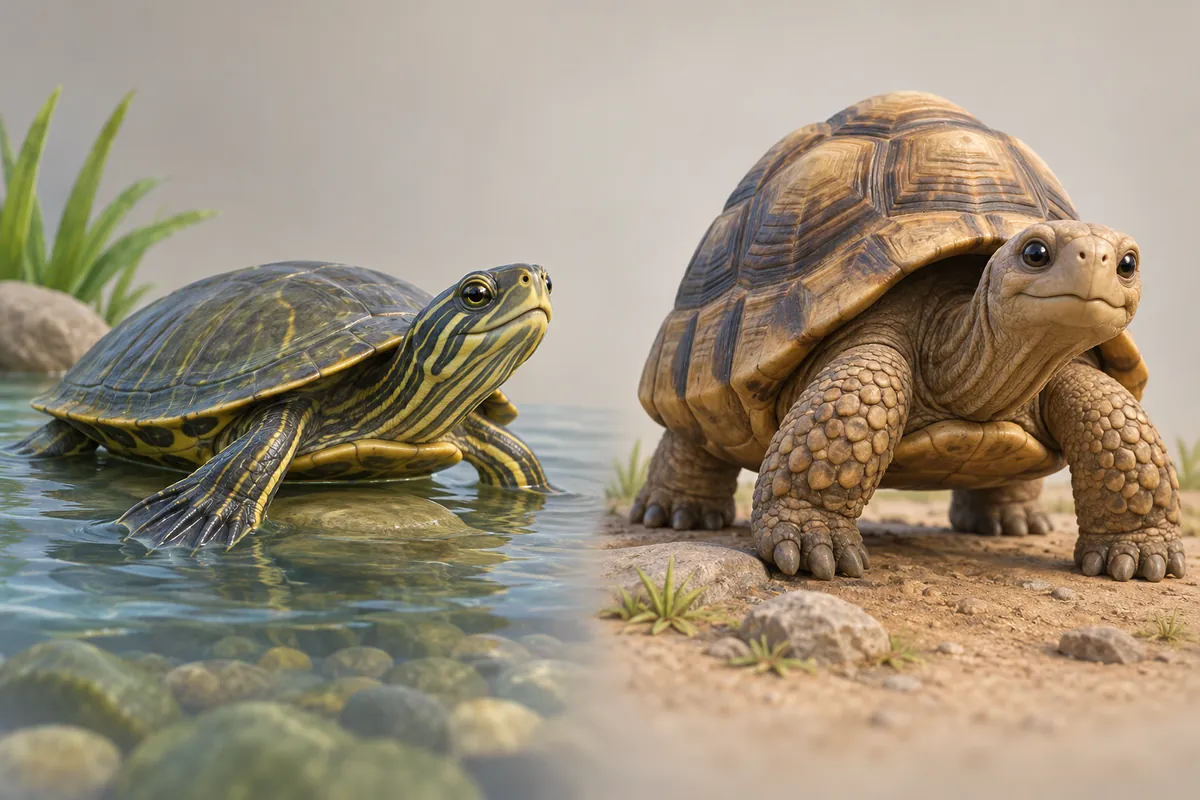
How do turtle and tortoise descriptions differ?
Many turtles spend much of their lives in water, while tortoises are land-dwelling, but naming patterns and physical traits vary. Smithsonian describes turtle shells as typically flatter than tortoise shells while noting exceptions. San Diego Zoo describes turtles, tortoises, and terrapins as related reptiles with different habitat patterns.
For an accurate sentence, prefer the animal’s known name and observed traits over a broad label. “A red-eared slider paddled through the pond” gives a species name and action. “A domed tortoise crossed the sandy enclosure” fits a land-dwelling animal. Use a field guide for identification rather than an adjective alone.
Can adjectives describe turtle behavior?
Yes. Adjectives such as cautious, alert, basking, or swimming can describe behavior, but behavior changes with setting and individual circumstances. “The turtle stayed alert near the pond edge” reports an observation; “turtles are timid” makes a broad claim that may not fit every animal.
Movement words also depend on context. A turtle may swim, paddle, crawl, bask, hide, or forage. Give the action directly when possible, then add an adjective only if it contributes a useful detail. Avoid treating a turtle’s shell as a removable hiding place; it is part of the animal’s body.
Frequently asked questions
What are three adjectives for a turtle?
Patterned, shelled, and aquatic are three possible turtle adjectives, but the best choices depend on the individual or species. “Patterned” describes markings, “shelled” names a defining body feature, and “aquatic” fits a turtle that lives in water in a short description.
What adjective describes a turtle’s shell?
A turtle shell might be described as patterned, smooth, ridged, flattened, or domed, depending on the species and the visible feature. Smithsonian notes that many turtle shells are flatter than tortoise shells but also points out exceptions, so check the animal before using a general description.
Is slow-moving a good adjective for every turtle?
No. Slow-moving may fit an observed turtle in a particular moment, but it should not be treated as a universal trait. Turtles vary by species and activity; some swim actively or move quickly over short distances. Describe the behavior you actually observe.
What words describe a turtle’s habitat?
Aquatic describes a water-dwelling setting, semi-aquatic fits animals that use both water and land, and terrestrial describes land habitats. Habitat labels vary among species, so use a trusted species profile when the distinction matters in a report or identification guide.
Conclusion
Choose turtle adjectives from observable shell, color, movement, habitat, or behavior traits. Turtle species vary, and broad distinctions between turtles and tortoises have exceptions. For a vivid, accurate sentence, pair one precise adjective with the animal’s name or a specific observed action.
If you’ve ever encountered a turtle, you know that these creatures are fascinating and unique. From their slow and deliberate movements to their protective shells, turtles have captivated our imagination for centuries. But have you ever wondered how to describe a turtle using adjectives? In this article, I’ll dive into the world of turtle adjectives, providing you with a comprehensive list of words that perfectly capture the essence of these remarkable creatures.
When it comes to describing turtles, there are a plethora of adjectives that come to mind. From their appearance to their behavior, each word paints a vivid picture of these ancient reptiles. Whether you’re writing a story, studying biology, or simply want to expand your vocabulary, this article will equip you with a variety of descriptive words to bring your turtle encounters to life. So, let’s embark on this adjective-filled journey and discover the perfect words to describe turtles in all their splendor.
How to Describe turtle? – Different Scenarios
When we encounter turtles, whether in the wild or in captivity, we often find ourselves searching for words to capture their unique characteristics. Describing turtles can be an exciting and challenging task, as these fascinating creatures have various attributes and behaviors that make them truly remarkable. Let’s explore different scenarios and discover the perfect adjectives to describe turtles.
In the Wild
When observing turtles in their natural habitat, it’s essential to take into account their surroundings and the way they interact with their environment. Here are some adjectives to describe turtles in the wild:
- Majestic: Turtles gracefully move through the water, their elegant movements reminiscent of a ballet dancer.
- Camouflaged: Many turtle species blend seamlessly with their surroundings, using their colors and patterns for protection.
- Patient: Turtles spend hours motionless, showing incredible patience as they wait for the perfect moment to make their move.
- Adaptable: These resilient creatures have adapted to various habitats, from rivers and lakes to oceans and even deserts.
- Mysterious: Turtles often embody an air of mystery, appearing and disappearing without warning, leaving us in awe of their elusive nature.
In Captivity
Observing turtles in a controlled environment, such as a zoo or an aquarium, allows us to observe their behaviors up close. Here are some adjectives to describe turtles in captivity:
- Curious: Turtles in captivity often display an inquisitive nature, exploring their tanks and interacting with their surroundings.
- Content: Well-cared-for turtles exhibit a sense of contentment, with their needs met and a safe space to call home.
- Friendly: Some turtle species are known for their sociable behavior, enjoying human interactions and even seeking out attention.
- Fascinating: Watching turtles in captivity provides the opportunity to witness their unique habits and behaviors up close, truly captivating the onlookers.
- Peaceful: Turtles in a calm and tranquil environment exude a sense of serenity, basking in the warmth of the sun or swimming leisurely in their tanks.
Describing turtles in different scenarios allows us to appreciate the diverse qualities and characteristics of these incredible creatures. Whether in the wild or in captivity, turtles never fail to fascinate and captivate us with their beauty and mystery.
Describing Words for turtle in English
When it comes to describing turtles, there are a variety of words that can be used to capture their unique characteristics. Whether in the wild or in captivity, turtles exhibit fascinating qualities that make them captivating creatures. Let’s explore some adjectives that can be used to describe turtles.

1. Size and Appearance:
- Small
- Large
- Majestic
- Colorful
- Vibrant
- Shelled
2. Movements and Behaviors:
- Slow
- Graceful
- Deliberate
- Agile
- Curious
- Methodical
3. Characteristics and Features:
- Ancient
- Resilient
- Hardy
- Reclusive
- Patient
- Adaptable

4. Habitat and Environment:
- Aquatic
- Terrestrial
- Coastal
- River-dwelling
- Tropical
- Amphibious
5. Personality Traits:
- Peaceful
- Independent
- Gentle
- Timid
- Curious
- Solitary
6. Species-Specific Traits:
- Chelonian (pertaining to turtles and tortoises)
- Terrapin (freshwater turtle)
- Sea turtle
- Box turtle
- Pond turtle
- Snapping turtle
Describing turtles using these adjectives allows us to appreciate the diverse qualities and behaviors they possess. Whether it’s their intriguing movements, beautiful appearance, or their ability to adapt to different environments, turtles are truly remarkable creatures.
Remember, when teaching these words to young children, provide examples and visuals to help them understand the meaning of each word. By introducing them to the descriptive vocabulary of turtles, we can ignite their curiosity and foster a love for these fascinating animals.
Let’s continue exploring more scenarios where adjectives can be used to describe turtles and enrich our understanding of these incredible creatures.
Adjectives for turtle
In this section, I’ll be discussing various adjectives that can be used to describe turtles. Adjectives help us paint a vivid picture through words, allowing us to appreciate the diverse qualities and behaviors of these magnificent creatures. By using descriptive words, we can ignite curiosity in young children and deepen their understanding of turtles, making learning an exciting experience.

Positive Adjectives for Turtles with Example Sentences
When describing turtles in a positive light, we can utilize a range of adjectives to capture their unique characteristics. Here are 12 examples of positive adjectives that can be used to describe turtles:
| Adjective | Example Sentence |
|---|---|
| Majestic | The majestic sea turtle glided gracefully through the water. |
| Tranquil | The tranquil turtle basked in the warm sun, completely at peace. |
| Resilient | The resilient turtle survived against all odds and made a speedy recovery. |
| Ancient | The ancient turtle, with its wrinkled shell, seemed wise beyond its years. |
| Playful | The playful turtle chased after its own reflection in the pond. |
| Graceful | With every movement, the graceful turtle exhibited elegance and poise. |
| Serene | The serene turtle floated effortlessly in the calm waters. |
| Curious | The curious turtle poked its head out to explore its surroundings. |
| Majestic | The majestic sea turtle glided gracefully through the water. |
| Tranquil | The tranquil turtle basked in the warm sun, completely at peace. |
| Resilient | The resilient turtle survived against all odds and made a speedy recovery. |
| Ancient | The ancient turtle, with its wrinkled shell, seemed wise beyond its years. |
These adjectives help paint a vivid picture of turtles, showcasing their beauty, resilience, and intriguing qualities.
Negative Adjectives for Turtles with Example Sentences
While we mainly want to focus on positive aspects, it’s important to acknowledge that there are also some negative adjectives that could be used to describe turtles. Here are 5 examples:
- Sluggish: The sluggish turtle moved slowly and lazily across the shore.
- Shy: The shy turtle retreated into its shell at the slightest disturbance.
- Timid: The timid turtle hesitated before venturing into unfamiliar territory.
- Boring: Some might consider turtles as boring due to their slow movements and quiet nature.
- Repetitive: The repetitive behavior of a turtle’s daily routine can be seen as monotonous by some.
While turtles possess many positive qualities, these adjectives highlight their more reserved and less dynamic characteristics.
By understanding and using descriptive language, we can foster a deeper appreciation for turtles and spark the curiosity of young minds. Adjectives allow us to bring turtles to life through words, helping children develop a sense of wonder and admiration for these remarkable animals. Stay tuned for more scenarios where adjectives can be used to describe turtles and expand our understanding of their world.
Synonyms and Antonyms with Example Sentences

Synonyms for Turtle
When it comes to describing turtles, there are a plethora of adjectives that can be used. These synonyms provide alternative ways to express the characteristics of turtles. Here are a few examples:
| Synonym | Definition | Example Sentence |
|---|---|---|
| Majestic | Having grandeur or dignity | The majestic turtle gracefully glided through the water. |
| Tranquil | Calm and peaceful | The tranquil turtle basked in the sun on a warm rock. |
| Resilient | Able to recover quickly from difficult situations | The resilient turtle survived harsh conditions and thrived. |
| Ancient | Extremely old or prehistoric | The ancient turtle carried wisdom from centuries past. |
| Playful | Full of fun and enthusiasm | The playful turtle chased its reflection in the pond. |
| Graceful | Having elegance and beauty in movement | The graceful turtle moved with a smooth and fluid motion. |
| Serene | Peaceful and untroubled | The serene turtle floated peacefully in the calm waters. |
| Curious | Eager to learn or know more about something | The curious turtle investigated every shell it came across. |
Antonyms for Turtle
On the other hand, there are also antonyms that can be used to describe turtles in a contrasting manner. These opposites help to showcase the diversity of language and provide alternative perspectives. Here are a few examples:
| Antonym | Definition | Example Sentence |
|---|---|---|
| Sluggish | Slow-moving and lacking energy | The sluggish turtle trudged through the mud. |
| Shy | Nervous or timid in the presence of others | The shy turtle retreated into its protective shell. |
| Timid | Lacking in courage or confidence | The timid turtle hesitated before entering the water. |
| Boring | Dull and uninteresting | The boring turtle remained motionless for hours. |
| Repetitive | Characterized by repeated patterns or actions | The repetitive turtle followed the same routine daily. |
By using these synonyms and antonyms, we can paint a more vivid picture of turtles and expand our understanding of their world.
Conclusion
Describing turtles using adjectives allows us to appreciate the many facets of their nature. By exploring synonyms and antonyms, we have discovered a rich tapestry of words that capture the essence of these remarkable creatures. From the majestic and tranquil demeanor of turtles to their resilient and ancient existence, each adjective paints a unique picture of their world.
Positive synonyms such as playful, graceful, serene, and curious highlight the diverse behaviors and qualities that turtles possess. These words evoke a sense of wonder and appreciation for the intricate beauty of their movements and interactions.
On the other hand, negative antonyms like sluggish, shy, timid, boring, and repetitive provide a contrasting perspective, revealing the complexities of turtle behavior. These words remind us that turtles, like any other living beings, exhibit a range of characteristics that make them unique and fascinating.
By incorporating these descriptive language tools into our descriptions of turtles, we can deepen our understanding and connection with these captivating creatures. Adjectives serve as a window into their world, allowing us to appreciate their complexities and marvel at their existence. So, let us continue to explore the vast array of adjectives that can be used to describe turtles and unlock the secrets of their extraordinary lives.


