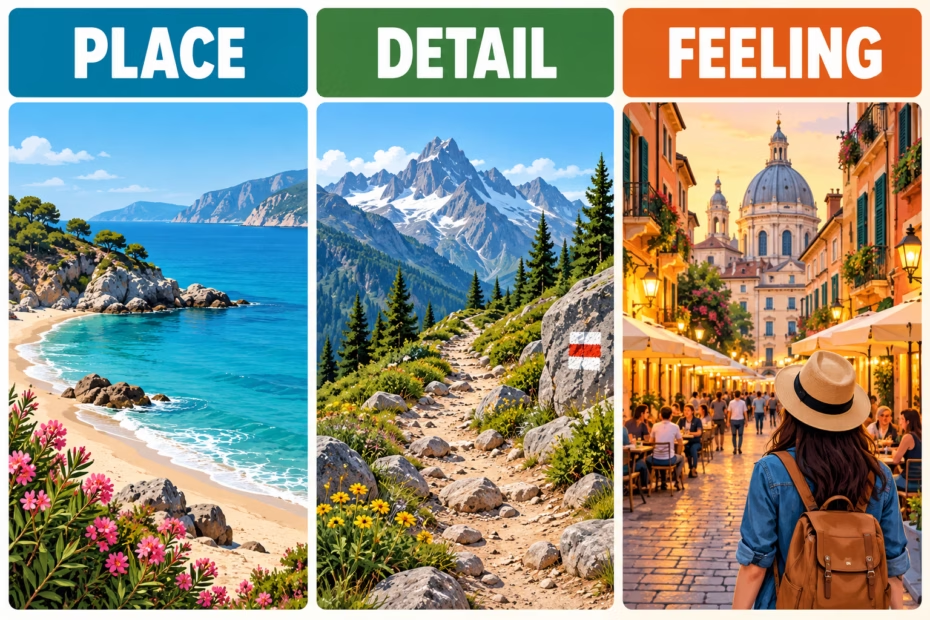
Adjectives for vacation are most useful when they tell a reader what the trip was like: its pace, setting, activities, or a specific moment. Instead of calling an entire destination “amazing,” describe the quiet beach at sunrise, the steep trail, or the crowded market. The detail makes the adjective useful.
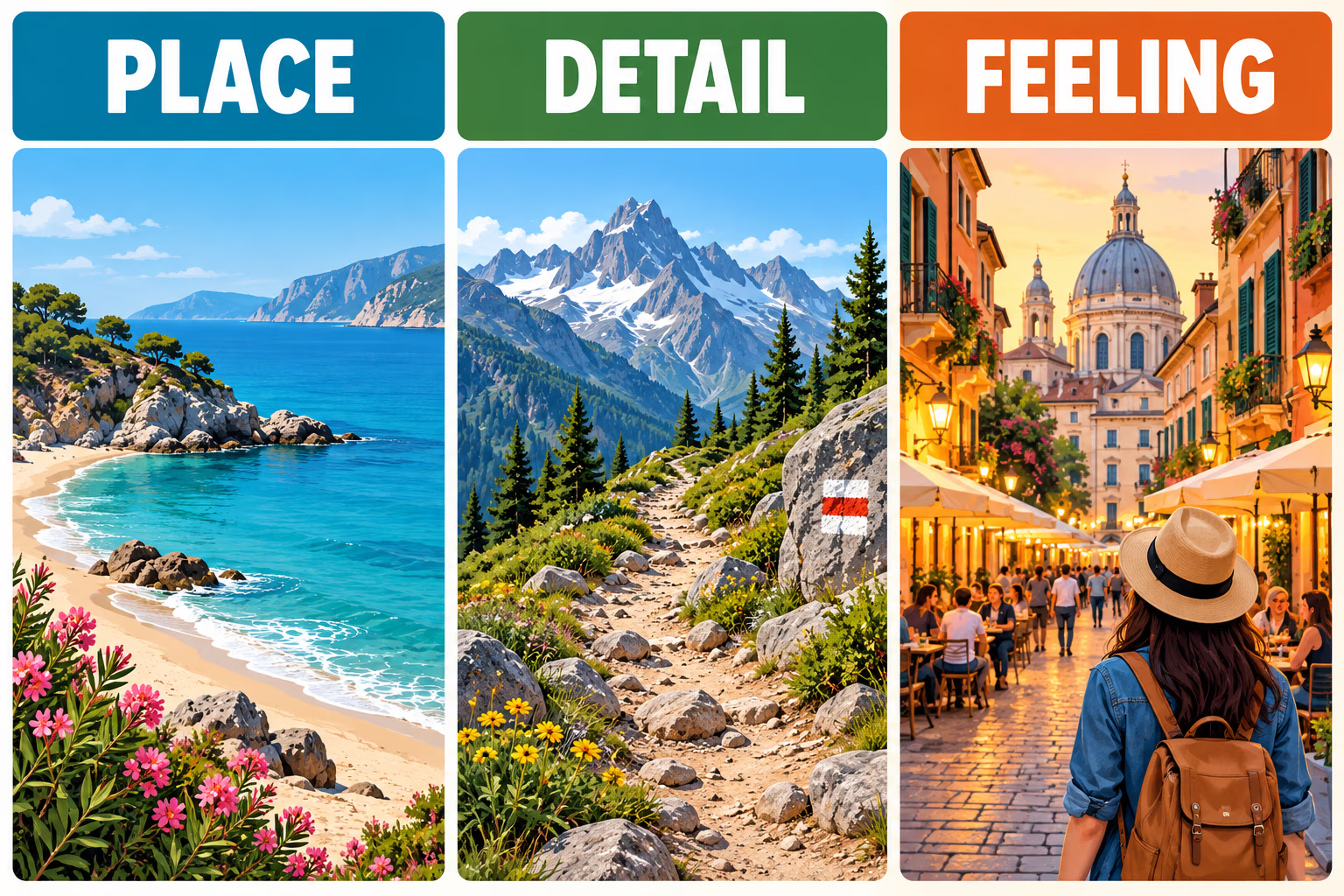

How to choose adjectives for vacation by trip type
A vacation can be restful, adventurous, cultural, or a mixture. These words describe an itinerary or experience; they are not guarantees that everyone on the trip will feel the same way.

| Trip focus | Useful adjectives | Example |
|---|---|---|
| Rest and downtime | peaceful, restful, unhurried, restorative | “We planned an unhurried weekend with long breakfasts and no fixed schedule.” |
| Outdoor activity | active, adventurous, challenging, scenic | “The scenic route followed a challenging trail above the lake.” |
| Arts and local history | cultural, historic, educational, lively | “A local guide made the historic district feel lively and easy to explore.” |
| Time with children or relatives | family-friendly, flexible, playful, memorable | “The flexible itinerary left room for breaks and spontaneous stops.” |
| Food and markets | flavorful, bustling, fragrant, varied | “The bustling market was full of fragrant spices and fresh fruit.” |
| Nature and scenery | wooded, coastal, remote, sunlit | “We spent a sunlit afternoon on a wooded path.” |
Describe what you noticed
Concrete observations help readers picture a place without turning a personal preference into a universal judgment. You might describe a room as airy or compact, a street as busy or quiet, or a view as wide and misty. Pair evaluative words such as wonderful or disappointing with the reason: “The view was wonderful at sunset” says more than “The whole town was wonderful.”

Access descriptions benefit from the same precision. “Step-free entrance” names one observable feature; it does not establish that a whole hotel, attraction, or route will meet every traveler’s needs. Check the specific facilities and services that matter for a particular trip. Travel guidance from the U.S. Department of State notes that accessibility requirements and services can vary by destination, so travelers should research details in advance (Accessibility Needs).
Use vacation adjectives in a sentence
An adjective can come before a noun: a relaxing vacation, an adventurous trip, or the crowded festival. It can also follow a linking verb: the vacation felt relaxing, the trail looked steep, or the museum was fascinating. The adjective describes the noun in both patterns.

Common expressions include go on vacation, take a vacation, and a vacation in Rome or a vacation to Rome. Use the phrase that fits the sentence: “They went on a relaxing vacation,” “We took a short vacation,” and “She planned a vacation in Portugal.”
Vacation, holiday, getaway, and related words
Vacation commonly means a period away from work or school, especially in American English. In British English, holiday is the usual word for a trip or time away; in American English, holiday often refers to a special day. Regional use varies, so context helps. Cambridge labels vacation as US usage and points to holiday as the UK equivalent (Cambridge Dictionary: vacation); Oxford Learner’s Dictionaries also distinguishes North American vacation from British holiday (Oxford Learner’s Dictionaries: vacation).
Related nouns are not exact substitutes in every sentence. A getaway often suggests a short escape; a retreat emphasizes rest, reflection, or a focused activity; an expedition suggests an organized journey with a purpose; and a journey can mean the act or experience of traveling. Choose the word that matches the trip rather than treating the list as interchangeable synonyms.
Are these vacation adjectives opposites?
Many words described as vacation “antonyms” are actually labels for unpleasant experiences or reactions. Restful and tiring can contrast in context; peaceful and noisy describe different conditions. But nightmare and disappointment are nouns, and they are not grammatical antonyms of vacation. A trip can be a vacation and still be disappointing. When you need an opposite, identify the specific quality first: relaxing versus stressful, quiet versus noisy, or affordable versus expensive.
Frequently asked questions
What are positive adjectives for a vacation?
Depending on the experience, positive choices include relaxing, memorable, scenic, enjoyable, refreshing, and exciting. A short example makes the choice more convincing: “The scenic train ride was the most memorable part.”
What adjectives describe a relaxing vacation?
Try restful, peaceful, unhurried, restorative, or low-key. Use the word that fits the actual pace and activities.
Is “vacation” an adjective?
Vacation is usually a noun, as in “our vacation.” It can also modify another noun in a compound or attributive phrase, as in “vacation plans.” Words such as relaxing, adventurous, and scenic are adjectives describing the vacation.
For clear travel writing, choose adjectives for vacation that match a specific setting, activity, pace, or feeling. Words such as restful, adventurous, and cultural become more informative when paired with details readers can picture.
Note on the original source: The article section below is preserved as published. Its examples are illustrative rather than a verified or exhaustive vocabulary list. Its “synonyms” are related travel nouns whose meanings depend on context, while words labeled “antonyms” mostly name negative experiences or reactions; they are not grammatical opposites of vacation. Check a word’s meaning and fit before treating items as interchangeable.
Planning a vacation is an exciting time filled with anticipation and daydreams of relaxation and adventure. But have you ever struggled to find the right words to describe your vacation experience? Fear not! In this article, I’ll be sharing a comprehensive list of adjectives that will help you vividly describe your vacation memories. From serene and tranquil to exhilarating and awe-inspiring, these adjectives will bring your vacation stories to life.
Imagine lounging on a pristine beach, feeling the warm sand between your toes and the gentle breeze caressing your skin. How would you describe this blissful moment? Perhaps you would use words like “idyllic,” “serene,” or “paradisiacal.” These adjectives capture the essence of a tranquil beach vacation, painting a picture of pure relaxation and tranquility.
On the other hand, if your vacation is all about adrenaline-pumping activities and thrilling experiences, you might choose adjectives like “adventurous,” “exhilarating,” or “heart-pounding.” Whether you’re zip-lining through a dense forest or conquering towering mountains, these adjectives will convey the excitement and exhilaration of your vacation adventures.
So, get ready to enhance your vacation storytelling skills with this collection of descriptive adjectives. Whether you’re reminiscing about a peaceful retreat or an action-packed escapade, these adjectives will help you capture the essence of your vacation and transport your readers to the amazing moments you experienced.
How to Describe vacation? – Different Scenarios
When it comes to describing a vacation, the right choice of words can make all the difference in capturing the essence of your experience. Whether you’re trying to convey the tranquility of a beach getaway or the excitement of an adventurous trip, it’s important to choose adjectives that paint a vivid picture in the reader’s mind. In this section, I’ll provide examples of how to describe different vacation scenarios using a variety of descriptive words.
- Tranquil Beach Vacation
- Adventurous Mountain Retreat
- Cultural City Exploration
In each of these scenarios, the choice of adjectives plays a crucial role in conveying the emotions and experiences associated with the vacation. By using descriptive words like ‘idyllic,’ ‘thrilling,’ and ‘vibrant,’ you can transport your readers to the specific atmosphere and ambiance of the destination.
Describing Words for vacation in English
When it comes to describing vacations, choosing the right words is essential in capturing the essence and creating a vivid picture in the reader’s mind. Whether you’re planning a tranquil beach getaway, an adventurous mountain retreat, or a cultural city exploration, the right adjectives can help paint a more memorable experience. In this section, we will explore a variety of adjectives to help you craft the perfect description for your next vacation.
Tranquil Beach Vacations
Relaxing: Picture yourself lying on the warm sandy beach, listening to the gentle sound of the waves crashing against the shore. It’s the perfect setting for a relaxing vacation.
Serene: Imagine the peacefulness of a secluded beach, with crystal-clear turquoise water, and no one else in sight. It’s a serene escape from the hustle and bustle of everyday life.
Tranquil: A tranquil beach vacation offers a sense of calm and tranquility, where you can unwind and rejuvenate your mind, body, and soul.
Adventurous Mountain Retreats
Thrilling: Embark on an exciting adventure as you hike through rugged mountain trails, conquer breathtaking peaks, and experience the adrenaline rush of extreme sports.
Breathtaking: The majestic beauty of towering mountains and deep valleys will leave you in awe. It’s an experience that takes your breath away.
Invigorating: Feel the fresh mountain air filling your lungs as you indulge in exhilarating outdoor activities, from skiing and snowboarding to mountain biking and rock climbing.
Cultural City Explorations
Vibrant: Immerse yourself in the vibrant energy of a bustling city, where rich history and modern culture collide. Explore museums, art galleries, and bustling markets.
Cosmopolitan: Experience the cosmopolitan atmosphere of a city, characterized by diversity, international cuisine, and a thriving nightlife scene.
Enchanting: Stroll through charming streets, adorned with historic architecture and landmarks, as you uncover the enchanting stories and traditions of the city.
Choosing the right adjectives is the key to capturing the essence of different vacation scenarios. Whether you’re describing a tranquil beach getaway, an adventurous mountain retreat, or a cultural city exploration, these descriptive words can help bring your description to life.
Adjectives for vacation
Adjectives play a vital role in painting a vivid picture and conveying emotions when describing different vacation scenarios. Whether you’re discussing tranquil beach getaways, adventurous mountain retreats, or cultural city explorations, choosing the right adjectives is essential in capturing the essence of each experience. In this article, I will provide you with a range of descriptive adjectives to help bring your vacation descriptions to life.
Positive Adjectives for Vacation with 12 Example Sentences
When it comes to describing a vacation in a positive light, there are countless adjectives to choose from. Here are twelve examples that can be used to convey the joy and excitement associated with a memorable trip:
| Adjective | Example Sentence |
|---|---|
| Exhilarating | The rollercoaster ride was exhilarating. |
| Breathtaking | The view from the mountaintop was breathtaking. |
| Serene | We enjoyed a serene sunset on the beach. |
| Magical | The fireworks display was truly magical. |
| Enchanting | The historical castle was enchanting to explore. |
| Blissful | Relaxing in the hammock by the palm trees was blissful. |
| Thrilling | We had a thrilling adventure in the jungle. |
| Captivating | The local folk dance performance was captivating. |
| Spectacular | The panoramic view from the lookout was spectacular. |
| Charming | The quaint little town was charming and picturesque. |
| Refreshing | Taking a dip in the crystal-clear lake was refreshing. |
| Memorable | The vacation was filled with memorable experiences. |
Negative Adjectives for Vacation with 5 Example Sentences
While it’s important to focus on the positive aspects of a vacation, there are also times when negative adjectives may be necessary, such as when discussing challenges or disappointments. Here are five examples of negative adjectives that can be used cautiously when describing a less-than-ideal vacation experience:
| Adjective | Example Sentence |
|---|---|
| Chaotic | The crowded streets made the city visit chaotic. |
| Disappointing | The lack of activities made the vacation disappointing. |
| Dull | The attractions in the area were dull and uninteresting. |
| Frustrating | The long delays at the airport were frustrating. |
| Unpleasant | The hotel room had an unpleasant odor. |
Remember, when using negative adjectives, it’s essential to provide context and balance them with positive aspects to create a well-rounded and honest description.
By carefully selecting adjectives, you can effectively convey the emotions and experiences associated with different vacation scenarios. Whether you’re aiming to describe the beauty of a tranquil beach or the thrill of an adventurous mountain retreat, having a rich vocabulary of descriptive words will allow you to paint a compelling picture. So, go ahead and bring your vacation descriptions to life with these adjectives.
Synonyms and Antonyms with Example Sentences
Synonyms for vacation
When it comes to describing a vacation, choosing the right words is essential in capturing the essence and experience of the trip. Here are some synonyms that can be used to add variety and vividness to your descriptions:
- Getaway: Sometimes, we all need a little escape from our daily routine and responsibilities. A weekend getaway to the countryside can be a perfect way to unwind and relax.
- Holiday: Who doesn’t love a good holiday? Whether it’s exploring new cities or lounging on a beautiful beach, vacations are a time to celebrate and enjoy life.
- Retreat: A serene retreat in the mountains can provide a much-needed break from the hustle and bustle of city life. It’s a chance to reconnect with nature and oneself.
- Expedition: For the adventurous souls, an expedition to remote locations or challenging terrains can be an exhilarating experience. It’s a chance to push boundaries and discover new horizons.
- Journey: Vacations are more than just a physical relocation; they are a journey of self-discovery and personal growth. Exploring new cultures and meeting different people can open up a world of new possibilities.
Remember, when using synonyms, choose words that best fit the context and tone of your description. Synonyms can help add depth and richness to your writing, painting a vivid picture of the vacation experience.
Antonyms for vacation
While vacations are typically seen as enjoyable and exciting experiences, it’s important to acknowledge that not all trips may meet our expectations. Here are some antonyms that can be used to describe challenging or disappointing vacation scenarios:
- Nightmare: Sometimes, a vacation can turn into a nightmare due to unforeseen circumstances like bad weather or travel mishaps. It’s important to balance negative experiences with positive aspects to provide a well-rounded description.
- Disappointment: A vacation can be a disappointment when it doesn’t live up to our expectations. Whether it’s a subpar accommodation or lackluster attractions, it’s important to highlight both the negatives and positives in your description.
- Misadventure: While some people seek adventure on their vacations, others might find themselves in a misadventure – unexpected or undesirable situations that can make the trip challenging or less enjoyable.
- Frustration: Long queues, delayed flights, and lost luggage can lead to feelings of frustration during a vacation. It’s crucial to include these aspects to provide an honest portrayal of the experience.
- Boredom: Sometimes, a vacation can become monotonous and boring if there’s a lack of engaging activities or attractions. Be sure to provide a balanced description, highlighting both the exciting and dull moments.
Using antonyms can help provide a realistic view of the vacation experience, showcasing the challenges and disappointments that can occur. Remember to balance negative adjectives with positive aspects to create a well-rounded description.
By incorporating synonyms and antonyms into your descriptions, you can create a captivating and engaging narrative that captures the true essence of a vacation. These words add depth and variety to your writing, allowing readers to visualize and connect with the experiences you’re describing. Choose your words wisely to convey the emotions and experiences associated with different vacation scenarios.
Conclusion
In this article, we have explored the significance of selecting the right adjectives to depict various vacation scenarios. By incorporating synonyms and antonyms into our descriptions, we can bring variety and liveliness to our narratives. Synonyms like “getaway,” “holiday,” “retreat,” “expedition,” and “journey” enable us to capture the diverse aspects and experiences of a vacation. On the other hand, antonyms like “nightmare,” “disappointment,” “misadventure,” “frustration,” and “boredom” allow us to portray challenging or unsatisfactory vacation situations.
It is crucial to strike a balance between negative adjectives and positive elements to create a well-rounded depiction. By doing so, we can craft a captivating and engaging narrative that truly captures the essence of a vacation. Remember, the right adjectives can transport readers to different settings, evoke emotions, and paint vivid pictures in their minds.
So, whether you’re describing a relaxing beach getaway or an adventurous mountain expedition, choose your adjectives wisely. Use synonyms and antonyms to add depth and excitement to your descriptions, and watch as your readers become immersed in your vacation tales. Happy writing!


