
“Vibes” is informal shorthand for the mood or feeling a place, situation, or person gives you. To describe one, choose adjectives from observable clues: calm or lively pace, hushed or noisy sound, dim or bright light, reserved or bustling social energy, and a serene or tense emotional impression. Make the clue explicit so your word stays precise.
Adjectives for Vibes at a Glance
- Start with a clue: notice movement, sound, lighting, interaction, or the impression the scene creates.
- Choose the right kind of word: hushed describes sound; serene describes a calm impression; vibrant can describe lively energy or strong color.
- Use concrete evidence: name a quiet room, fast-moving crowd, warm light, or welcoming exchange.
- Check the viewpoint: the same place may feel inviting to one visitor and overwhelming to another.
- Keep the term informal: a “vibe” is a reader’s or speaker’s impression, not a standardized measurement or diagnosis.
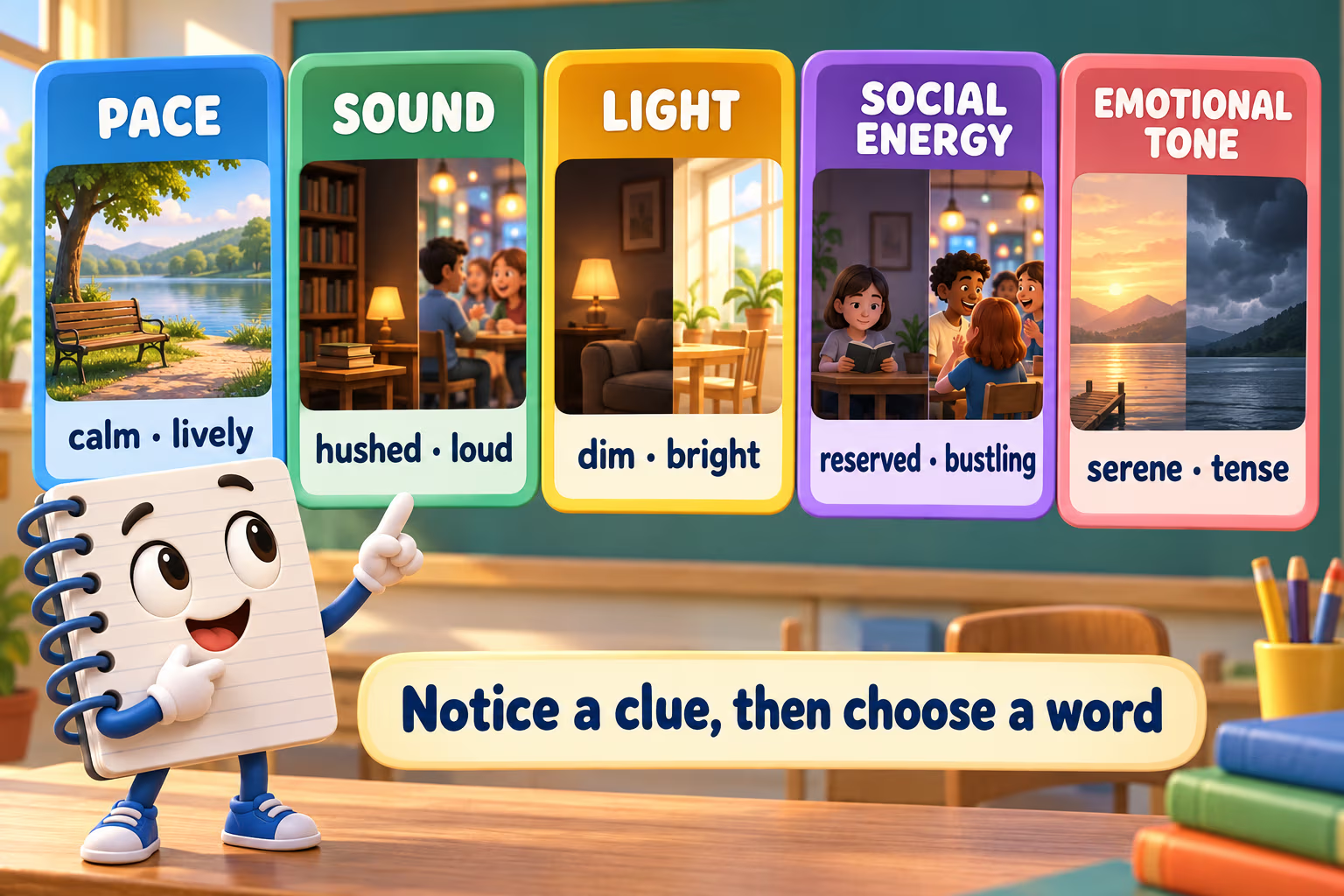
What does “vibe” mean, and how should you describe one?
Cambridge Dictionary labels vibe informal and defines it as the mood or feeling of a place, situation, or person. Because the term names an impression, a strong description shows what produced that impression. Instead of calling a restaurant “good-vibe,” describe its low music, steady conversation, amber light, or relaxed pace.
Separate what you can observe from what you infer. “The café was hushed” points to a low sound level; “the café felt serene” interprets the whole scene as calm. That interpretation may be useful, but it belongs to a viewpoint. If another character finds the silence awkward, say so rather than presenting one response as a fact about everyone.
A practical selector: choose by the clue you notice
Use this selector to move from a scene detail to a fitting adjective. The groups are writing prompts rather than fixed categories: one word may fit more than one cue, and context determines the final choice.
| Observable cue | Ask yourself | Possible adjectives | Original example |
|---|---|---|---|
| Pace and movement | Are people or events still, unhurried, busy, or fast? | calm, leisurely, lively, brisk, frantic | “A leisurely pace let visitors linger beside each painting.” |
| Sound | Is the setting quiet, musical, conversational, or loud? | hushed, melodic, chatty, raucous, cacophonous | “Hushed voices and the soft clock made the library feel serene.” |
| Light and color | Does the space look dim, soft, bright, or strongly colored? | shadowy, muted, sunlit, vivid, vibrant | “Vibrant murals brightened the market’s narrow arcade.” |
| Social energy | Do people seem welcoming, reserved, animated, or tense? | welcoming, reserved, convivial, bustling, tense | “The welcoming host remembered every guest’s name.” |
| Emotional tone | What impression do the details create for this speaker? | serene, playful, uneasy, mysterious, bittersweet | “A bittersweet mood settled over the farewell picnic.” |
These cues help a writer make an impression legible; they do not turn the impression into an objective score. If you use a broad word such as intense, add the evidence: a rapid drumbeat, a packed room, and people talking over one another. If you choose an emotional word such as uneasy, show the detail that makes the narrator read the scene that way.
How do close vibe adjectives differ?
Related adjectives often overlap, but each can direct attention to a different feature. Serene, for example, emphasizes a peaceful and calm impression; vibrant can suggest exciting energy and can also describe bright, strong color. A nearby synonym may still be better when its narrower meaning matches the evidence.
| Words | Useful distinction | Scene example |
|---|---|---|
| Serene / tranquil | Both suggest calm. Serene often emphasizes a composed, peaceful impression; tranquil draws attention to freedom from disturbance. | “The lake looked serene at dusk; the secluded cove was tranquil even after the wind rose elsewhere.” |
| Vibrant / lively | Vibrant suggests vivid energy and may describe strong color; lively emphasizes activity, animation, or enthusiasm. | “Vibrant banners filled the square with color, while a lively band kept the dancers moving.” |
| Cozy / welcoming | Cozy usually describes comfortable warmth or intimacy; welcoming describes how readily people or a place receive visitors. | “The small, lamplit reading room was cozy; the volunteer at the entrance made it welcoming.” |
| Mysterious / eerie | Mysterious points to something unknown or unexplained; eerie adds an unsettling or uncanny impression. | “The locked observatory seemed mysterious; its tapping shutters made it eerie after dark.” |
| Energetic / frantic | Energetic can suggest purposeful activity; frantic suggests uncontrolled haste or agitation. | “The volunteers were energetic during setup, but the last-minute scramble felt frantic.” |

Dictionary entries can help check a word’s center of meaning. Cambridge describes serene as peaceful and calm, while its entry for vibrant connects the word with energy or excitement and with bright, strong color. Those meanings support the distinctions above, but they do not make the words interchangeable in every sentence.
How can you make a vibe description more precise?
- Name one detail: mention the crowd’s movement, the music level, the color of the light, or how people interact.
- Pick one main adjective: use hushed for quiet sound, bustling for busy activity, or welcoming for a receptive social tone.
- Show the viewpoint: use wording such as “felt uneasy to Mara” when the adjective expresses one person’s interpretation.
- Remove redundant stacks: replace “a calm, peaceful, tranquil, serene room” with a concrete detail and the one word that carries your intended nuance.
For example, “The market had a vibrant vibe” is broad. “Bright awnings shaded a crowded lane, and vendors called greetings over the steady chatter” gives readers evidence for vibrant. If you want the feeling itself, add the viewpoint: “To Jules, the noise felt exhilarating; to her tired brother, it was overwhelming.”
For words that name an internal emotional response rather than the atmosphere around it, see our related list of adjectives for feelings. For writing about a place, combine one atmosphere word with concrete details a reader can picture, hear, or observe.
Original examples and the new selector
The original scenario sections, adjective lists, examples, tables, and conclusion are preserved below exactly as published, including the source’s character-encoding artifacts. Use the selector above as a practical supplement: it helps connect each existing word to a scene clue without changing the original list.
When it comes to describing the atmosphere or feeling of a place or situation, adjectives play a vital role. They have the power to transport us to a different state of mind, evoking emotions and setting the tone for our experiences. In this article, I’ll be exploring a range of adjectives that can aptly capture the essence of vibes, from the serene and tranquil to the energetic and vibrant. Whether you’re trying to convey the ambiance of a cozy caf√© or the excitement of a bustling city street, these descriptive words will help you paint a vivid picture for your readers.
From “calm” and “peaceful” to “lively” and “energetic,” the English language offers a plethora of adjectives to describe the vibes we encounter in our daily lives. In this article, I’ll be providing you with a comprehensive list of adjectives, along with examples, to help you effectively communicate the atmosphere and feeling of any given situation. Whether you’re a writer looking to add depth to your descriptions or simply someone who wants to better articulate their experiences, this guide will equip you with the right words to capture the essence of any vibe.
The power of words lies in their ability to transport us to different places and evoke emotions. In this article, I’ll be diving into the world of adjectives that can be used to describe vibes, providing you with a rich vocabulary to express the ambiance and feeling of any situation. Whether you’re trying to convey the tranquility of a peaceful beach or the exhilaration of a lively concert, these descriptive words will allow you to paint a vivid picture in the minds of your readers. So, let’s embark on this linguistic journey together and discover the perfect adjectives to encapsulate the vibes that surround us.
How to Describe vibes? – Different Scenarios
When it comes to describing vibes, it’s important to choose adjectives that accurately capture the atmosphere or feeling of a particular place or situation. Whether you’re a writer looking to add depth to your descriptions or someone who wants to better articulate their experiences, here are some tips on how to describe vibes in different scenarios:
- Serene and Tranquil Vibes: When you want to convey a sense of peace and tranquility, choose adjectives that evoke a calm and soothing atmosphere. For example:
- Energetic and Vibrant Vibes: For situations that are lively, energetic, and full of excitement, opt for adjectives that capture the vibrant atmosphere. Consider using words like:
- Mysterious and Intriguing Vibes: Sometimes, you may want to describe an atmosphere that is mysterious or intriguing. In these cases, descriptive adjectives that evoke curiosity and wonder work well. Choose words such as:
- Cozy and Comforting Vibes: When you want to describe a warm and inviting atmosphere, adjectives that evoke a sense of coziness and comfort are ideal. Consider using words like:
-
- Adventurous
Describing Words for vibes in English
When it comes to describing the vibes or atmosphere of a certain place or situation, choosing the right adjectives is crucial. It helps to paint a vivid picture and accurately convey the feeling to others. In this section, I’ll provide you with a range of descriptive words that can be used to express different vibes in English. Whether you’re a writer looking to add depth to your descriptions or a preschool teacher trying to teach easy words to kids, these adjectives will help you effectively communicate the essence of any given situation.
Serene and Tranquil Vibes
- Calm
- Peaceful
- Serene
- Tranquil
Example: “The beach at sunset was a serene and tranquil place, with gentle waves and a warm breeze.”
Energetic and Vibrant Vibes
- Lively
- Energetic
- Vibrant
- Dynamic
Example: “The concert was filled with energetic and vibrant music, and the crowd danced and sang along with enthusiasm.”
Mysterious and Intriguing Vibes
- Enigmatic
- Intriguing
- Mystical
- Suspenseful
Example: “The abandoned mansion had a mysterious and intriguing atmosphere, with creaking floors and ghostly whispers.”
- Warm
- Cozy
- Comforting
- Inviting
Example: “Snuggled up by the fireplace, I felt the cozy and comforting ambiance of the cabin in the woods.”
These are just a few examples of descriptive adjectives that can be used to encapsulate different vibes or feelings. Remember, the choice of words can greatly impact how others perceive a certain place or situation. So, choose them wisely to create a vivid and accurate portrayal.
Adjectives for vibes
As a writer, I understand the importance of choosing the right adjectives to accurately describe the atmosphere or feeling of a particular place or situation. Words have the power to capture the essence of any given vibe and transport the reader to a whole new experience.
Positive Adjectives for Vibes
When it comes to positive vibes, there are a plethora of descriptive adjectives that can effectively communicate the energy and atmosphere. Let me share with you some examples:
| Adjective | Example Sentence |
|---|---|
| Serene | The sunset over the calm lake created a serene atmosphere. |
| Energetic | The concert was filled with an energetic and lively crowd. |
| Vibrant | The bustling city streets were filled with vibrant energy. |
| Peaceful | I found solace in the peaceful surroundings of the park. |
| Joyful | The children’s laughter filled the air, bringing joy to all. |
These adjectives help us express a wide range of positive vibes in different scenarios. Whether it’s a serene and tranquil setting or an energetic and vibrant atmosphere, the right words can bring the essence of the moment to life.
Negative Adjectives for Vibes
On the other hand, there are moments when we encounter negative vibes. While we may not always want to dwell on them, it’s crucial to have the vocabulary to express those feelings accurately. Here are a few examples:
| Adjective | Example Sentence |
|---|---|
| Gloomy | The weather was gloomy, reflecting my mood. |
| Ominous | The dark clouds overhead gave an ominous feeling. |
| Dreary | The abandoned house had a dreary and eerie vibe. |
| Tense | The room was filled with tension and uneasiness. |
| Melancholy | The melancholy melody evoked a sense of sadness. |
These negative adjectives allow us to articulate mysterious and intriguing vibes or convey discomfort in a particular situation. Though not ideal, they are essential for a well-rounded description.
By equipping ourselves with a diverse vocabulary of adjectives, we can effectively capture and convey the essence of any vibe. Whether it’s a cozy and comforting atmosphere or a enigmatic and captivating aura, the right words have the power to transport others to the heart of the experience.
Remember, communication is a powerful tool, and with the right choice of words, you can leave a lasting impression on others. So next time you’re describing a vibe, choose your adjectives wisely and let your words paint a vivid picture.
Synonyms and Antonyms with Example Sentences
Synonyms for Vibes
When it comes to describing vibes, having a diverse vocabulary is key to accurately convey the essence of a particular place or situation. Here are some synonyms that can help you describe different vibes with precision:
- Calm
- Serene
- Tranquil
- Peaceful
- Energetic
- Lively
- Dynamic
- Vibrant
- Mysterious
- Intriguing
- Enigmatic
- Captivating
- Cozy
- Comforting
- Inviting
- Warm
For example:
- The serene vibes of the beach at sunset transport me to a state of tranquility.
- The vibrant energy of the city streets fills me with excitement and enthusiasm.
Antonyms for Vibes
Sometimes, it’s helpful to know the opposite meaning of a certain vibe. Here are some antonyms for different vibes:
- Calm
- Agitated
- Restless
- Energetic
- Lethargic
- Dull
- Mysterious
- Obvious
- Transparent
- Cozy
- Uninviting
- Cold
Using antonyms can help you create a contrast or highlight a particular feeling or atmosphere. Here are some example sentences:
- Despite the crowded streets, there was an agitated vibe in the air that made me feel uneasy.
- The old, abandoned house had a cold and uninviting vibe that gave me chills.
As a writer or someone who wants to better articulate their experiences, using synonyms and antonyms provides you with a toolbox of words to effectively communicate the essence of any given situation. The power of communication lies in choosing the right adjectives to describe a vibe, and by expanding your vocabulary, you can have a lasting impact on how others perceive a certain place or situation.
Conclusion
Choosing the right adjectives to describe a vibe is crucial in effectively conveying the atmosphere or feeling of a place or situation. Throughout this article, we have explored various tips and examples on how to accurately describe different vibes in different scenarios.
From serene and tranquil vibes to energetic and vibrant vibes, mysterious and intriguing vibes to cozy and comforting vibes, we have provided a comprehensive list of descriptive adjectives for each vibe. By using these adjectives, readers can communicate the essence of any given situation with precision and clarity.
Furthermore, we have discussed the importance of having a diverse vocabulary to accurately convey the essence of any vibe. Synonyms and antonyms for different vibes, along with example sentences, have been provided to showcase the power of words in shaping the perception of a particular atmosphere.
The choice of adjectives to describe a vibe has a significant impact on communication. By selecting the right words, we can create a lasting impression and effectively convey the desired atmosphere or feeling. So, let’s embrace the power of adjectives and elevate our ability to describe vibes in a way that resonates with others.
Frequently Asked Questions About Adjectives for Vibes
What does “vibe” mean in everyday English?
In informal English, a vibe is the mood or feeling associated with a place, situation, or person. It summarizes an impression rather than identifying a measurable property. To make the meaning clear in writing, show the details behind the impression, such as quiet music, bright colors, brisk movement, or friendly conversation.
How do I choose the right adjective for a vibe?
Start with a detail you can observe, such as pace, sound, lighting, or interaction, and select a word that names that feature. Then add a short example or sensory clue. Use an emotional adjective only when you make clear whose interpretation it expresses; different people may experience the same setting differently.
Are “serene” and “tranquil” exactly the same?
They overlap because both can describe calm. Serene often suggests a peaceful, composed impression, while tranquil can emphasize freedom from disturbance. The difference is subtle, so the sentence’s evidence matters: a quiet face may seem serene, while a sheltered garden may be tranquil.
What is the difference between “vibrant” and “lively”?
Vibrant often conveys vivid energy or strong color; lively more directly describes activity, animation, or enthusiasm. A market can have vibrant painted signs and a lively crowd. The terms can overlap, but choosing one helps readers notice either vividness or motion.
Can one place have both positive and negative vibes?
Yes. A setting can feel inviting and noisy, or beautiful and unsettling, at the same time. You can describe the mixed impression with two distinct details—“warm lamplight softened the room, but the unanswered phone made it feel tense”—and attribute the response to a character when it is subjective.


