As a writer, I often find myself searching for just the right words to describe the incredible women I encounter in my life. From their strength and resilience to their grace and intelligence, there are so many adjectives that come to mind when I think of women. In this article, I’ll be sharing some of the most powerful and empowering adjectives that capture the essence and beauty of women.
When it comes to describing women, one word that immediately comes to mind is “fierce.” Women have an innate ability to tackle challenges head-on and overcome any obstacles in their path. They possess a strength that is both admirable and awe-inspiring. Another adjective that perfectly encapsulates women is “nurturing.” Whether it’s caring for their loved ones or making a difference in their communities, women have a natural inclination to provide love, support, and guidance to those around them.
In this article, I’ll delve into a diverse range of adjectives that celebrate the multifaceted nature of women. From their intelligence and creativity to their compassion and resilience, there are countless words that can be used to describe the amazing women in our lives. So, let’s explore these adjectives together and honor the remarkable qualities that make women truly extraordinary.
How to Describe Women? – Different Scenarios
When it comes to describing women, there are endless adjectives that can be used to capture their incredible qualities. Here are a few examples of how women can be described in different scenarios:
- In the workplace:
- In relationships:
- In leadership roles:
- In nurturing roles:
- In personal strengths:
Remember, these are just a few examples of the vast range of adjectives that can be used to describe women. Each woman is unique and possesses her own combination of qualities that make her extraordinary.
Describing Words for Women in English
As I mentioned earlier, women possess a multitude of extraordinary qualities that make them truly remarkable. In this section, I will explore some commonly used adjectives that can be used to describe women in various scenarios. These words not only capture the essence of women’s unique qualities but also highlight their strengths and contributions.
When it comes to the workplace, women are often described as hardworking, ambitious, and determined. They display remarkable leadership skills, inspiring and motivating others with their confidence and perseverance. Whether they are managing teams or driving their own businesses, women have proven time and again that they are a force to be reckoned with.
In relationships, women are often described as compassionate, supportive, and empathetic. They have an innate ability to understand and connect with others on a deep emotional level. Their nurturing nature ensures that their loved ones feel loved, cared for, and understood. Women excel in creating a warm and loving environment for their families, making them the backbone of many households.
In leadership roles, women are often described as inspirational, visionary, and innovative. They possess the ability to think outside the box and find creative solutions to complex problems. Their collaborative and inclusive approach allows them to bring diverse perspectives together, fostering a sense of unity and cooperation within their teams and organizations.
Women also possess a wide range of personal strengths. Some common adjectives used to describe these qualities include confident, intelligent, resilient, and adaptable. They have the ability to handle challenges with grace and determination, never backing down in the face of adversity. Women’s intuition and wisdom guide them in making sound decisions and navigating life’s complexities.
It is important to note that these examples only scratch the surface of the many adjectives that can be used to describe women. Each woman is unique, possessing her own combination of extraordinary qualities and strengths. The richness and diversity of these qualities make women an indispensable part of our society.
| Workplace | Relationships | Leadership |
|---|
Adjectives for Women
Positive Adjectives for Women
As a kindergarten teacher, I believe it’s important to use positive adjectives when describing women. These adjectives highlight their wonderful qualities and inspire children to appreciate and respect women. Here are 12 examples of positive adjectives for women along with their definitions:
| Adjective | Definition |
|---|---|
| Creative | Having the ability to think imaginatively and come up with new ideas |
| Kind-hearted | Showing kindness, compassion, and empathy towards others |
| Brave | Showing courage, confidence, and strength in the face of challenges |
| Intelligent | Having a high level of mental ability and being able to learn, understand, and apply new information |
| Resilient | Being able to recover quickly from difficulties and bounce back stronger |
| Empathetic | Having the ability to understand and share the feelings of others |
| Determined | Having a strong sense of purpose and being focused on achieving goals |
| Supportive | Providing encouragement, help, and assistance to others |
| Ambitious | Having a strong desire to succeed and achieve great things |
| Caring | Showing concern, kindness, and consideration towards others |
| Wise | Showing good judgment, knowledge, and insight |
| Inspiring | Providing motivation and encouragement to others through one’s actions and words |
When teaching these adjectives to children, I would provide examples and ask them to think of women in their lives who embody these qualities. Encouraging children to recognize and appreciate these positive traits in women will help develop a sense of respect and admiration.
Negative Adjectives for Women
While it’s important to focus on the positive, it’s also important to teach children about negative adjectives and how they can be hurtful. Here are 5 examples of negative adjectives for women along with their definitions:
| Adjective | Definition |
|---|---|
| Bossy | Excessively controlling and domineering |
| Fragile | Easily broken or damaged |
| Emotional | Displaying intense emotions that are perceived as weakness |
| Hysterical | Overly dramatic and irrational in emotional reactions |
| Submissive | Being overly obedient and passive |
When discussing these negative adjectives with children, I would emphasize that these words can be hurtful and should not be used to describe anyone. It’s important for children to understand that women can be strong, independent, and capable, just like men.
By teaching children about both positive and negative adjectives for women, we can help shape their understanding of gender equality and respect. Let’s empower our young minds to appreciate the diversity and strength of women in our society.
Synonyms and Antonyms with Example Sentences
Synonyms for Women
When it comes to describing women, there are numerous positive adjectives that can capture their unique qualities. Here are some synonyms that paint a vibrant picture of women:
- Creative: Women have a remarkable ability to think outside the box and come up with innovative ideas. For example, “She painted a beautiful portrait that showcased her creative talents.”
- Kind-hearted: Women are often known for their compassion and empathy towards others. They show kindness and generosity without hesitation. For instance, “She volunteered at the local shelter, displaying her kind-hearted nature.”
- Brave: Women have shown incredible acts of bravery throughout history, breaking barriers and challenging societal norms. A fitting example would be, “She fearlessly climbed the mountain, embodying true bravery.”
- Intelligent: Women possess exceptional intelligence and have made significant contributions in various fields. “She solved the complex math problem effortlessly, showcasing her intelligence.”
- Resilient: Women are known for their resilience and ability to bounce back from challenges. An example could be, “She faced adversity with strength and resilience, refusing to give up.”
- Empathetic: Women have a remarkable ability to understand and share the feelings of others. You can say, “She listened attentively and offered comforting words, showing her empathetic nature.”
- Determined: Women exhibit a strong sense of determination and relentless pursuit of their goals. For instance, “She worked tirelessly to achieve her dreams, displaying unwavering determination.”
- Supportive: Women are often supportive of others, offering encouragement and lending a helping hand. For example, “She stood by her friend’s side, offering unwavering support during challenging times.”
- Ambitious: Women are driven and have big aspirations for themselves. An example could be, “She set ambitious career goals and worked hard to achieve them.”
- Caring: Women are naturally caring and nurturing towards others. You can say, “She took care of her younger siblings, displaying her caring nature.”
- Wise: Women possess wisdom and provide valuable insights based on their experiences. For instance, “She offered wise advice that helped guide others in making important decisions.”
- Inspiring: Women serve as an inspiration to many through their achievements and actions. An example could be, “Her accomplishments in the field of science were truly inspiring.”
Antonyms for Women
While it is essential to focus on the positive adjectives, it’s important to acknowledge that there are also negative adjectives often used to describe women. Here are some antonyms that, unfortunately, perpetuate stereotypes:
- Bossy: This negative adjective implies that women who assert themselves are overly aggressive. For example, “She was unfairly labeled as bossy for taking charge of the meeting.”
- Fragile: This adjective diminishes a woman’s strength and resilience, suggesting they are delicate. A typical example could be, “She was often seen as fragile, despite her inner strength.”
- Emotional: This adjective unfairly implies that women are overly sensitive and ruled by their emotions. You might hear someone say, “She was dismissed as being too emotional during the discussion.”
- Hysterical: This adjective is used to belittle women by suggesting they are overly dramatic or irrational. For instance, “She was unfairly accused of being hysterical when she expressed her frustrations.”
- Submissive: This adjective suggests that women should be passive and obedient, rather than assertive. A common example could be, “She was expected to be submissive and conform to societal expectations.”
Conclusion
In this article, I have explored various adjectives that can be used to describe women. We have discussed both positive and negative adjectives, highlighting the importance of teaching children about gender equality and respect.
Throughout the article, I provided examples of positive adjectives such as creative, kind-hearted, brave, intelligent, resilient, empathetic, determined, supportive, ambitious, caring, wise, and inspiring. These adjectives showcase the unique qualities that women possess and the positive impact they can have on society.
On the other hand, I also mentioned negative adjectives like bossy, fragile, emotional, hysterical, and submissive. While these adjectives exist, it is crucial to understand that they perpetuate stereotypes and should not be used to define or limit women.
By teaching children about both positive and negative adjectives, we can shape their understanding of gender equality and empower them to challenge stereotypes. It is important to celebrate the diverse qualities and strengths that women possess, fostering an environment of respect and inclusivity.
The adjectives we use to describe women play a significant role in shaping societal perceptions. Let us choose our words wisely, recognizing and appreciating the contributions and unique qualities of women in all aspects of life.
Looking for adjectives for women to use in a card, character sketch, introduction, or tribute? This guide offers word ideas while keeping one point in view: no adjective describes all women. Choose a word that fits the individual, the context, and how the person wants to be described.
How to choose a respectful adjective
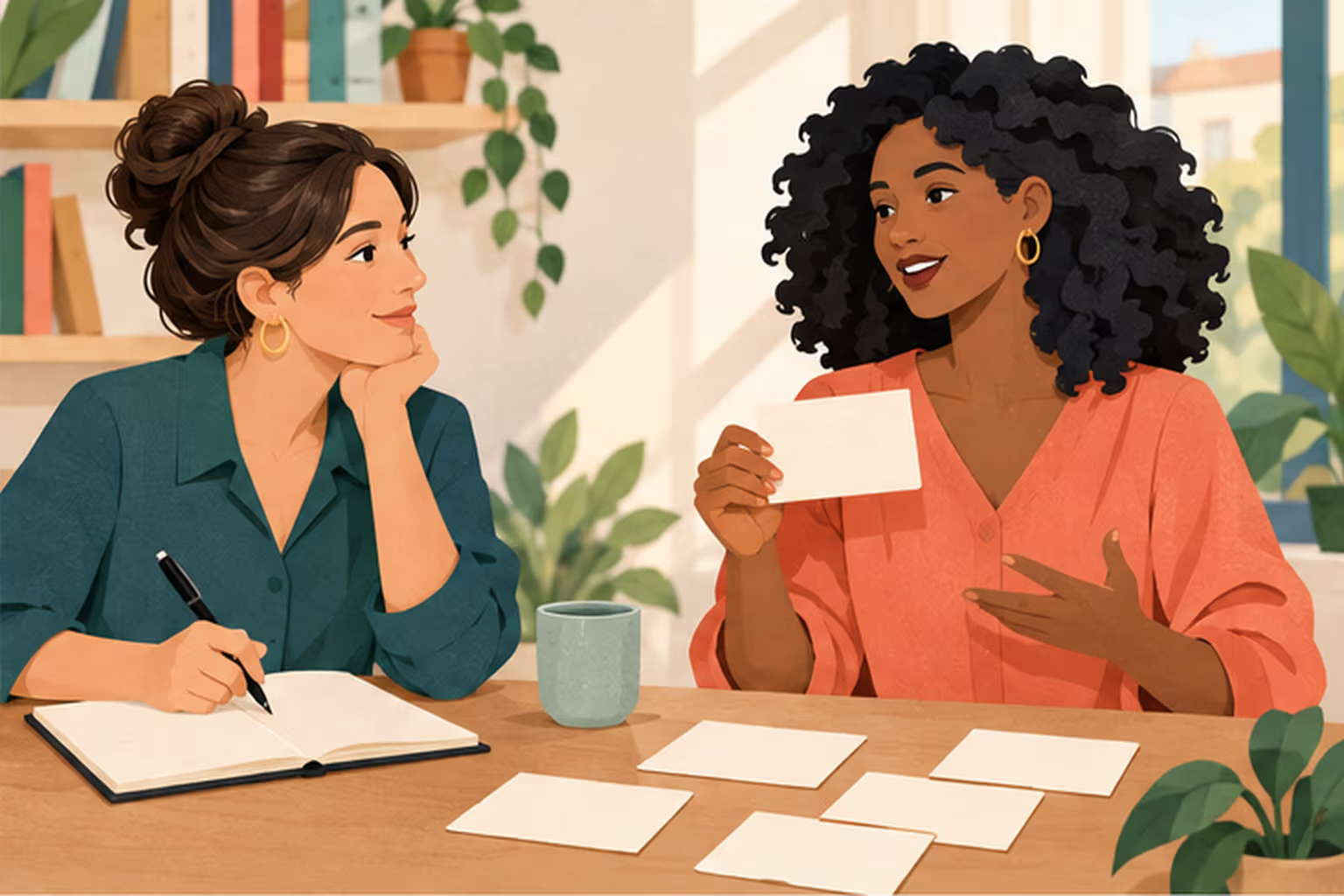
Start with evidence. A useful description connects a word to something observable: a person’s decisions, actions, skills, or stated preferences. “She is meticulous about checking the measurements” gives the reader a reason for “meticulous.” A broad label such as “naturally nurturing” makes an assumption about personality from gender alone.
Also consider relevance and audience. In a professional bio, words such as skilled, decisive, or inventive may be more informative than appearance-focused praise. In a personal note, thoughtful, witty, or generous may sound warmer when they genuinely fit. If you know the person, use her preferred name and pronouns; for a hypothetical or general example, avoid guessing.
Inclusive-language guidance from the American Psychological Association and UN Women encourages writers to avoid stereotypes and use language that respects people. That advice applies to adjective lists too: treat each word below as an option, not a rule about women as a group.
Positive adjectives for women by quality
These words can help narrow a search. Pick the section that fits what you are trying to say, then add a concrete detail so the description feels specific.
- Knowledge and skill: capable, perceptive, resourceful, analytical, articulate, accomplished.
- Character and values: honest, considerate, principled, generous, dependable, compassionate.
- Creativity and ideas: imaginative, original, inventive, curious, expressive, visionary.
- Confidence and action: decisive, courageous, persistent, self-assured, proactive, determined.
- Communication and teamwork: attentive, collaborative, diplomatic, encouraging, candid, insightful.
- Presence and style: poised, lively, elegant, playful, warm, distinctive.
Context changes meaning. “Assertive” can praise clear communication in one situation and sound critical in another. “Quiet” may describe someone’s speaking style without saying anything about her confidence or ability. When a word could be read as a judgment, explain the behavior you mean.
Examples that make descriptions more specific
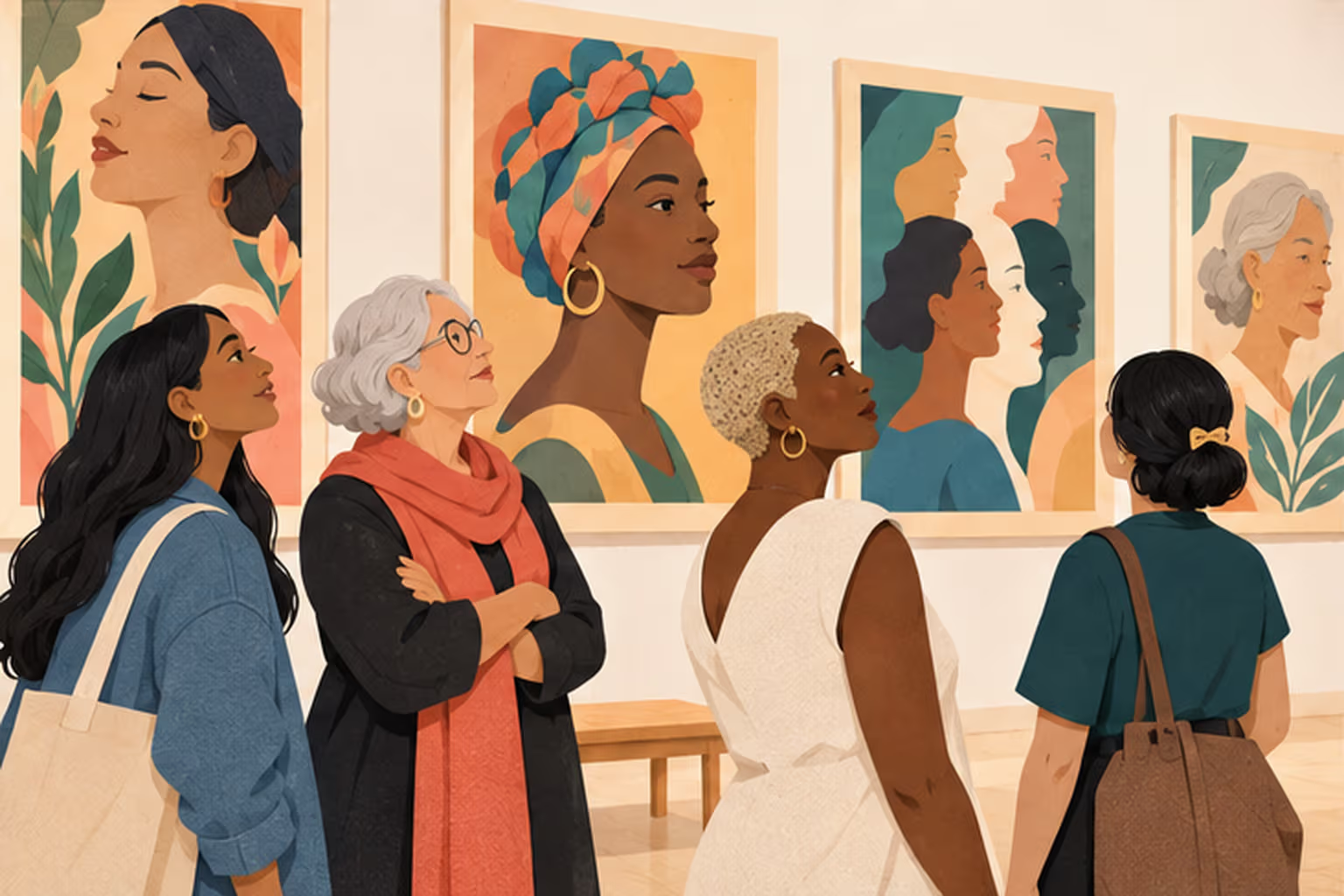
Instead of writing “She is a natural leader,” try “She set a clear goal, invited input, and helped the group decide on next steps.” Instead of “She is sweet,” say “She checked in with the new colleague and made sure they had the information they needed.” Specific details let readers understand what the adjective means, while avoiding the implication that women share one expected role.
For a short introduction, you might write: “Maya is a resourceful designer who turns complex feedback into practical options.” For a personal tribute: “Nia is generous with her time and quick to make people feel welcome.” For a fictional character: “Ruth is observant and dry-witted; she notices a missing clue before anyone else.” In each case, the words connect to actions or a recognizable voice.

Words to use carefully
Some adjectives carry assumptions about age, appearance, emotion, or gender roles. “Bossy,” “emotional,” “aggressive,” and “hysterical” can dismiss a person’s point instead of describing what happened. “Beautiful,” “pretty,” and “young” focus on appearance or age, so use them only when that is relevant and welcome. “Nurturing” and “selfless” may be accurate for a particular person, but they should not be treated as qualities women owe others.
When assessing conduct, describe the same behavior consistently regardless of gender. Replace a label with the action: “interrupted twice,” “set a firm boundary,” or “changed the plan after hearing new evidence.” A fair description separates what someone did from assumptions about why they did it.
Frequently asked questions
What are some strong adjectives for women?
Capable, resilient, determined, resourceful, and courageous can describe strength when the circumstances support those words. A short example makes the meaning clearer than a label alone.
How can I compliment a woman professionally?
Focus on relevant work, skills, or contributions: “Your analysis clarified the decision,” or “You handled the difficult questions thoughtfully.” Avoid comments on appearance unless that is appropriate to the relationship and setting.
Should I call someone beautiful or strong?
Use either word if it fits, feels welcome, and suits the context. When unsure, choose a specific quality the person has shown or ask what language she prefers.
Adjectives are useful starting points, not complete portraits. Let individual evidence and the person’s own preferences guide the final choice.