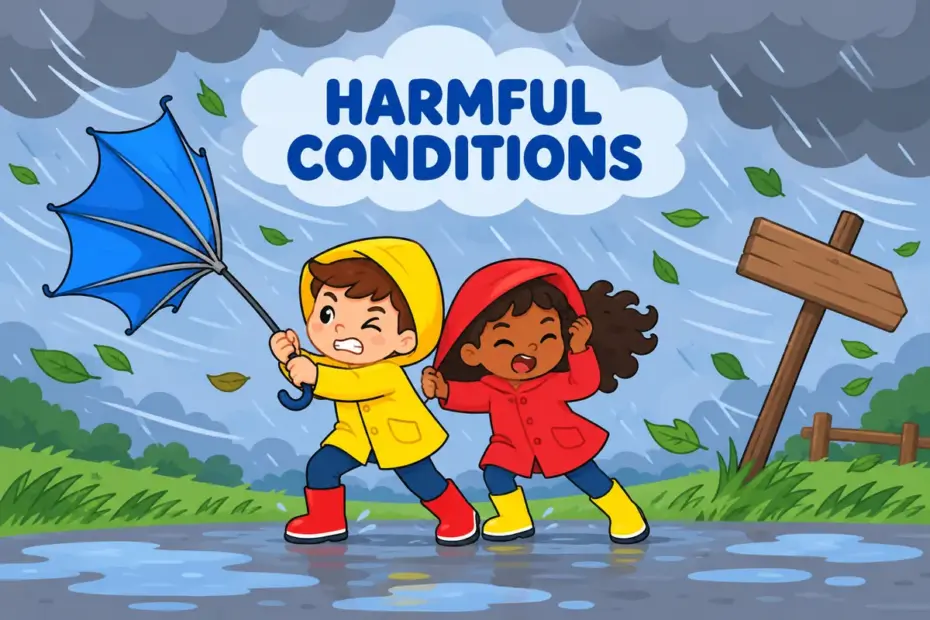
Adverse is an adjective meaning harmful, unfavourable or working against someone. To use adverse in a sentence, attach it to the thing that causes the harm: “The trials found no adverse effects.” It usually sits before a noun, and it is a different word from averse, which describes a person’s reluctance.
Adverse at a glance
- Adverse is an adjective; its adverb is adversely, and its noun adversity carries a different sense.
- It means harmful or unfavourable, and it usually precedes a noun.
- Its common partners are effects, conditions, weather, reaction and impact.
- The register is formal, common in medicine, law and risk writing.
- The commonest error is confusing adverse with averse, which needs to.
What does adverse mean?
Adverse is an adjective meaning harmful, unfavourable or acting against a person or plan. The Cambridge entry for adverse places it with nouns such as effect, condition and weather. The word describes the force or circumstance, not the feeling of the person it affects. A road can have adverse camber, and a decision can have an adverse impact on a family. Where the harm is a measured loss, detrimental is often the better adjective, because it points to a specific cause.
| Sense | Plain meaning | Example sentence |
|---|---|---|
| Harmful | Causing damage or trouble | The drug had adverse effects. |
| Unfavourable | Not helpful to a plan | Adverse weather delayed the flight. |
| Opposing | Acting against an interest | The ruling was adverse to the tenants. |
Adverse does not mean merely difficult or annoying. It signals real harm or genuine opposition, so a mildly busy day is not adverse. It is also not averse: averse means unwilling and always pairs with to, as in she is averse to risk.
How do you use adverse in a sentence?
Adverse sits before a noun far more often than after a verb, which is its clearest grammatical habit. For plain speech, harmful is the everyday adjective.
| Pattern | Example | What it signals |
|---|---|---|
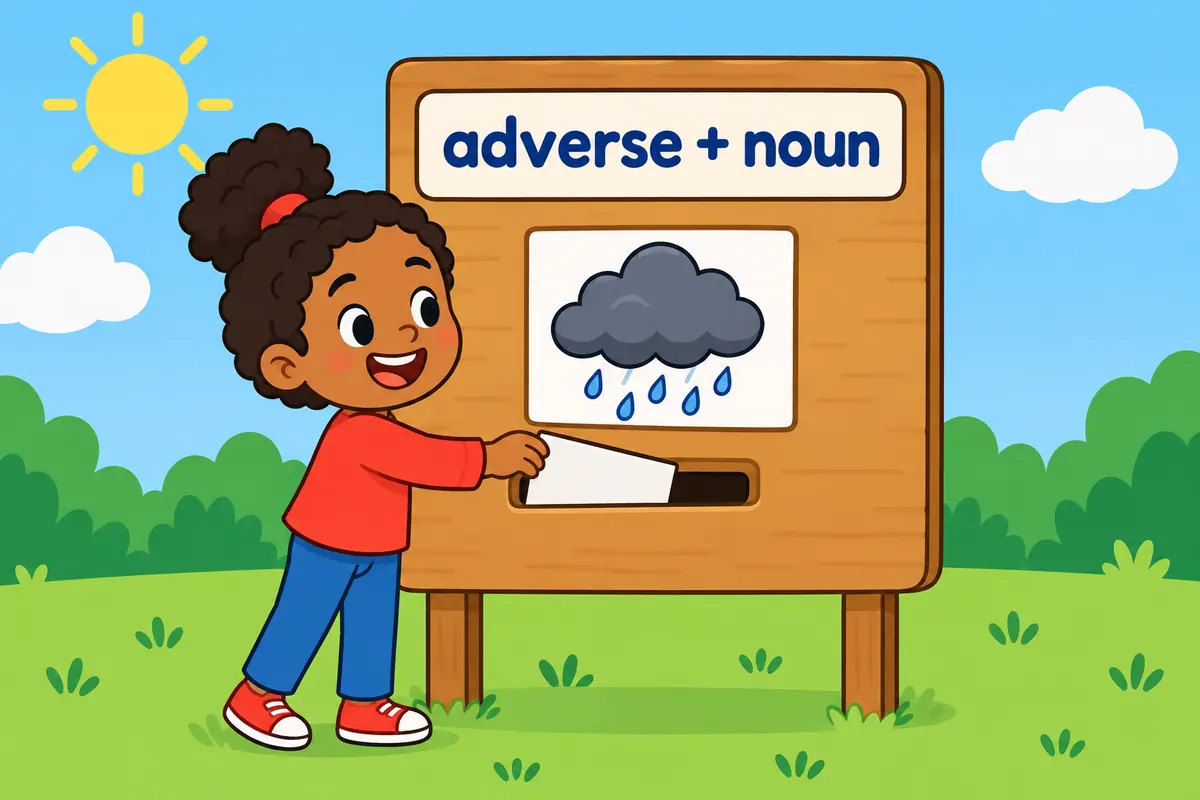
| adverse + noun | The report noted adverse conditions. | The dominant, attributive use. |
| adverse + effect + on | The delay had an adverse effect on morale. | Names the target of the harm. |
| be adverse to + noun (formal) | The court was adverse to the claim. | A formal, legal use meaning opposed. |
| adversely + verb | Output was adversely affected by heat. | The adverb modifies the effect. |
| adverse + to + interest (legal) | An adverse possession claim was filed. | A fixed legal phrase. |
The adverb adversely is the safer choice when you want to modify a verb, because placing adverse after a linking verb, as in the conditions were adverse to us, is correct but rare.
Adverse in a sentence: examples across contexts
The attributive pattern, adverse plus a noun, covers most sentences, and the adverb carries the rest. The nine sentences below show where each belongs.
| Context | Example sentence | Why this works |
|---|---|---|
| Medicine | The trial reported no adverse effects at the standard dose. | The fixed medical collocation. |
| Weather | Adverse weather grounded all flights on Friday. | The standard aviation phrase. |
| Law | The ruling was adverse to the landlord’s claim. | The formal, opposed sense. |
| Finance | A rate rise had an adverse impact on small firms. | Names the harmed group. |
| Workplace | Long hours adversely affected the night staff. | Uses the adverb with a verb. |
| Health | Smoking has well-documented adverse consequences. | Pairs with consequences. |
| Education | The change had no adverse effect on results. | The common no-adverse-effect pattern. |
| News | Roadworks created adverse conditions for drivers. | Fits the news register. |
| Conversation | I would not call a busy week adverse. | Marks the word as formal in speech. |
In every sentence the word attaches to a thing or a circumstance, never to a person’s mood, which is the boundary that keeps it apart from averse.
Adverse vs averse
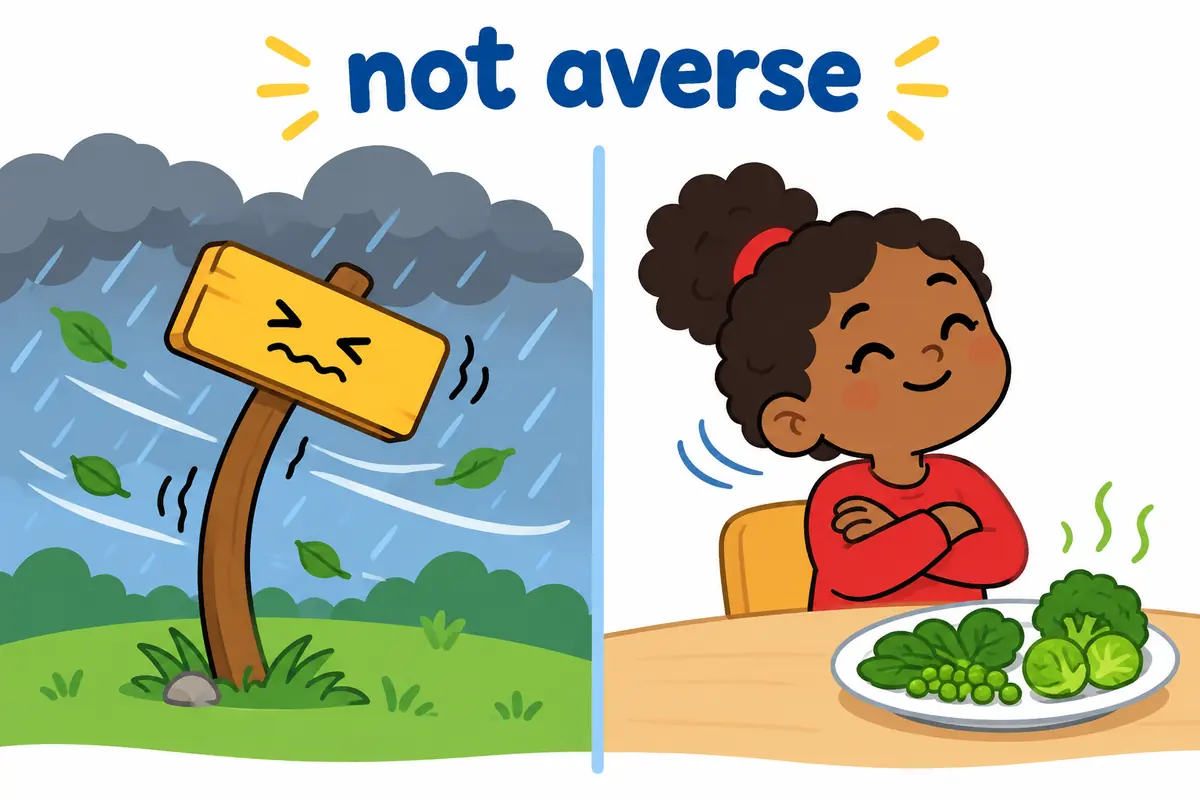
Adverse and averse differ by one letter and by one large idea. Adverse describes the harm, while averse describes the reluctant person.
| Attribute | adverse | averse |
|---|---|---|
| Core sense | Harmful or unfavourable | Unwilling or reluctant |
| What it describes | A thing or circumstance | A person’s attitude |
| Preposition | to, only in formal legal use | to, always |
| Typical partner | effects, conditions, weather | risk, change, the idea |
| Register | Formal, technical | Somewhat formal |
Verdict: choose adverse for harms and obstacles and averse for unwilling people; if a person is reluctant, only averse fits, and if a thing causes harm, only adverse does. Do not let diverse, meaning varied, drift in; it shares letters but not meaning. Where the opposition is personal rather than harmful, hostile is the stronger adjective.
Word forms and grammar of adverse
Adverse has an adverb and a noun, though the noun has shifted meaning toward hardship rather than harm. The root also yields adversity, which names misfortune rather than a specific harmful effect.
| Form | Part of speech | Example |
|---|---|---|
| adverse | adjective | The drug caused adverse effects. |
| adversely | adverb | Sleep was adversely affected. |
| adverseness | noun, rare | Only a legal handbook uses adverseness. |
| adversity | noun, different sense | The family coped with adversity. |
| adversary | noun | An adversary challenges you. |
| averse | adjective, different word | She is averse to debt. |
Common mistakes with adverse
- Incorrect:
I am adverse to late meetings.Correct: I am averse to late meetings. Rule: A person is averse, meaning unwilling; adverse describes harmful things. - Incorrect:
The adverse effect of the trip was a busy day.Correct: The effect of the trip was a busy day. Rule: Reserve adverse for real harm, not mild inconvenience. - Incorrect:
The weather aversely affected the match.Correct: The weather adversely affected the match. Rule: The adverb is adversely, not aversely. - Incorrect:
There were adverse opinions about the plan.Correct: There were diverse opinions about the plan. Rule: Diverse means varied; adverse means harmful or opposed.
Practice using adverse
Work through the six items, then check the reasoning rather than only the answer.
- Fill the gap: The team blamed ______ weather for the cancelled match.
- Choose the better word: She is (adverse / averse) to changing the plan.
- Correct the error: Sales were aversely affected by the strike.
- Build a sentence: use an adverse effect on about a new rule.
- Spot the register: which belongs in a medical report — no adverse effects were seen, or the tablets were a bit rough?
- Rewrite with the adverb: The delay affected the schedule adversely. Move the adverb before the participle.
Answers
- adverse — the weather is the harmful circumstance, not a person’s feeling.
- averse — a person who is unwilling is averse, and it takes to.
- Sales were adversely affected by the strike — the adverb is adversely.
- Model answer: The new rule had an adverse effect on small shops.
- No adverse effects were seen — a medical report keeps the formal collocation.
- The delay adversely affected the schedule — the adverb sits before the participle it modifies.
The bottom line
Use adverse in a sentence to describe a harmful or unfavourable thing, and keep it before a noun most of the time. Two points decide most sentences: adverse describes circumstances, while averse describes a reluctant person and always takes to, and the adverb is adversely. Where the harm is a measured loss, detrimental is often more exact.
Frequently asked questions about adverse
Is it adverse or averse?
Adverse means harmful and describes things such as effects, weather or conditions. Averse means unwilling and describes people, as in averse to change. A useful memory aid pairs the endings: adverse goes with harmful things, and averse goes with reluctant people. Only averse commonly follows the verb be.
Can adverse describe a person?
Only in rare formal or legal writing, and usually in the phrase adverse party or adverse witness, meaning the opposing side. In ordinary prose, adverse describes effects, conditions and weather, never someone’s feelings. For a person who dislikes something, use averse; the two words are not interchangeable.
What is the adverb of adverse?
The adverb is adversely, as in output was adversely affected by the heat. Do not invent aversely for this purpose, because that would confuse the word with averse. Adversely modifies a verb or participle, while the adjective adverse normally sits before a noun instead.
What does adverse mean in medicine?
In medicine, adverse describes an unwanted harmful effect caused by a treatment or drug. The standard phrase is adverse effect or adverse reaction, used in trial reports and patient leaflets. This sense keeps the core meaning intact: the treatment, not the patient, is the source of the harm.
Have you ever encountered a situation where the outcome was unfavorable or had a negative impact? This type of scenario can be described as “adverse.”
In the context of language and communication, an adverse situation or consequence often refers to something that brings about unwanted or harmful results. Whether it pertains to adverse weather conditions affecting travel plans or adverse reactions to medication, understanding how to use “adverse” in a sentence can help convey the idea of something unfavorable clearly and effectively.
7 Examples Of Adverse Used In a Sentence For Kids
- Eating too much candy can have adverse effects on your health.
- Not wearing warm clothes in winter can lead to adverse effects on your body.
- Skipping meals can have adverse effects on your energy levels.
- Being mean to others can have adverse effects on your friendships.
- Not listening to your teacher can have adverse effects on your learning.
- Watching too much TV can have adverse effects on your eyes.
- Not brushing your teeth can lead to adverse effects on your dental health.

14 Sentences with Adverse Examples
- Adverse weather conditions might affect your commute to college, so it’s important to plan accordingly.
- It’s crucial to maintain a healthy lifestyle to avoid adverse effects on your academic performance.
- Skipping classes can have adverse consequences on your understanding of the subject matter.
- Procrastination can lead to adverse effects on your grades and stress levels.
- Joining too many extracurricular activities can have an adverse impact on your time management skills.
- Failing to meet assignment deadlines can result in adverse outcomes on your overall academic progress.
- Not getting enough sleep can have adverse effects on your concentration in lectures and during exams.
- Engaging in risky behavior like substance abuse can have adverse consequences on your mental and physical health.
- Ignoring feedback from professors can lead to adverse results in your learning and growth as a student.
- Trying to cheat on exams can have adverse effects on your academic integrity and reputation.
- Protesting against college policies in a disruptive manner may lead to adverse disciplinary actions.
- Sharing personal information carelessly online can have adverse implications on your privacy and security.
- Taking on too many courses in a semester can result in adverse effects on your mental well-being and academic performance.
- Not seeking help from counselors or support services when feeling overwhelmed can have adverse effects on your mental health and overall college experience.

How To Use Adverse in Sentences?
Adverse means harmful or unfavorable. When using the word in a sentence, it typically describes a situation or condition that is not beneficial or has a negative impact.
Here are a few examples of how to use adverse in a sentence:
- The hurricane had an adverse effect on the local economy, causing businesses to shut down and tourists to stay away.
- Smoking can have adverse effects on your health, increasing the risk of lung cancer and heart disease.
- The athlete’s performance was hindered by the adverse weather conditions during the race.
- Poor time management skills can have adverse consequences on your academic performance.
- The new medication had some adverse side effects, leading the patient to discontinue its use.
Remember to use adverse when you want to convey a sense of harm, negativity, or unfavorable conditions. By incorporating this word into your vocabulary, you can effectively communicate situations where something is working against a desired outcome.

Conclusion
In conclusion, sentences with the keyword “adverse” often showcase negative consequences, unfavorable effects, or harmful outcomes. These sentences highlight the importance of being aware of potential risks and taking precautions to avoid adverse situations. Whether describing adverse effects of a medication, adverse weather conditions, or adverse impacts on the environment, these examples emphasize the need to address challenges proactively to prevent undesirable outcomes.
By paying attention to sentences with the word “adverse,” individuals can better understand the potential risks associated with various situations and make informed decisions to mitigate these hazards. Awareness of adverse consequences can lead to better planning, risk management, and problem-solving strategies to avoid or minimize negative impacts in personal, professional, and environmental contexts.


