Allot in a Sentence: Meaning, Patterns & Examples
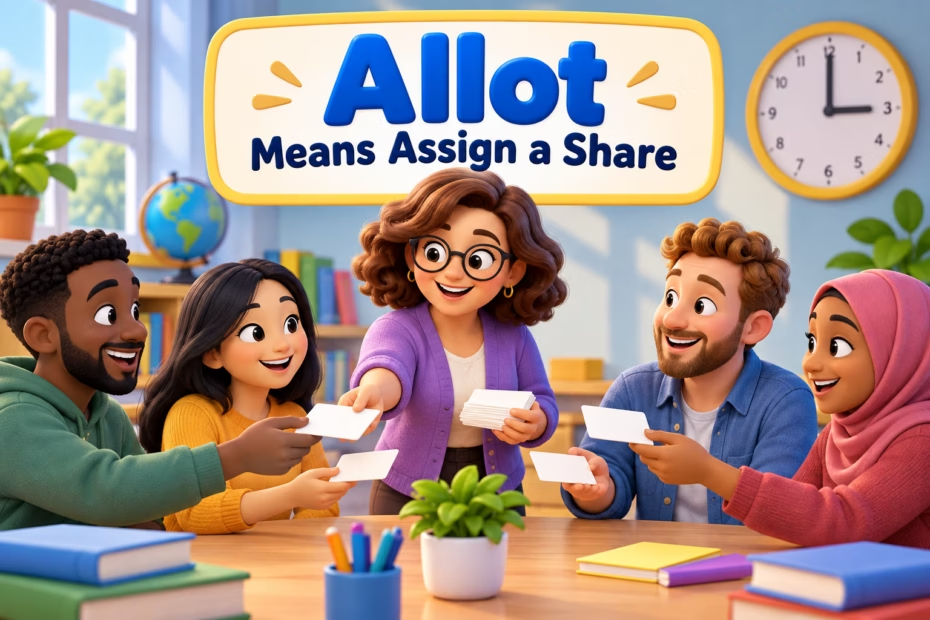
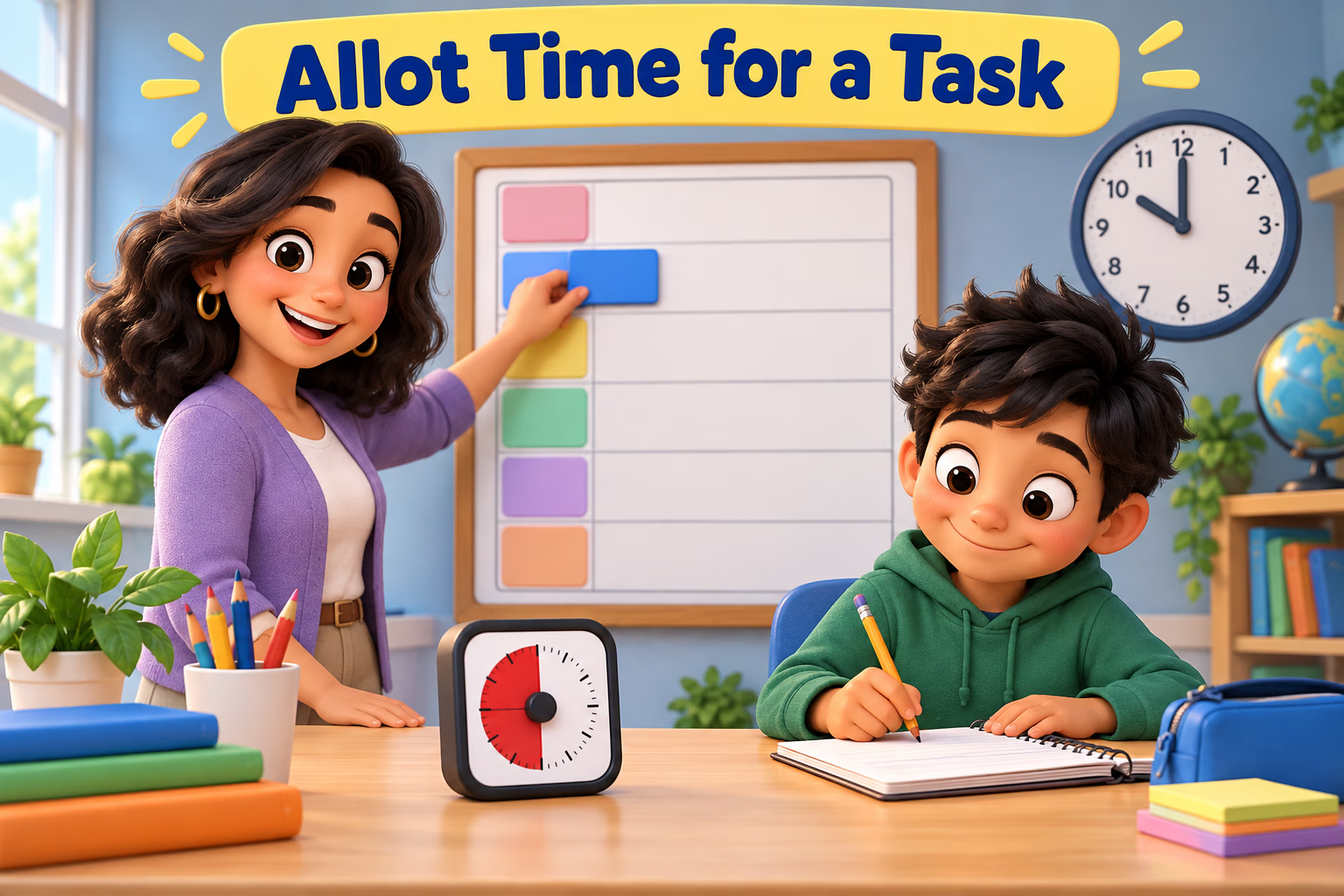
Allot is a verb meaning to give or assign a share of something for a purpose. You can allot something to a person, allot a person something, or allot time for a task: “The coordinator allotted each speaker five minutes.”
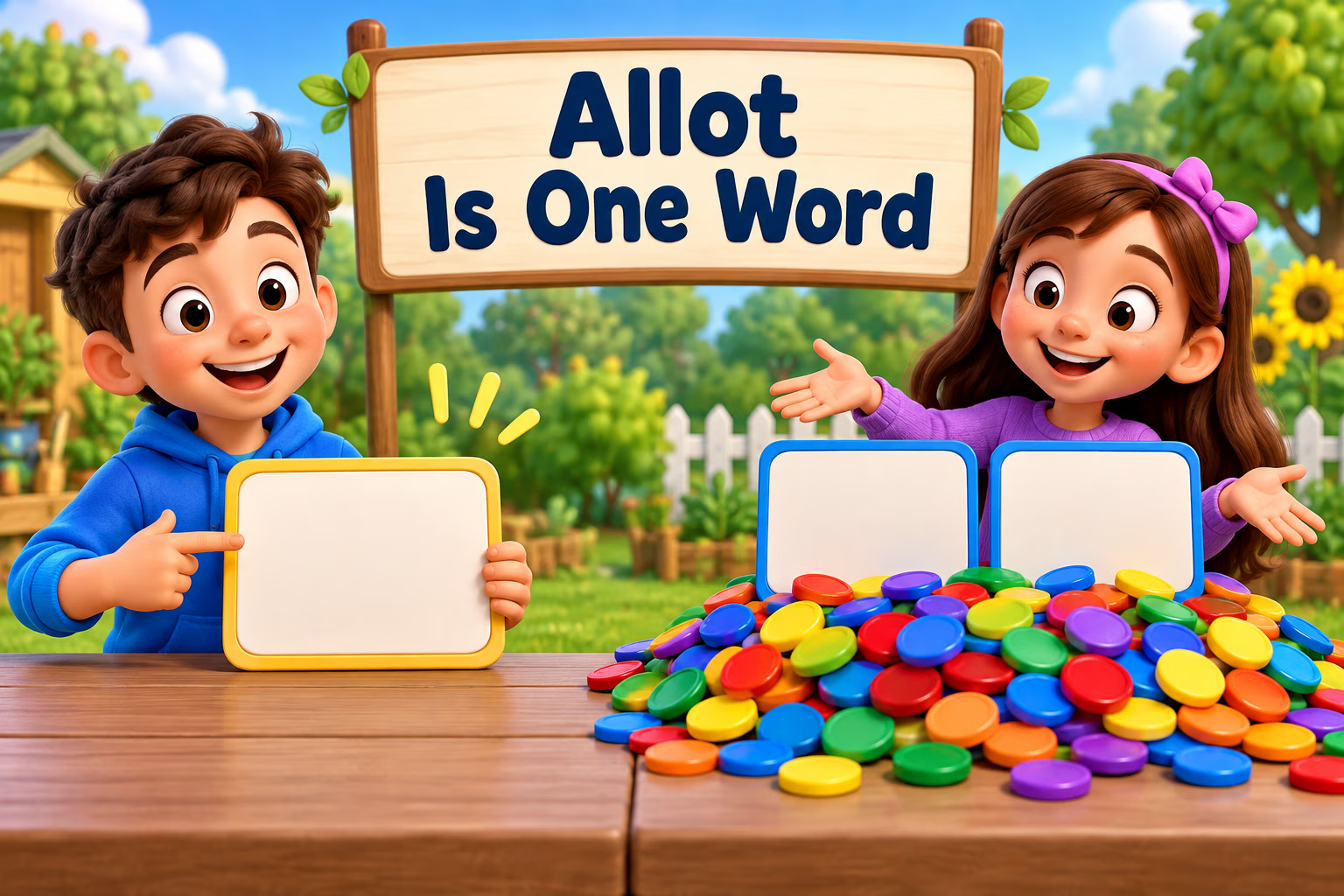
Allot is one word; a lot is a two-word expression meaning a large amount or number. Compare “We allot ten minutes to each speaker” with “We have a lot of speakers.” The expressions sound similar, but they perform different jobs in the sentence.

How to use allot in a sentence
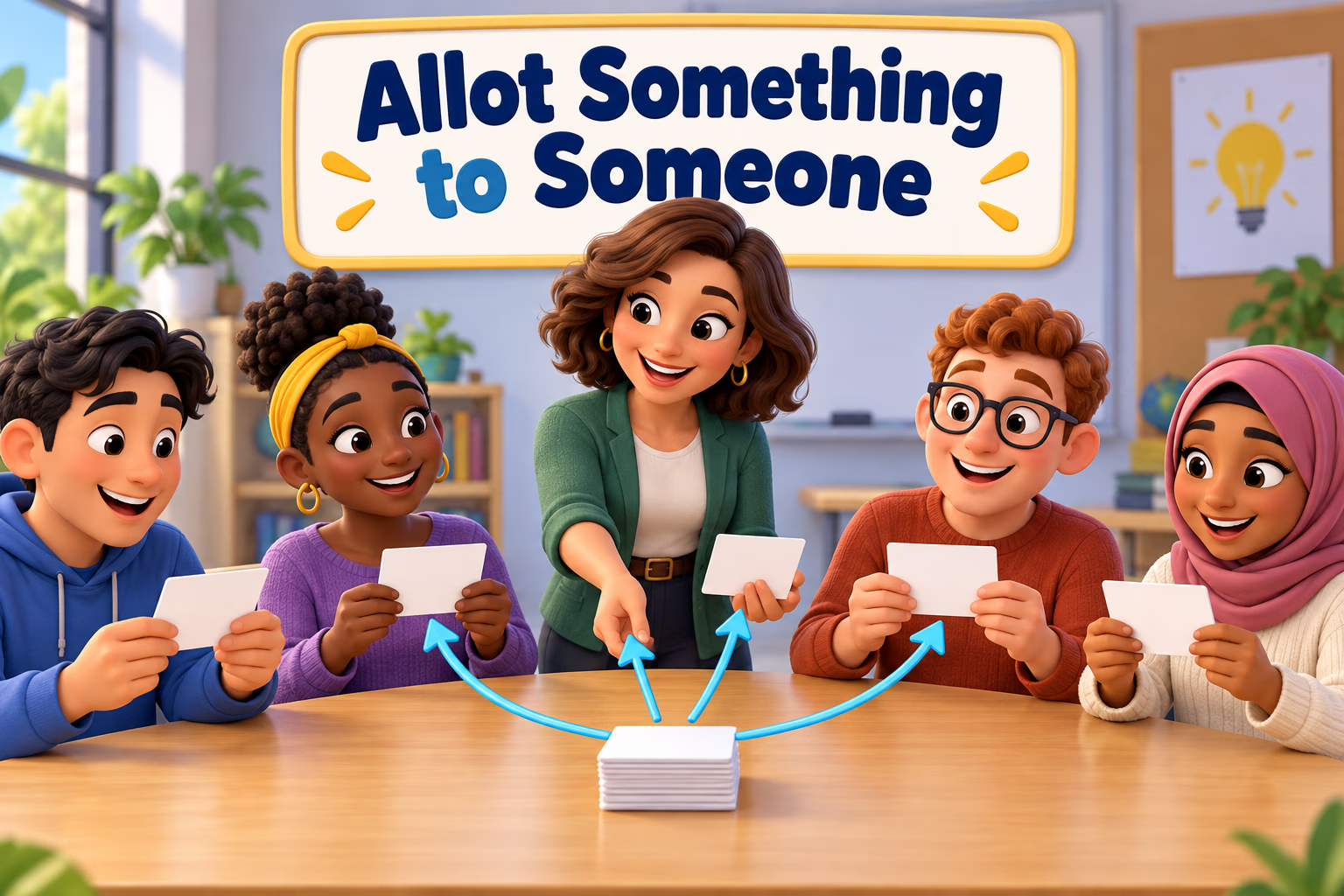
Use allot when a person or group assigns a portion of something available, such as time, money, seats, or tasks. Cambridge Dictionary gives both the pattern “allot something to someone” and the double-object pattern “allot someone something.”
| Sentence pattern | Example | What is allotted? |
|---|---|---|
| allot something to someone | The teacher allotted ten minutes to each group. | Ten minutes |
| allot someone something | The teacher allotted each group ten minutes. | Ten minutes |
| allot time for a purpose | We allotted an hour for the review. | An hour |
When the recipient is important, make it clear who receives the share. “The committee allotted funds” says what was distributed but not who or what was assigned those funds; “The committee allotted funds to the library” gives the recipient.
Allot, a lot, and allotted
Allot is a transitive verb: it acts on something that is assigned. A lot is a separate expression used for a large amount or number, as in “a lot of time.” The past form and past participle are allotted; the -ing form is allotting, each with a doubled t.
The examples below retain the original practice sentences. One wording in the original guide says that allotting is usually done in a “fair or proper” way; that is not part of the verb’s meaning. Allot means assign or distribute a share, while fairness depends on how the decision is made.
Have you ever wondered how to properly use the word “allot” in a sentence? “Allot” means to allocate or distribute a certain amount of something for a specific purpose.
When crafting a sentence with “allot,” it’s crucial to ensure that the quantity being distributed is clearly stated and that the purpose or recipient of the allocation is also specified.
7 Examples Of Allot Used In a Sentence For Kids
- Allot every student a crayon for coloring.
- Let’s allot two biscuits for each of you.
- We will allot time for playing in the classroom.
- The teacher will allot a storybook for reading practice.
- Each student will be allotted a spot on the playground.
- Please allot your toys to the correct bins.
- We need to allot equal time for each game during recess.
14 Sentences with Allot Examples
- Students should carefully plan their schedule and allot sufficient time for each subject.
- It is important to allot enough time for studying before the exams.
- Make sure to allot a specific budget for groceries and other expenses every month.
- Group projects require students to allot tasks efficiently among team members.
- It is advisable to allot adequate time for revisions before the final submission of assignments.
- Students should allot time for extracurricular activities to maintain a healthy work-life balance.
- When preparing for a presentation, it is crucial to allot time for practice and rehearsal.
- Allot specific time slots for breaks to avoid burnout while studying for long hours.
- Participating in college events may require students to allot time for rehearsals and event preparations.
- Allot enough time to commute between classes to avoid being late for lectures.
- It is essential to allot time for self-care activities such as exercise and relaxation.
- Students must allot time for research and data collection when working on academic projects.
- Set aside and allot a particular time for scholarship applications and admission processes.
- Allot specific time slots for group study sessions to enhance collaborative learning and knowledge sharing.
How To Use Allot in Sentences?
To use the word “Allot” in a sentence, you must understand its meaning and correct usage. “Allot” means to allocate or distribute something to someone, usually in a fair or proper manner. Here is a guide on how to properly incorporate “Allot” in a sentence:
-
Determine the context: Consider the situation where you need to use the word “Allot.” Are you talking about time, resources, money, or something else being distributed?
-
Choose the subject: Identify who or what is doing the allotting. This could be a person, a group of people, or a system.
-
Identify the object: Decide what is being allotted. This could be a task, a specific amount of money, a portion of time, or any other tangible or intangible unit.
-
Structure the sentence: Place the subject at the beginning, followed by the action of allotting, and then the object that is being allotted.
-
Example sentence: “The project manager decided to allot each team member a specific role based on their skills and expertise.”
Remember to use “Allot” in situations where something is being distributed, assigned, or apportioned. By following this guide, you can effectively use “Allot” in a sentence in a clear and appropriate manner.
Conclusion
In conclusion, the examples of sentences with “allot” demonstrate how this word is used to indicate the allocation of a specific amount of something. Whether referring to time, money, or resources, “allot” signifies the distribution or assignment of a portion for a particular purpose. These sentences illustrate how individuals or organizations designate and apportion resources in a deliberate manner to achieve their objectives efficiently and effectively. By allotting resources wisely, people can ensure that they are making the most of what is available to them.
Understanding how to use “allot” in sentences can help individuals communicate clearly when discussing the division of resources. By incorporating this word skillfully in writing and speech, individuals can convey their intentions and decisions regarding the distribution of time, money, or other resources in a precise and coherent manner.
Choose allot, allocate, or a lot
Allot and allocate both mean assigning a share for a purpose, though allocate may sound more natural in some administrative or technical contexts. A lot does not mean assign: it describes a large quantity. Use the verb when something is being distributed, and the two-word phrase when describing how much there is.
- Allot: “The organizer allotted each group two tables.”
- A lot: “There are a lot of groups.”
- Allotted: “The allotted time ended at noon.”
- Allotting: “They are allotting the remaining seats now.”
For clarity, include the amount or share when it is known, identify the person or purpose receiving it, and use allotted or allotting with the double t. The word describes the act of assigning a portion; it does not by itself say whether the distribution is equal or fair.
Sources and further reading
Cambridge Dictionary: allot; Oxford Learner’s Dictionaries: allot; Cambridge Dictionary: lot.


