Anachronistic in a Sentence: Meaning and Examples
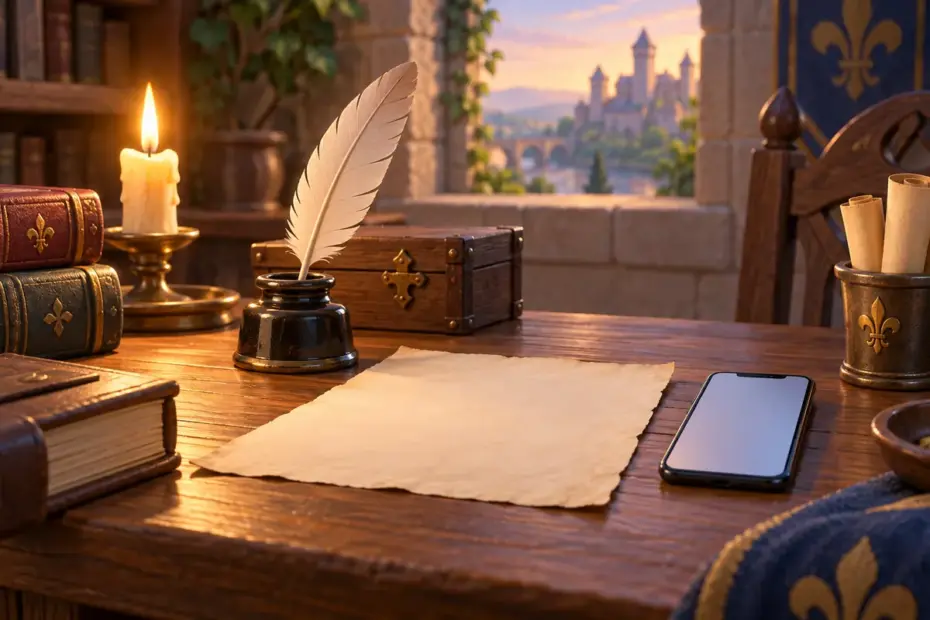
Anachronistic describes something chronologically out of place. Use anachronistic in a sentence by making the situation clear: “A smartphone would be anachronistic in the medieval scene.” The examples below distinguish its grammatical role and related expressions so you can choose a form that communicates your intended meaning accurately in context.
Key facts at a glance
- Anachronistic is an adjective.
- describes something chronologically out of place.
- Out of chronological place.
- Context and word choice determine the intended meaning.
What does anachronistic mean?
Anachronistic describes something chronologically out of place. Merriam-Webster: anachronistic provides the reference meaning. An object, expression, or practice can be anachronistic when it belongs to a different period from its setting. The mismatch matters, not age alone. An old object in a modern museum is not automatically an error because the setting intentionally displays historical material.
Anachronistic in a sentence: practical examples
- A smartphone would be anachronistic in the medieval scene.
- The critic identified an anachronistic phrase in the historical novel.
- The film deliberately uses anachronistic music.
- An anachronistic reference disrupted the otherwise careful setting.
- The proposal sounded anachronistic to its modern audience.
- She checked whether the costume detail was anachronistic.
Compare the examples by identifying the subject, the word’s grammatical role, and the surrounding detail that establishes its meaning. Change the concrete details when writing your own sentence, while keeping the grammatical pattern intact.

How do the main patterns and related words differ?
| Choice or pattern | Meaning or use | Example |
|---|---|---|
| Anachronistic | Out of chronological place | A smartphone would be anachronistic in a medieval scene. |
| Old-fashioned | Reflecting older styles | The room had old-fashioned furniture. |
| Antique | An old collectible object or its character | An antique chair stood in the gallery. |
Anachronistic is an adjective. Anachronism is the related noun, and anachronistically is the adverb. Use anachronistic before a noun or after a linking verb.
How do you avoid the common usage errors?
Do not use anachronistic merely to mean unusual, antique, or geographically misplaced. Identify the relevant period and the feature that conflicts with it. Fiction may intentionally combine eras, so distinguish a deliberate device from an accidental mismatch.
- Identify the meaning your sentence needs.
- Choose the grammatical form for that role.
- Add a concrete action, object, or context.
- Check that the related word would not communicate a different claim.

Putting the examples into practice
Use anachronistic in a sentence with attention to meaning, context, and grammatical role. Choose an example that matches the idea you want to express, then replace its details with accurate information about your own subject.
Frequently asked questions
Does anachronistic simply mean old?
No. Anachronistic concerns a mismatch between something and its chronological setting. An old object may fit perfectly in a historical scene or museum display. Identify the intended period and explain why the detail belongs elsewhere. Age alone does not establish the kind of chronological mismatch the adjective describes.
Can anachronism be deliberate?
Yes. A writer or filmmaker may deliberately introduce a detail from another period for humor, contrast, or a distinctive style. A sentence should distinguish intention from an accidental historical error when that information is known. The presence of an anachronistic feature alone does not establish that the creator made a mistake.
What is the noun form of anachronistic?
Anachronism is the related noun. “The costume contains an anachronism” names the mismatch, while “The costume detail is anachronistic” describes it with an adjective. The words are related but occupy different positions, so choose the form that fits the sentence and specify the historical feature under discussion.
How do I support an anachronistic claim?
Identify the setting’s time period and the date or period associated with the disputed detail. Then explain the mismatch. For example, a modern device in a medieval setting is straightforward, while a particular expression may require historical research. Do not label something anachronistic solely because it feels unfamiliar or old-fashioned.
Have you ever come across a sentence in a contemporary novel that seemed strangely out of place, like it belonged to another time period altogether? That’s because you may have encountered an anachronistic example sentence, one that doesn’t quite fit with the time frame of the story.
An anachronistic example sentence is a literary device where a phrase or expression is used that doesn’t align with the chronological setting of the narrative. This intentional blending of past and present elements can create a striking contrast, adding depth to the storytelling and prompting readers to think critically about the themes being explored.
7 Examples Of Anachronistic Used In a Sentence For Kids
- The king wearing an anachronistic crown looked funny.
- The dinosaur toy seemed anachronistic in the modern playset.
- The old car in the museum was anachronistic compared to new cars.
- The knight’s armor was anachronistic for the royal costume party.
- The ancient scrolls in the library seemed anachronistic next to the computer.
- The princess’s castle dollhouse looked anachronistic next to the toy rockets.
- The pirate’s wooden ship toy was anachronistic compared to the toy cars.
14 Sentences with Anachronistic Examples
- In today’s technological age, using a typewriter would be considered anachronistic.
- Some professors may still prefer giving lectures using transparencies, which seems anachronistic compared to modern PowerPoint presentations.
- Handwritten assignments are starting to feel anachronistic with the prevalence of online submissions.
- The idea of carrying around a physical planner seems increasingly anachronistic with the availability of digital calendars on smartphones.
- Insisting on attending classes in person during a pandemic could be seen as anachronistic considering the advancements in online learning technology.
- Printed textbooks are becoming more anachronistic as students opt for digital versions that are easily accessible on their devices.
- Some colleges still have strict dress codes, which can feel anachronistic in a time when individual expression is valued.
- The practice of taking notes by hand may be considered anachronistic now that most students use laptops or tablets in class.
- The reliance on physical library books seems anachronistic when students can access a plethora of online resources with just a few clicks.
- Creating physical flashcards may seem anachronistic when there are numerous apps available for digital flashcards that are more convenient.
- Some college traditions may seem anachronistic to newer generations of students who prioritize different values and beliefs.
- The use of overhead projectors for presentations is becoming increasingly anachronistic as colleges invest in more advanced audiovisual equipment.
- The concept of having fixed class timings may seem anachronistic in a world where asynchronous and flexible learning options are becoming more common.
- Expecting students to adhere strictly to printed syllabi can feel anachronistic when changes and updates can easily be communicated through digital platforms.
How To Use Anachronistic in Sentences?
To use Anachronistic in a sentence, first identify a person, object, or idea that seems out of place or belonging to a different time period. For example, “The anachronistic sight of a knight in shining armor riding a horse through the city streets caught everyone off guard.”
Next, place the word anachronistic in your sentence to describe the element that seems out of its time period. Make sure the word is used correctly in the context of your sentence to convey the sense of being outdated or belonging to a different era. For instance, “The Victorian-style dress she wore to the modern party looked anachronistic compared to everyone else’s contemporary outfits.”
Remember to consider the surroundings or time frame in which you use the word anachronistic to effectively communicate the idea of something being out of place chronologically. A proper application of this word can vividly illustrate a stark contrast between different time periods, adding depth and clarity to your writing.
Practice using anachronistic in various sentences to become more comfortable integrating it into your vocabulary. Experiment with different contexts and scenarios to fully grasp the nuances of this word and enhance your writing skills.
Conclusion
In literature, movies, and everyday conversations, sentences with anachronistic elements can transport us to different time periods, creating a unique and intriguing sense of nostalgia or whimsy. By juxtaposing different eras or blending modern language with historical context, these sentences offer a fresh perspective and challenge our perceptions of time. They can also serve as a creative tool for writers to infuse their work with depth and complexity, engaging readers through a clever nod to the past.
Whether it’s a Shakespearean character using emojis or a medieval knight ordering a latte, sentences with anachronistic elements add a playful twist to our language and storytelling. By breaking the rules of traditional timelines, they allow for cross-pollination of ideas and genres, fostering creativity and innovation in how we communicate and express ourselves.


