Apostrophe rules in English cover two jobs: showing ownership and marking missing letters in a contraction. The apostrophe sits before the s for one owner and after the s for several owners. “The dog’s bowl” belongs to a single dog, while “the dogs’ bowls” belong to more than one.
Apostrophe rules in English at a glance
- An apostrophe marks ownership or a contraction, never a plain plural.
- A single owner adds an apostrophe then s: the teacher’s desk.
- Several owners ending in s add only the apostrophe: the teachers’ desk.
- A plural that does not end in s still adds apostrophe then s: the children’s toys.
- Possessive pronouns such as its, yours and theirs never take an apostrophe.
- The mark is decided by the owner’s spelling, not by the sound of the word.
What are the apostrophe rules in English?
Every rule follows from the two jobs of what an apostrophe is: it replaces missing letters, or it marks possession. Those jobs rarely overlap, so the test is to ask which one the sentence needs. Standalone articles such as a and an work differently, since they stand as whole words, while the apostrophe only ever hangs off another word.
| Rule | Example | What it shows |
|---|---|---|
| Single owner | the cat’s tail | apostrophe before s marks one owner |
| Plural owner ending in s | the cats’ tails | apostrophe after s marks several owners |
| Plural owner not ending in s | the women’s coats | an irregular plural keeps apostrophe then s |
| Contraction | do not becomes don’t | the apostrophe stands for the missing letter |
| Name ending in s | James’s bike or James’ bike | both forms appear, so stay consistent |
| Time and money | a day’s work, ten pounds’ worth | an amount is treated as the owner |
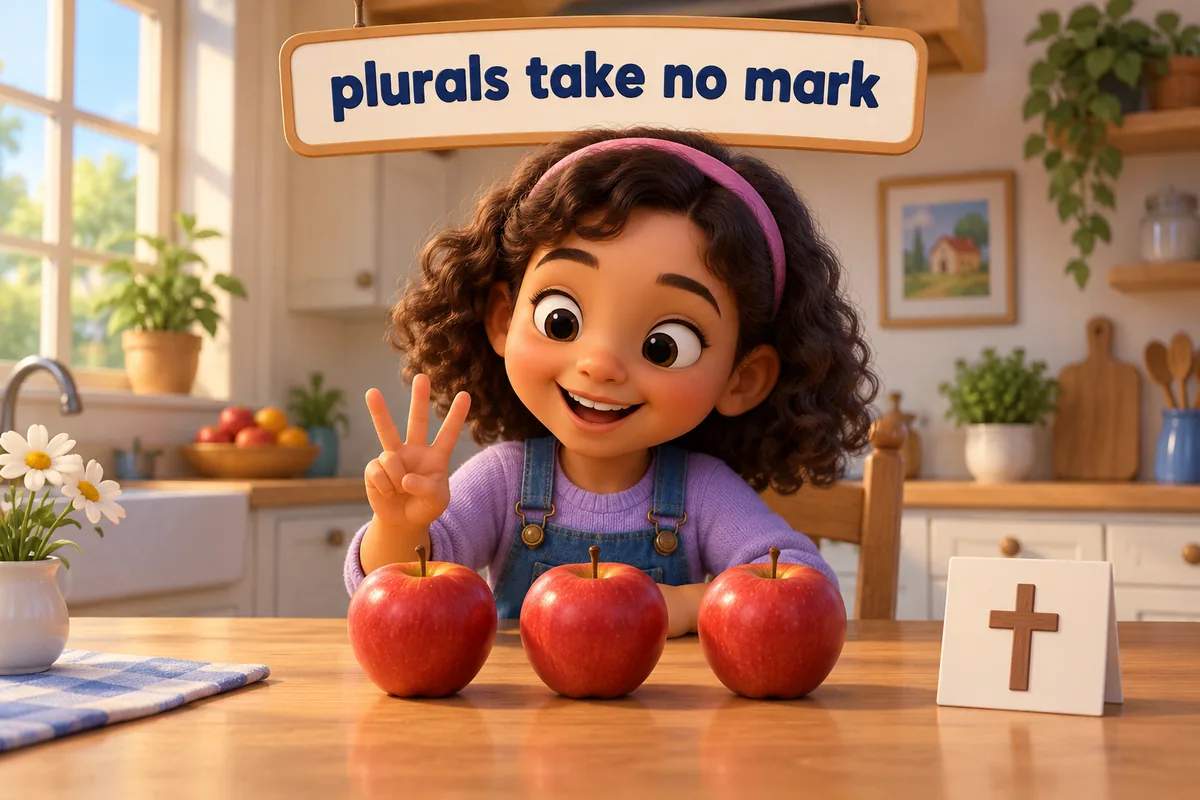
| Plain plural | three apples, not three apple’s | a plural never takes an apostrophe |
The last row causes the most trouble, because a plural and a possessive can look and sound the same. The difference is meaning: if nothing is owned, no mark is needed.
How do you use an apostrophe in a sentence?
Placement follows the spelling of the owner, so the pattern is regular enough to put in a table; ready-made lines sit in apostrophe sentence examples. Each pattern below names the owner first, then attaches the mark.
| Pattern | Example | What it signals |
|---|---|---|
| owner + ’s | the manager’s report | a single owner |
| owner + s’ | the managers’ report | several owners ending in s |
| irregular plural + ’s | the children’s room | a plural that does not end in s |
| possessive pronoun | the book is hers | no apostrophe at all |
| verb + n’t, ’re, ’ll | they’re, we’ll, isn’t | a contraction of two words |
| compound owner + ’s | my sister-in-law’s car | the mark lands on the last word |
Apostrophe rules examples across contexts
The same two jobs appear in every register, from a classroom note to a legal file, and the mark behaves identically each time. The owner changes, but the rule does not, so every row below rewards the same quick test.
| Context | Example sentence | Why this works |
|---|---|---|
| Classroom | The teacher’s notes were pinned to the board. | a single owner takes apostrophe then s |
| Workplace email | Please send the client’s invoice before noon. | one client owns the invoice |
| News report | The workers’ union rejected the offer. | a plural owner ending in s takes the bare apostrophe |
| Everyday speech | That’s my brother’s bike. | a contraction and a possessive in one line |
| Academic writing | Researchers’ findings were published in March. | plural possessive with no extra s |
| Legal writing | The defendant’s statement was read aloud. | a formal singular possessive |
| Travel writing | The town’s market opens at dawn. | a singular possessive of a place |
| Narration | The children’s laughter filled the hall. | an irregular plural adds apostrophe then s |
| Customer service | It’s ready for collection. | a contraction of it is |
| Recipe | Stir in the chef’s sauce last. | a singular possessive in an instruction |
| Sports report | The players’ shirts were soaked. | a regular plural takes the trailing apostrophe |
| Notice | Keep off the grass. | no owner, so no apostrophe appears |
Apostrophe s or s apostrophe: which side does it go?
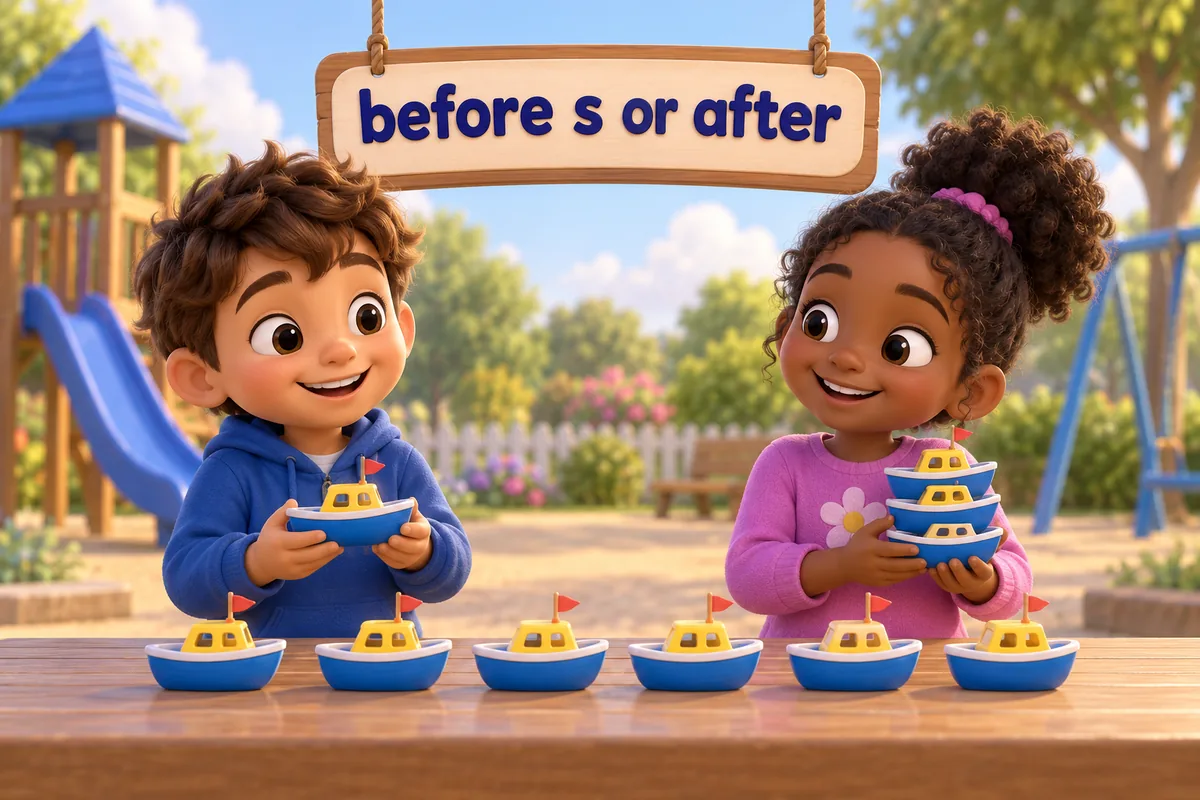
The deciding question is how many owners there are and how the owner’s spelling ends, so the contrast is worth setting side by side.
| Test | Apostrophe then s | s then apostrophe |
|---|---|---|
| Number of owners | one | more than one |
| Owner’s final letter | any letter | usually s |
| Example | the girl’s coat | the girls’ coats |
| Irregular plural | the men’s hats | not used, since men does not end in s |
| Sound test | adds an extra syllable | adds no new sound |
| Memory hook | the mark sits next to one owner | the mark sits after the owners |
Add the apostrophe and s when one owner is named, and push the apostrophe after the s when the owners are plural. A reader who hears an extra syllable is almost always looking at the singular form, while a silent mark points to the plural.
Word forms and grammar of apostrophes
| Form | What it marks | Example |
|---|---|---|
| apostrophe then s on a singular noun | one owner | the dog’s lead |
| apostrophe after a plural s | several owners | the dogs’ leads |
| apostrophe inside a contraction | omitted letters | we’re, can’t, it’s |
| possessive pronouns | ownership without a mark | its, hers, theirs |
| apostrophe for time and money | an amount treated as owner | a day’s work |
| apostrophe in names ending in s | both styles exist | Chris’s or Chris’ |
| apostrophe in a compound | the final word owns | my father-in-law’s chair |
| no apostrophe in a plural | simple quantity | two hundred pens |
The forms above never mix: a noun is either possessive or plain, and a pronoun is either a contraction such as it’s or a possessive such as its. A quick check of the noun form settles almost every case before the mark is written.
Common mistakes with apostrophes
Most errors come from adding a mark where none is needed or dropping one that the meaning requires, so each pair below names the wrong version, the fix and the rule.
- Incorrect: The
dog’sare barking. Correct: The dogs are barking. Rule: a simple plural takes no apostrophe. - Incorrect:
Itsa long way home. Correct: It’s a long way home. Rule: the contraction of it is needs the apostrophe. - Incorrect: Keep off the
grass’s. Correct: Keep off the grass. Rule: no ownership, so no apostrophe. - Incorrect: The
childrenscoats were wet. Correct: The children’s coats were wet. Rule: an irregular plural keeps apostrophe then s. - Incorrect: The
manager’sare meeting. Correct: The managers are meeting. Rule: a plural noun is not possessive without a following noun. - Incorrect:
Mothersday is in May. Correct: Mother’s Day is in May. Rule: a named day keeps the possessive mark.
A comma marks a pause rather than ownership, so even careful comma rules will not fix an apostrophe error; the two marks answer different questions.
Practice using apostrophes
- Fill in the blank: The ___ bowl is on the floor, and only one dog lives here.
- Choose the better form: the (girls / girls’) team, shared by several girls.
- Correct the error: Three bird’s sat on the wall.
- Build a sentence: use a contraction of she is about a pupil who is ready.
- Spot the register: which line suits a public notice, (a) Keep off the grass, or (b) Keep off the grass’s?
- Fill in the blank: The ___ toys were packed away, and there is more than one child.
Answers
- dog’s, because one dog owns the bowl.
- girls’, because the team belongs to several girls.
- Three birds sat on the wall; a plain plural takes no apostrophe.
- She’s ready to begin; the apostrophe stands for the missing i.
- (a), because the sign shows no ownership and needs no mark.
- children’s, because the plural does not end in s.
The bottom line
Two jobs, two tests, one mark: an apostrophe either shows ownership or replaces missing letters. Ask how many owners a noun has, place the mark before the s for one and after the s for several, and leave plain plurals bare. Because apostrophe rules in English follow the spelling of the owner rather than the sound of the word, checking the noun is faster than trusting the ear. Run the two tests and the mark lands in the right place every time.
Frequently asked questions about apostrophes
Does a name that ends in s take an extra s after the apostrophe?
Both styles are accepted, so James’s bike and James’ bike both appear in print. Choose one and apply it to every name of that shape in a document. Consistency matters more than which style you pick, because a mixed page looks careless even when each single mark is correct.
Why does it’s take an apostrophe but its does not?
It’s is a contraction of it is or it has, and the apostrophe stands for the letters that were dropped. Its is a possessive pronoun, and possessive pronouns never take an apostrophe. The test is to expand the word: if it becomes it is, use it’s.
Is a shop sign that reads apple’s grammatically wrong?
If the sign simply means more than one apple, the apostrophe is wrong, because a plain plural takes no mark. If it means something belonging to an apple that has been left out of the sign, the apostrophe could be right. Context decides, but on a fruit stall the plural reading is almost always intended.
Where does the apostrophe go in an owner such as mother-in-law?
Add the mark to the final word of the compound, since that word carries the ownership: my mother-in-law’s garden. For more than one, make the last word plural first and then add the apostrophe. Attaching the mark earlier, as in mother’s-in-law, is never correct.