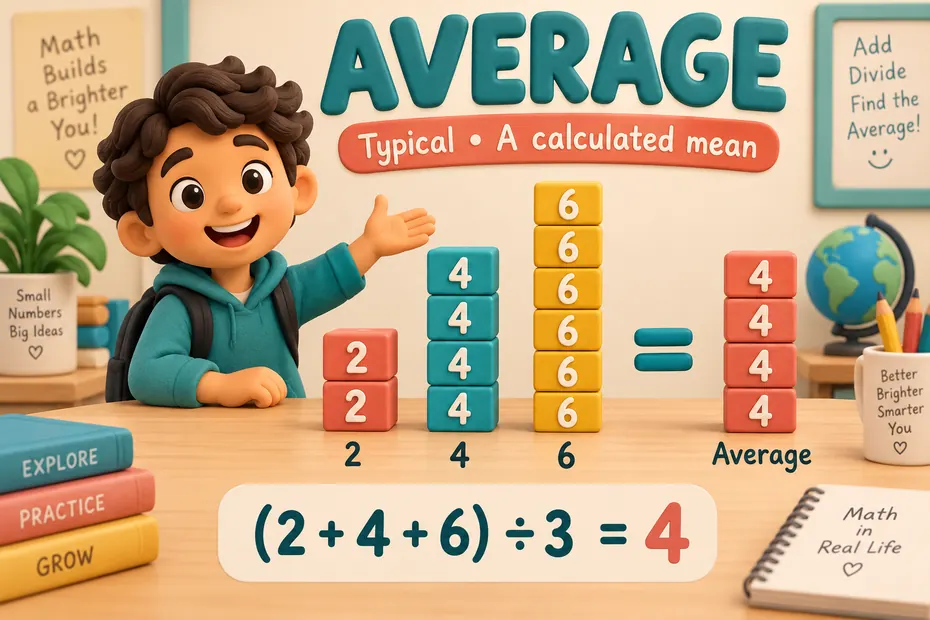
What does average mean in a sentence?
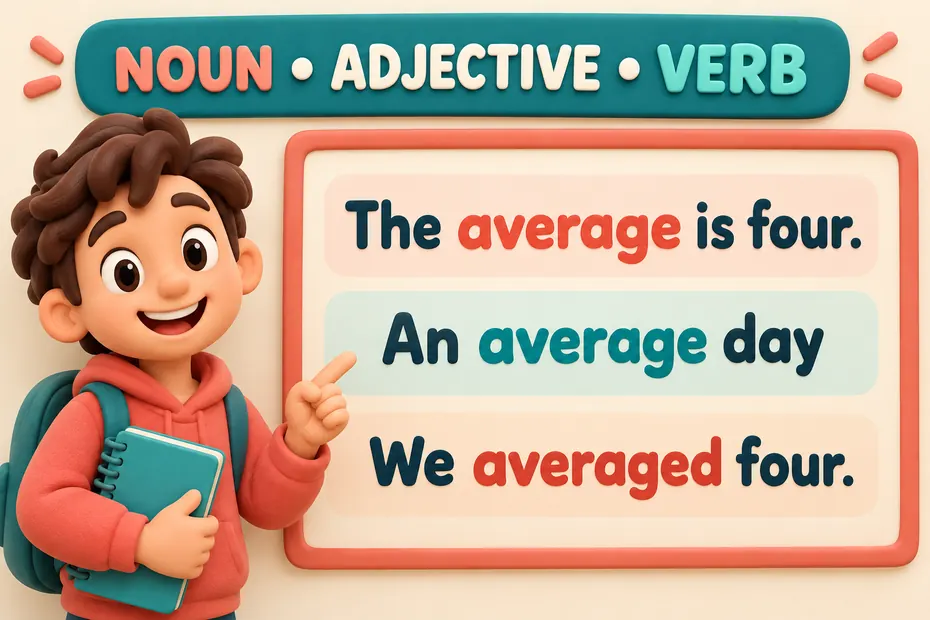
Average can mean a calculated central value or something ordinary and typical. It can be a noun (“The average is four”), an adjective (“an average day”), or a verb (“We averaged four”). In a numerical report, specify the measure and group; in an everyday description, context explains what counts as typical.
How do the noun, adjective, and verb uses differ?
The sentence structure tells you which role average plays. As a noun, average names a value or standard. As an adjective, it describes another noun. As a verb, it describes obtaining or calculating an average. A learner can practice all three roles with the same small set of numbers instead of memorizing unrelated examples.
| Role | Original example | What average does |
|---|---|---|
| Noun | The average of two, four, and six is four. | Names the calculated value. |
| Adjective | The average score was four. | Describes score. |
| Verb | The players averaged four points each. | Reports the average quantity. |
| Ordinary description | It was an average afternoon. | Describes an unremarkable or typical afternoon. |
In a report, “average score” needs a relevant group or period. Four points per player, four points per game, and four points per attempt use different denominators. The number alone does not establish the comparison. Add the unit and the reference group so the reader understands exactly what was averaged.
Does average always mean the arithmetic mean?
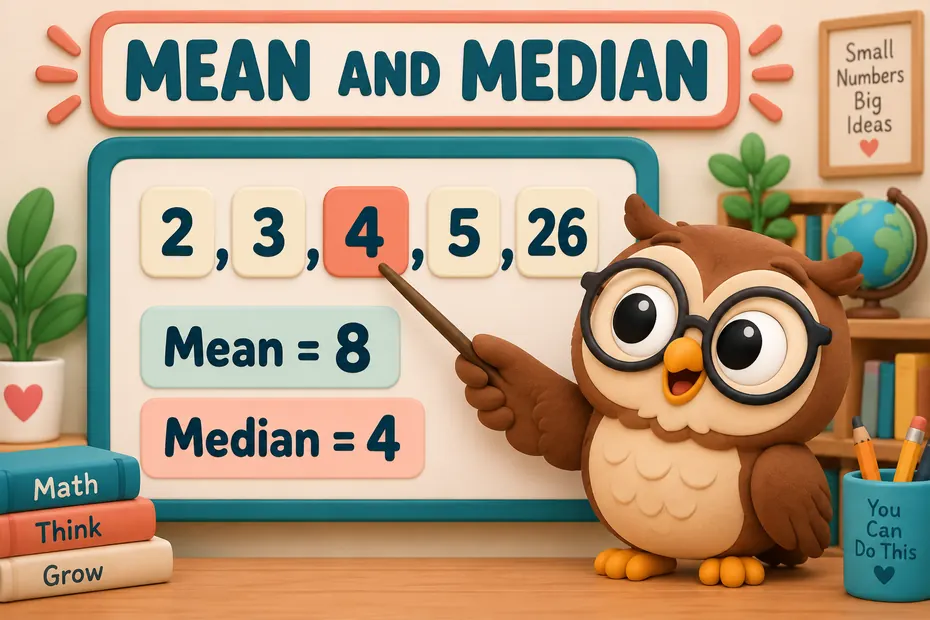
In many everyday numerical contexts, average refers to the arithmetic mean, but the word can also be used more broadly for a central or typical value. For a technical report, name mean, median, or mode when the distinction matters. NIST’s statistics handbook explicitly distinguishes these measures of location.
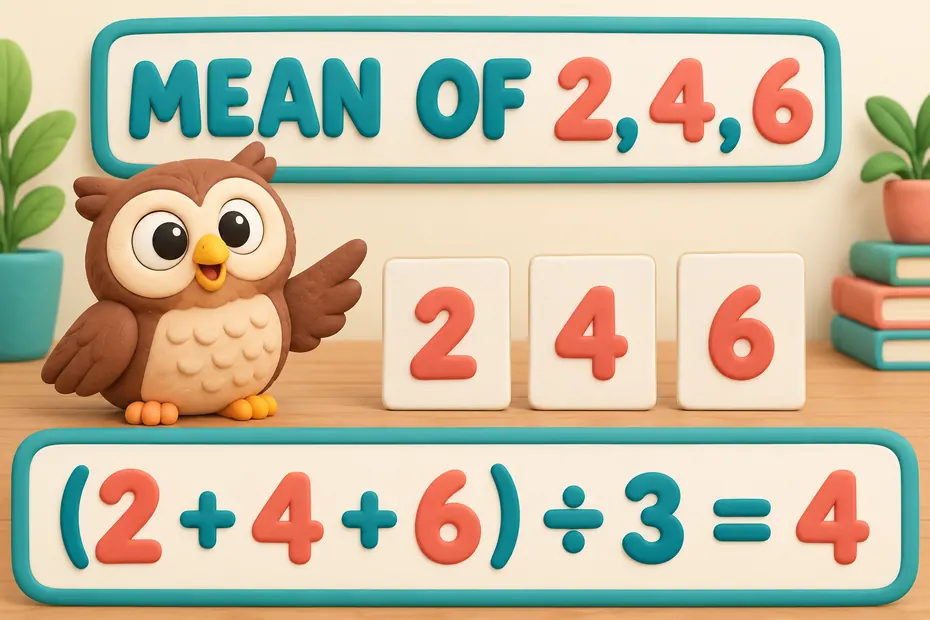
For the arithmetic mean of 2, 4, and 6, add the values to get 12 and divide by the three values to get 4. In the different set 2, 3, 4, 5, and 26, the sum is 40, so the mean is 8. The median is 4, the middle value in the ordered set. The larger final value changes the mean more strongly than the median.
Those calculations are teaching examples rather than facts about a real population. “The mean of these five values is 8” is precise. “The typical value is 8” makes an additional interpretive claim, which may not suit the pattern. Choose the statistic based on what the sentence needs to communicate, and state the choice.
How should you use on average and above average?
On average introduces a summary across cases, while above average compares a result with a reference value or ordinary standard. “The group read four pages a day on average” does not mean every day had four pages. “This result is above the class average” compares one result with that class’s summary value.
- On average: The three journeys took twenty minutes on average.
- Above average: Her score was above the group’s average.
- Below average: This month’s attendance was below the annual average.
- An average of: The club welcomed an average of twelve visitors per session.
- Average + noun: The average waiting time was ten minutes.
Use hyphens when a compound adjective appears before a noun and helps readers parse it: “an above-average score.” After the noun, “The score was above average” ordinarily needs no hyphen. Keep the phrase’s meaning separate from punctuation: the comparison remains incomplete unless readers know which group or standard supplies the average.
How can you avoid misleading average sentences?
Name the data being summarized and avoid turning an aggregate into a claim about every individual. “The average visit lasted thirty minutes” permits shorter and longer visits. “Every visit lasted thirty minutes” makes a different claim. A clear sentence preserves that distinction even when the surrounding text is informal.
- Identify whether average means a number or an ordinary quality.
- For a number, name the measure being used.
- Include the group, period, and unit.
- Check the arithmetic on a small example if you are calculating.
- Do not imply that every case equals the summary value.
Also avoid averaging averages blindly when the groups have different sizes. Suppose two learners averaged 10 pages and eight learners averaged 5 pages. Across all ten learners, the mean is 6 pages, not 7.5: the totals are 20 and 40 pages, giving 60 divided by 10. This small example shows why the size of each group matters.
In nonnumerical descriptions, explain your intended tone. “An average restaurant” may sound like faint praise or criticism. “A typical neighborhood restaurant” can be a clearer neutral description. When evaluating a person or their work, name the specific performance rather than reducing the person to an unexplained label.
Frequently asked questions about average
Is average a noun or an adjective?
It can be both, and it can also be a verb. In “The average is ten,” it is a noun. In “the average result,” it is an adjective. In “We averaged ten,” it is a verb. Look at its job in the complete sentence rather than assigning one role to every occurrence.
Does an average have to appear in the data?
No. The arithmetic mean of 2 and 5 is 3.5, although neither original value is 3.5. A summary can lie between observed values. That is why “The average household has…” needs careful interpretation: the calculation may describe a group without corresponding to any particular actual household.
What is a simple average sentence?
“The average of two and six is four” is a simple numerical example. “It was an average day” demonstrates the ordinary-quality sense. These sentences teach different meanings. Choose the first for a calculation lesson and the second for a vocabulary lesson about typical or unremarkable experiences.
Does average mean bad?
No. Average can neutrally describe a central value or ordinary level. In an evaluation, “just average” may imply that something failed to stand out, but the tone comes from context. If you mean unsatisfactory, excellent, or typical, the more explicit word may communicate your judgment more clearly.
Sources and calculation notes
Word meanings and grammatical roles were checked against Merriam-Webster’s average entry. Statistical distinctions follow NIST’s measures of location guide. All numerical examples here were independently calculated for teaching.

Have you ever wondered what the word “average” really means? In simplest terms, average refers to a value that is typical or representative of a set of data.
When we talk about the average of a group of numbers, we are essentially finding a central value that summarizes the overall data. It is a popular concept in mathematics and statistics and is often used to gauge a general trend or performance level.
7 Examples Of Average Used In a Sentence For Kids
- My average height is not too tall or too short.
- An average of 7 marbles in a game is good to start.
- The average temperature in summer is hot and sunny.
- In a group, the average number of fingers is 5.
- An average of 3 colors are used in a rainbow.
- The average size of a mango is medium.
- A healthy snack is an average of one fruit.
14 Sentences with Average Examples
- The average attendance in our class is around 80%.
- The average score in the last exam was 60%.
- I usually spend an average of two hours studying every day.
- The average number of assignments given per semester is 8.
- Our college canteen serves food at an average price compared to other places nearby.
- Students are required to maintain an average GPA of at least 2.5 to avoid academic probation.
- The average number of students per classroom is 40.
- It is recommended that students get an average of 7-8 hours of sleep per day.
- The cafeteria offers a variety of meals at an average cost, making it convenient for students on a budget.
- Students can expect an average of 3-4 quizzes per subject throughout the semester.
- The average class duration is 50 minutes.
- It is important for students to maintain an average balance between academics and extracurricular activities.
- Attendance in lectures is taken into consideration when calculating the average participation grade.
- The average wait time at the library during exam season can be up to 30 minutes.
How To Use Average in Sentences?
To use Average in a sentence, you need to understand that it typically represents the middle point of a range of numbers. Here’s a simple guide on how to use it effectively:
-
Identify the data set: Before using Average in a sentence, you first need a group of numbers to work with. For example, let’s take the numbers 5, 10, 15, 20, and 25.
-
Calculate the average: Add up all the numbers in the set and then divide the sum by the total amount of numbers. For our example set, the calculation would be (5 + 10 + 15 + 20 + 25) / 5 = 15.
-
Construct a sentence: You can now use Average in a sentence to describe the calculated value. For instance, “The average of the numbers 5, 10, 15, 20, and 25 is 15.”
-
Enhance your sentence: To provide more context or meaning, you can further elaborate on how the average was calculated or why it is important. For example, “Understanding the average helps in finding the middle value of a data set.”
By following these steps and guidelines, beginners can confidently incorporate Average into their sentences to convey the central value of a set of numbers.
Conclusion
In conclusion, sentences with the word “average” tend to describe something typical, usual, or moderate in nature. These sentences often provide a comparison to determine the mean or central value within a set of data. For example, “The average income in the region is $50,000 per year,” or “On average, students spend two hours studying each night.”
By using the term “average,” these sentences help to convey a sense of normalcy or a baseline for measurement. They are commonly used in statistical analysis, research findings, and everyday conversation to give a general idea of what is considered normal or typical within a given context.


