
Bel, bell, or belle? Choose by meaning
A bel is a technical measurement unit, a bell is a ringing object or something shaped like one, and a belle is a woman described as attractive and socially admired. These words commonly sound alike, but their spellings carry different meanings. Write “The bell rang,” “The value is expressed in bels,” and “She was the belle of the ball.” A shout of joy is not the ordinary dictionary meaning of bel.
This guide also corrects two misleading shortcuts: a bell is not merely a sound, and belle does not have a universal rule limiting it to a young woman. Choose the word from the sentence’s subject and purpose rather than guessing from pronunciation.

Key facts and comparison
| Word | Main use | Example | Useful clue |
|---|---|---|---|
| bel | Noun: a logarithmic measurement unit | The technician converted the reading into bels. | Technical measurement |
| bell | Noun: a ringing instrument, signal, or bell-shaped part | A small bell hung beside the door. | Ringing or a flared shape |
| belle | Noun: an attractive, popular woman | The novel introduces a celebrated society belle. | A person and social description |
Bel: the measurement word
Merriam-Webster’s bel entry identifies the measurement meaning and its connection with Alexander Graham Bell’s name. In technical writing, the symbol for bel is B, while decibel uses dB. According to NIST’s guide to units accepted for use with the SI, one decibel equals one tenth of a bel. Therefore, one bel equals ten decibels.
For a spelling exercise, “2 B = 20 dB” demonstrates a unit conversion. It does not identify a particular sound, equipment setting, or reference level. NIST explains that the quantity and any reference value must be specified when using these units. Avoid treating the conversion alone as a claim about how loud something sounds.
- “The report gives the ratio in bels.”
- “Use dB when the stated unit is decibels.”
- “Check the reference value before interpreting the measurement.”
The plural is bels. The lower-case unit name and upper-case symbol belong to different conventions: write “a bel,” but use B as the symbol. This specialized word is much less likely than bell in a sentence about a school, church, door, or musical instrument.
Bell: the object, signal, and shape
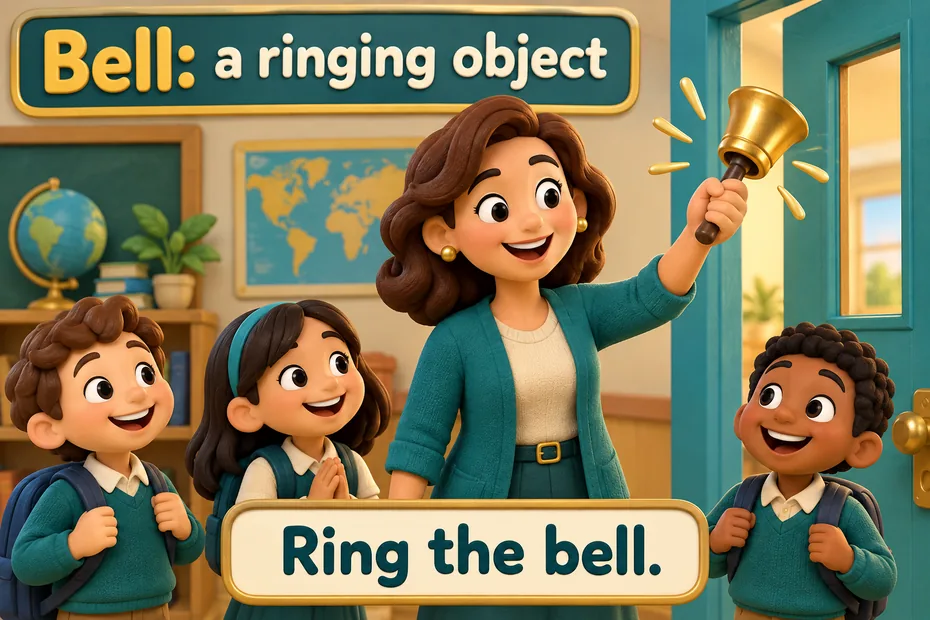
A bell can be a metal object that rings, the signal associated with ringing, or a flared part resembling a bell. Merriam-Webster’s bell entry includes the flared opening of a wind instrument. Thus, “the trumpet’s bell” describes part of the trumpet rather than a separate ringing handbell.
Consider these examples: “The teacher rang the bell” refers to the object; “We left at the final bell” refers to the signal marking an event; “The trumpet’s bell faced the audience” refers to its flared end. All three use the same spelling. Do not replace bell with bel simply because the sentence mentions sound.
Bells is the ordinary plural. Bell also has verb uses, including fitting something with a bell or making something flare into a bell-like shape. These specialized uses do not change the familiar noun examples. For most everyday writing, “ring the bell” is the clearest action phrase.
Belle: a description of a woman
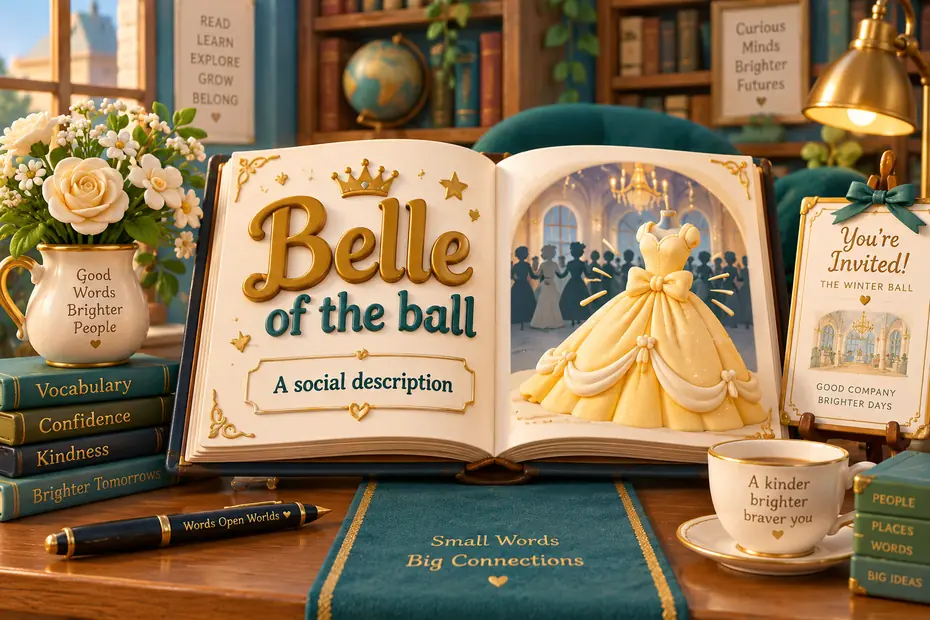
Merriam-Webster’s belle entry describes a girl or woman admired for attractiveness and popularity. The phrase belle of the ball refers to someone particularly admired at a social occasion. The entry does not impose a specific maximum age, so “belle can never refer to an older woman” is an unreliable rule.
This word often suits historical fiction, society writing, or a deliberately graceful description. It emphasizes appearance and social attention, so it may sound dated or unnecessarily focused on looks in a workplace profile. If the intended point is professional achievement, say “accomplished researcher,” “respected leader,” or another description that states the achievement directly.
Examples that keep the meanings separate
- “The bell rang during the celebration.” The ringing object needs two l’s.
- “The engineer expressed the result in bels.” The technical unit has one l.
- “In the story, Clara becomes the belle of the ball.” The person-description ends in e.
- “The technician measured the bell’s output.” Both measurement and ringing appear, but the object remains a bell.
- “Several society belles attended the fictional reception.” The plural of belle is belles.
A useful memory aid is to picture three things: a measurement chart for bel, a ringing object for bell, and a character at a gathering for belle. Memory aids support the definitions; they do not replace checking context.
Frequently asked questions
Are all three interchangeable because they sound alike? No. Their pronunciation can match while their meanings and spelling remain different. A spellchecker may accept the wrong one, so reread the sentence for meaning.
Is bel an ordinary word for a joyful shout? That is not the standard measurement definition documented above. For an excited sound, choose “cheer,” “shout,” or “cry of delight” according to what happened.
Does belle mean every woman? No. It adds a particular judgment about attractiveness and social admiration. Use “woman” when that extra description is unnecessary.
What is the quickest editing test? Replace the word mentally with “unit,” “ringing object,” or “admired woman.” The meaning that fits points to bel, bell, or belle. In technical material, also check whether B or dB is the intended symbol.
Key Takeaways
- “Bel” is an archaic term rarely used in modern English that refers to a loud sound or shout of joy.
- “Bell” is the commonly used term to describe the sound produced by a hollow, metal instrument.
- “Belle” is a noun that specifically refers to a beautiful or attractive young woman.
- Using “bel” instead of “bell” is a common mistake.
- “Belle” should only be used to describe a young woman and not an older woman.
- Understanding the definitions and proper usage of “bel,” “bell,” and “belle” is crucial for effective communication.
Understanding the Difference
As language evolves, words with similar spellings or pronunciations can sometimes cause confusion. In this section, I’ll help you navigate the nuances between “bel,” “bell,” and “belle” to ensure you’re using these words appropriately.
Definition of “bel”:
The word “bel” is an archaic term that is rarely used in modern English. It refers to a loud sound or a shout, typically used to express joy or celebration. For example, you might hear the “bel” of church bells during a wedding ceremony or the “bel” of a horn at a sporting event.
Definition and Usage of “Bel”
“Bel” is an archaic term that is rarely used in modern English. It refers to a loud sound or shout used to express joy or celebration. While “bel” may not be commonly used today, it still holds historical significance and can be found in certain contexts.
In the past, “bel” was often associated with the ringing of church bells during special occasions, such as weddings or holidays. The vibrant sound of the bells would resonate throughout the town, announcing a joyous event and bringing people together. Similarly, at sporting events or festive gatherings, horns and trumpets would emit a loud and cheerful “bel” to create a festive atmosphere.
It’s important to note that the usage of “bel” is now quite limited. In modern English, we typically use the word “bell” to refer to the sound produced by a hollow, metal instrument. Whether it’s the chiming of a traditional bell or the striking of a doorbell, “bell” is the term we commonly use to describe these sounds. On the other hand, “belle” refers to a beautiful or attractive young woman.
To summarize, while “bel” was once used to signify a loud sound or shout of joy, it has become an archaic term in modern English. The word “bell,” but, is the more commonly used term to describe the sound produced by hollow, metal instruments. And remember, “belle” is used to describe a beautiful young woman.
By understanding the differences between “bel,” “bell,” and “belle,” we can use these words appropriately in our writing and conversations, ensuring clarity and precision in our communication.
Definition and Usage of “Bell”
When it comes to understanding the differences between “bel,” “bell,” and “belle,” it’s important to start with a clear definition of each word. In this section, I’ll focus on the definition and usage of “bell.”
Definition: A “bell” refers to a hollow, metal instrument that produces a distinct sound when struck or when its clapper moves. It is typically used for signaling, marking the time, or providing a warning. Bells can vary in size and shape, from small handheld bells to large church bells.
Usage: The word “bell” is commonly used to describe the sound that this instrument makes. For example, we might say, “The church bell rang loudly,” or “The doorbell chimed.” Bells are often associated with specific events or rituals, such as weddings or holidays.
Understanding the appropriate usage of “bell” is crucial for clear and effective communication. Using this word correctly helps convey a specific sound or instrument, avoiding any confusion or ambiguity.
Summarizing, “bell” is a noun that refers to a hollow, metal instrument used for producing a distinct sound. It is important to differentiate “bell” from “bel” and “belle” to ensure accurate and precise communication.
Remember, the article is designed to assist students in grasping the nuances and proper usage of commonly confused words in English. In the next section, I will investigate into the definition and usage of “bel,” further highlighting the differences between these similar-sounding words.
Definition and Usage of “Belle”
“Belle” is a word that is often confused with “bel” and “bell,” but it carries a completely different meaning and usage. Let’s investigate into the definition and proper usage of “belle” to gain a better understanding.
Definition of “Belle”:
“Belle” is a noun that refers to a beautiful or attractive young woman. It is commonly used to describe someone who is visually appealing or has an elegant charm. The word “belle” originates from French, where it literally means “a beautiful woman.” In English, it has become widely used to portray a feminine ideal of beauty.
Usage of “Belle”:
The word “belle” is typically used in written or spoken language to compliment or describe someone’s appearance. It can be used in various contexts, such as in literature, poetry, or in casual conversations. Here are a few examples of how “belle” can be used in sentences:
- She is the belle of the ball, attracting everyone’s attention with her grace and charm.
- The actress was known for her role as the romantic lead, playing the enchanting belle in the popular movie.
- His girlfriend is a true belle, with her stunning looks and captivating smile.
Understanding the appropriate usage of “belle” is important for effective communication. It allows us to accurately convey our thoughts and descriptions when referring to a beautiful young woman. So next time you come across the word “belle,” remember its definition and use it appropriately in your writing or conversations.
Common Mistakes in Usage
One of the common mistakes I often come across is the confusion between “bel,” “bell,” and “belle.” Understanding the differences between these words is crucial for effective communication. Let’s dive deeper into the proper usage of each:
The Difference Between “Bel” and “Bell”
One common mistake is using “bel” instead of “bell.” “Bel” is an archaic term that is rarely used in modern English. It refers to a loud sound or shout used to express joy or celebration. While it may have been commonly used in the past, nowadays its usage is quite limited. Instead, we use “bell” to refer to the sound produced by a hollow, metal instrument.
Proper Usage of “Belle”
Another common mistake is misusing “belle.” It is important to understand that “belle” is a noun that specifically refers to a beautiful or attractive young woman. It is commonly used to describe someone who is visually appealing or has an elegant charm. The word “belle” originates from French, where it literally means “a beautiful woman.” In English, it has become widely used to portray a feminine ideal of beauty.
Now that we have discussed the common mistakes in usage, let’s move on to understanding the proper definitions and examples of each word.
In the next section, I will investigate deeper into the definitions and give examples of how to accurately use these words in various contexts. By gaining a clear understanding of the differences between “bel,” “bell,” and “belle,” we can avoid common mistakes and communicate effectively. So let’s explore it further.
Tips for Using Each Word Correctly
When it comes to using “bel,” “bell,” and “belle” appropriately, it’s important to understand their definitions and contexts. Here are some tips to help you use each word correctly:
- Understand the difference between “bel” and “bell”:
- “Bel” is an archaic term used to describe a loud sound or a shout of joy. But, it is rarely used in modern English. Instead, we usually use “bell” to refer to the sound produced by a hollow, metal instrument. For example, we say, “The church bell chimed loudly.”
- Learn the definition of “belle” and use it in context:
- “Belle” is a noun that describes a beautiful or attractive young woman. It is a commonly used word to showcase someone who is visually appealing or possesses an elegant charm. The word “belle” originated from French, where it literally means “a beautiful woman.” In English, it has become widely used to portray a feminine ideal of beauty.
- Pay attention to appropriate usage:
- Use “bel” sparingly, as it is an archaic term and not commonly used in modern English. Instead, opt for “bell” when referring to the sound produced by a hollow, metal instrument.
- Reserve “belle” for describing a beautiful or attractive young woman. Avoid using it to refer to an older woman, as it specifically refers to a young female.
Understanding the proper usage of these words will help you communicate effectively and avoid common mistakes. By knowing the definitions and examples of “bel,” “bell,” and “belle,” you can confidently use them in the appropriate contexts.
So, remember:
- “Bel” is an archaic term for a loud sound or shout of joy.
- “Bell” refers to the sound produced by a hollow metal instrument.
- “Belle” describes a beautiful or attractive young woman.
Now that we have a clear understanding of these words, let’s explore some common mistakes and examples in the next section.
Conclusion
Understanding the differences between “bel,” “bell,” and “belle” is crucial for effective communication. While “bel” is an archaic term rarely used in modern English, it refers to a loud sound or shout expressing joy or celebration. Nowadays, we typically use “bell” to describe the sound produced by a hollow, metal instrument. On the other hand, “belle” is reserved for describing a beautiful or attractive young woman.
By knowing the appropriate usage of these words, we can avoid common mistakes and ensure clear communication. Whether it’s using “bell” to describe the sound of a ringing alarm or “belle” to compliment someone’s beauty, using these words correctly enhances our language skills.
Remember, language evolves, and it’s essential to stay updated with modern English usage. So, the next time you encounter “bel,” “bell,” or “belle,” you’ll know exactly how to use them appropriately, adding precision and clarity to your communication.
Frequently Asked Questions
Q: What does the word “bel” mean?
A: “Bel” is an archaic term that is rarely used in modern English. It refers to a loud sound or shout used to express joy or celebration.
Q: What is the difference between “bel” and “bell”?
A: “Bel” is an outdated term, while “bell” is the term commonly used in modern English to refer to the sound produced by a hollow, metal instrument.
Q: What does the word “belle” mean?
A: “Belle” is used to describe a beautiful or attractive young woman.
Q: How can I use these words correctly?
A: To use these words correctly, reserve “bel” for historical or literary purposes. Use “bell” when referring to the sound produced by a hollow, metal instrument. Finally, use “belle” to describe a beautiful or attractive young woman.


